Omniglot News (22/03/26)

Omniglot News

Here’s the latest news from the world of Omniglot.

New adapted script: Asirilik (Асирилик), a way to write Tamazight with the Cyrillic alphabet devised by Xavier Merica

Sample text in Asirilik

New adapted script: Chukchi Latin Alphabet (Lyghorawetlhen Latinlhen Alfavit) – a way to write Chukchi with the Latin alphabet created by Dijacz.

New language pages:

  • Koshin (Kɔshin), a Western Beboid language spoken in the Northwest Region of Cameroon.
  • Kung (Kuŋ), a Central Ring Grassfields language spoken in the Northwest Region of Cameroon.
  • Mambila, a Northern Bantoid language spoken in southeastern Nigeria and northwestern Cameroon.
  • Anāl, a Northwestern Kuki-Chin language spoken in India and Myanmar.

New numbers pages:

  • Epele (Ẹkpeye), an Igboid language spoken in Rivers and Bayelsa states in southern Nigeria.
  • Ogba (Ọgbà), an Igboid language spoken mainly in Rivers State in southern Nigeria.
  • Kharia (कोरकू), a Munda language spoken mainly in the Indian states of Jharkhand, Chhattisgarh and Odisha.

New family words page: Lingua Franca Nova

This week on the Omniglot blog there’s a new post entitled Mouchard, in which we investigate the French word mouchard (grass, snitch, informant), and related things, and there’s the usual language quiz. See if you guess what language this is:

Here’s a clue: this language is spoken in southern China.

The mystery language in last week’s language quiz was Daasanach (Af Daasanach), a Lowland East Cushitic language spoken in Ethiopia, Kenya and South Sudan.

The recording comes from: YouTube

In this week’s Adventure in Etymology we’re Holding It Together as we uncover the origins of the words content and content.

It’s also available on Instagram and TikTok.

On the Celtiadur blog this week there’s a new post entitled Rushy Sedges about words for sedge, rushes and related things in Celtic languages.

For more Omniglot News, see:
https://www.omniglot.com/news/
https://www.facebook.com/groups/omniglot/
https://www.facebook.com/profile.php?id=100046466483286

JapanesePod101.com

You can also listen to this podcast on: Apple Podcasts, Amazon Music, TuneIn and Podchaser.

If you would like to support this podcast, you can make a donation via PayPal or Patreon, or contribute to Omniglot in other ways.


Radio Omniglot podcasts are brought to you in association with Blubrry Podcast Hosting, a great place to host your podcasts. Get your first month free with the promo code omniglot.


Adventures in Etymology – Holding It Together

In this Adventure in Etymology, we’re holding it together as we uncover the origins of the words content and content.

Contentment

As an adjective, content [kənˈtɛnt] means satisfied, pleased or contented, and as a noun, it can mean satisfaction, contentment or pleasure, or that which contents or satisfies. As a verb, to content means to give contentment or satisfaction to, to satisfy, or to make happy.

It comes from Middle English contenten [kɔnˈtɛntən] (to satisfy), from Old French contenter (to content, satisfy), from Latin contentus (contained, satisfied, enclosed), from contineō [kɔnˈtɪ.ne.oː] (to hold, keep, connect, contain), from con- (together) and teneō (to hold) [source].

A related word is content [ˈkɒn.tɛnt], which means that which is contained, subject matter, semantic information, or one or more creative works. This comes from the same roots as content, via Middle English content (things contained, contents), from Latin contentus etc [source].

Related words include contain, continent, continuous and countenance in English, contenir (to contain, hold) in French, contente (happy, content, satisfied) in Portuguese and continencia (continence, self-control) in Spanish [source].

Incidentally, the word contend [kənˈtɛnd] (to contest, dispute, quarrel) is not related to content or content even though it sounds similar. Instead, it comes from Middle English contenden (to engage in rivalry, compete), from Old French contendre, from Latin contendēre (to stretch out, strive after, contend), from con- (together) and tendere (to stretch) [source].

Related words include contention and contentious in English, contesa (quarrel, argument, dispute) in Italian, and cynnen (contention, discord) in Welsh [source].

If you would like to support this podcast, you can make a donation via PayPal or Patreon, or contribute to Omniglot in other ways.

Radio Omniglot podcasts are brought to you in association with Blubrry Podcast Hosting, a great place to host your podcasts. Get your first month free with the promo code omniglot.

The Fastest Way to Learn Japanese Guaranteed with JapanesePod101.com

I also write about words, etymology and other language-related topics on the Omniglot Blog, and I explore etymological connections between Celtic languages on the Celtiadur blog.


Omniglot News (15/03/26)

Omniglot News

Here’s the latest news from the world of Omniglot.

New writing system: Quốc âm tân tự (國音新字), a syllabic script for Vietnamese based on strokes from chữ Hán and chữ Nôm characters devised during the 19th century.

Sample text in Quốc âm tân tự

New language pages:

  • Reyesano, a Tacanan language spoken in José Balivián Province in Beni Department in northern Bolivia.
  • Tacana, a Tacanan language spoken in La Paz Province in Beni Department in northern Bolivia.
  • Yuqui (Mbiaye’), a Tupí-Guaraní spoken in the Cochabamba Department in central Boliva.

New numbers pages:

  • Waata (Waatah), a Cushitic language spoken in the Coast Province in Kenya.
  • Emilian (emigliân), a Romance language spoken mainly in the Emilia-Romagna region in northern Italy.
  • Rushani (rix̌ůn ziv / риx̌ӯн зив), a Pamir language spoken mainly Badakhshan Province in northeastern Afghanistan.

New phrases page: Idaʼan, a North Bornean language spoken in Sabah in Malaysia.

This week on the Omniglot blog there’s a new post entitled Pouring Rain, in which we look into the saying it never rains but it pours, and related sayings in English and other languages, and there’s the usual language quiz.

See if you guess what language this is:

Here’s a clue: this language belongs to the Cushitic language family.

The mystery language in last week’s language quiz was Pacoh (Pacóuh), a Katuic language spoken in central Vietnam and southern Laos.

Recording from: YouTube

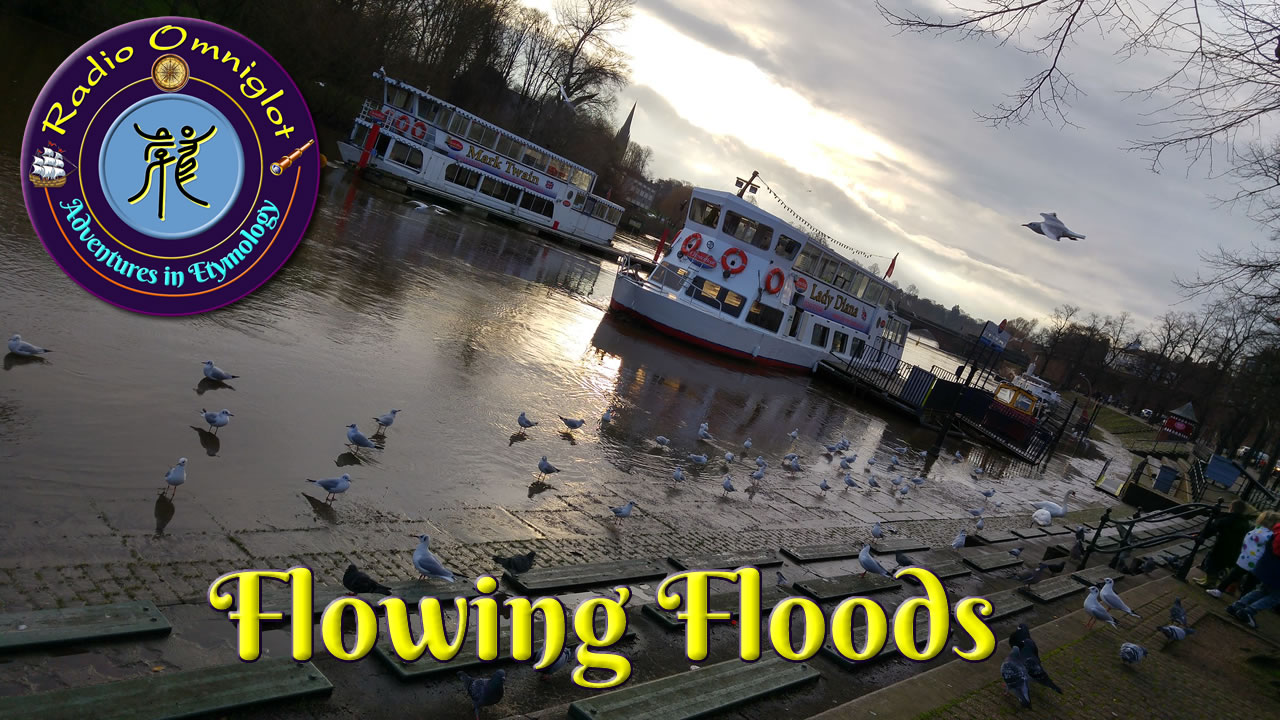
In this week’s Adventure in Etymology, entitled Flowing Floods, we find out what the word flood has to do with rivers, flowing and high tides.

It’s also available on Instagram and TikTok.

There’s also a new post on the Celtiadur blog this week entitled Nits about words for nit and related things in Celtic languages.

Improved pages: Emilian and Romagnol language pages.

For more Omniglot News, see:
https://www.omniglot.com/news/
https://www.facebook.com/groups/omniglot/
https://www.facebook.com/profile.php?id=100046466483286

JapanesePod101.com

You can also listen to this podcast on: Apple Podcasts, Amazon Music, TuneIn and Podchaser.

If you would like to support this podcast, you can make a donation via PayPal or Patreon, or contribute to Omniglot in other ways.


Radio Omniglot podcasts are brought to you in association with Blubrry Podcast Hosting, a great place to host your podcasts. Get your first month free with the promo code omniglot.
Adventures in Etymology – Flowing Floods

What links the word flood with words for flow, river and high tide? Let’s find out in this Adventure in Etymology.

Flowing Floods

Meanings of flood [flʌd] include:

  • An overflow of a large amount of water (usually disastrous) from a lake or other body of water due to excessive rainfall or other input of water.
  • A large number or quantity of anything appearing more rapidly than can easily be dealt with (e.g. a flood of complaints).
  • The flowing in of the tide.

It comes from Middle English flod [floːd] (river, lake, ocean, flood), from Old English flōd / ᚠᛚᚩᛞᚢ [floːd] (flowing of the tide, river, stream, flood), from Proto-West Germanic *flōdu (river, flood), from Proto-Germanic *flōduz (river, flood), from PIE *plóh₃tus (overflow, deluge), from *pleh₃(w)- (to swim, to flow) [source].

Words from the same roots possibly include flow in English, flod [fluːd] (river, flood, high tide) in Swedish, vloeien [ˈvlui̯ə(n)] (to flow) in Dutch, плувам [ˈpɫuvɐm] (to swim, to float) in Bulgarian, and plauti [ˈpɫɐ̂ʊtʲɪ] (to wash, rinse) in Lithuanian [source].

In Old English, another word for river (and stream) was ēa [æɑː], which comes from Proto-West Germanic *ahu (river), from Proto-Germanic *ahwō (stream, river, water), from PIE *h₂ekʷeh₂ ([flowing] water) [source].

Words from the same roots include eddy and ewer in English, å [oː] (river, creek, big stream) in Swedish, ø [øˀ] (island) in Danish, á [auː] (river) in Icelandic, and agua [ˈa.ɣ̞wa] (water) in Spanish [source].

There was a lot of rain in the UK this week, and plenty of large puddles on the roads, but I didn’t see any major floods. I hope things were okay where you are.

If you would like to support this podcast, you can make a donation via PayPal or Patreon, or contribute to Omniglot in other ways.

Radio Omniglot podcasts are brought to you in association with Blubrry Podcast Hosting, a great place to host your podcasts. Get your first month free with the promo code omniglot.

The Fastest Way to Learn Japanese Guaranteed with JapanesePod101.com

I also write about words, etymology and other language-related topics on the Omniglot Blog, and I explore etymological connections between Celtic languages on the Celtiadur blog.


Omniglot News (08/03/26)

Omniglot News

Here’s the latest news from the world of Omniglot.

New language pages:

  • Rabha (ৰাভা), a Sal language spoken in Assam, West Bengal and Maghalaya in the northeast of India.
  • Kenyang (Kɛ́nyāŋ), a Mamfe language spoken in the Manyu and Meme departments in the Southwest Region of Cameroon.
  • Araona (alaōna), a Tacanan spoken in the La Paz Department in the northwest of Bolivia.

New numbers pages:

  • Rabha (ৰাভা), a Sal language spoken in the northeast of India.
  • Kenyang (Kɛ́nyāŋ), a Mamfe language spoken in the Manyu and Meme departments in the Southwest Region of Cameroon.
  • Bugkalot (Bogkalot), a Northern Luzon language spoken in the Cagayan Valley region in the Philippines.

New Tower of Babel translation: Rabha (ৰাভা).

This week on the Omniglot blog there’s a new post entitled Bons Mots, in which we look into the meanings and origins of the term bon mot, and there’s the usual language quiz.

See if you guess what language this is:

Here’s a clue: this language is spoken in Vietnam and Laos.

The mystery language in last week’s language quiz was Dena’ina (Denaʼina Qenaga / Denaʼinaqʼ) -, a Northern Athabaskan language spoken on the Kenai Peninsula in southern Alaska in the USA.

In this week’s Adventure in Etymology, entitled Harmonious Reason, we find out whether the words harmony and reason are connected.

It’s also available on Instagram and TikTok.

There’s also a new post on the Celtiadur blog this week entitled Melting 🫠 about words for to melt, to disolve and related things in Celtic languages.

Laufey @ Co-op Live, Manchester

In other news, I went to see Laufey [ˈlœyːvei] in Manchester this week. She’s an Icelandic / Chinese singer song-writer based in LA who sings what she calls Jazz Pop (in English). She was supported by Alice Phoebe Lou, a South African singer song-writer based in Berlin. It was a wonderful concert, and I heard people around me speaking Cantonese, Swedish and English. So quite an international event.

For more Omniglot News, see:
https://www.omniglot.com/news/
https://www.facebook.com/groups/omniglot/
https://www.facebook.com/profile.php?id=100046466483286

JapanesePod101.com

You can also listen to this podcast on: Apple Podcasts, Amazon Music, TuneIn and Podchaser.

If you would like to support this podcast, you can make a donation via PayPal or Patreon, or contribute to Omniglot in other ways.


Radio Omniglot podcasts are brought to you in association with Blubrry Podcast Hosting, a great place to host your podcasts. Get your first month free with the promo code omniglot.

Adventures in Etymology – Harmonious Reason

Are the words harmony and reason connected? Let’s find out in this Adventure in Etymology.

Singing in Pontio / Canu ym Mhontio

Meanings of harmony [ˈhɑː.mə.ni] include:

  • Agreement or accord.
  • A pleasing combination of elements, or arrangement of sounds.
  • Two or more notes played simultaneously to produce a chord.

It comes from Middle English armonie (harmonious sounds, song, music, harmony), from Old French (h)armonie (harmony, musical instrument), from Latin harmonia (harmony, music, peace), from Ancient Greek ἁρμονία (harmonía – joint, union, agreement, concord of sounds), from or related to ἁρμόζω (harmózō – I fit together), from PIE *h₂er- (to join, fit, fix together) [source].

Meanings of reason [ˈɹiː.zən] include:

  • A cause.
  • A motive for an action or a determination.
  • Rational thinking.

It comes from Middle English reso(u)n (reason), from Anglo-Norman raisun (logic, logical reasoning), from Latin ratiō (reason, calculation, procedure), from reor (to reckon, calculate, think), from Proto-Italic rēōr (to reckon, calculate, think), from PIE *h₂reh₁- (to think, reason, arrange), from *h₂er- (to join, fit, fix together) [source].

Other words from the same roots possibly include arachnid, art, ordinary, ornament, ratio and read in English, Rede (stream, current, flow) in German, araña (spider, chandelier) in Spanish, arment (herd of cattle or horses) in Catalan, гармония [ɡɐrˈmonʲɪjə] (harmony) in Russian [source].

One word for harmony (and melody) in Old English was swinsung, which came from swinsian (to sing) from Proto-West Germanic *swinisōn, from Proto-Germanic *swinisōną, from Proto-Germanic *swin- (to sound), from PIE *swenh₂- (to sound) [source].

Words from the same roots include assonance, sonata, sonnet, sound and swan in English, seinn (to play [an instrument], sing, warble, chatter) in Irish, honni (to claim, assert) in Welsh, and dzon (bell) in Polish [source].

If you would like to support this podcast, you can make a donation via PayPal or Patreon, or contribute to Omniglot in other ways.

Radio Omniglot podcasts are brought to you in association with Blubrry Podcast Hosting, a great place to host your podcasts. Get your first month free with the promo code omniglot.

The Fastest Way to Learn Japanese Guaranteed with JapanesePod101.com

I also write about words, etymology and other language-related topics on the Omniglot Blog, and I explore etymological connections between Celtic languages on the Celtiadur blog.


Omniglot News (01/03/26)

Omniglot News

Here’s the latest news from the world of Omniglot.

New language pages:

  • Jagham (Ejagham), an Ekoid language spoken in southeastern Nigeria and southwestern Cameroon.
  • Bobongko, a Central Tivoid language spoken in the Menchum Department of the Northwest Region of Cameroon.
  • Gaʼdang, a Northern Luzon language spoken in Luzon in the Philippines.
  • Kemezung (Kɨmədzuŋ), an Eastern Beboid language spoken in the Northwest Region of Cameroon.
  • Ese Ejja (Eseʼejja), a Tacanan spoken in northern Bolivia and southern Peru.

New adapated script: Coptic for Esperanto, a way to write Esperanto with the Coptic script devised by Ethon Musk.

Ϯⲏⲱⲓ ϩⲟⲙⲟⲓ ⲉⲥⲧⲁⲥ ⲇⲉⲛⲁⲥⲕⲉ ⲗⲏⲃⲉⲣⲁⲓ ⲕⲁⲓ ⲉⲅⲁⲗⲁⲓ ⲗⲁⲩ ⲇⲏⲅⲛⲟ ⲕⲁⲓ ⲣⲁⲓⲧⲟⲓ. Ⲏⲗⲏ ⲡⲟⲥⲉⲇⲁⲥ ⲣⲁⲝⲏⲟⲛ ⲕⲁⲓ ⲕⲟⲛⲥⲝⲏⲉⲛⲝⲟⲛ, ⲕⲁⲓ ⲇⲉvⲱⲥ ⲕⲟⲛⲇⲱⲧⲏ ⲱⲛⲱ ⲁⲗ ⲁⲗⲏⲁ ⲉⲛ ⲥⲡⲏⲣⲏⲧⲟ ⲇⲉ ⲫⲣⲁⲧⲉⲝⲟ.

New numbers pages:

  • Jagham (Ejagham), an Ekoid language spoken in southeastern Nigeria and southwestern Cameroon.
  • Gaʼdang, a Northern Luzon language spoken in Luzon in the Philippines.
  • Kemezung (Kɨmədzuŋ), an Eastern Beboid language spoken in the Northwest Region of Cameroon.

New phrases page: Tombonuwo (Tambonuo), a North Bornean language spoken in Sabah in East Malaysia.

This week on the Omniglot blog there’s a new post entitled Silly Madness, in which we investigate the word mishegoss, and related words in English and other languages, and there’s the usual language quiz.

See if you guess what language this is:

Here’s a clue: this language is spoken in Alaska in the USA.

The mystery language in last week’s language quiz was Rabha (Rabha khurang), a member of the Sal branch of the Tibeto-Burman language family spoken in Assam, West Bengal & Maghalaya in northeastern India.

In this week’s Adventure in Etymology, entitled Flowing Rhythms, we find out what the word rhythm has to do with flowing.

It’s also available on Instagram and TikTok.

There’s also a new post on the Celtiadur blog this week entitled Childish Infants about words for baby, child and related things in Celtic languages.

For more Omniglot News, see:
https://www.omniglot.com/news/
https://www.facebook.com/groups/omniglot/
https://www.facebook.com/profile.php?id=100046466483286

JapanesePod101.com

You can also listen to this podcast on: Apple Podcasts, Amazon Music, TuneIn and Podchaser.

If you would like to support this podcast, you can make a donation via PayPal or Patreon, or contribute to Omniglot in other ways.


Radio Omniglot podcasts are brought to you in association with Blubrry Podcast Hosting, a great place to host your podcasts. Get your first month free with the promo code omniglot.

Adventures in Etymology – Flowing Rhythms

What does the word rhythm have to do with flowing? Let’s find out in this Adventure in Etymology.

bodhran by the window

Meanings of rhythm [ˈɹɪð.m̩] include:

  • The variation of strong and weak elements (such as duration, accent) of sounds, notably in speech or music, over time; a beat or meter.
  • A specifically defined pattern of such variation.
  • A flow, repetition or regularity

It comes from Latin rhythmus [ˈrʰytʰ.mʊs] (rhythm), from Ancient Greek ῥῠθμός [r̥ytʰ.mós] (vibration, rhythm, measure, order, form), from Proto-Hellenic *hrutʰmós, from PIE *sru-dʰ-mo-s from *srew- (to flow, stream) [source].

Words from the same roots include catarrh, stream, rheumatism and rhyme / rime in English, ρέω (réo – to flow, run) in Greek, ritmo (rhythm, pace) in Spanish, strøm ([electrical] current, flow, stream) in Danish, srūti (to flow, stream, run) in Lithuanian, and sruth (stream, current, flow) in Irish [source].

The word logorrhea (excessive talkativeness, the excessive use of words in writing; excessive and often uncontrollable speaking due to a mental disorder) also comes from the same roots. It’s made up of logo- (word speech) and -rrhea (flowing), and was possibly modelled on verbal diarrheadiarrhea also comes from the same roots [source].

Part of the word maelstrom (a large and violent whirlpool, a chaotic or turbulent situation) is also related. It comes from Dutch maelstrom (whirlpool), ultimately from PIE *melh₂- (to crush, grind) and *srew- (to flow, stream) [source].

If you would like to support this podcast, you can make a donation via PayPal or Patreon, or contribute to Omniglot in other ways.

Radio Omniglot podcasts are brought to you in association with Blubrry Podcast Hosting, a great place to host your podcasts. Get your first month free with the promo code omniglot.

The Fastest Way to Learn Japanese Guaranteed with JapanesePod101.com

I also write about words, etymology and other language-related topics on the Omniglot Blog, and I explore etymological connections between Celtic languages on the Celtiadur blog.


Omniglot News (22/02/26)

Omniglot News

Here’s the latest news from the world of Omniglot.

New language pages:

  • Ipulo, a Central Tivoid language spoken in the Southwest and Northwest regions of Cameroon.
  • Isu, a Central Tivoid language spoken in the Menchum Department of the Northwest Region of Cameroon.
  • Baraba Tatar (Парабачы), a variety of Siberia Tatar, a Turkic a language spoken in Siberia in Russia.
  • Ralte (Râlte Pau), a Northeastern Kuki-Chin language spoken in Mizoram, Manipur and Tripura in the northeast of India.

New adapted script: Cantonese Cyrillic (Ғоңдұңва Сәйлейї Зимоў), a way to write Cantonese with the Cyrillic alphabet devised by Dijacz.

Янян сәңїпыңдәң, хәй жүнїм тұңмай күнлей сөң ятлёт пыңдәң. Кёйдей яў лейсың тұңмай лөңсәм, їце йыңдоң ї хыңдәй ғанхәй’ге зыңсән сөңдёйдой.

New numbers pages:

  • Sisaali (Sɩsaalɩ), a Southern Gur language spoken in southern Burkina Faso.
  • Edo (Ẹ̀dó), a Volta-Congo language spoken mainly in Edo State in southern Nigeria.
  • Ralte (Râlte Pau), a Northeastern Kuki-Chin language spoken in Mizoram, Manipur and Tripura in India.

New Tower of Babel translation in: Edo (Ẹ̀dó)

This week on the Omniglot blog there’s a new post entitled Pages, Pagans & Peasants, in which we find out whether the words page, pagan, peasant and pheasant are related, and there’s the usual language quiz.

See if you guess what language this is:

Here’s a clue: this language is spoken in northeastern India.

The mystery language in last week’s language quiz was Kuuk Thaayorre, a Pama-Nyungan language spoken in Queensland, Australia.

In this week’s Adventure in Etymology, entitled Plain Planes, we find out if the words plain, plane and plan are related.

It’s also available on Instagram and TikTok.

There’s also a new post on the Celtiadur blog this week entitled Knowing Recognition about words for to know, to recognize and related things in Celtic languages.

For more Omniglot News, see:
https://www.omniglot.com/news/
https://www.facebook.com/groups/omniglot/
https://www.facebook.com/profile.php?id=100046466483286

JapanesePod101.com

You can also listen to this podcast on: Apple Podcasts, Amazon Music, TuneIn and Podchaser.

If you would like to support this podcast, you can make a donation via PayPal or Patreon, or contribute to Omniglot in other ways.


Radio Omniglot podcasts are brought to you in association with Blubrry Podcast Hosting, a great place to host your podcasts. Get your first month free with the promo code omniglot.

Adventures in Etymology – Plain Planes

Are the words plain, plane and plan related? Let’s find out in this Adventure in Etymology.

Cheshire Plains

Plain [pleɪn] as an adjective can mean:

  • Simple, unaltered, ordinary, unsophisticated.
  • Obvious, evident.
  • Open, honest, candid.
  • Unattractive
  • Flat, level (rare, regional)

It comes from Middle English pleyn (clear, unambiguous), from Anglo-Norman pleyn (plain), from Old French plain (plain [flat area]), from Latin plānus (level, flat, even, intelligible, clear), from Proto-Italic *plānos, from PIE *pleh₂-no-s (flattened) from *pleh₂- (flat) [source].

As a noun, plain can mean:

  • An expanse of land with relatively low relief and few trees, especially a grassy expanse.
  • A broad, flat expanse in general, as of water.

This comes from the same roots as the adjective plain, but directly from Old French plain [source].

Words from the same roots include plane (flat surface), explain, plan, palm, piano, floor, flat and maybe plant and field in English, plan (map, plane, plan) in French, llano (even, flat, level, plain) in Spanish, flor (thin, transparent fabric) in Swedish, and llawr (floor, deck, stage, platform, cellar, ground) in Welsh [source].

The word clan (a group of people all descended from a common ancestor; a traditional social group of families in the Scottish Highlands having a common hereditary chieftain) possibly comes from the same roots via Irish clann (children, clan) or Scottish Gaelic clann (children, clan, tribe), both of which are from Old Irish cland (children, family, plant), from Old Welsh plant (children), from Latin planta (shoot, offspring), from PIE *pleh₂- (flat).

If you would like to support this podcast, you can make a donation via PayPal or Patreon, or contribute to Omniglot in other ways.

Radio Omniglot podcasts are brought to you in association with Blubrry Podcast Hosting, a great place to host your podcasts. Get your first month free with the promo code omniglot.

The Fastest Way to Learn Japanese Guaranteed with JapanesePod101.com

I also write about words, etymology and other language-related topics on the Omniglot Blog, and I explore etymological connections between Celtic languages on the Celtiadur blog.