Shady Shadows

Words for shadow, shade and related things in Celtic languages.

Shady shadows

Words marked with a * are reconstructions.

Proto-Celtic *skāto(m) = shadow
*ufo-skāto/u = shadow, shelter
Old Irish (Goídelc) scáth [skaːθ] = shade, shadow, shelter, protection
foscad = shade, shelter
Middle Irish (Gaoidhealg) scáth, scatha, sgátha [skaːθ] = shade, shadow, reflexion, image, phantom, spectre, shelter, covering, protection
scáthaig(h)the = frightened, terrified
scáthán, scathan, sgathán = mirror, looking-glass
foscad, foscud, foiscthe, foscaidh = shadow, shade, gloom, glimmer, shelter, protection
Irish (Gaeilge) scáth [sˠkɑː / ˈsˠkæː] = shade, shadow, covering, protection, screen, reflected image, phantom, fear, dread, bashfulness, timidity
scáthach = shady, sheltered
scáthaigh = to shade, darken, obscure, cover, screen, protect
scáthán = mirror, looking-glass, centre of attraction
scáthánach = reflecting, specular
scáthlán = shelter, open-ended hut or shed, screen, (lamp) shade
foscadh = (literary) shade, shadow, shadowy form, shelter
Scottish Gaelic (Gàidhlig) sgàth [sgaː] = shade, shadow, dread, apprehension
sgàthach [sgaː.əx] = shady, shadow, timid, fearful, shy, skittish
sgàthachd [sgaːhəxg] = timidity
sgàthag [sgaː.ag] = dread, fright
sgàthair [sgaː.ɛrʲ] = coward
sgàthan [sgaːhan] = looking-glass, mirror, reflector
sgàthanaichte [sgaːhanɪçdʲə] = mirrored
fasgadh [fasgəɣ] = (act of) sheltering, shelter
Manx (Gaelg) scaa = shadow, shade, screen, cover, timidity, apparition, ghost
scaagh = bashful, timid, shadowy, shady
scaaghey = to darken, overshadow, shade, shadow, shadowing
scaadooagh = shadowy, shadowing, shady
scaane = mirror
Middle Welsh (Kymraec) isscaud, isgaud, yscaỼt, ysgod, ysgaỼt = shade, shadow, darkness
gwascawt, gwasgawt, gwasgawd = shelter, shady place, shadow
kyscaut, kysgod, cyscod = shadow, reflection, shade
kyscoty, kysgodi, kyscodi = to shelter, defend, protect
yscodic, iscodic, ysgodic = retreating, fearful, skittish, sheltered
ysgodigaw = to frighten, retreat, flee, escape
Welsh (Cymraeg) ysgod = shade, shadow, darkness, night, soul, spirit, apparition, goblin, appearance, fright, disguise, mask
cysgod = shadow, reflection, shade, likeness, phantom, symbol, shelter
cysgodaf, cysgodi = to shelter, defend, protect
cysgodol = shadowing, sheltering, shady, snug
gwasgod = shelter, shady place, shadow
(y)sgodig = retreating, fearful, skittish, sheltered
ysgodigaf, ysgodigo = to frighten, retreat, flee, escape
Old Cornish scod = shade, shadow
Middle Cornish (Cernewec) schus = fear, suspicion
Cornish (Kernewek) skeus, skeuj = shadow, reflection
skeusedner, skeusenner = photographer
skeusek = shady, suspicious
skeusen = photograph
skeusenieth, skeusenweyth = photography
skeusener, skeusenores = photographer
skeusi = to elude, escape, evade capture
Old Breton (Brethonoc) scot = shadow, reflection, ghost
guascotou = shelter, shade
Middle Breton (Brezonec) squeut = shadow, reflection, ghost
goasquet = shelter, shade
Breton (Brezhoneg) skeud [skøːt] = shadow, reflection, ghost
skeudan = to shade
skeudenn [ˈskøːdɛn] = image, illustration
skeudennadur = figurine, illustration
skeudennadurezh = iconography
skeudennaouañ = to illustrate
gwasked = shelter, shade

Etymology: from Proto-Indo-European *sḱeh₃t- (darkness, shadow) [source]. The English words shadow and shade come from same roots, as do schaduw (shadow) in Dutch, Schatten (shadow, shade) in German, and skodde (fog, mist) in Norwegian [source].

The Fastest Way to Learn Japanese Guaranteed with JapanesePod101.com

Sources: Wiktionary, Etymological Dictionary Of Proto Celtic, In Dúil Bélrai English – Old Irish glossary, eDIL – Electronic Dictionary of the Irish Language, Teanglann.ie, Am Faclair Beag, An etymological dictionary of the Gaelic language, Fockleyreen: Manx – English Dictionary, Online Manx Dictionary, Gaelg Corpus, Geiriadur Prifysgol Cymru, Lexicon cornu-britannicum : a dictionary of the ancient Celtic language of Cornwall, Gerlyver Kernewek, Devri : Le dictionaire diachronique du breton, Geriafurch, TermOfis





Telling Tales

Words for story, tale, news and related things in Celtic languages.

Telling Tales

Words marked with a * are reconstructions.

Proto-Celtic *skʷetlom = story
*kom-skʷetlom = (?)
Primitive Irish *skʷetlan = story
Old Irish (Goídelc) scél, scel, scéuill, sceuill [sʲkʲeːl] = story, tale, news
scélach = gossiping, gossipy
scélaige = story-teller
scélaigecht = story-telling
airscél = story, tale
Middle Irish (Gaoidhealg) scél, scel, scéuill, sceuill = story, narration, tale, news, tidings, information, account, statement, reproach, accusation, argument, pleading, defence, excuse, event
scélach = given to story-telling, gossiping, prattling
scélaige = story-teller, historian
scélaigecht = story-telling, stories
scélugad = story-telling, gossiping
airscél, = famous tale, (edifying) story, parable
Irish (Gaeilge) scéal [ʃceːlˠ / ʃcialˠ] = story, historical, biographical account, narrative, tale, anecdote, account of an event, piece of news, report, theme, plot, state of affairs, matter, circumstance
scéala = news, tidings, word, message, information, disclosure
scéalach = news-bearing, gossiping
scéalaí, scéaltóir = story-teller, bearer of news
scéalaigh = to relate
scéalaíocht = (act of) story-telling
Scottish Gaelic (Gàidhlig) sgeul [sgʲial̪ˠ] = story, news, tidings, sign
sgeulach [sgʲial̪ˠəx] = pertaining to or abounding in tales, fond of tales, newsmongering
sgeulachadh [sgʲial̪ˠəxəɣ] = (act of) narrating, narration, nattering, rambling, yarning
sgeulachd [sgʲial̪ˠəxg] = story, tale, yarn, fable, legend
sgeuladair [sgʲial̪ˠədɪrʲ] = storyteller, newsmonger
sgeulaadh [sgʲial̪ˠəɣ] = tale-telling, telling of tales
sgeulag [sgʲial̪ˠag] = small tale/story
Manx (Gaelg) skeeal = story, tale, yarn, tidings, rumour, report, history, legend
skeealagh = narrative
skeealaght = anecdotage, history, story-telling
skeealeragh = gossip, storyteller, talebearer, tattler, communicative, pratling, tattling
skeealerey = gossip, newsmonger, storyteller, talebearer, taleteller
Middle Welsh (Kymraec) chuetlev, hwetil, cheutil, cheudyl, chwetyl, chwedyl = story, account, legend, fable, tidings, news, report, rumour, saying, adage
chuedleuha, chwedleua = to speak, chat, converse, discourse, commune, gossip
chwedleugar, chwedlevgar = talkative, garrulous, gossipy, mythical, legendary
chwedlevwr, chwdelcwr = talker, gossip, story-teller, racouteur
Welsh (Cymraeg) chwed(d)l [ˈχwɛdɛl] = story, account, legend, fable, tidings, news, report, rumour, saying, adage
chwedlaidd = mythical, fabulous, mythological
chwedlddysg = mythology
chwedlëig = talkative, gossiping
chwedluach prattle, idle gossip
chwedleua(f), chweddlueo = to speak, chat, converse, discourse, commune, gossip
chwed(d)leugar = talkative, garrulous, gossipy, mythical, legendary
chwedleuwr = talker, gossip, story-teller, racouteur
Middle Cornish (Cernewec) whethel = narrative, story, tale
Cornish (Kernewek) hwedhel = narrative, story, tale hwedhela = to narrate, tell tales
hwedhlans = narration
hwedhlek = narrative
hwedhlor(es) = narrator
Middle Breton (Brezonec) quehezl = information (?)
Breton (Brezhoneg) kehel = information, intention, question, piece of news, review, report
kehela = toward, with regard to
keheladur = veneration, worship
kehelañ = to announce, inform, worship

Etymology: from Proto-Indo-European *sekʷ (story) [source]. The Brythonic words were possibly borrowed from Old Irish [source]. The English word saga comes from the same roots, via Old Norse saga (epic tale, story) [source]. Saw comes from the same roots, via Old English sagu (saw) [source].

The Fastest Way to Learn Japanese Guaranteed with JapanesePod101.com

Sources: Wiktionary, Etymological Dictionary Of Proto Celtic, In Dúil Bélrai English – Old Irish glossary, eDIL – Electronic Dictionary of the Irish Language, Teanglann.ie, Am Faclair Beag, An etymological dictionary of the Gaelic language, Fockleyreen: Manx – English Dictionary, Online Manx Dictionary, Gaelg Corpus, Geiriadur Prifysgol Cymru, Lexicon cornu-britannicum : a dictionary of the ancient Celtic language of Cornwall, Gerlyver Kernewek, Devri : Le dictionaire diachronique du breton, Geriafurch, TermOfis


Nettles

Words for nettle and related things in Celtic languages.

Nettle

Words marked with a * are reconstructions.

Proto-Celtic *ninatis = nettle
Old Irish (Goídelc) nenaid = nettle
Middle Irish (Gaoidhealg) nenaid, neanaidh = nettle
nentóg, nenntog, neantog, neanntóga, nenntóc = nettle
Irish (Gaeilge) neanta = nettle(s), stringing, irritating, painful, irritable, testy
neantóg [ˈn̠ʲan̪ˠt̪ˠoːɡ] = nettle
neantóg loiscneach = stinging nettle
neantúil = nettle-like, stinging, irritating, irritable, testy
Scottish Gaelic (Gàidhlig) neanntag [n̪ʲãũn̪ˠdag] = common/stinging nettle (urtica dioica)
deanntag [dʲãũn̪ˠdag] = common/stinging nettle
feanntag [fjãũn̪ˠdag] = common/stinging nettle
eanntag [ɛ͂ũn̪ˠdag] = common/stinging nettle
deanntag / feanntagach / eanntagach [dʲãũn̪ˠdagəx / fjãũn̪ˠdagəx / ɛ͂ũn̪ˠdagəx] = place where nettles grow, common/stinging nettle
Manx (Gaelg) undaagagh = (stinging) nettle, urticaceous (nettle-like)
Proto-Brythonic *nɨnad = nettles
Middle Welsh (Kymraec) danhad, danat, dynat, dynhad danatl = nettles
Welsh (Cymraeg) danadl [ˈda(ː)nadl] = nettles, plants of the genus Urtica, and other plants similar in appearance.
danhad(l)en, dynhaden = nettle
danadl duon = stinging-nettles
danadl-dir = land that brings forth nettles or thorns
danhad(l)og, dynhadog = abounding or overgrown with nettles
Old Cornish linhaden = nettle
Middle Cornish (Cernewec) linhaden = nettle
Cornish (Kernewek) linas = nettles
linasen = nettle
linasek = bed of nettles
Middle Breton (Brezonec) linat, linad = nettles
linhadenn = nettle
linhadec = nettle-infested place
Breton (Brezhoneg) linad [ˈlĩː.nat] = nettles
linadenn = nettle
linadeg [lĩ.ˈnɑː.dɛk] = nettle-infested place

Etymology: uncertain [source]. Possibly from Proto-Indo-European *neh₂d- (to twist, knot, tie), which might be the root of nettle in English, netel (nettle) in Dutch, Nessel (nettle, muslin) in German, nässla (nettle) in Swedish [source].

Language skills in just 10 minutes a day with Ling

Sources: Wiktionary, Etymological Dictionary Of Proto Celtic, In Dúil Bélrai English – Old Irish glossary, eDIL – Electronic Dictionary of the Irish Language, Teanglann.ie, Am Faclair Beag, An etymological dictionary of the Gaelic language, Fockleyreen: Manx – English Dictionary, Online Manx Dictionary, Gaelg Corpus, Geiriadur Prifysgol Cymru, Lexicon cornu-britannicum : a dictionary of the ancient Celtic language of Cornwall, Gerlyver Kernewek, Devri : Le dictionaire diachronique du breton, Geriafurch, TermOfis


What?

Words for what? which? who? where? and related things in Celtic languages.

What?
What?

Words marked with a * are reconstructions.

Proto-Celtic *kʷid? = what?
Old Irish (Goídelc) cid? = what?
cote, cate, catte [ˈko.d̠ʲe] = of what sort is …? what is …?
Middle Irish (Gaoidhealg) cote, coteeet, codde, cate, cati, cáte = what (is)?
Irish (Gaeilge) cad? [kad̪ˠ] = what? where? (in Munster)
cad é? [kəd̪ˠˈeː] = what? (in Connacht & Ulster)
cad é mar (atá tú)? = how (are you)? (in Ulster)
céard? [ceːɾˠd̪ˠ] = what? (in Connacht)
goidé? [ɡəˈtʲeː] = what? (in Connacht & Ulster)
cad chuige? [kɑt̪ˠ ˈxɪɟɪ / kəˈt̪ˠiɟə] = why? (in Mayo,& Ulster)
cad ina thaobh? [ˌkɑn̪ˠəˈheːvˠ] = why? (in Munster)
Scottish Gaelic (Gàidhlig) ciod? [kʲid] = what?
ciod air bith = whichever, whatever
ciod e? = what?
ciod thuige? [kʲid hugʲə] = why?
dè? [dʲeː] = what? who?
dè man? dè mar? [deː man / dʲeː mar] = how?
Manx (Gaelg) cre? = what?
cre fa? = why?
cre wooad? = how much?
quoid? = how many? how much?
Old Welsh (Kembraec) pa? = what? which?
Middle Welsh (Kymraec) pa? py? = what? which?
paham? pam? = why? reason, cause, question
Welsh (Cymraeg) pa? [paː] = what? which?
paham? pam? = why? reason, cause, question
pa bryd? = when? at what time?
pa un? p’un? = who(m)? which (one)?
Middle Cornish (Cernewec) pe? pa? py? = what? which? where?
pa le? = where place? where?
pahan = what
perag? prâg? = for what? wherefore? why?
pattel? patla? fattel? fatla? = how? by what means?
pe? pa? py? =
Cornish (Kernewek) py? pe? = what? which?
py lies? = how many?
pyth? = what?, that which
ple? = where?
prag? = why? what for?
fatla? = how?
Old Breton pe? = what?
Middle Breton (Brezonec) pe? pé? = what?
peguement? pe quement? = how much? how many?
pe en lech? = where?
penaus? penos? = how?
perac? pe-rac? = why?
petra? = who? what?
Breton (Brezhoneg) pe? [peː] = which one?
pegeit? [peˈɡɛjt] = how long? how far?
pegement? [pe.ˈɡẽ.mːɛnt] = how much? how many?
pegoulz? [pe.ˈɡuls] = when?
pehini? [peˈ(h)ĩːni] = which one?
pelec’h? [peˈlɛːx] = where?
penaos? [pẽ.ˈnɔːs] = how?
perak? [pe.ˈrɑːk] = why?
peseurt? [peˈsøʁt] = what? what kind?
petra? [ˈpe.tʁa] = who? what?

Etymology: from Proto-Indo-European *kʷid (what? which?) [source]. Words from the same PIE roots include çë (what?) in Albanian, kas (that, which, who) in Latvian, что (što – that, what, which) in Russian, che (what, which) in Italian, ¿qué? (what? which?) in Spainish [source].

Proto-Celtic *kʷei? = who?
Old Irish (Goídelc) cía = what? where? who? how? if, although
cía airet? = how long?
cía airm? cairm? airm? = where?
cía chruth? = how?
cía méit? = how many? how much?
Middle Irish (Gaoidhealg) cía? ce? ci? = who? what? how? where?
Irish (Gaeilge) cá? = what? how? where?
cá hait? = (at) what place? where?
cá huair? = at what hour? when?
cá fhad? = how long?
cá mhéad? = how much? how much?
cé? = who?
cén? = what? which?
Scottish Gaelic (Gàidhlig) cò? [koː] = who(m)? where?
cò idir = whoever
cò ann? = wherein?
cò as? [ko as] = where from?
Manx (Gaelg) quoi? [kwəi] = who? whom? which? whichever, who?
quoi erbee = who(so)ever, whom(so)ever
quoi jeu? = which one?
quoid? c’wooad? = how many? how much?
Proto-Brythonic *puɨ? = who?
Middle Welsh (Kymraec) pwy? = who(m)? what?
pwy bynnac, pwybynnag = whoever
Welsh (Cymraeg) pwy? [puːɨ̯ / pʊi̯] = who(m)? what?
pwy bynnag = whoever
Middle Cornish (Cernewec) pew? pyw? p(y)u? piwa? = who?
pywpenag, piwha bennac, piwa bennac, pyu penagh = who(s)ever
Cornish (Kernewek) piw? [piˑʊ] = who?
piw penag, piw pynag = whoever
piw? = who?
Old Breton (Brethonoc) piu? = who?
Middle Breton (Brezonec) piu? piou? = who?
piupennac, piu pennac, piou bennac = whoever
Breton (Brezhoneg) piv? [piw] = who?
piv bennak = whoever
pivelezh = identity

Etymology: from Proto-Indo-European *kʷís (who? what? which, that) [source]. Words from the same PIE roots include ca (than, as) in Romanian, hve (how, like, as) in Icelandic, how and when in English, and hoe (how) in Dutch [source].

Language skills in just 10 minutes a day with Ling

Sources: Wiktionary, Etymological Dictionary Of Proto Celtic, In Dúil Bélrai English – Old Irish glossary, eDIL – Electronic Dictionary of the Irish Language, Teanglann.ie, Am Faclair Beag, An etymological dictionary of the Gaelic language, Fockleyreen: Manx – English Dictionary, Online Manx Dictionary, Gaelg Corpus, Geiriadur Prifysgol Cymru, Lexicon cornu-britannicum : a dictionary of the ancient Celtic language of Cornwall, Gerlyver Kernewek, Devri : Le dictionaire diachronique du breton, Geriafurch, TermOfis

Unlimited Web Hosting - Kualo

Tenacious Toughness

Words for tough, tenacious, stiff and related things in Celtic languages.

tough

Words marked with a * are reconstructions.

Proto-Celtic *reginis = hard, stiff, tough
Old Irish (Goídelc) rigin = hard, tough, slow
Middle Irish (Gaoidhealg) rigin = tough, hard, unyielding, slow, dilatory, prolix, slow-moving, tranquil
rigne = tenacity, toughness, slowness, prolixity, sluggishness
Irish (Gaeilge) righin [ɾˠiːnʲ] = tough, tenacious, unyielding, stubborn, slow, deliberate, lingering, tardy, vicous, stringy, ropy
righne = toughness
righneáil = (act of) lingering, loitering, dawdling
righneálach = lingering, loitering, dawdling
righneálaí = lingerer, loiterer, dawdler, stubborn person
righneas = toughness, tenacity, stubborness, slowness, tardiness, viscosity
righnigh = to toughen, persevere, linger, delay, become viscid
Scottish Gaelic (Gàidhlig) righinn [r̪ʲi.ɪn̪ʲ] = stiff, tough, sticky, adhesive
righinn-bheulach = tight-lipped
rìghneas [r̪ʲiːnəs] = stiffness, tenacity
Manx (Gaelg) reen = hard, rigid, stiff, unyielding, thick-skinned
reenagh = stringy, toughish, tight
reenaghey = stiffen, toughen(ing)
reeneyder = stiffener, toughener, tonic
reenid = rigidity, starkness, toughness
Proto-Brythonic *rrėɣɨn = (?)
Old Welsh (Kembraec) Regin = tribal name
Middle Welsh (Kymraec) rein, rain, rhain = stiff (of corpse), stone-dead, rigid, stiffened
Welsh (Cymraeg) rhain [r̥ai̯n] = stiff (of corpse), stone-dead, rigid, stiffened

Etymology: from Proto-Celtic *regeti (to stretch, to straighten), from Proto-Indo-European *h₃réǵeti (to be straightening, from *h₃réǵ- (to straighten, to righten) [source].

Words from the same roots include rail, rank, realm, regime, regular and rule in English, Regel (rule) in German, rang (row, line, position) in French, rheng (rank, row) in Welsh, reja (grate, grating, grille) in Spanish, rank [source].

Middle Welsh (Kymraec) serth = steep, sloping, precipitous, high
syrthaỽ, syrthav = to fall, tumble, prostrate oneself
Welsh (Cymraeg) serth = steep, sloping, precipitous, high, straight, vertical, upright, discourteous, uncivil, insulting, curt, surly, unseemly, uncouth
serthaf, serthu = to become steep, to revile, abuse, malign
serthaidd = steep, precipitous, discourteous
serthrwydd = steepness, obscenity, ribaldry
syrth(i)af, syrth(i)o [ˈsərθjɔ] = to fall, tumble, prostrate oneself
Middle Cornish (Cernewec) serth = stiff, hard
Cornish (Kernewek) serth = abrupt, erect, stiff, upright, vertical
serthals = precipice
serthi = to rise up sharply
serthter = abruptness, inflexibility, rigidity, rigour, steepness, stiffness, verticality
Middle Breton (Brezonec) serz = abrupt, tightly, firmly
Breton (Brezhoneg) serzh [ˈsɛrs] = steep, robust, stable
serzhañ = to tackle, to go back up
serzhded = escarpment, cliff
serzhder = perpendicularity
serzhdenn = ascent, solid, robust

Etymology: unknown, possibly related to start in English, styrte (to rush, fall down, overthrow, jump) in Dutch, and stürzen (to fall down, drop, tumble) in German [source].

Proto-Celtic *razgo / *ringo- = torture (?)
Old Irish (Goídelc) riag = torture
Middle Irish (Gaoidhealg) ríag = torture
Irish (Gaeilge) riagh = rack, torture, execute (literary)
Scottish Gaelic (Gàidhlig) rag [r̪ˠag] = inflexible, rigid, stiff, pig-headed, stubborn, stark, tense
ragach [r̪ˠagəx] = stiff, tough
ragadh [r̪ˠagəɣ] = (act of) stiffening, making rigid, benumbing
ragaireachd [r̪ˠagɪrʲəxg] = extortion
Manx (Gaelg) rag = stiff
Breton (Brezhoneg) reut [røːt] = stiff, rigid, sharp, stocky
reutaat = to stiffen
reutadur = stiffening, rigidification
reutaer = stiffener
reuted = rigidity

Etymology (Breton): from Old French roide (stiff, straight, steep, abrupt), from Latin rigidus (stiff, rigid, hard, stern), from rigeō (to be stiff, stiffen) from Proto-Italic *rigēō, from Proto-Indo-European *Hreyǵ- (to stretch out, reach, bind) [source]. The Goidelic words come from the same PIE roots, via Proto-Celtic *rigo- (to stretch) [source].

Words from the same roots include raide (stiff, straight, steep, abrupt) in French, rigid in English, recio (tough, robust, strong) in Spanish and rijo (hard, tough, stiff, wiry) in Portuguese [source].

Sources: Wiktionary, Etymological Dictionary Of Proto Celtic, In Dúil Bélrai English – Old Irish glossary, eDIL – Electronic Dictionary of the Irish Language, Teanglann.ie, Am Faclair Beag, An etymological dictionary of the Gaelic language, Fockleyreen: Manx – English Dictionary, Online Manx Dictionary, Gaelg Corpus, Geiriadur Prifysgol Cymru, Lexicon cornu-britannicum : a dictionary of the ancient Celtic language of Cornwall, Gerlyver Kernewek, Devri : Le dictionaire diachronique du breton, Geriafurch, TermOfis

Sighing Groans

Words for sigh, groan and related things in Celtic languages.

Bridge of Sighs P1190962_edit
Bridge of Sighs, Cambridge, UK

Words marked with a * are reconstructions.

Proto-Celtic *ouxsanatā = sign, groan
Old Irish (Goídelc) osnad = sign, groan
Middle Irish (Gaoidhealg) osnad, osna, osnam, asnad = sign, groan or similar utterance (of pain, fatigue, etc), a grievance, cause of complaint, impeachment
Irish (Gaeilge) osna [ˈɔsˠn̪ˠə] = sigh, groan
smiorúil = marrowy, medullary, lively, spirited, manly
osnaigh = to sigh
osnaíl = sighing, sobbing
osnaíoch = sighing
Scottish Gaelic (Gàidhlig) osna [ɔsn̪ˠə] = sigh
osnach [ɔsn̪ˠəx] = sighing
osnachadh [ɔsn̪ˠəxəɣ] = (act of) sighing
osnaich [ɔsn̪ˠɪç] = groaning, sighing
Manx (Gaelg) osney = groan, sigh, sough, pant, blast
osnaghey = to moan, sigh, sough, gasp, groan; sighing
Proto-Brythonic *ʉxanad = sigh (?)
Middle Welsh (Kymraec) ucheneid, ucheneit, vcheneit, ychenaid = sigh, groan, moan
ucheneidaỽ, ucheneidio, vcheneiddio = to sigh, groan, moan, gasp, sob
Welsh (Cymraeg) uchenaid = sigh, groan, moan, aspiration
ucheneid(i)o = to sigh, groan, moan, gasp, sob
ucheneidiol = sighing, short-winded, panting, aspirate, fricative
ucheneidiwr = one who sighs or groans
achenaid = sigh, aspiration
ochenaid = sigh, groan, moan, sorrow, short prayer
ochneidio = to sigh, moan, groan
ochneidiol = sighing
Middle Cornish (Cernewec) hanadzhan = sigh
hynadzha = to groan, to sigh
hynadzhas = a groan, sigh, howling
Cornish (Kernewek) hanas = groan, murmur, sigh, whisper
hanasa, hanaja = to groan, murmur, sigh, whisper
Middle Breton (Brezonec) huanat, vhanat = sigh
huanadaff = to sigh
Breton (Brezhoneg) huan = sigh
huanad [hy.ˈãː.nat] = sigh, sorrow, pain, affliction
huanadañ = to sigh
huanader = sighing, one who sighs

Etymology: from Proto-Celtic *(o)uxs- (up) and *anati (to pause, remain – originally to breathe), from Proto-Indo-European *upó-/*h₁ewp- (up, to rise), and *h₂énh₁ti (to breathe) from *h₂enh₁- (to breathe) [source].

Words from the same roots include angi (breath, ethos) in Icelandic, ånde (breath, to breathe) in Danish, anhéler (to pant, gasp) in French, ëndë (desire, inclination, pleasure) in Albanian, جان (jân – soul, life, energy, strength, essense) in Persian, anemone, animal, animate, animosity, exhale and inhale in English [source], and words for up, above, high, elevated, noble, chief, leader, life, soul, spirit, breath, etc in Celtic languages.

Middle Welsh (Kymraec) ebwch = groan, sob, sigh, gasp
Welsh (Cymraeg) ebwch = groan, sob, sigh, gasp, (short) breath, blast, spasm
ebychiad = a gasping, a sighing, gasp, sigh, interjection, exclamation
ebychnod = exclamation mark
ebychol = sighing, groaning, gasping
ebychu = to gasp, sigh, groan, exclaim, interject

Etymology: unknown [source].

Sources: Wiktionary, Etymological Dictionary Of Proto Celtic, In Dúil Bélrai English – Old Irish glossary, eDIL – Electronic Dictionary of the Irish Language, Teanglann.ie, Am Faclair Beag, An etymological dictionary of the Gaelic language, Fockleyreen: Manx – English Dictionary, Online Manx Dictionary, Gaelg Corpus, Geiriadur Prifysgol Cymru, Lexicon cornu-britannicum : a dictionary of the ancient Celtic language of Cornwall, Gerlyver Kernewek, Devri : Le dictionaire diachronique du breton, Geriafurch, TermOfis
Pithy Marrow

Words for bone marrow, pith and related things in Celtic languages.

Roasted Bone Marrow

Words marked with a * are reconstructions.

Proto-Celtic *smerus = marrow
Old Irish (Goídelc) smir = marrow
Middle Irish (Gaoidhealg) smir, smiur = marrow
smirammair = marrow-tub, apparently a bath of marrow from crushed bones used in the treatment of wounded warriors
smirchomairt = marrow-mash, a mixture or extract of pounded marrow
smirde = belonging to the marrow
Irish (Gaeilge) smior [ˈsˠmʲɪɾˠ / ˈsˠmʲɛɾʲ] = marrow, pith, essential part, quintessence
smiorúil = marrowy, medullary, lively, spirited, manly
smiorúlacht = liveliness, spiritedness, manliness
Scottish Gaelic (Gàidhlig) smior [smir] = marrow, pith, best part (of anything), the stuff of, stamina, vigour
smior cnàmha = bone marrow
smiorach [smirəx] = lively person, lad, young man; pertaining to or abounding in marrow, pithy
smiorail [smiral] = mettlesome, plucky, hardy, vigorous, smart
smioralachd [smirəl̪ˠəxg] = briskness, liveliness, courage, manliness
smiorsadh [smir̪ˠsəɣ] = vim, pep
Manx (Gaelg) smuir = marrow, medulla
smuirr = fat, marrow
smuiragh = greasy, marrowy
smuirragh = marrowy, medullary
Proto-Brythonic *mer = marrow (?)
Middle Welsh (Kymraec) mêr, mer = (bone) marrow, fibers or pith (of plant), sap, hemp, best or essential part, quintessence, essence, soul, heart, centre, middle, depth, (source of) strength
Welsh (Cymraeg) mêr [meːr] = (bone) marrow, fibers or pith (of plant), sap, hemp, best or essential part, quintessence, essence, soul, heart, centre, middle, depth, (source of) strength
meraidd = marrowy, medullar(y),
merbys = marrowfat peas
Middle Cornish (Cernewec) maru = marrow
Cornish (Kernewek) mer = marrow
Middle Breton (Brezonec) mel = marrow
Breton (Brezhoneg) mel [meːl] = marrow, sap
mel-penn = brain

Etymology: from Proto-Indo-European *smérus (grease), from *smer- (to anoint) [source]. Words from the same roots include medulla (pith, marrow) and smear in English, moelle (marrow, pith, spinal cord) in French, smeer (smear) in Dutch, smör (butter) in Swedish [source].

Sources: Wiktionary, Etymological Dictionary Of Proto Celtic, In Dúil Bélrai English – Old Irish glossary, eDIL – Electronic Dictionary of the Irish Language, Teanglann.ie, Am Faclair Beag, An etymological dictionary of the Gaelic language, Fockleyreen: Manx – English Dictionary, Online Manx Dictionary, Gaelg Corpus, Geiriadur Prifysgol Cymru, Lexicon cornu-britannicum : a dictionary of the ancient Celtic language of Cornwall, Gerlyver Kernewek, Devri : Le dictionaire diachronique du breton, Geriafurch, TermOfis

Hairy Manes

Words for mane and related things in Celtic languages.

Lovely Mane

A mane [meɪn] is longer hair growth on back of the neck of an animal, especially a horse or lion, or long or thick hair of a person’s head. It comes from Middle English ma(y)ne (mane), from Old English manu (mane), from Proto-West Germanic *manu, from Proto-Germanic *manō (mane), from Proto-Indo-European *mon(y)- (crest, mane) [source].

Words marked with a * are reconstructions.

Proto-Celtic *mongā = mane
Old Irish (Goídelc) mong = mane, lock
Middle Irish (Gaoidhealg) mong, monc = a lock or tuft of hair, hair, a head of hair, sea form, surf, foiliage, nap of cloth, mane
mongach = long-haired, hairy
mongda = having abundant hair
Irish (Gaeilge) moing [mˠiːɲɟ] = mane, long hair, thick growth of hair, thick growth of vegetation, dense cover of trees, overgrown swamp, mossy fen
moingfhada = long-maned, long-haired
moingfhionn = white-maned, fair-haired
mongach = maned, long-haired, covered with vegetation, mossy, marshy
mongán = overgrown swamp, overgrown stream
monglait = mop of hair
Scottish Gaelic (Gàidhlig) mong = mane (of hair)
muing [mũĩŋʲgʲ] = mane (of hair)
muingeach [mũĩŋʲgʲəx] = woman with a mane of hair, maned, pertaining to a mane, having a mane of hair
muingeag = young woman with a mane of hair
Manx (Gaelg) mwing = mane
mwingagh = maned
mwing-jeear = halter
Proto-Brythonic *mung = mane (?)
Middle Welsh (Kymraec) mwng, mig = mane
mygdwn, mygawc, mygtwn = having a cut or hacked mane
myngvras, myguras = long- or thick-maned
mygawc, myghawc, myngoc, myngawc = maned
Welsh (Cymraeg) mwng [mʊŋ] = mane
myngdwn = having a cut or hacked mane
myngfras = long- or thick-maned
myngog = maned
Cornish (Kernewek) mong = mane
Old Breton (Brethonoc) mogou = mane
Middle Breton (Brezonec) moe = mane
Breton (Brezhoneg) moue [mweː] = mane, hair, crest
moueek = maned, (having) abundunt hair
mouen, moueñ = mane, hair, crest

Etymology: possibly related to Proto-Celtic *monis (neck), from Proto-Indo-European *mónis (neck) [source].

Proto-Celtic *(ɸ)rānos, *rāno- = mane
Middle Irish (Gaoidhealg) róinne, rúainne = a single hair
Irish (Gaeilge) rón [ˈɾˠuːnˠ] = horsehair, long hair as from an animal’s tail
rónadóir = maker of dealer in, haircloth, furrier, feather merchant
rónéadach = haircloth
rónléine = hair-shirt
Scottish Gaelic (Gàidhlig) ròin [r̪ˠɔːn̪ʲ] = single hair, haircloth, sackcloth
ròineach [r̪ˠɔːn̪ʲəx] = hairy, full of hair
ròineachadh [r̪ˠɔːn̪ʲəxəɣ] = (act of) stuffing with hair
ròineag [r̪ˠɔːn̪ʲag] = single hair, strand, fibre, flagellum
ròineagach [r̪ˠɔːn̪ʲagəx] = hairy
ròinidh [r̪ˠɔːn̪ʲɪ] = hairy, long-haired, thick-haired
Manx (Gaelg) renaig = hair
renaigagh = hairy, piliferous
Proto-Brythonic *rrọn = horsehair
Middle Welsh (Kymraec) raun, rawn = long coarse animal hair, esp. horsehair, bristles, (garment) made from hair, strung with hair (harp), tail
rawnir, rhwanhir, rhownhir = long-haired, long-maned, long-tailed, having long feathers
Welsh (Cymraeg) rhawn [r̥au̯n] = long coarse animal hair, esp. horsehair, bristles, (garment) made from hair, strung with hair (harp), tail
rhawn(h)ir = long-haired, long-maned, long-tailed, having long feathers
rhawnog = like horsehair, make of horsehair, long-haired
Middle Cornish (Cernewec) ren, rên = mane, horsehair
Middle Breton (Brezonec) reun = horsehair, pig bristles
Breton (Brezhoneg) reun = horsehair, pig bristles, silk
reuneg = silky, horsehair
reunek = like horsehair
reunenn = horsehair, silk
reunigell = pile

Etymology: uncertain [source 1, source 2].

Sources: Wiktionary, Etymological Dictionary Of Proto Celtic, In Dúil Bélrai English – Old Irish glossary, eDIL – Electronic Dictionary of the Irish Language, Teanglann.ie, Am Faclair Beag, An etymological dictionary of the Gaelic language, Fockleyreen: Manx – English Dictionary, Online Manx Dictionary, Gaelg Corpus, Geiriadur Prifysgol Cymru, Lexicon cornu-britannicum : a dictionary of the ancient Celtic language of Cornwall, Gerlyver Kernewek, Devri : Le dictionaire diachronique du breton, Geriafurch, TermOfis

Awls & Bodkins

Words for awl, bodkin and related things in Celtic languages.

Awls

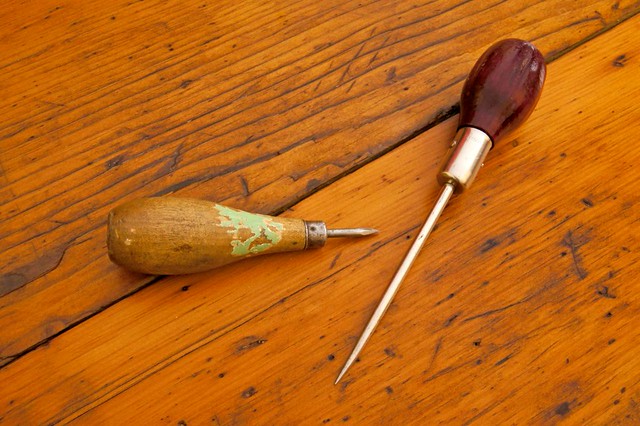
An awl [ɔːl/ɔl] is a pointed instrument for piercing small holes, as in leather or wood; used by shoemakers, saddlers, cabinetmakers, etc. The blade is differently shaped and pointed for different uses, as in the brad awl, saddler’s awl, shoemaker’s awl, etc. The word comes from Middle English a(u)l (awl), from Old English æl (awl, hook, fork), from Proto-West Germanic *al (awl), from Proto-Germanic *alaz (awl), from Proto-Indo-European *h₁ólos (awl) [source].

antique bodkins (& tweezers)

A bodkin [ˈbɒdkɪn] is a small sharp pointed tool for making holes in cloth or leather. A blunt needle used for threading ribbon or cord through a hem or casing. A hairpin. A dagger, or a sharp tool, like an awl, formerly used for pressing down individual type characters (e.g. letters) from a column or page in making corrections. It comes from Middle English boydekin (dagger) and possibly has Celtic roots [source].

Words marked with a * are reconstructions.

Proto-Celtic *minaweto- = awl
Old Irish (Goídelc) menad = awl
Middle Irish (Gaoidhealg) menad, menadh, menath, meanadh = awl, borer or pointed instrument used for drilling holes
Irish (Gaeilge) meana [ˈmʲan̪ˠə] = awl, bradawl, bodkin
Scottish Gaelic (Gàidhlig) minidh, meanaidh [minɪ] = shoemaker’s awl, small awl
Manx (Gaelg) mennee = awl, bradawl, pricker, stiletto
Proto-Brythonic *mɨnawed = awl (?)
Middle Welsh (Kymraec) mynawyd, minawed = awl, bradawl, bodkin
Welsh (Cymraeg) myn(i)awyd = awl, bradawl, bodkin (also written bin(i)ewid, binawad or byniawid)
bwyta uwd â mynawyd = to attempt the impossible (“to eat porridge with an awl”)
mynawydu, mynawydo = to pierce with an awl
mynawydaidd = awl-shaped
Middle Cornish (Cernewec) benewes = awl
Cornish (Kernewek) menowes = awl
Middle Breton (Brezonec) menauet = awl, bodkin, punch
Breton (Brezhoneg) minaoued = awl, bodkin, punch
minaoueder = maker of awls, bodkins or punches
minaouediñ = to punch

Etymology: unknown; possibly a substrate word [source].

Proto-Celtic *brazdos = thorn
Old Irish (Goídelc) brot = goad
Middle Irish (Gaoidhealg) brot, brud, brod = brotad = act of goading, urging
Irish (Gaeilge) brod [bˠɾˠod̪ˠ] = goad
broideadh = to prod, nudge, bite
Scottish Gaelic (Gàidhlig) brog [brog] = awl
brogan [brogan] = small awl, probe, poker
Manx (Gaelg) brod = goad, jab, nudge, prick, spur, stimulus, poker

Etymology: from Proto-Indo-European *bʰresdʰ-, from *bʰers- (top, tip, point). Words from the same roots include barley, bristle and brush in English, barr (pine needles) in Icelandic, bara (bread) in Welsh, Cornish and Breton, farina (flour, meal) in Italian, and harina (flour) in Spanish [source].

Another word for bodkin in Manx is burkan. Not sure where it comes from. A bodkin in Welsh is also a bwytgyn or botgyn, which come from Middle English boytekyn / boydekin (dagger, bodkin).

Sources: Wiktionary, Etymological Dictionary Of Proto Celtic, In Dúil Bélrai English – Old Irish glossary, eDIL – Electronic Dictionary of the Irish Language, Teanglann.ie, Am Faclair Beag, An etymological dictionary of the Gaelic language, Fockleyreen: Manx – English Dictionary, Online Manx Dictionary, Gaelg Corpus, Geiriadur Prifysgol Cymru, Lexicon cornu-britannicum : a dictionary of the ancient Celtic language of Cornwall, Gerlyver Kernewek, Devri : Le dictionaire diachronique du breton, Geriafurch, TermOfis

Sticky Glue

Words for glue and related things in Celtic languages.

Glue

Words marked with a * are reconstructions.

Proto-Celtic *gloidos = glue, lime
Old Irish (Goídelc) gláed [ˈɡlaːi̯ð] = glue
Middle Irish (Gaoidhealg) gláed, glaed, glaedh, glaod = glue, birdlime
gláedamail = glutinous, viscous
gláedid = to adhere, hold fast
gláeta = stuck, glued
Irish (Gaeilge) glae = glue, gluey, sticky, substance, slime
glaeigh = to glue
glaeúil = gluey, slimy
Scottish Gaelic (Gàidhlig) glaodh [gl̪ˠɯː] = comb, cud, honeycomb
glaodhach [gl̪ˠɯː.əx] = gluey, pasty, (act of) gluing
glaodhadh [gl̪ˠɯː.əɣ] = (act of) gluing, (act of) pasting
glaodhte [gl̪ˠɯːdʲə] = glued, pasted
Manx (Gaelg) gleiy = glue, adhesive, gum, jelly, mucilage
gleihagh = jelly, jellylike
gleighaghey = to (turn to, make) jelly
Proto-Brythonic *glʉd = glue (?)
Middle Welsh (Kymraec) glut, glud, glvd = glue, gum, birdlime
glud, glut = sticky, adhesive, glutinous, viscious, tenacious
glvdio, gludio = to glue, glum, paste, solder, fasten securely, cling, adhere, stick
Welsh (Cymraeg) glud [ɡlɨːd / ɡliːd] = glue, gum, birdlime, paste, mess, gluten
glud [ɡlɨːd / ɡliːd] = sticky, adhesive, glutinous, viscious, tenacious, constant, diligent, stubborn
glud(i)aidd = sticky, viscid, gluey, clammy
gludedd = tenacity
gludiad = a gluing together, agglutination, cohesion, glutinousness
glud(i)o = to glue, glum, paste, solder, fasten securely, cling, adhere, stick
glud(i)og = gluey, glutinous, gummy, viscous, sticky, clammy
glutgaul, glutgawl = jelly
llud = slime
Old Cornish glut = glue
Middle Cornish (Cernewec) glut = glue, viscous matter, paste
Cornish (Kernewek) glus = glue, adhesive, gum, resin
glusa = to glue
glusek, glujek = adhesive, sticky
Middle Breton (Brezonec) glut = glue
gludaff = to glue
Breton (Brezhoneg) glud = glue
gludañ = to glue
gludegezh = viscosity
gludek = sticky, viscous
gludenn = sticky matter, glue
gludennerezh = viscosity

Etymology: from Proto-Indo-European *gleyH- (to smear, to stick, glue, putty) [source].

Words from the same PIE roots include gluten, glue, clay and cloth in English, kline (to smear) in Norwegian, hlína (earth, soil, clay) in Czech, liiv (sand) in Estonian, Klei (clay) in German [source].

Proto-Celtic *glinati = to adhere
Old Irish (Goídelc) glenaid [ˈɡʲlʲe.nəðʲ] = to stick (to), cling, adhere
Middle Irish (Gaoidhealg) gláedid = to adhere, hold fast, stuck, glued
Irish (Gaeilge) glean = to stick, adhere, agglutinate
Proto-Brythonic *glɨnad = to stick (?)
Middle Welsh (Kymraec) glynu = to adhere, cleave, cling, stick, keep close, bind firmly
Welsh (Cymraeg) glynu [ˈɡlənɨ̞ / ˈɡləni] = to adhere, cleave, cling, stick, keep close, bind firmly
glynedig = stuck, sticking, sticky, adhesive, attached, connected
glyniad = adhesion, adherence, attachment
glynllyd = sticky
glynol = clinging, adherent, tenacious, sticky, adhesive, infectious
Middle Cornish (Cernewec) gleny, glyné = to cling to, cleave to, adhere, stick
Cornish (Kernewek) glena (orth) = to adhere (to), stick (to)
glenus = adhesive
glenysen = sticker
Middle Breton (Brezonec) *glenaff = to stick
englenaff = to stick

Etymology: from Proto-Indo-European *gli-né-H-ti, from *gleyH- (to smear, to stick, glue, putty) [source].

Middle Irish (Gaoidhealg) gliú = glue, adhesive stuff
Irish (Gaeilge) gliú [ɟlʲuː] = glue
gliúáil = to glue
gliúch = gluey
Scottish Gaelic (Gàidhlig) gluimh
Manx (Gaelg) glooie = glue, adhesive, slime
Welsh (Cymraeg) gliw = glue
gliwaidd = gluey, sticky
gliwio = to glue

Etymology: from English glue, or from Middle English glew [ɡliu̯] (glue, birdlime, tar, resin), from Old French glu (glue, birdlime), from Late Latin glūs, from Latin glūten (glue), from Proto-Italic *gloiten, from Proto-Indo-European *glóh₁ytn̥, from *gleyH- (to smear, to stick, glue, putty) [source].

Sources: Wiktionary, Etymological Dictionary Of Proto Celtic, In Dúil Bélrai English – Old Irish glossary, eDIL – Electronic Dictionary of the Irish Language, Teanglann.ie, Am Faclair Beag, An etymological dictionary of the Gaelic language, Fockleyreen: Manx – English Dictionary, Online Manx Dictionary, Gaelg Corpus, Geiriadur Prifysgol Cymru, Lexicon cornu-britannicum : a dictionary of the ancient Celtic language of Cornwall, Gerlyver Kernewek, Devri : Le dictionaire diachronique du breton, Geriafurch, TermOfis