Childish Infants

Words for baby, infant and related things in Celtic languages.

IMG_5631

Words marked with a * are reconstructions.

Old Irish (Goídelc) lenab = baby, child, infant
lenbaide = childish, puerile
lenbaidecht = childishness, childish pursuits, childish play
Middle Irish (Gaoidhealg) lenap, lenab, lenam, lenb, lenbh, lenabh = baby, child, infant; young man, youth, boy
lenbán, lelbán = infant, young child
lenbdacht = infancy, childhood, childish pursuits
lenbaide, lenbhaidhe = childish, puerile
lenbaidecht, lenmaidecht = childishness, childish pursuits, childish play
Irish (Gaeilge) leanbh [ˈlʲan̪ˠəvˠ / ˈl̠ʲanˠu(ː)] = child
leanbaí = child-like, innocent, childish, puerile
leanbaí = childhood, childishness, puerility
leanb(h)án = little child, baby, darling
leanbhaois = (age of) childhood, dotage
Scottish Gaelic (Gàidhlig) leanabh [l̪ʲɛnəv] = baby, (young) child, babe
leanabhachd [l̪ʲɛnəbəxg] = infancy, childhood, childishness
leanabhaidh [l̪ʲɛnəbɪ] = childish, infantile
leanabhan [l̪ʲɛnəvan] = infant
Manx (Gaelg) lhiannoo = baby, child, infant, family
lhiannooagh = infantile, babyish, babylike, puerile, boyish; girlish, infantile

Etymology: unknown [source].

Middle Irish (Gaoidhealg) páitse, pāitside, pāitsidhe = a page, attendant, child
Irish (Gaeilge) páiste [ˈpˠɑːʃtʲə / ˈpˠaːʃtʲə] = child
páistiúil = child-like, childish
páistiúilacht = childishness
Scottish Gaelic (Gàidhlig) pàiste [paːʃdʲə] = child, infant
pàistean [paːʃdʲan] = small infant
pàisteanach [paːʃdʲanəx] = childish, infantile
pàisteil [paːʃdʲal] = babyish
Manx (Gaelg) paitçhey [ˈpɛːtʃə] = child, brat, kid, (boy) page

Etymology: from Old French page (page – youth attending a person of high degree), from Late Latin pagius (a servant), possibly from Latin pāgus (district, region, countryside, countryfolk), or from Ancient Greek παιδίον (paidíon – young child) [source].

Irish (Gaeilge) báb = baby, maiden (maiden)
bábán = small baby
bábánta = babyish, innocent
bábóg [ˈbˠabˠɔɡ] = doll
Scottish Gaelic (Gàidhlig) bàban† = baby
Manx (Gaelg) babban = baby, babe, doll
Middle Welsh (Kymraec) baban = baby, infant, doll, puppet
Welsh (Cymraeg) baban [ˈba(ː)ban] = baby, infant, doll, puppet
babanaidd = infant(ile), babyish, childish, childlike
babandod [baˈbandɔd] = babyhood, infancy, childhood, babyishness, childishness
babanu = to baby, coddle, pamper, spoil, cherish
Middle Cornish (Cernewec . Kernuak) baban = babe, child
Cornish (Kernewek) baban [ˈba.ban] = baby, baby doll
babi = baby
Breton (Brezhoneg) babig(ed), baba = baby
babigour = childcare worker
babik = childish, babyish, puerile

Etymology: from Middle English babe, baban (baby, infant), and/or Old English *baba (a male child), from Proto-West Germanic *babō, from Proto-Germanic *babô. Words from the same roots include baby and babe in English baby (baby) in Dutch, baby (table football, baby, darling, sweetheart) in French, and baby (child, baby, small shot of whisky, tripod) in Italian [source].

For other words for child(ren) see the Cowherd, boy, child post.

The Fastest Way to Learn Japanese Guaranteed with JapanesePod101.com

Sources: Wiktionary, Etymological Dictionary Of Proto Celtic, In Dúil Bélrai English – Old Irish glossary, eDIL – Electronic Dictionary of the Irish Language, Teanglann.ie, Am Faclair Beag, An etymological dictionary of the Gaelic language, Fockleyreen: Manx – English Dictionary, Online Manx Dictionary, Gaelg Corpus, Geiriadur Prifysgol Cymru, Lexicon cornu-britannicum : a dictionary of the ancient Celtic language of Cornwall, Gerlyver Kernewek, Devri : Le dictionaire diachronique du breton, Geriafurch, TermOfis


What?

Words for what? which? who? where? and related things in Celtic languages.

What?
What?

Words marked with a * are reconstructions.

Proto-Celtic *kʷid? = what?
Old Irish (Goídelc) cid? = what?
cote, cate, catte [ˈko.d̠ʲe] = of what sort is …? what is …?
Middle Irish (Gaoidhealg) cote, coteeet, codde, cate, cati, cáte = what (is)?
Irish (Gaeilge) cad? [kad̪ˠ] = what? where? (in Munster)
cad é? [kəd̪ˠˈeː] = what? (in Connacht & Ulster)
cad é mar (atá tú)? = how (are you)? (in Ulster)
céard? [ceːɾˠd̪ˠ] = what? (in Connacht)
goidé? [ɡəˈtʲeː] = what? (in Connacht & Ulster)
cad chuige? [kɑt̪ˠ ˈxɪɟɪ / kəˈt̪ˠiɟə] = why? (in Mayo,& Ulster)
cad ina thaobh? [ˌkɑn̪ˠəˈheːvˠ] = why? (in Munster)
Scottish Gaelic (Gàidhlig) ciod? [kʲid] = what?
ciod air bith = whichever, whatever
ciod e? = what?
ciod thuige? [kʲid hugʲə] = why?
dè? [dʲeː] = what? who?
dè man? dè mar? [deː man / dʲeː mar] = how?
Manx (Gaelg) cre? = what?
cre fa? = why?
cre wooad? = how much?
quoid? = how many? how much?
Old Welsh (Kembraec) pa? = what? which?
Middle Welsh (Kymraec) pa? py? = what? which?
paham? pam? = why? reason, cause, question
Welsh (Cymraeg) pa? [paː] = what? which?
paham? pam? = why? reason, cause, question
pa bryd? = when? at what time?
pa un? p’un? = who(m)? which (one)?
Middle Cornish (Cernewec) pe? pa? py? = what? which? where?
pa le? = where place? where?
pahan = what
perag? prâg? = for what? wherefore? why?
pattel? patla? fattel? fatla? = how? by what means?
pe? pa? py? =
Cornish (Kernewek) py? pe? = what? which?
py lies? = how many?
pyth? = what?, that which
ple? = where?
prag? = why? what for?
fatla? = how?
Old Breton pe? = what?
Middle Breton (Brezonec) pe? pé? = what?
peguement? pe quement? = how much? how many?
pe en lech? = where?
penaus? penos? = how?
perac? pe-rac? = why?
petra? = who? what?
Breton (Brezhoneg) pe? [peː] = which one?
pegeit? [peˈɡɛjt] = how long? how far?
pegement? [pe.ˈɡẽ.mːɛnt] = how much? how many?
pegoulz? [pe.ˈɡuls] = when?
pehini? [peˈ(h)ĩːni] = which one?
pelec’h? [peˈlɛːx] = where?
penaos? [pẽ.ˈnɔːs] = how?
perak? [pe.ˈrɑːk] = why?
peseurt? [peˈsøʁt] = what? what kind?
petra? [ˈpe.tʁa] = who? what?

Etymology: from Proto-Indo-European *kʷid (what? which?) [source]. Words from the same PIE roots include çë (what?) in Albanian, kas (that, which, who) in Latvian, что (što – that, what, which) in Russian, che (what, which) in Italian, ¿qué? (what? which?) in Spainish [source].

Proto-Celtic *kʷei? = who?
Old Irish (Goídelc) cía = what? where? who? how? if, although
cía airet? = how long?
cía airm? cairm? airm? = where?
cía chruth? = how?
cía méit? = how many? how much?
Middle Irish (Gaoidhealg) cía? ce? ci? = who? what? how? where?
Irish (Gaeilge) cá? = what? how? where?
cá hait? = (at) what place? where?
cá huair? = at what hour? when?
cá fhad? = how long?
cá mhéad? = how much? how much?
cé? = who?
cén? = what? which?
Scottish Gaelic (Gàidhlig) cò? [koː] = who(m)? where?
cò idir = whoever
cò ann? = wherein?
cò as? [ko as] = where from?
Manx (Gaelg) quoi? [kwəi] = who? whom? which? whichever, who?
quoi erbee = who(so)ever, whom(so)ever
quoi jeu? = which one?
quoid? c’wooad? = how many? how much?
Proto-Brythonic *puɨ? = who?
Middle Welsh (Kymraec) pwy? = who(m)? what?
pwy bynnac, pwybynnag = whoever
Welsh (Cymraeg) pwy? [puːɨ̯ / pʊi̯] = who(m)? what?
pwy bynnag = whoever
Middle Cornish (Cernewec) pew? pyw? p(y)u? piwa? = who?
pywpenag, piwha bennac, piwa bennac, pyu penagh = who(s)ever
Cornish (Kernewek) piw? [piˑʊ] = who?
piw penag, piw pynag = whoever
piw? = who?
Old Breton (Brethonoc) piu? = who?
Middle Breton (Brezonec) piu? piou? = who?
piupennac, piu pennac, piou bennac = whoever
Breton (Brezhoneg) piv? [piw] = who?
piv bennak = whoever
pivelezh = identity

Etymology: from Proto-Indo-European *kʷís (who? what? which, that) [source]. Words from the same PIE roots include ca (than, as) in Romanian, hve (how, like, as) in Icelandic, how and when in English, and hoe (how) in Dutch [source].

Language skills in just 10 minutes a day with Ling

Sources: Wiktionary, Etymological Dictionary Of Proto Celtic, In Dúil Bélrai English – Old Irish glossary, eDIL – Electronic Dictionary of the Irish Language, Teanglann.ie, Am Faclair Beag, An etymological dictionary of the Gaelic language, Fockleyreen: Manx – English Dictionary, Online Manx Dictionary, Gaelg Corpus, Geiriadur Prifysgol Cymru, Lexicon cornu-britannicum : a dictionary of the ancient Celtic language of Cornwall, Gerlyver Kernewek, Devri : Le dictionaire diachronique du breton, Geriafurch, TermOfis

Unlimited Web Hosting - Kualo

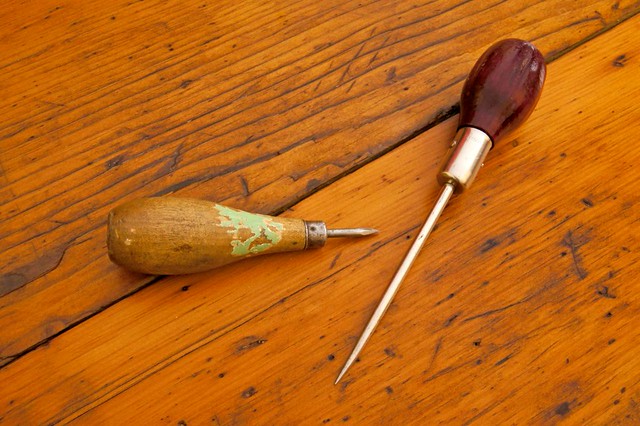
Awls & Bodkins

Words for awl, bodkin and related things in Celtic languages.

Awls

An awl [ɔːl/ɔl] is a pointed instrument for piercing small holes, as in leather or wood; used by shoemakers, saddlers, cabinetmakers, etc. The blade is differently shaped and pointed for different uses, as in the brad awl, saddler’s awl, shoemaker’s awl, etc. The word comes from Middle English a(u)l (awl), from Old English æl (awl, hook, fork), from Proto-West Germanic *al (awl), from Proto-Germanic *alaz (awl), from Proto-Indo-European *h₁ólos (awl) [source].

antique bodkins (& tweezers)

A bodkin [ˈbɒdkɪn] is a small sharp pointed tool for making holes in cloth or leather. A blunt needle used for threading ribbon or cord through a hem or casing. A hairpin. A dagger, or a sharp tool, like an awl, formerly used for pressing down individual type characters (e.g. letters) from a column or page in making corrections. It comes from Middle English boydekin (dagger) and possibly has Celtic roots [source].

Words marked with a * are reconstructions.

Proto-Celtic *minaweto- = awl
Old Irish (Goídelc) menad = awl
Middle Irish (Gaoidhealg) menad, menadh, menath, meanadh = awl, borer or pointed instrument used for drilling holes
Irish (Gaeilge) meana [ˈmʲan̪ˠə] = awl, bradawl, bodkin
Scottish Gaelic (Gàidhlig) minidh, meanaidh [minɪ] = shoemaker’s awl, small awl
Manx (Gaelg) mennee = awl, bradawl, pricker, stiletto
Proto-Brythonic *mɨnawed = awl (?)
Middle Welsh (Kymraec) mynawyd, minawed = awl, bradawl, bodkin
Welsh (Cymraeg) myn(i)awyd = awl, bradawl, bodkin (also written bin(i)ewid, binawad or byniawid)
bwyta uwd â mynawyd = to attempt the impossible (“to eat porridge with an awl”)
mynawydu, mynawydo = to pierce with an awl
mynawydaidd = awl-shaped
Middle Cornish (Cernewec) benewes = awl
Cornish (Kernewek) menowes = awl
Middle Breton (Brezonec) menauet = awl, bodkin, punch
Breton (Brezhoneg) minaoued = awl, bodkin, punch
minaoueder = maker of awls, bodkins or punches
minaouediñ = to punch

Etymology: unknown; possibly a substrate word [source].

Proto-Celtic *brazdos = thorn
Old Irish (Goídelc) brot = goad
Middle Irish (Gaoidhealg) brot, brud, brod = brotad = act of goading, urging
Irish (Gaeilge) brod [bˠɾˠod̪ˠ] = goad
broideadh = to prod, nudge, bite
Scottish Gaelic (Gàidhlig) brog [brog] = awl
brogan [brogan] = small awl, probe, poker
Manx (Gaelg) brod = goad, jab, nudge, prick, spur, stimulus, poker

Etymology: from Proto-Indo-European *bʰresdʰ-, from *bʰers- (top, tip, point). Words from the same roots include barley, bristle and brush in English, barr (pine needles) in Icelandic, bara (bread) in Welsh, Cornish and Breton, farina (flour, meal) in Italian, and harina (flour) in Spanish [source].

Another word for bodkin in Manx is burkan. Not sure where it comes from. A bodkin in Welsh is also a bwytgyn or botgyn, which come from Middle English boytekyn / boydekin (dagger, bodkin).

Sources: Wiktionary, Etymological Dictionary Of Proto Celtic, In Dúil Bélrai English – Old Irish glossary, eDIL – Electronic Dictionary of the Irish Language, Teanglann.ie, Am Faclair Beag, An etymological dictionary of the Gaelic language, Fockleyreen: Manx – English Dictionary, Online Manx Dictionary, Gaelg Corpus, Geiriadur Prifysgol Cymru, Lexicon cornu-britannicum : a dictionary of the ancient Celtic language of Cornwall, Gerlyver Kernewek, Devri : Le dictionaire diachronique du breton, Geriafurch, TermOfis

Nests

Words for nest and related things in Celtic languages.

Nest

Words marked with a * are reconstructions.

Proto-Celtic *nizdos = nest
Old Irish (Goídelc) net = nest
Middle Irish (Gaoidhealg) net, neid, nead, (n)nit = nest
Irish (Gaeilge) nead [nʲad̪ˠ] = nest, bed, lair, snug abode, home, den, close group, gang
neadaigh = to nest, nestle, bed, set, lodge, settle
neadaím = to nestle
neadaireacht = nesting, nest-buildling
neadú = nesting, settling, nestling, bedding
Scottish Gaelic (Gàidhlig) nead [n̪ʲed] = nest, circular hollow
neadach = abounding in nests
neadachadh [n̪ʲedəxəɣ] = (act of) nesting
neadaich [n̪ʲedɪç] = nest!, to nestle, house, lie, build or make a nest
neadan [n̪ʲedan] = little nest
Manx (Gaelg) edd = nest, hat, cap
Proto-Brythonic *nɨθ [ˈnɨːθ] = nest
Middle Welsh (Kymraec) nyd, nyth, nŷth = nest
nythaid, nytheid = nestful (of chicks, etc), brood
nythu = to nest, nestle, lie snugly
Welsh (Cymraeg) nyth [nɨːθ, niːθ] = nest
nythaid = nestful (of chicks, etc), brood
nythfa [ˈnəθva] = a colony (of birds or insects)
nythiad = nesting
nythle = nesting place, shelter, pigeon-hole, box
nythu [ˈnəθɨ̞, ˈnəθi] = to nest, nestle, lie snugly
Old Cornish neid = nest
Middle Cornish (Cernewec) nyth, nŷth, neith = nest
Cornish (Kernewek) neyth = nest
neythik = alcove
Old Breton (Brethonoc) nith = nest
Middle Breton nez = nest
Breton (Brezhoneg) neizh, nezh [ˈnɛjs] = nest
neizhadur = nesting
neizhiad [ˈnɛjzjat] = nested
neizhiañ [ˈnɛj.zjã] = to nest, to live
neizhiata = to look for nests
neizhiet = niche, recess

Note: the Manx word edd was probably nedd originally, but the n was rebracketed as belonging to the definite article, so y nedd became yn edd, just as a napron became an apron in English [source].

Etymology: from Proto-Indo-European *nisdós, from *ni (down) & *sed (sit) = “where [the bird] sits down” [source]. Words from the same PIE roots include neth (sprout, bud) in Albanian, նստել [nəsˈtel] (to sit, sink, fit, shrink) in Armenian, lizdas (nest) in Lithuanian, hnízdo (nest) in Czech, नीड़ (nīṛ – nest) in Hindi, nest, nidate (to become implanted in) and niche in English, Nest (nest, small village) in German, and nido (nest, home, nursery school) in Italian [source].

Old Irish (Goídelc) fóir = nest, lair, den
Middle Irish (Gaoidhealg) fóir, foir = site, area, confine, abode
Irish (Gaeilge) fáir = hen’s nest, bed, lair
fáireog = (little) nest (for hen)

Etymology: uncertain [source].

Sources: Wiktionary, Etymological Dictionary Of Proto Celtic, In Dúil Bélrai English – Old Irish glossary, eDIL – Electronic Dictionary of the Irish Language, Teanglann.ie, Am Faclair Beag, An etymological dictionary of the Gaelic language, Fockleyreen: Manx – English Dictionary, Online Manx Dictionary, Gaelg Corpus, Geiriadur Prifysgol Cymru, Lexicon cornu-britannicum : a dictionary of the ancient Celtic language of Cornwall, Gerlyver Kernewek, Devri : Le dictionaire diachronique du breton, Geriafurch, TermOfis

Shameful Disgrace

Words for shame, disgrace and related things in Celtic languages.

Shame.

Words marked with a * are reconstructions.

Proto-Celtic *meblā = shame, disgrace
Old Irish (Goídelc) mebal, mebul [ˈmʲe.βal / ˈmʲe.βul] = shame, disgrace
Middle Irish (Gaoidhealg) mebal, mebul, meabhal = (a cause of) shame, a disgrace, deciet, guile, treachery
Irish (Gaeilge) meabhal = shame, disgrace, deceit, treachery
meabhlach = shameful, disgraceful, deceitful, treacherous, deceptive, illusory, seductive, beguiling
meabhlaigh = to shame disgrace, deceive, betray, seduce
meabhlaire = deceitful, guileful person, deceiver, betrayer, seducer
meabhlaireacht = (act of) deceiving, deceptiong, treachery
meabhlú = deception, betrayal, seduction
Scottish Gaelic (Gàidhlig) meabhal = perfidy, shame, reproach, fraud, deceit (archaic)
meabhalach = deceitful, treacherous, fraudulent, shameful (archaic)
Proto-Brythonic *meβl = shame, disgrace
Middle Welsh (Kymraec) mefyl, mewil, meuil, meuel, meuyl, mefl = shame, disgrace, dishonour, reproach, insult
meuyluethyant = shameful failing or fault
meuylhaet = reproach, abuse
mefylwr = scoundrel, rascal
meuyllwryayth, mefylwryaeth = (cause of) shame, disgrace, dishonour
Welsh (Cymraeg) mefl = shame, disgrace, dishonour, reproach, insult, blemish, blot, fault, flaw
meflu = to disgrace, put to shame, stain, spoil, soil, foul
meflfethiant = shameful failing or fault
meflhau = to disgrace, put to shame
meflus = faulty, imperfect
meflwriaeth = (cause of) shame, disgrace, dishonour
Middle Cornish (Cernewec) meul, meaul = mischief, bad luck
Cornish (Kernewek) mewl = bad luck, misfortune

Etymology: from the Proto-Indo-European *mebʰ- (to blame). Words from the same root include αξιόμεμπτος (axiómemptos – reprehensible, blameworthy) and άμεμπτος (ámemptos – spotless, unblemished) in Greek [source].

Proto-Celtic *metom = blight, decay, shame, failure, error
Old Irish (Goídelc) meth = blight, decay, decline, wasting
Middle Irish (Gaoidhealg) meth, meath = decay, blight, wasting, failure
Irish (Gaeilge) meath = decline, decay, fail, deteriorate, to waste, fritter away
meathán = weakling, sickly person, coward
meathlaigh = to decline, decay, fail, deteriorate, degenerate
meatacht = decline, decay, craveness, cowardice
meathlaigh = to decline, decay, fail, deteriorate, degenerate
meathlaíocht = decline, decay, failure
Scottish Gaelic (Gàidhlig) meath [mɛ] = fading (away), degenerating, degeneration, taunting, jeering, jibing
meathach [mɛ.əx] = degenerate
meathaichte [mɛ.ɪçdʲə] = degenerate, decayed
Middle Welsh (Kymraec) meth = failure , failing, deficiency, fault, defect, error, mistake
methyant, methiant = failure, mistake, error, failing, defect
methu, methy = to fail, be unsuccessful, be mistaken
Welsh (Cymraeg) meth [meːθ] = failure , failing, deficiency, fault, defect, error, mistake
methadwy = faillible, perishable
methfodd = failing, fault
methiad = failure, insolvency
methiant = failure, mistake, error, failing, defect
methu = to fail, be unsuccessful, be mistaken
Middle Cornish (Cernewec) medh, mêdh = shame, bashfulness
medha = to be ashamed
Cornish (Kernewek) meth = shame
perthi meth = to be ashamed (of)
methardak = stalemate
methek = ashamed, bashful, shy
methus = embarrassing, shameful
Old Breton (Brethonoc) meplaom = to be ashamed
Middle Breton mezz, mez = shame
mezeguez = confusion
mezus = ashamed, shameful, disgraceful
Breton (Brezhoneg) mezh [ˈmeːs] = shame
mezhadenn = affront, insult, slight
mezhañ = to intimidate, bully, cow
mezhata = to confuse, confound, embarras
mezhegezh = confusion
mezhek [ˈmeː.zɛk] = ashamed, shameful, disgraceful
mezhekadenn = humiliation
mezhekaat = to humiliate
mezhus [ˈmeː.zys] = ashamed, shameful, disgraceful

Etymology: uncertain – possibly from a non-Indo-European language, or related to maoth (tender, soft, weak) in Irish, which comes from Proto-Celtic *moytos (tender), from Proto-Indo-European *meyh₁- (mild, soft), from which we get mite (mild, moderate, meek) in Italian, and mitigation in English [source].

Proto-Celtic *nāryā = modesty, magnanimity
Old Irish (Goídelc) náire [ˈn̪aː.ɾʲe] = shame, shyness, reluctance
Middle Irish (Gaoidhealg) náire, náre, naire = shamefacedness, bashfulness, diffidence, backwardness, reluctance, modesty, generosity
náirech = diffident, shy, modest
náiríne = shame, affronted modesty
innáire [ˈin͈aːrʲə] = modesty, generosity
Irish (Gaeilge) náire [ˈn̪ˠɑːɾʲə / ˈn̪ˠaːɾʲə] = shame, sense of shame, decency, modesty
náireach [ˈn̪ˠɑːɾʲəx] = shameful, bashful, modest, diffident
náireachán = bashful, diffident, person
náirigh = to shame
náiriú = shame, disgrace
Scottish Gaelic (Gàidhlig) nàire [n̪ˠaːrʲə] = embarrassment, shame, disgrace, ignominy, bashfulness
nàireach [n̪ˠaːrʲəx] = shameful, bashful, coy, modest
nàireachadh [n̪ˠaːrʲəxəɣ] = (act of) shaming
nàireil [n̪ˠaːrʲal] = disgraceful, shameful
nàirich [n̪ˠaːrʲɪç] = shame, make ashamed!
Manx (Gaelg) nearey = disgrace, shame
nearaghey, naaraghey = to abash, disgrace, shame
naareydagh = shameful, scandalous

Etymology: possibly related to Proto-Celtic *nāro- (noble, great-hearted), from Proto-Indo-European *h₂enr (manly strength) [source].

Old Irish (Goídelc) méla = disgrace, shame
Middle Irish (Gaoidhealg) méla, meala, mela = shame, disgrace, discomfiture, mortification
mélach = ashamed, disappointed
Irish (Gaeilge) méala [ˈmʲeːlˠə] = humiliation, ignominy, grief, sorrow
méalach [ˈmʲeːlˠəx] = lamentable, lamenting, sorrowful, humiliating, fault-finding
méalacht = (state of) sorrow, lamentation
méalaigh = to humble, humiliate, bring to grief
Scottish Gaelic (Gàidhlig) mèala = reproach, grief

Etymology: unknown

Sources: Wiktionary, Etymological Dictionary Of Proto Celtic, In Dúil Bélrai English – Old Irish glossary, eDIL – Electronic Dictionary of the Irish Language, Teanglann.ie, Am Faclair Beag, An etymological dictionary of the Gaelic language, Fockleyreen: Manx – English Dictionary, Online Manx Dictionary, Gaelg Corpus, Geiriadur Prifysgol Cymru, Lexicon cornu-britannicum : a dictionary of the ancient Celtic language of Cornwall, Gerlyver Kernewek, Devri : Le dictionaire diachronique du breton, Geriafurch, TermOfis

Each & Every

Words for each, every, all and related things in Celtic languages.

Each & Every

Words marked with a * are reconstructions.

Proto-Celtic *kʷākʷos = everyone, everybody, each, every
Transalpine Gaulish papos = each, every (?)
Old Irish (Goídelc) cách, cach [kax] = each, every, all, everyone
cach la céin = one at a time
cechtar = both, each
Middle Irish (Gaoidhealg) cach, cech [kax / kex] = each, every, all,
cách, cach = the one, each, everyone, all, the rest
cechtar = each (of), both (of), either (of)
Irish (Gaeilge) gach [ɡax / ɡɑx] = every, each, everything
gach rud = everything
gach aon, gach uile = every
gach aon duine = each, every, person, everybody
gach bliain, gach uile bhliain = every year
ceachtar [ˈcaxt̪ˠəɾˠ] = either, one or other of two
Scottish Gaelic (Gàidhlig) gach [gax] = every, each, all, per
gach a chèile = each other
gach bliadhna = every year, annually
gach dùrachd = best regards, yours sincerely
gach pearsa = per capita
gach ràith = every season, seasonally, every quarter, quarterly
gach rud = everything
gach uile [gax ulə] = every, each
Manx (Gaelg) dagh [dax] = each, every, both, singular
gagh = each, every
dagh blein, gagh blein = annually, yearly
dagh laa, gagh laa = daily, every day
gagh-laa = ordinary
dagh ooilley, dagh un = every
dagh unnane = every one
dagh ynnyd, dagh ooilley ard, dagh ooilley raad = everywhere
dagh ooilley nhee = everything
dagh ooilley phersoon = everybody
dagh ooilley raad = everywhere
cagh = all, everyone, everybody
cagh elley = everyone else, rest
cagh yt cheilley = reciprocal
Proto-Brythonic *pọb, *pāpos = every, each (?)
Old Welsh (Kembraec) paup = every, each
Middle Welsh (Kymraec) pop, pob = every, each, all, all manner of, every type of
pobed = entirety
pobua, pop wa, pob va = everywhere, every place
pob uann, popmann, pop mann = everywhere, every place, every part
pob un, pob vn, pobun everyone, everybody, each one, every (single) one, all
Welsh (Cymraeg) pob [poːb] = every, each, all, all manner of, every type of
pob dim, popeth = everything
pobfa, pob fa = everywhere, every place
pob lle poblle = every place, everywhere
poblleath, pobmanrwydd = ubiquity, omnipresence
pobman, pob man = everywhere, every place, every part
pobun, pob un everyone, everybody, each one, every (single) one, all
Middle Cornish (Cernewec) pép, péb = every one
pob, póp, pôb, pôp, pûb, pûp = every, all
pop, pób = every, each
pepynag, pepenag = whatsoever, whatever
Cornish (Kernewek) peub, pob = all, everybody, everyone
pub = each, every
pub eur = always
pub huni = everybody, everyone
pub le = everywhere
pub pres, pub prys, pub termyn = always, all the time
pub tra, puptra = everything
pub dedhyek, pubdedhyek = daily
pubonan, pubonen = everybody
Old Breton (Brethonoc) pop = each, every
Middle Breton (Brezonec) pep = each, every
pep vnan = each and every, everybody, everyone
Breton (Brezhoneg) pep [pep] = each, every
a bep eil = alternatively in turns
bemdez [ˈbɛmde(s)] = every day
bemnoz [ˈbɛmnos] = every night
pep hini, pep unan = each and every, everybody, everyone
(a) pep lec’h = everywhere
pep tro = every time

Etymology: either from Proto-Indo-European *kʷo-h₃kʷ-os, from *kʷós (which, what) and *h₃kʷ-os (to see), or from PIE *kʷeh₂-kʷos [Source]. Words from the same roots possibly include how in English, hoe (how) in Dutch, hve (how, like as) in Icelandic, con (with, together) in Italian, com (with, against, together) in Portuguese, cu in Romanian, and cual (like, as, in the manner of) in Spanish [Source].
.

Proto-Celtic *olyos = all
Gaulish ollos = everything, everyone (?)
Old Irish (Goídelc) (h)uile, (h)ule [(h)ˈulʲe] = all, whole
Middle Irish (Gaoidhealg) uile [ˈulʲə] = all, every, the whole, everyone
Irish (Gaeilge) uile [ˈɪlʲə / ˈɛlʲə] = all, every, whole, wholly, entirely
uilechoiteann = general, universal
uilechumhachtach = omnipotent, almighty
uilefheasach = omniscient
uilefhóinteach = all-purpose
uileghabhálach = comprehensive, compendious, exhaustive
uileláithreach = omnipresent, ubiquitous
uiliteach = omnivorous
Scottish Gaelic (Gàidhlig) uile [ulə] = all, every, entire, total
uil-fhiosrach = all-knowing, omniscient
uile-amasach [ɯl aməsəx] = all-purpose
uile-bhiast = monster
uile-chinnteachd = surety, certainty
uile-choitcheann [ulə xɔhdʲçən̪ˠ] = universal
uileas [uləs] = all, every
Manx (Gaelg) ooilley [ulʲə / ulʲu] = all, whole, entire, everyone, everybody
ooilley cooidjagh all together
ooilley kiart = all right, alright, OK
ooilley dy lieragh = altogether
ooilley mygeart = all around, everywhere, round about, rampant
ooilley-niartal = almighty
ooilley smaghtagh = totalitarian
Old Welsh (Kembraec) hol = all, the whole, everything, everyone
Middle Welsh (Kymraec) oll, holl = all, the whole, everything, everyone, holla()l
hollaul, hollawl, hollaỽl = whole, complete, entire
holl gyuoethaỽc, hollgyuoethauc, hollgyuoethawc = almighty, omnipotent, all-powerful
Welsh (Cymraeg) holl, oll [hoːɬ] = all, the whole, everything, everyone, entire, complete, total, completely, entirely
oll yn oll = all in all
(h)ollfydol = cosmic, universal, global
(h)ollgyfoethog = almighty, omnipotent, all-powerful
(h)ollol = whole, complete, entire
(h)olloldeb, hollolrwydd = universality, generality
(h)ollwybodol = omniscient, all-knowing, know-alls
(h)ollysydd = omnivore
Middle Cornish (Cernewec) oll, ol = all, every
olgallusec, olgalluster = almighty
Cornish (Kernewek) oll = all, every, entirely, everything
oll termyn = enduring, etermal, everlasting
olldalghus = comprehensive, global
ollgallos = omnipotence
ollgallosek, ollgallojek = almighty
ollgemmyn, ollgebmyn = general
ollgompassus = holistic
ollvys, ollves = universe
ollvysel, ollvesel = global, universal
Old Breton (Brethonoc) oll = everything, everyone
Middle Breton (Brezonec) holl, hol, oll = everything, everyone
Breton (Brezhoneg) holl [ɔl] = everything, everyone, completely, totally
holl-razh = completely
hollad = total
hollat = global, total
hollbad = perpetual, permanent
hollegezh = generality
hollegour [ɔˈleːɡur] = generalist
hollek [ˈɔlːek] = general, uncountable
hollved [ˈɔlvet] = universe

Etymology: from Proto-Indo-European *h₂olyos, from *h₂el- (beyond, other) [source]. Words from the same roots include altro (other, another, more, further) in Italian, autre (another) in French, otro (other, another) in Spanish, allur (all, everybody) in Icelandic, al (all, any) in Danish, and all and alter(native) in English [source]

Sources: Wiktionary, Etymological Dictionary Of Proto Celtic, In Dúil Bélrai English – Old Irish glossary, eDIL – Electronic Dictionary of the Irish Language, Teanglann.ie, Am Faclair Beag, An etymological dictionary of the Gaelic language, Fockleyreen: Manx – English Dictionary, Online Manx Dictionary, Gaelg Corpus, Geiriadur Prifysgol Cymru, Lexicon cornu-britannicum : a dictionary of the ancient Celtic language of Cornwall, Gerlyver Kernewek, Devri : Le dictionaire diachronique du breton, Geriafurch, TermOfis


Who?

Words for who and related things in Celtic languages.

Who?

Words marked with a * are reconstructions.

Proto-Celtic *kʷei = who
Old Irish (Goídelc) cía, ce, ci, cia = who? what? where? how? although, if
cía airet? = how long?
cía airm? = where?
cía chruth? = how?
cía méit? = how many? how much?
Middle Irish (Gaoidhealg) cía, cia, cá = who? what? how? where?
cia airm? = what place? where?
cia eret? cia airet? = how long?
Irish (Gaeilge) cé? [keː] = who? whom?
cén? [ceːnˠ] = what? which?
cén áit? = where? at what place?
cén chaoi? = how? in what whay?
cén dóigh? = how? in what way?
cén fáth? = why? for what reason?
cén uair? = when? at what time?
cér(b)? = who is?
cér(bh)? = who was?
Scottish Gaelic (Gàidhlig) [koː] = who(m)? where?
ge be cò = whoever, whosoever
cia? [kʲa] = how? what? which? who?
cia mheud? [kʲaˈviəd] = how many?
cia ás? [kʲaˈas] = whence? where from?
cia minig? = how often?
cia fhada? [kʲaˈadə] = how long?
cia airson? = why?
Manx (Gaelg) quoi [kwəi] = who? whom? which, whichever, who
quoi erbee = who(so)ever, whom(so)ever
quoi s’lesh = whose
quoi jeu? = which one?
Proto-Brythonic *puɨ = who (?)
Old Welsh (Kembraec) pui = what
Middle Welsh (Kymraec) pwy, puy = who(m), whose, what, which, how
pwy … pynac = whichever, whatever
Welsh (Cymraeg) pwy [puːɨ̯ / pʊi̯] = who(m), whose, what, which, how
pwy bynnag = who(so)ever, whichever, what(so)ever
pwy … bynnag = whichever, whatever
pwyma, pwyna = what-d’you-call-him/her
Middle Cornish (Cernewec) pyw, pu = who, whom, which
pywpenag, pwy-penag, piwha bennac = whosoever
Cornish (Kernewek) piw [piˑʊ] = who
piw penag / pynag [piˑʊ] = whoever
Old Breton (Brethonoc) piu = who
Middle Breton (Brezonec) piu = who
Breton (Brezhoneg) piv [ˈpiw] = who
piv bennak = whoever
piv din-me = thing, thingamajig, whatstheirface (a person whose name is unknown)

Etymology: from Proto-Indo-European *kʷís (who, what, which, that) [source]. Words from the same root include how, whether and status quo in English, hoe (how) in Dutch, hver (every, each, everyone) in Danish, qui (who, whom, which, that) in French, chi (who, whom, whoever) in Italian, com (with, against, alongside, together) in Portuguese, and który (what, which, that, who) in Polish [source].

Sources: Wiktionary, Etymological Dictionary Of Proto Celtic, In Dúil Bélrai English – Old Irish glossary, eDIL – Electronic Dictionary of the Irish Language, Teanglann.ie, Am Faclair Beag, An etymological dictionary of the Gaelic language, Fockleyreen: Manx – English Dictionary, Online Manx Dictionary, Gaelg Corpus, Geiriadur Prifysgol Cymru, Lexicon cornu-britannicum : a dictionary of the ancient Celtic language of Cornwall, Gerlyver Kernewek, Devri : Le dictionaire diachronique du breton, Geriafurch, TermOfis


Credible Belief

Today we’re looking at the words for belief, religion and related things in Celtic languages.

Inside St. Patrick's Cathedral Midtown Manhattan New York City NY P00620 DSC_1137

Words marked with an * are reconstructions.

Proto-Celtic *kreddīti = to believe
Old Irish (Goídelc) creitid [ˈkʲrʲedʲiðʲ] = to believe
creitem = belief, faith
Middle Irish (Gaoidhealg) creitid, craitid = to believe, trust, give allegiance
creitem = (act of) believing, being converted; belief, faith, religion; credit, credibility, good standing
Irish (Gaeilge) creid [cɾʲɛdʲ / cɾʲɪdʲ] = to believe, give credence to, suppose
creideamh = belief, faith, religion, creed
creidiúint = credit
creidiúnach = creditable, reputable, respectable
creidiúnacht = creditableness, respectability
creidiúnaí = creditor
creidmheach = believer, believing, faithful
creidte = credible
Scottish Gaelic (Gàidhlig) creid [krʲedʲ] = (to) believe, suppose
creideadh [krʲedʲəɣ] = belief, creed, faith
creideamh [krʲedʲəv] = belief, creed, faith
creideas [krʲedʲəs] = faith, credit, credibility, credence
creideasachd [krʲedʲəsəxg] = credibility
creideasaiche [krʲedʲəsɪçə] = creditor
creidmheach [krʲedʲvəx] = believer
Manx (Gaelg) cred [kredʲ] = to believe
credjuagh = believer, disciple, believing, believable
credjue = belief, creed, conviction, faith, religion
Proto-Brythonic *krėdid = to believe
Middle Welsh (Kymraec) cred, cret, kred = belief, creed, religion, faith
credaduy, credadwy = credible, trustworthy, genuine, authentic, certain sure, believed
credaw, credu, credv = to believe, have faith in, trust
Welsh (Cymraeg) cred = belief, creed, religion, faith, trust, oath, promise, integrity, fidelity, credit
credadwy = credible, trustworthy, genuine, authentic, certain sure, believed
crediniaeth = belief, opinion, religion, creed, faith, confidence, credulity
credu [ˈkrɛdɨ̞ / ˈkreːdi] = to believe, have faith in, trust, give credit, be disposed, feel inclined
Middle Cornish (Cernewec) cred, crêd, cresy, cregy = belief, faith
credgyans, credzhans, cregyans = the Creed, belief
Cornish (Kernewek) krysi, kreji = to believe, think
krysadow, kryjus = credible
kryjans, krejyans = belief, religion
kryjyk = religious
Old Breton (Brethonoc) critim = to believe
Middle Breton (Brezonec) cridiff, credyt, credaff = to believe
Breton (Brezhoneg) krediñ [ˈkreː.dĩ] = to believe, dare
kredad = credit
kredañ = credenza, wardrobe
kredapl = believable, likely
kredekaat = to credit
kredenn = belief, superstition
kreder = believer, creditor
kredig, kredik = credulous
kredoniezh = caution

Etymology: from Proto-Indo-European *ḱreddʰh₁-éh₂ / *ḱréddʰh₁eti (to believe, trust) from *ḱḗr (heart) [source]. Words from the same PIE roots include credible, credenza, credit, credo and incredible, in English, credere (to believe, think) in Italian, croire (to believe) in French, and creer (to believe, think, reckon) in Spanish [source].

The Fastest Way to Learn Japanese Guaranteed with JapanesePod101.com

Sources: Wiktionary, Etymological Dictionary Of Proto Celtic, In Dúil Bélrai English – Old Irish glossary, eDIL – Electronic Dictionary of the Irish Language, Teanglann.ie, Am Faclair Beag, An etymological dictionary of the Gaelic language, Fockleyreen: Manx – English Dictionary, Online Manx Dictionary, Gaelg Corpus, Geiriadur Prifysgol Cymru, Lexicon cornu-britannicum : a dictionary of the ancient Celtic language of Cornwall, Gerlyver Kernewek, Devri : Le dictionaire diachronique du breton, Geriafurch, TermOfis


Particularly Special

Today we’re looking at the words for special, particular, different and related things in Celtic languages.

Special

Words marked with an * are reconstructions.

Proto-Celtic *ɸarekʷennom = extremity, end
Old Irish (Goídelc) airchenn = certain, definite
Middle Irish (Gaoidhealg) airchenn, airchend = certain, fixed, definite, prominent, leading, chaste, leader, chief
Irish (Gaeilge) airchinneach = hereditary steward of church lands
Scottish Gaelic (Gàidhlig) airchinneach = erenagh (monastic role)
Middle Welsh (Kymraec) arpennic, arbennyc, arbennig, arbennic = principal, chief, main, foremost, supreme, excellent, wonderful, splendid, sacred, solemn, serious, chief, prince, leader, head
arbenhicrỽyd = specialness, particularity, peculiarity
arbennigyaỽl, arbenygaul = lord, chieftain, sovereign
arbennedic = generous, noble
Welsh (Cymraeg) arbennig [arˈbɛnɪɡ] = principal, chief, main, foremost, supreme, excellent, wonderful, splendid, sacred, solemn, serious, special, particular, peculiar, distinctive, specific, characteristic
arbenig(i)aeth = speciality, expertise
arbenigo = to make special, specify, denote, specialize
arbenig(i)ol = special, particular, specific, distinct
arbenigrwydd = specialness, particularity, peculiarity
arbenigwr, arbenigydd = specialist, expert, authority
Middle Cornish (Cernewec) arbennec, arbednec = usual, customary
Cornish (Kernewek) arbennik, arbednik = distinctive, particular, special
arbenigel = specialist
arbeniger, arbenigores specialist
arbenikter = specialism, speciality
yn arbennik = especially
Middle Breton (Brezonec) arbennik = soft, tender
Breton (Brezhoneg) arbennik [ar.ˈbɛ.nːik] = special, specialized, expert
arbennigour = specialist, expert
arbennikaat = to specialize
arbennikaat = specialization, expertise, specializing
arbennikaet = specialized, competent
arbennikadur = specialization, expertise, specializing

Etymology: from Proto-Celtic ɸare- (for(e)-) and *kʷennom (head) [source]. Words from the same Proto-Celtic roots include arpent (acre, arpent – an old French unit of area or length) in French [source].

Irish (Gaeilge) ar leith, faoi leith [ɛɾʲˈl̠ʲɛh / fˠiːˈl̠ʲɛh] = apart, separate(ly), several, distinct, remarkable, special
Scottish Gaelic (Gàidhlig) air leth = particular(ly), separate(ly), discrete(ly), individual(ly), apart, exceptional(ly)
Manx (Gaelg) er lheh = special, specific, certain, distinctive, aloof, separate

Etymology: from Old Irish leth (side), from Proto-Celtic *letos or from Proto-Celtic *ɸletos (breadth, side). Words from the same Proto-Celtic roots include lled (breadth, width, part, half) in Welsh, led (wide, large, broad) in Breton, and les (breadth, width) in Cornish [source]. See the Halves and Sides Celtiadur post for more details.

Irish (Gaeilge) speisialta [ˈsˠpʲɛʃiəl̪ˠt̪ˠə] = special
speisialtacht = speciality
speisialtóir = specialist
speisialtóireacht = specializing, specialization
Welsh (Cymraeg) sbesial = special, especially good

Etymology: from Middle English special(e) (exceptional, extraordinary, particular), from Old French especial (special, powerful, mighty), from Latin speciālis (specific), from speci(ēs) (kind, type, seeing, spectacle, appearance, display), from speciō (to observe, watch, look at), from Proto-Italic *spekjō (to observe, see), from Proto-Indo-European *spéḱyeti (to be looking at) [source].

Proto-Celtic *sani = apart from
*sanis = different
Old Irish (Goídelc) sainredach = characteristic, peculiar
Middle Irish (Gaoidhealg) sainredach, sainredaig, sunnarthach = peculiar or belonging to, particular, special, set apart, specific, definite
Irish (Gaeilge) sonrach = particular, specific
sonraigh = particularize, specify, define; to perceive, distinguish
sonraíoch = noticeable, remarkable, peculiar, extraordinary, abnormal,grotesque
sonraíocht = specification
sonrú = specification, notice, perception
Scottish Gaelic (Gàidhlig) sònraichte [sɔːnrɪçdʲə] = specific, specified, stipulated, certain, special, defined, allocated, assigned, excellent, noted
Manx (Gaelg) sonraghey = to specify
Middle Welsh (Kymraec) han = separation, divorce, different, other, (out) of, from
Welsh (Cymraeg) hân = separation, divorce, different, other, (out) of, from
Middle Cornish (Cernewec) hanys = from thee
Cornish (Kernewek) ahanav = from me
ahanas = from you (sg)
ahanodho = from him
ahanedhi = from her
ahanan = from us
ahanowgh = from you (pl)
anedha = from them
Old Breton (Brethonoc) han = outside of, other than, different from
Middle Breton (Brezonec) han = outside of, other than, different from
Breton (Brezhoneg) han = outside of, other than, different from

Etymology: from Proto-Indo-European *senH- (apart, without, for oneself). Words from the same roots possibly include sunder in English, zonder (without) in Dutch, sondern (to separate, sunder) in German, sönder (broken, out of order) in Swedish, senza (without) in Italian, sans (without) in French, sin (without) in Spanish [source].

The Fastest Way to Learn Japanese Guaranteed with JapanesePod101.com

Sources: Wiktionary, Etymological Dictionary Of Proto Celtic, In Dúil Bélrai English – Old Irish glossary, eDIL – Electronic Dictionary of the Irish Language, Teanglann.ie, Am Faclair Beag, An etymological dictionary of the Gaelic language, Fockleyreen: Manx – English Dictionary, Online Manx Dictionary, Gaelg Corpus, Geiriadur Prifysgol Cymru, Lexicon cornu-britannicum : a dictionary of the ancient Celtic language of Cornwall, Gerlyver Kernewek, Devri : Le dictionaire diachronique du breton, Geriafurch, TermOfis


Captive Hostages

Words for hostage, pledge and related things in Celtic languages.

Hostage

Words marked with an * are reconstructions.

Proto-Celtic *geistlos = hostage, bail
Gaulish geistlus = hostage (?)
Old Irish (Goídelc) gíall = a human pledge, hostage
Middle Irish (Gaoidhealg) gíall, gial, giall = a human pledge, hostage, jailer, act of yielding homage, obeying
gíallacht, gíallnus = hostageship, captivity
Irish (Gaeilge) giall [ɟiəl̪ˠ] = hostage, (human) pledge
giallach = having or taking hostages
giallacht = hostageship, bondage
Scottish Gaelic (Gàidhlig) giall [gʲiəl̪ˠ] = hostage, pledge
giallach [gʲiəl̪ˠəx] = pertaining to or abounding in hostages / pledges
Manx (Gaelg) gioal = pledge, pawn, stake, wager, bet, bond
geulys, geuleydys = bondage
Proto-Brythonic *guɨstl = hostage, bail
Middle Welsh (Kymraec) gustil, gustel, guyst(e)l, gvystl, gwystyl = pledge, security, surety, guarantee, earnest
guystlvy, gustelau, gusthaf = to give pledge or assurance, guarntee, pledge, pawn
gwystlyryaeth, gwystloryaeth = suretyship, pledge, stake, pawn, mortgage
Welsh (Cymraeg) gwystl [ɡwɨ̞sdl / ɡʊi̯sdl] = pledge, assurance, security, surety, guarantee, earnest, gage, pawn, hostage, wager, stake, bet, mortgage
gwystl(i)ad = a pledging, a pawning
gwystlo = to give pledge or assurance, guarntee, pledge, pawn
gwystlchwarae = gambling
gwystledig = pledge, bound, mortgaged
gwystlor(i)aeth = suretyship, pledge, stake, pawn, mortgage
gwystlwr, gwystlydd = mortgagor, pawnbroker
Old Cornish guistel = hostage
Middle Cornish (Cernewec) guistel = hostage, pledge, surety
Cornish (Kernewek) gostel = hostage, riot
gostla = to pawn, wage
Old Breton (Brethonoc) guistl = hostage
Middle Breton (Brezonec) goestl = hostage, pledge
goestlaff = to consecrate, dedicate, pledge, devote
goestlet = pledged, dedicated, consecrated
Breton (Brezhoneg) gouestl [ˈɡwestl] = hostage, pledge, guarantee, bail, surety
gouestladur = commitment, offering
gouestlaj = mortgage
gouestlañ [ˈɡwestlã] = to bet, wager, guarantee, pledge, consecrate, dedicate, devote
gouestlaoua = to bribe, buy, corrupt, grease the palm of
gouestlaouañ = to bribe, corrupt
gouestlet = pledged, dedicated, consecrated

Etymology: from Proto-Indo-European *gʰeydʰ- (to yearn for, to desire) [source]. Words from the same Proto-Celtic root, via Proto-Germanic *gīslaz (hostage), include gijzelen (to take hostage) in Dutch, Geisel (hostage) in German, gidsel (hostage) in Danish, gisslan (hostage) in Swedish, and kihlata (to betroth) in Finnish [source].

Words from the same PIE root include geisti (to desire, crave, covet, lust after) in Lithuanian, gaidīt (to wait, expect, anticipate) in Latvian, ждать (ždatʹ – to wait for, expect) in Russian, and geizen (to be miserly) in German [source].

Old Irish (Goídelc) brága [ˈbraː.ɣɘ] = hostage, captive, prisoner
Middle Irish (Gaoidhealg) brága, brágha, brage [ˈbraːɣə] = captive, prisoner, hostage
brágigdenas, braighdenus, braighdeanas = hostageship, captivity
bráigtechas, braightechus = hostageship
Irish (Gaeilge) brá [bˠɾˠɑː] = captive, hostage
braighdeanach = captive, prisoner
braighdeanas = captivity, bondage
Scottish Gaelic (Gàidhlig) bràigh [braːj] = captive, hostage
bràighdeanas = bondage, captivity, slavery
neach am bràighdeanas = captive, hostage

Etymology: from Proto-Celtic *brāgants (neck, throat), from *brāg + *-ants (body part suffix), from Proto-Indo-European *gʷerh₃- (to swallow, devour, eat) [source]. The sense “captive” derives from the Middle Irish phrase gaibid ar brágait (to take captive: lit. “to take by the neck”) [source].

Words from the same PIE root include carnivore, devour, gargle, gorge, gurgle and voracious in English; gurgeln (to gargle, gurgle) in German; voractià (oracity, voraciousness) in Italian, and gerti (to drink, soak up, absorb) in Lithuanian [source].

The word for hostage in Manx is raane, which also means assurance, bail, bond, collateral, guarantee, pledge or surety [source]. Its etymology is not known [source].

The Fastest Way to Learn Japanese Guaranteed with JapanesePod101.com

Sources: Wiktionary, Etymological Dictionary Of Proto Celtic, In Dúil Bélrai English – Old Irish glossary, eDIL – Electronic Dictionary of the Irish Language, Teanglann.ie, Am Faclair Beag, An etymological dictionary of the Gaelic language, Fockleyreen: Manx – English Dictionary, Online Manx Dictionary, Gaelg Corpus, Geiriadur Prifysgol Cymru, Lexicon cornu-britannicum : a dictionary of the ancient Celtic language of Cornwall, Gerlyver Kernewek, Devri : Le dictionaire diachronique du breton, Geriafurch, TermOfis