Words for companion, friend, ceilidh and related things in Celtic languages.

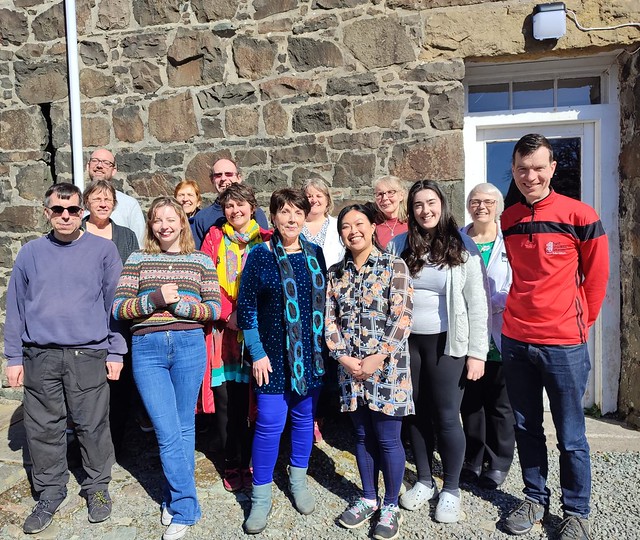
Ceilidh at Sabhal Mòr Ostaig in the Isle of Skye / Cèilidh aig Sabhal Mòr Ostaig san Eilean Sgitheanach
Words marked with a * are reconstructions.
| Proto-Celtic |
*kēlyos = companion, servant |
| Primitive Irish |
ᚉᚓᚂᚔ (celi) = follower, devotee (genitive) |
| Old Irish (Goídelc) |
céile [ˈkʲeːlʲe] = client, companion, husband, liege, servant, spouse, subject, vassal
céilide [ˈkʲeːlʲiðʲe] = visit, visiting
coicéile = companion, comrade, friend, friendship |
| Middle Irish (Gaoidhealg) |
céile, ceile, céli = servant, bondsman, vassal, subject, fellow, companion, husband
céileachas = adultery
céilide = visit, act of visiting
coicéile, cocéle, coceli = vassal, bondsman, companion, fellow, friend
coicéilsine, cocéilsine, cocélsine = fellowship, clientship |
| Irish (Gaeilge) |
céile [ˈceːlʲə] = companion, spouse
céileachas = companionship, cohabitation, copulation
céilí = friend call, visit, social evening, Irish dancing session
céilíoch = person fond of social visits, sociable person
céilíocht = sociableness, companionableness
céiliúil = companionable
coigéile = mate, companion
coigéilsine = fellowship, companionship |
| Scottish Gaelic (Gàidhlig) |
cèile [kʲeːlə] = fellow, partner, significant other, spouse, counterpart
cèile-còmhraige = opponent, antagonist
cèile-pòsta = married partner (husband or wife)
cèileach [kʲeːləx] = entertaining
cèileachadh [kʲeːləxəɣ] = participating/sharing in, twinning, partnering (of a city)
cèiliche [kʲeːlɪçə] = visitor
cèilidh [kʲeːlɪ] = ceilidh, visit, (act of) visiting
cèilidheach [kʲeːlɪjəx] = companionable, fond of company, sociable |
| Manx (Gaelg) |
keilley = match
dy cheilley = joined, together
e cheilley = fellow
ry-cheilley = en masse, together, with each other
kaylee = ceilidh |
| Proto-Brythonic |
*kuɨlð = servant, companion |
| Middle Welsh (Kymraec) |
cilit, cilid, kilid, kilyd = servant, companion |
| Welsh (Cymraeg) |
cilydd [ˈkɪlɨ̞ð/ˈkiːlɪð] = fellow, companion, neighbour, enemy, other
cilyddol = reciprocal, mutual
at ei gilydd = together
gyda’i gilydd = together
ei gilydd = each other
o bryd i’w gilydd = from time to time |
| Middle Cornish (Cernewec) |
cele = companion, fellow, one of two |
| Cornish (Kernewek) |
kila = companion |
| Old Breton |
kiled = friend |
| Middle Breton (Brezonec) |
kile = the other (one), friend |
| Breton (Brezhoneg) |
kile = associate, stooge, colleague, sidekick |
Etymology: possibly the Proto-Celtic word originally meant ‘wayfarer’, from Proto-Indo-European *ḱey- (to settle, to be lying down) [source].
The English word ceilidh [ˈkeɪli] (an informal social gathering where traditional Irish or Scottish folk music is played, with dancing and storytelling; a ceilidh dance; to dance a ceilidh) was borrowed from Scottish Gaelic and/or from Irish [source]. Someone who attends a ceilidh is apparently a ceilidher [source].
The Welsh equivalent of a ceilidh is a twmpath, which also meanings hillock, knoll, mound, pile, gathering or assembly. It’s also a known as a twmpath dawns (folk-dance, barn dance, public dance) or noson lawen (“merry/joyful evening”). In Cornish a ceilidh is a troyll, which also means spiral or swirl, and in Breton they are known as fest-noz (“night party / ”) [source].
| Proto-Celtic |
*karants = friend
*karantodyos = friendly |
| Gaulish |
Caranto-, Carantōna = personal names
*Carantodios = personal name |
| Old Irish (Goídelc) |
cara [ˈkarɘ] = friend, relation, relative, kinsman
cairdes = friendship, alliance, pact
cairdine = friendship, alliance
caratad = friendship, alliance
caraid = to love |
| Middle Irish (Gaoidhealg) |
cara, carae [ˈkarə] = friend
cairdide = friendly
caratrad = friendship, alliance
cairdech, cairdeac, cairdeach = friendly, having many friends
cairdes, cardes, cairdius = friendship, alliance, covenant, pact, relationship, kinship
cairdemail [ˈkɑːɾˠdʲuːlʲ] = friendly
caraid, carad = to love
caratrad, caratrid = friendship, alliane |
| Irish (Gaeilge) |
cara [ˈkɑɾˠə / ˈkaɾˠə] = friend, relative
anamchara = spiritual adviser, confidant, kindred spirit, soulmate
cairdeach [ˈkɑːrdʲəx] = generous, friendly
cairdeas = friendship
cairdine = friendship, pact, truce
cairdiúil [ˈkɑːɾˠdʲuːlʲ] = friendly
cairdiúlacht = friendliness |
| Scottish Gaelic (Gàidhlig) |
caraid [karɪdʲ] = friend, relation, kinsman, Quaker
càirde [kaːr̪dʲə] = friendship, entente
càirdeas [kaːr̪dʲəs] = kinship, friendship, friendliness
càirdeach [kaːr̪dʲəx] = kin, related, friendly |
| Manx (Gaelg) |
carrey = friend, well-wisher
caardys, caarjys = friendship, kin(ship), pedigree, blood relationship, allied to
caarjoil = amiable, friendly, friendliness
caarjysagh = friendly
caarjysaght = friendliness |
| Proto-Brythonic |
*kar [kar] = friend, relative |
| Middle Welsh (Kymraec) |
kar, kereint, kerenhit, car, karant = kinsman, relative, cousin, friend, companion, dear one
keredic, keradwy, karatwy = loveable, amiable, dear, beloved
caru, karu, kary = to love, woo, court
carannawc = dear, beloved
kerenhit, kerennyd, carennydd = kindred, kinship, relationship, descent, affinity, friendship, love |
| Welsh (Cymraeg) |
câr [kaːr] = kinsman, relative, cousin, friend, companion, dear one
carad = loved
caradwy, ceradwy = loveable, amiable, dear, beloved
caru = to love, woo, court
carennydd = kindred, kinship, relationship, descent, affinity, friendship, love |
| Old Cornish |
car = friend, ally, a dear neighbour, kinsman, cousin |
| Middle Cornish (Cernewec) |
car, câr, = friend, ally, a dear neighbour, kinsman, cousin, father
caradow = beloved, loving, dear
care = to love
carense, cerense = love, friendship |
| Cornish (Kernewek) |
kar = parent, relation, relative
kara = to care for, like, love
kardewder = loving-kindness
karadow = beloved, fond, loveable, loving
karder = loveliness, splender
karer = boyfriend, lover
kares = girlfriend, relation, relative, mistress (lover) |
| Old Breton (Brethonoc) |
car = agreeable, dear |
| Middle Breton (Brezonec) |
car = friend, relative
carantez = love
caret = to love, cherish, desire |
| Breton (Brezhoneg) |
kar [ˈkɑːr] = relative, friend
karadegezh = kindness
karadek [kaˈrɑːdek] = kind, nice, amiable
karantegezh = affection, love
karantek [kaˈrãntek] = affectionate, pleasant
karantez [kaˈrãn.tɛs] = love
karedig [kaˈreːdik] = lover, loving
karout [ ˈkɑː.rut] = to love, cherish, desire
karet [ˈkɑː.ret] = favourite, beloved |
Etymology: from Proto-Celtic *karāti (to love, desire), from *karos (dear, beloved), from Proto-Indo-European *kh₂-ró-s, from *keh₂- (to desire) & *-rós (adjectival suffix) [source]. Words from the same PIE roots include charity, cheer, and cherish in English, caro (dear, precious, expensive) in Italian, cher (dear(ly), expensive) in French, caro (dear, expensive) in Spanish, kär (in love, enamored, dear, beloved) in Swedish, and kær (dear, adorable, cute) in Danish [source].
| Irish (Gaeilge) |
comhar [kõːɾˠ] = combined work, mutual assistance, co-operation, partnership |
| Scottish Gaelic (Gàidhlig) |
coimheart [kɔ̃jəRʃd] = companion |
| Manx (Gaelg) |
commeeys = communion, connection, league, mess, participation, partnership, relations (between people) |
| Proto-Brythonic |
*kumpar = peer, fellow, spouse, partner, companion |
| Middle Welsh (Kymraec) |
kymar = peer, fellow, spouse, partner, companion |
| Welsh (Cymraeg) |
cymar [ˈkəmar] = equal, peer, companion, mate, fellow, spouse, consort
cymar bywyd = life partner
cymhares = female partner, wife, mate, companion, equal
cymharus = well matched, well paired, corresponding, matching, appropriate, fitting
cymheiriaeth = a coupling together, partnership |
| Middle Cornish (Cernewec) |
cespar = spouse, married person, mate |
| Cornish (Kernewek) |
kespar / kespares = partner
kesplegadow = compatible |
Etymology (Brythonic words): from Latin compār (fellow, partner, equal [person], spouse), from con- (used to indicate being or bringing together), from cum (with), and pār (even, equal, like; companion, comrade, mate, spouse) [source]. The Goidelic words may come from different roots.
Words from the same roots include compare, pair, par (equal value) and peer in English, paar (pair, couple, some) in Dutch, and péire (pair) in Irish [source].
| Proto-Brythonic |
*ko-u̯ekt- = companion, comrade, friend (?)
*ko-u̯ektii̯ŏ- = company, band or gathering of companions, troop, host, retinue |
| Old Welsh (Kembraec) |
coueidid = company, band or gathering of companions, troop, host, retinue |
| Middle Welsh (Kymraec) |
kyueith, kyweith = companion, comrade, friend
kiueithad = society, company, partnership
kyweithaed = gathering, company
kyweythas, kyweithas, keuey[th]as = soceity, company, fellowship, companionship
kweithasgar = sociable, gentle, kind(ly), gracious
kyweithit, ky()eithyd, kyweithyd = company, band or gathering of companions, troop, host, retinue |
| Welsh (Cymraeg) |
cywaith = companion, comrade, friend; association, harmony
cyweithad = society, company, partnership
cyweithäed = gathering, company
cyweithas = soceity, company, fellowship, companionship, alliance, commerce; sociable, gentle, kindly
cyweithasu = to associate, civilze, treat with courtesy
cyweithasgar = sociable, gentle, kind(ly), gracious
cyweith(i)asol = social, kind, gentle courteous
cyweithydd = company, band or gathering of companions, troop, host, retinue |
| Middle Cornish (Cernewec) |
coweth, cowyth = companion, fellow, mate, comrade
cowethas = company, society
cowethe = company, sociery
cowethes = female companion, help-mate
cowetheyans = communion, fellowship
cowethys = acquainted |
| Cornish (Kernewek) |
koweth / kowethes = companion, comrade, friend, mate, peer
kowethas = association, society
kowethasek = social
kowethegeth = friendship
kowethek = friendly
kowethus = gregarious
kowethyades, kowethyas = colleague
kowethyadow = socialable
kowethyans = company, organisation |
Etymology: from Proto-Brythonic *ko- (together, equal, similar) u̯ekt- (to move, go) [source].

Sources: Wiktionary, Etymological Dictionary Of Proto Celtic, In Dúil Bélrai English – Old Irish glossary, eDIL – Electronic Dictionary of the Irish Language, Teanglann.ie, Am Faclair Beag, An etymological dictionary of the Gaelic language, Fockleyreen: Manx – English Dictionary, Online Manx Dictionary, Gaelg Corpus, Geiriadur Prifysgol Cymru, Lexicon cornu-britannicum : a dictionary of the ancient Celtic language of Cornwall, Gerlyver Kernewek, Devri : Le dictionaire diachronique du breton, Geriafurch, TermOfis