Omniglot News (13/11/22)

Here’s the latest news from the world of Omniglot.

There are new language pages about:

  • Nengone (p’ene nengone), a Southern Oceanic language spoken mainly on Maré and Tiga islands, which are part Loyalty Islands Province in New Caledonia.
  • Daakaka, a Southern Oceanic language spoken in the southwest of Ambrym Island in Malampa Province of Vanuatu
  • Sa (Lokit), a Southern Oceanic language spoken in the south of Pentecost Island in Penama Province of Vanuatu.

New constructed script: Cebuano Script (Suwat Sinugbu), which was created by John Clement Husain and Mares Barrioquinto as an alternative way to write Cebuano (Bisaya), a Philippine language spoken mainly in the Central Visayas region of the Philippines.
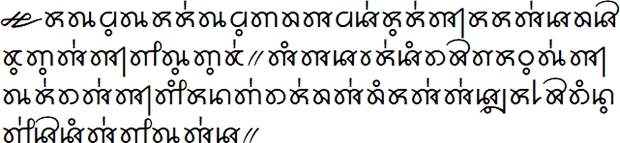
Sample text in the Cebuano Script

There are new numbers pages in:

  • Etruscan (mekh Rasnal), a language that was spoken in Eturia in Italy from about 600 BC to the 5th century AD.
  • Nengone (p’ene nengone), a Southern Oceanic language spoken mainly on Maré and Tiga islands in New Caledonia.
  • Ingrian (Ižoran keeli), a Finno-Ugric language spoken in the Ingria region in the northwest of the Russian Federation.

There’s a new version of the Tower of Babel story in Lun Bawang, a North Bornean language spoken in the Sesayap river area of North Kalimantan province in Indonesia.

There’s an Omniglot blog post about the word Myriad and other ways to refer to a large or countless number, and the usual Language Quiz. See if you can guess what language this is:

Here’s a clue: this language is spoken in the Northern Territory of Australia.

The mystery language in last week’s language quiz was Cimbrian (Tzimbrisch), a Germanic language spoken in northeastern Italy.

There’s a new Celtiadur post about words for Up Above and related things in Celtic languages.

On the Celtic Pathways podcast we’re looking at some Crooked and Twisted words.

In the Adventure in Etymology we’re getting perplexed and confused by the origins of the word Befuddle.

I joined Mastodon this week, specifically Polyglot City. I’ll be posting there fairly regularly as Omniglot. Join me if you’d like to.

In other news, I went to a concert this week featuring the Welsh harpist, Catrin Finch, and the Senegalese kora player, Seckou Keita, who sang in Wolof and Mandinka – not languages you hear very often in Bangor.

Here’s one of the tunes they played:

For more Omniglot News see:
https://www.omniglot.com/news/
https://twitter.com/Omniglossia
https://www.facebook.com/groups/omniglot/
https://www.facebook.com/Omniglot-100430558332117

You can also listen to this podcast on: Apple Podcasts, Amazon Music, Stitcher, TuneIn, Podchaser, PlayerFM or podtail.

If you would like to support this podcast, you can make a donation via PayPal or Patreon, or contribute to Omniglot in other ways.

The Fastest Way to Learn Korean with KoreanClass101

Adventures in Etymology – Befuddle

In this Adventure in Etymology we are getting perplexed and confused by the origins of the word befuddle.

Golden Lion Tamarin (Leontopithicus rosalia)

Befuddle [bɪˈfʌdl] means:

  • to perplex or confuse (sb)
  • to stupefy (sb), especially with alcohol

It comes from be- (a prefix) and fuddle (to confuse, intoxicate, get drunk; intoxication, a muddle or confusion) [source], possibly from the Low German fud(d)eln (to work negligently) [source].

Related words include befuddlement (a state of being befuddled), fuddlesome (confusing), fuddler (drunkard) and fuddling (intoxication).

Incidentally, in some English dialects, such as in Derbyshire, Yorkshire, Nottinghamshire and Bedfordshire, a fuddle is a party or picnic where attendees bring food and wine.

Such an event might also be called a potluck, potluck dinner, pitch-in, shared lunch, faith supper, covered-dish supper, Jacob’s Join, bring a plate or fellowship meal [source]. Other names are available. What would you call it?

According to the description of the photo, which is of a Golden Lion Tamarin (Leontopithicus rosalia) by the way, “Tamarins are easy to confuse. I just asked him what the square root of 5 was, and he got all befuddled.” So it’s a good way to illustrate befuddlement, and I like to use photos of cute animals on my posts, because why the hell not?

Here’s a video I made of this information:

Video made with Doodly [afflilate link].

I also write about words, etymology and other language-related topics on the Omniglot Blog, and I explore etymological connections between Celtic languages on the Celtiadur.

You can also listen to this podcast on: Apple Podcasts, Amazon Music, Stitcher, TuneIn, Podchaser, PlayerFM or podtail.

If you would like to support this podcast, you can make a donation via PayPal or Patreon, or contribute to Omniglot in other ways.

The Fastest Way to Learn Japanese Guaranteed with JapanesePod101.com

Celtic Pathways – Crooked and Twisted

In this episode we’re looking at some crooked and twisted words.

Spiral staircase in Conwy / Grisiau troellog yng Nghonwy

In Proto-Celtic, the word *kambos meant twisted, crooked or bent. It comes from the Proto-Indo-European word *kh₂em- (to arch, bend, curve), from *(s)ḱh₂embos (crooked) [source].

Descendents in the modern Celtic languages include:

  • cam [kaumˠ] = bend, bent, crooked, crookedness, fraud; to bend, crook, distort in Irish
  • cam [kaum] = bent, crooked, awry, not straight, squinty, wry, one-eyed; bend, curve, trick in Scottish Gaelic
  • cam = bent, crooked, deceitful, intricate, knotty, perverse, rakish, wry, wrong in Manx
  • cam [kam] = crooked, bent, hunch-backed, distorted, wry, bowed, curved, looped, winding in Welsh
  • kamm = bent, crooked, erroneous, error, wrong in Cornish
  • kamm = angled, bent, bend in Breton

The Proto-Celtic word *kambos is the root of the Galician words camba (doorjamb of an oven, handmill), cambar (to bend), cambiar (to change) [source]. The word cambiar (to change) in Spanish and Portuguese, and the word change in English come from the same Celtic roots [source].

*kambos is possibly also the root of the French word as camus [ka.my] (flat-nosed, snub-nosed) [source], which was borrowed into English as camous/camoys (flat, depressed, crooked nose – used until the 19th century) [source].

The English word kam (crooked, awry) was borrowed from the Welsh word cam, but is no longer used [source].

The name Campbell comes from the Scottish Gaelic Caimbeul, from cam (crooked) and beul (mouth) [source], while Cameron comes from Camshròn, from cam (crooked) and sròn (nose) [source].

More details of crooked words in Celtic languages can be found on the Celtiadur, a blog where I explore connections between Celtic languages in more depth. I also write about words, etymology and other language-related topics on the Omniglot Blog.

You can also listen to this podcast on: Apple Podcasts, Amazon Music, Stitcher, TuneIn, Podchaser, PlayerFM or podtail.

If you would like to support this podcast, you can make a donation via PayPal or Patreon, or contribute to Omniglot in other ways.

The Fastest Way to Learn Japanese Guaranteed with JapanesePod101.com

Omniglot News (06/11/22)

Here’s the latest news from the world of Omniglot.

There are new language pages about:

  • Big Numbas (V’ënen Taut), an Oceanic language spoken in the Big Numbas region in the northwest of Malekula Island in Malampa Province of Vanuatu.
  • Neverver, a Southern Oceanic language spoken on Malekula Island in Malampa Province of Vanuatu.
  • Tamambo (Tamabo), a Remote Oceanic language spoken mainly on Malo Island in Sanma province of Vanuatu.

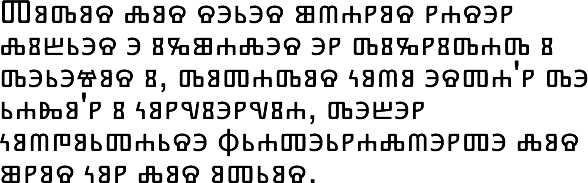
New constructed script: Katemayar, which was created by Bryson Schnaitmann to write his constructed language, Kynaatt.

Article 1 of the Universal Declaration of Human Rights in Katemayar

There are new numbers pages in:

  • Ambel (galí Ambél), a Malayo-Polynesian spoken mainly on Waigeo island in West Papua province in eastern Indonesia.
  • Big Numbas (V’ënen Taut), an Oceanic language spoken in the Big Numbas region in the northwest of Malekula Island in Malampa Province of Vanuatu.
  • Paku, an East Barito language spoken in Central Kalimantan province of Indonesia.
  • Warao, a language isolate spoken in Delta Amacuro, Monagas and Sucre states of Venezuela.

There’s an Omniglot blog post called Tidy! about Dutch words for tidying and cleaning, and the usual Language Quiz. See if you can guess what language this is:

Here’s a clue: this language is spoken in Italy.

The mystery language in last week’s language quiz was Tamahaq, a Northern Berber language spoken in southern Algeria, western Libya and northern Niger.

There are new Celtiadur posts about words for Halloween, Hosts of Folks and related things in Celtic languages.

On the Celtic Pathways podcast we have a A Slew of Slogans, which is about words for slogan, slew and related things.

In the Adventure in Etymology find possible links between the word rubble and words such as rubbish, hale, hail, whole and holy.

Here’s a bit of music – some Minor Noodles that I recorded yesterday featuring a friend on the guitar and me on the mandolin:

For more Omniglot News see:
https://www.omniglot.com/news/
https://twitter.com/Omniglossia
https://www.facebook.com/groups/omniglot/
https://www.facebook.com/Omniglot-100430558332117

You can also listen to this podcast on: Apple Podcasts, Amazon Music, Stitcher, TuneIn, Podchaser, PlayerFM or podtail.

If you would like to support this podcast, you can make a donation via PayPal or Patreon, or contribute to Omniglot in other ways.

The Fastest Way to Learn Korean with KoreanClass101

Adventures in Etymology – Rubble

There’s some building work going on at my house, so in this Adventure we’re digging into the origins of the word rubble.

Rubble

Rubble [ˈɹʌb.əl] is:

  • the broken remains of an object, usually rock or masonry
  • rough, irregular stones broken from larger masses, esp. waste fragments from the demolition of a building, etc.

It comes from the Middle English rouble/rubel/robel, from the Anglo-Norman *robel (bits of broken stone), possibly from the Old Norse rubba (to huddle, crowd together, heap up), from the Proto-Germanic *rubbōną (to rub, scrape) [source].

It is probably related to the word rubbish (refuse, waste, garbage, junk, trash), which was robous (rubbish, buidling rubble) in Middle English [source]. The word rub possibly comes from the same roots as well [source].

Here’s a video I made of this information:

Video made with Doodly [afflilate link].

I also write about words, etymology and other language-related topics on the Omniglot Blog, and I explore etymological connections between Celtic languages on the Celtiadur.

You can also listen to this podcast on: Apple Podcasts, Amazon Music, Stitcher, TuneIn, Podchaser, PlayerFM or podtail.

If you would like to support this podcast, you can make a donation via PayPal or Patreon, or contribute to Omniglot in other ways.

The Fastest Way to Learn Japanese Guaranteed with JapanesePod101.com

Celtic Pathways – A Slew of Slogans

In this episode we’re looking into the Celtic roots of the words slogan and slew.

A Slew of Slogans

In English the word slogan means a distinctive phrase of a person or group of people, a motto, a catchphrase, and formerly, a battle cry used by the Irish or by Scottish highlanders [source].

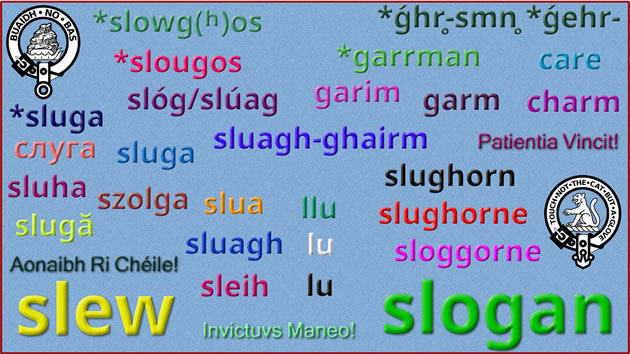
In the past it was written sloggorne, slughorne or slughorn, and it comes from the Scottish Gaelic sluagh-ghairm [ˈsɫ̪uəɣɤɾʲəm] (battle cry) from the Old Irish slóg/slúag (army, host, throng, crowd), and gairm (call, cry, crow, proclamation) [source].

The Old Irish word slóg/slúag comes from the Proto-Celtic *slougos (troop, army), from the Proto-Indo-European *slowg(ʰ)os (entourage) [source].

Celtic words from the same root include:

  • slua [sˠl̪ˠuə] = host, force, army; crowd, multitude, throng in Irish
  • sluagh [sl̪ˠuəɣ] = folk, people, populace; the fairy host; crowd in Scottish Gaelic
  • sleih = commonalty, crowd, family, inhabitants, people, populace, public, relations in Manx
  • llu [ɬɨː / ɬiː] = host, a large number (of people), a great many, multitude, throng, crowd in Welsh
  • lu [ly: / liˑʊ] = army, military, troop in Cornish
  • lu = army in Breton

Words for family and household in Celtic languages, such as teaghlach in Irish and teulu in Welsh, come from the same Proto-Celtic root, via *tegoslougom (“house army”) [source].

The English word slew (a large amount), as in “a slew of papers” was borrowed from the Irish slua [source].

Words from the same PIE root include слуга (servant) in Bulgarian, Macedonian, Russian, Ukrainian and Serbian; sługa (minion, servant) in Polish; sluha (servant) in Czech and Slovak, slugă (servant, domestic) in Romanian, and szolga (servant, attendant) in Hungarian [source].

The Old Irish word gairm (call, cry, crow, proclamation) comes from the Proto-Celtic *gar(r)man- (cry, shout), from the Proto-Indo-European *ǵh₂r̥-smn̥, from *ǵeh₂r- (to shout, cry).

Celtic words from the same root include:

  • gairm [ˈɡaɾʲəmʲ/ˈɡɪɾʲəmʲ] = call, summons, calling, vocation in Irish
  • gairm [ɡɤrʲɤm] = calling, crying, call, cry, announcing, declaring, convenning, call of the cockerel in Scottish Gaelic
  • gerrym = crowing, outcry, shouting, whoop, whooping, (cock) crow), avocation, mission, profession, vocation in Manx
  • garm = shout, cry, outcry, clamour in Welsh
  • garm = shout, whoop, yell in Cornish
  • garm = cry, clamour, weeping in Breton

Words from the same roots include gáir (cry, shout, report) in Irish, goir (to call, cry, hoot) in Scottish Gaelic, gair (word, speech) in Welsh [more details].

The English words garrulous (excessively talkative), care and charm (sound of many voices (esp. of birds or children), a flock or group (esp. of finches)) as come from the same PIE roots [source].

More details about words for Troop, host, throng can be found on the Celtiadur, a blog where I explore connections between Celtic languages in more depth. I also write about words, etymology and other language-related topics on the Omniglot Blog.

You can also listen to this podcast on: Apple Podcasts, Amazon Music, Stitcher, TuneIn, Podchaser, PlayerFM or podtail.

If you would like to support this podcast, you can make a donation via PayPal or Patreon, or contribute to Omniglot in other ways.
The Fastest Way to Learn Japanese Guaranteed with JapanesePod101.com

Omniglot News (30/10/22)

Here’s the latest news from the world of Omniglot.

There are new language pages about:

  • Batak Angkola, a Southern Batak language spoken in the province of North Sumatra in Indonesia
  • Batak Dairi (Kata Pakpak), a Northern Batak language spoken in the provinces of Aceh and North Sumatra in Indonesia.
  • Batak Karo (cakap Karo), a Northern Batak language spoken in the provinces of Aceh and North Sumatra in Indonesia.
  • Batak Simalungun (Sahap Simalungun), a Southern Batak language spoken in the province of North Sumatra in Indonesia.
  • Batak Mandailing (Saro Mandailing), a Southern Batak language spoken in North Sumatra Province in Indonesia.
  • Batak Toba (Hata Batak Toba), a Southern Batak language spoken in the province of North Sumatra in Indonesia.
  • Makalero, a Timor-Alor-Pantar language in the municipality of Lautém in the east of East Timor.

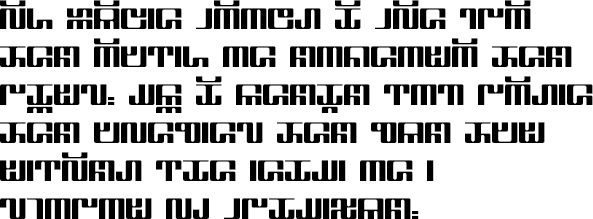
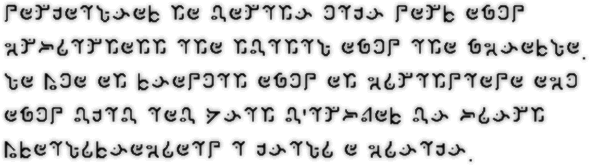
New constructed script: Jierimse, which was invented by Kobey Hill as an alternative way to write Austalian English, and was inspired by the Glagolitic and Ge’ez scripts.

Article 1 of the Universal Declaration of Human Rights in Jierimse

There are new numbers pages in:

  • Tobelo, a West Papuan language spoken in the provinces of North Maluku and Papua in Indonesia.
  • Kembayan, a Southern Land Dayak language spoken in West Kalimantan province of Indonesia
  • Kambera (hilu Humba), a Malayo-Polynesian language spoken in Sumba Island in eastern Indonesia.

There are new Tower of Babel translations in:

There’s an Omniglot blog post about spelling and Miss Pelling, and the usual Language Quiz. See if you can guess what language this is:

Here’s a clue: this language is spoken in parts of North Africa

The mystery language in last week’s language quiz was Äynu (Äynú / ئهﻳنوُ), a Turkic language spoke in the Xinjiang Uyghur Autonomous Region in the northwest of China.

There’s a new Celtiadur post about words for Heels and related things in Celtic languages.

On the Celtic Pathways podcast we find out what links the word Clan with words such as children, plant and plantain.

As it’s near the end of October, in the Adventure in Etymology we’re investigating the origins of the word hallow, as in Halloween.

I also made improvements to the Batak script, and made separate pages for Batak languages (mentioned above).

For more Omniglot News see:
https://www.omniglot.com/news/
https://twitter.com/Omniglossia
https://www.facebook.com/groups/omniglot/
https://www.facebook.com/Omniglot-100430558332117

You can also listen to this podcast on: Apple Podcasts, Amazon Music, Stitcher, TuneIn, Podchaser, PlayerFM or podtail.

If you would like to support this podcast, you can make a donation via PayPal or Patreon, or contribute to Omniglot in other ways.
The Fastest Way to Learn Korean with KoreanClass101

Adventures in Etymology – Hallow

As it’s near the end of October, in this Adventure in Etymology we’re investigating the origins of the word hallow, as in Halloween.

Halloween in Hallow

Hallow [ˈhæləʊ / ˈhæloʊ] is an old word that means:

  • A saint; a holy person; an apostle.
  • (plural) The relics or shrines of saints or non-Christian gods.

It comes from the Middle English halwe (saint, holy thing, shrine), from the Old English hālga (saint), from the Proto-Germanic *hailagô (holy person), from *hailagaz (holy, sacred), rom *hailaz (whole, intact, hale, healthy), from the PIE *kóylos (healthy, whole) [source].

The word Halloween comes from the Scots Hallow evin/even, from Allhallow evin, from Allhallow (all the saints) and evin (evening) [source].

English words from the same roots include holy, hale (healthy, sound, robust), as in hale and hearty, hail (to greet, salute, call) and whole [source].

Here’s a video I made of this information:

Video made with Doodly [afflilate link].

I also write about words, etymology and other language-related topics on the Omniglot Blog, and I explore etymological connections between Celtic languages on the Celtiadur.

You can also listen to this podcast on: Apple Podcasts, Amazon Music, Stitcher, TuneIn, Podchaser, PlayerFM or podtail.

If you would like to support this podcast, you can make a donation via PayPal or Patreon, or contribute to Omniglot in other ways.

The Fastest Way to Learn Japanese Guaranteed with JapanesePod101.com

Celtic Pathways – Clan

In this episode we’re looking a the word clan and related things in Celtic languages.

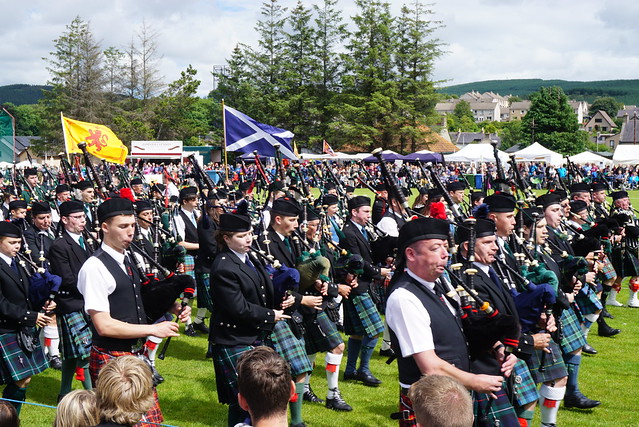
Dufftown Highland Games

The word clan in English means a group of people descended from a common ancestor, a traditional social group of families in the Scottish Highlands having a common hereditary chieftain, or any group defined by family ties with some sort of political unity [source].

It was borrowed from clann in Irish or Scottish Gaelic, which come from the Old Irish cland (children, family, offspring, plant), from the Old Welsh plant (children, young people, offspring), from the Latin planta (vegetable, sprout, shoot, twig, shrub), possibly from the Proto-Italic *plāntā, from the Proto-Indo-European *pleh₂- (flat) or from the Proto-Italic *plānktā, from the Proto-Indo-European *pleh₂k-/*pleh₂g- (to strike, fast) [source].

Related words in the Celtic languages include:

  • clann [kl̪ˠɑun̪ˠ/kl̪ˠɑːn̪ˠ/kl̪ˠan̪ˠ] = children, offspring, race, descendents, clan, followers, plant, lock (of hair),
    and planda [pl̪ˠaun̪ˠd̪ˠə] = plant, scion in Irish
  • clann [kl̪ˠaun̪ˠ] = children, offspring, progeny, clan, lock of hair, curl
    and plannt [pl̪ˠãũn̪ˠd] = plant in Scottish Gaelic
  • cloan [klɔːn] = children, descendent, family circle,
    and plant = plant in Manx
  • plant [plant] = children, young people, offspring, progeny, descendents, followers, disciples, servants in Welsh
  • plans = plant in Cornish
  • plantenn = plant in Breton

The English word plant comes from the same roots, via Middle English, Old English and Latin [source], as does the word plantain, via Middle English, Anglo-Norman, Old French and Latin [source].

The word clan was borrowed from English into various other languages, including Dutch, French, German, Italian, Polish, Russian, Portuguese and Spanish. It even ended up in Turkish, via French. So the Turkish word klan arrived via French, English, Irish/Scottish Gaelic, Old Irish, Old Welsh, Latin, Proto-Italic and Proto-Indo-European – quite a journey! [source]

More details about these words on Celtiadur, a blog where I explore connections between Celtic languages in more depth. I also write about words, etymology and other language-related topics on the Omniglot Blog.

You can also listen to this podcast on: Apple Podcasts, Amazon Music, Stitcher, TuneIn, Podchaser, PlayerFM or podtail.

If you would like to support this podcast, you can make a donation via PayPal or Patreon, or contribute to Omniglot in other ways.
The Fastest Way to Learn Japanese Guaranteed with JapanesePod101.com

Omniglot News (23/10/22)

Here’s the latest news from the world of Omniglot.

There are new language pages about:

  • Wapishana (Wapixana), a Northern Arawakan language spoken in Guyana and Brazil.
  • Ketengban, an Eastern Mek language spoken in Highland Papua Province in Indonesia.

New constructed script: High Gavellian, which was created in 2020 by the developers of the Minecraft MMORPG Wynncraft, and is used to write English and Irish in the game.

Sample text in High Gavellian

New adapated script Glagoñol (Ⰳⱉⰰⰳⱁⰾⰹⱌⱏ), which is a way to write Spanish with the Glagolitic alphabet devised by Rodrigo Bustamante Solano.

Ⱅⱁⰴⱁⱄ ⰾⱁⱄ ⱄⰵⱃⰵⱄ ⱆⰿⰰⱀⱁⱄ ⱀⰰⱄⰵⱀ ⰾⰻⰱⱃⰵⱄ ⰵ ⰻⰳⱆⰰⰾⰵⱄ ⰵⱀ ⰴⰻⰳⱀⰻⰴⰰⰴ ⰻ ⰴⰵⱃⰵⱍⱁⱄ ⰻ, ⰴⱁⱅⰰⰴⱁⱄ ⰽⱁⰿⱁ ⰵⱄⱅⰰ'ⱀ ⰴⰵ ⱃⰰⰸⱁ'ⱀ ⰻ ⰽⱁⱀⱌⰻⰵⱀⱌⰻⰰ, ⰴⰵⰱⰵⱀ ⰽⱁⰿⱂⱁⱃⱅⰰⱃⱄⰵ ⱇⱃⰰⱅⰵⱃⱀⰰⰾⰿⰵⱀⱅⰵ ⰾⱁⱄ ⱆⱀⱁⱄ ⰽⱁⱀ ⰾⱁⱄ ⱁⱅⱃⱁⱄ.

There are new numbers pages in:

  • Dawan (Uab Metô), a Timoric language spoken in East Nusa Tenggara province on the island of West Timor in Indonesia.
  • Ngalum, am Ok language spoken in Papua province of Indonesia, and in Sandaun province of Papua New Guinea.
  • Lepki, a South Pauwasi language spoken in Western New Guinea.
  • Mao (Emela), an Angami-Pochuri language spoken in Manipur and Nagaland in northeastern India
  • Ketengban, an Eastern Mek language spoken in Highland Papua Province in Indonesia.

There are new Tower of Babel translations in: Pamona, Tobelo, Termanu, Una, Rampi, Gorontalo, Saluan, Mentawai, Banggai and Sangirese.

There’s a new page of silly phraes, mostly from Duolingo, in Scottish Gaelic

New article: Four Nordic languages around the Baltic Sea – Fynsk, Åländska, Malax and Estonian Swedish

There’s an Omniglot blog post about the Scots word Snoozle, which means to snooze or doze, or to nuzzle, poke with the nose or snuggle, and the usual Language Quiz. See if you can guess what language this is:

Here’s a clue: this language is in the northwest of China.

The mystery language in last week’s language quiz was
Boro / Bodo (बर’ राव), a member of the Sal branch of the Sino-Tibetan language family spoken in northeast India and eastern Nepal.


There’s a new Celtiadur post about words for Peace and Fairies and related things in Celtic languages.

On the Celtic Pathways podcast we look into the origins of words for sacks, bags, bellys and related things in Celtic languages, and discover that the English words bulge, bilge and budget have Celtic roots.

In this week’s Adventure in Etymology we tell tales about the origins of the word spell and related words.

For more Omniglot News see:
https://www.omniglot.com/news/
https://twitter.com/Omniglossia
https://www.facebook.com/groups/omniglot/
https://www.facebook.com/Omniglot-100430558332117

You can also listen to this podcast on: Apple Podcasts, Amazon Music, Stitcher, TuneIn, Podchaser, PlayerFM or podtail.

If you would like to support this podcast, you can make a donation via PayPal or Patreon, or contribute to Omniglot in other ways.
The Fastest Way to Learn Korean with KoreanClass101