Hills

Words for hill and related words in Celtic languages.

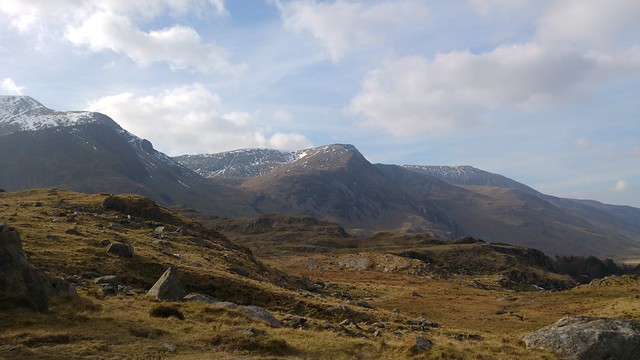
Cwm Idwal

Proto-Celtic *ardwos = high
Gaulish Arduenna = place name
Old Irish (Goídelc) ard [ar͈d] = high, height
Middle Irish (Gaoidhealg) ard, árd = high above ground, elevated, lofty, tall, noble, great, proud, arduous, high place, height
ardach = hilly
ardae, airde = height, high place, nobility, loudness
ardaid = to rise
ardaigid = to raise, magnify, exalt
ardán = pride, arrogance
ardri = high king
Irish (Gaeilge) ard [ɑːɾˠd̪ˠ/æːɾˠd̪ˠ] = height, hillock, top, high part, elevation, head, rise, ascent
ardaigh = to raise, elevate, ascend, carry
ardaitheoir = lift, elevator
na farraigí arda = the high seas
sála arda = high heels
Ard-Aifreann = High Mass
Ard-Aighne = Attorney-General
ardaingeal = archangel
Scottish Gaelic (Gàidhlig) àrd [aːr̪ˠd] = high, lofy, tall, great, loud, chief, eminent, superior, supreme
àrd-bheinn = pinnacle
Manx (Gaelg) ard [ø(r)d] = high, towering, tall, big, loud, height, high place, fell, incline
Proto-Brythonic *arð = high
Middle Welsh (Kymraec) ard, art = hill
Welsh (Cymraeg) ardd [arð/aːrð] = hill, highland, top, high, upland
Middle Cornish (Cernewec) ard = high, lofty
Cornish (Kernewek) ardh = height, high place
Breton (Brezhoneg) arz = high, elevated, lofty

Etymology: from the Proto-Indo-European *h₃r̥dʰwós, from *h₃erdʰ- (to increase, grow, upright, high) [source], which is also the root of the Latin word arbor (tree) and words for tree in Romance languages [source].

Proto-Celtic *knokkos = protuberance, hill
Old Irish (Goídelc) cnocc [knok] = hill, lump, swelling
cnoccach [ˈknokax] = hilly, lumpy
cnocán [ˈknokaːn] = little lump, mound, hill
Middle Irish (Gaoidhealg) cnocc = lump, protruberance, hill, mound
cnoccach, cnocach = lumpy, hilly
cnoccán, cnocán = little lump, mound, hill
Irish (Gaeilge) cnoc [kn̪ˠɔk / kn̪ˠʊk/ kɾˠʊk] = hill, mount
cnocach = hilly
cnocadóir = hillman, hillclimber
cnocadóireacht = hill-climbing
cnocán = hillock, heap
cnocánach = hilly, uneven
Scottish Gaelic (Gàidhlig) cnoc [krɔ̃xg] = hill, small hill, hillock, knoll, chilblain
cnocach [krɔ̃xgəx] = hilly, rugged, abrupt
cnocaireachd [krɔ̃xgɛrʲəxg] = rough hill walking, pacing
cnocan [krɔ̃xgan] = hillock, ball of fibre
Manx (Gaelg) cronk = mount, tor, hill,
crongan = mound, small hill, tuffet, tumulus, hillock
cronkan = knoll, small hill, hillock
Proto-Brythonic *knox = hill, mound
Middle Welsh (Kymraec) cnwch = swelling, protuberance, thickness, hump
Welsh (Cymraeg) cnwc = hillock, knoll; swelling, tumour, lump, knob, hump
cnocell = hillock, knoll
Old Breton cnoch = hill
Middle Breton qnech, knech, crech, cre(a)c’h = high, height, mountain, hill
krec’hennek full of hills
krec’hiek = steep, sloping, incluned
Breton (Brezhoneg) krec’h = height, eminence, mound

Etymology: from the Proto-Indo-European *kneg- (back of the head, nape, neck). The English word neck, and related words in other Germanic languages, come from the same root [source].

Proto-Celtic *brusnyos = hill
Old Irish (Goídelc) bruinne = breast(s), bosom, chest; womb
Middle Irish (Gaoidhealg) bruinne, bruinde = breast, bosom, chest
Irish (Gaeilge) broinne = breast, bosom; brink, verge
Scottish Gaelic (Gàidhlig) broinne [brɤin̪ʲ] = belly, stomach; womb; bulge
Manx (Gaelg) brein = womb
Proto-Brythonic *bronnā = breast
Middle Welsh (Kymraec) bronn, bron = breast, bosom
Welsh (Cymraeg) bron [brɔn] = breast, bosom, thorax, hill-side, slope, breast (of hill)
bronallt, broniallt = gentle slope of hill, rising ground, wooded slope
bryn = hill, mount, rise, bank; heap, mound; prominence, highness
Middle Cornish (Cernewec) bron = a round protuberance, breast, pap, slope of a hill
Cornish (Kernewek) bronn / brodn [brɔn: / brɔdn] = breast, hill
Middle Breton (Brezonec) bron, bronn = breast, bossom, udder
bronnañ, bronnat, bronniñ = to breast feed
Breton (Brezhoneg) bronn [ˈbrɔ̃n] = breast

Etymology: from Proto-Celtic *brusū (belly, abdomen, breast), possibly from the Proto-Indo-European *bʰrews- (belly, to swell) [source].

Words from the same Proto-Celtic root, via the Proto-West-Germanic *brunnjā (chainmail shirt), include: brynja (coat of mail) in Icelandic, Swedish and Faroese, brynje (mail, armour) in Danish, brynje (coat of armour, protective clothing for motorcyclists) in Norwegian, and броня [brɔˈnʲa] (armour, armoured vehicle, shell) in Ukrainian [source].

The English words breast, brisket and bruise come from the same PIE root, as do borst (chest, thorax, breast) in Dutch, Brust (chest, breast, bosom) in German, and bröst (breast, chest, thorax) in Swedish [source].

Proto-Celtic *brixs / *brig- = hill
Gaulish *brignā, -brigā = hill
Old Irish (Goídelc) brí [bʲrʲiː] = hill
Middle Irish (Gaoidhealg) brí, bri = hill
Irish (Gaeilge) brí [bʲɾʲiː] = brae, hill
Scottish Gaelic (Gàidhlig) bre = hill, headland
Proto-Brythonic *breɣ [ˈbrɛːɣ] = hill
Welsh (Cymraeg) bre [bre] = hill, hillock, mountain, hill-country, upland, peak
Middle Cornish (Cernewec) bre = mountain, hill
Cornish (Kernewek) bre [brɛ: / bre:] = hill – appears as Bray or Brae in placenames
Middle Breton (Brezonec) bre = hill
Breton (Brezhoneg) bre [breː] = hill, mountain

Etymology: from the Proto-Indo-European *bʰerǵʰ- (high) [source].

The Spanish word breña (scrub, brush, rough ground), the Portuguese word brenha (scrub, complication, confusion) come from the Gaulish *brignā, via the Vulgar Latin *brigna (rocky terrain) [source].

From the same PIE root we get the English words burrow and borough, and words in placenames such as burg, burgh and bury, and also the German Burg (castle), the Danish borg (castle, stronghold), and related words in other Germanic languages.

Proto-Celtic *krowko- = heap
Old Irish (Goídelc) crúach = stack, mountain, hill
Middle Irish (Gaoidhealg) crúach,cruach = stack of corn, rick, heap, conical pile
crúachad = act of stacking, piling up
crúachán = small rick, hill
crúachda = swollen, piled up
Irish (Gaeilge) cruach [kɾˠuəx] = stack, rick, pile, (mountain) stack
cruachach = full of stacks
cruachadóir = stack-builder
cruachadóireacht = (act of) building stacks
cruachán = (small) stack; person of stunned growth
cruachóg = heap
Scottish Gaelic (Gàidhlig) cruach [kruəx] = pile, stack; round hill; clamp (stack)
cho seasgair ri luchag ann an cruach = as snug as a bug in a rug (“as snug as a mouse in a haystack”)
cruach-fheòir = haystack
cruach-mhòna, cruach mònach = peat-stack
cruach-sheangan = anthill
Manx (Gaelg) creagh = stack, furrow
creagh fendeilagh = barricade
creagh hraagh = haystack
Middle Welsh (Kymraec) krug, gruc, grvg = hillock
Welsh (Cymraeg) crug = hillock, knoll, cairn, tumulus, heap, mass, stack, group, company, multitude; pustule, abscess, boil, carbuncle
Old Cornish cruc = hillock
Middle Cornish (Cernewec) cruc, cruk, crŷc = hillock, mound, barrow
Cornish (Kernewek) krug = mound, tumulus
Old Breton cruc = hillock
Middle Breton (Brezonec) krug = pile, heap
krugell = pile, heap, hillock, mound, tumulus
Breton (Brezhoneg) krug = mound
krugell = hillock, tumulus

Etymology: possibly from the Proto-Indo-European *krā(u)- (to heap up) [source].

Proto-Celtic *tumbo- = excrescence hill
Old Irish (Goídelc) tom = bush, tuft, hillock, knoll
Middle Irish (Gaoidhealg) tom = bush, tuft, hillock, knoll
Irish (Gaeilge) tom [t̪ˠɑumˠ/t̪ˠʌmˠ] = bush, shrub
tomach = bushy, tufted
tomachán = small tuft
Scottish Gaelic (Gàidhlig) tom [tɔum] = hillock, knoll, mound, clump, heap, tuft
toman [toman] = small hillock
tomag [tomag] = small hillock/knoll/mound, small clump, small heap
Manx (Gaelg) tom = tussock
Middle Welsh (Kymraec) tom, tomm = dung(hill), manure, compost, dirt, muck
Welsh (Cymraeg) tom = dung(hill), manure, compost, dirt, muck, mud, mound, heap

Etymology: possibly from the Proto-Indo-European *tewh₂- (to swell), and cognate with the English word tumulus.

Words marked with a * are reconstructions.

Sources: Wiktionary, Am Faclair Beag, Online Manx Dictionary, Teanglann.ie, eDIL – Electronic Dictionary of the Irish Language, In Dúil Bélrai English – Old Irish glossary, Geiriadur Prifysgol Cymru, Gerlyver Kernewek, Dictionaire Favereau, TermOfis, English – ProtoCeltic WordList (PDF), Etymological Dictionary Of Proto Celtic

Blubrry podcast hosting

Streams and Currents

Words for stream, current and related things in Celtic languages.

Cwm Idwal

Words marked with a * are reconstructions.

Proto-Celtic *srutom = stream, river; flow, current
Gaulish srut(u)a = torrent, stream, watercourse
Old Irish (Goídelc) sruth [sruθ] = stream, river, current; strait
Middle Irish (Gaoidhealg) sruth = stream, river, current, torrent, strait
Irish (Gaeilge) sruth [sˠɾˠʊ(h)] = stream, current, flow
sruthach = streaming, flowing, full of streams
sruthaigh = to stream, flow
sruthaire = stroller, vagabond, unbidden guest
sruthaireacht = (act of) roaming, vagabondage, (act of) scrounging
sruthán = (small) stream, rivulet, brook, gush, flow
sruthánach = abounding in streams, streaming
sruthlán = streamlet, rill
Scottish Gaelic (Gàidhlig) sruth [sdruh] = stream, current
sruthlag [sdrul̪ˠag] = runnel, streamlet
sruthan [sdruhdan] = long stream of words, long-winded talk
sruthach [sruhəɣ] = flowing, streaming, flow
sruthan [sdruhan] = brook, streamlet
sruthadair [sdruhədɪrʲ] = streamer
Manx (Gaelg) stroo [struː] = current, stream, race, watercourse, tide-race, tidal flow
strooan = brook, creek, river, rivulet, stream, waterway
strooaney = flowing, streamed
strooanagh = full of streams, streaming
Proto-Brythonic *frud = stream, river; flow, current
Middle Welsh (Kymraec) frut, ffrwt, ffryt = swift stream, torrent, flood, current
Welsh (Cymraeg) ffrwd [fruːd] = swift stream, torrent, flood, current
ffrwdel = leaves and branches piled together in a flooded river
ffrwd fâl, ffrwd y felin = mill-stream
ffryd(i)af, ffrydio, ffrydu = to flow, stream, gush, purl, shed
ffrydiedig = flowing, shed
ffrydiog = streaming, flowing
ffrydiol = flowing, streaming, gushing, fluid
ffrydiolrwydd = fluidity
ffrydlif, ffrwdlif = stream, streaming flood, torrent, current, tide
Old Cornish frot = stream
Middle Cornish (Cernewec) frot = strait, channel
Cornish (Kernewek) fros = current, flow
fros tredan = electric current
frosa = to flow
Old Breton (Brethonoc) frud, frut = torrent, stream
Middle Breton (Brezonec) froud = torrent, stream/td>
Breton (Brezhoneg) froud [fruːt] = torrent, stream

Etymology: from the Proto-Indo-European *srew- (to flow, stream). Words from the same PIE root include rheum, rhythm and stream in English, and Strom (large river, stream, current) in German [source].

Proto-Celtic *nantos / nantus = stream, valley
Proto-Brythonic *nant [ˈnant] = stream, river, valley
Gaulish *nanto = valley
Middle Welsh (Kymraec) nant [ˈnant] = river, stream, brook
Welsh (Cymraeg) nant [ˈnant] = river, stream, brook, rivulet; torrent, ditch, valley, glen, dale; ravine, gorge
nentig, nennig = small stream
Old Cornish nans = stream
Cornish (Kernewek) nans [nans / nænz] = dale, valley
Old Breton (Brethonoc) nant = valley
Middle Breton (Brezonec) nant, ant = valley
Breton (Brezhoneg) (n)ant [(n)ãnt] = valley with watercourses (archaic, used in place names)

Etymology: possibly from Proto-Celtic *nemetom (sacred place, sanctuary), from the Proto-Indo-European *nem- (to give, take, distribute) [source].

The Francoprovençal word nant (stream) comes from the same Proto-Celtic roots [source], as does the French place name Nanterre [source], the Irish word neimheadh (sanctuary, privilege of rank, holy thing), and the Breton word neved / neñved (sanctuary) [source].

Words from the same PIE root include numb, number in English. nemen (to take, grasp, grab) in Dutch, nehmen (to take, hold, grasp) in German, nimh (poison, venom) in Irish and Scottish Gaelic [source].

Irish (Gaeilge) fobhar = well, stream
Middle Welsh (Kymraec) guuer, gouer, gofer = stream
gouerei, goferu, goveru = to derive, emanate, gush, stream, run, cause to flow, pour
Welsh (Cymraeg) gofer = overflow of a well, stream, effluence, duct, stream, brook, rill, rivulet
goferaf, goferu = to derive, emanate, gush, stream, run, cause to flow, pour
goferllyd = oozy, marshy
Old Cornish guuer = brook, stream
Middle Cornish (Cernewec) gover = brook, stream
Cornish (Kernewek) gover = brook, stream
Old Breton (Brethonoc) gouher = stream
Middle Breton (Brezonec) gouuer, gouer, gouvea = stream
Breton (Brezhoneg) gou(v)er [ˈɡuː(v)ɛr] = stream, streamlet
gouverian, gouveriañ = to irrigate

Etymology: unknown [source].

Proto-Celtic *wētā, *wēttā = swamp, stream
Old Irish (Goídelc) féith [fʲeːθʲ] = vein, sinew, kidney
Middle Irish (Gaoidhealg) féith, feith = kidney, fibre, sinew, vein, artery, vessel
féithech = sinewy, veined
Irish (Gaeilge) féith [fʲeː(h)] = sinew, muscle, vein, soft seam in bogland, vine
féitheach = sinewy, muscular, veined, ribbed, swampy
féitheog = (small) sinew, muscle, vein
féitheogach = sinewy, muscular, brawny
Scottish Gaelic (Gàidhlig) fèith [feh] = muscle, sinew, vein, stagnant channel in a bog (often overgrown with moss and dry in summer)
fèith-dhìreach = gullet, oesophagus
fèith-lùthaidh = sinew, tendon
fèitheach [fɛː.əx] = muscled, muscly, sinewy, veiny
fèitheag [fɛː.ag] = small muscle, sinew or vein
Manx (Gaelg) feh = nerve, sinew, tendon
fehagh = sinewy
Middle Welsh (Kymraec) guyth, gwyth, gỽyth = vein, sinew, nerve, stream
gúithén, gwythen = vein, blood-vessel, artery, muscle
gwythiennawc, gwythennoc = veined, full of veins, venous, striated
Welsh (Cymraeg) gŵyth [ɡuːɨ̯θ/ɡʊi̯θ] = vein, sinew, nerve, stream, brook, ditch, gutter, drain, channel, firth, estuary
gwythennus = full of veins, veined, veiny
gwythïen, gwythen = vein, blood-vessel, artery, muscle, siney, (harp) string
gwyth(i)ennog = veined, full of veins, venous, striated
Old Cornish guid = channel, pipeline, vein
Middle Cornish (Cernewec) gwyth, goth = channel, pipeline, vein
Cornish (Kernewek) gooth = channel, pipeline, vein
Old Breton (Brethonoc) goed, guoeth = stream
Middle Breton (Brezonec) goazz, goaz, gouaz = stream
Breton (Brezhoneg) gwazh [ɡwaːs] = stream, canal, channel, washhouse, marshy meadow
gwazheg = watered, marshy
gwazhell = watered land
gwazhenn = vein
gwazhian, gwazhiañ = to dig a stream, to make a bed, to water
gwazhiennek = veined

Etymology: possibly from the Proto-Indo-European *weyh₁- (to whither), which is also the root of výsti (whither) in Lithuanian, and vissna (to wilt, whither) in Swedish [source].

The Fastest Way to Learn Japanese Guaranteed with JapanesePod101.com

Sources: Wiktionary, Am Faclair Beag, Online Manx Dictionary, Teanglann.ie, eDIL – Electronic Dictionary of the Irish Language, In Dúil Bélrai English – Old Irish glossary, Geiriadur Prifysgol Cymru, Gerlyver Kernewek, Dictionaire Favereau, TermOfis, English – ProtoCeltic WordList (PDF), Etymological Dictionary Of Proto Celtic

Unlimited Web Hosting - Kualo

Land, Parishes & Enclosures

Words for land, parish, enclosure and related things in Celtic languages.

Llangwyfan church Eglwys Llangwyfan

Words marked with a * are reconstructions.

Proto-Celtic *landā = (open) land
Gaulish landa = land
Old Irish (Goídelc) land, lann = building, house, land, plot, plate
Middle Irish (Gaoidhealg) land, lann = building, house, land, plot, plate
íarlann = pantry
ithlann, ithla = threshing floor, barn, granary, storehouse; garden, orchard
Irish (Gaeilge) lann = land, ground, plot, house, building (especially a church)
bialann = canteen, restaurant
leabharlann = library
longlann = dockyard
réadlann = observatory
saotharlann = laboratory
Scottish Gaelic (Gàidhlig) lann [l̪ˠaun̪ˠ ~ l̪ˠan̪ˠən] = enclosure, enclosed area, precinct; repository; house, church
amharc-lann = observatory
biadh-lann = canteen, dinning hall, refectory
broc-lann = badger’s den, sett
long-lann = dockyard
fasg-lann = shelter
lann-eaglaise = church precinct
leabhar-lann = library
obair-lann = laboratory
suin-lann = dormitory
ur-lann = esplanade, green
Manx (Gaelg) lann = enclosure, habitation
lhonglann = dockyard
lioarlann = library
seyrlann = laboratory
reayrtlann = observatory
Proto-Brythonic *llann [ˈl͈anː] = land, area, plot, sacred place, churchyard
Middle Welsh (Kymraec) lánn, lann, lan, llann = land
lannerch, llanerch, llennyrch = a clearing, glade
Welsh (Cymraeg) llan [ɬan] = (parish) church, monastery, heaven, churchyard
llan gadeiriol = cathedral
llan (y) gwyryfon = nunnery
llan y plwyf = parish chuch
llandref = village, small town, church village
llandy = parsonnage, glebe-house
llangeidwad = churchwarden
llanaidd = glade-like, open, clear; ecclesiastical, (of a) church
llannerch = a clearing, glade, oasis, pasture, court, empty space, patch, place, area
Middle Cornish (Cernewec) lan = a church, an inclosure, yard, church-yard
lanherch = glade
Cornish (Kernewek) lann [lan:] = yard
lannergh = glade
Old Breton (Brethonoc) lann = moor, heath, moorland
Middle Breton (Brezonec) lann = moor, heath, moorland
lanneg, lannek, lannell = land covered with moor
landonenn = swath
lann = monastery, church
Breton (Brezhoneg) lann [ˈlãnː] = moor, heath, moorland
lanneg = land covered with moor

Etymology: from the Proto-Indo-European *lendʰ- (land, heath) [source].

Words from the same Proto-Celtic root, via Gaulish and Latin, include lande (moor, moorland, heath) in French, landa (a (sandy) plain) in Spanish, landa (country, field, piece of land) in Basque [source].

The (archaic) English word laund [lɔːnd] (a grassy plain or pasture, especially surround by woodland; a glade) possibly comes from the same Proto-Celtic root, via Middle English, Old French and Gaulish, or from the Proto-Germanic *landą (land), which comes from the same PIE root [Source].

Words from the same PIE roots include land and lawn in English, land (land, country) in Dutch, Land (country, state, province, land) in German, land (land, country, nation, state, ground, earth) in Swedish, land (country, land) in Danish, lado (uncultivated, wild land) in Czech, and ледина [ˈlɛdina] (untilled land) in Macedonian [source].

Proto-Brythonic *pluɨβ = countryside, parish, common people, parishoners
Middle Welsh (Kymraec) plwyf, plwy = parish, parishioners, people
plwyvog = parishioner, parochial
plwyfol = parochial, lawfully settled in a parish
Welsh (Cymraeg) plwy(f) [pluːɨ̯(v) / plʊi̯(v)] = parish, poor relief, parishioners, people
plwyfo = to settle in a parish
plwyfog = parishioner, parochial
plwyfol = parochial, lawfully settled in a parish
plwyfoldeb = parochialism
Old Cornish plui = parish
Middle Cornish (Cernewec) plew, plui, plu = parish
Cornish (Kernewek) pluw = parish
pluwek = parishioner (m), parochial
pluwoges = parishioner (f)
Old Breton (Brethonoc) pluiu, plueu, ploeu, ploi, ploe = country, countryside
Middle Breton (Brezonec) ploeou, ploe, ploé = country, countryside
plouisyen = peasant, rural
Breton (Brezhoneg) ploue [pluːe] = parish (historical – appears in placenames), countryside (literary)
plouead = country, earthy
plouezad = peasant, rural
plouk [pluːk] = yokel

Etymology: from Latin plēb(ē)s (common people, plebians), from Old Latin plēbēs, from Proto-Italic *plēðwēs Proto-Indo-European *pl̥h₁dʰwḗh₁s ~ *pl̥h₁dʰuh₁és, from *pleh₁- (fill) [source].

The French word plouc [pluk] (hick, country bumpkin, yokel) was borrowed from Breton plouk in the late 19th century [source].

Other words from the same roots include fill, folk, pleb (a commoner, a common, unsophisticated, cultureless person), plenty, plural, plus and public in English [source].

Middle Irish (Gaoidhealg) parráiste = parish
pairche = parish, diocese
Irish (Gaeilge) paróiste [ˈpˠaɾˠæʃtʲə] = parish
paróisteach = parishioner, presentable person, parochial
paróisteachas = parochialism
Scottish Gaelic (Gàidhlig) parasite [parɪʃdʲə] = parish
eaglais parasite = parish church
neach-parasite = parishioner

Etymology: from Anglo-Norman paroche (parish), from Late Latin parochia (parish), from Ancient Greek παροικίᾱ (paroikíā – a dwelling abroad), from πάροικος (pároikos – neighboring, foreigner), from παρά (pará, beside) + οἶκος (oîkos – house). [source].

Scottish Gaelic (Gàidhlig) sgìre [sgiːrʲə] = district, parish
sgìreachd [sgʲiːrʲəxg] = parish
Manx (Gaelg) skeerey = parish
skeeragh = parochial
skylley = parish

Etymology: from Old English sċīr (office, district, region, shire), from Proto-West Germanic *skīru (office, district), from PIE *(s)ker- (to cut). The English word shire comes from the same roots [source].

The Fastest Way to Learn Japanese Guaranteed with JapanesePod101.com

Sources: Wiktionary, Am Faclair Beag, Online Manx Dictionary, Teanglann.ie, eDIL – Electronic Dictionary of the Irish Language, In Dúil Bélrai English – Old Irish glossary, An Etymological Dictionary of the Gaelic Language, Geiriadur Prifysgol Cymru, Gerlyver Kernewek, Dictionaire Favereau, TermOfis, English – ProtoCeltic WordList (PDF), Etymological Dictionary Of Proto Celtic

Unlimited Web Hosting - Kualo

Houses and Dwellings

Words for house, dwelling and related things in Celtic languages.

Gleann Cholm Cille

Words marked with a * are reconstructions.

Proto-Celtic *tegos = house, dwelling
Gaulish *attegia = hut
Old Irish (Goídelc) tech [tʲex] = house
tech midchuarta, tech n·óil = banquet hall, drinking hall
tech n·othar, tech othrais = hospital
tech sét = treasury
tech talman = dungeon, underground chamber, vault
Middle Irish (Gaoidhealg) tech, teg = house, dwelling
tech mbecc = privy
tech cille = church
tech ósta = inn, hostelry
tech talman = dungeon, underground chamber, vault
Irish (Gaeilge) teach [tʲax / tʲæːx] = house, habitation, dwelling, public building
teachín = small house, cottage
teach ceann tuí = thatched house
teach gloinne = glass-house, greenhouse
teach solais = lighthouse
teach spéire = skyscraper
teach tábhairne = saloon
teach beag = latrine, privy
teach Dé = God’s house, church, heaven
Scottish Gaelic (Gàidhlig) taigh [tɤj] = house
taigh-barraide = terraced house
taigh-bathair = warehouse
taigh-beag = toilet, privy, convenience
taigh-bidh = restaurant
taigh-òsta = hotel, hostelry
taigh-seinnse = pub, public house
taigh-tuathanais = farmhouse
taighean [tɛhan] = little house
taigheadas [tɤjədəs] = residence, housing, housekeeping
taigheil [tɛhal] = domestic
Manx (Gaelg) thie = building, habitation, home, house, residence, homeward, domestic
teagh [tʃax] = habitation, house
çhaagh [tʃax] = house
thieoil = domestic, homely
thieoilagh = domestic, domestic servant
thie bee = café, restaurant
thie beg = small house, lavatory
thie lhionney = ale house, beer house, boozer, pub
thie oast = hotel, pub, saloon, tavern, inn
Proto-Brythonic *tɨɣ = house
Old Welsh tig = house
Middle Welsh (Kymraec) thy, ty = house
tyaid, tŷaid, tŷed = houseful, household, family
Welsh (Cymraeg) [tɨː / tiː] = house, home, room, cell, chamber
tŷ bach = lavatory, toilet
tŷ bwyta = restaurant, café
(tŷ) tafarn = tavern, public house, pub
tyaeth = household, family
tyaf, tyo = to provide a house, shelter, house
tyaid = houseful, household, family
tyaidd, tyol = domestic, family, household
Old Cornish ti = house
Middle Cornish (Cernewec) chy = house, dwelling
Cornish (Kernewek) chi, chy [ʧi:] = house
chi gweder = greenhouse
chi unnik = detached house
chi unnleur = bungalow
Old Breton tig = house
Middle Breton (Brezonec) ty = house, accommodation
tyeguez, tieguez = household, farm, family
Breton (Brezhoneg) ti [ˈtiː] = house, local
tiad = household, (large) family
tian, tiañ = to move in
tiegezh = household, farm, family
tiegezhian, tiegezhiañ = to settle down
tiekaat = to operate (a farm), to manage (a household)

Etymology: from the Proto-Indo-European *(s)teg- (cover, roof) [source], which is also the root of the words stegosaurus, toga, tile and thatch [source].

The Fastest Way to Learn Japanese Guaranteed with JapanesePod101.com

Sources: Wiktionary, Am Faclair Beag, Online Manx Dictionary, Teanglann.ie, eDIL – Electronic Dictionary of the Irish Language, In Dúil Bélrai English – Old Irish glossary, Geiriadur Prifysgol Cymru, Gerlyver Kernewek, Lexicon Cornu-britannicum: A Dictionary of the Ancient Celtic Language of Cornwall, Dictionaire Favereau, TermOfis, Le dictionnaire diachronique du breton, Etymological Dictionary Of Proto Celtic

Towns and Tribes

Words for dwelling, settlement, town, tribe and related things in Celtic languages.

Trefor

Proto-Celtic *trebā = dwelling
Gaulish Atrebates = name of a tribe
Old Irish (Goídelc) treb = house, farm; household; tribe
Middle Irish (Gaoidhealg) treb = house, farm; household; tribe
Irish (Gaeilge) treibh [ˈtʲɾʲɛv] = house, homestead, farmstead; household, family; tribe, race
Scottish Gaelic (Gàidhlig) treabh [tro] = farming village
treubh [treːv] = tribe
Proto-Brythonic *treβ [ˈtrɛːβ] = town, settlement
Middle Welsh (Kymraec) tref [ˈtrɛːβ] = town, settlement
trefad, trevad, treuad, treuat = dwelling(-place), habitation
trefan, treuan = small town or city, village, dwelling, abode, manor-house, fort
Welsh (Cymraeg) tre(f) [treː(v)] = town; town centre; dwelling(-place), habitation, residence, home; house (and surrounding land), homestead, farm, estate, cluster of houses; township; tribe
trefad = dwelling(-place), habitation, residence, home, region, domain
trefaf, trefu= to dwell, live, settle
trefan = small town or city, village, dwelling, abode, manor-house, fort
Middle Cornish (Cernewec) tre, trev = dwelling place, homestead, home, town
tregva, trigva = dwelling place, habitation
trevedic = one from a country village, a country man, rustic
Cornish (Kernewek) tre [trɛ:/tre:] = farmstead, home, town, village
trigva = abode, address, dwelling, resdidence
trigys = settled, to reside, live
Old Breton treff, treb = town, settlement
Middle Breton (Brezonec) tre, trev = town
Breton (Brezhoneg) trev = town
trevour = civil

Etymology: From the Proto-Indo-European *treb- (dwelling, settlement) [source].

Words from the same Proto-Celtic root (via Latin) possibly include trobo (beehive, skep) in Galician, and truébanu (beehive, barrel, basket) in Asturian [source].

This is also the root of the archaic English word thorp(e) (a group of houses standing together in the country; a hamlet; a village), which appears in place names such as Milnthorpe and Scunthorpe.

Related words in other languages include Dorf (hamlet, village, town) in German, torp (village) in Danish, torp (farm, cottage, croft) in Swedish, þorp (village, farm) in Icelandic, and trevë (country, region, village) in Albanian [source].

Words marked with a * are reconstructions.

Sources: Wiktionary, Am Faclair Beag, Online Manx Dictionary, Teanglann.ie, eDIL – Electronic Dictionary of the Irish Language, In Dúil Bélrai English – Old Irish glossary, Geiriadur Prifysgol Cymru, Gerlyver Kernewek, Gerlyvyr Cernewec, Dictionaire Favereau, TermOfis, Le dictionnaire diachronique du breton, Geriafurch, English – ProtoCeltic WordList (PDF), Etymological Dictionary Of Proto Celtic


The Fastest Way to Learn Japanese Guaranteed with JapanesePod101.com

Lord, Ruler

Words for lord, master, ruler and related words in Celtic languages.

lord and lady

Words marked with a * are reconstructions.

Proto-Celtic *tigerno(s) = lord, master
*tigernākos = lordly, ruler
Gaulish Tigernum = placename
Primitive Irish ᚈᚔᚌᚔᚏᚅ (tigirn) = lord
Old Irish (Goídelc) tigerna = lord
tigernas = lordship
Middle Irish (Gaoidhealg) tigerna = sovereignty, lord, superior, chief
tigernach, tigernaide, tigernamail = lordly
tigernaid = rules
tigernaigid = to rule, dominate
tigernas = lordship, dominion, possession, power, dominance
tigernatas = lordship, dominion
Irish (Gaeilge) tiarna [ˈtʲiəɾˠn̪ˠə] = lord, master, ruler
tiarnaigh = to rule, dominate
tiarnas = lordship, rule, dominion, domain
tiarnúil = lordly, masterful, overbearing, domineering, cheeky
tiarnúlacht = lordliness, overbearingness, domination, cheekiness
aintiarna = despotic lord, tyrant
aintiarnas = tyranny
bantiarna = lady
Scottish Gaelic (Gàidhlig) tighearna [tʲi.əɾˠn̪ˠə] = lord, The Lord, laird, chief, ruler, baronet, master, superior
tighearnach, tighearnail = lordly, magisterial
tighearnas = lordship, dominion, peerage
aintighearna = despot, oppressor, tyrant
aintighearnas = oppression, tyranny
baintighearna = lady
Manx (Gaelg) çhiarn [ˈtʃaːrn] = laird, lord, peer
çhiarnaght = dominion, lordship
çhiarnys = domain, domination, dominion, lordship, manor, peerage
ben çhiarn = lady
Proto-Brythonic *tɨɣern = lord, ruler
*tɨɣernọg = lordly, noble
Middle Welsh (Kymraec) teyrn, tegyrn = lord, master
teyrneit, teyrneidd, têyrnaidd = monarchical, royal, kinglike, princely, majestic, dignified
tyrnas, ternas, teyrnas, teernas, teÿnas = monarchy, kingdom, realm, dominion
tyrnasa, tëyrnasa, teyrnasa = to reign (over), rule, govern
tëyrnasaidd = monarchical, royal, dignified
Welsh (Cymraeg) teyrn [teɨ̯rn / tei̯rn] = monarch, sovereign, king, prince, lord, ruler, leader, dictator, tyrant, royal
teyrnach, teyrnachaeth = royal line, dynasty
teyrnaidd = monarchical, royal, kinglike, princely, majestic, dignified
teyrnas = monarchy, kingdom, realm, dominion
teyrnasaf, teyrnasu = to reign (over), rule, govern
teyrnasaidd = monarchical, royal, dignified
Middle Cornish (Cerenwec) mychtern = king
Cornish (Kernewek) machdeyrn = king
Old Breton (Brethonoc) *tiarn, *tiern = lord, master
*tiarnoc = lordly, noble
Middle Breton (Brezonec) tyèrn, tiern = prince, sovereign
Breton (Brezhoneg) tiern [ˈtiː.ɛrn] = prince, sovereign

Etymology: possibly from Proto-Celtic *tiger (raid, raiding party) and *-inos (of, pertaining to). *Tigerno(s) may originally have meant something like “the chief of the raiding party” [source].

The name Vortigern from the same roots, as do versions in Welsh, Gwrtheyrn and Breton, Gourziern [source].

More about words for Kings and Queens.

The Fastest Way to Learn Japanese Guaranteed with JapanesePod101.com

Sources: Wiktionary, Am Faclair Beag, Online Manx Dictionary, Teanglann.ie, eDIL – Electronic Dictionary of the Irish Language, In Dúil Bélrai English – Old Irish glossary, Geiriadur Prifysgol Cymru, Gerlyver Kernewek, Lexicon Cornu-britannicum: A Dictionary of the Ancient Celtic Language of Cornwall, Dictionaire Favereau, TermOfis, Le dictionnaire diachronique du breton, Etymological Dictionary Of Proto Celtic

Kings and Queens

Words for king and related things in Celtic languages.

Brian Boru, High King of Ireland (1002-1014)
Brian Boru, High King of Ireland (1002-1014) / Brian Bóruma mac Cennétig, Ard-Rí ar Éirinn

Words marked with a * are reconstructions.

Proto-Celtic *rīxs/*rig- = king
Celtiberian reikis = king
Gaulish rīx = king – appears in names like Katurīx, Suādurīx, *Werkingetorīx (Vercingetorix) and Asterix
Primitive Irish ᚏᚔᚌᚐᚄ (rigas) = (of the) king
Old Irish (Goídelc) [r͈ʲiː] = king
rígdae = regal, kingly
rígdún = palace
Middle Irish (Gaoidhealg) rí, ríg, rig = king, head, chief
rígán = a sub-king, chief
rígamail, rioghamhail = royal
rígdacht = kingliness, kingly qualities, a kingdom
rígda(e) = a royal dwelling place, palace
rígrach = = royal, kingly
Irish (Gaeilge) [ɾˠiː] = king, sovereign, monarch
ríoga = regal, royal
ríora = kings, royal persons, royalty, dynasty
Scottish Gaelic (Gàidhlig) rìgh [r̪ʲiː] = king
banrìgh = queen
àrd-rìgh = high king
mòr-rìgh = emperor
rìoghachadh = reigning, reign
rìoghachd = kingdom, realm
Manx (Gaelg) ree = king
reejerey = cavalier, chevalier, king, knight, lord, paladin, prince
reeoil = kinglike, monarchy, regal, royal
reeaght, reeriaght, riaght, ream = kingdom
Proto-Brythonic *riɣ [ˈriːɣ] = king
Old Welsh rig = king
Middle Welsh (Kymraec) ri, rhi = king
rhiaidd, rhïaidd = regal, royal, noble, generous
rieu, riav = king, lord, ruler, chieftain
rriawdr, riawdr = lord, ruler, chieftain, God
Welsh (Cymraeg) rhi [r̥iː] = king, prince, lord, ruler, chieftain
rhiaidd = regal, noble, aristocratic, dignified
rhiau = king, lord, ruler, chieftain
rhiawdr = lord, ruler, chieftain, God
Middle Cornish (Cernewec) ruy, ruif = king, sovereign, ruler
ryal, real = royal, kingly
Cornish (Kernewek) riel = regal, royal
Old Breton ri = king
Middle Breton (Brezonec) ri, rí = king
Breton (Brezhoneg) ri [ˈʁiː] = king

Etymology: from Proto-Indo-European *h₃rḗǵs (king, ruler) [source]. Words from the same Proto-Celtic root include rich in English, ryk (rich, wealthy) in Afrikaans, ricco (rich, wealthy, affluent) in Italian, riche (rich) in French, Reich (empire, realm) in German, and rikas (rich, wealthy, opulent, plentiful) in Finnish [source].

English words with the suffix -ric, such as bishopric (a diocese or region of a church which a bishop governs), and comes from the same Proto-Celtic root [source].

Proto-Celtic *rīganī= queen
Gaulish rigani = queen
Old Irish (Goídelc) rígan = queen
Middle Irish (Gaoidhealg) rígain, rígan, rígnae = queen, noble lady
Irish (Gaeilge) ríon = queen, queenly, noble, lady, fair maiden
banríon = queen
(ban)ríonacht = queenship
ríonaí = queenly
ríonaigh = to queen (chess)
Scottish Gaelic (Gàidhlig) rìghinn [r̪ʲi.ɪn̪ʲ] = princess (archaic)
rìbhinn [r̪ʲiːvɪn̪ʲ] = maid, maiden, girl, Venus, adder, queen (archaic)
banrìgh = queen
Manx (Gaelg) reeven = queen
rein = queen
ben-rein = queen
Proto-Brythonic *rriɣėn [r͈iˈɣe̝ːn] = queen
Middle Welsh (Kymraec) riein, riain = (young) woman, girl, damsel, lass, maiden, virgin, queen, noble girl, lady
Welsh (Cymraeg) rhiain = (young) woman, girl, damsel, lass, maiden, virgin, queen, noble girl, lady

Etymology: from Proto-Indo-European *h₃rḗǵnih₂ (queen), from *h₃rḗǵs (king, ruler) [source]. Words from the same roots include reine (queen) in French, reina (queen) in Spanish, erregina (queen) in Basque, and regină (queen) in Romanian [source].

Middle Welsh (Kymraec) rhỼyf, rwyf, rỼy = king, lord, ruler, chieftain, leader
rwyfaỼ, rwyfaỼ = to have dominion over, govern, rule
rwyuannus, rhwyvanus = royal, kinglike, governing
ruyvenit = prince, king, ruler
rhwyfiadur, ruyfadur, rwyfyadur, rỼyfyadur = chief(tain), lord, leader, ruler, protector
Welsh (Cymraeg) rhwy(f) = king, lord, ruler, chieftain, leader
rhwyfo = to have dominion over, govern, rule, lead, be ostentatious, live in splendour
rhwyfanes = queen, lady
rhwyfaniad = reign, government, rule, kingdom
rhwyfanus = royal, kinglike, governing
rhwyfenydd = prince, king, ruler
rhwyf(i)adur = chief(tain), lord, leader, ruler, protector
Old Cornish ruifanes = queen
ruifadur = chief(tain), lord, leader
Middle Cornish (Cernewec) ruy, ruif = king, sovereign, ruler
ruifanes, ruivanes = a female ruler, queen
Cornish (Kernewek) ruvanes = queen
ruvaneth = kingdom
Old Breton roe = king
Middle Breton (Brezonec) roe, roé, roue, rouè = king
rouanes, roanez, rouanés = queen
rouantelez, roeantelez = kingdom
roueel = royal
roueeler = royalist
roueelezh = royalty
roueelouriezh = royalism
roueoni = reign
Breton (Brezhoneg) roue = king
rouanez = queen
rouantelezh = kingdom, monarchy
roueel = royal
roueelezh = royalty
roueelouriezh = royalism

Etymology: from Old French roi (king), from Latin rēgem (king, ruler, despot, tyrant), from Proto-Italic *rēks (king), from Proto-Indo-European *h₃rḗǵs (king, ruler) [source].

Words from the same Latin root include re (king) in Italian, roi (king) in French, viceroy in English and rey (king) in Spanish [source].

Proto-Celtic *brigantīnos = (someone) pre-eminent, outstanding
Proto-Brythonic *brɨɣėntin [brɨɣe̝nˈtiːn] = lord, king
Middle Welsh (Kymraec) breenhin, breennin, breyenhin, brenhin = king
brenhynes, brenhines = queen, goddess, queen bee
brenineiziaw = to become kingly
brenhynyaeth, brenhinyaeth = royalty, kingship, reign
Welsh (Cymraeg) brenin [ˈbrɛnɪn / ˈbreːnɪn] = king, sovereign, monarch, head of region
brenineiddio = to make/become regal/kingly, make (sb) a king
breninesaidd = queen-like, queenly
breninesol = queen-like, queenly, pertaining to a queen
breningarol = royalist
breniniaethu = to reign, govern
breninoldeb = kingship, royalty
brenhines = queen, goddess, queen bee
brenhiniaeth = royalty, kingship, reign, government
Middle Cornish (Cernewec) brentyn, bryntyn = privileged, sovereign, noble, excellent
Cornish (KerneweK) bryntin, brentin = grand, great, noble, splendid, superb
Old Breton brientin, brientinion = king
Middle Breton (Brezonec) brientin = aristocrat
brientinelezh = aristocracy
Breton (Brezhoneg) brientin = aristocrat
brientinel = aristocratic
brientinelezh = aristocracy
brienteg, brientek = privileged
brientekaat = to favour
briental = royalties

Etymology: from Proto-Indo-European *bʰérǵʰonts (high), from *bʰerǵʰ- (to rise up, ascend) [source].

From the same Proto-Celtic root, , we get the tribal name *Brigantī (Brigantes – a Celtic tribe that occupied much of what is now northern England), Brigantia (a Celtic goddess of victory, and the territory of the Brigantes), the name Bridget, the Irish name Bríd, the Scottish Gaelic name Brìghde, the Manx name Breeshey, and the placenames such as Bragança (a city in northeastern Portugal), Bregenz (a city in western Austria) and Brianza (a city in northern Italy), [source].

English words from the same PIE root include bourgeois, burrow, fort and maybe burgler [source].

Middle Welsh (Kymraec) mechdeyrn, mychdeyrn, machdeyrn = king, lord, monarch, emperor
mechteyrnged, mychteyrnged = tribute due to an overlord from an inferior lord
Welsh (Cymraeg) mechdeyrn, mychdeyrn, machdeyrn = king, lord, monarch, emperor, God, tributary prince, viceroy
mechdeyrnged, mychdeyrnged = tribute due to an overlord from an inferior lord
Middle Cornish (Cernewec) mychtern = sovereign, king
mychternes = queen
mychterneth = sovereignity, dominion, royalty, kingdom
Cornish (Kernewek) myghtern, metern [mɪx’tɛrn] = king, monarch
myghternes, meternes = monarch, queen
myghterneth, meterneth = kingdom
myghternses, meternses = kingship, monarchy
Old Breton machtiern = king

Etymology: from Welsh mach (surety, guarantor, sponsor, hostage) and teyrn (sovereign, monarch, king) [source].

Sources: Wiktionary, Am Faclair Beag, Online Manx Dictionary, Teanglann.ie, eDIL – Electronic Dictionary of the Irish Language, In Dúil Bélrai English – Old Irish glossary, Geiriadur Prifysgol Cymru, Gerlyver Kernewek, Dictionaire Favereau, TermOfis, English – ProtoCeltic WordList (PDF), Etymological Dictionary Of Proto Celtic

Blubrry podcast hosting

Cowherd, boy, child

Words for cowherd, boy, child and related people in Celtic languages.

Cowherd 1

Proto-Celtic *boukolyos = cowherd
Old Irish (Goídelc) búachaill [ˈbuːa̯xil͈ʲ] = cowherd, herder, herdsman
Irish (Gaeilge) buachaill [ˈbˠuəxɪlʲ] = boy, young unmarried; herdboy, herdsman; man-servant, male employee; lad
buachailleacht = herding (cattle)
Scottish Gaelic (Gàidhlig) buachaille, buachaill [buəçɪl̪ʲ(ə)] = herder, herdsman, cowherd, shepherd, youth
buachailleachd [buəxɪl̪ʲəxg] = herding, watching cattle, invigilation
buachailleadh [buəxɪl̪ʲəɣ] = to herd, watch cattle
buachailleach [buəxɪl̪ʲəx] = pastoral
Manx (Gaelg) bochilley = shepherd, herdsman
bochillagh = herd, pastoral
bochillaghey = to herd
bochillaght = drove, herd, look after, shepherd, pastoral
Proto-Brythonic *bʉgöl [bʉˈɡøːl] = herdsman
Middle Welsh (Kymraec) blucelid, bukeyl, bugeil = herdsman, shepherd
Welsh (Cymraeg) bugail [ˈbɪɡai̯l / ˈbiːɡai̯l] = herdsman, shepherd, guardian, keeper, leader, defender; bishop, priest, pastor, minister
bugeil(i)aeth = pastoral care, shepherd’s watch, pastorate, ministry
bugeilio = to shepherd, tend cattle, watch, keep guard, act as a pastor, minister
bugeil(i)aidd = pastoral, pertaining to a shepherd, shepherdly, ministerial
Middle Cornish (Cernewec) bugel, begel, bigel, bygel = herdsman, shepherd, pastor
Cornish (Kernewek) bugel = pastor, shepherd
bugeles = pastor, shepherd(ess)
bugelya = to herd
Middle Breton bugel, buguel, bugale = child, shepherd
bugelek = childlike, childish
bugelel = infantile
bugelez = shepherdess, herdswoman
bugeliañ = to keep, guard (animals)
Breton (Brezhoneg) bugel = child

Etymology
From the Proto-Indo-European gʷowkólos, from *gʷṓws (cow) and *kʷel- (to revolve, move around, sojourn) [source]. English words from the same roots include beef, bovine, bucolic, buffalo, butter and cow [source].

Here’s the Irish song Buachaill On Eirne (Boy from the Erne):

Here’s the Irish folk song Na Buachaillí Álainn (The Beautiful Lads):

Both songs are sung by Clannad, whose name comes from the same roots as the words below, and who get me interested in learn Irish songs and language.

Old Irish (Goídelc) cland [klan͈d] = children, family, offspring, plant
clannmar [ˈklan͈ṽar] = prolific
Middle Irish (Gaoidhealg) clann = plant, planting, off-shoot, produce, children, family, offspring, descendents, race, clan
clannach = having many children, prolific, fruitful, productive, abundant
Irish (Gaeilge) clann [kl̪ˠɑun̪ˠ/kl̪ˠɑːn̪ˠ/kl̪ˠan̪ˠ] = children, offspring, race, descendents, clan, followers, plant, lock (of hair)
clannach = having many children, prolific, luxuriant
clannaigh = to plant, procreate, luxuriate
clannú = procreation
planda [pl̪ˠaun̪ˠd̪ˠə] = plant, scion
plandaigh = to plant
plandáil = plantation
plandóg = shapely, comely woman; young plant
Scottish Gaelic (Gàidhlig) clann [kl̪ˠaun̪ˠ] = children, offspring, progeny, clan, lock of hair, curl
clannail [kl̪ˠan̪ˠal] = fruitful, prolific, abounding in locks, curls, curly, shining, sleek, luxurious
clanmhor [kl̪ˠãũn̪ˠvər] = fruitful, prolific
plannt [pl̪ˠãũn̪ˠd] = plant
Manx (Gaelg) cloan [klɔːn] = children, descendent, family circle
plant = plant
plantal = to plant
Old Welsh plant = children, young people, offspring
Middle Welsh (Kymraec) plant = children, young people, offspring
Welsh (Cymraeg) plant [plant] = children, young people, offspring, progeny, descendents, followers, disciples, servants
plentyn = child, young person, etc
panta(f) = to beget or bear (children), procreate, breed
plantaidd = childlike, innocent
Middle Cornish (Cernewec) plans = plant
plansa = to plant
Cornish (Kernewek) plans = plant
plansa = to plant, stick
Middle Breton plantenn, planten, plantenn = plant, beautiful woman
plantenniñ = to take root, to layer
planter = planter
planterez = planting
Breton (Brezhoneg) plantenn = plant

Etymology: from the Latin planta (vegetable, sprout, shoot, twig, shrub), possibly from the Proto-Indo-European *pleh₂- (flat) [source]. The Old Irish word cland was borrowed from Old Welsh plant [source]. English words from the same roots include clan (via Irish and/or Scottish Gaelic) and plant (via Middle and Old English) [source].

Sources: Wiktionary, Am Faclair Beag, Online Manx Dictionary, Teanglann.ie, eDIL – Electronic Dictionary of the Irish Language, In Dúil Bélrai English – Old Irish glossary, Geiriadur Prifysgol Cymru, Gerlyver Kernewek, Dictionaire Favereau, TermOfis, English – ProtoCeltic WordList (PDF), Etymological Dictionary Of Proto Celtic

The Fastest Way to Learn Japanese Guaranteed with JapanesePod101.com

Daughter / Girl

Words for daughter / girl in Celtic languages.

Proto-Celtic *enigenā = daughter
Primitive Irish ᚔᚅᚔᚌᚓᚅᚐ (inigena) = daughter
Old Irish (Goídelc) ingen [ˈinʲɣʲen] = daughter, maiden, virgin, young woman
Irish (Gaeilge) iníon [ɪˈnʲiːnˠ / ˈɪnʲiːnʲ / n̠ʲiənˠ] = daughter, girl, maiden; (young) woman, Miss
gariníon = granddaughter
iníon deirféar = niece (sister’s daughter)
iníon dearthár = niece (brother’s daughter)
Scottish Gaelic (Gàidhlig) nighean [ɲiː.an̪ˠ] = daughter, girl, lass
gar-inghean, nighean-mhic = granddaughter
nighean-pheathar = niece (sister’s daughter)
nighean-bhràthar = niece (brother’s daughter)
Manx (Gaelg) inneen [ɪnˈjiːn] = daughter, girl (also written ‘neen / ‘nneen)
oe ‘neen = granddaughter
inneen shayrey = niece (sister’s daughter)
inneen vraarey = niece (brother’s daughter)

Etymology
From the Proto-Indo-European *h₁én (in) + *ǵenh₁- (produce, give birth). [source].

Words marked with a * are reconstructions.

Sources: Wiktionary, Am Faclair Beag, teanglann.ie, On-Line Manx Dictionary

Proto-Celtic *merkā = daughter
Proto-Brythonic *merx = daughter
Scottish Gaelic (Gàidhlig) smarach [smɛrəx] = lively person; lad, young man
Welsh (Cymraeg) merch [mɛrχ] = girl, lass; female, (young or unmarried) woman; daughter; female descendant
Cornish (Kernewek) myrgh [mɪrx] = daughter
mergh = daughter
Breton (Brezhoneg) merc’h = daughter, girl, maiden
merc’hig = little girl, daughterling

Etymology
From the Proto-Indo-European *méryos (boy, girl). [source].

Words marked with a * are reconstructions.

Sources: Wiktionary, Am Faclair Beag, Geiriadur Prifysgol Cymru, Gerlyver Kernewek, Dictionnaire Favereau

To Carry / Flow

Words for to carry, to flow and related things in Celtic languages.

Carrying a Catch

Words marked with a * are reconstructions.

Proto-Celtic *bereti = to carry
*ɸarebereti = to use
Old Irish (Gaídelc) beirid [ˈbʲerʲiðʲ] = to carry, bear, bring forth, judge
ar·beir [arˈbʲerʲ] = to live, use, employ, eat, reproach, subdue, express
Middle Irish (Gaoidhealg) beirid, berid = to carry, infer, bear, bring forth, be born, yield, produce, judge, pass judgement
ar-beir, airbir = to live, eat, use, employ, plead, subdue, express
Irish (Gaeilge) beir [bʲɛɾʲ] = to bear, give birth to; lay (eggs); bear away, win; bring, take; catch, overtake; proceed, advance
Scottish Gaelic (Gàidhlig) beir [berʲ] = to take hold; bring forth, bear, produce; carry
beirachd [berʲəxg] = bearing (children), giving birth, birthing, bringing forth, birth, nativity, taking hold, holding, catching up with
Manx (Gaelg) behr = to bear (give birth to)
ruggyr = birth, nativity
laa ruggyr, laa ruggyree = birthday
Proto-Brythonic *bėrɨd [be̝ˈrɨːd] = to flow, carry
*ėrβėrɨd [be̝ˈrɨːd] = to make use of, employ, take
Middle Welsh (Kymraec) beru = to flow
Welsh (Cymraeg) beru = to flow, drip; drizzle
arfer [ˈarvɛr] = to use, be used to, be accustomed to; custom, practice, procedure, habit
Middle Cornish (Cernewec) berthy = to bear, carry, sustain, entertain, take
perthy = to bear, carry, sustain, entertain, take
porthy = to bear (with), carry, endure, sustain, suffer
Cornish (Kernewek) perthi = to bear, endure, put up with, stand, suffer, tolerate
perthyans = endurance, patience, tolerance
Middle Breton beraff = to flow
Breton (Brezhoneg) berañ [ˈbeːrã] = to drip, flow

Etymology: from the Proto-Indo-European *bʰéreti (to be carrying), from *bʰer- (to bear, carry) [source]. Words from the same roots include: barn, barrow, (to) bear, birth, broad and (to) thole (to endure) in English, bie (to bring, deliver) Albanian, բերել (berel – to bring, fetch) Armenian, and berti (to throw, strew, scatter, shed) Lithuanian [source].

The Fastest Way to Learn Japanese Guaranteed with JapanesePod101.com

Sources: Wiktionary, Etymological Dictionary Of Proto Celtic, In Dúil Bélrai English – Old Irish glossary, eDIL – Electronic Dictionary of the Irish Language, Teanglann.ie, Am Faclair Beag, An etymological dictionary of the Gaelic language, Fockleyreen: Manx – English Dictionary, Online Manx Dictionary, Gaelg Corpus, Geiriadur Prifysgol Cymru, Lexicon cornu-britannicum : a dictionary of the ancient Celtic language of Cornwall, Gerlyver Kernewek, Devri : Le dictionaire diachronique du breton, Dictionnaires bilingues de Francis Favereau / Edition Skol Vreizh, TermOfis

Unlimited Web Hosting - Kualo