Heads & Brains

Words for heads, brains, minds and related things in Celtic languages.

Aquileia

Words marked with a * are reconstructions.

Proto-Celtic *kʷennom = head
*en-kʷennio- = brain
Gaulish pennon, πεννο, πεννοου = head
Primitive Irish ᚉᚒᚅᚐ-ᚉᚓᚅᚅᚔ (cuna-cenni) = dog’s head
Old Irish (Goídelc) cenn [kʲen͈] = head, end, leader
inchinn = brain
Middle Irish (Gaoidhealg) cenn, cend = head, roof, end, chief, leader
cenna (adj.) = chief, principal
cennacht, ceannacht = headship, supremacy, leadership
cennas, cendus = headship, leadership, superiority, precedence
cennide = headgear, headdress, helmet
cennmar, cennmhar = big-headed
cennphort = capital, chief, leader
cenntromm, ceanntrom = heavy-handed
inchinn, inchind = brain(s), mind, intelligence, intention
Irish (Gaeilge) ceann [caun̪ˠ / cɑːn̪ˠ / can̪ˠ] = head; end, extremity; one; chief, main
ceannas = headship, sovereignty, authority, command, forwardnewss, self-assertiveness
ceannasach = ruling, sovereign, commanding, masterful, forward, self-assertive, bold, assured, dominant (chord)
ceannasaí = commander, controller
ceanntrom = bullying, oppression, top-heavy, sluggish, drowsy
inchinn [ˈɪɲçən̠ʲ] = brain
Scottish Gaelic (Gàidhlig) ceann [kʲaun̪ˠ] = head, end, close, finish, lid, roof, subject, topic, leader
ceann-suidhe = president
ceannadair [kʲan̪ˠədɪrʲ] = leader
ceannara [kʲan̪ˠər̪ˠə] = resolute, strong-headed
ceannard [kʲãũn̪ˠər̪ˠd] = chief, leader, head, boss, president, headland
ceannardach [kʲãũn̪ˠər̪ˠdəx] = chiefly, commanding, imperious
ceannas [kʲan̪ˠəs] = presidency, rule, superiority, dominance
eachainn [ɛnɛxɪn̪ʲ] = brain, brains
Manx (Gaelg) kione [caun / coːn / coᵈn] = head, headland, chief, ringleader, bottom, poll, end, extreme, close, finish, top-end, top, point of argument, termination, closing, extremity, point, dyke, tribune
kionard = chief
kionnoort = chief(tain), captain, governor, ruler, prince, deputy, constable
kioneys = dominance, domination, command, hegemony
Proto-Brythonic *penn [ˈpenː] = head
Cumbric pen = head
Middle Welsh (Kymraec) penn, pen = head, chief
pennadur = ruler, chief(tain), lord, nobleman, aristocrat, prince, king, sovereign
pennaethu = to act as a chief, to rule
pennaytheid = chieflike, princely
penryn, penrin, pennrynn = cape, promontory, headland, point, peninsula
talcen, talken = forehead, brow
Welsh (Cymraeg) pen [pɛn] = head, obverse (of coin); top, summit, roof, highest point; extremity, end, beginning; headland, promontory, projecting point of rock; pole
penadur = ruler, chief(tain), lord, nobleman, aristocrat, prince, king, sovereign
penaethu = to act as a chief, to rule
penr(h)yn = cape, promontory, headland, point, peninsula
talcen = forehead, brow
ymennydd [əˈmɛnɨ̞ð / əˈmɛnɪð] = brain, brains, intellectual capacity, mind
Old Cornish penn = head
Middle Cornish (Cernewec) pen = an extremity, end, conclusion, head, chief, beginning, the upper part, summit
pencanguer = centurion (“head of 100 men”)
pendevig, pensevic, pedhzhivig = prince, chief, nobleman
pendruppia = to nod, shake the head
penryn = promontory, cape, head-land
Cornish (Kernewek) penn, pedn [pɛn:] = end, head, summit, top, main, premier, top
pennek = big-headed
pennen = buddle-head
pennseviges = princess
pennsevik = chief, noble, prince
pennskol = university
ympynnyon brain
Old Breton penn = head, chief
Middle Breton (Brezonec) penn, pen = head, chief
pennec = big-headed, stubborn, obstinate
Breton (Brezhoneg) penn [pɛnː] = head, chief, leader
pennad [ˈpɛ.nːat] = piece, end, moment, chapter, article
pennadur = authority
pennan = main, dominant
pennañ = to form a head, to stand up to
pennek [ˈpɛnːɛk] = big-headed, stubborn, obstinate
penntir [ˈpɛntiʁ] = promontory
empenn = brain

Etymology: unknown. The words for brain all mean “in (the) head” [source]. The tal in Welsh talcen comes from tâl (end, extremity, top, side, edge, front), from Proto-Celtic *talu (front, forehead) – see the post about Foreheads, while the cen retains the c [k] from Proto-Celtic.

Old Irish (Goídelc) in(n)tinn [ˈin͈ʲtʲin͈ʲ] = head, end
Middle Irish (Gaoidhealg) in(n)tinn = mind, view, disposition, attention, intention, will, purpose, high spirits, courage
dall-inntinn = dullness, stupidity, dull, stupid, heavy
Irish (Gaeilge) intinn [ˈiːn̠ʲtʲən̠ʲ] = mind, mental state, disposition, attention, spirits, intention, accord
intinneach = willing, intent(ional), strong-willed, spirited, in high spirits
Scottish Gaelic (Gàidhlig) inntinn [ĩːn̪ʲdʲɪn̪ʲ] = (human) mind; intellect, intelligence; intention, purpose
inntinneach [ĩːn̪ʲdʲɪn̪ʲəx] = interesting, high-minded, high-spirited, jolly, merry
inntinneachd [ĩːn̪ʲdʲɪn̪ʲəxg] = high-mindedness
inntinneil = mental
Manx (Gaelg) inchyn, inçhyn = brain, grey matter, intellect, spirit
inchynagh = brainy, cerebral, intelligent, mental, witted
inchynaght = intellect, intelligence
ard-inchynys = brilliance
co-inchynys = telepathy
far-inchynaght = artificial intelligence

Etymology: from the Latin intentiō (strain, tension, increase, exertion, charge, purpose, intention), from intendō (to stretch out, strain, turn one’s attention to, focus (on), aim, direct), ultimately from Proto-Indo-European *ten- (to stretch, extend) [source]. Words from the same roots include tend, tent, tense, tenure and intention in English, entendre (to hear, mean) in French, tener (to have, possess, hold) in Spanish [source].

The Fastest Way to Learn Japanese Guaranteed with JapanesePod101.com

Sources: Wiktionary, Etymological Dictionary Of Proto Celtic, In Dúil Bélrai English – Old Irish glossary, eDIL – Electronic Dictionary of the Irish Language, Teanglann.ie, Am Faclair Beag, An etymological dictionary of the Gaelic language, Fockleyreen: Manx – English Dictionary, Online Manx Dictionary, Gaelg Corpus, Geiriadur Prifysgol Cymru, Lexicon cornu-britannicum : a dictionary of the ancient Celtic language of Cornwall, Gerlyver Kernewek, Devri : Le dictionaire diachronique du breton, Dictionaire Favereau, TermOfis

Unlimited Web Hosting - Kualo

Sacks, bags & stomachs

Words for sack, bag, stomach in Celtic languages.

Belly up

Words marked with a * are reconstructions.

Proto-Celtic *bolgos = sack, bag, stomach
Gaulish *bolgā = sack, bag, stomach
Old Irish (Goídelc) bolc = belly, stomach; bag, satchel; bellows
Irish (Gaeilge) bolg [ˈbˠɔlˠəɡ] = belly, stomach, abdomen; bag; bulge, broad part, middle; bellows
bolgach = big-bellied, bulging
bolgadán = corpulent person or animal
bolgán = bubble, bulb, air-bladder (of fish), puff-ball, windbag (of person)
bolgchaint = ventriloquism
Scottish Gaelic (Gàidhlig) bolg [bɔl̪ˠɔg] = blister, bulge, (light) bulb
bolgach = abounding in bags/blisters, bellied, bulging, jutting, knobby
bolgadh = billowing, puffing up/out, ballooning, swelling
bolgan = (plant) bulb, lightbulb
Manx (Gaelg) bolg [bolɡ] = stomach, abdomen, belly, tummy, corporation, bilge, bowl (of lamp)
bolgagh = abdominal, bellied, billowy, blisterm bulging, puffy
bolgan = bladder, blister, sac, vesicle, bubble
Proto-Brythonic *bolɣ = sack, bag, stomach
Old Welsh bolg = belly, stomach
Middle Welsh (Kymraec) bol, boly = belly, stomach
Welsh (Cymraeg) bol [bɔl] = belly, paunch, abdomen, stomach, bowels; tripe; appetite, desire, gluttony, liking; womb; swelling, bulge, surface, side
bolio = to gorge, belly, swell, bulge, swagger
boliog = (big-)bellied, corpulent, swollen, bulging, pregnant
Cornish (Kernewek) bolgh [bɔlx] = breach, gap, opening
bolghen = boll, capsule
Middle Breton bolc’h = flax pod
Breton (Brezhoneg) bolc’h = flax pod

Etymology
From Proto-Indo-European *bʰólǵʰ-os (skin bag, bolster), from *bʰelǵʰ- (to swell) [source]. English words from the same PIE root include bellows, belly, and bolster, via Old English and Proto-Germanic, billow via Old Norse and Proto-Germanic, foolish and folly via Old French and Latin [source], and bulge, budge and budget via Old French, Latin and Gaulish [source].

The Fastest Way to Learn Japanese Guaranteed with JapanesePod101.com

Sources: Wiktionary, Am Faclair Beag, Online Manx Dictionary, Teanglann.ie, eDIL – Electronic Dictionary of the Irish Language, In Dúil Bélrai English – Old Irish glossary, Geiriadur Prifysgol Cymru, Gerlyver Kernewek, Dictionaire Favereau, TermOfis, English – ProtoCeltic WordList (PDF), Etymological Dictionary Of Proto Celtic

Unlimited Web Hosting - Kualo

Thick

Words for thick and related things in Celtic languages.

Thick & Thin

Words marked with a * are reconstructions.

Proto-Celtic *tegus = thick
Old Irish (Goídelc) tiug [tʲiu̯ɣ] = thick, dense
tiget = thickness
Middle Irish (Gaoidhealg) tiug = thick, dense, solid, density, press, crowd
tiugaigid = to thicken
Irish (Gaeilge) tiú = thick, dense
tiubh [tʲuː / tʲʊ(w)] = thick, dense, closely set; fast
tiubhaigh = to thicken, conventrate
tiúchan = concentration
Scottish Gaelic (Gàidhlig) tiugh [tʲu] = thick; stout, portly, buxom; fat, viscous (paint); frequent
strong>tiughachadh [tʲu.əxəɣ] = (act of) thickening, squeezing
strong>tiughad(as) [tʲu.əd(əs)] = thickness
strong>tiughaich [tʲu.ɪç] = thicken, squeeze
strong>tiughalach [tʲu.əl̪ˠəx] = dregs
Manx (Gaelg) chiu = stout, thick, heavy, blubber, thick-set ( hedge), strong (solution), whipped (cream), intense; foggy, turbid
cheeid = thickness, density, grossness
chiughey = to become heavy, to clot, to concentrate, to congeal, to thicken
Proto-Brythonic *teɣ = thick
Old Welsh teu = thick
Middle Welsh (Kymraec) tew, teỽ, tev = thick, strong, sturdy, deep
teỽder, tewder thickness, depth, density, fatness
tewet, tewhet, teỽet = thickness, depth, fat
tewhau, tevhau = to make or become fat, to fatten, to thicken, to congeal
Welsh (Cymraeg) tew [teːu̯ / tɛu̯] = thick; made of thick cloth; strong, sturdy, powerful; deep
tewder thickness, depth, density, fatness, corpulence, obesity, hardness (of hearing)
tewed = thickness, depth, fat
tewhad = fattening, thickening, coagulation, condensation
tewhau = to make or become fat, to fatten, to thicken, to congeal
Middle Cornish (Cernewec) tew = thick, gross, fat, foggy
tewder = thickness, grossness, fatness
tewraga = to thicken
Cornish (Kernewek) tew [tɛˑʊ] = fat, bulky, dense, thick, chubby
tewder = bulk, consistency, density, thickness
tewhe = to thicken, fatten
Middle Breton teu, teo = thick, fat, big
teuhat = to thicken, grow
teuder, teoder = thickness, size
Breton (Brezhoneg) tev [ˈtew] = thick, fat, big, obese, opaque
tevaat {teˈvɑːt] = to thicken, grow
tevded [ˈtew.det] = thickness, size
tevder [ˈtew.dɛr] = thickness, size
tevdur = thickening, enlargment, coagulation

Etymology: from Proto-Indo-European *tégus (thick), from *teg- (to cover) [source]. Words from the same roots include thick, protect, thatch, thug and tile in English, dik (thick, fat, cool, nice) in Dutch, dick (thick, fat) in German, tjock (thick, fat) in Swedish, tykky (thick snow or rime on trees) in Finnish, and deahkki (muscle) in Northern Sami [source].

Proto-Celtic *remros = fat, thick
Old Irish (Goídelc) remor [ˈr͈ʲeβ̃or] = fat, stout, thick
Middle Irish (Gaoidhealg) remor, reamur, remar = stout, thick, bulky, corpulent
remraigid = to thicken, fatten, make stout
Irish (Gaeilge) ramhar [ɾˠauɾˠ / ˈɾˠãuəɾˠ] = fat, thick
ramharaigh = to fatten, thicken, batter, stupefy
ramharú = fattening, coagulation, fulling, dulling stupefying, beating
Scottish Gaelic (Gàidhlig) reamhar [r̪ˠãũ.ər] = fat, plump, meaty, fleshy
reamhrachd [r̪ˠɛ͂ũrəxg] = fatness, state of being overweight
ro-reamhar = obese
Manx (Gaelg) roauyr = fat, thick, stout, gross, bulky, plump, overweight
roauyragh = fattening, fatness, fat person
roauyraghey = to fatten, to thicken, to gain weight, fattening, thickening
roauyrey = fat
Proto-Brythonic *rreβ̃ = (?)
Middle Welsh (Kymraec) ref = thick, stout, great, large
Welsh (Cymraeg) rhef = thick, stout, great, large, bundle
rhefder = thickness, stoutness, girth

Etymology: unknown [source].

Sources: Wiktionary, Etymological Dictionary Of Proto Celtic, In Dúil Bélrai English – Old Irish glossary, eDIL – Electronic Dictionary of the Irish Language, Teanglann.ie, Am Faclair Beag, An etymological dictionary of the Gaelic language, Fockleyreen: Manx – English Dictionary, Online Manx Dictionary, Gaelg Corpus, Geiriadur Prifysgol Cymru, Lexicon cornu-britannicum : a dictionary of the ancient Celtic language of Cornwall, Gerlyver Kernewek, Devri : Le dictionaire diachronique du breton, Geriafurch, TermOfis


Green & Verdant

Words for green, verdant and related things in Celtic languages.

Gleann Cholm Cille

Words marked with a * are reconstructions.

Proto-Brythonic *gwɨrð = green, verdant
Old Welsh (Kembraec) guird = green, verdant, bluish green, grey
guirdglas = sea-green, dark green, verdant, greenish
Middle Welsh (Kymraec ) guirt, gwyrd, gwyrt =green, verdant, bluish green, pale (blue), grey; fresh, lively; grassy
gwyrddv = to become green, sprout, make verdent
gwyrd(d) velyn, gwyrddvelyn = greenish-yellow, olive, light green
gwyrddlas, gwyrdlas, gwyrdd-las = sea-green, dark green, verdant, greenish
gwyrdloewet = bright green
Welsh (Cymraeg) gwyrdd [ɡwɨ̞rð / ɡwɪrð] = green, verdant, bluish green, pale (blue), grey; fresh, lively; grassy
gwyrdd
gwyrdd(i)af, gwrddu, gwyrddio = to become green, sprout, make verdent
gwyrddaidd = greenish, leek-green
gwyrddfelyn = greenish-yellow, olive, light green
gwyrddlas = sea-green, dark green, verdant, greenish
gwyrddloyw = bright green
Old Cornish guirt = green
Middle Cornish (Cernewec) guirt, gwirdh, gwêr = green, flourishing
Cornish (Kernewek) gwyrdh [gwɪrð] = green (not of plants or the sea)
gwer [gwɛ:r / gwe:r] = green
gwerdhu = dark green
gwerem = emerald
gwerik = greenish
gwerlas = blueish-green, teal
Middle Breton (Brezonec) guerz, guezr = green
Breton (Brezhoneg) gwer [ɡweːr/ɡɥeːr] = green (artificial)
gwerin, gweriñ = to green

Etymology: from Latin viridis (green, young, fresh, lively, youthful), from vireō (to be verdant, to sprout), from Proto-Italic *wizēō, from Proto-Indo-European *weys- (to increase) [source]. Words from the same roots include verdant, verdigris and verdure in English, vert (green) in French, verde (green) in Spanish, and verdhë (yellow, pale) in Albanian [source].

Proto-Celtic *udnios/*utnio- = green (?)
Old Irish (Goídelc) úaine = green, greenness
Middle Irish (Gaoidhealg) úaine = green, verdant, greenness
Irish (Gaeilge) uaine [ˈuənʲə/ˈwɛnʲə] = (vivid) green, greenness, verdue
uaine éadrom = pale green
Scottish Gaelic (Gàidhlig) uaine [uən̪ʲə] = green, greenness
uaineach [uən̪ʲəx] = tedious
Uaineach [uən̪ʲəx] = Green Party supporter, a Green
uaineachadh [uən̪ʲəxəɣ] = turning green, being humbled
uainead [uən̪ʲəd] = greenness
uainealach [uən̪ʲəlˠ̪əx] = greenish
sìor-uaine = evergreen
Manx (Gaelg) eayney/geayney = green, greenness, verdure
geaynaght = verdure
geaynid = bile, greenness, verdure
Etymology: from Proto-Indo-European *wed- (green) [source]. Words from the same roots include [source].

Middle Welsh (Kymraec ) ehoec = heather-colour(ed), purple, green
Welsh (Cymraeg) ehöeg = heather-colour(ed), purple, green, green colour
hoeg = green
Etymology: possibly from *oec (heather) [source].

The Fastest Way to Learn Japanese Guaranteed with JapanesePod101.com

Sources: Wiktionary, Am Faclair Beag, Online Manx Dictionary, Teanglann.ie, eDIL – Electronic Dictionary of the Irish Language, In Dúil Bélrai English – Old Irish glossary, Geiriadur Prifysgol Cymru, Gerlyver Kernewek, Dictionaire Favereau, TermOfis, English – ProtoCeltic WordList (PDF), Etymological Dictionary Of Proto Celtic

Unlimited Web Hosting - Kualo

Grey

Words for grey and related words in Celtic languages.

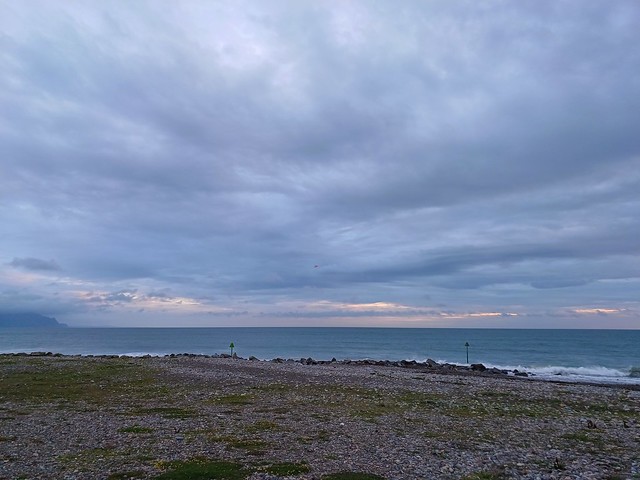
Traeth Dinas Dinlle Beach

Words marked with a * are reconstructions.

Proto-Celtic *ɸlētos = grey
Old Irish (Goídelc) líath [l͈ʲiːa̯θ] = grey, grey-haired
Middle Irish (Gaoidhealg) líath, liath = grey, grey-haired, aged
Irish (Gaeilge) liath [ˈl̠ʲiə] = grey, grey-haired (person), pale
liathábhar = grey matter
liathach = greyish
liathacht = greyness, greyishness
liathadh = greyness
liathbhán = greyish white, pale, wan
liathbhuí = sallow
liathdhearg = pale red, pinkish
liathghlas = pale green, pale grey
liathghorm = pale blue, blue-grey, livid
Scottish Gaelic (Gàidhlig) liath [l̪ʲiə] = grey, grizzled
liath-dhearg = pink
liath-ghlas = light grey, hoary
liath-ghorm = lilac
liathach = greyish, dirty white
liathachadh = making grey, creamer, whitener
liathad = degree of greyness, staleness
liathadh = making grey, becoming grey, greying, growing mouldy
liathtas = greyness
Manx (Gaelg) lheeah = grey, silver, grey- or white-haired, grey-headed, hoary, musty, mould
lheeaghid = greyness
lheeaghys = greyness, hoariness, mustiness
lheeah-ghlass = light grey, sage green
lheeah-ghorrym = blue-grey, glaucous, livid
lheeah gorrym-yiarg = mauve
lheeah-vane = whitish
lheeah-wuigh = yellowish
Proto-Brythonic *luɨd = grey
Middle Welsh (Kymraec) luit, llvid, lluid, lluyd, llwyt = grey, pale, pallid, wan
lwytlas = greyish-blue, pale
Welsh (Cymraeg) llwyd [ˈɬuːɨ̯d / ˈɬʊi̯d] = grey, faint; pale, pallid, wan; russet, brown; turbid, muddy (water); grey-haired, grey-headed, old, ancient; grey (hair), grizzled
llwydaf, llwydo = to turn grey or brown, to become turbid or muddy, turn pale, fade, grow old, deteriorate, decay
llwydaidd = greyish, rather pale, brownish, turbid, drab, poorish, dreary, dismal, lacking enthusism, lukewarm
llwyd-ddu = dark grey, greyish black, blackish, dusky, swarthy, dun
llwydedd = greyness, mouldiness, mould, mildew, mustiness, hoariness, pallor, paleness
llwyd-felyn = greyish-yellow, beige, fawn, pale brown, khaki, buff
llwydlas = greyish-blue, pale
Old Cornish luit, lot = grey, mouldy
Middle Cornish (Cernewec) loys = grey, mouldy
Cornish (Kernewek) loos [lo:z / lu:z] = grey, hoary, mouldy
Old Breton loit = mold, moldy
Middle Breton (Brezonec) loüet = mold, moldy
loedadur = moldy
Breton (Brezhoneg) loued = grey, mouldy
louedadur = mold, blight
louedan, louedañ = to turn grey, mold
louedek = to greyness

Etymology: from Proto-Indo-European *pelh₁- (pale). Words from the same roots include fallow, pale, pallid and polio in English, and the names Floyd and Lloyd [source].

Proto-Celtic *blāros = grey
Gaulish *blāros = (?)
Old Irish (Goídelc) blár = grey, blaze (on a horse)
Middle Irish (Gaoidhealg) blár = grey
Irish (Gaeilge) blár = blaze on animal’s forehead
Scottish Gaelic (Gàidhlig) blàr [bl̪ˠaːr] = blaze, white-faced, having a white foreheard (applied to cows and horses)
blàrach [bl̪ˠaːrəx] = white-faced (of an animal)
blàradh [bl̪ˠaːrəɣ] = (act of) blazing, roughly hewing
blàrag [bl̪ˠaːrag] = blaze, white-faced animal (cow or horse)
blàras [bl̪ˠaːrəs] = blace (i.e. white spot)
Proto-Brythonic *blọr = grey (?)
Middle Welsh (Kymraec) blawr, blaur, blaỽr = grey, greyish-blue, pale-blue, white, greyish-white, hoary, tawny, russet (of horses)
blawrfrych = speckled grey
Welsh (Cymraeg) blawr = grey, greyish-blue, pale-blue, white, greyish-white, hoary, tawny, russet (of horses)
blawrgoch = tawny, russet, greyish-red
blawrio = to turn pale, green or grey; become hoary, grow light
blawrwyn = grey, whitish-grey, light grey, white, hoary, pale blue

Etymology: possibly from Proto-Indo-European *bʰleh₁- (yellow, blue). The Occitan word blar (glaucous) comes from the root, via Gaulish *blāros and Latin Blārus. The English word blue comes from the same PIE root [source].

The Fastest Way to Learn Japanese Guaranteed with JapanesePod101.com

Sources: Wiktionary, Am Faclair Beag, Online Manx Dictionary, Teanglann.ie, eDIL – Electronic Dictionary of the Irish Language, In Dúil Bélrai English – Old Irish glossary, Geiriadur Prifysgol Cymru, Gerlyver Kernewek, Dictionaire Favereau, TermOfis, English – ProtoCeltic WordList (PDF), Etymological Dictionary Of Proto Celtic

Unlimited Web Hosting - Kualo

Red

Words for red in Celtic languages.

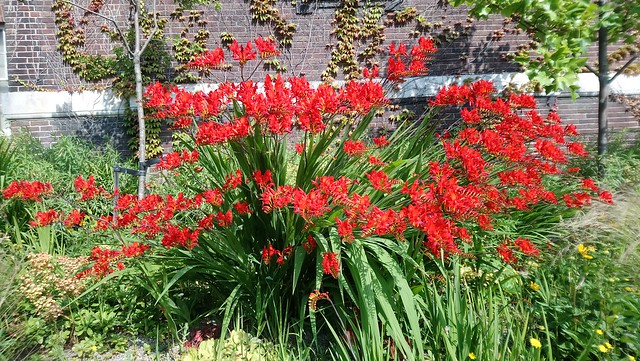
Flowers / Blodau

Words marked with a * are reconstructions.

Proto-Celtic *dergos = red, crimson
Old Irish (Goídelc) derg [dʲerɡ] = red
dergaid = to redden
Middle Irish (Gaoidhealg) derg, derc = red, ruddy, bloody, sanguinary, red-hot, incandescent
dergadas = to redden
dergaid = to redden, make red, kindle, burn
dergaide = reddish
derge = redness, ruddiness, flushing
dergthach = red, ruddy, hot, reddish
Irish (Gaeilge) dearg [ˈdʲaɾˠəɡ / ˈdʲæɾˠəɡ] = red, rouge, red ink, glowing, raw, bloody
deargadh = reddening, blushing, glow(ing), light(ing), bloodying, wounding, chafing, soil-turning, digging
deargán = red matter or object, chafed, patch, glow
dearglasta = blazing, red-hot
Scottish Gaelic (Gàidhlig) dearg [dʲɛrɛg] = red, ruddy, flamming, red-hot
dearg-amadan = bloody fool, complete idiot
dearg-bhuidhe = orange
dearg-lasrach [dʲɛrɛg l̪ˠasrəx] = flaming red, red hot
deargachadh [dʲɛrɛgəxəɣ] = reddening, making an impression, blushing, drawing blood
dearg-ruadh = bright red (hair, wool, etc)
Manx (Gaelg) jiarg = red, sanguine, ruddy, bloodshot, rouge, gules, glowing, stark, florid, live, burning, abandoned, fair (intensive), turned (land)
jiargey = chafe, sore, red
jiargaghey = to blush, flush, glow, redden, blushing, glowing
jiargid = grossness, reddishness, redness
jiarg-bwee = orange
jiarg-cheh = red hot
jirgid = blush, glow, reddness, ruddiness

Etymology from Proto-Indo-European *dʰerg- (to dim, darken) [source]. The English word dark comes from the same root [source].

Proto-Celtic *roudos = red
Gaulish *roudos = red
Old Irish (Goídelc) rúad [r͈uːa̯ð] = red, reddish
rúadnaid = to redden
forrúad = red, russet
Middle Irish (Gaoidhealg) rúad = red, brownish, dark red, strong, mighty
rúadnaid = to make red, redden
Irish (Gaeilge) rua [ɾˠuə] = red, reddish-browm, russet, copper-brown; wild, fierce; rough, strong
ruachan = reddening, rusting (vegetation
ruachorcra = puce
ruacht = redness (of hair)
ruafholtach = red-haired
Scottish Gaelic (Gàidhlig) ruadh [r̪ˠuəɣ] = (browny) red, rust-coloured, ginger, russet, red colour, redness; strength; red deer
ruadhachadh [r̪ˠuə.əxəɣ] = reddening, making red
ruadhan [r̪ˠuəɣan] = reddishness, overcooked good, tea which has been boiling all day
ruadh-bhuidhe = auburn
Manx (Gaelg) ruy [rɛi/riː] = red, ginger, tan, copper-complexioned, red-haired, foxy, sandy
ruyagh = reddish
ruyghey = bronze, brown, redden, tan(ned)
ruyid = brownness, reddishness, redness, tan
ruissagh = florid, reddish, rose-coloured, rosy, ruddy
ruissaght = reddishness, rosiness, ruddiness
Proto-Brythonic *rʉð = red
Old Welsh (Kembraec) rud = red
Middle Welsh (Kymraec) rud, rut, rhudd = red, ruddy
rudit, rutaỽ, rudaỽ, rhuddo = to make or become red, crimson or violet
rudell, ruddell = red, reddish
rutem, rud em, rudem = ruby, garnet, ruby-coloured
rudcoch, rruddgoch, rudgoch = red, crimson, purple, blood-red, bloody
ruddlas, ryddlas = reddish-blue, purple, violet
Welsh (Cymraeg) rhudd = red, ruddy, purplish, bay, tawny, brown, bloody, covered with blood, scorched, crimson, violet, purple
rhuddaf, rhuddo = to make or become red, crimson or violet
rhuddel(l) = red, reddish, brown, bay, red ochre, red colour
rhuddem = ruby, garnet, ruby-coloured
rhuddgoch = red, crimson, purple, blood-red, bloody
rhuddiad = becoming red or pink, blushing, redness
rhuddlas = reddish-blue, purple, violet
Old Cornish rud = red
Middle Cornish (Cernewec / Kernuak) rudh, rud, rûdh ruydh = red, crimson
Cornish (Kernewek) rudh [ry:ð / ri:ð] = ginger, red
rudh min = lipstick
rudhek = robin
rudhel = auburn, russet red
rudhem = ruby
rudhgogh = blood-red
rudhik = reddish
rudhlas = purple, reddish purple
rudhlasdu = crimson
rudhlos = greyish red, russet
rudhvelyn = orange, reddish orange
rudhwyn = gay, pink, reddish pink
rudhya = to blush, redden
Old Breton (Brethonoc) rud = red
Middle Breton (Brezonec) ruz, ru, rus = red
Breton (Brezhoneg) ruz = red
ruzded = redness
ruzdu = brown
ruzellat = to glow
ruzian, ruziañ = to blush

Etymology: from Proto-Indo-European *h₁rewdʰ- (red). Words from the same root include red, robust, ruby, ruddy, russet and rust in English [source].

Proto-Celtic *kokko-/*kokki = red
Proto-Brythonic *kox = red
Middle Welsh (Kymraec) coch = red
cochi, kochi = to make or become red, redden, brown, scorch, blush
cochder, cochter, kochder = redness, ruddiness, flush
kochdduy, coch-ddu, cochddû = reddish-black, russet, brown
cochliw = red-coloured, bloody, redness, ruddiness
kochwen = reddish-white, pink
coghyn, kochyn, cochen = red-haired person, hare
Welsh (Cymraeg) coch [koːχ] = red, redness, ruddy, scarlet, bloody; ginger (hair); brown; poor, feeble, unskilful
cochaf, cochi = to make or become red, redden, brown, scorch, blush
cochaidd = reddish, ruddy, bloody
cochder = redness, ruddiness, flush
cochddu = reddish-black, russet, brown
cochfelyn = copper-coloured, reddish yellow
cochlas = purple, violet, reddish blue
cochliw = red-coloured, bloody, redness, ruddiness
cochliwaf, cochliwio = to paint red
cochrudd = crimson, ruddy
cochwyn = reddish-white, pink
cochyn = red-haired person, hare
Middle Cornish (Cernewec / Kernuak) coch, couch = red, bloody
Cornish (Kernewek) kogh = blood-red, crimson, scarlet

Etymology: from the Latin coccum (a scarlet berry), from the Ancient Greek κόκκος (kókkos – berry). This is also the root of coccinus (scarlet, scarlet-dyed), from which comes the English word cochineal, and related words in other languages [source].

Proto-Celtic *wlannos = blood red
Old Irish (Goídelc) flann = red, blood-red
Middle Irish (Gaoidhealg) flann, fland [flan͈] = red, blood-red, blood
Irish (Gaeilge) flann = (blood-)red, bloody, sanguinary, blood (poetic)
flannbhuí = orange (colour)
flanndearg = vermilion
flannrua = blood-red
Scottish Gaelic (Gàidhlig) flann [fl̪ˠaun̪ˠ] = blood (archaic)
flann-dhearg = blood-red (archaic)

Etymology from Proto-Indo-European *welh₃- (to strike, hit, wound). Words from the same roots include vulnerable, valkyrie and Valhalla in English [source] and words for blood in Celtic languages.

The Fastest Way to Learn Japanese Guaranteed with JapanesePod101.com

Sources: Wiktionary, Am Faclair Beag, Online Manx Dictionary, Teanglann.ie, eDIL – Electronic Dictionary of the Irish Language, In Dúil Bélrai English – Old Irish glossary, Geiriadur Prifysgol Cymru, Gerlyver Kernewek, Dictionaire Favereau, TermOfis, English – ProtoCeltic WordList (PDF), Etymological Dictionary Of Proto Celtic

Unlimited Web Hosting - Kualo

Silver & Money

Words for silver, money and related things in Celtic languages.

Silver Coins From a Hoard

Words marked with a * are reconstructions.

Proto-Celtic *argantom = silver
Gaulish arangto- / *argantom = silver
Celtiberian arkanta / arkato- = silver
Old Irish (Goídelc) argat [ˈarɡad] = silver, money
airgdide = silver
Middle Irish (Gaoidhealg) argat = silver, currency, money
airgdide = (made of ) silver
airgetlach = mine
Irish (Gaeilge) airgead [ˈaɾʲɪɟəd̪ˠ / ˈæɾʲɪɟəd̪ˠ] = silver, money, sum of money
airgeadaí = financier
airgeadaigh = to silver, electroplate
airgeadaíocht = monetary policy, management
airgeadas = finance
airgeadóir = cashier, (bank) teller
airgeadra = currency
airgeadúil = silvery, financial, moneyed, profitable
Scottish Gaelic (Gàidhlig) airgead [ɛrʲɛgʲəd] = money, silver, cash, currency
airgead-beò = mercury (Me), quicksilver
airgead-làimhe = cash
airgead-urrais = insurance
airgeadach [ɛrʲɛgʲədəx] = silver(y), well-off, moneyed, lucrative
airgeadachadh = silvering, silverplating, monetizing
airgeadaichte [ɛrʲɛgədɪçdʲə] = silvered
airgeadas [ɛrʲɛgʲədəs] = finance
airgeadra [ɛrʲɛgʲədrə] = currency
Manx (Gaelg) argid = money, silver, coinage, wages, finance, exchequer
argidagh = fiscal, moneyed, financier, (the) rich, silver(ed)
argidaghey = silver, silver plate
argid-roie, argid cadjin = currency
argideyr = cashier, financier, teller
argidoil = financial, monetary
argidys = finance
Proto-Brythonic *arɣant [arˈɣant] = silver, money
Old Welsh (Kembraec) argant = silver
Middle Welsh (Kymraec) aryant, ariant, arian = silver
arandûy, ariandy = bank
arianllais = (having) a clear or melodious voice or sound
arianna, aryanna = to collect or accumulate money, beg for (money)
ariannu = to give money to, fund, finance
aryanheyt, areanneit, aryaneit = silvered, silver-plated, make of silver, silvery, wealthy, rich, moneyed
ariannog = wealthy, rich, moneyed, silver(y)
Welsh (Cymraeg) arian [ˈarjan] = silver, silvery; silver vessel; money, coin(s), coinage, currency, wealth
arianllais = (having) a clear or melodious voice or sound
arianna = to collect or accumulate money, beg for (money)
ariannaf, ariannu = to give money to, fund, finance, silver, inlay, plate
ariannaid = silvered, silver-plated, make of silver, silvery, wealthy, rich, moneyed
arianneg = financial management, finance
Ariannin = Argentinia, Argentinian
ariannog = wealthy, rich, moneyed, silver(y)
ariannwr, ariannydd = cashier, financier, banker, sponsor
Old Cornish argan, arʒant, argans = silver
Middle Cornish (Cernewec) archans, arhans, arrans = silver
Cornish (Kernewek) arghans [‘arhans / ‘ærhɐnz] = money, silver
arghans bew/byw = quicksilver
arghansek = financial, silvery
arghanser, arghansores = banker
arghans-gweres = subsidy
arghanti = bank
Arghantina = Argentina
Old Breton (Brethonoc) argant = silver
Middle Breton (Brezonec) archant = silver
Breton (Brezhoneg) arc’hant [ˈar.ɣãnt] = silver, money
arc’hantadur = silvering
arc’hantaj = silverware
arc’hantan, arc’hantañ = to silver, realize (in money), capitalize, sponsor, convert
arc’hantek = silver (adj)
arc’hanter = silverer
arc’hantiri = silverware
arc’hantus = money-producing, lucrative, capitalizable

Etymology: from Proto-Indo-European *h₂erǵn̥tom (silver), from *h₂erǵ- (white, glittering) [source]. Words from the same PIE root include Argentina and argentous (of, pertaining to or containing silver) in English, արծաթ (arcatʿ – silver) in Armenian, argento (silver) in Italian, argent (silver, money, cash) in French [source].

The Fastest Way to Learn Japanese Guaranteed with JapanesePod101.com

Sources: Wiktionary, Am Faclair Beag, Online Manx Dictionary, Teanglann.ie, eDIL – Electronic Dictionary of the Irish Language, In Dúil Bélrai English – Old Irish glossary, Geiriadur Prifysgol Cymru, Gerlyver Kernewek, Dictionaire Favereau, TermOfis, English – ProtoCeltic WordList (PDF), Etymological Dictionary Of Proto Celtic

Unlimited Web Hosting - Kualo

Honey

Words for honey in Celtic languages.

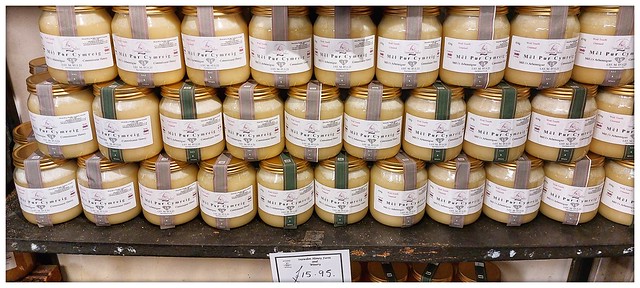
Deryl shop

Words marked with a * are reconstructions.

Proto-Celtic *meli(t) = honey
Old Irish (Goídelc) mil = honey
Middle Irish (Gaoidhealg) mil, mel = honey
criathar mela = honeycomb
Irish (Gaeilge) mil [mʲɪlʲ] = honey
militeach = honey-eating
miliúil = honey-like, honeyed
beach mheala = honey bee
blas meala = taste of honey, delicious taste
briathra meala = honeyed words
broc meala = honey badger
ceo meala = honey dew
cíor mheala = honeycomb
lá meala = delightful day
mí na meala = honeymoon
chomh milis le míl = as sweet as honey
Scottish Gaelic (Gàidhlig) mil [mil] = honey
mil an fhraoich = heather honey
mil-dheoch = mead
mil air do bheul! = that’s wonderful/excellent news! (“honey on your mouth”)
teillean-meala = honey bee
cho milis ris an t-siùcar / cho milis ris a’ mhil = as sweet as honey
Manx (Gaelg) mil [mɪl] = honey
mill freoaie = heather honey
mill kerey = comb honey
mill freoaie = heather honey
cha millish as mill = as sweet as honey
Proto-Brythonic mel = honey
Old Welsh (Kembraec) mel = honey
Middle Welsh (Kymraec) mel, mêl = honey
meledic = sweetened with honey
Welsh (Cymraeg) mêl [meːl] = honey, nectar
mêl ar ei frechdan/fara = source of pleasure (“honey on his sandwich/bread”)
mêl ar ei fysedd = schadenfreude (“honey on his fingers”)
mêl grug = heather honey
mêl gwyllt = wild honey
dil mêl = honeycomb
gwenynen mêl = honey bee
mis mêl, melfis = honeymoon
melaf, mela, melu = to gather nectar to make honey, to sweeten (with honey)
melaidd = sweet, honey-like
meledig = sweetened with honey
Old Cornish mel = honey
Middle Cornish (Cernewec) mel, mêl = honey
melder = sweetness
Cornish (Kernewek) mel = honey
melder = darling, sweetness, love
Middle Breton (Brezonec) mel, mèl, meel, mil = honey
Breton (Brezhoneg) mel [meːl] = honey, compliments
mela = to look for honey, honeydew
meladour = honey merchant
melek = honeyed
meler = honey maker

Etymology: from the Proto-Indo-European *mélid (honey), which is also the root of the English words mildew and mulch [source].

The Fastest Way to Learn Japanese Guaranteed with JapanesePod101.com

Sources: Wiktionary, Am Faclair Beag, Online Manx Dictionary, Teanglann.ie, eDIL – Electronic Dictionary of the Irish Language, In Dúil Bélrai English – Old Irish glossary, Geiriadur Prifysgol Cymru, Gerlyver Kernewek, Dictionaire Favereau, TermOfis, English – ProtoCeltic WordList (PDF), Etymological Dictionary Of Proto Celtic

Unlimited Web Hosting - Kualo

Fresh & New

Words for fresh and new in Celtic languages.

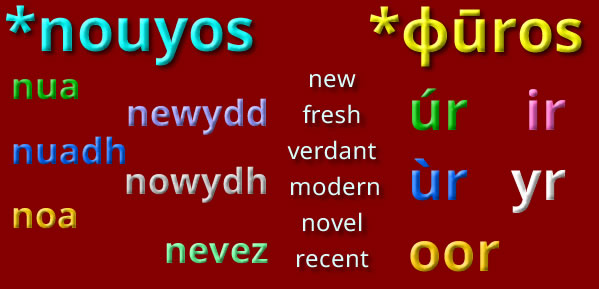
Words for new in Celtic languages

Proto-Celtic *ɸūros = new
Old Irish (Goídelc) úr = fresh, new
Middle Irish (Gaoidhealg) úr = fresh, new, bright, noble, generous, fair, active, recent
Irish (Gaeilge) úr [uːɾˠ] = fresh; free, liberal, moist
úrach = green timber
úraigh = to freshen, scour, cleanse, become moist, damp
úras = new milk
úrchneasach = fresh-complexioned
Scottish Gaelic (Gàidhlig) ùr [uːr] = new, fresh
ùrachadh = refreshing, renewing, renovating, renewal
ùr-ghnàthaich = innovative, innovatory
ùr-ghnàthaichear = innovator
ùrad = degree of newness, novelty
Manx (Gaelg) oor = new, sweet, novel, sappy, crisp, span, fresh, hour, raw
ooragh = hourly, refreshing
ooraghey = to freshen, purify, refresh, relieve, sweeten
ooraghtoil, oorey = refreshing
Welsh (Cymraeg) ir [iːr] = verdant, green, juicy, sappy, moist, succulent, not withered, not dried up or coagulated, fresh, undried; mild; alive, thriving, lively, vigorous; new, fresh, young, unripe
iraidd = fresh, verdant, green, juicy, sappy, moist, liquid
Cornish (Kernewek) yr [ɪ:r/iːr] = fresh

Etymology: from the Proto-Indo-European *puHrós (wheat), possibly from *pewH- (to be clean, pure) [Source].

Words from the same PIE roots include pure in English, პური (ṗuri – bread, wheat) in Georgian, and պուրի (puri – a type of bread) in Armenian [Source].

Proto-Celtic *nouyos = new
Gaulish *novios = (used in place names)
Celtiberian nouiza = new
Old Irish (Goídelc) núa [n͈uːa̯] = new
Middle Irish (Gaoidhealg) núa(e) = new, recent, fresh, lusty, vigorous, fair, clear, bright, lately, anew, again, recently
Irish (Gaeilge) nua [n̪ˠuə / n̪ˠuː] = new, fresh, recent, novel; newness, new thing
nua-aimseartha = modern
nuachan = novation
nuacht = news, novelty
nuachtóir = reporter, journalist
Scottish Gaelic (Gàidhlig) nuadh [nuəɣ] = new, fresh, recent, novel, modern, unfamiliar
a-nuadh = anew
nua-aimsireach = modern, up to date
nua-fhasanta = newfangled
nuadhachadh = renewing, renovating
nuadhachas = novelty, innovation
Manx (Gaelg) noa = fresh, modern, new, novel, original, recent, unused
noa-emshiragh = modern
noaght = freshness, modernity, newness, novelty
noaid = freshness, innovation, newness, novelty, originality
aanoaghey = to rejuvenate, renew, renovate
Proto-Brythonic *newɨð = new
Old Welsh neguid = new
Middle Welsh (Kymraec) newyt, newyd = new, recent, modern, late, novel
newydhau, newyddhau = to renew, renovate, restore
Welsh (Cymraeg) newydd [ˈnɛu̯.ɨ̞ð/ˈnɛu̯.ɪð] = new, recent, newly-grown, modern, late, novel, changed, different; new (moon), unused, fresh
newyddaf, newyddu = to renew, renovate, restore, be renewed or restored, replace, change, reform, modernize, innovate
newyddaidd = newish, new, modern, newfangled, fresh, renewed
newyddair = neologism, new word or spelling
newyddeb = novelty, innovation
newyddiadur = newspaper
newyddiadura = to be a journalist
newyddiadureg = jouralese, journalism
Middle Cornish (Cernewec) newydh, nowydh, nowedh = new, fresh, late, recent
Cornish nowydh = fresh, new, novel, newly, just
nowydh flamm = brand new
nowydh genys = newborn
Old Breton nouuid = new
Breton (Brezhoneg) nevez [ˈne.ve] = new
nevezadeg restoration campaign
nevezadenn = innovation
nevezadenniñ = to innovate
nevezadur = innovation, updating, actualisation
nevezer = innovator

Etymology: from the Proto-Indo-European *néw(y)os (new) [Source]. The town of Noia in A Coruña in Galicia in the northwest of Spain probably gets its new from the same Proto-Celtic root possibly via Celtiberian [Source].

Words marked with a * are reconstructions.

Sources: Wiktionary, Am Faclair Beag, Online Manx Dictionary, Teanglann.ie, eDIL – Electronic Dictionary of the Irish Language, In Dúil Bélrai English – Old Irish glossary, Geiriadur Prifysgol Cymru, Gerlyver Kernewek, Dictionaire Favereau, TermOfis, English – ProtoCeltic WordList (PDF), Etymological Dictionary Of Proto Celtic

The Fastest Way to Learn Japanese Guaranteed with JapanesePod101.com

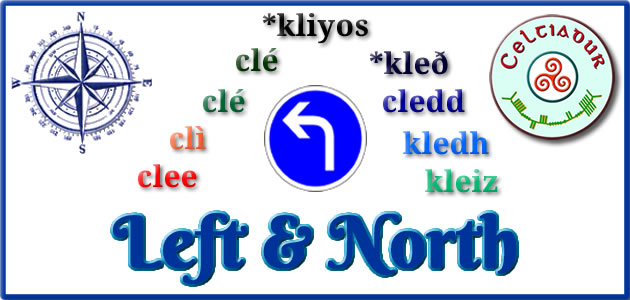
Left & North

Words for left, north and related words in Celtic languages.

Left & North

Words marked * are reconstructions.

Proto-Celtic *kliyos = left (hand)
*uɸokliyom = north
Old Irish (Goídelc) clé = left
fochlae = the north, seat of honor
Middle Irish (Gaoidhealg) clé = left
fochla = the north, seat of honour
Irish (Gaeilge) clé [clʲeː / clʲiː] = left, left hand, left-hand side
clébhord = port, larbord
Scottish Gaelic (Gàidhlig) clì [kliə] = left
clì-làmhach = left-handed
làmh chlì = left hand, left wing (in politics)
clè [kleː] = left, left-handed, mistaken, wrong, lar-board, sinister (in heraldry)
Manx (Gaelg) clee = left. leftist
skian clee = left wing
cleeid = left handedness
Proto-Brythonic *kleð = left, northern
*gwogleð [ɡwoˈɡlɛːð] = north
Old Welsh cled = left hand, left side
gogled = north
Middle Welsh (Kymraec) cled, kled = left, left hand, left side
argled = left, unlucky, unfortunate
guocled, goglet, gogled, gogledd = north
Welsh (Cymraeg) cledd [kleːð] = left, left hand/side
argledd = left, unlucky, unfortunate
gogledd = north, northern, northerly, North Wales, north wind
Middle Cornish (Cernewec) cledh, clêdh = left, north
cledhec = left-handed
dorn-kledh = left-handed
Cornish (Kernewek) kledh [klɛ:ð / kle:ð] = left, left-handed, northern
kledhbarth = north
Kledhbarthyas, Kledhbarthyades = Northerner
kledhek = awkward, clumsy, left-handed
kledhek hy thowlow / y dowlow = impractical
gogledh = north
a-gledh = on the left
a-gledh dhe = to the left of
a-gledhbarth = on the north side
Middle Breton (Brezonec) cleiz = left
Breton (Brezhoneg) kleiz [klɛj(s)] = left, north, northern, irrascible
kleizell = left
kleizenn = north wind
kleiziad – left-handed, left-hander
kleizour = left winger
a-gleiz [aˈɡlɛj(s)] = to the left
gougleiz, gouglez [ˈɡuɡlɛj(s)] = north (archaic)

Etymology: from the Proto-Indo-European *ḱléyteh₂ (leaning, sloped, inclined) from *ḱley- (to lean, incline) [source].

Words from the same PIE roots include clement, client, climate, climax, clinic, ladder and to lean in English [source].

Proto-Celtic *(s)kīttos = left, left-handed, clumsy, awkward, wrong, sinister, sad
Middle Irish (Gaoidhealg) cittach = left-handed, awkward
Irish (Gaeilge) ciotach [ˈcɪt̪ˠəx / ˈcɪt̪ˠa(h)] = left-handed, awkward, clumsy, difficult, troublesome, inconvenient
ciotachán = left-handed person, awkward, clumsy person
ciotóg = left hand, left fist, lefthanded person
ciotógach = left-handed, left-fisted, awkward
Scottish Gaelic (Gàidhlig) ciotach [kʲihdəx] = left-handed, awkward, sinister
ciotachan = left-handed person
Manx (Gaelg) kiuttag = left hand
kyttagh = left-handed
kiuttaght = left-handedness
Middle Welsh (Kymraec) chwith, hwidd = left, left-handed
Welsh (Cymraeg) chwith [χwiːθ] = left; left-handed, awkward, bungling, uncouth, unfortunate, sinister, sad, strange, unaccustomed, unusual, wrong, amiss; the left (hand); the Left
chwithig = left, left-handed; strange, awkward, clumsy, bungling, wrong, inauspicious, unpleasant, suspicious
chwithlyd = sinister, chilly
gochwith, go chwith = contrary, opposite, inside out, clumsy, awkward, left-handed; evil, mishap, misfortune

Etymology: from the Proto-Indo-European *skh₂ey- (left) [source].

Proto-Celtic *towto = left, north
Old Irish (Goídelc) túaid, thúaid = north, in the north
túaidemain = in the north, northwards
fa thuaith, fo thuaidh = northwards, to the north
Middle Irish (Gaoidhealg) túaid, thúaid = north, in the north, northern, northwards
túaidebar = the north
túaidemain = in the north
túaiscert = the north, the left, northerly
túaiscertach = northern, left hand, a northerner
atúaid = from the north, to the north of
Irish (Gaeilge) thuaidh [huəɟ / huə / huəj] = (in the) north, northern
ó thuaidh = to the north, northwards
aduaidh = from the north
tuaisceart = north, northern part
Tuaisceart Éireann = Northern Ireland
tuaisceartach = Northerner, northern, awkward to deal with, surly, rude
tuaisceartacht = awkwardness, surliness, rudeness
Scottish Gaelic (Gàidhlig) tuath [tuə] = north
gu tuath = northward(s)
tuathach [tuəhəx] = northerner, person from North Uist; northerly, northern, boreal
tuathal = anti-clockwise, unlucky, ill-omended, confused, agitated, disorientated
tuathar = place with a northerly aspect, land facing north
tuathlach = unlucky, awkward, left-handed
Manx (Gaelg) twoaie = north, northerly, northern, boreal, northward
twoaieagh = northerner, northsider, northern (Manx) person
goal twoaie = rainbow (“going north”)
my hwoaie = north, northerly, northward
Nerin Hwoaie = Northern Ireland
Old Breton tut = good, favorable
tuthe = a kind of demon

Etymology: possibly from the Proto-Indo-European *tewto- or *tewH- (to look favorably, protect, observe). Cognate with the Latin tūtus (safe, prudent, secure, protected), which is the root of English words like tutor and intuition [source].
Blubrry podcast hosting

Blubrry podcast hosting

Sources: Wiktionary, Am Faclair Beag, Online Manx Dictionary, Teanglann.ie, eDIL – Electronic Dictionary of the Irish Language, In Dúil Bélrai English – Old Irish glossary, Geiriadur Prifysgol Cymru, Gerlyver Kernewek, Gerlyvyr Cernewec, Lexicon Cornu-britannicum: A Dictionary of the Ancient Celtic Language of Cornwall, Dictionaire Favereau, TermOfis, Le dictionnaire diachronique du breton, Geriafurch, English – ProtoCeltic WordList (PDF), Etymological Dictionary Of Proto Celtic