Towns and Tribes

Words for dwelling, settlement, town, tribe and related things in Celtic languages.

Trefor

Proto-Celtic *trebā = dwelling
Gaulish Atrebates = name of a tribe
Old Irish (Goídelc) treb = house, farm; household; tribe
Middle Irish (Gaoidhealg) treb = house, farm; household; tribe
Irish (Gaeilge) treibh [ˈtʲɾʲɛv] = house, homestead, farmstead; household, family; tribe, race
Scottish Gaelic (Gàidhlig) treabh [tro] = farming village
treubh [treːv] = tribe
Proto-Brythonic *treβ [ˈtrɛːβ] = town, settlement
Middle Welsh (Kymraec) tref [ˈtrɛːβ] = town, settlement
trefad, trevad, treuad, treuat = dwelling(-place), habitation
trefan, treuan = small town or city, village, dwelling, abode, manor-house, fort
Welsh (Cymraeg) tre(f) [treː(v)] = town; town centre; dwelling(-place), habitation, residence, home; house (and surrounding land), homestead, farm, estate, cluster of houses; township; tribe
trefad = dwelling(-place), habitation, residence, home, region, domain
trefaf, trefu= to dwell, live, settle
trefan = small town or city, village, dwelling, abode, manor-house, fort
Middle Cornish (Cernewec) tre, trev = dwelling place, homestead, home, town
tregva, trigva = dwelling place, habitation
trevedic = one from a country village, a country man, rustic
Cornish (Kernewek) tre [trɛ:/tre:] = farmstead, home, town, village
trigva = abode, address, dwelling, resdidence
trigys = settled, to reside, live
Old Breton treff, treb = town, settlement
Middle Breton (Brezonec) tre, trev = town
Breton (Brezhoneg) trev = town
trevour = civil

Etymology: From the Proto-Indo-European *treb- (dwelling, settlement) [source].

Words from the same Proto-Celtic root (via Latin) possibly include trobo (beehive, skep) in Galician, and truébanu (beehive, barrel, basket) in Asturian [source].

This is also the root of the archaic English word thorp(e) (a group of houses standing together in the country; a hamlet; a village), which appears in place names such as Milnthorpe and Scunthorpe.

Related words in other languages include Dorf (hamlet, village, town) in German, torp (village) in Danish, torp (farm, cottage, croft) in Swedish, þorp (village, farm) in Icelandic, and trevë (country, region, village) in Albanian [source].

Words marked with a * are reconstructions.

Sources: Wiktionary, Am Faclair Beag, Online Manx Dictionary, Teanglann.ie, eDIL – Electronic Dictionary of the Irish Language, In Dúil Bélrai English – Old Irish glossary, Geiriadur Prifysgol Cymru, Gerlyver Kernewek, Gerlyvyr Cernewec, Dictionaire Favereau, TermOfis, Le dictionnaire diachronique du breton, Geriafurch, English – ProtoCeltic WordList (PDF), Etymological Dictionary Of Proto Celtic

The Fastest Way to Learn Japanese Guaranteed with JapanesePod101.com

Lord, Ruler

Words for lord, master, ruler and related words in Celtic languages.

lord and lady

Words marked with a * are reconstructions.

Proto-Celtic *tigerno(s) = lord, master
*tigernākos = lordly, ruler
Gaulish Tigernum = placename
Primitive Irish ᚈᚔᚌᚔᚏᚅ (tigirn) = lord
Old Irish (Goídelc) tigerna = lord
tigernas = lordship
Middle Irish (Gaoidhealg) tigerna = sovereignty, lord, superior, chief
tigernach, tigernaide, tigernamail = lordly
tigernaid = rules
tigernaigid = to rule, dominate
tigernas = lordship, dominion, possession, power, dominance
tigernatas = lordship, dominion
Irish (Gaeilge) tiarna [ˈtʲiəɾˠn̪ˠə] = lord, master, ruler
tiarnaigh = to rule, dominate
tiarnas = lordship, rule, dominion, domain
tiarnúil = lordly, masterful, overbearing, domineering, cheeky
tiarnúlacht = lordliness, overbearingness, domination, cheekiness
aintiarna = despotic lord, tyrant
aintiarnas = tyranny
bantiarna = lady
Scottish Gaelic (Gàidhlig) tighearna [tʲi.əɾˠn̪ˠə] = lord, The Lord, laird, chief, ruler, baronet, master, superior
tighearnach, tighearnail = lordly, magisterial
tighearnas = lordship, dominion, peerage
aintighearna = despot, oppressor, tyrant
aintighearnas = oppression, tyranny
baintighearna = lady
Manx (Gaelg) çhiarn [ˈtʃaːrn] = laird, lord, peer
çhiarnaght = dominion, lordship
çhiarnys = domain, domination, dominion, lordship, manor, peerage
ben çhiarn = lady
Proto-Brythonic *tɨɣern = lord, ruler
*tɨɣernọg = lordly, noble
Middle Welsh (Kymraec) teyrn, tegyrn = lord, master
teyrneit, teyrneidd, têyrnaidd = monarchical, royal, kinglike, princely, majestic, dignified
tyrnas, ternas, teyrnas, teernas, teÿnas = monarchy, kingdom, realm, dominion
tyrnasa, tëyrnasa, teyrnasa = to reign (over), rule, govern
tëyrnasaidd = monarchical, royal, dignified
Welsh (Cymraeg) teyrn [teɨ̯rn / tei̯rn] = monarch, sovereign, king, prince, lord, ruler, leader, dictator, tyrant, royal
teyrnach, teyrnachaeth = royal line, dynasty
teyrnaidd = monarchical, royal, kinglike, princely, majestic, dignified
teyrnas = monarchy, kingdom, realm, dominion
teyrnasaf, teyrnasu = to reign (over), rule, govern
teyrnasaidd = monarchical, royal, dignified
Middle Cornish (Cerenwec) mychtern = king
Cornish (Kernewek) machdeyrn = king
Old Breton (Brethonoc) *tiarn, *tiern = lord, master
*tiarnoc = lordly, noble
Middle Breton (Brezonec) tyèrn, tiern = prince, sovereign
Breton (Brezhoneg) tiern [ˈtiː.ɛrn] = prince, sovereign

Etymology: possibly from Proto-Celtic *tiger (raid, raiding party) and *-inos (of, pertaining to). *Tigerno(s) may originally have meant something like “the chief of the raiding party” [source].

The name Vortigern from the same roots, as do versions in Welsh, Gwrtheyrn and Breton, Gourziern [source].

More about words for Kings and Queens.

The Fastest Way to Learn Japanese Guaranteed with JapanesePod101.com

Sources: Wiktionary, Am Faclair Beag, Online Manx Dictionary, Teanglann.ie, eDIL – Electronic Dictionary of the Irish Language, In Dúil Bélrai English – Old Irish glossary, Geiriadur Prifysgol Cymru, Gerlyver Kernewek, Lexicon Cornu-britannicum: A Dictionary of the Ancient Celtic Language of Cornwall, Dictionaire Favereau, TermOfis, Le dictionnaire diachronique du breton, Etymological Dictionary Of Proto Celtic

Doctor

Words for doctor and related things in Celtic languages.

Doctor

Words marked with a * are reconstructions.

Middle Irish (Gaoidhealg) dochtúir, doctúir = learned ma, teacher, professor, physician
Irish (Gaeilge) dochtúir [d̪ˠɔxˈt̪ˠuːɾʲ / ˈd̪ˠʌxt̪ˠuɾʲ] = doctor
dochtúireacht = doctorate, medical practice, doctoring
Scottish Gaelic (Gàidhlig) dotair [dɔhdɛrʲ] = doctor, surgeon, physician
dotaireachd [dɔhdɪrʲəxg] = doctorate, knowledge of medicine, (act of) curing, healing
dotaireas [dɔhdɪrʲəs] = doctorate, knowledge of medicine
Manx (Gaelg) doghtoor = doctor
doghtoorahgt = doctorate
Middle Welsh (Kymraec) doethur = doctor, teacher, sage, learned man
Welsh (Cymraeg) doethur, doethor = doctor, teacher, sage, learned man
Cornish (Kernewek) doktour = doctor

Etymology: from the Latin doctor (teacher, instructor), from doceō (teach), from the Proto-Italic *dokeō (tell, inform, teach, instruct), from the Proto-Indo-European *deḱ- (to take) [source].

Proto-Celtic *lī(φ)agi- = doctor
Old Irish (Goídelc) líaig = leech, doctor, physician
fáithlíaig = doctor, physician
leiges = healing, medicine, curing
Middle Irish (Gaoidhealg) líaig, liag, leaga, lega, lieig = leech, doctor, physician, adviser, healer
leiges. leges, leighis = healing, medical treatment, cure, remedey, medicine, medicament, curing, healing
leigesamail = medicinal, healing
leigisid, leigiste = medicinal, healing, to cure, to heal
Irish (Gaeilge) lia [l̠ʲiə] = healer, physician
lia ban = gynaecologist
lia súl = oculist
leigheas = art of healing, medicine, medical treatment
leigheasach = healing, curative, medicinal
leigheasóir = healer, curer
leigheasra = cures, medicines
Scottish Gaelic (Gàidhlig) lèigh [l̪ʲeː] = physician, surgeon
lèighadair = pharmacist
lèigheadairachd = pharmacy
lèigheadh = (act of) healing
leigheas [l̪ʲe.əs] = curing, healing, medicine
lèigheil = medical
lighiche [l̪ʲi.ɪçə] = healer, physician, surgeon
Manx (Gaelg) (fer/ben) lhee = (male/female) doctor, physician
lheihys = cure, curing, heal(ing), remedy
lheihyssagh = curable, curative, healing

Etymology: possibly from Proto-Germaic *lēkiz (healing, medicine, healer), or directly from the Proto-Indo-European *h₂leg- (to care for) [source]. Words from the same Proto-Celtic / PIE root possibly include leech in English, læknir (medical practitioner, doctor) in Icelandic, läkare (doctor, physician) and läka (to heal) in Swedish, lääkäri (phyisican, doctor) in Finnish, and læge (doctor, physician, surgeon) in Danish [source].

Old Irish (Goídelc) midach = physician
Middle Irish (Gaoidhealg) midach, midech, midaig = physician
Proto-Brythonic *meðïg = doctor
Middle Welsh (Kymraec) metic, medyc, med(d)ic, meddig = doctor, medical practitioner, physician, surgeon, healer
methygaeth = (science of) medicine, surgery, drug
medyges, meddyges female doctor or healer, female herbalist
medegynyaeth, medeginyaeth, medegynyaeth = medicine, remedy, medical treatment, surgery, cure, healing
Welsh (Cymraeg) meddyg [ˈmɛðɪɡ / ˈmeːðɪɡ] = doctor, medical practitioner, physician, surgeon, healer
meddyg(i)adwy = curable, treatable
meddyg(i)aeth = (science of) medicine, surgery, drug
meddygu = to practise medicine, to treat medically, to prescribe, to heal, to cure
meddyges female doctor or healer, female herbalist
meddygfa = surgery, clinic, pharmacy, hospital
meddygin(i)aeth = medicine, remedy, medical treatment, surgery, cure, healing
meddygol = medical, medicinal, healing, curative
Old Cornish medhec = physician
Middle Cornish (Cernewec) methic, medhic = physician
Cornish (Kernewek) medhek [mɛðɛk / ‘mɛðɐk] = doctor, physician
medhegel = medical
medhegieth = medical science, medicine
medhegiethel = medicinal
medhegneth = medication, medicine
medhegva = clinic, (doctor’s) surgery
medhegvael = clinical
Middle Breton (Brezonec) mezec = doctor
mezeyaff = to treat, to care for
mezeyet, mezeguet = medicine
mezegioez = medicine
Breton (Brezhoneg) mezeg [ˈmeː(z)ek] = doctor
mezegañ [meˈ(z)eː.ɡã] = to care for (medically), to treat
mezegiezh [me(z)eˈɡiːɛs] = medicine

Etymology: from the Latin medicus (doctor), from medeor (I heal, cure, remedy), from the Proto-Italic *medēōr (to heal), from Proto-Indo-European *med- (to measure, give advice, heal). Words from the same roots include medico (doctor, physician, medical) in Italian, medicus (doctor, physician) in Dutch, medic, medical, medicine, meditate and remedy in English, and médico (doctor, physician) in Spanish [source].

Sources: Wiktionary, Etymological Dictionary Of Proto Celtic, In Dúil Bélrai English – Old Irish glossary, eDIL – Electronic Dictionary of the Irish Language, Teanglann.ie, Am Faclair Beag, An etymological dictionary of the Gaelic language, Fockleyreen: Manx – English Dictionary, Online Manx Dictionary, Gaelg Corpus, Geiriadur Prifysgol Cymru, Lexicon cornu-britannicum : a dictionary of the ancient Celtic language of Cornwall, Gerlyver Kernewek, Devri : Le dictionaire diachronique du breton, Geriafurch, TermOfis


Kings and Queens

Words for king and related things in Celtic languages.
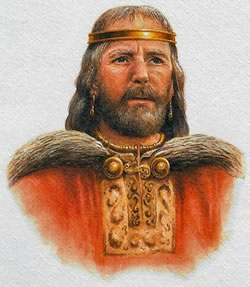
Brian Boru, High King of Ireland (1002-1014)
Brian Boru, High King of Ireland (1002-1014) / Brian Bóruma mac Cennétig, Ard-Rí ar Éirinn

Words marked with a * are reconstructions.

Proto-Celtic *rīxs/*rig- = king
Celtiberian reikis = king
Gaulish rīx = king – appears in names like Katurīx, Suādurīx, *Werkingetorīx (Vercingetorix) and Asterix
Primitive Irish ᚏᚔᚌᚐᚄ (rigas) = (of the) king
Old Irish (Goídelc) [r͈ʲiː] = king
rígdae = regal, kingly
rígdún = palace
Middle Irish (Gaoidhealg) rí, ríg, rig = king, head, chief
rígán = a sub-king, chief
rígamail, rioghamhail = royal
rígdacht = kingliness, kingly qualities, a kingdom
rígda(e) = a royal dwelling place, palace
rígrach = = royal, kingly
Irish (Gaeilge) [ɾˠiː] = king, sovereign, monarch
ríoga = regal, royal
ríora = kings, royal persons, royalty, dynasty
Scottish Gaelic (Gàidhlig) rìgh [r̪ʲiː] = king
banrìgh = queen
àrd-rìgh = high king
mòr-rìgh = emperor
rìoghachadh = reigning, reign
rìoghachd = kingdom, realm
Manx (Gaelg) ree = king
reejerey = cavalier, chevalier, king, knight, lord, paladin, prince
reeoil = kinglike, monarchy, regal, royal
reeaght, reeriaght, riaght, ream = kingdom
Proto-Brythonic *riɣ [ˈriːɣ] = king
Old Welsh rig = king
Middle Welsh (Kymraec) ri, rhi = king
rhiaidd, rhïaidd = regal, royal, noble, generous
rieu, riav = king, lord, ruler, chieftain
rriawdr, riawdr = lord, ruler, chieftain, God
Welsh (Cymraeg) rhi [r̥iː] = king, prince, lord, ruler, chieftain
rhiaidd = regal, noble, aristocratic, dignified
rhiau = king, lord, ruler, chieftain
rhiawdr = lord, ruler, chieftain, God
Middle Cornish (Cernewec) ruy, ruif = king, sovereign, ruler
ryal, real = royal, kingly
Cornish (Kernewek) riel = regal, royal
Old Breton ri = king
Middle Breton (Brezonec) ri, rí = king
Breton (Brezhoneg) ri [ˈʁiː] = king

Etymology: from Proto-Indo-European *h₃rḗǵs (king, ruler) [source]. Words from the same Proto-Celtic root include rich in English, ryk (rich, wealthy) in Afrikaans, ricco (rich, wealthy, affluent) in Italian, riche (rich) in French, Reich (empire, realm) in German, and rikas (rich, wealthy, opulent, plentiful) in Finnish [source].

English words with the suffix -ric, such as bishopric (a diocese or region of a church which a bishop governs), and comes from the same Proto-Celtic root [source].

Proto-Celtic *rīganī= queen
Gaulish rigani = queen
Old Irish (Goídelc) rígan = queen
Middle Irish (Gaoidhealg) rígain, rígan, rígnae = queen, noble lady
Irish (Gaeilge) ríon = queen, queenly, noble, lady, fair maiden
banríon = queen
(ban)ríonacht = queenship
ríonaí = queenly
ríonaigh = to queen (chess)
Scottish Gaelic (Gàidhlig) rìghinn [r̪ʲi.ɪn̪ʲ] = princess (archaic)
rìbhinn [r̪ʲiːvɪn̪ʲ] = maid, maiden, girl, Venus, adder, queen (archaic)
banrìgh = queen
Manx (Gaelg) reeven = queen
rein = queen
ben-rein = queen
Proto-Brythonic *rriɣėn [r͈iˈɣe̝ːn] = queen
Middle Welsh (Kymraec) riein, riain = (young) woman, girl, damsel, lass, maiden, virgin, queen, noble girl, lady
Welsh (Cymraeg) rhiain = (young) woman, girl, damsel, lass, maiden, virgin, queen, noble girl, lady

Etymology: from Proto-Indo-European *h₃rḗǵnih₂ (queen), from *h₃rḗǵs (king, ruler) [source]. Words from the same roots include reine (queen) in French, reina (queen) in Spanish, erregina (queen) in Basque, and regină (queen) in Romanian [source].

Middle Welsh (Kymraec) rhỼyf, rwyf, rỼy = king, lord, ruler, chieftain, leader
rwyfaỼ, rwyfaỼ = to have dominion over, govern, rule
rwyuannus, rhwyvanus = royal, kinglike, governing
ruyvenit = prince, king, ruler
rhwyfiadur, ruyfadur, rwyfyadur, rỼyfyadur = chief(tain), lord, leader, ruler, protector
Welsh (Cymraeg) rhwy(f) = king, lord, ruler, chieftain, leader
rhwyfo = to have dominion over, govern, rule, lead, be ostentatious, live in splendour
rhwyfanes = queen, lady
rhwyfaniad = reign, government, rule, kingdom
rhwyfanus = royal, kinglike, governing
rhwyfenydd = prince, king, ruler
rhwyf(i)adur = chief(tain), lord, leader, ruler, protector
Old Cornish ruifanes = queen
ruifadur = chief(tain), lord, leader
Middle Cornish (Cernewec) ruy, ruif = king, sovereign, ruler
ruifanes, ruivanes = a female ruler, queen
Cornish (Kernewek) ruvanes = queen
ruvaneth = kingdom
Old Breton roe = king
Middle Breton (Brezonec) roe, roé, roue, rouè = king
rouanes, roanez, rouanés = queen
rouantelez, roeantelez = kingdom
roueel = royal
roueeler = royalist
roueelezh = royalty
roueelouriezh = royalism
roueoni = reign
Breton (Brezhoneg) roue = king
rouanez = queen
rouantelezh = kingdom, monarchy
roueel = royal
roueelezh = royalty
roueelouriezh = royalism

Etymology: from Old French roi (king), from Latin rēgem (king, ruler, despot, tyrant), from Proto-Italic *rēks (king), from Proto-Indo-European *h₃rḗǵs (king, ruler) [source].

Words from the same Latin root include re (king) in Italian, roi (king) in French, viceroy in English and rey (king) in Spanish [source].

Proto-Celtic *brigantīnos = (someone) pre-eminent, outstanding
Proto-Brythonic *brɨɣėntin [brɨɣe̝nˈtiːn] = lord, king
Middle Welsh (Kymraec) breenhin, breennin, breyenhin, brenhin = king
brenhynes, brenhines = queen, goddess, queen bee
brenineiziaw = to become kingly
brenhynyaeth, brenhinyaeth = royalty, kingship, reign
Welsh (Cymraeg) brenin [ˈbrɛnɪn / ˈbreːnɪn] = king, sovereign, monarch, head of region
brenineiddio = to make/become regal/kingly, make (sb) a king
breninesaidd = queen-like, queenly
breninesol = queen-like, queenly, pertaining to a queen
breningarol = royalist
breniniaethu = to reign, govern
breninoldeb = kingship, royalty
brenhines = queen, goddess, queen bee
brenhiniaeth = royalty, kingship, reign, government
Middle Cornish (Cernewec) brentyn, bryntyn = privileged, sovereign, noble, excellent
Cornish (KerneweK) bryntin, brentin = grand, great, noble, splendid, superb
Old Breton brientin, brientinion = king
Middle Breton (Brezonec) brientin = aristocrat
brientinelezh = aristocracy
Breton (Brezhoneg) brientin = aristocrat
brientinel = aristocratic
brientinelezh = aristocracy
brienteg, brientek = privileged
brientekaat = to favour
briental = royalties

Etymology: from Proto-Indo-European *bʰérǵʰonts (high), from *bʰerǵʰ- (to rise up, ascend) [source].

From the same Proto-Celtic root, , we get the tribal name *Brigantī (Brigantes – a Celtic tribe that occupied much of what is now northern England), Brigantia (a Celtic goddess of victory, and the territory of the Brigantes), the name Bridget, the Irish name Bríd, the Scottish Gaelic name Brìghde, the Manx name Breeshey, and the placenames such as Bragança (a city in northeastern Portugal), Bregenz (a city in western Austria) and Brianza (a city in northern Italy), [source].

English words from the same PIE root include bourgeois, burrow, fort and maybe burgler [source].

Middle Welsh (Kymraec) mechdeyrn, mychdeyrn, machdeyrn = king, lord, monarch, emperor
mechteyrnged, mychteyrnged = tribute due to an overlord from an inferior lord
Welsh (Cymraeg) mechdeyrn, mychdeyrn, machdeyrn = king, lord, monarch, emperor, God, tributary prince, viceroy
mechdeyrnged, mychdeyrnged = tribute due to an overlord from an inferior lord
Middle Cornish (Cernewec) mychtern = sovereign, king
mychternes = queen
mychterneth = sovereignity, dominion, royalty, kingdom
Cornish (Kernewek) myghtern, metern [mɪx’tɛrn] = king, monarch
myghternes, meternes = monarch, queen
myghterneth, meterneth = kingdom
myghternses, meternses = kingship, monarchy
Old Breton machtiern = king

Etymology: from Welsh mach (surety, guarantor, sponsor, hostage) and teyrn (sovereign, monarch, king) [source].

Sources: Wiktionary, Am Faclair Beag, Online Manx Dictionary, Teanglann.ie, eDIL – Electronic Dictionary of the Irish Language, In Dúil Bélrai English – Old Irish glossary, Geiriadur Prifysgol Cymru, Gerlyver Kernewek, Dictionaire Favereau, TermOfis, English – ProtoCeltic WordList (PDF), Etymological Dictionary Of Proto Celtic

Blubrry podcast hosting

Cowherd, boy, child

Words for cowherd, boy, child and related people in Celtic languages.

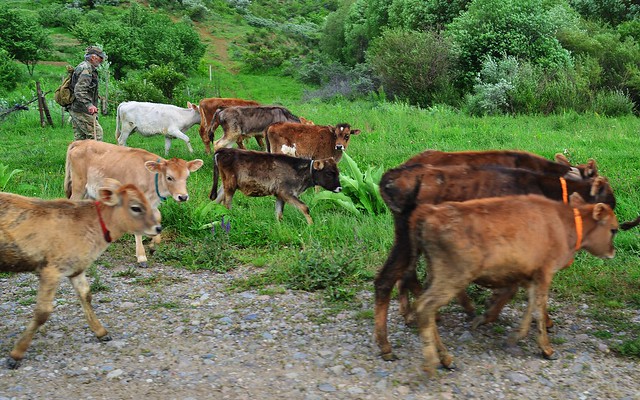
Cowherd 1

Proto-Celtic *boukolyos = cowherd
Old Irish (Goídelc) búachaill [ˈbuːa̯xil͈ʲ] = cowherd, herder, herdsman
Irish (Gaeilge) buachaill [ˈbˠuəxɪlʲ] = boy, young unmarried; herdboy, herdsman; man-servant, male employee; lad
buachailleacht = herding (cattle)
Scottish Gaelic (Gàidhlig) buachaille, buachaill [buəçɪl̪ʲ(ə)] = herder, herdsman, cowherd, shepherd, youth
buachailleachd [buəxɪl̪ʲəxg] = herding, watching cattle, invigilation
buachailleadh [buəxɪl̪ʲəɣ] = to herd, watch cattle
buachailleach [buəxɪl̪ʲəx] = pastoral
Manx (Gaelg) bochilley = shepherd, herdsman
bochillagh = herd, pastoral
bochillaghey = to herd
bochillaght = drove, herd, look after, shepherd, pastoral
Proto-Brythonic *bʉgöl [bʉˈɡøːl] = herdsman
Middle Welsh (Kymraec) blucelid, bukeyl, bugeil = herdsman, shepherd
Welsh (Cymraeg) bugail [ˈbɪɡai̯l / ˈbiːɡai̯l] = herdsman, shepherd, guardian, keeper, leader, defender; bishop, priest, pastor, minister
bugeil(i)aeth = pastoral care, shepherd’s watch, pastorate, ministry
bugeilio = to shepherd, tend cattle, watch, keep guard, act as a pastor, minister
bugeil(i)aidd = pastoral, pertaining to a shepherd, shepherdly, ministerial
Middle Cornish (Cernewec) bugel, begel, bigel, bygel = herdsman, shepherd, pastor
Cornish (Kernewek) bugel = pastor, shepherd
bugeles = pastor, shepherd(ess)
bugelya = to herd
Middle Breton bugel, buguel, bugale = child, shepherd
bugelek = childlike, childish
bugelel = infantile
bugelez = shepherdess, herdswoman
bugeliañ = to keep, guard (animals)
Breton (Brezhoneg) bugel = child

Etymology
From the Proto-Indo-European gʷowkólos, from *gʷṓws (cow) and *kʷel- (to revolve, move around, sojourn) [source]. English words from the same roots include beef, bovine, bucolic, buffalo, butter and cow [source].

Here’s the Irish song Buachaill On Eirne (Boy from the Erne):

Here’s the Irish folk song Na Buachaillí Álainn (The Beautiful Lads):

Both songs are sung by Clannad, whose name comes from the same roots as the words below, and who get me interested in learn Irish songs and language.

Old Irish (Goídelc) cland [klan͈d] = children, family, offspring, plant
clannmar [ˈklan͈ṽar] = prolific
Middle Irish (Gaoidhealg) clann = plant, planting, off-shoot, produce, children, family, offspring, descendents, race, clan
clannach = having many children, prolific, fruitful, productive, abundant
Irish (Gaeilge) clann [kl̪ˠɑun̪ˠ/kl̪ˠɑːn̪ˠ/kl̪ˠan̪ˠ] = children, offspring, race, descendents, clan, followers, plant, lock (of hair)
clannach = having many children, prolific, luxuriant
clannaigh = to plant, procreate, luxuriate
clannú = procreation
planda [pl̪ˠaun̪ˠd̪ˠə] = plant, scion
plandaigh = to plant
plandáil = plantation
plandóg = shapely, comely woman; young plant
Scottish Gaelic (Gàidhlig) clann [kl̪ˠaun̪ˠ] = children, offspring, progeny, clan, lock of hair, curl
clannail [kl̪ˠan̪ˠal] = fruitful, prolific, abounding in locks, curls, curly, shining, sleek, luxurious
clanmhor [kl̪ˠãũn̪ˠvər] = fruitful, prolific
plannt [pl̪ˠãũn̪ˠd] = plant
Manx (Gaelg) cloan [klɔːn] = children, descendent, family circle
plant = plant
plantal = to plant
Old Welsh plant = children, young people, offspring
Middle Welsh (Kymraec) plant = children, young people, offspring
Welsh (Cymraeg) plant [plant] = children, young people, offspring, progeny, descendents, followers, disciples, servants
plentyn = child, young person, etc
panta(f) = to beget or bear (children), procreate, breed
plantaidd = childlike, innocent
Middle Cornish (Cernewec) plans = plant
plansa = to plant
Cornish (Kernewek) plans = plant
plansa = to plant, stick
Middle Breton plantenn, planten, plantenn = plant, beautiful woman
plantenniñ = to take root, to layer
planter = planter
planterez = planting
Breton (Brezhoneg) plantenn = plant

Etymology: from the Latin planta (vegetable, sprout, shoot, twig, shrub), possibly from the Proto-Indo-European *pleh₂- (flat) [source]. The Old Irish word cland was borrowed from Old Welsh plant [source]. English words from the same roots include clan (via Irish and/or Scottish Gaelic) and plant (via Middle and Old English) [source].

Sources: Wiktionary, Am Faclair Beag, Online Manx Dictionary, Teanglann.ie, eDIL – Electronic Dictionary of the Irish Language, In Dúil Bélrai English – Old Irish glossary, Geiriadur Prifysgol Cymru, Gerlyver Kernewek, Dictionaire Favereau, TermOfis, English – ProtoCeltic WordList (PDF), Etymological Dictionary Of Proto Celtic

The Fastest Way to Learn Japanese Guaranteed with JapanesePod101.com

Troop, host, throng

Today we’re looking at troop, host, throng and related word in Celtic languages.

The crowd grows ...

Proto-Celtic *slougos = troop, army
Gaulish *slugi = troop, army
Old Irish (Goídelc) slóg, slúag = army, host; throng, crowd, company, assembly
Middle Irish (Gaoidhealg) slúagh = army, host; throng, crowd, company, assembly
Irish (Gaeilge) slua [sˠl̪ˠuə] = host, force, army; crowd, multitude, throng
sluaghán = slogan
sluamhar = having large forces, multitudinous
slógadh = mobilization, hosting
Scottish Gaelic (Gàidhlig) sluagh [sl̪ˠuəɣ] = folk, people, populace; the fairy host; crowd
sluaghmhor = populous, densely, inhabited
sluagh-ghairm = slogan
an sluagh cumanta = the common folk
sluagh na sìthe = the fairies (poetic)
sluagh Innse Fàil = the people of Ireland (poetic)
Manx (Gaelg) sleih = commonalty, crowd, family, inhabitants, people, populace, public, relations
sleih gerrym = slogan
Proto-Brythonic *lʉɣ [ˈlʉːɣ] = troop
Middle Welsh (Kymraec) llu, llv = host, throng, multitude
Welsh (Cymraeg) llu [ɬɨː / ɬiː] = host, a large number (of people), a great many, multitude, throng, crowd, flock (of birds); army, body of armed men, regiment
lluaf, lluo = to throng, crowd, flock together, gather, bring together
lluarth = military camp
lluarthaf, lluarthu = to pitch camp, encamp, camp
heddlu = police
Old Cornish lu = army
Middle Cornish (Cernewec) lu = a great multitude, host, army
Cornish (Kernewek) lu [ly: / liˑʊ] = army, military, troop
morlu, lu lestri = navy
Old Breton lu = army
Middle Breton (Brezonec) lu = army
morlu = navy
Breton (Brezhoneg) lu = army
aerlu = airforce
morlu = navy

Etymology: from the Proto-Indo-European *slowgʰos / *slowgos (entourage), which is also the root of the English word slew [source].

The English word slogan comes from the Scottish Gaelic sluagh-ghairm [ˈsɫ̪uəɣɤɾʲəm] (battle cry) from the Old Irish slóg/slúag (army, host, throng, crowd), and gairm (call, cry, crow, proclamation) [source].

Sources: Wiktionary, Am Faclair Beag, Online Manx Dictionary, Teanglann.ie, eDIL – Electronic Dictionary of the Irish Language, In Dúil Bélrai English – Old Irish glossary, Geiriadur Prifysgol Cymru, Gerlyver Kernewek, Dictionaire Favereau, TermOfis, English – ProtoCeltic WordList (PDF), Etymological Dictionary Of Proto Celtic

The Fastest Way to Learn Japanese Guaranteed with JapanesePod101.com

Person, people, human

Words for person, people and related words in Celtic languages.

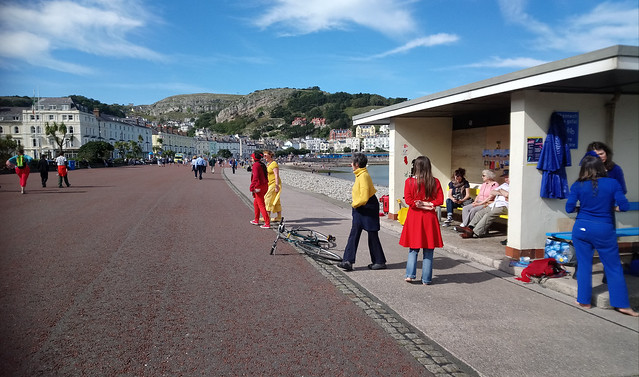
Colourful people in Llandudno

Proto-Celtic *gdonyos = person
Old Irish (Goídelc) duine [ˈdunʲe] = person
duineta = human
dóenacht [ˈdoːi̯naxt] = humanity
Middle Irish (Gaoidhealg) duine = human, human being, man, mankind, person
Irish (Gaeilge) duine [ˈd̪ˠɪnʲə] = human being, man, mankind, person, people, one
duineata = human, kindly
duineatacht = humaneness, kindliness
duiniúil = human, natural, kindly
duiniúlacht = humanity, kindliness
Scottish Gaelic (Gàidhlig) duine [dɯn̪ʲə] = fellow, person, man, husband, (any)one
daonnachd [dɯːn̪ˠəxg] = humanity, charity, benevolence, liberality, hospitality
duine-uasal = gentleman
Manx (Gaelg) dooinney [ˈd̪uːnʲə] = human, man, fellow, husband
deiney = human, man, menfolk
dooinnalys = humanity, human nature
dooinnidaght = humaneness
Proto-Brythonic *dün [ˈdyːn] = human, person
Middle Welsh (Kymraec) din, dyn = man, human being
Welsh (Cymraeg) dyn [dɨːn / diːn] = man, human being; person, one, anyone; mankind, the human race; manservant, vassal; manly or competent person
dynes [ˈdənɛs] = woman
dynegwr, dynegydd = anthropologist
dynfarch [ˈdənvarχ] = centaur
dyneidd(i)o = to render man-like or human, personify, humanize, civilize, tame, refine
dyneiddiol = humanistic, humanitarian, humanizing, civilizing
Old Cornish den = man, person
Cornish (Kernewek) den [dɛ:n / de:n] = man, guy, human, person
dengerenjedhek, dengerensedhek = humanitarian
denladh = homicide, manslaughter
denladhyas = assassin, killer, murderer
denses = humanity
Old Breton den / don = man, person
Middle Breton den = man, person
Breton (Brezhoneg) den [ˈdẽːn] = human being, person, man, husband

Etymology: from the Proto-Indo-European *dʰéǵʰom-yo- (earthling, human), from *dʰéǵʰōm (earth), which is also the root of the English words human, humus and (bride)groom [source].

Old Irish (Goídelc) popul [ˈpobul] = people; tribe, nation, inhabitants; folk; populace, crowd
Middle Irish (Gaoidhealg) popul = people
Irish (Gaeilge) pobal [ˈpˠɔbˠəlˠ / ˈpˠʌbˠəlˠ] = people, community; parish, congregation; population
pobalscoil = community school
poblacht = republic
poblachtach = republican
teach pobail = church, chapel
teange an phobail = vernacular
Scottish Gaelic (Gàidhlig) poball [pobəl̪ˠ] = folk, people; community; laity, lay people
poballach [pobəl̪ˠəx] = popular, populous
poblachd [pɔbl̪ˠəxg] = republic
Manx (Gaelg) pobble = people, population, community, folk, congregation, masses
pobbylagh = public, populous
pobblaght = republic
Proto-Brythonic *pobl = people
Middle Welsh (Kymraec) pobyl = people
Welsh (Cymraeg) pobl [ˈpʰɔbl̩ˠ / ˈpʰɔbl̩] = people, public, nation, tribe, crowd, inhabitants
pybl = people, the common person, folk
poblog = populous, peopled, populated; popular, acceptable; common
poblogaeth = population, populousness
poblogedig = populated, inhabited
poblogeiddio = to popularize
poblogi = to populate, people, inhabit; to popularize
Old Cornish popel = people
Cornish (Kernewek) pobel = people
pobla = to populate
poblans = population
poblansorieth = demographics
poblansoriethek = demographic
Breton (Brezhoneg) pobl = people, multitude

Etymology: from the Latin populus (people, nation, community), from the Proto-Italic *poplos (army) [source].

Words marked with a * are reconstructions.

Sources: Wiktionary, Am Faclair Beag, Online Manx Dictionary, Teanglann.ie, eDIL – Electronic Dictionary of the Irish Language, In Dúil Bélrai English – Old Irish glossary, Geiriadur Prifysgol Cymru, Gerlyver Kernewek, Gerlyvyr Cernewec, Dictionaire Favereau, TermOfis, Le dictionnaire diachronique du breton, Geriafurch, English – ProtoCeltic WordList (PDF), Etymological Dictionary Of Proto Celtic

The Fastest Way to Learn Japanese Guaranteed with JapanesePod101.com

To Carry / Flow

Words for to carry, to flow and related things in Celtic languages.

Carrying a Catch

Words marked with a * are reconstructions.

Proto-Celtic *bereti = to carry
*ɸarebereti = to use
Old Irish (Gaídelc) beirid [ˈbʲerʲiðʲ] = to carry, bear, bring forth, judge
ar·beir [arˈbʲerʲ] = to live, use, employ, eat, reproach, subdue, express
Middle Irish (Gaoidhealg) beirid, berid = to carry, infer, bear, bring forth, be born, yield, produce, judge, pass judgement
ar-beir, airbir = to live, eat, use, employ, plead, subdue, express
Irish (Gaeilge) beir [bʲɛɾʲ] = to bear, give birth to; lay (eggs); bear away, win; bring, take; catch, overtake; proceed, advance
Scottish Gaelic (Gàidhlig) beir [berʲ] = to take hold; bring forth, bear, produce; carry
beirachd [berʲəxg] = bearing (children), giving birth, birthing, bringing forth, birth, nativity, taking hold, holding, catching up with
Manx (Gaelg) behr = to bear (give birth to)
ruggyr = birth, nativity
laa ruggyr, laa ruggyree = birthday
Proto-Brythonic *bėrɨd [be̝ˈrɨːd] = to flow, carry
*ėrβėrɨd [be̝ˈrɨːd] = to make use of, employ, take
Middle Welsh (Kymraec) beru = to flow
Welsh (Cymraeg) beru = to flow, drip; drizzle
arfer [ˈarvɛr] = to use, be used to, be accustomed to; custom, practice, procedure, habit
Middle Cornish (Cernewec) berthy = to bear, carry, sustain, entertain, take
perthy = to bear, carry, sustain, entertain, take
porthy = to bear (with), carry, endure, sustain, suffer
Cornish (Kernewek) perthi = to bear, endure, put up with, stand, suffer, tolerate
perthyans = endurance, patience, tolerance
Middle Breton beraff = to flow
Breton (Brezhoneg) berañ [ˈbeːrã] = to drip, flow

Etymology: from the Proto-Indo-European *bʰéreti (to be carrying), from *bʰer- (to bear, carry) [source]. Words from the same roots include: barn, barrow, (to) bear, birth, broad and (to) thole (to endure) in English, bie (to bring, deliver) Albanian, բերել (berel – to bring, fetch) Armenian, and berti (to throw, strew, scatter, shed) Lithuanian [source].

The Fastest Way to Learn Japanese Guaranteed with JapanesePod101.com

Sources: Wiktionary, Etymological Dictionary Of Proto Celtic, In Dúil Bélrai English – Old Irish glossary, eDIL – Electronic Dictionary of the Irish Language, Teanglann.ie, Am Faclair Beag, An etymological dictionary of the Gaelic language, Fockleyreen: Manx – English Dictionary, Online Manx Dictionary, Gaelg Corpus, Geiriadur Prifysgol Cymru, Lexicon cornu-britannicum : a dictionary of the ancient Celtic language of Cornwall, Gerlyver Kernewek, Devri : Le dictionaire diachronique du breton, Dictionnaires bilingues de Francis Favereau / Edition Skol Vreizh, TermOfis

Unlimited Web Hosting - Kualo

To Choke

Words for to choke and related things in Celtic languages.

*choke*

Words marked with a * are reconstructions.

Proto-Celtic *taketi/*tageti = to choke, strangle
Old Irish (Goídelc) tachtad = choking, strangulation
Middle Irish (Gaoidhealg) tachtad, teachtadh = choking, strangulation
tachtaid = to choke, stifle, strangle, hang, oppress, vex, seize, arrest
Irish (Gaeilge) tacht [t̪ˠɑxt̪ˠ] = to choke, strangle,suffocate
tachtadh = choking, stangulation
tachtaire = choker, strangler
tachtarnach = (act of) choking, choking sound
Scottish Gaelic (Gàidhlig) tachd [taxg] = choke, smother, strangle, throttle, clog
tachdach = choking, strangulation
tachdadair [taxgədɪrʲ] = choker, throttler, strangler, choke, throttle
Manx (Gaelg) toght = to strangulate
toaghtey = to choke, strangle, throttle, clog; choking, strangulation, clogging
toaghteyr = choke
Middle Welsh (Kymraec) tag = choke, choking, suffocation, strangulation
tagedic, tagedig choked, strangled
tagell = jowl, wattle
tacua, tagfa = choking, throttling
tagu, tagy = to choke, stifle, strangle, throttle, suffocate
Welsh (Cymraeg) tag = choke, choking, suffocation, strangulation
tagedig choked, strangled
tagell = jowl, wattle, double chin, throat, windpipe, barb, snare
tagfa = choking, throttling, bottleneck
tagiad = choking, strangulation, obstruction
tagu = to choke, stifle, strangle, throttle, suffocate; to cough (in North Wales)
tagwr, tagydd = choker, strangler, choke (in an engine)
Middle Cornish (Cernewec) tag, tâg = choking, strangling
taga = to stifle, strangle, choke, throttle
Cornish (Kernewek) tag = choking
taga = to choke, clog, strangle, suffocate
Middle Breton (Brezonec) tag = acrid, strangulation
tagaff = to attack, devour, suffocate, smother, strangle
Breton (Brezhoneg) tag [tɑːk] = acrid, strangulation
tagañ [ˈtɑː.ɡã] = to attack, devour, suffocate, smother, strangle
tagus [ˈtɑːɡys] = offensive, suffocation, acrid, acidic

Etymology: possibly from Proto-Indo-European *tak-, which is also the root of tacit (implied) in English, taire (to be/keep quiet, shut up) in French, and tiga (to keep silent, deliberately ignore) in Swedish [source].

Sources: Wiktionary, Am Faclair Beag, teanglann.ie, On-Line Manx Dictionary, Geiriadur Prifysgol Cymru, Gerlyver Kernewek, Dictionnaire Favereau

To search

Words for to search, track and related things in Celtic languages.

Searching

Words marked with a * are reconstructions.

Proto-Celtic *lorgom, *lergo- = track, trace
Old Irish (Goídelc) lorg = path, track, trace
Middle Irish (Gaoidhealg) lorg = trace, vestige, mark, impression, track, trail, path, course
Irish (Gaeilge) lorg [ˈl̪ˠɔɾˠəɡ / ˈl̪ˠʌɾˠəɡ] = to track, trace; seek, search for; trace, vestige, mark, impresssion, track, trail, path, course
lorgaire = tracker, pursuer, detective, seeker, searcher, follower, adherent
lorgaireacht = (act of) tracking, tracing, pursuing, seeking, searching, detection
Scottish Gaelic (Gàidhlig) lorg [ˈl̪ˠɔrɔg] = to trace, track, search, pursue, follow by scent or footprints
air lorg = on the track of, in search of, found, located
lorgadh [l̪ˠɔrɔgɪç] = (act of) discovering, finding
lorgaich = track! trace! pry! ferret out!
lorgadh [l̪ˠɔrɔgɛrʲə] = detective, detector, finder, tracker
lorganach [l̪ˠɔrɔganəx] = sluggard, slowcoach, trail, track
meur-lorg = fingerprint
Manx (Gaelg) lorg = trace, track, trail, vestige, spoor
lorgey = to trace, to track, to pursue, pursuit, tracing, trailing, urging
lorgaghey = to drive (on/along), to urge on, urging
Proto-Brythonic *llurɣ, ˈɬuːru = track, trail (?)
Middle Welsh (Kymraec) llwrw, llwry = track, trail, path, way, direction
Welsh (Cymraeg) llwrw, llwry [ˈɬʊru / ˈɬuːru] = track, trail, path, way, direction, course, career, manner, mode, form, semblance; tax, fee, fine, penalty; opportunity, convenince
Middle Cornish (Cernewec) lerch, lyrch, ler = trace, vestige, footstep
war lerch = after
Cornish (Kernewek) lergh = track, trail, trace
a-lergh = lately, recently
war-lergh = according to, after, behind
Old Breton (Brethonoc) lerg = trace, sequel
Middle Breton (Brezonec) lerch = trace, sequel
Breton (Brezhoneg) lerc’h [ˈlɛrx] = trace, sequel, continued
lerc’h-ouzh-lerc’h = next, right away, successively
lerc’henn = postposition
dilercʼh = remainder, consequence, delay
war-lercʼh = after, behind, because of

Etymology: uncertain [source] or from Proto-Indo-European *lerg- (slippery, even) [source]

Proto-Celtic *swelos = to turn
Old Irish (Goídelc) sel = a turn, a while, a spell
dessel = sunwise, clockwise
túaithbel = anticlockwise, widdershins, lefthandwise
Middle Irish (Gaoidhealg) sel, seal = a turn, a time, a while
dessel, deisell, dessiul = direction of the sun, right-hand course, sunwise, clockwise
túaithbel, tuaithbil, tuaithbiul = against the sun, withershins, lefthandwise
Irish (Gaeilge) seal [ˈʃal̪ˠ] = turn, while, spell, span
sealad = turn, while, space of time
sealadach = temporary, provisional
sealaíocht = (act of) alternating, taking turns, alternation
deiseal [ˈdʲeʃəlˠ] = righthand direction, direction of the sun, clockwise, sunwise
tuathal [ˈt̪ˠuəhəl̪ˠ] = anticlockwise, counterclockwise
Scottish Gaelic (Gàidhlig) seal [ʃal̪ˠ] = while, space of time
sealach [ʃal̪ˠəx] = temporary, transient, transitory
sealad [ʃal̪ˠəd] = while, period of time
sealadach [ʃal̪ˠədəx] = transitional, transitory, caretaker, provisional
sealaidheachd [ʃal̪ʲɪjəxg] = course of time, transitoriness, relay
sealan [ʃal̪ˠan] = a little/short while
deiseal [dʲeʃal] = clockwise, facing south, finished, ready, poised, prepared, handy, dexterous
tuathal [tuəhəl̪ˠ] = anticlockwise, counterclockwise, unlucky, ill-omened, confused, agitated, disorien(ta)ted
Manx (Gaelg) shalee = design, intention, project, purpose, pursuit, quest
shayll = piece of work, spell, turn
shallidagh = provisional, provisory, temporary, transient, interim
jeshal = clockwise
Proto-Brythonic *hwel = (?)
Old Welsh (Kembraec) chwel, cheil = turn, course, period
Middle Welsh (Kymraec) chwyl = turn of events, course, destiny
whel = turn, course, period
chwilyaw, chwiliaw, chwilio = to search, seek, trace, investigate, examine, rummage, ransack, try
Welsh (Cymraeg) chwŷl [χwɨːl / χwiːl] = turn of events, course, destiny
chwyl(i)ad = a turning round, roation, revolution
chwyl(i)o = to revolve, rotate, turn around
chwêl = turn, course, period, while, commotion, disturbance
chwilio [ˈχwɪljɔ / ˈχwɪljɔ] = to search, seek, trace, investigate, examine, rummage, ransack, try
chwiliadur = search engine
chwiliedydd = searcher, examiner, investigator
chwiliwr = searcher, investigator, examiner, trier, inquirer, spy, inquisitor
chwilys = inquisition
chwilyswr = inquisitor
chwiliota(f) = to rummage, pry, grope for, grabble, pilfer
Middle Cornish (Cernewec) chwila, whela(s), hwila(s), hwillaz = to seek, to seach for
hwiliog a searcher, seeker, conjuror
Cornish (Kernewek) hwilas [‘ʍilas / ‘ʍilɐz] = to seek, look for, attempt, try, search
hwilerbownder, hwiler hyns = pathfinder
hwilreseger = orienteer
hwilresek = orienteering
hwilva = laboratory
Middle Breton (Brezonec) chouilia = to search, look for
Breton (Brezhoneg) hoal = age, ascendancy, attractiveness
hoal-vat = happiness, prosperity
hoalad = career, era, epoc, period
hoaladur = delectation
hoalat = to seduce, to delight
holc’hiñ = to search

Etymology: possibly from Proto-Indo-European *welH- (to turn, revolve). Words from the same roots in English include helicopter, helix, valve, wallow, whelk, and deiseal (clockwise, sunwise – borrowed from Irish) [source]

Sources: Wiktionary, Etymological Dictionary Of Proto Celtic, In Dúil Bélrai English – Old Irish glossary, eDIL – Electronic Dictionary of the Irish Language, Teanglann.ie, Am Faclair Beag, An etymological dictionary of the Gaelic language, Fockleyreen: Manx – English Dictionary, Online Manx Dictionary, Gaelg Corpus, Geiriadur Prifysgol Cymru, Lexicon cornu-britannicum : a dictionary of the ancient Celtic language of Cornwall, Gerlyver Kernewek, Devri : Le dictionaire diachronique du breton, Geriafurch, TermOfis