Omniglot News (08/12/24)

Omniglot News

Here’s the latest news from the world of Omniglot.

New language pages:

  • Kuku (Kʊ́tʊ́k nà kùkù), an Eastern Nilotic language spoken in South Sudan and Uganda.
  • Nyepu (Kútúk nà ŋyɛ́pʊ̀), an Eastern Nilotic language spoken in South Sudan.
  • Ecuadorian Siona (Ba̠icoca), a Western Tucanoan language spoken mainly in northeastern Ecuador.
  • Siona (Gantëya coca), a Western Tucanoan language spoken in southwestern Colombia.

New adapated script: Tengwar for Russian, a way to write Russian with Tolkein’s Tengwar script devised by Murray Callahan.
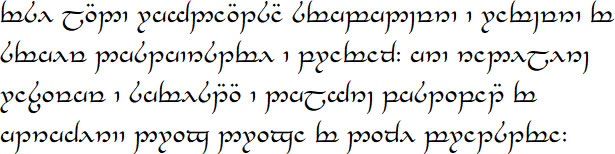
Sample text

New numbers pages:

  • Obolo, a Lower Cross River language spoken in southern Nigeria.
  • Nuxalk (ItNuxalkmc), a Salishan language spoken in Bella Coola in British Columbia in Canada.

On the Omniglot blog this week, we discover what guillemets are, and what links chevrons to goats in a post entitled Guillemets & Goats and there’s the usual Language Quiz. See if you can guess what language this is:

Here’s a clue: this language is spoken in parts of Iran and Azerbaijan.

The mystery language in last week’s language quiz was Yaaku (Mogogodo), a Lowland East Cushitic language spoken in western Kenya.

In this week’s Celtic Pathways podcast, Country Gardens, we uncover links between words for country and land in Celtic languages, and words for garden, wood and related things in other languages. It’s also available on YouTube, Instagram and TikTok

On the Celtiadur blog there’s a new post entitled Cards in which we look into words for card and related things in Celtic languages.

For more Omniglot News, see:
https://www.omniglot.com/news/
https://www.facebook.com/groups/omniglot/
https://www.facebook.com/Omniglot-100430558332117

JapanesePod101.com

You can also listen to this podcast on: Apple Podcasts, Amazon Music, Stitcher, TuneIn, Podchaser, PlayerFM or podtail.

If you would like to support this podcast, you can make a donation via PayPal or Patreon, or contribute to Omniglot in other ways.

Radio Omniglot podcasts are brought to you in association with Blubrry Podcast Hosting, a great place to host your podcasts. Get your first month free with the promo code omniglot.

Unlimited Web Hosting - Kualo

Celtic Pathways – Country Gardens

In this episode we uncover links between words for country and land in Celtic languages, and words for garden, wood and related things in other languages.

Bodnant
Bodnant Garden / Gardd Bodnant

The Proto-Celtic word *mrogis means border(land), march, mark, region, country, territory or province, and comes from Proto-Indo-European *mórǵs (frontier, border) [source]

Related words in the modern Celtic languages include:

  • brugh = dwelling, mansion in Irish
  • brugh [bruh] = broch (a type of Iron Age stone tower with hollow double-layered walls – see below), fortified tower, large house, mansion, fairy mound in Scottish Gaelic
  • brogh = broch in Manx
  • bro [broː] = region, country, land, neighbourhood, border, limit, boundary in Welsh
  • bro = country, land in Cornish
  • bro [broː] = counry(-side) in Breton

For more about words for border, land, country and related things in Celtic languages, see the Celtiadur post: Region and Country

Mousa Broch

Words from the same Proto-Celtic root, via Gaulish *brogis and Latin brogi-/broges, include brolo (vegetable garden, orchard, grove) in Italian, and breuil (wood, copse, coppice) in French, bröol (a lawn or vegetable garden surrounding house) in Cimbrian, and Brühl (enclosed land, (wet/swampy) meadow) in German (found mainly in place names).

Words from the same PIE root include margin, and march (a border region; formal, rhythmic way of walking) in English, and marge (margin, markup) in French, marca (brand, make, trademark) in Italian [source], Mark (a fortified border area, marches) in German, and mark (field) in Danish, as in Denmark [source].

Radio Omniglot podcasts are brought to you in association with Blubrry Podcast Hosting, a great place to host your podcasts. Get your first month free with the promo code omniglot.

The Fastest Way to Learn Japanese Guaranteed with JapanesePod101.com

Omniglot News (01/12/24)

Omniglot News

Here’s the latest news from the world of Omniglot.

New language pages:

  • Yamba, a West Bamileke language spoken in southern Cameroon and eastern Nigeria.
  • Tugen, a Kalenjin language spoken mainly in Baringo County in western Kenya.
  • Rendille (Afi Renꞌdille), a Lowland East Cushitic language spoken in the north of the Eastern Province of Kenya.

New numbers pages:

  • Wolaytta (Wolayttatto Doonaa), a North Omotic language spoken in southern Ethiopia.
  • Äiwoo, an Oceanic language spoken in Temotu Province of the Solomon Islands.

New phrases page: Tugen, a Kalenjin language spoken in western Kenya.

On the Omniglot blog, there’s a new post entitled Paper Cards about the word carta which means paper in Italian and card in Spanish, and has various other meanings, another post entitled Mermaid Sirens, about differences between mermaids and sirens, and there’s the usual Language Quiz. See if you can guess what language this is:

Here’s a clue: this language is spoken in western Kenya.

The mystery language in last week’s language quiz was Shawiya (Tacawit / ⵜⴰⵛⴰⵡⵉⵜ), a Northern Berber language spoken in Algeria and Tunisia, specifically the variety of Shawiya spoken in western Tunisia.

In this week’s Adventure in Etymology, entitled Office Opus, we find connections between the word office and words like copy, manure, opera, opulence and opus. It’s also available on YouTube, Instagram and TikTok

On the Celtiadur blog there’s a new post entitled Disease about words for sickness, disease, grief and related things in Celtic languages, and I made improvements to the post about words for Death.

I also made improvements to the Wolaytta language page.

For more Omniglot News, see:
https://www.omniglot.com/news/
https://www.facebook.com/groups/omniglot/
https://www.facebook.com/Omniglot-100430558332117

JapanesePod101.com

You can also listen to this podcast on: Apple Podcasts, Amazon Music, Stitcher, TuneIn, Podchaser, PlayerFM or podtail.

If you would like to support this podcast, you can make a donation via PayPal or Patreon, or contribute to Omniglot in other ways.

Radio Omniglot podcasts are brought to you in association with Blubrry Podcast Hosting, a great place to host your podcasts. Get your first month free with the promo code omniglot.

Unlimited Web Hosting - Kualo

Adventures in Etymology – Office Opus

In this Adventure in Etymology, we find connections between the word office and words like copy, manure, opera, opulence and opus.

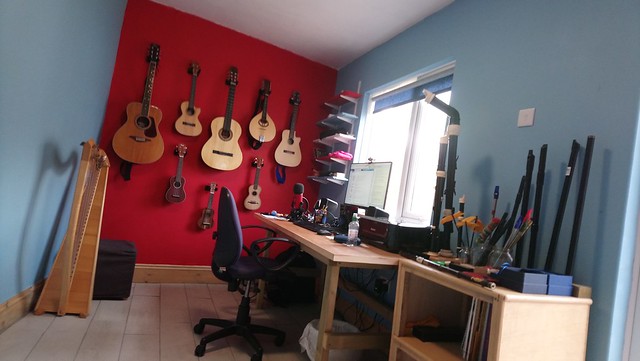
My studio / office
My garden office / studio

An office [ˈɒfɪs/ˈɔfɪs] is:

  • A room, set of rooms, or building used for non-manual work.
  • A position of responsibility.
  • An official position, particularly high employment within government.
    (other meanings are available)

It comes from Middle English office [ɔˈfiːs(ə)] (employment, occupation, obligation), from Old French office (office, job, service), from Latin officium (duty, service, office, obligation) from opificium (work), from opifex (someone who does [creative / constructive] work) from opus (work), from PIE *h₃ep- (to work, toil, make, ability) [source].

Words from the same roots include copy, manure, opera, operate, opulence and opus (a work of music or art) in English; usine (factory) in French; ofício (craft, trade, profession) in Portuguese; oficina (office, workshop, laboratory) in Spanish, and ufficio (office) and officina (workshop, laboratory) in Italian [source].

Hang on, manure? It comes from Middle English maynouren (to supervise, reign, exercise one’s authority), from Anglo-Norman meinourer, from Old French manouvrer (to work, make, create), from Vulgar Latin *manuoperare (to work by hand), from Latin manū (by hand) and operārī (to work). The word manoeuvre comes from the same roots [source].

You can also listen to this podcast on: Apple Podcasts, Amazon Music, TuneIn, Podchaser, Podbay or Podtail and other pod places.

If you would like to support this podcast, you can make a donation via PayPal or Patreon, or contribute to Omniglot in other ways.

Radio Omniglot podcasts are brought to you in association with Blubrry Podcast Hosting, a great place to host your podcasts. Get your first month free with the promo code omniglot.
The Fastest Way to Learn Japanese Guaranteed with JapanesePod101.com

I also write about words, etymology and other language-related topics on the Omniglot Blog, and I explore etymological connections between Celtic languages on the Celtiadur blog.

Unlimited Web Hosting - Kualo

Omniglot News (24/11/24)

Omniglot News

Here’s the latest news from the world of Omniglot.

New language pages:

  • Rongmei (Ruanglat / ꯔꯣꯡꯃꯩ), a Kuki-Chin-Naga language spoken in northeastern India.
  • Kupsabiny (Kupsapiiny), a Kalenjin language spoken in the Eastern Region of Uganda.
  • Lango (Laŋgo), an Eastern Nilotic language spoken in the Eastern Equatoria State of South Sudan.
  • Nyangatom (Inyangatom), an Eastern Nilotic language spoken along the Omo River in southwestern Ethiopia.

New numbers pages:

  • Yemba (Yɛmba), a West Bamileke language spoken in the Southwest and West regions of Cameroon.
  • Xârâcùù, a Southern New Caledonian language spoken in the North Province of New Caledonia.

On the Omniglot blog, there’s a new post entitled Paved Floors, in which we investigate the Italian word pavimento (floor) and related words in other languages, and there’s the usual Language Quiz. See if you can guess what language this is:

Here’s a clue: this language is spoken in Tunisia.

The mystery language in last week’s language quiz was Ladin, a Gallo-Romance language spoken in northern Italy. The recording is specifically in Col Ladin (Ladin da Col), a variety of Ladin spoken in Livinallongo del Col di Lana in the Province of Belluno in the region of Veneto in Italy.

In this week’s episode of the Celtic Pathways podcast, entitled Tan Oaks, we look into the possible Celtic roots of words such as tan, tannery and Tannenbaum. It’s also available on YouTube, Instagram and TikTok

On the Celtiadur blog there’s a new post entitled Original Pedigree about words for origin, basisnobility, lineage and related things in Celtic languages, and I made improvements to the post about Oak (trees).

I also made improvements to the Yemba language page.

For more Omniglot News, see:
https://www.omniglot.com/news/
https://www.facebook.com/groups/omniglot/
https://www.facebook.com/Omniglot-100430558332117

JapanesePod101.com

You can also listen to this podcast on: Apple Podcasts, Amazon Music, Stitcher, TuneIn, Podchaser, PlayerFM or podtail.

If you would like to support this podcast, you can make a donation via PayPal or Patreon, or contribute to Omniglot in other ways.

Radio Omniglot podcasts are brought to you in association with Blubrry Podcast Hosting, a great place to host your podcasts. Get your first month free with the promo code omniglot.

Unlimited Web Hosting - Kualo

Celtic Pathways – Tan Oaks

In this episode we discover the possible Celtic roots of words such as tan, tannin and Tannenbaum.

September

The Proto-Celtic word *tannos means green oak, and comes from Proto-Indo-European *(s)dʰnwos/*(s)dʰonu (fir).

Related words in the Celtic languages include:

  • tinne = the letter t in the Ogham alphabet (ᚈ) in Irish
  • tinne [tʲenə] = the letter t (ᚈ) in Ogham; gorse, whin, furze (archaic) in Scottish Gaelic
  • taneru = to tan (hide) in Welsh
  • glastanen gelyn = holm oak in Cornish
  • tann = sessile oaks in Breton

For more about words for oak and related things, see the Celtiadur post: Oak (trees)

Words from the same Proto-Celtic roots, via Gaulish *tannos (oak) and Latin tannum (oak bark), include tan (pulped oak bark used in the tanning process of leather) in French, tano (stem, slip) in Galician, tanería (tannery) in Spanish, Tannenbaum (fir tree, Christmas tree) in German, θάμνος (thámnos – bush) in Greek, and tan, tannery, tannin (tannic acid) in English.

Words from the same PIE roots include thanë (cranberry bush) in Albanian, and धनु (dhanu – bow, Sagittarius) in Sanskrit. [source].

Radio Omniglot podcasts are brought to you in association with Blubrry Podcast Hosting, a great place to host your podcasts. Get your first month free with the promo code omniglot.

The Fastest Way to Learn Japanese Guaranteed with JapanesePod101.com

Omniglot News (10/11/24)

Omniglot News

Here’s the latest news from the world of Omniglot.

New writing system: Novo Tupi, an alphabet created in the early 19th century as a way to write Old Tupi, a language that was spoken by the Tupi people in Brazil until about the 19th century, and which developed into Nheengatu.

Sample text in Novo Tupi

New adapted script: Finnish Tengwar (Tengwar suomeksi), a way to write Finnish (and Estonian) with Tolkien’s Tengwar alphabet devised by Kuutti Saarivirta.

Sample text (Tehtar mode)

New language pages:

  • Ikoma (Eghiikoma), a Northeast Bantu language spoken in the Serengeti District of the Mata Region in northern Tanzania.
  • Old Tupi, a language that was spoken by the Tupi people in Brazil that developed into Nheengatu.
  • Kakwa (kʊ́tʊ́ nà kákwà), an Eastern Nilotic language spoken in Uganda, the Democratic Republic of the Congo (DRC), and South Sudan.

New numbers page: Ki’che’ (Qatzijobʼal), a Mayan language spoken in central Guatemala.

On the Omniglot blog we find whether the word kitchen is related to the words apricot, pumpkin and melon in a post entitled Kitchen Fruit, and there’s the usual Language Quiz. See if you can guess what language this is:

Here’s a clue: this language is spoken in northern Bolivia.

The mystery language in last week’s language quiz was Caac (Caaàc), a New Caledonian language spoken on the northeast coast of Grande Terre island in the North Province of New Caledonia.

In this week’s Celtic Pathways podcast, Grinding Pebbles, we discover the possible Celtic roots of words for gravel and other things in English and other languages.

On the Celtiadur blog there’s a new post entitled Counting Numbers about words for number, to count and related things in Celtic languages.

For more Omniglot News, see:
https://www.omniglot.com/news/
https://www.facebook.com/groups/omniglot/
https://www.facebook.com/Omniglot-100430558332117

JapanesePod101.com

You can also listen to this podcast on: Apple Podcasts, Amazon Music, Stitcher, TuneIn, Podchaser, PlayerFM or podtail.

If you would like to support this podcast, you can make a donation via PayPal or Patreon, or contribute to Omniglot in other ways.

Radio Omniglot podcasts are brought to you in association with Blubrry Podcast Hosting, a great place to host your podcasts. Get your first month free with the promo code omniglot.

Unlimited Web Hosting - Kualo

Omniglot News (27/10/24)

Omniglot News

Here’s the latest news from the world of Omniglot.

New language pages:

  • Kwasengen (Hanga Hundi), a Sepik language spoken in East Sepik Province in the northwest of Papua New Guinea.
  • Dirasha (D’iraassh), a Lowland East Cushitic language spoken in southwestern Ethiopia.
  • Saho (Saahot Af), a Lowland East Cushitic language spoken mainly in Eritrea and Ethiopia.

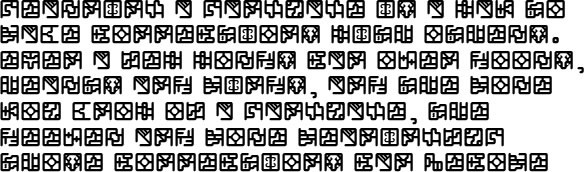
New constructed script: Bocsys, an alphabet I created for no particular reason that can be used to write most western European languages.

Sample text in the Bocsys alphabet in English

New numbers pages:

  • Kryts (Khaput dialect), a Northeast Caucasian spoken in northeastern Azerbaijan.
  • Sakizaya, an East Formosan language spoken mainly in Hualien County on the east coast of Taiwan.
  • Rukai, a Formosan language spoken in Pingtung, Kaohsiung and Taitung counties in the south of Taiwan.

On the Omniglot blog there’s a new post entitled Pans of Cream about words for cream in Italian, and related words in other languages. There’s also the usual Language Quiz. See if you can guess what language this is:

Here’s a clue: this language is spoken in northern Mexico.

The mystery language in last week’s language quiz was Tswa (xiTswa), a Southern Bantu language spoken in southern Mozambique.

In this week’s Celtic Pathways podcast, Oaken Larches, we discover the possible Celtic roots of words for larch (tree) in various non-Celtic languages.

On the Celtiadur blog there’s a new post called Sufficiently Enough about words for enough, sufficient and related things.

I also made improvements to the Oak (trees) Celtiadur post.

For more Omniglot News, see:
https://www.omniglot.com/news/
https://twitter.com/Omniglossia
https://www.facebook.com/groups/omniglot/
https://www.facebook.com/Omniglot-100430558332117

JapanesePod101.com

You can also listen to this podcast on: Apple Podcasts, Amazon Music, Stitcher, TuneIn, Podchaser, PlayerFM or podtail.

If you would like to support this podcast, you can make a donation via PayPal or Patreon, or contribute to Omniglot in other ways.

Radio Omniglot podcasts are brought to you in association with Blubrry Podcast Hosting, a great place to host your podcasts. Get your first month free with the promo code omniglot.

Unlimited Web Hosting - Kualo

Celtic Pathways – Oaken Larches

In this episode we discover the possible Celtic roots of words for larch (tree) in various non-Celtic languages.

Walk In A Larch Wood

A larch [ˈlɑːtʃ/ˈlɑɹtʃ] is a confierous tree of the genus Larix having deciduous leaves in fascicles (bundles). The most common type of larch tree in Europe is the European larch (Larix decidua), which is native to northern Italy. Other types of larch are availble.

The English word larch comes from early modern German Larche/Lärche, from Middle High German larche, from Old High German larihha, from Latin larix (larch), from Ancient Greek λάριξ (lárix – larch, Venice turpentine*), possibly from Gaulish *devro (oak?) from Proto-Celtic *daru (oak), from PIE *dóru (tree) [source].

*Venice turpentine = A thick substance made from the tree resin of the European larch (Larix decidua), formerly used as a component in the oil paintings to create glossy, translucent glazes [source].

Words in the modern Celtic languages from the same Proto-Celtic root include: dair [d̪ˠaɾʲ] (oak) in Irish, dair [darʲ] (oak) in Scottish Gaelic, darragh (oak) in Manx, dâr [ˈdaːr] (oak tree, leader, mighty lord) in Welsh, dar [daːr / dæːr] (oak) in Cornish, and dar [dɑːr] (oak) in Breton [source].

Words from the same Proto-Celtic root in other languages include: làrix in Catalan, lariks in Dutch learag in Scottish Gaelic, larch in English, Lärche in German, and lærk in Danish, all of which mean larch (tree) [source].

Incidentally, the French word mélèze (larch) has doubly Celtic roots: it comes from Franco-Provençal (Dauphinois) melèzo (larch tree), from Vulgar Latin *melice (larch), from Gaulish *mel- (larch) and Latin larix (larch). The Gaulish word *mel- comes from Proto-Celtic *meli (honey) [source].

Words from the same PIE root include δόρυ (dóry – spear) in Greek, terva (tar) in Finnish, dearbh (sure, certain) in Irish, tree, trim, and trough and true in English, and trä (wood) in Swedish [source].

See the Celtiadur post Oak (trees) for more details of words for oak and related things in Celtic languages. I also write about words, etymology and other language-related topics on the Omniglot Blog.

Radio Omniglot podcasts are brought to you in association with Blubrry Podcast Hosting, a great place to host your podcasts. Get your first month free with the promo code omniglot.

The Fastest Way to Learn Japanese Guaranteed with JapanesePod101.com

Omniglot News (20/10/24)

Omniglot News

Here’s the latest news from the world of Omniglot.

New language pages:

  • Kamasau, a Torricelli language spoken in East Sepik Province in the northwest of Papua New Guinea.
  • Bukiyip (Bukiyúp), a Torricelli language spoken in East Sepik Province in the northwest of Papua New Guinea.
  • Mufian, a Torricelli language spoken in East Sepik Province in Papua New Guinea.
  • Wiyot (Soulatluk), an Algic language that was spoken in Humboldt Bay in northwestern California, and which is being revived.

New numbers pages:

  • Wiyot (Soulatluk), an Algic language that was spoken in Humboldt Bay in northwestern California.
  • Yurok (Puliklah), an Algic language that was spoken in northern California, and which is being reivived.

On the Omniglot blog there’s a new post entitled Trigraphs about the rather unusual orthography used by the Yurok language. There’s also the usual Language Quiz. See if you can guess what language this is:

Here’s a clue: this language is spoken in Mozambique.

The mystery language in last week’s language quiz was Lahu (Ladhof) , a Lolo-Burmese language spoken in China, Myanmar, Thailand, Laos and Vietnam.

In this week’s Adventure in Etymology, Terminal Boundaries, we determine the limits of the word term, and find out how it’s connected to the Daleks in Dr Who.

On the Celtiadur blog there’s a new post about some Deeply Profound words, and I made improvements to the post about words for Fish.

I also made improvements to the Yurok and Betawi language pages, and the Unifon con-script page.

For more Omniglot News, see:
https://www.omniglot.com/news/
https://twitter.com/Omniglossia
https://www.facebook.com/groups/omniglot/
https://www.facebook.com/Omniglot-100430558332117

JapanesePod101.com

You can also listen to this podcast on: Apple Podcasts, Amazon Music, Stitcher, TuneIn, Podchaser, PlayerFM or podtail.

If you would like to support this podcast, you can make a donation via PayPal or Patreon, or contribute to Omniglot in other ways.

Radio Omniglot podcasts are brought to you in association with Blubrry Podcast Hosting, a great place to host your podcasts. Get your first month free with the promo code omniglot.
Unlimited Web Hosting - Kualo