Bolts and Locks

Today we’re looking at the words for locks, bolts and related things in Celtic languages.

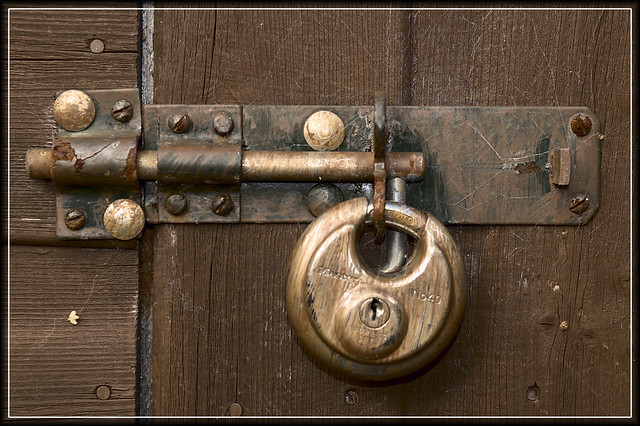
shed door bolt lock

Proto-Celtic *klāwos = bolt
Old Irish (Goídelc) cló, cloë = nail, spike
Irish (Gaeilge) cló [klˠoː] = form, shape, appearance; impression, mould; print, type; nail, spike
clóbhuail = print
clóchur = (type) setting
clóchuradóir = type-setter
clódóir = printer, dyer
clódóireacht = printing; dyeing, colouring; misrepresentation
clóghrafaíocht = typography
clóphreas = printing press
clóscríobh = typing, typewriting; to type
cló-eagar = composition
cló-eagraí = compositor
cló-eagraigh = to compose
Scottish Gaelic (Gàidhlig) clò [kl̪ˠɔː] = cloth, woven material, tweed; print; imprint; spike, nail; peg, pin
clò-bhualadh = printing, publication, printout
clò-bhualadair = printer (machine & printing house)
clò-ghrafachd = typography
clò-sgrìobhadair = typist, typewriter
clò-shuidheachadh = typesetting
Clò na Hearadh = Harris Tweed
cruth-clò = font
Manx (Gaelg) clou = edition, print, printed matter, printing press, publication, type
clouder = printer
clougraafeeaght = typography
clouscreeudeyr = typist
clou doo, clou trome = bold type
clou Gaelgagh = Gaelic type
clou gorrym = blueprint
soiaghey clou = type-setting
soieder clou = type-setter
Proto-Brythonic *klọw = bolt
Middle Welsh (Kymraec) clo, klo = lock, bolt
Welsh (Cymraeg) clo [kloː] = lock, bolt; impediment, difficulty; brake; cluster, bunch; conclusion
ar glo = locked
clo clap, clo clec, clo clwt = padlock
clo rheswm = conclusion
cyfnod clo = lockdown
tan glo (ac allwydd) = locked (up), under lock and key
cload = locking, end, conclusion, closure
cloadwy = lockable, locked, final
cloëdig, cloiedig = locked, secure, closed, concealed, bound, confined
cloi = to lock, shut, bind, clinch, conclude
Old Breton clou = bolt
Middle Breton clao = bolt
Breton (Brezhoneg) klaou = gear, key, mesh

Words marked with a * are reconstructions.

Etymology from the Proto-Indo-European *kleh₂w-os (bolt, bar, hook), from *(s)kleh₂w- (hook, crook, peg) [source].

Words from the same PIE root, via the Latin clāvis (key), include: chiave (key, spanner) in Italian, clé (key, wrench, spanner) and clef (clef (in music)) in French, clef, clavicle and clavichord in English, and llave (key, spanner, wrench, tap, spigot, switch) in Spanish [source].

I can’t find a cognate word in Cornish. A lock is a strother, and a bolt is a ebil. The origins of these words are not known.

Sources: Wiktionary, Am Faclair Beag, Online Manx Dictionary, Teanglann.ie, eDIL – Electronic Dictionary of the Irish Language, In Dúil Bélrai English – Old Irish glossary, Geiriadur Prifysgol Cymru, Gerlyver Kernewek, Gerlyvyr Cernewec, Dictionaire Favereau, TermOfis, Le dictionnaire diachronique du breton, Geriafurch, English – ProtoCeltic WordList (PDF), Etymological Dictionary Of Proto Celtic

The Fastest Way to Learn Japanese Guaranteed with JapanesePod101.com

Walls

Today we’re looking at the words for walls, weirs and related things in Celtic languages.

wall

Irish (Gaeilge) balla [ˈbˠal̪ˠə] = wall
cúlbhalla = back wall
idirbhalla = party wall
uchtbhalla = parapet
Scottish Gaelic (Gàidhlig) balla [bal̪ˠə] = wall
balla-tòin = back wall
balla-tarsainn = partition (wall)
balla-dìon = protective wall, safety barrier
Manx (Gaelg) boalley = bulwark, dyke, wall
boallee = to wall, enclose, impale
boallit = walled, dyked, enclosed
Middle Welsh (Kymraec) wal/gwal = wall
Welsh (Cymraeg) (g)wal [(ɡ)wal] = wall
walio = to wall
Middle Cornish gwal = wall

Etymology: from the Old English weall (wall, dike), from the Proto-Germanic *wallaz / *wallą (wall, rampart, entrenchment), from the Latin vallum (rampart, military wall), from vallus (stake, pallisade, point), from the Proto-Indo-European *welH-/*wel- (to turn, wind, roll) [source].

Words from the same roots include wall, wallow, well and valve in English, wal (coast, shore, earthen levee) in Dutch, Wall (rampart, parapet, earthwork, levee, embankment) in German, valla (fence, barricade, obstacle) in Spanish, and vall (moat) in Catalan [source].

Old Irish (Goídelc) múr = wall
Irish (Gaeilge) múr [mˠuːɾˠ] = wall, rampart, pile, building, dwelling, bank, mound, heap, mass, shower, profussion, abundance
múrach = having walls, walled, mural
múrdhathadóireacht = wall-painting
múr báistí = rain-cloud, heavy fall of rain
múr cathrach = city wall
múr ceo = bank of fog
múr tine = wall of flame, conflagration
Scottish Gaelic (Gàidhlig) mùr [muːr] = (defensive) wall, rampart, fortification
Proto-Brythonic *mʉr = wall
Old Welsh mur = wall
Middle Welsh (Kymraec) mur = wall
Welsh (Cymraeg) mur [mɨːr/miːr] = wall, rampart, fortification, defender
murio = to build (a wall) to wall, fortify, lay bricks or stones
muriog = walled, fortified, wall-like, defensive
murlen = poster, placard
murlun = mural, frieze
Breton (Brezhoneg) mur = (exterior) wall

Etymology: from the Latin mūrus (wall), from the Proto-Italic *moiros, from the Proto-Indo-European *mey- (to fix, to build fortifications or fences) [source].

Words from the same roots include mere (boundry, limit) in English, mur (wall) in French, muro (wall) in Italian, and muur (wall, barrier) in Dutch [source].

Proto-Celtic *wraga = ?
Gaulish *brāca = ?
Old Irish (Goídelc) fraig = wall (interior)
Irish (Gaeilge) fraigh = (interior of) wall, rafters, roof
fraighfhliulch = damp-walled, damp from contact with a wet wall (of clothes)
fraighleach = roofing, rafters
Scottish Gaelic (Gàidhlig) fraigh [frɤj] = partition, partitioning wall, border, edge, fringe, shelf
fraighnidh [frɤin̪ʲɪ] = water oozing through a wall

Etymology: unknown

Middle Welsh (Kymraec) paret, parwyt = wall
Welsh (Cymraeg) pared = wall, surface of a wall, dividing-wall, partition
Old Cornish poruit = wall

Etymology: from the Latin pariēs (the wall of a house or room). Words from the same roots include parete (wall, side, surface) in Italian, pared (wall) in Spanish, and paroi (inner wall, inside surface, side) in French [source].

Proto-Celtic *koret = palisade, wall
Old Irish (Goídelc) cora = weir
Middle Irish (Gaoidhealg) cora = stone fence, weir
Irish (Gaeilge) cora [ˈkɔɾˠə] = weir, rocky crossing-place in river, rocky ridge extending into sea or lake
cora éisc = fish weir
cloch chora = stepping-stone
Scottish Gaelic (Gàidhlig) caradh [karəɣ], cairidh [karʲɪ] = weir, mound (in a body of water)
cairidh-iasgaich = fishing weir
Middle Welsh (Kymraec) kored, cored, coret = weir, dam, fishgarth
Welsh (Cymraeg) cored = weir, dam
Old Breton kored / gored = fish weir
Breton (Brezhoneg) kored = fish weir

Etymology: uncertain – possibly related to the German word Hürde (hurdle) and/or the Old English word *hyrd (framework, door), which is the root of the English word hurdle.

The usual word for wall in Cornish is fos, which is cognate with words for ditch in other Celtic languages. See Ditches and Trenches.

Another word for wall in Breton is moger. See Fields, Meadows and Pastures.

Words marked with a * are reconstructions.

Sources: Wiktionary, Am Faclair Beag, Online Manx Dictionary, Teanglann.ie, eDIL – Electronic Dictionary of the Irish Language, In Dúil Bélrai English – Old Irish glossary, Geiriadur Prifysgol Cymru, Gerlyver Kernewek, Gerlyvyr Cernewec, Dictionaire Favereau, TermOfis, Le dictionnaire diachronique du breton, Geriafurch, English – ProtoCeltic WordList (PDF), Etymological Dictionary Of Proto Celtic

Blubrry podcast hosting

Steps

Words for steps and related words in Celtic languages.

Medieval Estella.

Proto-Celtic *kanxsman = step, act of stepping
Gaulish *kamman = step
Old Irish (Goídelc) céimm [ˈkʲeːmʲ] = step; rank (in a hierarchy)
Irish (Gaeilge) céim [ceːmʲ] = step, degree, rank, pass, ravine, difficulty
céimnigh = to step, grade, graduate
céimniú = stepping, tread, grading, graduation
aischéim = backward step
ardchéim = high rank, dignity, higher degree
bunchéim = primary degree, positive (degree)
coiscéim = footstep, pace
Scottish Gaelic (Gàidhlig) ceum [kʲeːm] = step, footstep, pace, tread, path, degree, measure
cois-cheum = step, pace
ceum-coise = footstep, footpath
Manx (Gaelg) keim = phase, step, degree, stage, standard, stile, grade
keimagh = postgraduate
keimee = to graduate, promote
Proto-Brythonic *kamman = step
Old Welsh cemmein = step
Middle Welsh (Kymraec) cam, camm, kam = step
Welsh (Cymraeg) cam [kam] = step, stride, pace, leap, foot-fall, footprint, trace, progress
camu, camaf = to step over, take a stride, take strides, pace
camâd = stile
Cornish (Kernewek) kamm = pace, step, track
Middle Breton cam = step
Breton (Brezhoneg) kamm = pace, walk tread, (foot)step
kammed = step

Etymology: from the Proto-Celtic *kengeti (to step), from the Proto-Indo-European *(s)keng- (to limp, walk lamely) [source]

Words from the same Gaulish root (*kamman) include: cammīnus (way) in Latin, camino (track, path, road, way, route, journey) and caminar (to walk, stroll, travel) in Spanish, caminho (way, road, path) in Portugese, cammino (walk, path, way) and camminare (to walk, work (function)) in Italian, and chemin (path, way, pathway) in French [source].

Words marked with a * are reconstructions.

Sources: Wiktionary, Am Faclair Beag, Online Manx Dictionary, Teanglann.ie, eDIL – Electronic Dictionary of the Irish Language, logainm.ie, In Dúil Bélrai English – Old Irish glossary, Geiriadur Prifysgol Cymru, Gerlyver Kernewek, Dictionaire Favereau, TermOfis, Le dictionnaire diachronique du breton, Geriafurch, English – ProtoCeltic WordList (PDF), Etymological Dictionary Of Proto Celtic
Blubrry podcast hosting

Grace and Favour

Words for grace, virtue and related words in Celtic languages.

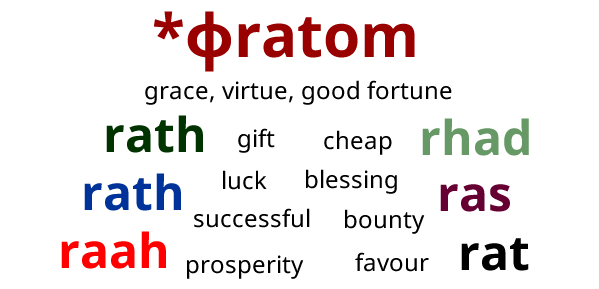
Words for grace and virtue in Celtic languages

Words marked with a * are reconstructions.

Proto-Celtic *ɸratom = grace, virtue, good fortune
Old Irish (Goídelc) rath = gift, goods, grace, luck, property, prosperity
Middle Irish (Gaoidhealg) rath(a) = grace, virtue, gift, good luck, fortune, prosperity
Irish (Gaeilge) rath [ɾˠɑh/ɾˠa/ɾˠah] = bestowal, grant, grace, favour, gift, bounty; prosperity; abundance; usefulness, good
rathaigh = to prosper, succeed, thrive, make successful
rathúil = prosperous, successful, thriving; fortunate, lucky
rathúlacht = prosperousness, successfulness
rathúnas = prosperity, plenty, abundance
rathúnasach = prosperous, abundant
anrath = ill-luck
anrathach = unlucky
Scottish Gaelic (Gàidhlig) rath [r̪ˠa] = good fortune/luck, prosperity, success
rathadach = fortunate, auspicious, prosperous
rathmhor = fortunate, auspicious, prosperous
rathach = fortunate, auspicious, prosperous
droch-rath = back luck/fortune
Manx (Gaelg) raah, rah = good luck, prosperity, well-doing
raah mie = prosperity
ard-raah = zenith of prosperity
gyn raah = unsuccessful
cur rah er = to prosper
Old Welsh rat = grace, blessing, favour,
Middle Welsh (Kymraec) rat, rad = grace, blessing, favour,
Welsh (Cymraeg) rhad [r̥aːd] = grace, blessing, favour, generosity, bounty, goodness, graciousness, talent, gift; cheap, free, unpaid, valueless, poor, inferior, gracious, giving, generous
rhad ac am ddim = free (of charge), without cost, unpaid
rhad Duw = the grace of God, God’s blessing
rhad fel baw / rhad mochyn = dirt cheap
yn rhad = as a gift, free (of charge), unpaid, cheaply, freely, unrestrained
rhadaf, rhadu = to bestow grace upon, bless, give generously, to make cheap
rhadineb = grace, graciousness
rhadwr = generous man
Middle Cornish (Cernewec) ras, râs, = grace, thanks, worth, value, excellence
mêr râs = thank you, much thanks
rasow = graces, excellencies
Cornish (Kernewek) ras = virtue
meur ras = thank you
rasek = graceful
diras = graceless
Old Breton rad = thought, reflection
Breton (Brezhoneg) rat = thought, reflection

Etymology: from the Proto-Celtic *ɸar-/*ɸarnati (to bestow), from the Proto-Indo-European *perh₃- (bestow, give) [source].

Words from the same PIE roots include pare (to remove the outer covering or skin of something with a cutting device) in English, paràre (to adorn, protect, shield) in Italian, parar (to stop, put up, lift, raise) in Spanish, and parod (ready, prepared) in Welsh [source].

The Fastest Way to Learn Japanese Guaranteed with JapanesePod101.com

Sources: Wiktionary, Am Faclair Beag, Online Manx Dictionary, Teanglann.ie, eDIL – Electronic Dictionary of the Irish Language, In Dúil Bélrai English – Old Irish glossary, Geiriadur Prifysgol Cymru, Gerlyver Kernewek, Dictionaire Favereau, TermOfis, English – ProtoCeltic WordList (PDF), Etymological Dictionary Of Proto Celtic

Unlimited Web Hosting - Kualo

Parts and Portions

Words for part, portion, piece, thing and related words in Celtic languages.

Words marked with a * are reconstructions.

Puzzle pieces

Proto-Celtic *rannā = part
Old Irish (Goídelc) rann = part (of a whole)
randatu = the property of belonging to a part of speech
rannaid = to divide (into parts), to apportion
ranngabáil = participle
Middle Irish (Gaoidhealg) rann, rand, ran, rán = part, lot, portion, faction, alliance
Irish (Gaeilge) rann [ɾˠanˠ] = part, side (in dispute), partition
rannach = apportioning, sharing, open-handed
rannadóir = divider, sharer
rannán = division
rannóg = section
rannpháirt = participation, part, share
roinn = share, portion, distribution, dealing, trading, division
Scottish Gaelic (Gàidhlig) rann [r̪ˠaun̪ˠ] = stanza, quatrain, verse, bond, deed, division, part, portion, section
rann-phàirt = participation, portion, participle
roinn [r̪ˠɤin̪ʲ / r̪ˠɤn̪ʲə] = dividing, partitioning, section, share, allotment, partition, department, division
roinneadair = divider, divisor, sorter
Manx (Gaelg) rheynn = divide, classify, distribute, dispense, share
fo-rheynn = section
so-rheynn = divisible
Proto-Brythonic *rrann = part
Middle Welsh (Kymraec) rann = part
Welsh (Cymraeg) rhan [r̥an] = part (of something), portion, division, element, constituent, component
rhanadwy = divisible, dividend
rhanedig = shared (out), divided, parted, split, separate
rhannu = to divide, separate, part, divide
Old Cornish radn = part, portion
Cornish (Kernewek) radn = lot, part, portion, role, share
ranna = to share
Middle Breton (Brezonec) rannaff = to share, separate, divide, pronounce, split
Breton (Brezhoneg) rann [rãnː] = part, fraction, division, slot
rannañ [ˈrã.nːã] = to share, separate, divide, pronounce, split
ranned [ˈrã.nːet] = dividend
ranngalon [ʁɑ̃nˈɡɑːlɔ̃n] = deep sorrow, desolation, heartbreak
rann

Etymology: from the Proto-Indo-European *per- (to sell) [source], which is also the root of such English words as depart, jeopardy, parcel, part, partition and portion [source].

Proto-Celtic *kʷezdis = piece, portion
Old Irish (Goídelc) cuit [kudʲ] = part, portion, share
cuit adaill, cuit adíll = a passing visit, a brief visit
cuitigid = to share, partake
Middle Irish (Gaoidhealg) cuit = share, part, portion
cuit(gi)d = to share, partake, participate
Irish (Gaeilge) cuid [kɪdʲ] = part (of whole), share, portion, some,
cuideach = wealthy, prosperous
cuideachta = company, companionship, social amusement, fun
cuideachtaigh = to bring together, associate
cuideachtúil = companionable, sociable
cuideachtúlacht = sociableness
cuidí = component
cuidigh = to share, help, requite, repay (usually for misdeed), do for, do away with
cuiditheoir = helper, supporter, seconder
cuidiú = to help, assistance
cuidiúil = helpful, cocky, conceited
Scottish Gaelic (Gàidhlig) cuid [kudʲ] = portion, share, allotment, ration, effects, means, belongings, some (people), accommodation, victuals
cuid-eigin [kudʲegʲɪn] = someone, somebody
cuideachail [kudʲəxal] = helpful, constructive, subsidiary
cuideachair [kudʲəxɛrʲ] = auxiliary, helper
cuideachas [kudʲəxəs] = help, suppprt
cuideachd [kudʲəxg] = company, society, throng, troop; also, too, jointly, together
cuideachdadh [kudʲəxgəɣ] = accompanying
cuideag [kudʲag] = small portion / share
Manx (Gaelg) cooid = certain, some, stuff, assets, goods, helping, means, part, possessions, proportion, resources
cooidjagh = accompanying, jointly, together, inclusive
cooidjaghtagh = companion, companionable
Gaulish *pettiā, = (?)
Pictish *ᚚᚔᚈ (pit) = (a parcel of) land, a portion (?) – found in placenames like Pitlochry
Proto-Brythonic *peθ = part
Old Welsh (Kembraec) ped = thing, object
Middle Welsh (Kymraec) peth = thing, object
Welsh (Cymraeg) peth [peːθ] = thing, object, material, suff, substance, device, instrument, personal possessions, belongings, tools, equipment, something, anything
peth(eu)ach = (unimportant) things, trifles
pethdod = thingness, thinghood, reality, substantiality
petheiddio = to reify, make real or concrete
Middle Cornish (Cernewec) peth, pêth, peyth, pŷth = thing, something, article
pethow = things, riches, wealth
Cornish (Kernewek) pyth, peth [pɪːθ / pɛθ] = commodity, material, matter, possession, property, thing, that which, what, appliance
pyth ha da, peth ha da = possessions
pythek, pethek = concrete
pythow, pethow = belongings, wealth
Middle Breton (Brezonec) pez, pezz = piece, bit, part
Breton (Brezhoneg) pezh [peːs] = piece, bit, room, part, what
pezhiad = (big) piece, piece (of)
pezhig = (an) ugly piece

Etymology: unknown, possibly borrowed from a non-Indo-European substrate source [source]. Words from the same roots via Gaulish *pettyā and Latin pettia (piece, portion), include piece in English, pièce (room, patch, piece, play, document) in French, peza (piece, fragment, part) in Galician, pieze (piece, part) in Spanish, biisi (song) in Finnish, and ピース (pīsu – piece) in Japanese [source].

Middle Irish (Gaoidhealg) písa, pissa = piece, fragment, coin
Irish (Gaeilge) piosa [ˈpʲiːsˠə] = piece, bit, patch, piece-work, literary or musical composition, coin
piosaáil = to piece together, patch
Scottish Gaelic (Gàidhlig) pìos [piːs] = bit, piece, sandwich, piece, (musical) composition, hunk (person)
pìosach [piːsəx] = in pieces / fragments
pìosail [piːsal] = sexy, attractive
pìosan [piːsan] = small piece / bit
Manx (Gaelg) peesh = bit, cutting, patch, piece, length (of thread), parcel
Cornish (Kernewek) pis = piece

Etymology: from Middle English pece (piece, morsel, bit), from Anglo-Norman piece (piece, bit, part), from Late Latin petttia (piece, portion), from Gaulish *pettyā, from Proto-Celtic *kʷezdis (piece, portion) – see above [source].

Proto-Celtic *darnos, *darnā = piece, part
Old Irish (Goídelc) drécht [dʲrʲeːxt] = portion, part
Middle Irish (Gaoidhealg) drecht, drécht = part, portion, section; poem, literary composition
dréchtach = numerous; skilled in song or poetry
dréchtfaid = to divide up
Irish (Gaeilge) dréacht [dʲɾʲeːxt̪ˠ]= part, portion, draft, detachment, number; (literary) piece, composition; draft
dréachtach = composer, poet; skilled in/diligent at compostion
dréachtaigh = to draft
dréachtín = versicle, stanza
dréachtóir = drafter, draughtsman (of documents)
Scottish Gaelic (Gàidhlig) dreachd [drɛxg] = draft
dreachd-aithisge = draft report
dreachd-dhealbh = working drawing
Manx (Gaelg) draght, dreaght = draft
draghtey = to draw up
dreaght feeleeaght = a piece of poetry
Gaulish *darnā = piece
Proto-Brythonic *darn = piece (?)
Middle Welsh (Kymraec) darn = piece, fragment, part
darnaw, darnio, darnu = to break or tear in pieces
Welsh (Cymraeg) darn [darn] = piece, fragment, part, coin, passage
darn(i), darnu = to break or tear in pieces
darn(i)edig = broken or torn to pieces
darniog = broken, shattered, fragmentary
Middle Cornish (Cernewec) darn = fragment, piece
pethow = things, riches, wealth
Cornish (Kernewek) darn = bit, fragment, part, piece
darnas = portion
Middle Breton (Brezonec) darn = fragment, part
darnaou = broken, very tired
darnaouet = torn to pieces, very tired, bored
Breton (Brezhoneg) darn [peːs] = fragment, part, some
darnan, darnañ = to fragment, chip, shorten
darnaou = broken, very tired
darnaouin = to break
darnek = partial

Etymology: from PIE *der- (to split, separate, tear, crack, shatter). The French word darne (steak, fillet) was borrowed from Breton darn (fragment, part, some). Words from the same PIE root include dermal, tear and tier in English, and tirar (to throw) in Spanish, zehren (to live on, feed on, undermine, wear out) in German, and драть [dratʲ] (to tear to pieces) in Russian [source].

The Fastest Way to Learn Japanese Guaranteed with JapanesePod101.com

Sources: Wiktionary, Am Faclair Beag, Online Manx Dictionary, Teanglann.ie, eDIL – Electronic Dictionary of the Irish Language, In Dúil Bélrai English – Old Irish glossary, An Etymological Dictionary of the Gaelic Language, Geiriadur Prifysgol Cymru, Gerlyver Kernewek, Dictionaire Favereau, TermOfis, English – ProtoCeltic WordList (PDF), Etymological Dictionary Of Proto Celtic

Unlimited Web Hosting - Kualo

Calling Words

Words for word, call, cry and related things in Celtic languages.

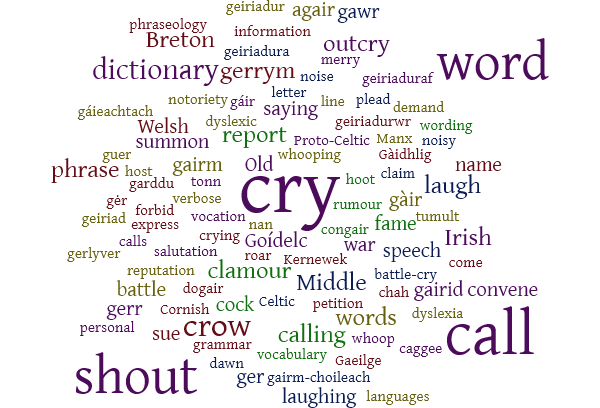
words is various languages
Word cloud created with WordItOut

Words marked with a * are reconstructions.

Proto-Celtic *gāri = shout, call
*garyeti = to cry, shout
*gar(r)man- = cry, shout
*garyo- = word, command
*garyos = call, cry
Gaulish *Garomaros / Garo-marus = personal name
adgarion = accuser (?)
Old Irish (Goídelc) gairm = call, name, summons
gairid [ˈɡarʲiðʲ] = to call, cry out, summon
adgair [aðˈɡarʲ] = to summon
congair [konˈɡarʲ] = to call, summon; invite
dogair = to call
Middle Irish (Goídelc) gairm = call, name, summons, cry, name, title, calling, employment, profession
gairid = to call
Irish (Gaeilge) gáir [ɡɑːɾʲ/ɡæːɾʲ] = cry, shout; report, fame, notoriety; to cry shout; laugh
gáire = to laugh
gáieach = laughing, smiling
gáieachtach = noisy, vociferous; laughing, merry
gairm [ˈɡaɾʲəmʲ/ˈɡɪɾʲəmʲ] = call, calling, acclaim
(an tuiseal) gairmeach = vocative (case)
gairmí = professional
gairmiúil = vocational, professional
slua gairm = slogan
Scottish Gaelic (Gàidhlig) goir [gɤrʲ] = to call, cry, hoot, crow
gàir [gaːrʲ] = to laugh, cry shout; outcry, shout, clamour
gàir nan tonn = the roar of the waves
gairm [ɡɤrʲɤm] = calling, crying, call, cry, announcing, declaring, convenning, call of the cockerel
gairmeachadh = (act of) calling
gairm-choileach = cock-crow
gairm-chatha, gairm-chogaidh = war-cry
sluagh-gairm = slogan
tuiseal gairmeach = vocative case
Manx (Gaelg) gerr = crow, shout
gerr chah = war cry
gerrym = crowing, outcry, shouting, whoop, whooping, (cock) crow), avocation, mission, profession, vocation
gerrymagh = vocative
gerrymoil = professional, vocational
gerrym caggee = battle cry, call up, war cry
gerrym chellee = cock crow
sleih gerrym = slogan
Proto-Brythonic *gėr [ɡe̝ːr] = word, speech
Middle Welsh (Kymraec) geir = word
gaur, gawr = shout, cry
garddu = groan
garym, garm = shout, cry, outcry, clamour
garymleis, garamleis = scream, clamour
Welsh (Cymraeg) gair [ɡai̯r] = word, speech, phrase, greeting, salutation, short exhortation, saying, proverb; verb; line of poetry, verse; report, rumour, information, letter, reputation, fame, praise
geiriad = wording, phraseology, phrase
geiriadaf, geiriadu = to word, phrase, express
geiriadur = dictionary
geiriaduraf, geiriaduro, geiriadura = to compile a dictionary
geiriaduriaeth, geiriaduraeth = lexicography; vocabulary; grammar
geiriadurwr = lexicographer, dictionary-maker
geiriog = wordy, verbose
garm = shout, cry, outcry, clamour
garmlais = scream, clamour
Middle Cornish (Cernewec) garm = a cry, shout, outcry
garme = to shout, raise a shout, cry aloud, cry out
Cornish (Kernewek) ger [ɡɛːr/ɡeːr] = word, saying, report
gerdhal = dyslexic
gerdhalni = dyslexia
gerlyver = dictionary
garm = to shout, whoop, yell
garm argemynna = (advertising) slogan
garm vresel = battle cry
garm wormola = ovation
garma = to cry out, whoop, yell
garma yn lowen = to cheer
Old Breton gerent = word. say
Middle Breton guer = word
garm = loud crying, yelping of a fox, war cry, cry
garmadeg, garmadenn = clamour
garmer = to cry, crying, brawler
garmiñ = to cry, bellow, yelp
Breton (Brezhoneg) ger [ɡeːr] = word
geriadur = dictionary
garm = cry, clamour, weeping

Etymology: from the Proto-Indo-European *ǵeh₂r- (to shout, call) [source]. The English words garrulous (excessively talkative), care and charm (sound of many voices (esp. of birds or children), a flock or group (esp. of finches)) come from the same PIE root [source].

Proto-Celtic *woxtlom = dispute
Old Irish (Goídelc) focul [ˈɸokul] = word
Middle Irish (Gaoidhealg) focal, foc(c)ull, focla, facul = word, vocable, phrase, estimate, award, judgement, promise
Irish (Gaeilge) focal [ˈfˠɞkəl̪ˠ/ˈfˠɔkəlˠ] = word, phrase, remark, observation, saying, intelligence, message, promise, assurance
focalhbhá = ellipsis …
foclach = wordy, verbose
foclachas = wordiness, verbiage
focleolaí = philologist
focleolaíoch = philological
focleolaíocht = philology
foclóir = dictionary, lexicon, vocabulary
foclóireacht = lexicography
foclóireolaíocht/strong> = lexicology
foclóirí = lexicographer
foclóirín = word-list, vocabulary
Scottish Gaelic (Gàidhlig) facal [faxgəl̪] = word, comment, remark
facal air an fhacal = word for word, literally, verbatim
facal-faire = password
facal-fhreumhail = etymology
facal-mùirne = an endearment
facal-toisich = introduction, preamble
Manx (Gaelg) fockle [ˈfɔːɡəl] = word, charm, vocable
focklagh = wordy, verbose, voluble, loquacious
focklaghys = wordiness, verbiage
fockleyr = dictionary, lexicon, thesaurus
fockleyragh = lexicographic
fockleyreen = vocabulary, wordbook
fockleyreyder = lexicographer
fockleyrys = lexicography
Proto-Brythonic *gwoɨθl = dispute
Middle Welsh (Kymraec) gwaethyl = debate, dispute, contention, battle
gwaethyl uann, gwaethyluann = loud in dispute, strenuous, striving
gwaethyl gwyr = fighter, warrior
Welsh (Cymraeg) gwaethl = debate, dispute, contention, battle
gwaethlfan = loud in dispute, strenuous, striving
gwaethlwr = fighter, warrior
gwaethl =

Etymology: from Proto-Indo-European *wókʷtlom, from *wekʷ- (to speak, sound out) [source]. Words from the same PIE roots include advocate, epic, vocal, voice, vouch and , vowel in English; gewagen (to report, notify) in Dutch; voce (voice, call, word) in Italian; and उक्ति (ukti – saying, expression) in Hindi [source].

Proto-Celtic *brētrā = word, battle
Old Irish (Goídelc) bríathar [ˈbʲrʲiːa̯θər] = word, speech, utterance, verb, discourse
Middle Irish (Gaoidhealg) bríathar, briathor = word, utterance, talk, saying, speech, discourse, blessing, prayer, curse, promise, vow, pledge, verb
bríathardae = wordy, verbal
bríatharach = wordy, verbose
bríathad = act of speaking
bríatharaigid = to speak, pronounce
Irish (Gaeilge) briathar [ˈbʲɾʲiəhəɾˠ / ˈbʲɾʲiːhəɾˠ] = word, verb
briathartha = verbal
briathrach = wordy, verbose
briathrachas = wordiness, verbosity
briathraíocht = diction
Scottish Gaelic (Gàidhlig) briathar [brʲiəhər] = word, term
briathrail [brʲiəral] = loquacious, talkative, wordy, verbose
briathrach [brʲiərəx] = talkative, loquacious, wordy, verbose
Manx (Gaelg) breear = verb
breearagh = verbal
Middle Welsh (Kymraec) brwyder, brwydyr = battle
brwydraw = to battle, fight, struggle, attack
brwydrin = battle, conflict, fierce, pugnacious
brwydyrdaer = resolute in battle, fighting with all one’s might
brwytyrgar, brwydyrgar = delighting in fighting, eager for battle, bellicose
brwydryar = tumult of battle, battle-cry
brwydr-wr = fighter, warrior, combatant
Welsh (Cymraeg) brwydr [ˈbrʊɨ̯dr / ˈbrʊi̯dr] = pitched battle, conflict, attack, campaign, struggle, bother, dispute, controversy, host, army
brwydrin = battle, conflict, fierce, pugnacious
brwydro = to battle, fight, struggle, attack
brwydrwr = fighter, warrior, combatant

Etymology: possibly from Proto-Indo-European *bʰerH- (to strike, pierce) [source]. Words from the same PIE root include boren (to) bore in English, (to drill) in Dutch, and foràre (to pierce, puncture) in Italian [source].

Proto-Celtic *galw-o- = call
Old Irish (Goídelc) gláed = shout, loud call
gláedach = noisy, blustering, adjective
gláedid = to cry out, name; verb
gláedem = wolf
glegrach = noisy
Middle Irish (Gaoidhealg) gláed, glaid = shout, loud call
gláedach = calling, crying out, shouting, noisy, blustering
gláedid = to cry out, to name
glegrach = noisy, resounding, clamorous
Irish (Gaeilge) glao [ɡl̪ˠeː/ɡlˠiː] = call, shout
glaoch = calling, to call
glaoigh = to call, cry out, shout
glaoiteach = calling, vociferous
glaomaire = loud-mouthing, vociferous, boastful person
glaomaireacht = shouting, bragging, boastfulness
Scottish Gaelic (Gàidhlig) glaodh [gl̪ˠɯː] = cry, shout, yell, proclamation
glaodhach [gl̪ˠɯː.əx] = crying, shouting, yelling
glaodhaire [gl̪ˠɯː.ɪrʲə] = crier, loudspeaker
glaodhar [gl̪ˠɯː.ər] = noise, rattling, clang, clash
glaodhte = cried, shouted, yelled
Manx (Gaelg) gyllagh = calling, crying
gyllaghey = to cry, roar, shout
Proto-Brythonic *gėlwɨd = to call
Middle Welsh (Kymraec) galw = a call, calling, shout, cry, invitation
gelwi, galw, galwaf = to call, shout, bawl, summon, invite
galwedic, galwedig = called, named, summoned
galwedigaeth, galwedygaeth = call, a calling, vocation, profession, occupation
Welsh (Cymraeg) galw [ˈɡalu / ˈɡaːlu] = a call, calling, shout, cry, invitation
galwad = a calling, call, shout, sounding
galwaf, galw, gelwain = to call, shout, bawl, summon, invite
galwdig = called, named, summoned
galwdigaeth = call, a calling, vocation, profession, occupation
galwdigaethol = vocational, occupational, professional
Middle Cornish (Cernewec) galow = a call, invitation
gelwel, gylwel = to call (for), invoke, name
Cornish (Kernewek) galow = appeal, call, calling, invitation, vocation
galwansek = vocational
galwen = call
galwesigeth = calling, profession, vocation
galwesik = professional
gelwel = to call, appeal, invite, summon
Old Breton (Brethonoc) galu = appeal, summons
Middle Breton (Brezonec) galu = appeal, summons
gueruell, gueluer = to call, summon
Breton (Brezhoneg) galv [ˈɡalw/ˈɡalɥ/ˈɡalf] = appeal, summons
galvedigezh [ɡalveˈdiːɡɛs] = vocation, calling
galvel, galven, galver, gervel = to call, summon

Etymology: from the Proto-Indo-European *gal(o)s- (voice, cry). The English word call comes from the same PIE root, as do galsas (sound, echo) in Lithuanian, голос [ˈɡoɫəs] (voice, word, remark, vote) in Russian, hlas (voice, vote) in Czech, and gallo (rooter, cockerel) in Spanish [Source].

The Fastest Way to Learn Japanese Guaranteed with JapanesePod101.com

Sources: Wiktionary, Am Faclair Beag, Online Manx Dictionary, Teanglann.ie, eDIL – Electronic Dictionary of the Irish Language, In Dúil Bélrai English – Old Irish glossary, Geiriadur Prifysgol Cymru, Gerlyver Kernewek, Dictionaire Favereau, TermOfis, English – ProtoCeltic WordList (PDF), Etymological Dictionary Of Proto Celtic

Unlimited Web Hosting - Kualo

Lakes and Ponds

Words for lakes, ponds and related things in Celtic languages.

Llyn Idwal

Proto-Celtic *lindā = pool, lake
Gaulish lindon = pool, lake; sea, ocean
Old Irish (Goídelc) lind [l̠ʲiːn̠ʲ / l̠ʲɪn̠ʲ] = pool, pond, body of water, lake, sea
Irish (Gaeilge) linn = pool, pond, body of water, lake, sea
linn mhuilinn = mill-pond
linn lachan = duck pond
linneach = full of pools, watery
linneolaíocht = limnology (freshwater science)
linntreog = small pool, puddle, pot-hole
Scottish Gaelic (Gàidhlig) linne [l̪ʲin̪ʲə] deep pool; strait, sound, firth
linne-thuathal, faochag-linne = whirlpool
Linne Giùdain = Firth of Forth
Linne Shalmhaigh = Solway Firth
éisg-linn = fishpond
Manx (Gaelg) lhingey = pool, pond, backwater
lhingey chassee = small whirlpool
lhingey eeast = fishpond
Proto-Brythonic *llɨnn = lake, liquid
Middle Welsh (Kymraec) llynn = lake, liquid
Welsh (Cymraeg) llyn [ɬɨ̞n/ɬɪn] = lake, pool, pond, puddle, moat
llyn anoddun = bottomless pit, the deep
llyn melin = mill pond
llyn tro = whirlpool
Old Cornish lin = lake
Cornish (Kernewek) lynn, lydn = lake
Old Breton lin = lake
Breton (Brezhoneg) lenn = lake, basin, washhouse, fishpond, body of water

Etymology: possibly from the Proto-Indo-European *liH-nd-o-/*liH-nd-u [source].

These words appear in places names such as Lincoln in England, Dublin in Ireland, Lintgen in Luxembourg, Limmat – a river in Switzerland (originally Lindimacus), and possibly strong>Lindern in Germany.

Proto-Celtic *loku = lake, pool
Old Irish (Goídelc) loch [l͈ox] = lake, inlet of the sea
Irish (Gaeilge) loch [l̪ˠɔx] = lake, pool, (body of) water, arm of the sea, lough, fiord
lochach = having (many) lakes
lochán = small lake, pond
lochánach = having (many) small lakes
loch-chuach = lake basin
Scottish Gaelic (Gàidhlig) loch [l̪ˠɔx] = loch, lake
lochach = pertaining to or abounding in lochs/lakes
lochan = small lake, loch
loch-mara = sea loch
loch-tasgaidh = reservoir
loch-uisge = freshwater loch/lake
feur-lochan = small grassy loch (which tends to dry up)
Manx (Gaelg) logh [laːx] = lake, lough, loch, arm of the sea
loghan = small lake, pond, dam, tank, dock, pool
loghanagh = full of lakes
logh-hailjey = saltwater lake
logh-ushtey = freshwater lake
Old Welsh lichou = lake, pool
Middle Welsh (Kymraec) luch, lluch = lake, pool
Welsh (Cymraeg) llwch [ɬuːχ] = lake, pool, stagnant water, bog, swamp, marsh, mud, mire, grime, filth, dung
Cornish (Kernewek) logh = inlet
Middle Breton laguenn = flooded field
Breton (Brezhoneg) loc’h = pond, lagoon, flooded meadow

Etymology: from the Proto-Indo-European *lókus (pond, pool), which is also the root of the Icelandic lögur (liquid, fluid, lake, sea), and words for lake in Romance languages, including lac in French, Occitan and Romanian, and lago in Galician, Italian, Spanish and Portuguese [source].

Words marked with a * are reconstructions.

Sources: Wiktionary, Am Faclair Beag, Online Manx Dictionary, Teanglann.ie, eDIL – Electronic Dictionary of the Irish Language, In Dúil Bélrai English – Old Irish glossary, Geiriadur Prifysgol Cymru, Gerlyver Kernewek, Dictionaire Favereau, TermOfis, English – ProtoCeltic WordList (PDF), Etymological Dictionary Of Proto Celtic
Blubrry podcast hosting

Ale and Beer

Words for ale, beer and related words in Celtic languages.

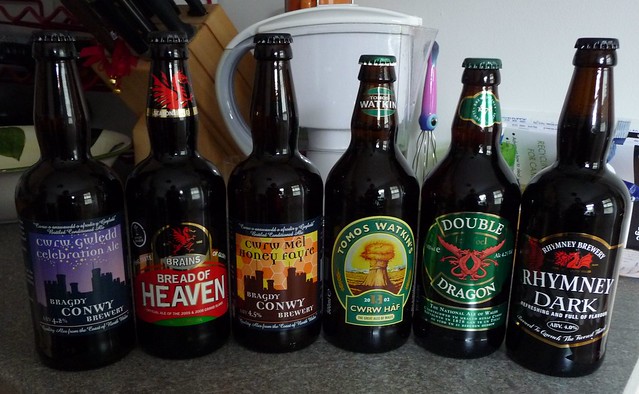
beer haul

Proto-Celtic *lindo- = drink
Gaulish linda = drink
Old Irish (Goídelc) linn [ˈl͈ʲin͈ʲ] = drink, liquid, brew, ale, beer, intoxicating drink
lind = liquid, drink, ale
Irish (Gaeilge) leann = (pale) ale, beer; liquid, fluid
lionn = humour (of the body)
lionndubhach = melancholy, depressed
leannadóir = ale-merchant
leannlus = hop
leann bó = milk
leann donn = brown ale
leann dubh = stout
leann piorra = perry
leann sinséir = ginger ale
leann úll = cider
iarleann = small, weak beer
seomra leanna = tap-room
teach leanna = ale-house
Scottish Gaelic (Gàidhlig) leann [l̪ʲãũn̪ˠ] / lionn [l̪ʲũːn̪ˠ]= ale, beer; humour (of the body); fluid, liquid
lionn-dubh = dejection, melancholy
lionn searbh = bitter (ale)
lionn-ubhal = cider
Manx (Gaelg) lhune = ale, beer
lhune doo = stout, porter
lhune freillagh = lager
lhune jinshar = ginger beer
lhune ooyl = cider
lhune peear = perry
lhune sharroo = bitter (beer/ale)
shamyr lhionney = bar room, lounge bar, tap room
thie lhionney = ale house, pub
Middle Welsh (Kymraec) llynn = drink
Welsh (Cymraeg) llyn [ɬɨ̞n/ɬɪn] = drink, beverage, intoxicating liquor, cordial, juice; liquid, humour
llyn afalau = cider, apple juice
llyn y bustl = bile
llyn gellyg = perry
Old Cornish lin = fluid, liquid, lotion
Cornish (Kernewek) lin = fluid, liquid, lotion
lin-golghi = washing detergent
lin leur = floor cleaner
lin sebon = detergent, washing-up liquid
Old Breton linnou = drink
Breton (Brezhoneg) liñvenn = liquid

Etymology: possibly from the Proto-Indo-European *liH-nd-o- [source].

Proto-Celtic *kormi, *kurman = beer
Gaulish curmi, curmím, κόρμα (kórma), κούρμι (koúrmi) = beer
Old Irish (Goídelc) cuirm = ale, beer
Irish (Gaeilge) coirm, cuirm [kɞɾʲəmʲ] = ale, drinking-party, feast, banquet
coirmeach = ale-drinking, festive
coirmtheach = ale-house
coirm cheoil, ceolchoirm = concert
Scottish Gaelic (Gàidhlig) cuirm [kurʲum] = feast, banquet, entertainment; ale, beer (archaic)
co(i)rm = ale, beer
cuirm-chiùil = concert
cuirm-chnuic = picnic
Manx (Gaelg) cuirrey = banquet, feast
cuirrey kiaull = concert
Proto-Brythonic *kuruβ ̃, *kurβ̃ = beer, ale
Old Welsh curum = beer, ale
Middle Welsh (Kymraec) kuref, kwryf, kwrwf, cwrwf, cyryw = beer, ale
Welsh (Cymraeg) cwrw [ˈkʊru / ˈkuːru] = beer, ale
cwrw Adda = Adam’s ale, water
cwrw casgen = draught beer
cwrw coch = brown ale
cwrw cychwyn = a drink of beer on setting out on a journey, one for the road
coesau cwrw = a drunken gait (“beer legs”)
Old Cornish coref, coruf = ale, beer
Middle Cornish (CerneweC) cor = ale, beer
coref = ale, beer
Cornish (Kernewek) korev, kor = ale, beer
Breton (Brezhoneg) korev = ale, beer

Etymology: possibly from the Proto-Indo-Eurpean *kremH- (to burn) [source], or *ḱr̥h₃-m- (porridge, soup), or *ḱh₁erh₂- (to mix) [source].

The Latin word cervēs(i)a (beer) comes from the same Proto-Celtic root, as do words for beer in several Romance languages, including Spanish (cerveza), Portuguese (cerveja), Galician (cervexa) and Catalan (cervesa) [source].

More about words for beer in European languages.

Irish (Gaeilge) beoir [bʲoːɾʲ] = beer, a woman (rare, colloquial)
beoir bhairille = draught beer
beoir shinséir = ginger beer
Scottish Gaelic (Gàidhlig) beòir [bjɔːrʲ] = beer
beòir chaol = small beer
roipean beòir = beer moustache
Manx (Gaelg) beer = beer
Middle Welsh (Kymraec) ber, berr, berre = beer, ale
Welsh (Cymraeg) bir = beer, ale
Breton (Brezhoneg) bier = ale, beer

Etymology (Irish, Scottish Gaelic and Manx): from the Old Norse bjórr, from the Proto-Germanic *beuzą (beer), from the Proto-Indo-Eurpean *bʰews- (dross, sediment) [source].

Etymology (Welsh): from the English beer, from the Middle English bere (beer), from the Old English bēor (beer), from the Proto-West Germanic *beuʀ (beer), from the Proto-Germanic *beuzą (beer) [source].

Etymology (Breton): from the French bière (beer), from the Old French biere (beer), from the Middle Dutch bier/bēr (beer), from the Frankish *bior (beer), from Proto-Germanic *beuzą (beer) [source].

Words marked with a * are reconstructions.

Sources: Wiktionary, Am Faclair Beag, Online Manx Dictionary, Teanglann.ie, eDIL – Electronic Dictionary of the Irish Language, In Dúil Bélrai English – Old Irish glossary, Geiriadur Prifysgol Cymru, Gerlyver Kernewek, Dictionaire Favereau, TermOfis, English – ProtoCeltic WordList (PDF), Etymological Dictionary Of Proto Celtic

Blubrry podcast hosting

Hurdle Fences

Words for hurdles, fences and related words in Celtic languages.

timeless gateway

Proto-Celtic *klētā = wattled frame, palisade, hurdle
Gaulish *cleta = hurdle
Old Irish (Goídelc) clíath = hurdle, litter, stretcher, wattlework
Middle Irish (Gaoidhealg) clíath = hurdle; wattle panels of walls, doors or gates; woven fence, palisade, outwork
Irish (Gaeilge) cliath [klʲiə] = wattled, latticed, frame, hurdle, phalanx, staff, stave (music)
cliathach = ribbed frame, engagement, battle
cliathobair = wattle-work, wickerwork
cliathóg = (small) hurdle
cliathóir = hurdler, hurdle-maker
cliathrás = hurdle race
cliathreathaí = hurdler
cliathreathaíocht = hurdling
Baile Átha Cliath Dublin (“Hurdle Ford Settlement”)
Scottish Gaelic (Gàidhlig) cliath [kliə] = grid, lattice, grate, grating, shoal (of fish), hurdle, harrow, stockade, stave, staff (music)
cliathag = small hurdle
cliath-bhogsa = crate
cliath-dhuilleag = spreadsheet
obair-chliath = trellis
Manx (Gaelg) cleeah = lattice, wicker, fret, darn, stave, staff, grid, stretcher, grate, grating, criss-cross, school of fish
cleea = hurdle
cleeader = hurdler
Proto-Brythonic *kluɨd = palisade, hurdle
Middle Welsh (Kymraec cluyt, clwyt = hurdle
Welsh (Cymraeg) clwyd [kluːɨ̯d / klʊi̯d] = movable hurdle, wattle, lattice, rack, crate, gate, door; protection, cover, defence
clwydo = to wattle, weave, hurdle, tangle; roost, sleep
clwydaid = a crateful, pannierful, kilnful
clwydedd = door, gate
clwydwaith = wickerwork, wattle
clwydwr = gate-keeper, porter
Old Cornish cluit = hurdle
Middle Cornish (Cernewec) cluit, clita = hurdle, wattle, crate, wattled gate
Cornish (Kernewek) kloos = fence, rack
Middle Breton klouet, cloet, kloued, klwed = hurdle
Breton (Brezhoneg) kloued = fence, barrier, gate, railings, grating, grid
klouedenn = openwork, fence, skylight, harrow, portcullis

Etymology: from the Proto-Indo-European *ḱléyteh₂ (leaning, sloped, inclined) from *ḱley- (to lean, incline) [source].

Words from the same Proto-Celtic root, via Gaulish and Latin, include claie (wicker rack, trellis, hurdle) in French and cheda (wattled laterals at the base of a traditional cart) in Galician [source].

Words from the same PIE root include client, climate, clinic, incline and lean in English, leunen (to lean) in Dutch, lehnen (to lean) in German, chinàre (to bend) in Italian, clemente (lenient) in Spanish [source], clé (left) and cleith (pole, cudgel, wattle) in Irish, cledd (left hand/side) in Welsh, and related words in Celtic languages [more details].

Sources: Wiktionary, Am Faclair Beag, Online Manx Dictionary, Teanglann.ie, eDIL – Electronic Dictionary of the Irish Language, In Dúil Bélrai English – Old Irish glossary, Geiriadur Prifysgol Cymru, Gerlyver Kernewek, Dictionaire Favereau, TermOfis, English – ProtoCeltic WordList (PDF), Etymological Dictionary Of Proto Celtic
Milk

Words for milk, and related words, in Celtic languages.

North versus South

Words marked with a * are reconstructions.

Proto-Celtic *laxto- = milk
Old Irish (Goídelc) lacht [l͈axt] = milk
Irish (Gaeilge) lacht [l̪ˠɑxt̪ˠ / l̪ˠaxt̪ˠ] = milk, yield of milk; tears
lachtadh = lacation; flooding (of eyes)
lachaí = nursling
lachtach = lactic, milky; tearful
lachtbhán = milkwhite
lachtmhar = lactiferous, milky, abounding in milk
Scottish Gaelic (Gàidhlig) lac, lachd = sweet milk
Manx (Gaelg) laghtveih = milk gauge, milk tester
Proto-Brythonic *llaɨθ = milk
Middle Welsh (Kymraec) llaeth = milk
Welsh (Cymraeg) llaeth [ɬaːɨ̯θ / ɬai̯θ] = milk; milk-like substance, latex; milt, soft roe
llaetha(f), llaethu = to yield milk, lactate, feed with milk, turn to milk
llaetheiddrwydd = milkiness, lactescence
llaethiad = lactation
llaethlyd = milk-like, milky
llaethog = milky, abounding in milk
llaethogrwydd, llaethedd = milkiness
llaethwraig = milkmaid, dairymaid, good milker
llaethyddol = dairy, dairying
y Llwybr Llaethog the Milky Way
Old Cornish lait = milk
Middle Cornish leth, leyth = milk
Cornish (Kernewek) leth = milk
Breton (Brezhoneg) laezh [ˈlɛːs] = milk

Etmology: from the Vulgar Latin *lacte (milk), from the Latin *lac (milk), from the Proto-Indo-European *ǵlákt [source].

Proto-Celtic *mlixtus = milk
Old Irish (Goídelc) mlicht [mʲlʲixt] = milch, in milk (of cattle)
Middle Irish (Gaoidhealg) blicht = milk
Irish (Gaeilge) bleacht [bʲlʲaxt̪ˠ] = milk, milk yield
Scottish Gaelic (Gàidhlig) bliochd [blixg] = milkiness, milk
bliochdmhor [blixg(v)ər] = milky, full of milk
bliochdach = milky, like milk, lacteous
Manx (Gaelg) bluight = lactiferous, lacteal, galactic
bluightagh, ollagh vluight = milking cows
Proto-Brythonic *bliθ = milk
Middle Welsh (Kymraec) blyth = milk
lleurith = milk
Welsh (Cymraeg) blith [bliːθ] = milch, lactating (of cow, etc), full of milk, in calf, in lamb, pregant, fruitful, productive, nourising; milk, dairy produce, lactation, dairying; profit, gain, advantage
blithog, blithiog = milch, giving milk, full of milk, fruitful, productive, bearing offspring
llefrith [ˈɬɛvrɪθ] = milk, new milk, sweet milk, fresh milk
Old Cornish leuerid = milk
Breton (Brezhoneg) livrizh = milk

Etmology: from the Proto-Indo-European *h₂ml̥ǵtus, from *h₂melǵ- (milk, to milk) [source].

The Welsh word llefrith, which is used in North Wales, comes from llef (weak) and blith (milk) [source].

Proto-Celtic *bandyo- = drop
Old Irish (Goídelc) banne = drop, pustule
bannán = small drop, droplet
Middle Irish (Gaoidhealg) bannae, bainne, banne = drop, pustule, milk
Irish (Gaeilge) bainne [ˈbˠaɲə / ˈbˠan̠ʲə] = milk
bainniúil = milky, milk-yielding
bainniúilacht = milkiness
Scottish Gaelic (Gàidhlig) bainne = milk
boinne [bɔn̪ʲə] = drop, small quantity, liquid measure
boinneag [bɔn̪ʲag] = droplet, little/small drop, (alcoholic) drink
boinnean [bɔn̪ʲan] = droplet, wee drop
Manx (Gaelg) bainney [banʲə] = milk
Middle Welsh (Kymraec) ban = drop (?)
Middle Cornish (Cernewec) ban, banna, banné = drop, a jot, the smallest portion of anything
Cornish (Kernewek) banna = bit, drop
Middle Breton (Brezonec) banne, bannhe, bannech = drop, droplet
Breton (Brezhoneg) banne [ˈbã.nːe] = drop, droplet, glass
banneata = to drink shots

Etymology: uncertain. Possibly related to French bain (bath) in French, baño (bath, bathroom, toilet), bagno (bath, to swin, bathe, bathroom) in Italian, and bania (jug, can, container, churn) in Polish [source].

Other words for milk in Proto-Celtic include: *glaxtā-, *melgos-, *mlig-e/o-, *seigi- and *sutu-.

The Fastest Way to Learn Japanese Guaranteed with JapanesePod101.com

Sources: Wiktionary, Etymological Dictionary Of Proto Celtic, In Dúil Bélrai English – Old Irish glossary, eDIL – Electronic Dictionary of the Irish Language, Teanglann.ie, Am Faclair Beag, An etymological dictionary of the Gaelic language, Fockleyreen: Manx – English Dictionary, Online Manx Dictionary, Gaelg Corpus, Geiriadur Prifysgol Cymru, Lexicon cornu-britannicum : a dictionary of the ancient Celtic language of Cornwall, Gerlyver Kernewek, Devri : Le dictionaire diachronique du breton, Dictionnaires bilingues de Francis Favereau / Edition Skol Vreizh, TermOfis

Unlimited Web Hosting - Kualo