Emptiness

Today we’re looking at the words for empty, soft and related things in Celtic languages.

View from Sabhal Mòr Ostaig

Proto-Celtic *wāstos = empty
Old Irish (Goídelc) fás = empty, vacant, deserted
fásaogod to empty, despoil
Middle Irish (Gaoidhealg) fás = empty, vain, futile, vacant
Irish (Gaeilge) fás [fˠɑːsˠ / fˠaːsˠ] = waste, vacant, empty, void; wild, luxuriant
fásach = waste, desert; uncultivated, uninhabited region; empty, deserted place
fásaigh = to lay waste, leave uncultivated
Scottish Gaelic (Gàidhlig) fàs [faːs] = empty; barren, waste, uncultivated, fallow, desolate
fàsach = desert, wilderness, empty place
fàsaich = to depopulate, lay waste to a place, desolate
fàslach = hollow, void, cavity
fàslail = desolate, lonely, solitary
Manx (Gaelg) faase = feeble, weak; desolate, void, barren, infirm
faasagh = desert, desolate, waste place, wilderness
faaselagh = weakest part, poor part of lawn
faasoil = desert

Etymology: from the Proto-Indo-European *h₁weh₂- (to leave, abandon) [source].

Old Irish (Goídelc) folam = empty
Middle Irish (Gaoidhealg) folam, falam = empty, uninhabited, shallow, barren, destitute, vain, worthless
folma = emptiness
Irish (Gaeilge) folamh [ˈfˠɔl̪ˠəvˠ / ˈfˠaːl̪ˠə / ˈfˠɔlˠuː] = empty
folmhaigh = to empty, discharge, exhaust; purge, evacuate
folmhach empty, vacant, sapce, gap (between teeth)
Scottish Gaelic (Gàidhlig) falamh [fal̪ˠəv] = empty, hollow, void
falamhachd = emptiness, voidness, vacancy, vacuum, void
falamhaich = to empty, void, evacuate
falamhaichte = emptied
Manx (Gaelg) follym = void, flat, shallow, barren, vacuous, waste, blank, empty, hollow, blank
folmaghey = to empty, void, hollow, vacate, deflate

Etymology: possibly from the Old Irish lomm (bare, naked, smooth) [source].

Middle Irish (Gaoidhealg) cúacca = empty
Proto-Brythonic *gwag = empty, vacant
Old Welsh guac = empty, desolate, vacant
Middle Welsh (Kymraec) gwac, gwag = empty, desolate, vacant
Welsh (Cymraeg) gwag [ɡwaːɡ] = empty, desolate, vacant, void, barren; meaningless, senseless, unsubstantial, frivolous, null and void, invalid
gwagedd = vanity, vainglory, conceit, empitness, unreality
gwagio = to empty, make empty, become empty
gwagle = empty place or space, vacuum, void, gap, chasm, space
Middle Cornish gwag = hungry, vain, void, vacant, at leisure; void, vacuum, hunger
Cornish (Kernewek) gwag = blank, empty, hollow, hungry, unfurnished, unoccupied, vacant
gwaga = to break into a cavity
gwagen = blank
gwagla = vacancy
gwagva = vacuum
gwakhe = to empty, vacate
Middle Breton goac = soft, tender
goacat = to soften
Breton (Brezhoneg) gwak = soft, tender
gwakaat = to soften
gwakadur = softening

Etymology: from the Vulgar Latin *vacus, from the Latin *vacuus (empty), from vacō (I am empty, void), from the Proto-Italic *wakos (empty), from the Proto-Indo-European *h₁weh₂- (to lack, empty) [source].

A Breton word for empty is goullo or gollo, the origins of which are not known.

Words marked with a * are reconstructions.

Sources: Wiktionary, Am Faclair Beag, Online Manx Dictionary, Teanglann.ie, eDIL – Electronic Dictionary of the Irish Language, In Dúil Bélrai English – Old Irish glossary, Geiriadur Prifysgol Cymru, Gerlyver Kernewek, Gerlyvyr Cernewec, Dictionaire Favereau, TermOfis, Le dictionnaire diachronique du breton, Geriafurch, English – ProtoCeltic WordList (PDF), Etymological Dictionary Of Proto Celtic

The Fastest Way to Learn Japanese Guaranteed with JapanesePod101.com

Soft and Tender

Today we’re looking at the words for soft and tender and related things in Celtic languages.

soft

Words marked with an * are reconstructions.

Proto-Celtic *buggos = soft, tender
Old Irish (Goídelc) boc = soft, gentle, tender
Middle Irish (Gaoidhealg) boc = soft, gentle, tender, tepid
Irish (Gaeilge) bog [bˠɔɡ / bˠʌɡ] (noun) = soft, tender, flabby, indulgent, lenient, mellow (voice), mild (weather), loose, lukewarm
bog (verb) = to soften, become soft, ease, warm, get milder, move, loosen, rock
bogach = soft, boggy ground
bogachar = softness, bogginess
bogadh = softening, easement, movement, stir
bogánta = soft, squelchy
bogearraí = software
an rud a fhaightear go bog caitear go bog é = easy come, easy go
tóg go bog é = take it easy
Scottish Gaelic (Gàidhlig) bog [boɡ] = flabby, soft, limp, pulpy; moist, marshy, boggy, slopp; foolish; damp, humid; indulgent; spiritless; flat (in music); lax (in linguistics)
bogach = bog, fen, marsh, swamp, morass, quagmire
bogachadh = wetting, steeping, moistening, mellowing, softening, swilling
bathar-bog = software
Manx (Gaelg) bog = soft, easy, tender, flabby, pulpy, slack, limp, moist, soft-hearted, callow
boggagh = to soften, steep
strong>boggaghey = to soften, relax, ease, moisten, dissolve
boggyr = soft
boglagh = quagmire, morass, swamp, oozy, boggy
bog-roauyr = podgy
bog-vroiet = soft-boiled
bog- vroojit = squashy
Old Breton (Brethonoc) buc = soft, tender
Middle Breton (Brezonec) boug = soft, tender
Breton (Brezhoneg) bouk [buːk] = soft, cozy, heavy, stifling (weather)
boukaat [buˈkɑːt] = to soften, tenderize
boukted = softness, weakness

Etymology: from the Proto-Indo-European *bʰewgʰ- (to bend, curve, arch) [source].

The English word bog (wet spongy ground, marsh, swamp), was borrowed from the Irish or Scottish Gaelic bog [source]. English words from the same PIE root include badge, bagel, (to) bow, buck and bow (and arrow) [source].

Old Irish (Goídelc) muad = cloud, mist, fumes
Middle Irish (Gaoidhealg) muad, muadh = cloud, mist, fumes
Scottish Gaelic (Gàidhlig) muadh = soft, moist
Manx (Gaelg) meeley = soft, bland, smooth, yielding, soft-spoken, moisten, delicate, fine
Middle Welsh (Kymraec) medal, meddal [kam] = soft, yielding, tender, delicate, pliable
Welsh (Cymraeg) meddal [ˈmɛðal / ˈmeːðal] = soft, yielding, tender, delicate, pliable; mild, gentle, placid, tolerant, merciful, lax, inexperienced, foolish, weak
meddalu = to soften, become soft, thaw; to lenite, cause lenition
meddalaidd = soft, softish, tender, immature, foolish, weak
meddalder = softness, soft spot, tenderness, sensitivity
meddaledig = softened, soft, tender
meddalwedd = software
treiglad meddal = soft mutation
Middle Cornish medhal, meddal = soft, mollient, tender
medhalder = softness, tenderness, mildness, gentleness
Cornish (Kernewek) medhel = soft
medhelhe = to lenite, soften, absorb
medhelheans = lenition
medhelweyth = software
Middle Breton mezell = malleable, mean
Breton (Brezhoneg) mezel = malleable, mean, leprosy

Etymology: possibly from Proto-Indo-European *ml̥dus (soft, weak) [source]. Words from the same PIE root include mild in English, mild (mild, gentle, lenient) in Dutch, mladý (young) in Czech, molle (soft, flabby, weak, feeble) in Italian, mou (soft, mushy, squishy, slow, weak, comfortable) in French, and muelle (soft, mild) in Spanish [source].

Proto-Celtic *mīnis = smooth, soft, gentle
*meinos = tender, soft, gentle
Gaulish *mēnos = (?)
Old Irish (Goídelc) mín = fine, minor, petty, small, level, smooth
Middle Irish (Gaoidhealg) mín, min = smooth, level, calm, gentle, placid, courteous, docile, digestible, palatable, soft
Irish (Gaeilge) mín [mʲiːnʲ] = smooth, fine
míneadas = gentleness, refinement
míneog = gentle, placid woman
mínigh = to smooth, polish, level, reclaim, make gentle, assuage, quiet, explain, expound, interpret
míníneacht = daintiness, refinement, gentleness, quietness, subtlety, preciosity, dainty, delicacy
mínitheoir = smoother, polisher, leveller, reclaimer, assuager, pacifier, explainer, interpreter
Scottish Gaelic (Gàidhlig) mìn [miːn] = smooth, silky, sleek, gentle, dainty, downy, powdery, fine, bland
mìneachd [miːnəxg] = smoothness, softness, delicacy, minuteness
mìnealas = softness, gentleness
Manx (Gaelg) meen = soft, sweet, meek, mild, bland, darling, dear, patient, quiet
meeninagh = soft, tameable, emollient
meeinid = softness, smoothness, patience, mildness, gentleness, blandness
Proto-Brythonic *muɨn = mild, gentle
Middle Welsh (Kymraec) mwyn = tender, mild, gentle, meek
mwynaidd = tender, mild, gentle, kind
mwynas = good, turn, kindness, courtesy, love
Welsh (Cymraeg) mwyn [muːɨ̯n / mʊi̯n] = tender, mild, gentle, meek, amiable, loving, kind, obliging, courteous, noble, fair, pleasant, sweet-sounding, melodious, soft, soothing
mwynaidd = tender, mild, gentle, kind
mwynas = good, turn, kindness, courtesy, love
mwyndeb = mildness, gentleness, pleasure
mwyndeg = gentle and fair, tender, genial, affable
Old Cornish muin = gracile
Middle Cornish (Cernewec) mon, moyn = slender,
Cornish (Kernewek) moon = slender, slim, thin
Old Breton (Brethonoc) moin = delicate
Middle Breton (Brezonec) moan = thin, slim, slender
Breton (Brezhoneg) moan [mwãːn] = thin, slim, slender, fine, subtle
moanaat = to get thinner, get slimmer, thin down, lose weight
moanard = a thin, slender, skinny person
moanded = slimming

Etymology: from Proto-Indo-European *meyh₁- (mild, soft). Words from the same root possible include mite (mild, moderate, balmy, mild, meek) and mezzo (half, middle, means, method) in Italian, miły (nice, pleasant, dear, gentle, soft) in Polish, and mielas (nice, sweet, cute) in Lithuanian [source].

The Fastest Way to Learn Japanese Guaranteed with JapanesePod101.com

Sources: Wiktionary, Etymological Dictionary Of Proto Celtic, In Dúil Bélrai English – Old Irish glossary, eDIL – Electronic Dictionary of the Irish Language, Teanglann.ie, Am Faclair Beag, An etymological dictionary of the Gaelic language, Fockleyreen: Manx – English Dictionary, Online Manx Dictionary, Gaelg Corpus, Geiriadur Prifysgol Cymru, Lexicon cornu-britannicum : a dictionary of the ancient Celtic language of Cornwall, Gerlyver Kernewek, Devri : Le dictionaire diachronique du breton, Geriafurch, TermOfis



Second Others

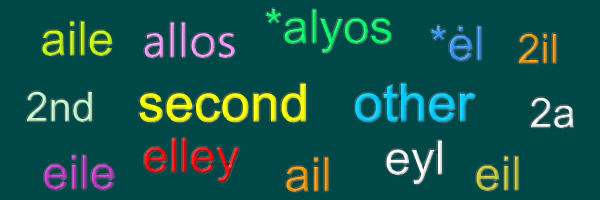
Today we’re looking at the words for second or other and related things in Celtic languages.

Second, Other

Proto-Celtic *alyos [ˈal.jos] = other, second
Leptonic 𐌀𐌋𐌉𐌏𐌔 (alios) = second, other
Gaulish allos, alos = second, other
Old Irish (Goídelc) aile = other, second
indala [in͈ˈdala] = other (of two)
Middle Irish (Goídelc) aile, oile, eile = other, second, another
indala = one (of two), less often, the other, later, the second
Irish (Gaeilge) eile [ˈɛlʲə] = other, another, next, more, else
dara [ˈd̪ˠɑɾˠə / ˈd̪ˠaɾˠə] = second (2ⁿᵈ), next, other
Scottish Gaelic (Gàidhlig) eile [elə] = other, another, else
eileadh [eləɣ] = other
eilich [elɪç] = alienate
eileachadh = (act of) alienating, alienation, othering
dala [dal̪ˠə] = second (2ⁿᵈ)
Manx (Gaelg) elley = other, else, another, additional, alternative
derrey = second in command, till, pending
yn derrey = second (2ⁿᵈ)
Proto-Brythonic *ėl [ˈe̝ːlˑ] = second, other
Middle Welsh (Kymraec) ail, eil, eyl = second, other
Welsh (Cymraeg) ail [ai̯l] = second, like, similar, equivalent, equal; son, grandson, heir, descendant; helper, supporter
ailgylchu = to recycle
eilaidd = secondary
eilfed = second (number)
eilaid = second (of time)
Middle Cornish eil = second, another
Cornish (Kernewek) eyl = one of two, second
eyla = to second
eylafinans = refurbishment
eylgelghya = to recycle
eylskrifa = to copy
Middle Breton) eil = second
Breton (Brezhoneg) eil [ˈɛjl] = second
eilvet = second (number)
eilad = second, copy, reproduction
eilañ = to accompany, copy
eiladiñ = to duplicate
eiladuriñ = to reproduce, reproduction

Words marked with a * are reconstructions.

Etymology: from the Proto-Indo-European *h₂élyos (other, another), from *h₂el- (beyond, other) [source]. The Old Irish word indala, which is the root of the Irish dara, the Scottish Gaelic dala and the Manx derrey, comes from the Old Irish ind (the) and aile (second) [source]..

Some words from the same PIE roots include else, all and ultra in English, al (all, all of) in Dutch, eller (else, otherwise) in Danish, Norwegian and Swedish, and այլ (ayl – another, other) in Armenian [source].

Sources: Wiktionary, Am Faclair Beag, Online Manx Dictionary, Teanglann.ie, eDIL – Electronic Dictionary of the Irish Language, In Dúil Bélrai English – Old Irish glossary, Geiriadur Prifysgol Cymru, Gerlyver Kernewek, Gerlyvyr Cernewec, Dictionaire Favereau, TermOfis, Le dictionnaire diachronique du breton, Geriafurch, English – ProtoCeltic WordList (PDF), Etymological Dictionary Of Proto Celtic

The Fastest Way to Learn Japanese Guaranteed with JapanesePod101.com

Copper

Today we’re looking at the words for copper and related things in Celtic languages.

copper pots

Proto-Celtic *omiyom = copper, bronze
Old Irish (Goídelc) umae, humae [ˈu.ṽe] = copper, bronze, brass
Middle Irish (Gaoidhealg) uma = copper, bronze, brass
Irish (Gaeilge) umha = copper, copper alloy, bronze
umhadhaite = bronze-coloured, bronzed
umhaí = worker in copper or bronze
cré-umha = bronze
cré-umhaigh = to bronze
salachar-umha = verdigris
Scottish Gaelic (Gàidhlig) umha [ũ.ə] = bronze, copper, brass
umhach = coppery, brassy
umha-dhathte = copper-coloured, bronze-coloured
ceàrd-umha = coppersmith
Linn an Umha = the Bronze Age
meirg-umha = verdigris
Manx (Gaelg) ooha = bronze
cur ooha er = to bronze, bronzing
Yn Eash Ooha = the Bronze Age
Proto-Brythonic *öβ̃ɨð = bronze, copper
Old Welsh emid, emed = bronze, copper
Middle Welsh (Kymraec) euyð, euyd = bronze, copper
Welsh (Cymraeg) efydd [ˈɛvɨ̞ð / ˈeːvɪð] = bronze, brass, copper; made of bronze brass or copper; brazen; bronze colour, coppery
efyddaf, efyddu = to cover or adorn with brass or copper, to braze
efyddaid = made of bronze or brass; brazen, brazed
efyddog = brassy, coppery
efyddwr = brass-smith, copper-smith
medal efydd = bronze medal
mwyn efydd = copper ore, copper mine
Oes yr Efydd = Bronze Age

Words marked with a * are reconstructions.

Etymology: possibly from the Proto-Celtic *omos (raw), from the Proto-Indo-European *h₂eh₃mós (raw, uncooked, bitter, sour) [source].

Some words from the same PIE root, via the Latin amārus (bitter, harsh, sour, dire), include amaro (bitter) in Italian, amer (bitter, sour) in French, amarillo (yellow, golden coloured) in Spanish [source], and marulă (lettuce) in Romanian [source].

Irish (Gaeilge) copar [ˈkopˠəɾˠ] = copper
gabha copair = coppersmith
coparás = copperas, copper sulphate
Scottish Gaelic (Gàidhlig) copar [kɔhbər] = copper
coparach = cuperous, like copper, coppery
copar-dubhaidh = copperas, green vitriol (iron(II) sylphate)
Manx (Gaelg) cobbyr, copuir = copper
cobbyragh = copperish, cupric
gaaue cobbyr = coppersmith
plait cobbyr = copperplate
Middle Welsh (Kymraec) copyr, copr, kopyr = copper
Welsh (Cymraeg) copr, copor, coper = copper; something of little value; red hair
gof copr = copper-smith
gwaith copr = copper-works, vessels made of copper
mwyn copr = copper ore, copper mine
Cornish (Kernewek) kober [stɛːn / steːn] = copper
kobrek = copper (colour)
Breton (Brezhoneg) kouevr = copper
kouevrek = cupric (relating to or containing copper)
kouevrus = cuprous (relating to or containing copper)

Etymology: from the Middle English coper (copper, bronze), from the Old English copor (copper), from the Proto-Germanic *kuprą (copper), from the Latin Latin cuprum (copper) from the Ancient Greek Κύπρος (Cyprus – where large reserves of copper can be found). The Breton word kouevr was borrowed from the French cuivre (copper, brass), from the same Latin root [source].

Sources: Wiktionary, Am Faclair Beag, Online Manx Dictionary, Teanglann.ie, eDIL – Electronic Dictionary of the Irish Language, In Dúil Bélrai English – Old Irish glossary, Geiriadur Prifysgol Cymru, Gerlyver Kernewek, Gerlyvyr Cernewec, Dictionaire Favereau, TermOfis, Le dictionnaire diachronique du breton, Geriafurch, English – ProtoCeltic WordList (PDF), Etymological Dictionary Of Proto Celtic

The Fastest Way to Learn Japanese Guaranteed with JapanesePod101.com

Metal

Today we’re looking at the words for metal, ore, mines and related things in Celtic languages.

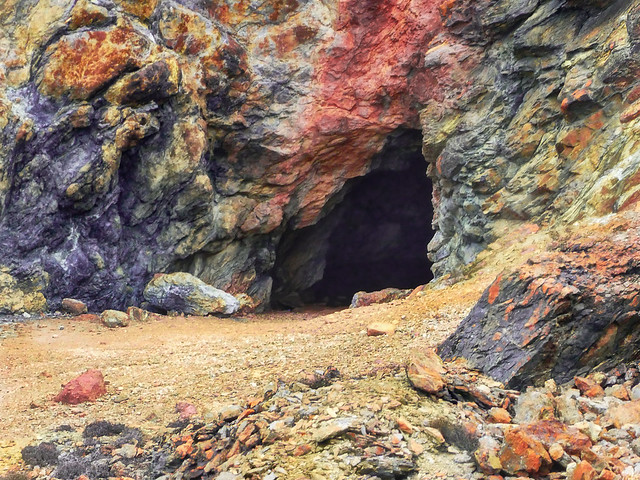
The cave at Parys mountain.

Proto-Celtic *mēnis = ore, metal, mine
Old Irish (Goídelc) méin, mían [mʲeːnʲ] = mineral, ore, metal
Middle Irish (Goídelc) méin, mían [mʲeːnʲ] = mineral, ore, metal
míanach = vein of ore, mine
míanaige = miner
Irish (Gaeilge) mianach = ore; stuff, material, substance, quality
mianadóir = miner
mianrach = mineral
mianreolaí = mineralogist
mianreolaíocht = mineralogy
mianadóireacht = mining; burrowing, excavating, digging deep
Scottish Gaelic (Gàidhlig) mèinn [mɛːn̪ʲ] = mine, ore
mèinnear, mèinneadair = miner
mèinnireach = mineral
mèinn-guail = coal mine, colliery
mèinn-talmhainn = landmine
mèinn salainn = salt mine
mèinneadh = mining
mèinnearach = mining
mèinn-eòlas = mineralogy
mèinneadh = mineralogical
mèinnearach = mineralogist
Manx (Gaelg) meain = ore, mine
meainagh = ore
meain-oayllys, meaineraght = metallurgy
meain-oaylee, meaineraght = mineralogist
meain arih = gold mine
meain argid = silver mine
meain chobbyr = copper mine
meain gheayil = coal mine, colliery
meain hollan = salt mine
meain leoaie = lead mine
Proto-Brythonic *muɨn = ore, metal, mine
Middle Welsh (Kymraec) mwyn, mŵn = mineral, ore, mine
Welsh (Cymraeg) mwyn = mineral, ore, mine
mwynwr = miner, sapper
mwyn arian = silver ore, silver mine
mwyn aur = gold ore, gold mine
mwyn cellt = quartz
mwyn coch = red lead, red ochre, haematite, other red ores
mwyn copr = copper ore, copper mine
mywn du = blacklead, graphite
mwyn efydd = copper ore, copper mine
mwyn haearn = iron ore
Cornish (Kernewek) moon = fusible metal mineral, mineral
Middle Breton *men = iron
Breton (Brezhoneg) mengleuz = quarry, slate quarry, mine
mengleuzer = slate quarry worker
mengleuzerezh = mining industry
mengleuziañ = to mine
mengleuziek = mining
mengleuzier = quarryman

Words marked with a * are reconstructions.

Etymology: probably from the Proto-Indo-European *mēy(H)nis, from *(s)mēy(H)- (to cut, hew) [source].

The English word mine (an excavation from which ore or solid minerals are taken) comes from the same Proto-Celtic root, via the Old French myne, mine, the Late Latin mina and Gaulish [source].

Middle Irish (Goídelc) mital(l) = metal
Irish (Gaeilge) miotal [ˈmʲɪt̪ˠəlˠ] = metal; mettle, spirit, hardihood
miotalach = metallic; mettlesome, spirited; hardy, wiry
miotalagrafaíocht = metallography
miotalóir = metallurgist
miotalóireach = metallurgic(al)
miotalóireacht = metal-work, metallurgy
Scottish Gaelic (Gàidhlig) miotal, meiteal = metal
= miner
meatailteach = metallic
obair-mheatailtean, obair-mheatailt = metalwork, metallurgy
meatailt uasal = precious metal
Manx (Gaelg) metal = metal
Middle Welsh (Kymraec) mettel = metal
Welsh (Cymraeg) metel, metal = metal, metal weapon or armour; substance, mettle, bravery, courage
metelaidd, metelig = metallic
meteleg = metallurgy
metelegol = metallurgical
metelegwr, metelegydd = metallurgist
Cornish (Kernewek) metol = metal
metolyek = metallic
Breton (Brezhoneg) metal = metal
metalerezh = metallurgy
metalour = metallurgist

Etymology (Welsh): from the Middle English metel(l), metal(l) (metal, ore), from the Old French metal (metal), from the Latin metallum (metal, precious metals, mine), from the Ancient Greek μέταλλον (métallon – metal, precious metals, mine) [source].

Etymology (Irish): from the Old French metal (metal), then as above [source].

The English word metal comes from the same roots, via Middle English, Old French, etc [source]. The word mettle (a quality of endurance and courage) was originally a variant of metal, and later came to have a figurative sense [source].

Sources: Wiktionary, Am Faclair Beag, Online Manx Dictionary, Teanglann.ie, eDIL – Electronic Dictionary of the Irish Language, In Dúil Bélrai English – Old Irish glossary, Geiriadur Prifysgol Cymru, Gerlyver Kernewek, Gerlyvyr Cernewec, Dictionaire Favereau, TermOfis, Le dictionnaire diachronique du breton, Geriafurch, English – ProtoCeltic WordList (PDF), Etymological Dictionary Of Proto Celtic

The Fastest Way to Learn Japanese Guaranteed with JapanesePod101.com

Hard Steel

Today we’re looking at the words for steel and related things in Celtic languages.

Steel

Old Irish (Goídelc) dúr = hard, hardy, resolute, rigid
Middle Irish (Gaoidhealg) dúr = rigid, hard, solid; difficult; hard to bear; strict, austere; hardy, resolute; unfeeling, dour, obdurate
Irish (Gaeilge) dúr = hard, rigid, solid; dour, grim, obstinate; dense, stupid, blunt, insensitive; sluggish
dúramán = dull-witted, stupid person
dúramánta = dull-witted, stupid
dúranta = dour, grim, morose, sullen
dúrantacht = dourness, sullenness
dúrapóg = surly person
dúrchroí = hard heart, hardness of heart
dúrchroíoch = hard hearted
Scottish Gaelic (Gàidhlig) dùr [duːr] = stubborn, intractable; obstinate, dull, stupid; persevering
durganta = rigid, stiff, hardened; robust, rigorous; obstinate, dogged; sullen, morose; grim, forbidding
Manx (Gaelg) douyr = mournful, uncomfortable, unhappy, afflicting
Proto-Brythonic *dʉr = hard, hard metal, steel
Middle Welsh (Kymraec) dur = steel
Welsh (Cymraeg) dur [dɨːr / diːr] = steel, steel weapon; hard, cruel
duraidd = steely, hard, faithful, true
durawdr = steel sword or lance
dur bwrw = cast steel
edau ddur = wire
fel y dur = true as steel, like steel
llifddur = file, rasp
Cornish (Kernewek) dur = steel
dur dinamm = stainless steel
Breton (Brezhoneg) dir = steel
dir disvergi = stainless steel
kazeg-dir = bicycle (“steel mare”)

Etymology from the Latin dūrus (hard, rough, harsh), from the Proto-Indo-European *drew- (hard, fast), from *dóru (tree) [source].

Words from the same Latin root include the Scots word dour (hard, stern, severe, relentless), possibly via Middle Irish, which was also borrowed into English and means stern, harsh or forbidding; the French word dur (hard, tough, harsh), the Italian word duro (hard, tough, harsh), and the Spanish word duro (hard, form, solid) [source].

Words from the same PIE root include Celtic words for oak (tree), and the English words true, trough and trim [source].

Irish (Gaeilge) cruach [kɾˠuəx / kɾˠɔx] = steel
cruachghreanadóireacht = steel-engraving
cruachobair = steelwork
cruachphláta = steel-plate
cruachphlátáilte = steel-plated
Scottish Gaelic (Gàidhlig) cruaidh [kruəj] = steel; stone anchor; hard, rocky ground
Manx (Gaelg) creoighey = steel

Etymology from the Irish crua (hard), from the Old Irish crúaid (hard, hardy, harsh, stern, strict), from the Proto-Celtic *kroudis (rude), possibly from *krū- (blood), from the Proto-Indo-European *krewh₂-. (blood) [source].

Scottish Gaelic (Gàidhlig) stàilinn [sdaːl̪ʲɪn̪ʲ] = steel
clòimh-stàilinn = steel wool
obraiche-stàilinn = steelworker
ionad-stàilinn = steelworks
Manx (Gaelg) staillin, steillyn, steillin = steel
staillinagh = steel-maker, steel
obbyr staillinagh = steelwork
ollan staillinagh = steel wool
snaie staillinagh = steel wire
towse staillinagh = steelyard

Etymology from the Old Norse stál (steel, sword), from the Proto-Germanic stahlą (steel), from the Proto-Indo-European *stek- (to be firm, stand fast) [source].

Words from the same Proto-Germanic root include steel in English, staal (steel) in Dutch, Stahl (steel) in German, and stål (steel, tool) in Danish [source].

Words marked with a * are reconstructions.

Sources: Wiktionary, Am Faclair Beag, Online Manx Dictionary, Teanglann.ie, eDIL – Electronic Dictionary of the Irish Language, In Dúil Bélrai English – Old Irish glossary, Geiriadur Prifysgol Cymru, Gerlyver Kernewek, Gerlyvyr Cernewec, Dictionaire Favereau, TermOfis, Le dictionnaire diachronique du breton, Geriafurch, English – ProtoCeltic WordList (PDF), Etymological Dictionary Of Proto Celtic

The Fastest Way to Learn Japanese Guaranteed with JapanesePod101.com

Doors

Today we’re looking at the words for door, gate, port, harbour and related things in Celtic languages.

Priory Church of St Mary in Chepstow, Wales

Words marked with a * are reconstructions.

Proto-Celtic *dwār = door
Gaulish *durom = door – was borrowed into Latin and appeared in placenames such as Augustodurum (now Bayeux), and Nemetodurum (now Nanterre)
Proto-Brythonic *dor = door
Old Welsh dor = door
Middle Welsh (Kymraec) dor = door
Welsh (Cymraeg) dôr [druːs] = door; defence, refuge, shield; opportunity; protector, defender, chief, leader
dôr blyg(edig) = folding door
dôr ddyrchafad = portcullis
Middle Breton dor = door
Breton (Brezhoneg) dor [doːr] = door
dor-dal = front door, portal
dorlec’h = door frame
dor a-dreñv = rear door
dor a-raok = front door
dor emgefre = automatic door
dor greñvaet = fortified gate
dor harz tan = fire door
dor-borzh = gate (of a courtyard)
dor brenestr = French window
gwir treuz-dor = doorstep

Etymology from the Proto-Indo-European *dʰwṓr (door), from *dʰwer- (doorway, door, gate) [source].

Words from the sane Proto-Indo-European root include: door and forum in English, deur (door) in Dutch, Tür (door, doorway) in German, dehors (outside) in French, fuori (outside) in Italian, and fuera (outside) in Spanish [source].

Proto-Celtic *dworestus = door
Old Irish (Goídelc) dorus [ˈdorus] = door
Middle Irish (Gaoidhealg) dorus [ˈdorus] = door
Irish (Gaeilge) doras [ˈd̪ˠɔɾˠəsˠ] = door, doorway
doras isteach = entrance
doras amach = exit
doras tosaigh / béil = front door
doras cúil / thiar = backdoor
doirseach = having doors, open, accessible, gaping (wound)
doirseoir = door-keeper, (hall) porter
doirseoireacht = occupation of door-keeper
Scottish Gaelic (Gàidhlig) dorus [dɔrəs] = door, valve
dorus-beag = back door, inner door
dorus-mór = front door, main entrance
doras a-mach = exit
àrd-doras = lintel
ath-dhoras = next door
deoch an dorais = stirrup cup, one for the door/road, Jock and Doris
Manx (Gaelg) dorrys = door, doorway, gate, portal; back (of cart), fly (of tent)
dorrys doont = back door
dorrys toshee = front door
dorrys egin = emergency exit, exit
jough yn dorrys = parting drink, stirrup cup
sole y dorrys = doorstep, threshold
Proto-Brythonic *drus = doorway, entrance, door
Old Welsh drus = doorway, entrance, door
Middle Welsh (Kymraec) drus, drvs, drws = doorway, entrance, door
Welsh (Cymraeg) drws [druːs] = doorway, entrance, door, pass, estuary, opening, opportunity, facility
drws codi/cudd = trap-door
drws nesaf = next door (to), very near (to), bordering (on)
wrth y drws = at hand, close, near
o ddrws = from before
drysaf, drwsaf, dryo, drwso = to mind a door (in a coal-mine)
dryswr, drwswr = door-boy (in a coal-mine)
drysor = doorkeepr, janitor, porter
Middle Cornish daras, darat = door
darador = doorkeeper
Cornish (Kernewek) daras = door
darasik = wicket
penn/pedn daras = lintel

Etymology from the Proto-Celtic *dwār (door) – see above [source].

Old Irish (Goídelc) port [por͈t] = place, shore, bank
Middle Irish (Gaoidhealg) port = place, spot, locality, stead, abode, settlement, bank, shore, mound, entrenchment
Irish (Gaeilge) port [ˈd̪ˠɔɾˠəsˠ] = landing-place, harbour, port, bank, place of refuge, haven, resort, fortified place, stronghold
aerfort = airport
calafort = port, harbour
Scottish Gaelic (Gàidhlig) port [pɔr̪ˠʃd] = port, dock
port-adhair = airport
baile-puirt = seaside village, port town
long-phort = seaport
Manx (Gaelg) purt = harbour, port, station
purt aer = airport
purt awiney = river port
purt lhuingey, lhong-phurt = seaport
Middle Welsh (Kymraec) porth = port, harbour, haven
porthua, porthfa = harbour, port, coast, haven, refuge
Welsh (Cymraeg) porth [pɔrθ] = port, harbour, haven, estuary, landing-place, ferry
porthfa = harbour, port, coast, haven, refuge
porthfad = ferryboat, wherry
porthladd = harbour, port, coast, safe anchorage
porthwas = ferryman, boatman, porter, carrier
Middle Cornish porth = (sea) port, harbour, bay
Cornish (Kernewek) porth = cove, harbour, haven, port
porth klos = docks
porthva = wharf
Middle Breton porz = port
porz mor, portz mor = seaport
Breton (Brezhoneg) porzh [pors] = port
porzh-mor [pɔrzˈmoːr] = seaport

Etymology from Latin portus (harbour, port, haven, refuge, warehouse), from Proto-Italic *portus (harbour) the Proto-Indo-European *pértus (crossing, from *per- (to lead, cross over, pass) [source].

Words from the same roots include port, portal, porter and portico in English, porte (door, gate, means) in French, puerta (door, gate, goal) in Spanish, póirse (porch, lobby, passage, closet) in Irish, and furta (wicket gate, port) in Polish [source].

Proto-Brythonic *porθ = door, gate, gateway
*porθọr = porter, gatekeeper
Middle Welsh (Kymraec) porth, pyrth, pirth = portal, door, gate(way)
porthavr, porthaur, porthawr, porthor = porter, gatekeeper, doorkeeper
Welsh (Cymraeg) porth [pɔrθ] = portal, door, gate(way), porch, lobby, vestibule, portico, gap, pass
porthfa = entrance, gate, portico
porthor(es) = porter, gatekeeper, doorkeeper
Middle Cornish porth = door, gate, entrance
porther, porthawr, portheres = doorkeeper, porter, janitor
Cornish (Kernewek) porth = portico, gate
porther, porthores = porter, janitor
porthji = gatehouse, lodge
Middle Breton porz = (monumental / city) gate
Breton (Brezhoneg) porzh [pors] = (monumental) gate, courtyard
porzhad = courtyard
porzhier = doorman, concierge
porzhierezh = courtyard, concierge
porzh-gwint [pɔrzˈɡɥĩnt] = drawbridge

Etymology from Latin porta (gate, entrance, passage, door, way), from Proto-Italic *portā (gate) the Proto-Indo-European *porteh₂, from *per- (to lead, cross over, pass) [source].

Old Irish (Goídelc) calad [por͈t] = shore, port, landing
Middle Irish (Gaoidhealg) calad, caladh = shore, port, landing-place, land
Irish (Gaeilge) caladh [ˈkɑl̪ˠə / ˈkalˠuː] = landing-place, ferry, port, harbour, river-meadow, break, large wave
calafort = port, harbour
Scottish Gaelic (Gàidhlig) cala [kal̪ˠə] = harbour, port, haven
cala-phort = harbour, haven
Manx (Gaelg) callee = landing place
calloo = breakwater, bulwark, column, landing stage
calloo marrey = pier

Etymology possibly from Late Latin calātum from Latin calō (to call, announce solemnly) [source], or from Proto-Celtic *kaletos (hard, strong cruel) [more details].

The Fastest Way to Learn Japanese Guaranteed with JapanesePod101.com

Sources: Wiktionary, Am Faclair Beag, Online Manx Dictionary, Teanglann.ie, eDIL – Electronic Dictionary of the Irish Language, In Dúil Bélrai English – Old Irish glossary, An Etymological Dictionary of the Gaelic Language, Geiriadur Prifysgol Cymru, Gerlyver Kernewek, Dictionaire Favereau, TermOfis, English – ProtoCeltic WordList (PDF), Etymological Dictionary Of Proto Celtic

Unlimited Web Hosting - Kualo

Wood Intelligence

Today we’re looking at the words for chess and related things in Celtic languages.

Chess

According to legend, the ancient Irish game of fidchell was invented by Lugh (god of light and inspiration) in the 9th century. It played an important role in the celebrations at the Festival of Lughnasa (in August), and was played by kings, druids, warriors – more details. See also: https://totallyirishgifts.com/fidchell-the-ancient-celtic-chess-game/.

The old Welsh game of gwyddbwyll is mentioned in medieval Welsh literature, however there are no surviving examples of the game.

Chess is thought to have originated in India in the 6th century AD, and was brought to Britian by the Normans in the 12th century.

See also: https://lornasmithers.wordpress.com/2017/06/16/gwyddbwyll-why-the-war-games/.

Old Irish (Goídelc) fidchell [ˈfɪðʲçɛlː] = an old Irish board game similar to chess
Irish (Gaeilge) ficheall [ˈfʲɪhəl̪ˠ / ˈfʲɪhəl̪ˠ / ˈfʲɪçəl̪ˠ] = chess, chessboard
flcheallacht = chess-playing
flcheallaí = chess-player
clár fichille = chessboard
fear fichille = chessman
fíann/forieann fichille = set of chessmen
Scottish Gaelic (Gàidhlig) fidhcheall = Celtic chess
Manx (Gaelg) feeal = chess
feealee = chess player
fer feeal, babban feeal = chess piece
claare feeal = chessboard
Proto-Brythonic *gwɨðbuɨll = a board-game similar to chess
Middle Welsh (Kymraec) gvytbuill, gvydbvll, gvydbvyll = one of the twenty-four feats of skill or prowess performed in Wales in medieval times; a board-game similar to chess
Welsh (Cymraeg) gwyddbwyll [ˈɡwɨ̞ðbʊɨ̯ɬ] / ˈɡʊi̯ðbʊi̯ɬ] = chess; knowledge, learning, science; reason, sense, discretion
gwyddbwyllwr = chess player, chess piece, chess man
Cornish (Kernewek) gwydhbol = chess
Old Breton guidpoill, guidpull = chess
Breton (Brezhoneg) gwezboell = (Celtic) chess
gwezboellet = chequered

Etymology from the Proto-Celtic *widukʷēslā [source], *widu (wood), from the Proto-Indo-European *h₁widʰ(h₁)-u-s [source]; and *kʷēslā (mind, sense, wisdom, intelligence, meaning), from the Proto-Indo-European *kʷeyt- (to notice) [source].

The English word wood also comes from the PIE root *h₁widʰ(h₁)-u-s, via the Middle English wode (wood), the Old English widu, wudu (wood) the Proto-West-Germanic *widu (forest, tree, wood), and the Proto-Germanic *widuz (wood) [source].

See also the post about Trees, Wood(s) & Forests

In Welsh, chess is also sies or ses, which were borrowed from the Middle English ches(se) (chess, chess set, chessboard, chess pieces) [source].

Middle Irish (Gaoidhealg) táiplis, táibhleis = tables, backgammon, backgammon-board
Scottish Gaelic (Gàidhlig) tàileasg [taːl̪ˠəsg] = chess, backgammon, draughts / checkers
Manx (Gaelg) tawlish = draughts / checkers
tawlish beg = draughts / checkers
tawlish mooar = backgammon
Welsh (Cymraeg) tawlfwrdd, towlfwrdd, tolfwrdd = a board game similar to chess, game-board; chess; chessboard, draughtboard

Etymology: from the Old Norse tafl (chess-like game, chess, backgammon), from the Latin tabula (tablet; board, plank) [source].

Words marked with a * are reconstructions.

Sources: Wiktionary, Am Faclair Beag, Online Manx Dictionary, Teanglann.ie, eDIL – Electronic Dictionary of the Irish Language, In Dúil Bélrai English – Old Irish glossary, Geiriadur Prifysgol Cymru, Gerlyver Kernewek, Gerlyvyr Cernewec, Dictionaire Favereau, TermOfis, Le dictionnaire diachronique du breton, Geriafurch, English – ProtoCeltic WordList (PDF), Etymological Dictionary Of Proto Celtic

The Fastest Way to Learn Japanese Guaranteed with JapanesePod101.com

Heather

Today we’re looking at the words for heather and related things in Celtic languages.

Heather

Words marked with a * are reconstructions.

Proto-Celtic *wroikos = heather
Gaulish *wroika = heather
Celtiberian *broikios = heather
Old Irish (Goídelc) froích, fróech = heather
Middle Irish (Gaoidhealg) fráech = heather
Irish (Gaeilge) fraoch [fˠɾˠeːx / fˠɾˠiːx / fˠɾˠiːx] = heather, heath, moor
fraochán = bilberry, whortleberry, ring-ouzel
fraochlach = heath
fraochmhá = heath
fraochmhar = heathery
fraoch bán = white heather
fraoch coitianta = Scotch heather, ling
píobaire fraoch = grasshopper
Scottish Gaelic (Gàidhlig) fraoch [frɯːx] = heather, ling
fraoch-geal = white common heather (Calluna vulgaris alba
fraoch-bheinn = heather-covered mountain
fraochan = whortleberry, blaeberry, lingonberry, cranberry
fraochach = heathy, heathery
Manx (Gaelg) freoagh = heather, ling, heath
freoagh bane = brier, white heather
freoagh marrey = sea fern
freoagh mooar = Scotch heather
Proto-Brythonic *gwrʉg [ˈɡwrʉːɡ] = heather
Middle Welsh (Kymraec) gruc, gerug, gwrug = heather
Welsh (Cymraeg) grug [ɡrɨːɡ / ɡriːɡ] = heather, ling heath
grug cyffredin = heather, ling, common heath, Calluna vulgaris
grugiar = (red) grouse, willow grouse, heath-hen
gruglus = heath-berries
gruglwyn = bush of heather, sweet broom
grugnythu = to nest or nestle in the heather
grugog = heath-covered, heathery, abounding in heather
Cornish (Kernwek) grug [ɡryːɡ / ɡriːɡ] = heath, heather, ling
grugyar = partridge
Middle Breton groegan = heather
Breton (Brezhoneg) brug [bryːk] = heather
brugek [ˈbryː.ɡɛk] = (a place) abundant in heather, covered with heather

Etymology unknown, possibly from a non-Proto-Indo-European root [source].

Words from the same Proto-Celtic roots, via Gaulish *wroikos (heather), and Latin *brūcus (heather) or Vulgar Latin *broccius, include brezo (heath) in Spanish, breixo (heather) in Galician, brugo (heather) and brughiera (heath, moor) in Italian, bruc (heather) and bruguera (heath) in Catalan, and bruyère (heather, heath, brier) in French [source].

Eilean Fraoch (Heather Isle) is a nickname for the Isle of Lewis / Eilean Leòdhais in the Western Isles / Na h-Eileanan Siar. Here’s a song about it:

Sources: Wiktionary, Am Faclair Beag, Online Manx Dictionary, Teanglann.ie, eDIL – Electronic Dictionary of the Irish Language, In Dúil Bélrai English – Old Irish glossary, Geiriadur Prifysgol Cymru, Gerlyver Kernewek, Gerlyvyr Cernewec, Dictionaire Favereau, TermOfis, Le dictionnaire diachronique du breton, Geriafurch, English – ProtoCeltic WordList (PDF), Etymological Dictionary Of Proto Celtic

The Fastest Way to Learn Japanese Guaranteed with JapanesePod101.com

Nieces

Today we’re looking at the words for niece and related people in Celtic languages.

Sasha and Nick
My brother and my niece

Words marked with a * are reconstructions.

Proto-Celtic *nextī = niece
Old Irish (Goídelc) necht = niece, grand-daughter
Middle Irish (Gaoidhealg) necht, neachd = niece, grand-daughter
Irish (Gaeilge) neacht [n̠ʲæxt̪ˠ] = niece
garneacht = grand-niece
Scottish Gaelic (Gàidhlig) nigh [n̪iːj] = daughter, niece
Proto-Brythonic *nėθ = niece
Middle Welsh (Kymraec) nith = niece
Welsh (Cymraeg) nith [niːθ] = niece
gor-nith = great-niece
Old Cornish noit = niece
Middle Cornish (Cernwec) noit = niece
Cornish (Kernwek) nith = niece
Old Breton nith = niece
Middle Breton nyz, niz = niece
Breton (Brezhoneg) nizh, nizez = niece
gou(r)nizez = great-niece

Etymology from the Proto-Indo-European *néptih₂ (niece, granddaughter) [source].

Words in Germanic language the come from the same PIE root, via the Proto-Germanic *niftiz (female descendent, granddaughter, niece), including: Nichte (niece) in German, nicht (female cousin, niece) in Dutch, and the obsolete English word nift (niece) [source].

The English word niece comes from the same PIE root, via the Middle English nece (niece, granddaughter), from the Old French nece (niece, granddaughter), from the Vulgar Latin *neptia (niece), from the Latin neptis (granddaughter) [source].

Other words for niece:

  • Irish: iníon deirféar (sister’s daughter), iníon dearthár (brother’s daughter)
  • Scottish Gaelic: nighean-pheathar (sister’s daughter), nighean-bhràthar (brother’s daughter), ban-ogha = granddaughter, niece
  • Manx: inneen shayrey (sister’s daughter), inneen vraarey (brother’s daughter)

See also the post about daughters.

The Fastest Way to Learn Japanese Guaranteed with JapanesePod101.com

Sources: Wiktionary, Am Faclair Beag, Online Manx Dictionary, Teanglann.ie, eDIL – Electronic Dictionary of the Irish Language, In Dúil Bélrai English – Old Irish glossary, Geiriadur Prifysgol Cymru, Gerlyver Kernewek, Lexicon Cornu-britannicum: A Dictionary of the Ancient Celtic Language of Cornwall, Dictionaire Favereau, TermOfis, Le dictionnaire diachronique du breton, Etymological Dictionary Of Proto Celtic