Brushes and Broom

Today we’re looking at the words for brush, broom and related things in Celtic languages.

brooms

Words marked with a * are reconstructions.

Middle Irish (Gaoidhealg) scúap [skuə̯b] = brush, broom, sheaf, bundle
scúapad = act of sweeping
scúapaire = sweeper
Irish (Gaeilge) scuab [sˠkuəbˠ] = besom, broom; brush; sheaf, armful, bundle; to sweep
scuabach = sweeping, flowing; gusty
scuabachán = sweeping, sweepings
scuabadh = to sweep, wash
scuabadóir = sweeper
scuabán = little besom, little brush, little sheaf, armful, bundle
scuab fiacla = toothbrush
scuab ghruaige = hairbrush
scuab ingne = nailbrush
scuab phéinte = paintbrush
sreangscuab = wire brush
Scottish Gaelic (Gàidhlig) sguab [sguəb] = broom, besom, brush, sheaf
sguabte = brushed, swept
sguabanta = tidy, trim, clean
sguabadh = brushing, sweeping
sguabachan = brush
sguabag = gusty, wind, whisk, sheaf (of corn)
sguabadair = vacuum cleaner
sguabair = sweeper
sguab-aodaich = clothes brush
Manx (Gaelg) skeab = besom, broom
skeabey = brush, brushing, brush over, brush up, sweep, sweeping
skeabit = brushed, swept
skeaban daah, skeaban-slaa = paintbrush
skeaban feeackle = toothbrush
skeaban folt/fuilt = hairbrush
Proto-Brythonic *ɨskʉb = brush, broom
Middle Welsh (Kymraec) escup, yscub, ysgub = brush, broom
Welsh (Cymraeg) ysgub [ˈəsɡɨ̞b / ˈəsɡɪb] = sheaf, wheatsheaf, bundle; brush, broom, besom, quiver of arrows
ysgubell = brush, broom, besom, mop, bunch (of flowers)
ysgubo = to brush, sweep (away), make into sheaves
ysgubol = sweeping
ysgubwr = sweeper, sweep
ysgub blu = feather duster
priodas (coes) ysgub = informal wedding in which the parties jump over a broomstick in the presence of witnesses
Middle Cornish scibia = to sweep, brush
sciber = barn, any large room
scubilen = whip, scourge
Cornish (Kernewek) skub = sweeping
skubell, skubyllen = broom, brush
skubellik = paintbrush
skubell sugna = vacuum cleaner
skubell-wolghi = mop
skuber, skubores = sweeper
skubus = sweeping
skubya = to brush, sweep
skubyllen dhes = toothbrush
skubyon = refuse, sweepings
Breton (Brezhoneg) skub [ˈskyːp] = broom, brush, blade; sweep
skubell = broom, brush, blade; sweep
skubell-vroust(añ) = scrubbing brush
skuberez = sweeper

Etymology: from the Latin scōpa (broom) Proto-Indo-European *skeh₂p- (to prop) [source]. Words from the same Latin root include scopa (broom) in Italian, escoba (broom) in Spanish, and shqopë (heather, heath, briar) in Albanian [source]..

Broom

Proto-Celtic *banatlo- = broom (shrub)
Gaulish *balano- = broom (shrub)
Celtiberian *bálago-, *bálaco- = broom (shrub)
Scottish Gaelic (Gàidhlig) bealaidh [bɛl̪ˠɪn] = broom (shrub)
bealaidh-Frangach, bealaidh-Sasannach = laburnum
Proto-Brythonic *banatlo- = broom (shrub)
Middle Welsh (Kymraec) banadil, banadyl, banadl = broom (shrub)
Welsh (Cymraeg) banadl, banal [ˈbanadl] = broom (shrub)
banadl Ffrainc = laburnum
Old Cornish banathel = broom (shrub)
Middle Cornish banal = broom (shrub)
Cornish (Kernewek) banadhel = broom (shrub)
Old Breton (Brethonoc) balan = broom (shrub)
Middle Breton (Brezonec) balain, balazn = broom (shrub)
Breton (Brezhoneg) balan [ˈbɑːlãn] = broom (shrub)
balaneg [bã.ˈnɑː.lek] = broom grove
balaenn [baˈlɑːɛn] = broom, brush

According to An Etymological Dictionary of the Gaelic Language by Alexander MacBain (1982), there is a cognate in Irish: beally/i, however it doesn’t appear in any of the Irish dictionaries I’ve checked.

Etymology: from the Proto-Indo-European *bʰenH-tlom (way, path) in the sense of “cleared path (in a wood)” [source].

The French word balai (broom, broomstick, brush) comes from the Gaulish *balano-, via Old French, Middle Breton and Old Breton [source]. The Spanish word bálago (straw, Spanish broom), comes from the same Gaulish root, via the Celtiberian *bálago-/*bálaco- [source].

Words same PIE roots possibly include bana (course, path, trajectory) in Swedish, baan (road, path, track, job, orbit) in Dutch, and Bahn (route, trail, railway)in German [source].

The shrub known as broom in Britain and Ireland is also known as common broom or Scotch broom, or Cytisus scoparius in Latin. It is a deciduous leguminous shrub native to western and Central Europe. Broom can also refer to similar plants, such as French broom and Spanish broom [source].

Twigs from the broom, and from other plants, can be tied to a stout stick and used to sweep things. Such implements are traditionally known as besoms or broom besoms, and became known simply as brooms [source].

The Fastest Way to Learn Japanese Guaranteed with JapanesePod101.com

Sources: Wiktionary, Am Faclair Beag, Online Manx Dictionary, Teanglann.ie, eDIL – Electronic Dictionary of the Irish Language, In Dúil Bélrai English – Old Irish glossary, Geiriadur Prifysgol Cymru, Gerlyver Kernewek, Dictionaire Favereau, TermOfis, English – ProtoCeltic WordList (PDF), Etymological Dictionary Of Proto Celtic

Unlimited Web Hosting - Kualo

Fish

Words for fish and related things in the Celtic languages.

Fish

Proto-Celtic *ɸēskos = fish
Old Irish (Goídelc) íasc = fish
íascach = fish, fishing
Middle Irish (Gaoidhealg) íasc, iasc, īesc, éisc, escc = fish
íascach, iasccach = abounding in fish
íascaire, iscaire = fisherman
íasmar, iascchmar = full of fish, productive in fish
Irish (Gaeilge) iasc [iəsˠk] = fish, to fish
iasc = fishing, fishery
iascaire = fisherman
iascaireacht = fishing, fishery
iasceolaíocht = ichthyology (scientific study of fish)
iasciteach = fish-eating, ichthyophagous
iascúil = abounding in fish, easy to fish, good at fishing
Scottish Gaelic (Gàidhlig) iasg [iəsg] = fish, Pisces
iasgach [iəsgəx] = fishing, angling, fishery
iasgachadh [iəsgəxəɣ] = (act of) fishing
iasgadair [iəsgədɪrʲ] = fisher(man)
iasgail [iəsgal] = fishy, pertaining to fish, good for fishing
iasgan [iəsgan] = small fish, mussel
Manx (Gaelg) (y)eeast = fish
eeastagh(ey) = to angle, to fish, angling, fishing
eeasteyr = fisherman
eeasteyraght = fishery, fishing
eeasteyrys = fishing
eeastoil = abounding in fish, fishy
eeast-oaylleeaght = ichthyology
Proto-Brythonic *uisk = fish
*Uɨsk = fish, river name (originally meaning “abundant in fish”)
Welsh (Cymraeg) Wysg [uːɨ̯sk / ʊi̯sk] = Usk (a river and town in south Wales)
Caerwysg = Exeter

Etymology: from the Proto-Indo-European *pisḱ-/peysḱ- (fish) [source]. The name of the river Exe in Devon comes from the same root, as does Exmoor, where the river rises, Exmouth, where it meets the sea, and Exeter, which stands on the river. The rivers Esk (North Yorkshire, Cumbria, Dumfries and Galloway, and East Lothian) and Axe (one in Dorset, Somerset, Devon; and another in Somerset) get their names from the same root [source].

Proto-Brythonic *pɨsk [pɨsk] = fish
*pɨskọd [pɨˈsˑkɔːd] = fish (pl)
Middle Welsh (Kymraec) pisscaud, psycgaut, pesgod = fish(es), Pisces
pysgodfwyd = ichthyophagous, piscivorous, fish-eating, fish-meal
pysgodlyn, pyscotlyn = fish-pool, fish-pond
peskod ha, pyscotta, pyscota = to fish, angle, fishing
pyscodwr, pyscod-wr, pyscottwr = fisherman, fisher
Welsh (Cymraeg) pysgod [ˈpəsɡɔd] = fish(es), Pisces
pysgodaidd = fishy, piscine, piscatory, piscatorial
pysgodfwyd = ichthyophagous, piscivorous, fish-eating, fish-meal
pysgodig = full of fish
pysgodlyn = fish-pool, fish-pond
pysgota = to fish, angle, fishing industry
pysgotwr = fisherman, fisher, angler, kingfisher, fishmonger
Middle Cornish (Cernewec) pisc, pysc = fish
piscadur, pysgadyr = fisherman
pisclin = fishpond
pisgetta, pysgetta = to fish
Cornish (Kernewek) pysk [pɪːsk] / pesk = fish
pyskador, peskador = fisherman
pyskadores, peskadores = fisherwoman
pyskessa, peskecha = to fish
pysklyn, pesklyn = fishpond
pyskva, peskva = aquarium
Middle Breton (Brezonec) pesq(uet) = fish
Breton (Brezhoneg) pesk(ed) [ˈpes.k(et)] = fish
pesker [ˈpeskɛʁ] = fishmonger, fisher(man)
pesketa [pɛs.ˈke.ta] = to fish
pesketaerezh [pɛs.ke.ˈtɛː.rɛs] = fishing, fisheries

Etymology: from the Latin piscātus, past participle of piscor (to fish), from piscis (fish), from Proto-Indo-European *péysks (fish) [source]. Words from the same PIE root include peshk (fish) in Albanian, pesce (fish) in Italian, poisson (fish) in French, fish, piscine (pertaining to fish), Pisces in English, and fisk (fish, Pisces) in Danish [source].

Interesting idioms related to fish:

  • Irish: Iasc as uisce i do bhéal! = Restrain your tongue! (“Fish out of water in your mouth”)
  • Irish: Ar iascadh libh? = Did you catch fish / succeed in your quest
  • Irish: Ar iascach ar dhuine = to fish information from sb
  • Scottish Gaelic: gaoth an iar, iasg is bainne = wind from the West, fish and milk
  • Welsh: pysgota mewn dŵr llwyd = to fish in troubled waters (“to fish in grey water”)

The Fastest Way to Learn Japanese Guaranteed with JapanesePod101.com

Sources: Wiktionary, Etymological Dictionary Of Proto Celtic, In Dúil Bélrai English – Old Irish glossary, eDIL – Electronic Dictionary of the Irish Language, Teanglann.ie, Am Faclair Beag, An etymological dictionary of the Gaelic language, Fockleyreen: Manx – English Dictionary, Online Manx Dictionary, Gaelg Corpus, Geiriadur Prifysgol Cymru, Lexicon cornu-britannicum : a dictionary of the ancient Celtic language of Cornwall, Gerlyver Kernewek, Devri : Le dictionaire diachronique du breton, Dictionnaires bilingues de Francis Favereau / Edition Skol Vreizh, TermOfis

Unlimited Web Hosting - Kualo

Cattle

Words for cattle, cow, bull, calf and related things in Celtic languages.

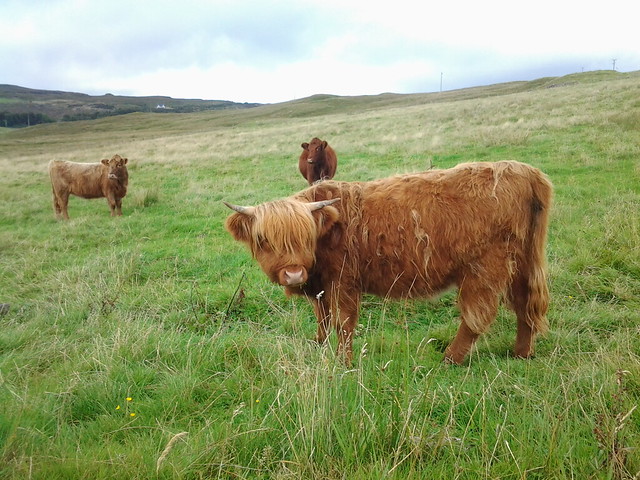
Highland cows

Words marked with a * are reconstructions.

Proto-Celtic *bāus = cow
*bow = cow
Celtiberian boustom = stable (?)
Old Irish (Goídelc) [boː] = ox, cow
Middle Irish (Gaoidhealg) = ox, cow
bóaire = stock-master, stock-owner (“cow-noble”)
bólacht = stock of cattle
bómlacht = cow’s milk
búarach = owner of cows
Irish (Gaeilge) [bˠoː] = cow
bó mhara = sea-cow, manatee
bó shamhraidh = ladybird
bó-aire = cattle lord, cattle owner
bódóir = cow-doctor
Scottish Gaelic (Gàidhlig) [boː] = cow
bò b(h)ainne = dair/milk cow
boineag = small cow
bòthach = pertaining to or abounding in cows
Manx (Gaelg) booa = cow
booa vluight = dairy cow
boin = very little cow
Proto-Brythonic *bʉ = cow
Middle Welsh (Kymraec) buv, bu, buw = cow
Welsh (Cymraeg) bu = cow, ox, head of cattle (as a standard of value in the Welsh laws)
buach = cowherd, rustic, wretched creature
biw = cow, cattle, horned cattle
Middle Cornish (Cernewec) biuh = cow
Cornish (Kernewek) bu = cow
Breton (Brezhoneg) bu = cow

Etymology: from the Proto-Indo-European *gʷṓws (cattle). The old Galician word busto (enclosed pasture, a herd of cattle) comes from the same Proto-Celtic roots, via Celtiberian [source].

Proto-Celtic *boukkā = cow
Proto-Brythonic *bʉx = cow
Middle Welsh (Kymraec) buvch, buwch = cow
Welsh (Cymraeg) buwch [bɨu̯χ / bɪu̯χ] = cow
buwch y dwfr = hippopotamus
buwch goch Duw = ladybird
buwchaidd = cow-like, pertaining to cattle, bovine, uncivilized, stolid
buwchan = small cow, young cow, heffer
buwchfrechu = to vaccinate (with cowpox)
buwchfrechiad = (cowpox) vaccination
buwchol = bovine
Old Cornish buch = cow
Middle Cornish (Cernewec) beuch, buch, beuh = cow
Cornish (Kernewek) bugh [biʊx / bɪwh] = cow
bugh godra = dairy cow
bughik = little cow
bughik Dhuw = ladybird
bughvowes = cowgirl
bughwas = cowboy
Middle Breton (Brezonec) buch = cow
Breton (Brezhoneg) buocʼh [ˈbɥoːχ / ˈbyːɔχ] = cow
buoc’han = ladybird
buoc’hken = cowhide

Etymology: from the Proto-Celtic *bāus (cow), the Proto-Indo-European *gʷṓws (cattle) [source].

Old Irish (Goídelc) crod = cattle, herds, livestock
Middle Irish (Gaoidhealg) crod, crud, (c)crodh = cattle, herds, stock, property, wealth
crodach = wealth, goods
Irish (Gaeilge) crodh [ˈkɾˠʊh] = cattle, wealth (in cattle), dowry
Scottish Gaelic (Gàidhlig) crodh [kroː/krɯj] = cattle

Etymology: possibly from Proto-Indo-European *ḱerdʰ- (file, row, herd) [source]. Words from the same roots include herd in English, Herde (herd, flock) in German and herdhe (nest) in Albanian [source].

Old Irish (Goídelc) ellach [ˈel͈ax] = good, property, livestock
Middle Irish (Gaoidhealg) ellach = goods, property, stock, cattle
Irish (Gaeilge) eallach, eallaighe [ˈal̪ˠəx / ˈal̪ˠa(x)] = chattels, goods, cattle, livestock, poultry
Scottish Gaelic (Gàidhlig) eallach [jal̪ˠəx] = burden, load, goods, property, cattle, livestock
Manx (Gaelg) ollagh = bovines, cattle, kine

Etymology: uncertain. Possibly related to sluagh (host, force, army; crowd, multitude, throng) [source].

Proto-Celtic *tarwos = bull
Gaulish taruos = bull
Old Irish (Goídelc) tarb [tarv] = bull
Middle Irish (Gaoidhealg) tarb = bull
Irish (Gaeilge) tarbh [ˈt̪ˠaɾˠuː / ˈt̪ˠaɾˠu] = bull
tarbhadóir = toreador
tarbhán = bull-calf, young bull
tarbhánta = bull-like, massive, powerful
tarbhántacht = bullishness
tarbhghadhar = bulldog
Scottish Gaelic (Gàidhlig) tarbh [tarav] = bull, Taurus
tarbh-chù = bulldog
tarbh-nathrach (neimhe) = dragonfly
tarbh-thonn = mighty wave
tarbhach = like a bull, hefty, chunky
tarbhan = small bull
tarbhan-dè = butterfly
Manx (Gaelg) tarroo = bull, Taurus
taarroo oaldey = bison, buffalo
tarroo-choo = bulldog
tarroo-feeaih = stag
Proto-Brythonic *tarw = bull
Middle Welsh (Kymraec) tarỼ, tarv = bull
Welsh (Cymraeg) tarw [ˈtaru / ˈtaːru] = bull, uncastrated male ox, papal bull, Taurus (sign of the zodiac); valiant leader, fierce hero
tarw dur = bulldozer
tarwgi = bulldog
Old Cornish tarow = bull
Middle Cornish (Cernewec) tarow = bull
Cornish (Kernewek) tarow = bull
Old Breton (Brethonoc) taruu = bull
Middle Breton (Brezonec) taru = bull
Breton (Brezhoneg) tarv [ˈtarw / ˈtɑːro] = bull

Etymology: from the Proto-Indo-European *táwros (wild bull, aurochs), which possibly comes from, or was borrowed into Proto-Semtic as *ṯawr- (bull, ox), from which we get ثَوْر (ṯawr – bull, steer, ox, Taurus) in Arabic [Source].

The Old Irish Irish word for bull was borrowed into Old Norse as tarfr, which became tarvur (bull, Taurus, womanizer) in Faroese, and tarfur (bull) in Icelandic [Source].

Words from the same PIE root include Taurus and steer in English, taureau (bull, Taurus) in French, toro (bull) in Spanish, and touro (bull) in Portuguese [Source].

Proto-Celtic *laygos / *lāɸigos = calf
Old Irish (Goídelc) lóeg [l͈oːi̯ɣ] = calf, favourite, darling
Middle Irish (Gaoidhealg) lóeg = calf, favourite, darling, young deer
Irish (Gaeilge) lao [l̪ˠeː / l̪ˠiː] = (young) calf
laoidín = tiny calf
laofheoil = veal
Scottish Gaelic (Gàidhlig) laogh [l̪ˠɯːɣ] = calf, kid (of deer), fawn, term of endearment for a child
laoghach = pertaining to or abounding in calves
laoghan = little calf
Manx (Gaelg) lheiy [ax] = calf
Middle Welsh (Kymraec) lo, lloe, llo = calf
Welsh (Cymraeg) llo [ɬoː] = calf, bullock, simpleton, dolt
llo(e)aidd = calf-like
lloeaf, lloeo, lloea = to calve
Old Cornish loch = calf
Middle Cornish (Cernewec) leauh, loch = calf
Cornish (Kernewek) leugh [løːx / leːx / lɛwh] = calf
Middle Breton (Brezonec) lue, leuè, leuë = calf
Breton (Brezhoneg) leue [ˈløː.e / lweː] = calf

Etymology: a diminutuve of the Proto-Indo-European *leh₂p- (cattle) [source].

Irish (Gaeilge) bearach = heifer, young cow
Scottish Gaelic (Gàidhlig) biorach [birəx] = a weaned but not fully mature calf or foal (up to 2 years); anti-suckling device, sucking preventer, weaner
Welsh (Cymraeg) bustach / bustych = bullock, ox, steer (possibly related to the above words)

Etymology: from the Old Irish berach [ˈbʲerax] (pointed, sharp; having pointed ears, horned), from bir (stake, spit, point; spear, spike) & -ach (related to, having, characterised by, prone to) [source].

Proto-Brythonic *ödjon = ox, bull
Middle Welsh (Kymraec) eydyon, eidon = ox, steer, bullock
Welsh (Cymraeg) eidion = domestic male of the bovine family, ox, steer, bullock, neat
Old Cornish odion = bullock
Middle Cornish (Cernewec) udzheon, odgan = bullock
Cornish (Kernewek) ojyon = ox
Middle Breton (Brezonec) egen, eugen, eugenn = ox, steer, beef
Breton (Brezhoneg) ejen [ˈeːʒɛn] = ox, steer, beef

Etymology: unknown [source].

Proto-Celtic *anderā = young woman
Gaulish anderon = heifer
Old Irish (Goídelc) ainder [ˈan͈ʲdʲər] = married woman; virgin, maiden
Middle Irish (Gaoidhealg) ander [ˈæn̠ʲəɾˠ] = girl, maiden, lass; young woman
Irish (Gaeilge) ainnir [ˈæn̠ʲəɾˠ] = girl, maiden, lass; young woman (poetic); attractive woman
Scottish Gaelic (Gàidhlig) ainnir [an̠ʲɪrʲ] = maiden, virgin; nymph; marriageable woman; young woman
Middle Welsh (Kymraec) anneir = heifer
Welsh (Cymraeg) anner [ˈanɛr] = heifer
Old Cornish annoer = heifer
Cornish (Kernewek) annor = heifer
Middle Breton (Brezonec) annoer, onnoer, ounner, onner = heifer
Breton (Brezhoneg) annoar [ˈãnwar] = heifer

Etymology: possibly related to Basque andere (lady, woman) [source].

The Fastest Way to Learn Japanese Guaranteed with JapanesePod101.com

Sources: Wiktionary, Am Faclair Beag, Online Manx Dictionary, Teanglann.ie, eDIL – Electronic Dictionary of the Irish Language, In Dúil Bélrai English – Old Irish glossary, An Etymological Dictionary of the Gaelic Language, Geiriadur Prifysgol Cymru, Gerlyver Kernewek, Dictionaire Favereau, TermOfis, English – ProtoCeltic WordList (PDF), Etymological Dictionary Of Proto Celtic

Unlimited Web Hosting - Kualo

Strength

Words for strength and related things in Celtic languages.
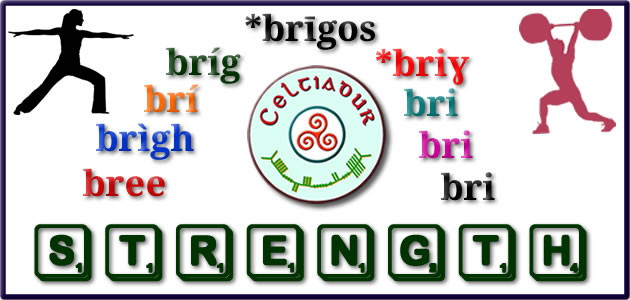
Strength

Words marked with a * are reconstructions.

Proto-Celtic *brīgos = strength
*brīga = power, worth
Gaulish *brīgos = strength
Old Irish (Goídelc) bríg [bʲrʲiːɣ / bʲrʲiːɣʲ] = force, power, value, virtue, strength, vigour, vitality
brígach = powerful, mighty, strong
brígmar = powerful
Middle Irish (Gaoidhealg) bríg, brigh = power, strength, force, authority, vigour, virtue, might, value, worth, advantage, meaning
brígach = powerful, mighty, forceful
brígda = strong, vigorous
brígmar = powerful, strong, vigorous, lively, efficacious
brígrad = power, force
Irish (Gaeilge) brí [brʲiː] = strength, vigour; force, significance; influence, merit
bríoch = strong, vigorous, efficacious
bríochmar = strong, viorous
bríochtach = strong, vigorous person
Scottish Gaelic (Gàidhlig) brìgh [brʲiː] = essence, gist, matter, pith, purport, substance; meaning, sense, significance; point (of an argument); energy, force
brìghealachd [brʲiː.əLəxg] = substance, juiciness, pithiness, significance (in mathematics)
brìgheil [brʲiː.al] = meaningful, significant
brìoghmhor [brʲiː(v)ər] = meaningful, energetic, substantial, pithy
Manx (Gaelg) bree = power, energy, stamina, vigour, virtue, initiative, validity, animation, inwardness, glow, exhalation, drift, essence, gist, effect
breeagh = inspiring, vigorous
breeoil = dynamic, energetic, essential, impulsive, valid, vibrant, vigorous, active, powerful
Proto-Brythonic *briɣ = honour, dignity (?)
Middle Welsh (Kymraec) bri = honour, dignity, reputation, fame
Welsh (Cymraeg) bri [briː] = honour, dignity, reputation, fame, prestige, esteem, power, authority, importance, value, popularity
briaeth = honour, dignity
briol = honourable, reverent, dignified
Middle Cornish (Cernewec) bry = account, value, worth, price
Cornish (Kernewek) bri = distinction, esteem, importance, relevance, reputation, value, prominence
fowt bri = insignificance
heb bri = irelevant
Old Breton (Brethonoc) bri = importance, weight, authority
Middle Breton (Brezonec) bry = respect, consideration
Breton (Brezhoneg) bri [briː] = dignity, honour, respect, consideration
brient = privilege, prerogative
brientek [bri.ˈɛn.tek] = privileged
brientin = = privileged, aristocrat

Etymology: possibly the Proto-Indo-European *bʰrḗǵʰ-o-s, from *bʰerǵʰ- (to rise, ascend, to be elevated, up high). Words from the same roots, via Gaulish, include brio (vigour, vivacity) in English, briu (energy, push, courage) in Catalan, brio (vivacity, liveliness) in Italian, brío (vigour, mettle, zeal) in Spanish, and brio (brilliance, panache) in French [Source].

Words from the same PIE roots include barrow, burrow, bury, effort, force and fort in English, and brenin (king), bwrw (to hit, strike, cast) in Welsh [Source].

Proto-Celtic *nertom = strength, power
Celtiberian Nerto- = strength (?)
Gaulish Nerto- = strength (?)
Old Irish (Goídelc) nert [n͈ʲer͈t] = power, strength
nertaid [ˈn͈ʲer͈tɨðʲ] = to strengthen
Middle Irish (Gaoidhealg) nert, nnert, nirt = strength, might, power, ability, significance
nertaid = to strengthen, confirm, exhort, urge
nertaigid = to strengthen, confirm, encourage, grow strong, side with support
Irish (Gaeilge) neart [nʲaɾˠt̪ˠ / n̠ʲæɾˠt̪ˠ] = strength, force, power, ability, plenty
neartaigh = to strengthen
neartaitheach = strengthening, reinforcing
neartaitheoir = strengthener, abettor
neartmhaire = vigorousness, strength
neartmhar = strong, vigorous, powerful
neartú = strengthening, reinforcement, support
Scottish Gaelic (Gàidhlig) neart [̪nʲɛRʃd] = might, strength, force, energy, power, (alcoholic) proof, majority, most
neartachadh [n̪ʲɛRʃdəxəɣ] = strengthening, building up, making strong
neartaich strengthen, build up, make strong
neartaiche = strengthener, emphasiser
neartail = mighty, powerful, emphatic, forcible
neartmhor = mighty, powerful, emphatic, forcible
neartmhorachd = robustness, vigour
Manx (Gaelg) niart = strength, power, force
niartaght = strength
niartal = cogent, forcible, mighty, potent, powerful, strong
niarteyder = strengthener
Proto-Brythonic *nerθ [nɛrθ] = strenght, force, power
Old Welsh (Kembraec) nerthi = to strengthen, reinforce, fortify
Middle Welsh (Kymraec) nerth, nyrth = force, strength, power, might
nerthawc, nerthawg, nerthog = strong, mighty, powerful
nerthawl, nerthol = strong, mighty, powerful
nerthu = to strengthen, reinforce, fortify
nerthyd, nerthwr = fortifier, supporter, helper
Welsh (Cymraeg) nerth [nɛrθ] = force, strength, power, might, energy, vigour, hardness
nerthedig = strong, strengthened
nerthog = strong, mighty, powerful, potent
nerthol = strong, mighty, powerful, potent
nerthu = to strengthen, reinforce, fortify, aid, help, exhort, urge
nerthwr, nerthydd = fortifier, supporter, helper
Middle Cornish (Cernewec) nerth = might, power, strength, force
Cornish (Kernewek) nerth [nɛrθ] = energy, force, might, power, strength
nertha = to strengthen
nerthek = energetic, powerful, robust
Old Breton (Brethonoc) nerth = force, energy
Middle Breton (Brezonec) nerz, nerh = force, energy
nerzus, nerhus = vigorous, robust, energetic
Breton (Brezhoneg) nerzh [nɛrs] = force, energy
nerzhan nerzhañ [ˈnɛrzan / ˈnɛrzã] = to strengthen, reinforce
nerzhder = vigueur
nerzhek = drastic
nerzhekaat = to give energy
nerzhelour = dynamic
nerzhus = vigorous
nerzhusaat = to strengthen oneself

Etymology: possibly the Proto-Indo-European *h₂ner-to- (virile, strong), from *h₂nḗr- (man, vital, energy). Words from the same roots include njer (man, human, person) in Albanian, άντρας [ˈandras] (man, husband) in Greek, noras (wish, desire, will, intention) in Lithuanian, nêr (lord, chief) in Welsh, and the name Nero [Source].

Old Irish (Goídelc) láitir = strong, powerful
Middle Irish (Gaoidhealg) láitir, laitir [ˈl͈aːdʲərʲ] = strong, powerful
Irish (Gaeilge) láidir [ˈl̪ˠɑːdʲəɾʲ / ˈl̪ˠaːdʲəɾʲ] = strong, powerful, durable, tough, solid, forcible, loud
láidreacht = strength
láidrigh = to strengthen
Scottish Gaelic (Gàidhlig) làidir [l̪aːdʲɪrʲ] = strong, potent, emphatic, robust, substantial
làidireachd = strength
làidireach = strong, potent, emphatic
làidrich = make strong, strengthen
Manx (Gaelg) lajer = strong, potent, vigorous, hard, heavy, powerful, stark
lajeragh = to strengthen, strengthening
lajerid = potency, powerfulness, strength, vigour
lajerys = cogency, force, might, prowess, strength

Etymology: unknown [Source].

Irish (Gaeilge) cadrán = hardness, stubborness, obstinacy
cadránta = hard, unfeeling, stubborn, obstinate
cadrántacht = hardness, stubborness, obstinacy
Proto-Brythonic *kadarn = strong, powerful, mighty (?)
Middle Welsh (Kymraec) cadarn, kadarn, katarnn = strong, powerful, mighty
cadarnhau, kadarnaha = to strengthen, secure, fortify, safeguard
kedernyt, kedernit, cedernyt = strength, power, potency, might
Welsh (Cymraeg) cadarn [ˈka(ː)darn] = strong, powerful, mighty, firm, fast
cadarnhad = confirmation
cadarnhau = to strengthen, secure, fortify, safeguard
cadernid = strength, power, potency, might
Middle Cornish (Cernewec) cadarn = strong, stout, valiant

Etymology: from Proto-Celtic *katus (battle), from Proto-Indo-European *kéh₃tus (battle), from *keh₃- (to fight). Words from the same roots include Hader (dispute, quarrel) and hadern (to quarrel, bicker, struggle) in German, and words for battle in Celtic languages [Source].

Proto-Celtic *kriɸmos = strong (?)
Proto-Brythonic *krɨβ̃ = strong
Middle Welsh (Kymraec) cryf, kryf = strong, powerful, vigorous
cryfder = strength, power, might
Welsh (Cymraeg) cryf [krɨːv / kriːv] = strong, powerful, vigorous, intoxicating, tough, rich, fruitful, intense
cryfder = strength, power, might
cryfhau = to strengthen
Old Cornish crif = strong, mighty, vigorous, hardy
Middle Cornish (Cernewec) cref, crŷf, crif, crev = strong, mighty, vigorous, hardy
Cornish (Kernewek) krev = forceful, powerful, robust, strong, substantial
krevder = intensity, strength
Middle Breton (Brezonec) cref, creff = strong, powerful
Breton (Brezhoneg) kreñv [ˈkrẽ(w)] = strong, solid
kreñvaat [krẽˈfɑːt] = to strengthen, reinforce
kreñvder [ˈkrẽ(w)dɛr] = strength, power, might
kreñvlec’h = stronghold, fortress

Etymology: from Proto-Celtic *kriɸ- (body) from Proto-Indo-European *krep- (body). Words for body in Celtic and other languages come from the same roots [Source].

Proto-Celtic *trexsnos = strong
*trexsos = stronger
Gaulish Trexius, Trexa, Trenus = personal names
Primitive Irish ᚈᚈᚏᚓᚅᚐᚂᚒᚌᚑᚄ (ttrenalugos), ᚈᚏᚓᚅᚐᚌᚒᚄᚒ (trenagusu) = (?)
Old Irish (Goídelc) trén [tʲrʲeːn] = strong
treise = power, strength
Middle Irish (Gaoidhealg) trén = strong, powerful, strong man
treise = strength, vigour, power
Irish (Gaeilge) tréan = strong man, warrior, champion, strength, power, intensity, plenty, abundance
tréaniarracht = strong, forcible, attempt
treise = strength, power, dominance, force, emphasis
treisigh = to strengthen, reinforce, fortify
treisiúil = strong, forceful, vigorous
Scottish Gaelic (Gàidhlig) trèine [treːnə] = might, power
treise [treʃə] = strength, vigour
treun [treːn] = champion, hero, brave, strong, sturdy
treunar [treːnər] = strong man, champion, hero; very brave, heroic
treunas = might, power
treuntachd = boldness, courage
treuntas = strength, power, magnanimity
Manx (Gaelg) trean = brave, firm, heroic, intensive, mighty, stout, valiant
treanid = braveness, exploit, feat heroics, might, strength, valour
Proto-Brythonic *trex = stronger
Middle Welsh (Kymraec) trech = stronger, mightier, greater, superior, better
Welsh (Cymraeg) trech [treːχ] = stronger, mightier, greater, superior, better
trechedd = supremacy, dominance
trechu = to defeat, overcome, overpower
Cornish (Kernewek) trygh = conquest, victory, superior, triumphant, victorious
trygher = victor
tryghi = to conquer, vanquish
Middle Breton (Brezonec) trech = victorious, victory
trechy, trechiff = to conquer, prevail, overcome
Breton (Brezhoneg) trec’h [briː] = superior, victorious, victory
trec’hadeg = triumph
trec’hadenn = success
trec’hedigezh = defeat
trec’her = winner
trec’hin, trec’hiñ = to conquer, prevail, overcome
trec’hus = victorious

Etymology: the Proto-Indo-European *(s)treg- (to be stiff, rigid, strong) or *treg- (strength). Words from the same roots include þróttur (strength, vigour, energy) in Icelandic, and idrott (sport, physical education) in Swedish [Source].

The Fastest Way to Learn Japanese Guaranteed with JapanesePod101.com

Sources: Wiktionary, Am Faclair Beag, Online Manx Dictionary, Teanglann.ie, eDIL – Electronic Dictionary of the Irish Language, In Dúil Bélrai English – Old Irish glossary, Geiriadur Prifysgol Cymru, Gerlyver Kernewek, Dictionaire Favereau, TermOfis, English – ProtoCeltic WordList (PDF), Etymological Dictionary Of Proto Celtic

Unlimited Web Hosting - Kualo

Oak (trees)

Words for oak (tree) and related things in Celtic languages.

Here be trees!

Words marked with a * are reconstructions.

Proto-Celtic *daru [d̪ˠaɾʲ] = oak
Gaulish Dervo = used in placenames
Old Irish (Goídelc) dair [d̪ˠaɾʲ] = oak
Middle Irish (Gaoidhealg) dair, daur = an oak, the letter D in the Ogham alphabet (ᚇ)
dairbre, dairbhre = an oak, oakling, a grove of oak grees, an oak wood
dairde, daurde = oaken
dair-ḟid, dauruth = an oak wood
Irish (Gaeilge) dair [d̪ˠaɾʲ] = oak, the letter D in the Ogham alphabet (ᚇ)
dairbhre = oaks, oak-grove
daireach = planted with / full of oaks
doire [ˈd̪ˠɛɾʲə] = oak-wood; wood, grove, thicket
Scottish Gaelic (Gàidhlig) dair [darʲ] = oak (archaic), the letter D, ᚛ᚇ᚜ in Ogham
dairbhre = oak, nursery or grove of oaks
darach [darəx] = oak, oaken, made of oak; ship (poetic)
darag [darag] = small/dwarf oak, stunted/branchy tree (which is not useable for working)
Manx (Gaelg) darragh = oak, oaken, oak grove, oak wood
darrag = oak, beam, cast (fishing), snood, hairline
darree = oak
Proto-Brythonic *dar [ˈdar] = oak tree
Middle Welsh (Kymraec) dar, dâr = oak
derwd(y) = oak house, oratory, prayer house, coffin
derwin, deruin = make of oak, oaken, abounding in oaks, strong, robust, oak timber
Welsh (Cymraeg) dâr [ˈdaːr] = oak tree, foremost warrior, leader, mighty lord
derw = oak trees
derwen [ˈdɛrwɛn] = oak tree
derwin = make of oak, oaken, abounding in oaks, strong, robust, oak timber
der(w)lwyn = oak grove, oak wood
Old Cornish dar = oak
Middle Cornish (Cernewec) dar = an oak
Cornish (Kernewek) dar [daːr / dæːr] = oak
derwen = oak tree
derw = oak trees
Old Breton daeru = oaks
Middle Breton (Brezonec) deru = oaks
Breton (Brezhoneg) dar [dɑːr] = oak
derv [ˈdɛrw/ˈdɛː.ro] = oaks
dervenneg = with oak trees
dervoed [dɛʁwət] = oak grove, oak wood

Etymology: from the Proto-Indo-European *dóru (tree) [source].

Words from the same Proto-Celtic root possibly include làrix (larch) in Catalan, lariks (larch) in Dutch learag (larch) in Scottish Gaelic, larch in English, Lärche (larch) in German, and lærk (larch) in Danish [source].

Words from the same PIE root include δόρυ (dóry – spear) in Greek, dervà (tar, resin) in Lithuanian terva (tar) in Finnish, dearbh (sure, certain) in Irish, tree, trim, and trough, true in English, and trä (wood) in Swedish [source].

Proto-Celtic *tannos = green oak
Gaulish *tannos = oak
Old Irish (Goídelc) tinne = holly, elder
Middle Irish (Gaoidhealg) tinne = holly, elder, the letter t in the Ogham alphabet (ᚈ)
Irish (Gaeilge) tinne = the letter t in the Ogham alphabet (ᚈ)
Scottish Gaelic (Gàidhlig) teine/tinne [tʲenə] = gorse, whin, furze (archaic), the letter t (ᚈ) in Ogham
Welsh (Cymraeg) taneru, tener(i)o = to tan (hide)
tanerdy = tannery
tanerwr = tanner (of hides)
Old Cornish tannen = oak (?)
Middle Cornish (Cernewec) tonnen = bark
glastanen, glastennen, glastan = (scarlet) oak
Cornish (Kernewek) glastanen gelyn = holly/holm oak
glastanen gork = cork oak
Middle Breton (Brezonec) glastann(enn) = holm oak(s)
Breton (Brezhoneg) tann [tānː] = sessile oaks
tannañ = to tan
glastann = holm oaks

Note: the Welsh words were borrowed from English tanner, which ultimately comes from Proto-Celtic *tannos, via French, Latin and Gaulish.

Etymology: from Proto-Celtic *(s)tannos, the Proto-Indo-European *(s)dʰnwos/*(s)dʰonu (fir). Words from the same Proto-Celtic roots, via Gaulish and Latin tannum (oak bark), include tan (pulped oak bark used in the tanning process of leather) in French, tano (stem, slip) in Galician, tanería (tannery), Tannenbaum (fir tree, Christmas tree) in German, θάμνος (thámnos – bush) in Greek, and tan, tannery, tannin (tannic acid) in English.

Words from the same PIE roots include thanë (cranberry bush) in Albanian, and धनु (dhanu – bow) in Sanskrit. [source].

The Fastest Way to Learn Japanese Guaranteed with JapanesePod101.com

Sources: Wiktionary, Etymological Dictionary Of Proto Celtic, In Dúil Bélrai English – Old Irish glossary, eDIL – Electronic Dictionary of the Irish Language, Teanglann.ie, Am Faclair Beag, An etymological dictionary of the Gaelic language, Fockleyreen: Manx – English Dictionary, Online Manx Dictionary, Gaelg Corpus, Geiriadur Prifysgol Cymru, Lexicon cornu-britannicum : a dictionary of the ancient Celtic language of Cornwall, Gerlyver Kernewek, Devri : Le dictionaire diachronique du breton, Dictionnaires bilingues de Francis Favereau / Edition Skol Vreizh, TermOfis

Unlimited Web Hosting - Kualo

Towns and Tribes

Words for dwelling, settlement, town, tribe and related things in Celtic languages.

Trefor

Proto-Celtic *trebā = dwelling
Gaulish Atrebates = name of a tribe
Old Irish (Goídelc) treb = house, farm; household; tribe
Middle Irish (Gaoidhealg) treb = house, farm; household; tribe
Irish (Gaeilge) treibh [ˈtʲɾʲɛv] = house, homestead, farmstead; household, family; tribe, race
Scottish Gaelic (Gàidhlig) treabh [tro] = farming village
treubh [treːv] = tribe
Proto-Brythonic *treβ [ˈtrɛːβ] = town, settlement
Middle Welsh (Kymraec) tref [ˈtrɛːβ] = town, settlement
trefad, trevad, treuad, treuat = dwelling(-place), habitation
trefan, treuan = small town or city, village, dwelling, abode, manor-house, fort
Welsh (Cymraeg) tre(f) [treː(v)] = town; town centre; dwelling(-place), habitation, residence, home; house (and surrounding land), homestead, farm, estate, cluster of houses; township; tribe
trefad = dwelling(-place), habitation, residence, home, region, domain
trefaf, trefu= to dwell, live, settle
trefan = small town or city, village, dwelling, abode, manor-house, fort
Middle Cornish (Cernewec) tre, trev = dwelling place, homestead, home, town
tregva, trigva = dwelling place, habitation
trevedic = one from a country village, a country man, rustic
Cornish (Kernewek) tre [trɛ:/tre:] = farmstead, home, town, village
trigva = abode, address, dwelling, resdidence
trigys = settled, to reside, live
Old Breton treff, treb = town, settlement
Middle Breton (Brezonec) tre, trev = town
Breton (Brezhoneg) trev = town
trevour = civil

Etymology: From the Proto-Indo-European *treb- (dwelling, settlement) [source].

Words from the same Proto-Celtic root (via Latin) possibly include trobo (beehive, skep) in Galician, and truébanu (beehive, barrel, basket) in Asturian [source].

This is also the root of the archaic English word thorp(e) (a group of houses standing together in the country; a hamlet; a village), which appears in place names such as Milnthorpe and Scunthorpe.

Related words in other languages include Dorf (hamlet, village, town) in German, torp (village) in Danish, torp (farm, cottage, croft) in Swedish, þorp (village, farm) in Icelandic, and trevë (country, region, village) in Albanian [source].

Words marked with a * are reconstructions.

Sources: Wiktionary, Am Faclair Beag, Online Manx Dictionary, Teanglann.ie, eDIL – Electronic Dictionary of the Irish Language, In Dúil Bélrai English – Old Irish glossary, Geiriadur Prifysgol Cymru, Gerlyver Kernewek, Gerlyvyr Cernewec, Dictionaire Favereau, TermOfis, Le dictionnaire diachronique du breton, Geriafurch, English – ProtoCeltic WordList (PDF), Etymological Dictionary Of Proto Celtic
The Fastest Way to Learn Japanese Guaranteed with JapanesePod101.com

To Carry / Flow

Words for to carry, to flow and related things in Celtic languages.

Carrying a Catch

Words marked with a * are reconstructions.

Proto-Celtic *bereti = to carry
*ɸarebereti = to use
Old Irish (Gaídelc) beirid [ˈbʲerʲiðʲ] = to carry, bear, bring forth, judge
ar·beir [arˈbʲerʲ] = to live, use, employ, eat, reproach, subdue, express
Middle Irish (Gaoidhealg) beirid, berid = to carry, infer, bear, bring forth, be born, yield, produce, judge, pass judgement
ar-beir, airbir = to live, eat, use, employ, plead, subdue, express
Irish (Gaeilge) beir [bʲɛɾʲ] = to bear, give birth to; lay (eggs); bear away, win; bring, take; catch, overtake; proceed, advance
Scottish Gaelic (Gàidhlig) beir [berʲ] = to take hold; bring forth, bear, produce; carry
beirachd [berʲəxg] = bearing (children), giving birth, birthing, bringing forth, birth, nativity, taking hold, holding, catching up with
Manx (Gaelg) behr = to bear (give birth to)
ruggyr = birth, nativity
laa ruggyr, laa ruggyree = birthday
Proto-Brythonic *bėrɨd [be̝ˈrɨːd] = to flow, carry
*ėrβėrɨd [be̝ˈrɨːd] = to make use of, employ, take
Middle Welsh (Kymraec) beru = to flow
Welsh (Cymraeg) beru = to flow, drip; drizzle
arfer [ˈarvɛr] = to use, be used to, be accustomed to; custom, practice, procedure, habit
Middle Cornish (Cernewec) berthy = to bear, carry, sustain, entertain, take
perthy = to bear, carry, sustain, entertain, take
porthy = to bear (with), carry, endure, sustain, suffer
Cornish (Kernewek) perthi = to bear, endure, put up with, stand, suffer, tolerate
perthyans = endurance, patience, tolerance
Middle Breton beraff = to flow
Breton (Brezhoneg) berañ [ˈbeːrã] = to drip, flow

Etymology: from the Proto-Indo-European *bʰéreti (to be carrying), from *bʰer- (to bear, carry) [source]. Words from the same roots include: barn, barrow, (to) bear, birth, broad and (to) thole (to endure) in English, bie (to bring, deliver) Albanian, բերել (berel – to bring, fetch) Armenian, and berti (to throw, strew, scatter, shed) Lithuanian [source].

The Fastest Way to Learn Japanese Guaranteed with JapanesePod101.com

Sources: Wiktionary, Etymological Dictionary Of Proto Celtic, In Dúil Bélrai English – Old Irish glossary, eDIL – Electronic Dictionary of the Irish Language, Teanglann.ie, Am Faclair Beag, An etymological dictionary of the Gaelic language, Fockleyreen: Manx – English Dictionary, Online Manx Dictionary, Gaelg Corpus, Geiriadur Prifysgol Cymru, Lexicon cornu-britannicum : a dictionary of the ancient Celtic language of Cornwall, Gerlyver Kernewek, Devri : Le dictionaire diachronique du breton, Dictionnaires bilingues de Francis Favereau / Edition Skol Vreizh, TermOfis

Unlimited Web Hosting - Kualo

Bones

Words for bones and related things in Celtic languages.

Bones

Proto-Celtic *knāmis = bone
Old Irish (Goídelc) cnáim [knaːṽʲ] = bone
Irish (Gaeilge) cnámh [knɑːvʲ / knaːvʲ] = bone; strip (in ploughing); submerged reef
Scottish Gaelic (Gàidhlig) cnàimh [krɛ̃ːv] = bone; unploughed area
Manx (Gaelg) craue [kreːw] = bone, whine, wild garlic, crow
Middle Welsh (Kymraec) knaw [knau̯] = bone, skull
Welsh (Cymraeg) cnaw [knau̯] = bone, skull

Etymology: from Proto-Indo-European *kónh₂m (leg) [source]. Words from the same root include ham in English and κνήμη [ˈknimi] (shin, tibia) in Greek [source].

Proto-Celtic *astū = bone
*astn(iy)o- = rib
*astkornu = bone
Old Irish (Goídelc) asna, esna = rib
Irish (Gaeilge) easna [ˈɑsˠn̪ˠə] = rib, strake, timber
easnach = costal, ribbed
Scottish Gaelic (Gàidhlig) asna [asn̪ˠə] = rib
aisean [aʃən] = rib
Manx (Gaelg) asney [kreːw] = fin, nerve, rib, timber
Proto-Brythonic *assī = rib
Middle Welsh (Kymraec) eis / asseu / assen = rib
Welsh (Cymraeg) asen = rib, breast, bosom; bar, spar, lath
ais [ai̯s] = ribs, laths
asennog = ribbed
asgwrn = bone; mortal remains, corpse, skeleton; stone (of fruit)
Middle Cornish (Cernewec) asow, asen = rib
ascorn = bone
asgornec = bony
Cornish (Kernewek) asowen = rib
askorn [‘askɔrn / ‘æskɐrn] = bone
askornek = skinny
Breton (Brezhoneg) askorn [ˈla.ɡat] = bone
askornek = bony

Etymology: from the Proto-Indo-European *h₃ésth₁ (bone) [source]. Words from the same root include ossify (to transform into bone) and ossuary (a container/building for holding bones) in English, asht (bone) in Albanian, os (bone) in Latin and its descendents in Romance languages, such as os (bone) in Catalan, French and Romanian, and hueso (bone) in Spanish [source].

Words marked with a * are reconstructions.

Sources: Wiktionary, Am Faclair Beag, Online Manx Dictionary, Teanglann.ie, eDIL – Electronic Dictionary of the Irish Language, In Dúil Bélrai English – Old Irish glossary, Geiriadur Prifysgol Cymru, Gerlyver Kernewek, Gerlyvyr Cernewec, Dictionaire Favereau, TermOfis, Le dictionnaire diachronique du breton, Geriafurch, English – ProtoCeltic WordList (PDF), Etymological Dictionary Of Proto Celtic

The Fastest Way to Learn Japanese Guaranteed with JapanesePod101.com

Ears

Words for ears, hares and related things in Celtic languages.

Ears

Words marked with a * are reconstructions.

Proto-Celtic *kloustā = ear, hearing
Old Irish (Goídelc) clúas [kluːa̯s] = ear, hearing
Middle Irish (Gaoidhealg) clúas, cluas = (sense of) hearing, ear
clúasach, clūasach = pleasing to the ear, having (big) ears or handles, big-eared
Irish (Gaeilge) cluas [klˠuəsˠ] = ear; ear-shaped object; lug, handle; cleat; tab; corner, margin
cluasach = having ears, long-eared
cluasachán = long-eared person or animal
cluasaí = listener, eavesdropper
cluasaíocht = eavesdropping, whispering, listening, talking in a furtive manner
cluasán = earphone, headphone
cluasánach = listless, inattentive person
cluasántacht = listlessness, inattention
Scottish Gaelic (Gàidhlig) cluas [kl̪ˠuəs] = ear, lug, handle
cluasach [kl̪ˠuəsəx] = pertaining to ears, aural, having (a) handle(s)
cluasachan [kl̪ˠuəsəxan] = pillow
cluasag [kl̪ˠuəsag] = pillow, bolster
cluasagach [kl̪ˠuəsagəx] = pertaining to or abounding in pillows
cluasaire [kl̪ˠuəsɪrʲə] = (person with) bigs ears
cluasan [kl̪ˠuəsan] = earphone, headset
Manx (Gaelg) cleaysh [kleːʃ] = ear, cleat, handle, lug, top corner of net, corner of sail
cleayshagh = aural, (large-)eared, lugged
cleayshtynagh = audible, listener
Proto-Brythonic *klʉst = ear
Middle Welsh (Kymraec) clust = ear, hearing, handle
clustueinyd, clustfeinydd = attentive or eager listener, eavesdropper
clustiog, klustioc = (large-/long-) eared, having a handle, pertaining to the ear
clustot, clustog, clustoc = cushion, pillow, bolster
Welsh (Cymraeg) clust [klɨːst / klɪst] = ear, sense of hearing, attention, willingness to listen; handle of a vessel, tag of a boot, top part of a bell; creek or inlet; auricle (of the heart)
clustfeinio = to listen closely or attentively, prick up the ears, eavesdrop
clustfeiniol = listening attentively or intently
clustfeiniwr, clustfeinydd = attentive or eager listener, eavesdropper
clustffon, clustffôn = earphone, headphone
clustiog = (large-/long-) eared, having a handle, pertaining to the ear
clustog = cushion, pillow, bolster
clustogi = to cushion, pillow, bolster up, upholster

Etymology: from Proto-Indo-European *ḱlow-steh₂, from *ḱlew- (to hear) [source]. Words from the same roots include clement, client, listen and loud in English, quaj (to call, name, value, declare) in Albanian, luid (loud, sound, assertion) in Dutch, sláva (fame, glory) in Czech, and hljóður (quiet, silent) in Icelandic [source].

Words for Hearing, Fame and Renown in Celtic languages also come from the same PIE roots.

Hare

Scottish Gaelic (Gàidhlig) sgiarnag, sgibearnag = hare
Proto-Brythonic *skuβarn = ear
*skuβarnọg = hare
Middle Welsh (Kymraec) esgyuarn, ysgyuarn, yscyfarn, yskyuarn = ear
ysgyuarnauc, yscyfarnawc, y scyuarnaỽc, ysgyuarnawc, yscyfarnoc = hare
Welsh (Cymraeg) ysgyfar(n) = ear
(y)sgyfarnog, sgwarnog = hare
ysgyfarnogaidd = harelike, leporine
Old Cornish scouarn = ear
scouarnoc = hare
Middle Cornish (Cernewec) scovarn, scouarn, scovern, scovorn, scoforn = ear
scovarnog, scowarnak, scowarnog = hare
Cornish (Kernewek) skovarn [‘skɔvarn / ‘skɔvɐrn] = ear, handle
skovarnek = hare
Old Breton scobarn = ear
Middle Breton (Brezonec) scouarn = ear
scouarnec = having large or long ears, long-eared, having handles
Breton (Brezhoneg) skouarn [skwarn] = ear, gills, handle
skouarnad [ˈskwar.nat] = a slap (on the ear)
skouarnañ = to garnish with an ear or handle
skouarnata [skwarˈnatːa] = to slap, to rub or pull ears
skouarneg [ˈskwar.nɛk] = hare
skouarnek [ˈskwar.nɛk] = having large or long ears, long-eared, having handles

Etymology: possibly from Proto-Indo-European *(s)kewh₁- (to observe, perceive) [source]. Words from the same PIE root include cautious, caveat and show in English, schouwen (to inspect, examine) in Dutch, schauen (to look, watch, view) in German, and cauto (prudent, cautious, sly) in Italian [source].

Irish (Gaeilge) giorria [ˈɟɪɾˠiə/ˈɟaɾˠiə] = hare
Scottish Gaelic (Gàidhlig) geàrr [gʲaːr̪ˠ] = hare
gearrach [gʲar̪ˠəx] = hare
giorrasach [gʲir̪ˠəsəx] = hare
geàrr-fhiadh = hare
gearrag [gʲar̪ˠag] = leveret, young hare

Etymology: from Old Irish gerr (short) and fíad (deer, wild animal(s)) [source].

Old Irish (Goídelc) míl maige = hare
Middle Irish (Gaoidhealg) míl maige = hare
Scottish Gaelic (Gàidhlig) maigheach [mɤjəx] = hare
Manx (Gaelg) mwaagh = hare
cha follan as mwaagh = brimful of health (“as healthy as a hare”)

Etymology: from Old Irish míl (animal) and mag (plain, field) [source].

Proto-Celtic *kasnī = hare
Old Irish (Goídelc) Cainnech = personal name
Middle Welsh (Kymraec) ceinach = hare
Welsh (Cymraeg) ceinach [ˈkei̯naχ] = hare (archaic – originally meant “(the) grey/white one”)
ceinachgi = harrier, hare-hound

Etymology: from Proto-Indo-European *ḱeh₂s- (hare). Words from the same PIE root include hare in English, haas (hare) in Dutch, Hase (hare) in German, and hase (female rabbit, hare) in French [source].

Middle Cornish (Cernewec) gad = hare
Middle Breton (Brezonec) gat = hare
Breton (Brezhoneg) gad [ɡɑːt] = hare

Etymology: unknown [source].

The Fastest Way to Learn Japanese Guaranteed with JapanesePod101.com

Sources: Wiktionary, Etymological Dictionary Of Proto Celtic, In Dúil Bélrai English – Old Irish glossary, eDIL – Electronic Dictionary of the Irish Language, Teanglann.ie, Am Faclair Beag, An etymological dictionary of the Gaelic language, Fockleyreen: Manx – English Dictionary, Online Manx Dictionary, Gaelg Corpus, Geiriadur Prifysgol Cymru, Lexicon cornu-britannicum : a dictionary of the ancient Celtic language of Cornwall, Gerlyver Kernewek, Devri : Le dictionaire diachronique du breton, Dictionaire Favereau, TermOfis

Unlimited Web Hosting - Kualo

Legs & Feet

Words for legs, feet and related things in Celtic languages.

Legs

Words marked with a * are reconstructions.

Proto-Celtic *koxsā = foot, leg
Old Irish (Goídelc) cos(s) [kos] = foot, leg
Middle Irish (Gaoidhealg) cos, cas = foot, leg, stem, support, handle, shaft, infantry
cosach = pertaining to feet or legs, long-legged
Irish (Gaeilge) cos [kɔsˠ] = leg, foot; handle, shaft, stem; lower end
cosán = path, footway, track, way, passage, direction
cosarálaí = trampler, clumsyfooted person
coiscéim = footstep
coisí = pedestrian
Scottish Gaelic (Gàidhlig) cas [kas] = foot, trotter; leg; handle, shaft shank (of a fishing hook
casach [kasəx] = (many-)footed, legged, abounding in feet
casachan [kasəxan] = pedal, treadle
cos [kɔs] = foot, leg, handle, shaft
Manx (Gaelg) cass [kaːs] = leg, barrel, foot, shaft, peg, bottom, outlet, mouth of river, stalk, hilt, stem of a pipe, crop of a whip
cassagh = footed, pedal, spiral, objective
kass = foot
Proto-Brythonic *koɨs = leg, shank, stem
Middle Welsh (Kymraec) coes = leg, shank
koescyn = leg, shank, stalk, stem
Welsh (Cymraeg) coes [koːɨ̯s / kɔi̯s / koːs] = leg, shank; handle, haft, stem, stalk
coes = little leg
coesgyn = leg, shank, stalk, stem
coesi(o) = to run away, leg it, walk, stride
Cornish (Kernewek) koos = leg

Etymology: from Proto-Indo-European *koḱs- (joint) [source]. Words from the same PIE root include cushion in English, Hachse (hock, shank, knuckle, leg) in German, coxa (thigh, drumstick) in Portuguese, and cuisse (thigh) in French [source].

Proto-Celtic *tregess = foot
Gaulish treide = foot
Old Irish (Goídelc) traig [traɣʲ] = foot (part of body / measurement), step
Middle Irish (Gaoidhealg) traig = foot, step
Irish (Gaeilge) troigh [t̪ˠɾˠɪɟ / t̪ˠɾˠɔ / t̪ˠɾˠiː] = foot (part of body / measurement), step
troitheach = foot-soldier, pedestrian
troitheán = pedal, treadle
troithíocht = sound of footsteps
Scottish Gaelic (Gàidhlig) troigh [trɔç] = foot (part of body / measurement), sole of foot
troighean = pedal
Manx (Gaelg) trie [strɛin] = foot, sole, twelve inches
Middle Welsh (Kymraec) troed, troet = foot
troeduet, troetued, troydvedd = foot (measurement)
troedaỽc, troedauc, troediog, troedyavc, troydawc = having a foot, footed, walking, ambulant, nimble-footed, sure-footed
Welsh (Cymraeg) troed [troːɨ̯d / trɔi̯d] = foot, shaft, handle, bottom, base, pedestal, foundation, extremity, end, stalk, foot-joint
troed-droed, troetroed = step by step, in step (with)
troedfa = pavement, foundation, base
troedfedd = foot (measurement)
troedfys = toe
troedffordd = footpath, footway
troediad = step, pace, walk, gait, kick
troed(i)o = to tread, step, walk, tample (on), plod, trudge
troed(i)og = having a foot, footed, walking, ambulant, nimble-footed, sure-footed
Old Cornish truit = foot
Middle Cornish trois, tros, trôs = foot
troishys = foot (length)
Cornish (Kernewek) troos [tro:z / tru:z] = foot, on foot
troos-hys, troos-hes = foot (length)
Old Breton treit, treyt = foot
Middle Breton troat = foot
troatet = foot (length)
Breton (Brezhoneg) troad [trwɑːt] = foot, handle
troadeg = with big feet, infantryman, pedestrian
troadek [ˈtrwɑː.dɛk] = having big feet, having a foot
troadikell [trwa.ˈdikː.ɛl] = pedal
troadikellañ [trwa.di.ˈkɛlː.ã] = to pedal
troadikeller [trwa.di.ˈkɛlː.ɛr] = pedalboard. pedaler
troatad [ˈtrwatː.at] = foot (length)

Etymology: from Proto-Indo-European *tregʰ- (to run, walk), apparently a variant of *dʰregʰ- (to run, drag, pull) [source]. Words from the same roots include drag, draw, train and treaty, and droichead (bridge) in Irish [source].

Proto-Celtic *garros = shank, leg, calf
Gaulish *garra = leg
Old Irish (Goídelc) gairr = calf of the leg
Middle Irish (Gaoidhealg) gairr, gair = calf of the leg
Proto-Brythonic *garr = shank, calf of the leg
Middle Welsh (Kymraec) garr, gar = leg, shank, thigh, ham, hough
Welsh (Cymraeg) gar [ɡar] = leg, shank, thigh, ham, hough
gar(r)an = leg, shank, shaft, axle
garanu = to fix a shank or handle, to fit with a shaft or axle, to crane
Middle Cornish (Cernewec) gar = shank, leg
Cornish (Kernewek) garr [ɡarː/ɡɒr] = leg, stem
garren = calf, stalk
Middle Breton (Brezonec) gar, garr = leg, paw
Breton (Brezhoneg) gar [ɡɑːr] = leg, paw
garegenn = leg (of trousers)
gargen = leg warmer
gallek [ˈɡa.rːɛk] = (having) long legs

Etymology: possibly from Proto-Indo-European *ǵʰs-r- (hand), from *ǵʰes- (hand, to take, give in exchange) [source]. Words from the same Proto-Celtic root include garra (shank, claw, talon) in Catalan, jarret (hough, hock) in French, garter (a band worn around the leg to hold up a sock or stocking) in English, and garra (claw, talon, paw, hook, passion, dedication) in Spanish [source].

Words from the same Proto-Info-European roots include dorë (hand) in Albanian, paže (arm) in Czech, and host (the consecrated bread of the Eucharist) in English [source].

The Fastest Way to Learn Japanese Guaranteed with JapanesePod101.com

Sources: Wiktionary, Etymological Dictionary Of Proto Celtic, In Dúil Bélrai English – Old Irish glossary, eDIL – Electronic Dictionary of the Irish Language, Teanglann.ie, Am Faclair Beag, An etymological dictionary of the Gaelic language, Fockleyreen: Manx – English Dictionary, Online Manx Dictionary, Gaelg Corpus, Geiriadur Prifysgol Cymru, Lexicon cornu-britannicum : a dictionary of the ancient Celtic language of Cornwall, Gerlyver Kernewek, Devri : Le dictionaire diachronique du breton, Dictionaire Favereau, TermOfis

Unlimited Web Hosting - Kualo