Peaks

Words for peaks and tops and related words in Celtic languages.

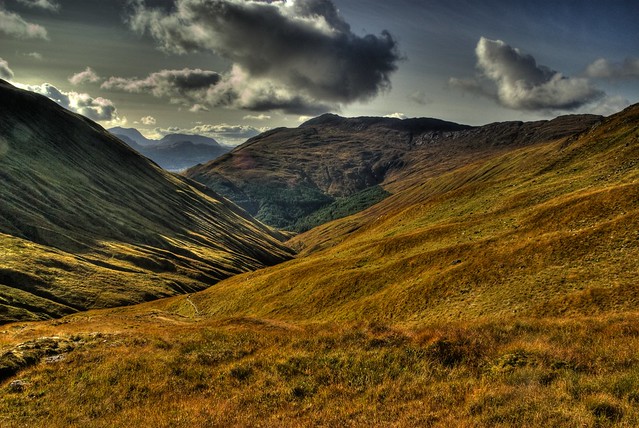
View from Snowdon

Proto-Celtic *bandā = top, peak; horn
*benno- = peak, top
Gaulish benn/*bannā = peak
Old Irish (Goídelc) benn [bʲen͈] = mountain, crag, peak, point, crest, summit, pinnacle, spire; gable, corner, horn (of animal), drinking horn, prong, crest
bennán = horned animal, cow, calf; horned or peaked object
Irish (Gaeilge) beann = horn, antler; drinking horn; prong (of fork)
beannach = horned, antlered, pronged, peaked, gabled, angular
beannógach = peaked,angular
binn = peak; gable; cliff; corner, edge, margin; lap; side, portion
Scottish Gaelic (Gàidhlig) beann [bjaun̪ˠ] = horn, peak, top, corner, skirt
beinn [bein̪ʲ] = mountain, mount, high hill
beinn-theine = volcano
eigh-bheinn = iceberg
Manx (Gaelg) beinn = mountain, ben, summit, pinnacle, apex, tine of deer
beinn rioee = iceberg
Proto-Brythonic *bann = top, peak
Middle Welsh (Kymraec) bann = peak
Welsh (Cymraeg) ban [ban] = top, tip, peak, summit, crest, peak, beacon, height, pinnacle, turret, hill, mountain, bare hill; chief; drinking horn, horn (of animal); arm, branch, beam, point (of cross)
bannau’r byd = corners, quarters or regions of the world, the ends of the earth
ban caer, ban y gaer = rampart of a fort; top or height of a fortess
ban lleuad = quarters of the moon, new moon
Cornish (Kernewek) ban = prominence
Breton (Brezhoneg) bann = rising, uphill, upright, post, column

Etymology: from the Proto-Indo-European *bn̥dʰéh₂ from *bendʰ- (pin, point). The Scots word ben (mountain, hill) comes from the Scottish Gaelic beinn. From Gaulish we get the Catalan words banya (horn) and banyut (horned, unfaithful), and the Occitan bana (horn), and the English word pin comes from the same PIE root [source].

Words marked with a * are reconstructions.

Sources: Wiktionary, Am Faclair Beag, Online Manx Dictionary, Teanglann.ie, eDIL – Electronic Dictionary of the Irish Language, Geiriadur Prifysgol Cymru, Gerlyver Kernewek, Dictionaire Favereau, TermOfis

Water

Words for water and related words in Celtic languages.

There are several words for water in Proto-Celtic: *akʷā-, *boglo-, *dubro-, *iskā-, *lawo-, *udeskio-, *utso-, *φeno-, *φono- and *stagro-. Only a few of them have descendents in the modern Celtic languages.

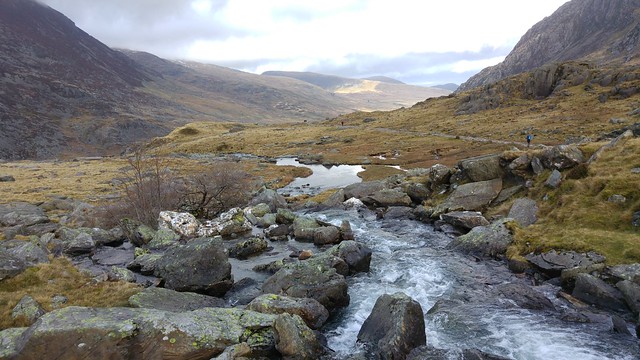
Afon Ogwen River

Proto-Celtic *dubros = water, dark
*dubrokū = otter (“water dog”)
*dubro-jarā = water-hen
Gaulish uerno-dubrum = name of a river
Old Irish (Goídelc) dobur [ˈdovur] = water, river
doburchú [ˈdovurˌxuː] = otter (“water dog”)
Middle Irish (Gaoidhealg) dobrán = water
Irish (Gaeilge) dobhar = water; flood, torrent; darkness, dullness, obscurity
dobhartha = watery, wet; dull, gloomy.
dobharchú = otter (“water dog”)
dobharchlog = water clock
dobhardhroim = watershed
dobhareach = hippopotamus
dobharlí = water-colour
dobhrán = otter; dull-witted, stupid, person
Scottish Gaelic (Gàidhlig) dobhar [do.ər] = water (archaic)
dobhar-chù [do.ərxu] = otter, beaver (“water dog”)
dobhar-lus [r̪ˠɔːhdəx] = (water)cress
dòbhran [dɔːran] = otter
Manx (Gaelg) dooarchoo = otter, beaver (“water dog”)
doour = reservoir, dam
Proto-Brythonic *duβr = water
*düβrgi = otter
Middle Welsh (Kymraec) dwfyr [ˈduvər] = water
Welsh (Cymraeg) dŵr [duːr], dwfr [dʊvr] = water; urine; pus
dyfrgi, dwrgi = otter (“water dog”)
dyfrgiad = watering, irrigation, urination
dyfrio, dyfru = to water, to irrigate, to run, to urinate
dyfrig = dripping, foaming (of a horse)
dyfraidd = aqueous, waterish, aquatic
Cornish (Kernewek) dowr [doʊɹ] = water; river
dowrgi = otter (“water dog”)
dowra = to water
dowrhe = to irrigate
dowrvagh = hippopotamus
dowrliw = water-colour
Middle Breton dour = water
Breton (Brezhoneg) dour [ˈduːr] = water; rain, tears, sweat, saliva
dourgi = otter (“water dog”)
douraerouant = hydra
dourliv, dourlivadur = water-colour
dournijerez = seaplane, flying boat, hydroplane

Etymology: from the Proto-Indo-European *dʰubrós (dark) from *dʰewb- (deep) [source].

Proto-Celtic *udenskyos = water
Old Irish (Goídelc) uisce [ˈusʲkʲe] = water
Irish (Gaeilge) uisce [ˈɪʃk̟ɪ] = water; rain, tears, saliva
uisceadán = aquarium
uiscebhealach = waterway
uiscedhath = watercolour
uiscedhíonach = waterproof
uisce-obach = watertight
uiscerian = aqueduct
uiscigh = to water, irrigate
uisciú = irrigation
Scottish Gaelic (Gàidhlig) uisge [ɯʃgʲə] = water; rain; river (in place names)
uisgeadan [ɯʃgʲədan] = aquarium; body of water
uisge-dhath, dath-uisge = watercolour
uisge-dhìonach = waterproof, impervious; watertight
uisgrian = aqueduct
fuar-uisge = cold rain, cold water
slighe-uisge = waterway
uisgich [ɯʃgʲɪç] = to water, irrigate
uisgeachadh [ɯʃgʲəxəɣ] = watering, irrigation
Manx (Gaelg) ushtey [ˈuʃtʲə] = water
ushteydane = aquarium
bollagh ushtey, coorse ushtey, raad ushtey = waterway
ammyr ushtey, droghad ushtey = aqueduct
ushtaghey = to water, irrigate, steep, watering irrigation

Etymology from the Proto-Indo-European *udén, from *wódr̥ (water) [source].

Slieve League / Sliabh Liag

Proto-Celtic *sālos = saltwater
Old Irish (Goídelc) sál [saːl], sáile [ˈsaːlʲe] = salt water, brine, seawater; sea, ocean (poetic)
Irish (Gaeilge) sáile [ˈsˠɑːlʲə] = sea water, sea, salt water, brine
Manx (Gaelg) sailley = salt water
Proto-Brythonic *salī = salt, sea water
Welsh (Cymraeg) hâl [haːl] = salt, salty, saline, akaline
heli = brine, salt water, pickle, sea-water, sea
Cornish (Kernewek) hyli = salt water
Breton (Brezhoneg) hal = salt water, salt
hili = brine, strong sauce

Etymology from the Proto-Indo-European *séh₂ls (salt) [source].

Scottish Gaelic (Gàidhlig) bùrn [buːr̪ˠn̪ˠ] = (fresh) water, amount of water, (act of) raining
bùrn-éirigh = spring water
bùrn-iarainn = mineral water
bùrn mìn = fine drizzle

Etymology from the Scots burn (a small river), from the Middle English bourne (small stream), from the Old English burne, burna (spring, fountain), from Proto-Germanic *brunnô (stream, brook). the Proto-Indo-European *bʰrun- (a bubbling forth; a fountain, wellspring, source) [source].

Words marked with a * are reconstructions.

Sources: Wiktionary, Am Faclair Beag, Online Manx Dictionary, Teanglann.ie, Geiriadur Prifysgol Cymru, Gerlyver Kernewek, Dictionaire Favereau

Frosty Ice

Words for frost and ice and related words in Celtic languages.

A cold and frosty morning / Bore oer a rhewllyd

Proto-Celtic *ɸreswos = frost
Old Irish (Goídelc) réúd [r͈ʲeːu̯ð] = frost
Middle Irish (Gaoidhealg) reód = frost
Irish (Gaeilge) reo [ɾˠoː / ɾˠɔː] = frost
reodóg = icicle
reoigh = to freeze, congeal, solidify
reoiteach = frosty, chilling
reoiteacht = frostiness
reoiteog, uachtar reoite = ice cream
reomhar = frigid
Scottish Gaelic (Gàidhlig) reòth [r̪ˠɔː] = frost, freeze, become frozen, congeal
reòite [r̪ˠɔːdʲə] = frozen, frosty, icy
reòthtach [r̪ˠɔːhdəx] = freezing, frosty
reòthadh = freeze
reòthadair [r̪ˠɔ.ədɪrʲ] = deep-freeze, freezer
stob reòta, caisean-reòta, boidean-reòthaidh = icicle
Manx (Gaelg) rio = frost, freezing, ice
riojey = to freeze, ice up
rioeeagh = freezing, frosty
rioeeaght = frostiness
rioghar, bwoid rioee, kibbin rioee = icicle
riojag, key riojey, key riojit = ice-cream
rio-stroo, awin rioee = glacier
Middle Welsh (Kymraec) rew, reo, rev = frost
Welsh (Cymraeg) rhew [r̥eːu̯ / r̥ɛu̯] = (hoar-) frost, ice
rhewaidd = freezing, frosty, icy
rhewedig = frozen, icy, extremely cold
rhewi = to freeze, preserve; anaesthetize, make numb
rhewiadur = refrigerator
rhewin = frosty weather
rhew bargod = icicle
rhew du = black ice
gwŷn rhew = frost-bite
rhedlif rhew = glacier
Old Cornish reu = ice, frost
Cornish (Kernewek) rew = ice, frost
rewer = freezer
rewi = to freeze
rewys = frozen
downrewi = deep-freeze, freezer
dehen rew = ice cream
furvell rew = ice tray
kub rew = ice cube
skes rew = ice skate
Breton (Brezhoneg) rev = frost, freezing, freeze
rev du = black ice
rev noz = night frost

Etymology: from the Proto-Indo-European *prews- (to freeze, frost), which is also the root of the word frost in English [source].

Ice cave on Franz Josef Glacier

Proto-Celtic *yegis = ice
Old Irish (Goídelc) aig [ˈaɣʲ] = ice
Irish (Gaeilge) oighear [əiɾʲ] = ice
oighear dubh = black ice
oighreach = glacial
leac oighir = (sheet of) ice
Scottish Gaelic (Gàidhlig) eigh [ej] = ice
eigh-bheinn = iceberg
eigh-shruth = glacier
leac-eighe = ice-floe
linn-eighe = ice age
pac-eigh = pack ice
taigh-eighe = ice house
Proto-Brythonic *jaɣ = ice
Welsh (Cymraeg) [jaː] = ice, (hoar-) frost
hufen iâ = ice cream
glaw iâ = frozen rain
Gwlad yr Iâ = Iceland
llen iâ = ice sheet
mynydd (o) iâ = iceberg, ice-mountain, ice-hill
Old Cornish iein = ice
Cornish (Kernewek) yey = ice
Middle Breton yen = ice

Etymology from the Proto-Indo-European *h₁yeg- (ice, frost), which is also the root of the English word icicle [source].

Another word for ice in Breton is skorn – etymology unknown.

Words marked with a * are reconstructions.

Sources: Wiktionary, Am Faclair Beag, Online Manx Dictionary, Teanglann.ie, Geiriadur Prifysgol Cymru, Gerlyver Kernewek, Dictionaire Favereau

Heavenly Sky

Words for sky and heaven in Celtic languages.

Cymylau

Proto-Celtic *nemos = sky, heaven
Old Irish (Goídelc) nem [n͈ʲeṽ] = heaven, sky, radiance
Irish (Gaeilge) neamh [nʲavˠ / n̠ʲavˠ / n̠ʲaw] = heaven, sky, firmament
neamhaí [n̪ʲial̪ˠ] = heavenly, celestial; droning, monotonous, apathetic
Scottish Gaelic (Gàidhlig) nèamh [n̪ʲɛ̃ːv] = heaven; firmament, the skies
nèamhaidh [n̪ʲɛːvɪ] = heavenly, celestial
Manx (Gaelg) niau = heaven
niauagh = heavenly, celestial
niauoil = divine, heavenly
Proto-Brythonic *neβ̃ [ˈnɛːβ̃] = heaven, sky
Old Welsh nem = heaven
Middle Welsh (Kymraec) new, nym, nef = heaven
Welsh (Cymraeg) nef [neːv] = heaven, paradise; God, providence; sky, firmament
nef a daear = heaven and earth
Old Cornish nef = heaven
Cornish (Kernewek) nev = heaven
Old Breton nem = heaven
Middle Breton neff = heaven
Breton (Brezhoneg) neñv [ˈnẽ(w)] = sky, heaven

Etymology: from the Proto-Indo-European *nébʰos (cloud, mist, moisture) [source].

Middle Irish (Gaoidhealg) spéir [ˈsˠkamˠəl̪ˠ] = sky,
Irish (Gaeilge) spéir [spʲeːɾʲ] = sky, air; airiness, brightness, light; sphere, circle, orbit
spéirbhean = beautiful woman, fair lady (‘sky-woman’)
spéirghealach = ‘sky-brightness’, starry light
spéirghlan = clear-skied
spéirghorm = sky-blue
spéirléas = skylight
Scottish Gaelic (Gàidhlig) speur [sbiər] = the sky, firmament, heavens, heights
speur-bhean = beautiful woman (usually in myths)
speur glan = clear skies
speur-eòlas = star-gazery
speur-shiubhal = space travel
bàta-speur = airship
bun-speura = skyline
sgoil-speur = astronomy
Manx (Gaelg) speyr = sky, climate
speyr-ghorrym = sky-blue, cerulean
speyr-oaylleeaght = aerology
speyr voorjeenagh =angry (sky)
speyr vreck = mackerel sky
corpane speyr(ey) = heavenly body
Welsh (Cymraeg) sffêr [neːv] = sphere, ball, globe, heavely body, sphere (of the sky)
Breton (Brezhoneg) sphère, sfer = sphere, globe

Etymology from the Latin sphēra / sphaera (ball, globe, sphere), from the Ancient Greek σφαῖρα (sphaîra – ball, globe) [source].

  • Another word for sky, and air, in Welsh is awyr [ˈau̯.ɨ̞r / ˈau̯.ɪr], from the Latin āēr (air)
  • The Cornish word sky is ebron
  • Another word for sky, and heavens, in Breton is oabl [ˈwɑːpl]

Words marked with a * are reconstructions.

Sources: Wiktionary, Am Faclair Beag, Online Manx Dictionary, Teanglann.ie, Geiriadur Prifysgol Cymru, Gerlyver Kernewek, Dictionaire Favereau

Cloudy Mist

Words for clouds and mist in Celtic languages.

Clouds

Words for cloud, mist and fog in Proto-Celtic:

  • *moudo, *neglo = cloud
  • *dumāko = mist
  • *dengwo = mist, smoke
  • *kewok / kiw-o- = fog
Old Irish (Goídelc) nél [n͈ʲeːl] = cloud
Irish (Gaeilge) néal [n̠ʲeːlˠ] = cloud; depression; fit, spasm; nap, snooze; dazed condition; swoon, trance
néaladóir = cloud-watcher, weather observer; look-out man; furtive person, sneak, spy
néaladóireacht = cloud-watching, weather-reading; sneaking, snooping, around, prying furtively, spying
néalmhar = nebulous, nebular; clouded, gloomy; sleepy
néaltach = cloudy
Scottish Gaelic (Gàidhlig) neul [n̪ʲial̪ˠ] = cloud; hue, complexion; swoon, fainting fit
neulach = cloudy, nebulous; obscure; ghostly, sickly
neulag = small cloud; slow women, dimwit
Manx (Gaelg) niaul = cloud
neeal = cloud, nebula, swoon, nap, ashen (colour), faint
Middle Welsh (Kymraec) nywl = mist, fog, haze
nywlawc [nɪu̯l] = foggy, misty
Welsh (Cymraeg) niwl [nɪu̯l] = fog, mist, vapour, haze, cloud(s), obscured eyesight
niwlen = (thin) mist, patch of mist or haze, cloudy film, cloudiness, cataract
niwlio = to be(come)/make misty, foggy or cloudy
niwlog [ˈnɪu̯lɔɡ] = foggy, misty
Cornish (Kernewek) niwl = fog, haze, mist
niwlek = misty, hazy, vague
niwlvlok = smog
Breton (Brezhoneg) nivlenn = mist, fog

Etymology: from the Vulgar Latin *nibulus, a modification of nūbilus (cloudy), from the Proto-Germanic *nebulaz (fog, mist, darkness), from the Proto-Indo-European *nébʰos (cloud, mist, moisture) [source].

Irish (Gaeilge) scamall [ˈsˠkamˠəl̪ˠ] = cloud
scamallach = cloudy, clouded
scamallaigh = to cloud (over), mist, obscure
Scottish Gaelic (Gàidhlig) sgòth [sgɔː] = cloud (bank)
sgòthach [sgɔː.əx] = cloudy

Etymology unknown

Proto-Celtic *kiw-o- = fog
Old Irish (Goídelc) ceó = mist, fog
Irish (Gaeilge) ceo [kʲoː / kʲɔː] = fog, mist, haze; cloud; vapour; blog blemish
ceobháísteach = heavy drizzle, Scotch mist
ceobhrán = light drizzle, mist haze; thin layer
ceobhránach = misty, drizzly
ceoch = foggy, misty, clouded
Scottish Gaelic (Gàidhlig) ceò [kʲɔː] = mist, fog, smoke, vapour
ceò-mara / ceò na mara = sea fog
ceò-uisge = drizzle
ceòban = small drizzling rain accompanied by mist
ceòbhran [kʲɔːran] = drizzle, drizzling rain
ceòthlach [kʲɔːl̪ˠəx] = thin mist; light drizzle
Manx (Gaelg) kay [kʲeː] = fog, haze, cloud, top (of milk), blur (on a mirror)
kyeoh [kʲoː] = fog
kayeeagh / kayagh = hazy, misty, nebulous, foggy

Etymology: from the Proto-Indo-European *(s)kew- (to cover, hide, cloud). The English word sky comes from the same root, via the Old Norse ský (cloud), as does the Old English word sċēo (cloud), via the Proto-Germanic *skiwô/skiwją (cloud, cloud cover, haze) [source].

Proto-Brythonic *kuml = cloud
Middle Welsh (Kymraec) cwmwl = cloud
Welsh (Cymraeg) cwmwl [ˈkʊmʊl] = fog, mist, vapour, haze, cloud(s), obscured eyesight
cymylog [kəˈməlɔɡ] = cloudy, overcast; sad; obscure, lacking clearness
cymylu [kəˈməlɨ / kəˈməli] = to cloud (over), become overcast; darken,; overshadow, obscure, dim
Cornish (Kernewek) kommol = fog, haze, mist
komolek = misty, hazy, vague
Breton (Brezhoneg) koumoul [ˈku.mu] = mist, fog
koumoulek = cloudly

Etymology: from the Latin *cumulus (heap, pile, surplus, summit), from the Proto-Indo-European *ḱewh₁- (to swell) [source].

Words marked with a * are reconstructions.

Sources: Wiktionary, Am Faclair Beag, Online Manx Dictionary, Teanglann.ie, Geiriadur Prifysgol Cymru, Gerlyver Kernewek

Life and Soul

Words for soul / spirit / life in Celtic languages.

Proto-Celtic *anaman = soul, spirit
Old Irish (Goídelc) ainimm [ˈanʲimʲ], anim [ˈanʲim], ainim, anaim, anaimm = soul, life, living creature, animal
Irish (Gaeilge) anam [ˈɑn̪ˠəmˠ / ˈanˠəmˠ] = soul, life, liveliness, spirt, breath
Scottish Gaelic (Gàidhlig) anam [anam] = soul, mind, spirit, life, breath
Manx (Gaelg) annym = soul, psyche, spirit
Proto-Brythonic *anati̯o- = soul, spirit
Middle Welsh (Kymraec) eneid, eneit = soul, spirit
Welsh (Cymraeg) enaid [haːv / haː] = soul, spirit
Cornish (Kernewek) enev / ena = soul
Middle Breton eneff = spring
Breton (Brezhoneg ene = soul

Etymology: from the Proto-Indo-European *h₂enh₁mos (soul, spirit), or from the Latin anima (soul, spirt, life) [source].

Here are some examples of how these words are used:

Irish

  • anam an duine = the human soul
  • duine gan anam = unfeeling/lifeless person
  • Tá a hanam istigh ann = she is devoted to him
  • Dia le m’anam! = God bless my soul!
  • Dar m’anam! = Upon my soul!
  • Lán d’anam = in high spirits

Scottish Gaelic

  • a Dhia m’anam! = God preserve us!
  • m’anam = (my) goodness!
  • anam caillte = a lost soul
  • na gabh d’ anam … = don’t you dare to …
  • air m’anam! = upon my soul!
  • cha robh anam beò ann = there wasn not a living soul there

Manx

  • annym-charrey = spiritual adviser
  • corp as annym = body and soul
  • Dar m’annym = Upon my soul!
  • gyn annym = spiritless, flat (mood), inanimate, soulless
  • M’annym da’n jouyll! = Well, I’m damned!
  • Cha row annym vio ayn = there wasn not a living soul there
  • Shee Yee da’n annym echey = may he rest in peace

Welsh

  • ymroi i rywbeth gorff ac enaid = to throw oneself body/heart and soul into sth
  • â’m holl enaid = with my whole soul
  • hi oedd enaid y parti = she was the life and soul of the party
  • enaid hoff cytûn = soul mate
  • miwsig yr enaid / canu’r enaid = soul music

Cornish

  • daskor y enev = to give up one’s ghost

Breton

  • peoc’h d’e ene = may he rest in peace

Old Irish (Goídelc) spiurt / spirut [ˈspʲirud] = spirit, incorporeal being, angel, ghost, apparition, soul, life
Irish (Gaeilge) spiorad = spirit, spiritedness, courage
Scottish Gaelic (Gàidhlig) spiorad [sbirəd] = spirit (of mind, ghost, liqueur), mind, vigour, heart
Manx (Gaelg) spyrryd = esprit, ghost, morale, spirit, psyche
Proto-Brythonic *spïrïd = spirit
Middle Welsh (Kymraec) yspryt / yspryd = spirit
Welsh (Cymraeg) ysbryd [ˈəsbrɨ̞d / ˈəsbrɪd] = spirit, soul; ghost, spectre, genius, temperament, disposition, mood, emotion, feeling, liveliness, vivacity, breath
Old Cornish spirit = spirit
Cornish (Kernewek) sperys / spyrys = spirit
Middle Breton speret = spirit
Breton (Brezhoneg spered = spirit

Etymology, from the Latin spīritus (air, breath, spirit), from Proto-Indo-European *(s)peys- (to blow, breathe) [source].

Words marked with a * are reconstructions.

Here are some examples of how these words are used:

Irish

  • An Spiorad Naomh = the Holy Spirit
  • spiorad an duine = the human spirit
  • spiorad na haoise = the spirit of the age
  • tá an spiorad ullamh = the spirit is willing

Scottish Gaelic

  • An Spiorad Naomh = The Holy Spirit
  • deagh-spiorad = good spirit
  • droch-spiorad = evil spirit, the Devil
  • spiorad-iùil = guiding spirit

Manx

  • drogh spyrryd = demon
  • gyn spyrryd = feckless, craven, boneless
  • Spyrryd Noo = Holy Spirit, Holy Ghost
  • spyrryd parteeagh = party spirit

Welsh

  • Ysbryd Glân, Glân Ysbryd = Holy Spirit/Ghost
  • gwendid ysbryd = melancholy, depression

Breton

  • Spered Santel = Holy Spirit/Ghost
  • droukspered = evil spirit, demon
  • spered-krouiñ = creativity
  • spered a gevezerez = spirit of competition

Sources: Wiktionary, Am Faclair Beag, Online Manx Dictionary, Teanglann.ie, Geiriadur Prifysgol Cymru, Gerlyver Kernewek

Seasons

Words for seasons in Celtic languages.

Spring

Proto-Celtic *wesrakos / *wesantos = spring
Old Irish (Goídelc) errach [ˈer͈ax] = spring
Irish (Gaeilge) earrach [əˈɾˠax / ˈaɾˠəx / ˈaɾˠa(h)] = spring
Scottish Gaelic (Gàidhlig) earrach [jar̪ˠəx] = spring
Manx (Gaelg) arragh [ˈarax] = spring
Proto-Brythonic *wesantēnos = spring
Old Welsh guiannuin = spring
Middle Welsh (Kymraec) gwaeanhwyn / gwaeannwyn / gwannwyn = spring
Welsh (Cymraeg) gwanwyn [ˈɡwanwɨ̞n / ˈɡwanwɪn] = spring, springtime
Old Cornish guaintoin = spring
Cornish (Kernewek) gwaynten = spring
Breton (Brezhoneg) nevez-amzer = spring

Etymology, from the Proto-Indo-European *wósr̥ (spring) [source].

Spring Blossom / Blodau y Gwanwyn

Summer

Proto-Celtic *samos = summer
Gaulish samo- = summer
Old Irish (Goídelc) sam [saṽ] / samrad [ˈsaṽrað] = summer
Irish (Gaeilge) samhradh [ˈsˠəuɾˠə / ˈsˠəuɾˠuː / ˈsˠəuɾˠu] = summer, summer garland
Scottish Gaelic (Gàidhlig) samhradh [sãũrəɣ] = summer
Manx (Gaelg) sourey [ˈsaurə] = summer
Proto-Brythonic *haβ̃ = summer
Old Welsh ham = summer
Middle Welsh (Kymraec) haf = summer
Welsh (Cymraeg) haf [haːv / haː] = summer
Old Cornish haf = summer
Cornish (Kernewek) hav = summer
Old Breton ham = summer
Middle Breton haff = summer
Breton (Brezhoneg) hañv = summer

Etymology, from the Proto-Indo-European *sm̥-h₂-ó- (summer) [source].

King John's Castle / Caisleán Luimnigh

Autumn

Old Irish (Goídelc) fogamar / fogomur [ˈɡʲaṽʲrʲəð] = autumn
Middle Irish (Gaoidhealg) fogamur = harvest
Irish (Gaeilge) fómhar [ˈfˠoːɾˠ / ˈfˠoːvˠəɾˠ / ˈfˠɔːwəɾˠ] = autumn, harvest season, harvest
Scottish Gaelic (Gàidhlig) foghar [fo.ər] = autumn, harvest, (act of) harvesting
Manx (Gaelg) fouyr = harvets, autumn
Middle Welsh (Kymraec) heduref / heduueref = autumn
possibly from hydd (stag) &‎ bref (bellow)
Welsh (Cymraeg) hydref [ˈhədrɛ(v) / ˈhədra] = autumn, period of full maturity, rutting season, mating time
Cornish (Kernewek) hedra / kynnyay / kydnyadh = autumn
Breton (Brezhoneg) here / kozhamzer / diskar-amzer = autumn

Etymology (Goidelic languages), from the Proto-Celtic *wo-gamur (under winter) from *gamur (winter) [source].

autumn falls...

Winter

Proto-Celtic *gyemos / *gamur = winter
Gaulish giamos = winter (personal name)
Primitive Irish ᚌᚐᚋᚔ- (gami/gen) = winter
Old Irish (Goídelc) gam / gaim = winter, winter storm
gaimred [ˈɡʲaṽʲrʲəð] = winter
Irish (Gaeilge) geimhreadh [ˈɟiːɾʲə / ˈɟiːvʲɾʲə / ˈɟɛvʲɾʲu] = winter
Scottish Gaelic (Gàidhlig) geamhradh [gʲãũrəɣ] = winter
Manx (Gaelg) geurey [ˈɡʲeurə / ˈɡʲuːrə] = winter
Old Welsh gaem = winter
Middle Welsh (Kymraec) gayaf = winter
Welsh (Cymraeg) gaeaf [ˈɡeɨ̯av / ˈɡei̯av] = winter
Old Cornish goyf = winter
Cornish (Kernewek) gwav / gwâv = winter
Old Breton guoiam = winter
Middle Breton gouaff = winter
Breton (Brezhoneg) goañv [ˈɡwãw / ˈɡwã] = winter

Etymology, from the Proto-Indo-European *ǵʰyem- (winter, year, frost, snow) [source].

Coed efo eira arno

Words marked with a * are reconstructions.

The names of the seasons, days and seasons in Celtic languages

Sources: Wiktionary, Am Faclair Beag, Online Manx Dictionary, Teanglann.ie, Geiriadur Prifysgol Cymru, Gerlyver Kernewek

Days

Words for day in Celtic languages.

Proto-Celtic *dīyos = day
*gdijes = yesterday
*noxt-yēr- = yesterday evening, last night
*se-diwos = today
*sindai noxtē = tonight
Old Irish (Goídelc) día [dʲiːa̯] = day
indé = yesterday
irráir [əˈɾʲeːɾʲ] = yesterday evening, last night
indiu = today
innocht = tonight
i mbárach = tomorrow
Irish (Gaeilge) dia [dʲiə] = day
inné [əˈn̠ʲeː] = yesterday
aréir [əˈɾʲeːɾʲ] = yesterday evening, last night
inniu [əˈn̠ʲʊ / ɪˈn̠ʲʊv] = today
anocht [əˈn̪ˠɔxt̪ˠ] = tonight
amárach [əˈmˠaːɾˠəx] = tomorrow
Scottish Gaelic (Gàidhlig) dia [dʲiə] = day
an-dè [ən̠ʲ’dʲeː] = yesterday
a-raoir [əˈrɤirʲ] = yesterday evening, last night
an-diugh [əɲˈdʲu] = today
a-nochd [əˈn̠ˠɔ̃xg] = tonight
a-màireach [əˈmaːrʲəx] = tomorrow
Manx (Gaelg) je/jy = day
jea = yesterday
riyr = yesterday evening, last night
jiu = today, nowadays
noght = tonight
mairagh = tomorrow
Proto-Brythonic *dið = day, daytime
*hanoɨθ = tonight
Old Welsh did = day
heddiw = today
henoid = tonight
yfory = tomorrow
Middle Welsh (Kymraec) dyð [dɨːð] = day
doe = yesterday
neithuir / neithwyr = yesterday evening, last night
heddiw / hediw / hetiv = today
heno = tonight
auory = tomorrow
Welsh (Cymraeg) dydd [dɨːð / diːð] = day, time of daylight, light
ddoe [ðoːɨ̯ / ðɔi̯] = yesterday
neithiwr [ˈnei̯θjʊr / ˈnei̯θjʊr] = yesterday evening, last night
heddiw [ˈhɛðɪu̯ / ˈheːðɪu̯] = today
heno [ˈhɛnɔ / ˈheːnɔ] = tonight
yfory [əˈvɔrɨ / əˈvoːri] = tomorrow
Old Cornish det = day
doy = yesterday
hetheu = today
aurorou = tomorrow
Cornish (Kernewek) dydh [diːð] = day
de = yesterday
nyhewer = yesterday evening, last night
hedhyw = today
haneth = tonight
a-vorow [əˈvɔɾoʊ] = tomorrow
Breton (Brezhoneg) deiz [ˈdɛj / ˈdɛjs / ˈdeː] = day
dec’h = yesterday
neizheur / dec’h da noz = yesterday evening, last night
hiziv = today
fenoz = tonight
(w)arc’hoazh [war.ˈɣwɑːs] = tomorrow

Etymology (day): from the Proto-Indo-European *dyew- (to be bright, sky, heaven) [source].

Etymology (tomorrow): from the Proto-Celtic bāregos (morning), either from *bā-rigos (cow-tying), or from the Proto-Indo-European *bʰeh₂-h₃reǵos (light-extending) [source].

Proto-Celtic *latyom = day
Old Irish (Goídelc) [l̪ˠaː] / laithe = day
Irish (Gaeilge) [l̪ˠɑː / l̪ˠæː] = day, daytime; current time; lifetime; point of time
Scottish Gaelic (Gàidhlig) latha [l̠ˠa.a] = day
Manx (Gaelg) laa [leː / laː] = day, daytime

Etymology from the Proto-Indo-European *leh₁t- (warm part of the year) [source].

Words marked with a * are reconstructions.

The names of the months (and days and seasons) in Celtic languages

Days in Celtic languages

Sources: Wiktionary, Am Faclair Beag, Online Manx Dictionary, Teanglann.ie, Geiriadur Prifysgol Cymru, Gerlyver Kernewek, Globse

Months

Words for month in Celtic languages.

Proto-Celtic *mīns = month
Old Irish (Goídelc) mi = month
Irish (Gaeilge) [mʲiː] = month
an mhí seo cáite = last month
an mhí seo = this month
an mhí seo chugainn = next month
Scottish Gaelic (Gàidhlig) mìos [miəs] = month
a’ mhìos sa chaidh = last month
a’ mhìos seo = this month
an ath-mhìos = next month
Manx (Gaelg) mee [miː] = month
yn vee shoh chaie = last month
yn vee sho = this month
yn vee shoh çheet = next month
Proto-Brythonic *mis = month
Welsh (Cymraeg) mis [miːs / miːs / miːʃ] = month, oestrus
y mis diwedda(f) = last month
y mis hwn = this month
y mis nesa(f) = next month
Cornish (Kernewek) mis = month
Breton (Brezhoneg) miz = month
ar miz diwezhañ = last month
ar miz-mañ = this month
ar miz kentañ = next month

Etymology (month): possibly from the Proto-Indo-European *mḗh₁n̥s (moon, month) [source].

Words marked with a * are reconstructions.

The names of the months (and days and seasons) in Celtic languages

Months in Celtic languages

Sources: Wiktionary, Am Faclair Beag, Online Manx Dictionary, Teanglann.ie, Geiriadur Prifysgol Cymru, Gerlyver Kernewek

Time & Weather

Words for time and weather in Celtic languages.

Old Irish (Goídelc) amm = point of time
Irish (Gaeilge) am [aumˠ / ɑːmˠ / amˠ] = time, point of time, occasion, usual, due, proper, opportune, season, period
Scottish Gaelic (Gàidhlig) àm [ãũm/amə] = time, occasion, period
Manx (Gaelg) am = time

Etymology: unknown

Proto-Celtic *amsterā = time, movement
Old Irish (Goídelc) aimser [ˈamʲsʲer] = point in time, period of time, age, epoch, rule, reign, season, weather
Middle Irish (Gaoidhealg) aimser [ˈamʲʃər] = time
Irish (Gaeilge) aimsir [ˈamʲʃəɾʲ / ˈæːmʲʃəɾʲ] = mind, mental state, disposition, attention, spirits, intention, accord
Scottish Gaelic (Gàidhlig) aimsir [ɛmɛʃɪrʲ] = climate, weather, season, era, time, reign
Manx (Gaelg) emshir [ˈɛmʃər] = weather, weather conditions, tense, time
Old Welsh amser = time
Middle Welsh (Kymraec) amser [ˈamser] = time
Welsh (Cymraeg) amser [ˈamsɛr / ˈamsar] = time, occasion, date, opportunity
Cornish (Kernewek) amser = (grammatical) tense
Breton (Brezhoneg) amzer = time, weather

Etymology: possibly from the Proto-Indo-European *h₂meh₁- (to mow, reap, harvest).

Proto-Celtic *trātu = time, hour
Old Irish (Goídelc) tráth [traːθ] = period of time, hour, point in time, day
Irish (Gaeilge) tráth [t̪ˠɾˠɑː / t̪ˠɾˠæː] = hour, time, occasion, day, period
Scottish Gaelic (Gàidhlig) tràth [traː] = time, meal, (grammatical) tense, when, phrase, season
Manx (Gaelg) traa = duration, time, period, occasion, tempo

Etymology: possibly from the Proto-Indo-European *terh₂- (to cross, pass).

Proto-Celtic *kʷritus = time, movement
Old Irish (Goídelc) cruth [kruθ] / crud [kruð] = form, shape, manner, way
Irish (Gaeilge) cruth [kɾˠʊ(h)] = shape, appearance, state, condition, manner, mode
Scottish Gaelic (Gàidhlig) cruth [kruh] = form, shape, figure
Manx (Gaelg) croo = shape, appearance, format, coinage, creation, create, coining, form, build
Proto-Brythonic *prɨd = shape, form. time
Middle Welsh (Kymraec) pryd/pryt = time. occasion
Welsh (Cymraeg) pryd [prɨːd / priːd] = time, occasion, period, season, day, meal(time), when, while
Old Cornish prit = time
Cornish (Kernewek) prys = time, season
Middle Breton pred = moment, meal
Breton (Brezhoneg) pred = moment, meal

Etymology: from the Proto-Indo-European *kʷer- (to do, make, build).

Middle Welsh (Kymraec) tywyd = weather
Welsh (Cymraeg) tywydd [ˈtəu̯.ɨ̞ð / ˈtəu̯.ɪð] = weather
Cornish (Kernewek) tewedha = weather

Etymology: unknown

Words marked with a * are reconstructions.

DUBLIN

Sources: Wiktionary, Am Faclair Beag, Online Manx Dictionary, Teanglann.ie, Geiriadur Prifysgol Cymru, Gerlyver Kernewek