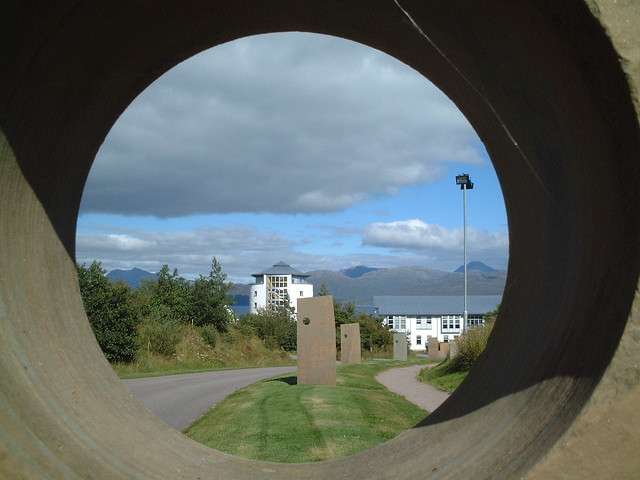
Circles

Words for circle, ring and related words in Celtic languages.

There are three words for circle in Proto-Celtic: *kerk-injo-, *kerkinn- and *kuro-. They don’t appear to have descendents in modern Celtic languages.

Sabhal Mòr Ostaig

Proto-Celtic *ānniyos = ring
Old Irish (Goídelc) áinne = ring
Middle Irish (Gaoidhealg) áinne, ánne = ring, circuit, anusm posterior
Irish (Gaeilge) fáinne [ˈfˠɑːɲə/ˈfˠæːn̠ʲə] = ring, circle, ringlet, curl, halo
fáinneach = annular, ring-like, ringed, ringleted, whorled, adorned, beautiful
fáinneadóir = ring-maker, dealer in rings
fáinneáil = (act of) circling, fluttering
fáinneán -= ampitheatre, circus
fáinneog = ringlet, curl
fáinneoir = person who rings animals
fáinnigh = to ring, encircle, dawn
fáinniú = encirclement, dawning
Scottish Gaelic (Gàidhlig) fàinne [faːn̪ʲə] = ring, ringlet, circle
fàinneach [faːn̪ʲəx] = pertaining to or like a ring, ringed
fàinneachadh [faːn̪ʲəxəɣ] = (act of) curling, ringing
fàinneag [faːn̪ʲag] = small ring, ringlet
Manx (Gaelg) fainey = circle, puck, whorl, wreathe, ring
fainnit = ringed

Etymology: from Proto-Indo-European *h₁eh₂no- (ring). Cognate with the Latin ānus (ring, anus), and anus in English, French, Catalan and Romanian [source].

The English word phon(e)y (fraudulent, fake) possibly comes from the old slang word fawney (a gilt brass ring used by swindlers; a finger ring), from the Irish fáinne (ring) [source].

Old Irish (Goídelc) circul = circle, orbit, zone, hoop
Middle Irish (Gaoidhealg) circul = circle, orbit, zone, hoop
Irish (Gaeilge) ciorcal [ˈkiɾˠkəlˠ] = circle
ciorcalach = circular, cyclic
ciorcalaigh = to encircle, circle
ciorclán = circular (letter)
Scottish Gaelic (Gàidhlig) cearcall [kʲɛrxgl̪ˠ] = circle, cycle, ring (circus, etc), hoop
cearclach = circular, cyclic(al)
Manx (Gaelg) kiarkyl = ring, circle, rim, coterie
kiarklagh = cyclic(al), rotund, circulatory
kiarkylagh = circular
daachiarkyl = bicycle
Proto-Brythonic *kɨrxl [aˈbɛːr] = circle, ring
Old Welsh circhl = circle, ring
Middle Welsh (Kymraec) kylch, kylc = circle, ring
Welsh (Cymraeg) cylch [kɨ̞lχ/kɪlχ] = circle, ring, compass, scope, range, circumference, environs, surroundsing, precints, zone, belt, hoop, social circle, orbit, revolution, period, cycle, halo
cylchai = halo
cylchaidd = circular, round(ish)
cylchig = circlet, small circle
cylch(i)ol = circular, orbital, surrounding, itinerant, periodic, cyclic
cylchu, cylch(i)af, cylcho = to hoop, rim (a wheel)
Cornish (Kernewek) kelgh, kylgh = circle, hoop, round, ring
kylghek = circular
kylghigow = hoop-la
kylghlavar = circumlocution
kylghvusur = perimeter
Middle Breton (Brezonec) kelc’h = circle, disc, halo
kelc’hdro = orbit
kelc’hennva = ampitheatre
kelc’hiad = circumference
kelc’hiek = circular
Breton (Brezhoneg) kelc’h = circle, halo
kelc’hiañ = to surround, define, figure out
kelc’hier = compass
kelc’htreiñ = to orbit
kelc’htro = orbit
kelc’htroel = orbital

Etymology: from the Latin circulus (circle), from circus (circle, ring, racecourse, circus), from the Ancient Greek κίρκος (kírkos – circle, ring) from the Proto-Indo-European *(s)ker- (to bend, turn) [source].

Words marked with a * are reconstructions.

Sources: Wiktionary, Am Faclair Beag, Online Manx Dictionary, Teanglann.ie, eDIL – Electronic Dictionary of the Irish Language, In Dúil Bélrai English – Old Irish glossary, Geiriadur Prifysgol Cymru, Gerlyver Kernewek, Dictionaire Favereau, TermOfis, English – ProtoCeltic WordList (PDF), Etymological Dictionary Of Proto Celtic

Blubrry podcast hosting

Battle

Words for battle and related things in Celtic languages.

St Fagan's National Museum of Wales

Words marked with a * are reconstructions.

Proto-Celtic *katus = battle
*Katutigernos = “battle lord/master” (male name)
*Katuwelnāmnos = “battle ruler” (male name)
Gaulish catu, katu = battle
Katutigernos (male name)
Primitive Irish ᚉᚐᚈᚈᚒ (cattu) = battle
Old Irish (Goídelc) cath [kaθ] = battle, fight, troop, battalion
cathach = bellicose, warlike
cathaigecht = warfare
cathaige = warrior
cathaigid = to fight, give battle
cocad = war, conflict (from com (with) and cath)
Middle Irish (Gaoidhealg) cath, = battle, fight, troop, battalion
cathach = bellicose, vehement
cathaigecht = warfare
cathaige = fighter, warrior
cathaigid = to fight, give battle
cocad = war, conflict, act of waging war
Irish (Gaeilge) cath [kah] = battle, conflict, trial, battalion
cathach = battling, warlike
cathaí = battler, fighter
cathaigh to battle, fight, tempt
cogadh [ˈkɔɡə/ˈkʌɡu] = war, warfare
Scottish Gaelic (Gàidhlig) cath [kah] = battle, fight, contest, struggle, battalion, warfare
cathach = warlike
cath nan con = dogfight
cath-thuagh = battle axe
blàr-catha = battlefield
gairm-chatha = warcry
cogadh [kogəɣ] = war, fighting, warfare
Manx (Gaelg) cah = military action battle
crooseyr cah = battle-cruiser
caggey [ˈkaːɣə] = war, fight, scrap, combat, campaign, clash, battle
Proto-Brythonic *kad = battle
*Kadüdɨɣern (male name)
*Kaduwallọn (male name)
Old Welsh Categern, Catigern (male name)
Cadwallawn (male name)
Categern, Catigern (male name)
Middle Welsh (Kymraec) kad, kat = battle
Cattegirn (male name)
Catgollaun, Catguallaun, Katwallaun (male name)
Welsh (Cymraeg) cad [kaːd] = battle, conflict, war, strife, struggle, trouble, army, host, throng, multitude, band
cad ar faes = at loggerheads
cadfan = battlefield
Cadfan (male name) = 6th century Breton missionary to Wales [more details]
Cadeyrn (male name)
Cadwallon (male name)
Middle Cornish (Cernewec) cad, câs = battle, war
cadlys = camp, intrenchment
cadwur = warrior, soldier, champion
Cornish (Kernewek) kas = armed conflict, battle, war
kasor, kasores = fighter
kasorek = militant
Kaswallawn (male name)
Old Breton Kaduuallon, Catuuallon (male name)
Middle Breton (Brezonec) kad = combat
Breton (Brezhoneg) kad = battle
Kadwallawn (male name)

Etymology: possibly from the Proto-Indo-European *kéh₃tus (fight), which is also the root of the German words Hader (dispute, quarrel) and hadern (to bicker, quarrel, struggle) [source].

Proto-Celtic *agrom = slaughter, battle
Old Irish (Goídelc) ár = slaugter
Middle Irish (Gaoidhealg) ár = slaugter, carnage, defeat, destruction
Irish (Gaeilge) ár [ɑːɾˠ] = slaughter, havoc
ármhá = battlefied, scene of slaughter
ármhach = slaughter
ármhar = slaugterous, destructive
Scottish Gaelic (Gàidhlig) àr [aːr] = battle, battlefield, slaughter, death
àr-fhaich, àr-mhagh = battlefield
àrmhach = destructive
Manx (Gaelg) haar [ˈhɛːr] = slaughter, slaughtering
Proto-Brythonic *aɨr [aɨ̯r] = battle, carnage
Old Welsh hair = battle, fight, war
Middle Welsh (Kymraec) aer = battle, fight, war
aerbeir, aerbair = battle-lord, battle-leader
aerbais = coat of mail
aerbar = battle-spear, spear of slaughter
aerbybyr = bright, fine, valiant, zealous, strong in battle
aerdawelỽch, aerdawelwch = silence after battle
Welsh (Cymraeg) aer [aːɨ̯r / ai̯r] = battle, fight, war, skirmish, carnage, slaughter, army
Old Cornish hair = slaughter, battle
Middle Cornish (Cernewec) ar, hâr, har = slaughter, battle
Old Breton (Brethonoc) air = battle, combat, carnage, massacre
airma = battlefield
Middle Breton (Brezonec) hair, aer, ár = battle, combat, carnage, massacre
aerva, aerfa, ármag = battlefield
Breton (Brezhoneg) aer [ɛːr] = battle, combat, carnage (archaic)
aergi [ˈɛrɡi] = fighting dog, war dog, warrior (archaic)
aerva [ˈɛr.va] = battlefield (archaic)

Etymology: from the Proto-Indo-European *h₂eǵros (field, pasturage), possibly from *h₂eǵ- (to drive). Words from the same roots include act, action, agent and agile in English [source].

The Fastest Way to Learn Japanese Guaranteed with JapanesePod101.com

Sources: Wiktionary, Am Faclair Beag, Online Manx Dictionary, Teanglann.ie, eDIL – Electronic Dictionary of the Irish Language, In Dúil Bélrai English – Old Irish glossary, Geiriadur Prifysgol Cymru, Gerlyver Kernewek, Dictionaire Favereau, TermOfis, English – ProtoCeltic WordList (PDF), Etymological Dictionary Of Proto Celtic

Unlimited Web Hosting - Kualo

Wool

Words for wool and related words in Celtic languages.

Glorious wool

Proto-Celtic *ulanā, *wlanā, *w(u)lāno-, *w(u)lano- = wool
Gaulish *wlanā = wool
Old Irish (Goídelc) olann [ˈolan͈] = wool
ollach = woolly
Irish (Gaeilge) olann [ˈɔlˠən̪ˠ] = wool, woolly hair, mop of hair; woollen
olanda = woolly
olannacht = woolliness
olanntáirgeach = wool-bearing
ollach = woolly, fleecy
ollacht = woolliness, fleeciness
Scottish Gaelic (Gàidhlig) olann [ˈɔl̪ˠən̪ˠ] = wool (usually while on sheep)
ola = woollen, made of wool
olach = woolly, fleecy
Manx (Gaelg) ollan = wool
ollanagh, olley = woolly
ollanaght = woolliness
Proto-Brythonic *gwlan [ˈɡwlaːn] = wool
Old Welsh gulan = wool
Middle Welsh (Kymraec) gluan, gwlan = wool
Welsh (Cymraeg) gwlân [ɡwlaːn] = wool, down, soft hair, grass, herbage; woollen, soft, made of wool
gwlana = to gather wool, beg or solicit wool
gwlanen = flannel, face-cloth; man of weak character, spineless person, unreliable person
gwlanendra = softness, lack of backbone
gwlanenêd = flannelette
gwlanel = flannel
gwlanennaidd, gwlanennog = flannelly, flannel-like, soft; weak-willed, without backbone, spineless (person), unreliable
gwlanennu = to provide with woollen clothing
gwlanennwr, gwlanennydd = flannel-maker, woollen-manufacturer, flannel-merchant, woollen-draper
gwlanog = woollen
Old Cornish gluan = wool
Middle Cornish glan, glawn = wool
Cornish (Kernewek) gwlan = wool
gwlanek = woollen, woolly
Middle Breton glan, gloan = wool
Breton (Brezhoneg) gloan = wool
gloanaj, gloanenn = woollen garment / material
gloanegenn = cozy, soft, snug
gloanell = cotten

Etymology: from the Proto-Indo-European *h₂wĺ̥h₁neh₂ (wool). The English word flannel comes ultimately from the Gaulish *wlanā, via Old French and Norman [source].

Sources: Wiktionary, Am Faclair Beag, Online Manx Dictionary, Teanglann.ie, eDIL – Electronic Dictionary of the Irish Language, In Dúil Bélrai English – Old Irish glossary, Geiriadur Prifysgol Cymru, Gerlyver Kernewek, Dictionaire Favereau, TermOfis, English – ProtoCeltic WordList (PDF), Etymological Dictionary Of Proto Celtic
Country and Land

Words for land, country and related words in Celtic languages.

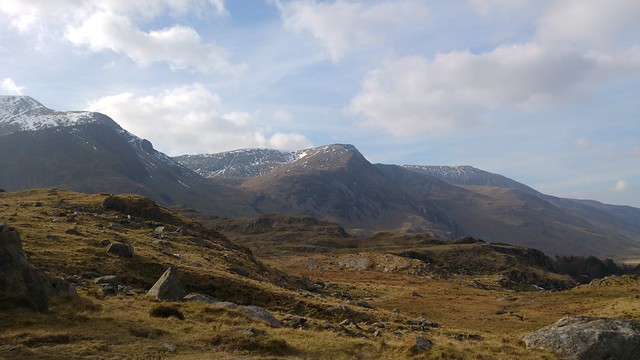
Cwm Idwal

Proto-Celtic *tīros = dry land, land, earth
*wo-tīro- = piece of land
Old Irish (Goídelc) tír = land, country, territory, ground
Tír inna n-Óc = (mythical) Land of Youth
Irish (Gaeilge) tír [tʲiːɾʲ] = country, land, state, nation; region, district. territory, rural district, country native, ordinary
tírdhreach = landscape
tíreach = native, of the country
tíreachas = domesticity
tíreánach = mainlander
tíreolaí = geographer
tíreolaíocht = geography
tírghrá = patriotism
tírghrách = patriotic
tírghráthóir = patriot
Tír na nÓg = (mythical) Land of the Young/Youth
Scottish Gaelic (Gàidhlig) tìr [tʲiːrʲ] = land, country, territory
tìreach = countryman, patriot
tìr-eòlas = geography
tìr-ghràdhaiche = patriot
tìr-mór = mainland, continent
Tìr nan Òg = (mythical) Land of the Young/Youth
àrd-tìr = highland
Manx (Gaelg) çheer = land, country, state, territory, shore
çheeragh = native
çheer-ghraihagh = patriotic
çheer-oayllee = geographer
çheer-oaylleeaght = geography
çheer vooar = mainland
çheer yalloo = landscape
Çheer ny Aeg = (mythical) Land of Youth
Proto-Brythonic *tir [ˈtiːr] = land
Old Welsh tir = land
Middle Welsh (Kymraec) tir, tyr = land
Welsh (Cymraeg) tir [tiːr] = land, ground, soil, turf, estate, open land, region, territory, domain, country, earth, ridge
tiriaf, tirio = to land, come ashore, disembark, arrive, reach
tir(i)og = landowning, landed
tiriogaeth = territory, realm, district, tract, (piece of) land
tiriogaethol = territorial
tirwedd = landscape, scenery, (geographic) relief
Cornish (Kernewek) tir = land, earth
tira = to land, come ashore
tiredh = territory
tirlanow = landfill
tir meur = mainland
tirnos = landmark
tirwedh = landscape
konna tir = peninsula
penn tir = headland
Breton (Brezhoneg) tir = land
penn-tir = headland

Etymology: possibly from the Proto-Indo-European *tērs-os/tḗrs (to heap up, increase, enlarge) [source].

Princes Street Gardens

Proto-Celtic *wlatis = sovereignty, rule
*walo- = prince, chief
*walatro- = ruler
Old Irish (Goídelc) flaith [flaθʲ] = lordship, sovereignty, rule, kingdom, realm, prince, ruler
flaithem = prince, ruler
flaithemail = princely, munificent
flaithemnacht = rule
flaithemnas, flaithius = rule, sovereignty
flaithiúlacht = princeliness, munificence, lavishness, generosity
Irish (Gaeilge) flaith [fˠlˠah/fˠlˠa] = lordship, sovereignty, ruler, prince, lord, chief
banfhlaith = princess
flaithbheartach = princely, generous
flaithbhile = princely scion, noble champion
flaitheas = rule, sovereignty, kingdom, realm
flaitheasach = heavenly, celestial
co-fhlaitheas = confederation
flaithiúil = princely, munificent, lavish, generous
flaithiúlach = lavish, generous
flaithiúnta = sovereign, heavenly
mì-fhlathail = ignoble
Scottish Gaelic (Gàidhlig) flath [fl̪ˠah] = king, prince, ruler, noble
banfhlath = wife of a chieftain, noblewoman
flath-shonas [fl̪ˠahənəs] = dominion, kingdom, heaven, the heavens
flathail = noble, gallant, patrician, princely, majestic; blithesome
mì-fhlathail = ignoble
Manx (Gaelg) flah = prince, potentate
flaunys = heaven, utopia, paradise
Proto-Brythonic *gwlad [ˈɡwlaːd] = sovereignty, country
*gwlėdig = civil, secular, established, national
*gwaladr [ɡwaˈladr̩] = ruler
Old Welsh gulat = country, realm
Middle Welsh (Kymraec) gulat, gulad, gwlat, gwlad = country, realm
Welsh (Cymraeg) gwlad [ɡwlaːd/ɡlaːd] = country, land, province, region, district, kingdom, realm, domain; nation, the people of a country
gwaladr = ruler, sovereign
gwladaidd = rural, rustic countrified, homely, plain, mean, poor, boorish, vulgar, rough, clumsy, awkward
gwladiath = native tongue, mother tongue
gwladwr = countryman, peasant, rustic, compatriot, inhabitant, citizen
gwledig = rural
rhyngwladol = international
Old Cornish gulat = country
Cornish (Kernewek) gwlas = country
gwlaskar = patriotic
gwlaskarer / gwlaskarores = patriot
gwlaskarenja / gwlaskerensa = patriotism
gwlaskor = kingdom, realm
Old Breton guletic = prince
Middle Breton gloat = kingdom, wealth
gloedic = count
Breton (Brezhoneg) glad [ɡlɑːt] = inheritance, heritage, patrimony

Etymology: from the Proto-Indo-European *h₂wélh₁tis/*h₂wl̥h₁téy-, from *h₂welh₁- (to rule, strong, powerful) [source].

Proto-Celtic *talamū = earth
Gaulish *talamon = ?
Old Irish (Goídelc) talam [ˈtalaṽ] = earth, (dry) land, country, soil, dirt, clay
Irish (Gaeilge) talamh [ˈt̪ˠɑlˠəvˠ/ˈt̪ˠalˠə/ˈt̪ˠalˠu] = earth, ground, land, dry land, soil, soild base (for discussion, understanding)
talamhchreathach = seismic
talamhchrith = earthquake
talamhiata = land-locked
talamhluas = ground speed
Scottish Gaelic (Gàidhlig) talamh [tal̪ˠav] = earth, ground, Earth
talamh bàn = fallow/unmanured ground
talamh-dearg = tiled soil, ploughed land
talamh-làidir, talamh-glas = unploughed land
talamh-rèisg = marshy/boggy ground
talamh-àitich = arable land, cultivable land
Manx (Gaelg) thalloo = country, land, shore, terrain, territory, clod, earth, ground , soil
thallooinaghey = to earth, earthing

Etymology: from the Proto-Indo-European *telh₂- (ground) [source]. The French surname Talmont, and the placenames Talmont-sur-Gironde and Talmont-Saint-Hilaire come from the same Proto-Celtic root, via the Gaulish *talamon, and the Latin Talamone / Talmun.

Words from the same PIE root include tellurian (of or relating to the earth) in English, тло [tɫɔ] (background, environment, ground, basis) in Ukrainian, потолок [pətɐˈɫok] (ceiling, upper limit, roof) in Russian, tło [twɔ] (background) in Polish, तल [t̪əl] (bottom, level, storey, floor) in Hindi [source].

Sources: Wiktionary, Am Faclair Beag, Online Manx Dictionary, Teanglann.ie, eDIL – Electronic Dictionary of the Irish Language, In Dúil Bélrai English – Old Irish glossary, Geiriadur Prifysgol Cymru, Gerlyver Kernewek, Dictionaire Favereau, TermOfis, English – ProtoCeltic WordList (PDF), Etymological Dictionary Of Proto Celtic
The Fastest Way to Learn Japanese Guaranteed with JapanesePod101.com

Stony Rocks

Words for rocks and stones in Celtic languages.

A view from Inis Mór

Proto-Celtic *klukā, *kluggā = stone, rock
*klukaros = pile of stones
Old Irish (Goídelc) cloch [klox] = stone, rock, precious stone, gem, bead (in a rosary), something built of stone, castle, fortress, stronghold
Irish (Gaeilge) cloch [klˠɔx, klˠʌx] = rock, large stone
clochach = stony, rocky
clochaid = stone, covered with stones
clochamail = stony, unyielding
clochán = paved road, causeway
clochda = made of stony, stony
Scottish Gaelic (Gàidhlig) clach [kl̪ˠax] = rock, stone, testicle, ball
clach-stéidhe = foundation stone
clach an teinntein = hearthstone
clach-uaighe = gravestone, headstone
clach-mheallain = hail(stone)
clach-mhìle = milestone
clachach [kl̪ˠaxəx] = rocky, stony
Manx (Gaelg) clagh [klaːx] = stone, testicle, stone monument
clagh eayil = limestone
clagh eayl = kidney stone
clagh gheayil = coal
clagh gheinnee = sandstone
clagh hayrn = magnet, magnetite, lodestone
claghagh = stony, flinty
Proto-Brythonic *klog = stone, rock
Middle Welsh (Kymraec) clok, cloc, clog = stone, rock
Welsh (Cymraeg) clog [kloːɡ] = rock, cliff, precipice; skull
clegyr, clegr = rocks, stones, rock, crag, cairn, stony place
clogfaen = boulder, large stone, rock
clogfryn = cliff, steep rock, precipice
clogyr = rock, crag
clogwrn = cliff, rock, tump, knoll
clogwyn = cliff, precipice, crag, boulder
clogwynog = precipitous, craggy, rocky
Middle Cornish (Cernewec / Kernuak) clog = a steep rock
Old Breton (Brethonoc) clecher = rocky outcrop
Breton (Brezhoneg) klog = steep, precipice
kleger [ˈkleːgɛr] = rocky outcrop
klegerek [kleˈgɛ:rɛk] = rocky, stony, rugged

Etymology: unknown [source].

Proto-Celtic *karrikā, *karrikī = stone, rock
Old Irish (Goídelc) carrac = rock
Irish (Gaeilge) carraig [ˈkɑɾˠɪɟ, ˈkaːɾˠɪɟ, ˈkaɾˠəc] = rock
carraigeach = rocky
carraigeolaí = petrologist
carraigeolaíocht = petrology
Scottish Gaelic (Gàidhlig) carraig [kar̪ˠɪɡʲ] = rock, crag, cliff, pinnacle, hard mass
Manx (Gaelg) carrick = cliff, crag, rock in the sea, fortress
Proto-Brythonic *karreg = stone, rock
Old Welsh carrecc, cerricc = stone
Middle Welsh (Kymraec) carrec, cerric, karreg = stone
Welsh (Cymraeg) carreg [ˈkarɛɡ/ˈkaraɡ] = stone; gall-stone; (fruit) pip; testicle
carreg (yr) aelwyd = hearthstone
carreg a thwll = gibberish, worthless thing (“stone with a hole”)
carreg fedd/bedd = gravestone
carreg (y) filltir = milestone
carreg sarn = stepping-stone, causeway
carreg sylfaen foundation-stone
carreg werthfawr = precious stone
Cornish (Kernewek) karrek = rock
Breton (Brezhoneg) karreg = rock, reef, shell
karregoniel = petrographic
karregoniezh = petrography
karregoniour = petrograph

Etymology: from the Proto-Indo-European *kh₂er- (hard) [source].

Proto-Celtic *maginos = stone, place
Old Irish (Goídelc) magan, maigen = a piece of open land, a spot, home, a place belonging to (someone)
Irish (Gaeilge) maighean = place, steading
Proto-Brythonic *maɣɨn = stone
Middle Welsh (Kymraec) maen, main, mein, mayn = stone
Welsh (Cymraeg) maen [maːɨ̯n/mai̯n] = stone (with a particular use), griddle stone, bakestone, griddle, precious stone
maenaf, maenu = to stone, pelt with stones, petrify
maenaidd = stony, like stone, full of stones
maenwaith = stonework, masonry
calchfaen, conglfaen = limestone
gwenithfaen, ithfaen = granite
llosgfaen = brimstone, sulphur
sylfaen = foundation, base, basis
tywodfaen = sandstone
Cornish (Kernewek) men = stone
Old Breton main = stone
Middle Breton main, maen, men = stone
Breton (Brezhoneg) maen = stone

Etymology: possibly related to the Proto-Celtic word *magos (plain, field), from the Proto-Indo-European *meǵh₂- (big, great) [source].

Proto-Celtic *ɸlikkā = (flat) stone
Old Irish (Goídelc) lecc = plate, stone, flat slab or rock
Irish (Gaeilge) leac [l̠ʲak, l̠ʲæk] = flat stone or rock, flagstone, slab, lid
leacach = area of flat rocks or flagstones; strewn with flat stones, flagged, stony
leacán = small flat stone, slab, tile
Scottish Gaelic (Gàidhlig) leac [l̪ʲɛxg] = flagstone, slab; tile; cheek; callus
leacag = small slab, tile
leacan = small slab, flagstone
Manx (Gaelg) leac = slab, sheet, flagstone, headstone, plaque, monolith, slate
leacan = tile
Proto-Brythonic *llex = (flat) stone
Middle Welsh (Kymraec) llech, lec = slate, slab of stone
Welsh (Cymraeg) llech [ɬeːχ] = slate, bakestone, griddle, slab of stone, paving stone, gravestone, rock, boulder, cliff
cromllech = cromlech, dolmen
llechfaen = slate, slab, flag, tablet, bakestone, griddle
priddlech = tile, brick
Cornish (Kernewek) legh = slates
Breton (Brezhoneg) lec’h = megalith. dolmen, flat rock

Etymology: from the Proto-Indo-European *pl̥keh₂ (flat surface), from *pleh₂- (flat), which is also the root of English words such as floor, palm, piano, plain, plan and plane [source].

Sources: Wiktionary, Am Faclair Beag, Online Manx Dictionary, Teanglann.ie, eDIL – Electronic Dictionary of the Irish Language, In Dúil Bélrai English – Old Irish glossary, Geiriadur Prifysgol Cymru, Gerlyver Kernewek, Dictionaire Favereau, TermOfis, English – ProtoCeltic WordList (PDF), Etymological Dictionary Of Proto Celtic

River Mouths

Words for estuary / mouth (of a river) in Celtic languages.

Aberaeron

Proto-Celtic *adberos = mouth, confluence (of a river)
Pictish *ᚐᚁᚓᚏ (aber) = mouth, confluence (of a river)
Old Irish (Goídelc) abar [ˈfʲilʲi] = confluence, river mouth
Irish (Gaeilge) abar [ˈabˠəɾˠ] = boggy ground, morass
abarach = boggy, muddy, sloughy
abracht = boggy place
Scottish Gaelic (Gàidhlig) abar / obar = confluence, place where two or more streams meet; marsh, bog, fen
Manx (Gaelg) aber = range, pasturage, river mouth, bunker, run
Proto-Brythonic *aber [aˈbɛːr] = mouth, confluence (of a river)
Old Welsh) oper, aper = estuary, mouth of a river
Middle Welsh (Kymraec) aber = estuary, mouth of a river
Welsh (Cymraeg) aber [ˈabɛr/ˈaːbɛr] = river mouth, estuary, confluence, bay, harbour, port, anchorage
Old Cornish aber = estuary, mouth of a river
Middle Cornish (Cernewec) aber = confluence of waters, the junction of rivers
Cornish (Kernewek) aber = river mouth
Old Breton aperou = estuary, mouth of a river
Breton (Brezhoneg) aber = estuary, mouth of a river, confluence, creek

Etymology: from the Proto-Celtic *ad- (to(wards), at) and *beros (bearer, flow) [source].

Proto-Celtic *eni-berom = carrying in
Old Irish (Goídelc) *in(d)ber = river mouth
Middle Irish (Gaoidhealg) inber, indber, inbir = rivermouth
Irish (Gaeilge) inbhear / inbhir [ˈabˠəɾˠ] = river mouth, estuary, firth
inbhearach = having many estuaries
Scottish Gaelic (Gàidhlig) inbhir [in̪ʲɪrʲ] = estuary, river mouth, (internet) feed
Manx (Gaelg) inver = estuary, river mouth

Etymology: from the Proto-Celtic *eni- (in) and *beros (bearer, flow), from Proto-Indo-European *bʰer- (to bear, carry) [source].

Notes
These words appear mainly in placenames such as Aberaeron, Abererch, Aberffraw, Abergavenny (Y Fenni), Abergynolwyn, Aberystwyth, Abergwaun (Fishguard), Aberhonddu (Brecon), Aberteifi (Cardigan), Aberdaugleddau (Milford Haven), Aberpennar (Mountain Ash) and Abertawe (Swansea) in Wales.

Aberdeen (Obar Dheathain) , Aberfeldy (Obar Pheallaidh), Aberfoyle (Obar Phuill), Abernethy (Obar Neithich), Arbroath (Aber Brothaig), Invergowrie (Inbhir Ghobharaidh), Inverkeithing (Inbhir Chèitinn), Inverness (Inbhir Nis), Inbhir Nàrann (Nairn), Inbhir Pheofharain (Dingwall), Inbhir Ùige (Wick) in Scotland.

Aber/Obar appear in Scottish placenames of Pictish origin, and may have been borrowed from Pictish. Inbhir/Inver appear in other placenames [source].

More details of placenames featuring Aber and Inver.

Old Irish (Goídelc) gáeth = the sea, a stream, an estuary
Middle Irish (Gaoidhealg) gáeth, gáoth, gaoth = the sea, a stream, an estuary
gáethlach = marsh, swamp
Irish (Gaeilge) gaoth [ɡeːh / ɡiːh] = inlet of sea, estuary
Gaoth Dobhair [ɡiːˈd̪ˠoːɾʲ] = Gweedore (a parish in County Donegal)
Scottish Gaelic (Gàidhlig) geodha [gʲɔ.ə] = inlet, cove, gully (by the sea), indent(ation)
Manx (Gaelg) giau = creek, inlet, cove
Giau Vooar ny Pershey = Persian Gulf

Etymology: possibly from the Old Norse gjá (chasm, rift, crack) [source].

Words marked with a * are reconstructions.

Sources: Wiktionary, Am Faclair Beag, Online Manx Dictionary, Teanglann.ie, eDIL – Electronic Dictionary of the Irish Language, In Dúil Bélrai English – Old Irish glossary, Geiriadur Prifysgol Cymru, Gerlyver Kernewek, Dictionaire Favereau, TermOfis, English – ProtoCeltic WordList (PDF), Etymological Dictionary Of Proto Celtic

Blubrry podcast hosting

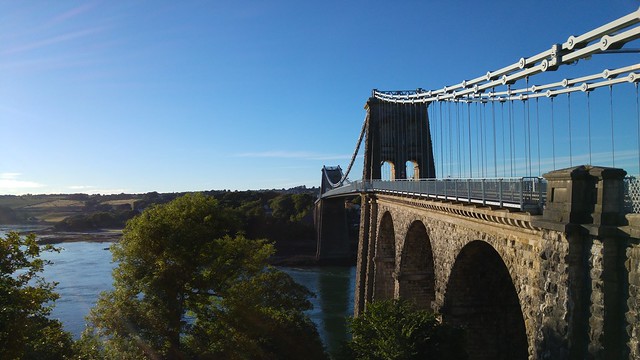
Bridges

Words for bridges and related words in Celtic languages.

Menai Bridge / Pont y Borth

Words marked with a * are reconstructions.

Old Irish (Goídelc) drochet [ˈdroxʲed] = bridge
Middle Irish (Gaoidhealg) drochet, drochat, droichet = bridge, causeway
drochetech, drochetóir = bridge-maker
Irish (Gaeilge) droichead [ˈd̪ˠɾˠɛçəd̪ˠ] = bridge
droichead crochta = suspension bridge
droichead tógála = drawbridge
droichead meáite = weigh bridge
droichead veidhlín = bridge of a violin
droichead sróine = bridge of the nose
Scottish Gaelic (Gàidhlig) drochaid [drɔxɪdʲ] = bridge
drochaid air fleodradh = pontoon
drochaid-thogalach, drochaid-thogail = drawbridge
drochaid-choise = footbridge
drochaid-rathaid = road bridge, viaduct
drochaid-thionndain = swing bridge
Manx (Gaelg) droghad = bridge, bridge of ship, arch, gantry
droghad aae = viaduct
droghad cassee = swing bridge
droghad coshey = gangway, footbridge
droghad croghit = suspension bridge
droghad keesh = toll bridge
droichead meihaghey = weigh bridge

Etymology: from Old Irish droch (wheel, circlet) and sét (path) [source].

Gaulish ponto = bridge
Proto-Brythonic *pont = bridge
Cumbric *pont = bridge
Old Welsh (Kembraec) pont = bridge
Middle Welsh (Kymraec) pont, pynt = bridge, drawbridge
Welsh (Cymraeg) pont [pɔnt] = bridge, drawbridge, viaduct, aqueduct
pontio = to bridge (a gap), to transition
pont godi = drawbridge
pont grog = suspension bridge
pont trwyn = bridge of the nose
pont y glaw, pont law = rainbow
pont ysgwydd = collar-bone, clavicle
pontio = to bridge, span, arch
pont(i)og = like a bridge, arched of the nature of a bridge
pont(i)wr, pontydd = a bridge-builder
pontyddiaeth = bridge-building
Old Cornish (Cernewec) pons = bridge
Middle Cornish (Cernewec) pons = bridge
Cornish (Kernewek) pons = bridge
ponsfordh = viaduct
pons travalya = travelling bridge
Middle Breton (Brezonec) pont = bridge
Breton (Brezhoneg) pont [pɔ̃nt] = bridge, top of the furrow, culvert, trigger guard
pontan, pontañ = to bridge, lay flat stones (on a ditch or stream)
pont-tro = swing bridge
pont hent-houarn = railway bridge
pont dilestrañ = bridge, deck (of ship)
pont kargañ = loading deck
pont-tro = swing bridge

Etymology: from Latin pōns (bridge, deck), from Proto-Indo-European *pónteh₁s (path, road), from *pent- (path). Words from the same roots include pont (bridge) in French, puente (bridge) in Spanish, път [pɤt] (road, way, path, journey, way) in Bulgarian source].

Proto-Celtic *brīwā = bridge
Gaulish briua = bridge
Leptonic 𐌐𐌓𐌖𐌉𐌀𐌌 (pruiam) = funerary construction (perhaps a grave)

Etymology: from Proto-Indo-European *bʰerw/*bʰrēw (wooden flooring, decking, bridge), which is also the root of the English words bridge and brig, and Brücke (bridge) in German [source].

The Fastest Way to Learn Japanese Guaranteed with JapanesePod101.com

Sources: Wiktionary, Am Faclair Beag, Online Manx Dictionary, Teanglann.ie, eDIL – Electronic Dictionary of the Irish Language, In Dúil Bélrai English – Old Irish glossary, Geiriadur Prifysgol Cymru, Gerlyver Kernewek, Dictionaire Favereau, TermOfis, English – ProtoCeltic WordList (PDF), Etymological Dictionary Of Proto Celtic
Unlimited Web Hosting - Kualo

Heavenly Sky

Words for sky and heaven in Celtic languages.

Cymylau

Proto-Celtic *nemos = sky, heaven
Old Irish (Goídelc) nem [n͈ʲeṽ] = heaven, sky, radiance
Irish (Gaeilge) neamh [nʲavˠ / n̠ʲavˠ / n̠ʲaw] = heaven, sky, firmament
neamhaí [n̪ʲial̪ˠ] = heavenly, celestial; droning, monotonous, apathetic
Scottish Gaelic (Gàidhlig) nèamh [n̪ʲɛ̃ːv] = heaven; firmament, the skies
nèamhaidh [n̪ʲɛːvɪ] = heavenly, celestial
Manx (Gaelg) niau = heaven
niauagh = heavenly, celestial
niauoil = divine, heavenly
Proto-Brythonic *neβ̃ [ˈnɛːβ̃] = heaven, sky
Old Welsh nem = heaven
Middle Welsh (Kymraec) new, nym, nef = heaven
Welsh (Cymraeg) nef [neːv] = heaven, paradise; God, providence; sky, firmament
nef a daear = heaven and earth
Old Cornish nef = heaven
Cornish (Kernewek) nev = heaven
Old Breton nem = heaven
Middle Breton neff = heaven
Breton (Brezhoneg) neñv [ˈnẽ(w)] = sky, heaven

Etymology: from the Proto-Indo-European *nébʰos (cloud, mist, moisture) [source].

Middle Irish (Gaoidhealg) spéir [ˈsˠkamˠəl̪ˠ] = sky,
Irish (Gaeilge) spéir [spʲeːɾʲ] = sky, air; airiness, brightness, light; sphere, circle, orbit
spéirbhean = beautiful woman, fair lady (‘sky-woman’)
spéirghealach = ‘sky-brightness’, starry light
spéirghlan = clear-skied
spéirghorm = sky-blue
spéirléas = skylight
Scottish Gaelic (Gàidhlig) speur [sbiər] = the sky, firmament, heavens, heights
speur-bhean = beautiful woman (usually in myths)
speur glan = clear skies
speur-eòlas = star-gazery
speur-shiubhal = space travel
bàta-speur = airship
bun-speura = skyline
sgoil-speur = astronomy
Manx (Gaelg) speyr = sky, climate
speyr-ghorrym = sky-blue, cerulean
speyr-oaylleeaght = aerology
speyr voorjeenagh =angry (sky)
speyr vreck = mackerel sky
corpane speyr(ey) = heavenly body
Welsh (Cymraeg) sffêr [neːv] = sphere, ball, globe, heavely body, sphere (of the sky)
Breton (Brezhoneg) sphère, sfer = sphere, globe

Etymology from the Latin sphēra / sphaera (ball, globe, sphere), from the Ancient Greek σφαῖρα (sphaîra – ball, globe) [source].

Old Irish (Goídelc) aer [ˈa.er] = air, sky
Middle Irish (Gaoidhealg) aidhéar, aer = air, atmosphere, sky, breath, amusement, sport
Irish (Gaeilge) aer [eːɾˠ / eːɾˠ] = air, sky, climate, gaiety, pleasure, (musical) air, tune
aerach = airy, light-hearted, gay, lively, frolicsome
aerfort = airport
aerghiotár = air guitar
aertha = light-headed, giddy, simply-minded, silly
Scottish Gaelic (Gàidhlig) adhar [a.ər] = air, sky, heaven
adharag = light breeze, aerial being
adharail = ethereal, airy, aerial
port-adhair = airport
Manx (Gaelg) aer [eːə] = aeronautical, air, pneumatic, atmosphere
aerag = aerial, antenna
aeragh = aerated, airy, atmospheric, ethereal
aeroil = airy, jaunty, volatile
Proto-Brythonic *auɨr = air
Middle Welsh (Kymraec) awyr [ˈa.uɨ̯r] = air
Welsh (Cymraeg) awyr [ˈau̯.ɨ̞r, ˈau̯.ɪr] = air, atmosphere, sky, firmament, (the) heavens
awyraidd = aerial, celestial, atmospheric, airy, well-ventilated
awyrell = balloon, airship, vent, ventilation shaft, airway
awyren = aeroplane, aircraft, balloon, meteor, fan
awyrennu = aviation
awyro = to ventilate, air, aerate
maes awyr = airport
Middle Cornish (Cernewec) ayr, auuit, aer = air, sky
Cornish (Kernewek) ayr = air
ayrborth = airport
ayrbost = airmail
ayredh = climate
ayrek = aerial
ayrell = ventilator
ayrella = to ventilate
ayrellans = ventilation
ayren = aeroplane
Old Breton aer = air, strong smell, sky, appearance
Middle Breton (Brezonec) aer, ær, ear, éér = air, strong smell, sky, appearance
Breton (Brezhoneg) aer [ɛʁ] = air
aeraer = ventilator, aerator
aerañ = to ventilate, aerate
aerlu = airforce

Etymology: from the Latin āēr (air), from the Ancient Greek ᾱ̓ήρ (āḗr – mist, air, wind, space, volume), from the Proto-Hellenic *auhḗr (morning mist), from the Proto-Indo-European *h₂ewsḗr, from *h₂ews- (dawn, east) [source].

Words from the same PIE root include east, Easter, aura, aurora and Australia [source].

Middle Welsh (Kymraec) wybr, ybrev = air
Welsh (Cymraeg) wybr [ʊɨ̯br, ʊi̯br] = sky, firmament, heaven, cloud, cataract
wybraf, wybro, wybran = to wander (aimlessly), rove, look up at the sky
wybraidd = pertaining to the sky or firmament, celestial, aerial. cloudy
wybrwr, wybrydd = astronome, astrologer, traveller, wanderer, vagabond, rover
wybryddiaeth = astronomy, astrology, meteorology
Old Cornish huibren = sky, firmament
Middle Cornish (Cernewec) ebron, ybron, ybbern = sky, firmament
Cornish (Kernewek) ebron = sky
Old Breton noabreen = sky, cloud
Middle Breton (Brezonec) oabr = sky, cloud
Breton (Brezhoneg) oabl [ˈwɑːpl] = sky, cloud

Etymology: unknown

Words marked with a * are reconstructions.

Sources: Wiktionary, Am Faclair Beag, Online Manx Dictionary, Teanglann.ie, eDIL – Electronic Dictionary of the Irish Language, In Dúil Bélrai English – Old Irish glossary, Geiriadur Prifysgol Cymru, Gerlyver Kernewek, Gerlyvyr Cernewec, Dictionaire Favereau, TermOfis, Le dictionnaire diachronique du breton, Geriafurch, English – ProtoCeltic WordList (PDF), Etymological Dictionary Of Proto Celtic

The Fastest Way to Learn Japanese Guaranteed with JapanesePod101.com

Seasons

Words for seasons in Celtic languages.

Spring

Proto-Celtic *wesrakos / *wesantos = spring
Old Irish (Goídelc) errach [ˈer͈ax] = spring
Irish (Gaeilge) earrach [əˈɾˠax / ˈaɾˠəx / ˈaɾˠa(h)] = spring
Scottish Gaelic (Gàidhlig) earrach [jar̪ˠəx] = spring
Manx (Gaelg) arragh [ˈarax] = spring
Proto-Brythonic *wesantēnos = spring
Old Welsh guiannuin = spring
Middle Welsh (Kymraec) gwaeanhwyn / gwaeannwyn / gwannwyn = spring
Welsh (Cymraeg) gwanwyn [ˈɡwanwɨ̞n / ˈɡwanwɪn] = spring, springtime
Old Cornish guaintoin = spring
Cornish (Kernewek) gwaynten = spring
Breton (Brezhoneg) nevez-amzer = spring

Etymology, from the Proto-Indo-European *wósr̥ (spring) [source].

Spring Blossom / Blodau y Gwanwyn

Summer

Proto-Celtic *samos = summer
Gaulish samo- = summer
Old Irish (Goídelc) sam [saṽ] / samrad [ˈsaṽrað] = summer
Irish (Gaeilge) samhradh [ˈsˠəuɾˠə / ˈsˠəuɾˠuː / ˈsˠəuɾˠu] = summer, summer garland
Scottish Gaelic (Gàidhlig) samhradh [sãũrəɣ] = summer
Manx (Gaelg) sourey [ˈsaurə] = summer
Proto-Brythonic *haβ̃ = summer
Old Welsh ham = summer
Middle Welsh (Kymraec) haf = summer
Welsh (Cymraeg) haf [haːv / haː] = summer
Old Cornish haf = summer
Cornish (Kernewek) hav = summer
Old Breton ham = summer
Middle Breton haff = summer
Breton (Brezhoneg) hañv = summer

Etymology, from the Proto-Indo-European *sm̥-h₂-ó- (summer) [source].

King John's Castle / Caisleán Luimnigh

Autumn

Old Irish (Goídelc) fogamar / fogomur [ˈɡʲaṽʲrʲəð] = autumn
Middle Irish (Gaoidhealg) fogamur = harvest
Irish (Gaeilge) fómhar [ˈfˠoːɾˠ / ˈfˠoːvˠəɾˠ / ˈfˠɔːwəɾˠ] = autumn, harvest season, harvest
Scottish Gaelic (Gàidhlig) foghar [fo.ər] = autumn, harvest, (act of) harvesting
Manx (Gaelg) fouyr = harvets, autumn
Middle Welsh (Kymraec) heduref / heduueref = autumn
possibly from hydd (stag) &‎ bref (bellow)
Welsh (Cymraeg) hydref [ˈhədrɛ(v) / ˈhədra] = autumn, period of full maturity, rutting season, mating time
Cornish (Kernewek) hedra / kynnyay / kydnyadh = autumn
Breton (Brezhoneg) here / kozhamzer / diskar-amzer = autumn

Etymology (Goidelic languages), from the Proto-Celtic *wo-gamur (under winter) from *gamur (winter) [source].

autumn falls...

Winter

Proto-Celtic *gyemos / *gamur = winter
Gaulish giamos = winter (personal name)
Primitive Irish ᚌᚐᚋᚔ- (gami/gen) = winter
Old Irish (Goídelc) gam / gaim = winter, winter storm
gaimred [ˈɡʲaṽʲrʲəð] = winter
Irish (Gaeilge) geimhreadh [ˈɟiːɾʲə / ˈɟiːvʲɾʲə / ˈɟɛvʲɾʲu] = winter
Scottish Gaelic (Gàidhlig) geamhradh [gʲãũrəɣ] = winter
Manx (Gaelg) geurey [ˈɡʲeurə / ˈɡʲuːrə] = winter
Old Welsh gaem = winter
Middle Welsh (Kymraec) gayaf = winter
Welsh (Cymraeg) gaeaf [ˈɡeɨ̯av / ˈɡei̯av] = winter
Old Cornish goyf = winter
Cornish (Kernewek) gwav / gwâv = winter
Old Breton guoiam = winter
Middle Breton gouaff = winter
Breton (Brezhoneg) goañv [ˈɡwãw / ˈɡwã] = winter

Etymology, from the Proto-Indo-European *ǵʰyem- (winter, year, frost, snow) [source].

Coed efo eira arno

Words marked with a * are reconstructions.

The names of the seasons, days and seasons in Celtic languages

Sources: Wiktionary, Am Faclair Beag, Online Manx Dictionary, Teanglann.ie, Geiriadur Prifysgol Cymru, Gerlyver Kernewek

Days

Words for day and related things in Celtic languages.

Days in Celtic languages

Proto-Celtic *dīyos = day
*gdijes = yesterday
*noxt-yēr- = yesterday evening, last night
*se-diwos = today
*sindai noxtē = tonight
Old Irish (Goídelc) día [dʲiːa̯] = day
indé = yesterday
irráir [əˈɾʲeːɾʲ] = yesterday evening, last night
indiu = today
innocht = tonight
i mbárach = tomorrow
Middle Irish (Gaoidhealg) día = day
indé = yesterday
irráir = the time before dawn, last night
indiu = today, the present time
innocht = tonight
i mbárach = tomorrow
Irish (Gaeilge) dia [dʲiə] = day
arú inné = the day before yesterday
inné [əˈn̠ʲeː] = yesterday
aréir [əˈɾʲeːɾʲ] = yesterday evening, last night
inniu [əˈn̠ʲʊ / ɪˈn̠ʲʊv] = today
anocht [əˈn̪ˠɔxt̪ˠ] = tonight
amárach [əˈmˠaːɾˠəx] = tomorrow
arú amárach = the day after tomorrow
Scottish Gaelic (Gàidhlig) dia [dʲiə] = day
a’ bhòin-dè [əˈvoːn̪ʲdʲe] = the day before yesterday
an-dè [ən̠ʲ’dʲeː] = yesterday
a-raoir [əˈrɤirʲ] = yesterday evening, last night
an-diugh [əɲˈdʲu] = today
a-nochd [əˈn̪ˠɔ̃xg] = tonight
a-màireach [əˈmaːrʲəx] = tomorrow
an-earar [ən̪ʲˈɛrər] = the day after tomorrow
Manx (Gaelg) je/jy = day
arroo y jea = the day before yesterday
jea = yesterday
riyr = yesterday evening, last night
jiu = today, nowadays
noght = tonight
mairagh = tomorrow
moghrey (ny) mairagh = tomorrow morning
oie ny vairagh = tomorrow night
n(h)uyr, laa ny nuyr = the day after tomorrow
Proto-Brythonic *dið = day, daytime
*hanoɨθ = tonight
Old Welsh did = day
heddiw = today
henoid = tonight
yfory = tomorrow
trennid = (on) the day after tomorrow, in two days time
Middle Welsh (Kymraec) dit, dyd = day
echtoe, echdoe = the day before yesterday
doe, does = yesterday
neithuir, neithwyr, neithiwyr, naithwyr = yesterday evening, last night
heddiw, hediw, hetiv = today
heno = tonight
auory, a vory, y uory, yfory = tomorrow
drenyd, trenhyd, drennydd = (on) the day after tomorrow, in two days time
trannoeth, dranoeth = (on) the following day, three days hence
Welsh (Cymraeg) dydd [dɨːð / diːð] = day, time of daylight, light
echdoe = the day before yesterday
echnos = the night before last
ddoe [ðoːɨ̯ / ðɔi̯] = yesterday
neithiwr [ˈnei̯θjʊr / ˈnei̯θjʊr] = yesterday evening, last night
heddiw [ˈhɛðɪu̯ / ˈheːðɪu̯] = today
heno [ˈhɛnɔ / ˈheːnɔ] = tonight
yfory [əˈvɔrɨ / əˈvoːri] = tomorrow
trennydd = (on) the day after tomorrow, in two days time
ail trannoeth, ail drannoeth = the day after tomorrow
trannoeth = (on) the following day, three days hence
Old Cornish det = day
doy = yesterday
hetheu = today
aurorou = tomorrow
Middle Cornish (Cernewec) dydh, dedh = day
de = yesterday
neiheur, neheur = yesterday evening, last night
hedhyw, hydhew, hithu, hithou, hithyou = today
haneth = tonight
avorow [əˈvɔɾoʊ] = tomorrow
trenja = the day after tomorrow
Cornish (Kernewek) dydh [diːð] = day
dygynsete = the day before yesterday
de = yesterday
de vyttin = yesterday morning
nyhewer = yesterday evening, last night
hedhyw = today
haneth = tonight
a-vorow [əˈvɔɾoʊ] = tomorrow
trenja = the day after tomorrow
Midlde Breton (Brezonec) deiz, dez = day
dec’hm dech, déh = yesterday
neizheur, neizhour, neyzor, neizour / dec’h da noz, deac’h da noz, déh de noz = yesterday evening, last night
hiziv, hidiv, hiniv, hyzium hyziou = today
fenozh, fennos, fenoz, fin-noz = tonight
(w)arc’hoazh, oarhoaz, varc’hoaz, warc’hoâ [war.ˈɣwɑːs] = tomorrow
antronoz all = the day after tomorrow
Breton (Brezhoneg) deiz [ˈdɛj / ˈdɛjs / ˈdeː] = day
dec’h = yesterday
neizheur / dec’h da noz = yesterday evening, last night
hiziv = today
henoazh = tonight
(w)arc’hoazh [war.ˈɣwɑːs] = tomorrow
eil tronoz = the day after tomorrow

Etymology (day): from the Proto-Indo-European *dyew- (to be bright, sky, heaven) [source].

Etymology (tomorrow): from the Proto-Celtic bāregos (morning), either from *bā-rigos (cow-tying), or from the Proto-Indo-European *bʰeh₂-h₃reǵos (light-extending) [source].

Proto-Celtic *latyom = day
Old Irish (Goídelc) [l̪ˠaː], laithe = day
Middle Irish (Gaoidhealg) = day
Irish (Gaeilge) [l̪ˠɑː / l̪ˠæː] = day, daytime; current time; lifetime; point of time
lá breithe = birthday
lá saoire = holiday
an meán lae = midday, noon
Scottish Gaelic (Gàidhlig) latha [l̠ˠa.a] = day
an latha an-diugh = the present day, contemporary
beul an latha = early morning
briseadh an latha = daybreak, dawn
ceann-là = date (in calendar), closing date, deadline
co-là-breith = birthday
là-breith = nativity, date of birth, birthday
latha-saor, saor-là = holiday, vacation
leabhar-latha = diary, journal
meadhan-latha = midday, noon
Manx (Gaelg) laa [leː / laː] = day, daytime
brishey laa = dawn
laa bleeaney = anniversary
laa jerinagh = deadline
laa ruggyr(ee) = birthday
laa seyr = day off, holiday
lioar laa = diary, journal

Etymology from the Proto-Indo-European *leh₁t- (warm part of the year) [source].

Words marked with a * are reconstructions.

The names of the months (and days and seasons) in Celtic languages

Sources: Wiktionary, Am Faclair Beag, Online Manx Dictionary, Teanglann.ie, eDIL – Electronic Dictionary of the Irish Language, In Dúil Bélrai English – Old Irish glossary, Geiriadur Prifysgol Cymru, Gerlyver Kernewek, Gerlyvyr Cernewec, Dictionaire Favereau, TermOfis, Le dictionnaire diachronique du breton, Geriafurch, English – ProtoCeltic WordList (PDF), Etymological Dictionary Of Proto Celtic

The Fastest Way to Learn Japanese Guaranteed with JapanesePod101.com