Heat

Words for heat, warmth and related things in Celtic languages.

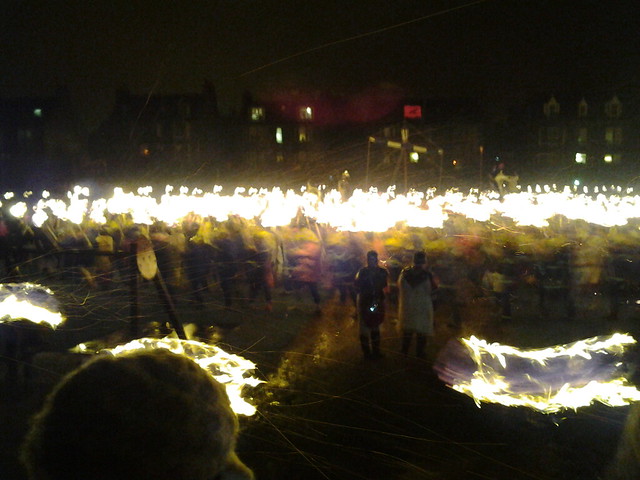
Flaming torches

Words marked with a * are reconstructions.

Proto-Celtic *texstus = heat
Old Irish (Goídelc) tess = heat, warmth
Middle Irish (Gaoidhealg) tess, tes = heat, warmth, sultriness, fervour, zeal
aintes = excessive heat
tesbach, teasbhach = heat, warmth, sultriness, ardour, fury, illess, fever
tessach = feverish heat, fever
tessaide = hot, warm, sultry
tessaigid = to warm, heat
Irish (Gaeilge) teas [tʲasˠ/tʲæsˠ] = heat, hotness, warmth; warm clothing, warm place; degree of hotness; high temperature, feverishness; ardour, passion; hottest, highest, stage
teasach = feverish heat, fever
teasaí = hot, warm; ardent, passionate; hot feverish; hot-tempered, fiery
teasaíocht = heat, warmth; ardour, passion; feverishness; hot temper, fire
teasaire = heater
Scottish Gaelic (Gàidhlig) teas [tʲes] = heat, hotness; temperature; heating (in metallurgy)
teas-mheidh = thermometer
teasach = fever, restlessness (caused by heat), mo(u)lt; thermal
teasadair / teasraiche / teasachan = heater
Manx (Gaelg) çhiass = heat, warmth
çhiassveih = thermometer
çhiasseyder = radiator, heater, warmer
çhiassid = hotness, temperature
çhiassagh = febrile, feverish
Proto-Brythonic tes = heat, warmth
Middle Welsh (Kymraec) tes = heat, warmth
Welsh (Cymraeg) tes [teːs] = heat (of the sun), warmth, (period of) warm weather, sunshine, (heat) haze, mist
cynes [ˈkənɛs] = warm (from cyn (co-) and tes)
tesaint = passion, zeal; heat, warmth
teser = (heat) haze
tesiad = a warming
tesio, tesiaf = to shine (of the sun)
tesog = hot, sunny, close sultry
Old Cornish tes = heat
Middle Cornish (Cernewec) tes = heat, warmth
Cornish (Kernewek) tes = heat
tesa = to heat
tesek = hot
tesel = thermal
Old Breton tes = heat
Middle Breton (Brezhonec) tez, tès = heat
Breton (Brezhoneg) tes = heat

Etymology: from the Proto-Indo-European *tep- (to be warm, to be hot) [source]. Celtic words from fire come from the same PIE root via the Proto-Celtic *teɸnets (fire) [source]

The English word tepid comes from the same PIE root [source].

Proto-Celtic *teɸents = heat
Old Irish (Goídelc) té, tee [tʲeː] = hot, warm; lustful, wanton; comfortable, sheltered; fervent; fierce, keen
Middle Irish (Gaoidhealg) té, te = warm, hot, comfortable, sheltered, fervent, fierce, keen, bold
Irish (Gaeilge) te [tʲɛ] = hot, warm; pungent; ardent, hot-tempered, vehement, hotfoot; affectionate, comfortable
teobhlasta = hot (spicy)
teochroí = warm-heartedness, warmth, affection
teochroíoch = warm-hearted
teocht = warmth, heat, temperature
teofholach = warm-blooded
alathe = lukewarm
téamh = heating, warming, distillation
Scottish Gaelic (Gàidhlig) teth [tʲeh] = hot
ain-teth = scorching, exceedingly hot, ardent, vehement, eager, inflamed
Manx (Gaelg) çheh = fevered, fervent, heated, hot, impassioned, passion, sexually precocious, thermal, warm
çhiow = to warm up, warm, warming up, inclined, yearned, heat,warmed

Etymology from the Proto-Indo-European *tep- (to be warm) [source].

Proto-Celtic *gʷrensos, *gʷrīnnso- = heat
Old Irish (Goídelc) grís = heat (of the sun), fire, embers
Middle Irish (Goídelc) grís, gríss = heat, fire, embers, hot ashes; glow, ardour, valour, passion
Irish (Gaeilge) gríos [ɡɾʲɪsˠ] = hot ashes, embers; heat, glow, ardour; rash, blotches (on skin)
gríosach = glowing
gríosóg = spark from embers, inflamed spot, rash
gríosóir = inciter, agitator
gríostaitneamh = burning, rosy, glow
gríosú = inflammation, incitement, stimulation
Scottish Gaelic (Gàidhlig) grìos [grʲiːs] = begging, entreaty; heat, embers, redness, inflammation, provocation
grìosad [grʲiəsəd] = begging, beseeching, entreating, cursing, swearing, stirring up a fire, provoking
Manx (Gaelg) gree [ɡriː] = heat
greeshagh = arouse (passions), arousing, vibrant, ember
greeshaghey = to aggravate, chivvy, set on, whip up, arouse (passions)
Middle Welsh (Kymraec) gwres, ywres, gỼres = heat, warmth
guressaei = to heat, warm
guressauc, gwressawc = hot, very warm
gwresoca, gwresogi = to make warm or hot
Welsh (Cymraeg) gwres [ɡwreːs] = heat, warmth, hot weather, feverishness, itching; intensity (of feeling), passion, lust, vehemence, ardour, fervour, zeal, enthusiasm
gwresâf, gwresáu = to heat, warm
gwresio, gwresu = to become heated, heat, generate heat, emit warmth
gwresog = hot, very warm, summery, heat-giving, calorific
gwresogi = to make warm or hot, provide warmth, heat
Middle Cornish (Cernewec) gwres = heat
Middle Breton (Brezhonec) groès, groës = heat
Breton (Brezhoneg) gwrez = heat, temperature, ardent, fervent, blazing
gwrezus = calorific
gwrezverk = temperature

Etymology possibly from the Proto-Indo-European *gʷʰer- (warm, hot) [source]. English words from the same PIE root include furnace, gore, thermal and warm [source].

Proto-Celtic *teɸesmis/*tefesmi- = heat
Middle Welsh (Kymraec) tui, tvymyn, tỼym, twym [tuːɨ̯m/tʊi̯m] = warm, (quite) hot, infectious, fervent, intense, passionate, heated, unpleasant, dangerous, heat, fever
twymna, tỼymaỼ, twymo = to make/become warm or hot
twymder = warmness, warmth, hotness, heat
twymyn = fever
Welsh (Cymraeg) twym [tuːɨ̯m/tʊi̯m] = warm, (quite) hot, infectious, fervent, intense, passionate, heated, unpleasant, dangerous, heat, fever
twym(n)af, twym(n)o = to make/become warm or hot, to warm, to heat, to ferment
twymder = warmness, warmth, hotness, heat
twym(n)wr, twymydd = person or thing that warms, heater
twymyn = fever, warm drink
Old Cornish toim, tum = hot, warm, heated
Middle Cornish (Cernewec) tom = hot, warm
tomder = heat, warmth
tomma = to make warm, to warm
tubm = hot, burning
tubma = to make hot, to heat, to warm
Cornish (Kernewek) tomm, tobm = hot, warm
tomm y wos, tobm y woos = hot-blooded
tomma, tobma = to warm, become warm
tommhe, tobmhe = heat, warm
tommheans, tobmheans = heating
tommheans ollvysel, tobmheans ollvesel = global warming
Middle Breton (Brezonec) tomm, toem, tuem = hot, warm, heat
toemaff, tomaff = to heat, to warm up
toemder, tomder = heat
Breton (Brezhoneg) tomm [tɔmː] = hot, warm
tommañ = to heat, to warm up, to be fond of, to become attached to
tommder = heat
tommerez = stove
tommerezh = boiler room

Etymology: from the Proto-Indo-European *tep- (to be warm, to be hot) [source]. Words for fire in Celtic languages come from the same root.

Proto-Celtic *brutus = fermentation, boiling heat
Old Irish (Goídelc) bruth [bruθ] = boiling, fury, glow, heat, rage, vehemence
Middle Irish (Goídelc) bruth = (boiling) heat, blaze, glow, anger, fury, excitement, fervour, valour
bruthach = fiery, furious, vigorous
bruthmar = fiery, raging, furious, ardent
Irish (Gaeilge) bruth [bˠɾˠʊ(h)] = heat, rash, eruption, nap, pile, covering, surf
bruthach = hot, fiery, napped, fluffy
bruthaire = cooker
bruthán = (slight) rash
brufar = ardent, fiery, lively
Scottish Gaelic (Gàidhlig) bruth [bruhθ] = hotness (of skin), hot and confined space, red-hot object, heat, fire
bruthainn [bruhɪn̪ʲ] = sultriness, sultry heat
bruthairneach [bruhər̪n̪ʲəx] = muggy, sultry, sweltry
bruich = to cook, boil
Manx (Gaelg) brooan = rash, eruption, skin disorder
Old Welsh brut = hot, warm
Middle Welsh (Kymraec) brytt, brwt, brwd = hot, warm, heat
brytio = to heat, warm, boil
Welsh (Cymraeg) brwd [bruːd] = hot, warm. heated, ardent, boiled, fervent, zealous, heat, brew(ing),
brwdfrydu = to enthuse, speak or feel with fervour
brwdfrydedd = zeal, enthusiasm, fervour, fanaticism
brwdfrydig = zealous, enthusiastic, fervent, ardent
brwdias = hot, heated, fiery, parboiling
brydio = to heat, warm, boil
Old Cornish bredion = to boil
Middle Cornish (Cernewec) bredion, bridzhen = to boil
Cornish (Kernewek) bryjyon = to boil
bryjys = boiled
Old Breton brot = ember
Middle Breton (Brezonec) broud = ember, excitement
Breton (Brezhoneg) broud [bruːt] = ember, excitement
broudañ [bruˈdɑːdɛn] = to burn, scald
broudus [ˈbruːdys] = stimulant

Etymology: from the Proto-Indo-European *bʰrewh₁- (to boil, brew), from *bʰer- (to boil) [source]. Words for the same roots include bread, brew, broth, burn and fervor in English [source].

Proto-Celtic *kʷoxtos = cooked, hot
Proto-Brythonic *poɨθ [ˈpoɨ̯θ] = cooked, hot
Middle Welsh (Kymraec) poeth = hot, burning
poethi = to heat, warm, burn, scorch, roast
Welsh (Cymraeg) poeth [poːɨ̯θ/pɔi̯θ] = hot, burning, fervent, intense, lustful, roast, cooked
poethaf, poethi = to heat, warm, burn, scorch, roast
poethder = heat, hotness, burning, inflammation, ardour, zeal, fervour
poethineb = passion, ardour, zeal, hot-headedness
Middle Cornish (Cernewec) poth = hot
Cornish (Kernewek) pooth = hot, scorching
potha = to heat, scorch
Middle Breton (Brezonec) poaz = cooked, grilled, burning
poazat, poazet = to cook, bake
Breton (Brezhoneg) poazh [bruːt] = cooked, burned, burning
poazhadur = cooking, baking, roasting
poazhañ = cooking, baking, roasting
poazhat = cooked
poazherez = cooker

Etymology: from the Proto-Indo-European *pokʷ-tó-s from *pekʷ- (to cook, ripen) [source]. Words for the same roots include apricot, biscuit, cook, cuisine and kitchen in English [source].

Words marked with a * are reconstructions.

Sources: Wiktionary, Am Faclair Beag, Online Manx Dictionary, Teanglann.ie, eDIL – Electronic Dictionary of the Irish Language, In Dúil Bélrai English – Old Irish glossary, Geiriadur Prifysgol Cymru, Gerlyver Kernewek, Lexicon Cornu-britannicum: A Dictionary of the Ancient Celtic Language of Cornwall, Dictionaire Favereau, TermOfis, Le dictionnaire diachronique du breton, Etymological Dictionary Of Proto Celtic

Parts and Portions

Words for part, portion, piece, thing and related words in Celtic languages.

Words marked with a * are reconstructions.

Puzzle pieces

Proto-Celtic *rannā = part
Old Irish (Goídelc) rann = part (of a whole)
randatu = the property of belonging to a part of speech
rannaid = to divide (into parts), to apportion
ranngabáil = participle
Middle Irish (Gaoidhealg) rann, rand, ran, rán = part, lot, portion, faction, alliance
Irish (Gaeilge) rann [ɾˠanˠ] = part, side (in dispute), partition
rannach = apportioning, sharing, open-handed
rannadóir = divider, sharer
rannán = division
rannóg = section
rannpháirt = participation, part, share
roinn = share, portion, distribution, dealing, trading, division
Scottish Gaelic (Gàidhlig) rann [r̪ˠaun̪ˠ] = stanza, quatrain, verse, bond, deed, division, part, portion, section
rann-phàirt = participation, portion, participle
roinn [r̪ˠɤin̪ʲ / r̪ˠɤn̪ʲə] = dividing, partitioning, section, share, allotment, partition, department, division
roinneadair = divider, divisor, sorter
Manx (Gaelg) rheynn = divide, classify, distribute, dispense, share
fo-rheynn = section
so-rheynn = divisible
Proto-Brythonic *rrann = part
Middle Welsh (Kymraec) rann = part
Welsh (Cymraeg) rhan [r̥an] = part (of something), portion, division, element, constituent, component
rhanadwy = divisible, dividend
rhanedig = shared (out), divided, parted, split, separate
rhannu = to divide, separate, part, divide
Old Cornish radn = part, portion
Cornish (Kernewek) radn = lot, part, portion, role, share
ranna = to share
Middle Breton (Brezonec) rannaff = to share, separate, divide, pronounce, split
Breton (Brezhoneg) rann [rãnː] = part, fraction, division, slot
rannañ [ˈrã.nːã] = to share, separate, divide, pronounce, split
ranned [ˈrã.nːet] = dividend
ranngalon [ʁɑ̃nˈɡɑːlɔ̃n] = deep sorrow, desolation, heartbreak
rann

Etymology: from the Proto-Indo-European *per- (to sell) [source], which is also the root of such English words as depart, jeopardy, parcel, part, partition and portion [source].

Proto-Celtic *kʷezdis = piece, portion
Old Irish (Goídelc) cuit [kudʲ] = part, portion, share
cuit adaill, cuit adíll = a passing visit, a brief visit
cuitigid = to share, partake
Middle Irish (Gaoidhealg) cuit = share, part, portion
cuit(gi)d = to share, partake, participate
Irish (Gaeilge) cuid [kɪdʲ] = part (of whole), share, portion, some,
cuideach = wealthy, prosperous
cuideachta = company, companionship, social amusement, fun
cuideachtaigh = to bring together, associate
cuideachtúil = companionable, sociable
cuideachtúlacht = sociableness
cuidí = component
cuidigh = to share, help, requite, repay (usually for misdeed), do for, do away with
cuiditheoir = helper, supporter, seconder
cuidiú = to help, assistance
cuidiúil = helpful, cocky, conceited
Scottish Gaelic (Gàidhlig) cuid [kudʲ] = portion, share, allotment, ration, effects, means, belongings, some (people), accommodation, victuals
cuid-eigin [kudʲegʲɪn] = someone, somebody
cuideachail [kudʲəxal] = helpful, constructive, subsidiary
cuideachair [kudʲəxɛrʲ] = auxiliary, helper
cuideachas [kudʲəxəs] = help, suppprt
cuideachd [kudʲəxg] = company, society, throng, troop; also, too, jointly, together
cuideachdadh [kudʲəxgəɣ] = accompanying
cuideag [kudʲag] = small portion / share
Manx (Gaelg) cooid = certain, some, stuff, assets, goods, helping, means, part, possessions, proportion, resources
cooidjagh = accompanying, jointly, together, inclusive
cooidjaghtagh = companion, companionable
Gaulish *pettiā, = (?)
Pictish *ᚚᚔᚈ (pit) = (a parcel of) land, a portion (?) – found in placenames like Pitlochry
Proto-Brythonic *peθ = part
Old Welsh (Kembraec) ped = thing, object
Middle Welsh (Kymraec) peth = thing, object
Welsh (Cymraeg) peth [peːθ] = thing, object, material, suff, substance, device, instrument, personal possessions, belongings, tools, equipment, something, anything
peth(eu)ach = (unimportant) things, trifles
pethdod = thingness, thinghood, reality, substantiality
petheiddio = to reify, make real or concrete
Middle Cornish (Cernewec) peth, pêth, peyth, pŷth = thing, something, article
pethow = things, riches, wealth
Cornish (Kernewek) pyth, peth [pɪːθ / pɛθ] = commodity, material, matter, possession, property, thing, that which, what, appliance
pyth ha da, peth ha da = possessions
pythek, pethek = concrete
pythow, pethow = belongings, wealth
Middle Breton (Brezonec) pez, pezz = piece, bit, part
Breton (Brezhoneg) pezh [peːs] = piece, bit, room, part, what
pezhiad = (big) piece, piece (of)
pezhig = (an) ugly piece

Etymology: unknown, possibly borrowed from a non-Indo-European substrate source [source]. Words from the same roots via Gaulish *pettyā and Latin pettia (piece, portion), include piece in English, pièce (room, patch, piece, play, document) in French, peza (piece, fragment, part) in Galician, pieze (piece, part) in Spanish, biisi (song) in Finnish, and ピース (pīsu – piece) in Japanese [source].

Middle Irish (Gaoidhealg) písa, pissa = piece, fragment, coin
Irish (Gaeilge) piosa [ˈpʲiːsˠə] = piece, bit, patch, piece-work, literary or musical composition, coin
piosaáil = to piece together, patch
Scottish Gaelic (Gàidhlig) pìos [piːs] = bit, piece, sandwich, piece, (musical) composition, hunk (person)
pìosach [piːsəx] = in pieces / fragments
pìosail [piːsal] = sexy, attractive
pìosan [piːsan] = small piece / bit
Manx (Gaelg) peesh = bit, cutting, patch, piece, length (of thread), parcel
Cornish (Kernewek) pis = piece

Etymology: from Middle English pece (piece, morsel, bit), from Anglo-Norman piece (piece, bit, part), from Late Latin petttia (piece, portion), from Gaulish *pettyā, from Proto-Celtic *kʷezdis (piece, portion) – see above [source].

Proto-Celtic *darnos, *darnā = piece, part
Old Irish (Goídelc) drécht [dʲrʲeːxt] = portion, part
Middle Irish (Gaoidhealg) drecht, drécht = part, portion, section; poem, literary composition
dréchtach = numerous; skilled in song or poetry
dréchtfaid = to divide up
Irish (Gaeilge) dréacht [dʲɾʲeːxt̪ˠ]= part, portion, draft, detachment, number; (literary) piece, composition; draft
dréachtach = composer, poet; skilled in/diligent at compostion
dréachtaigh = to draft
dréachtín = versicle, stanza
dréachtóir = drafter, draughtsman (of documents)
Scottish Gaelic (Gàidhlig) dreachd [drɛxg] = draft
dreachd-aithisge = draft report
dreachd-dhealbh = working drawing
Manx (Gaelg) draght, dreaght = draft
draghtey = to draw up
dreaght feeleeaght = a piece of poetry
Gaulish *darnā = piece
Proto-Brythonic *darn = piece (?)
Middle Welsh (Kymraec) darn = piece, fragment, part
darnaw, darnio, darnu = to break or tear in pieces
Welsh (Cymraeg) darn [darn] = piece, fragment, part, coin, passage
darn(i), darnu = to break or tear in pieces
darn(i)edig = broken or torn to pieces
darniog = broken, shattered, fragmentary
Middle Cornish (Cernewec) darn = fragment, piece
pethow = things, riches, wealth
Cornish (Kernewek) darn = bit, fragment, part, piece
darnas = portion
Middle Breton (Brezonec) darn = fragment, part
darnaou = broken, very tired
darnaouet = torn to pieces, very tired, bored
Breton (Brezhoneg) darn [peːs] = fragment, part, some
darnan, darnañ = to fragment, chip, shorten
darnaou = broken, very tired
darnaouin = to break
darnek = partial

Etymology: from PIE *der- (to split, separate, tear, crack, shatter). The French word darne (steak, fillet) was borrowed from Breton darn (fragment, part, some). Words from the same PIE root include dermal, tear and tier in English, and tirar (to throw) in Spanish, zehren (to live on, feed on, undermine, wear out) in German, and драть [dratʲ] (to tear to pieces) in Russian [source].

The Fastest Way to Learn Japanese Guaranteed with JapanesePod101.com

Sources: Wiktionary, Am Faclair Beag, Online Manx Dictionary, Teanglann.ie, eDIL – Electronic Dictionary of the Irish Language, In Dúil Bélrai English – Old Irish glossary, An Etymological Dictionary of the Gaelic Language, Geiriadur Prifysgol Cymru, Gerlyver Kernewek, Dictionaire Favereau, TermOfis, English – ProtoCeltic WordList (PDF), Etymological Dictionary Of Proto Celtic

Unlimited Web Hosting - Kualo

Ale and Beer

Words for ale, beer and related words in Celtic languages.

beer haul

Proto-Celtic *lindo- = drink
Gaulish linda = drink
Old Irish (Goídelc) linn [ˈl͈ʲin͈ʲ] = drink, liquid, brew, ale, beer, intoxicating drink
lind = liquid, drink, ale
Irish (Gaeilge) leann = (pale) ale, beer; liquid, fluid
lionn = humour (of the body)
lionndubhach = melancholy, depressed
leannadóir = ale-merchant
leannlus = hop
leann bó = milk
leann donn = brown ale
leann dubh = stout
leann piorra = perry
leann sinséir = ginger ale
leann úll = cider
iarleann = small, weak beer
seomra leanna = tap-room
teach leanna = ale-house
Scottish Gaelic (Gàidhlig) leann [l̪ʲãũn̪ˠ] / lionn [l̪ʲũːn̪ˠ]= ale, beer; humour (of the body); fluid, liquid
lionn-dubh = dejection, melancholy
lionn searbh = bitter (ale)
lionn-ubhal = cider
Manx (Gaelg) lhune = ale, beer
lhune doo = stout, porter
lhune freillagh = lager
lhune jinshar = ginger beer
lhune ooyl = cider
lhune peear = perry
lhune sharroo = bitter (beer/ale)
shamyr lhionney = bar room, lounge bar, tap room
thie lhionney = ale house, pub
Middle Welsh (Kymraec) llynn = drink
Welsh (Cymraeg) llyn [ɬɨ̞n/ɬɪn] = drink, beverage, intoxicating liquor, cordial, juice; liquid, humour
llyn afalau = cider, apple juice
llyn y bustl = bile
llyn gellyg = perry
Old Cornish lin = fluid, liquid, lotion
Cornish (Kernewek) lin = fluid, liquid, lotion
lin-golghi = washing detergent
lin leur = floor cleaner
lin sebon = detergent, washing-up liquid
Old Breton linnou = drink
Breton (Brezhoneg) liñvenn = liquid

Etymology: possibly from the Proto-Indo-European *liH-nd-o- [source].

Proto-Celtic *kormi, *kurman = beer
Gaulish curmi, curmím, κόρμα (kórma), κούρμι (koúrmi) = beer
Old Irish (Goídelc) cuirm = ale, beer
Irish (Gaeilge) coirm, cuirm [kɞɾʲəmʲ] = ale, drinking-party, feast, banquet
coirmeach = ale-drinking, festive
coirmtheach = ale-house
coirm cheoil, ceolchoirm = concert
Scottish Gaelic (Gàidhlig) cuirm [kurʲum] = feast, banquet, entertainment; ale, beer (archaic)
co(i)rm = ale, beer
cuirm-chiùil = concert
cuirm-chnuic = picnic
Manx (Gaelg) cuirrey = banquet, feast
cuirrey kiaull = concert
Proto-Brythonic *kuruβ ̃, *kurβ̃ = beer, ale
Old Welsh curum = beer, ale
Middle Welsh (Kymraec) kuref, kwryf, kwrwf, cwrwf, cyryw = beer, ale
Welsh (Cymraeg) cwrw [ˈkʊru / ˈkuːru] = beer, ale
cwrw Adda = Adam’s ale, water
cwrw casgen = draught beer
cwrw coch = brown ale
cwrw cychwyn = a drink of beer on setting out on a journey, one for the road
coesau cwrw = a drunken gait (“beer legs”)
Old Cornish coref, coruf = ale, beer
Middle Cornish (CerneweC) cor = ale, beer
coref = ale, beer
Cornish (Kernewek) korev, kor = ale, beer
Breton (Brezhoneg) korev = ale, beer

Etymology: possibly from the Proto-Indo-Eurpean *kremH- (to burn) [source], or *ḱr̥h₃-m- (porridge, soup), or *ḱh₁erh₂- (to mix) [source].

The Latin word cervēs(i)a (beer) comes from the same Proto-Celtic root, as do words for beer in several Romance languages, including Spanish (cerveza), Portuguese (cerveja), Galician (cervexa) and Catalan (cervesa) [source].

More about words for beer in European languages.

Irish (Gaeilge) beoir [bʲoːɾʲ] = beer, a woman (rare, colloquial)
beoir bhairille = draught beer
beoir shinséir = ginger beer
Scottish Gaelic (Gàidhlig) beòir [bjɔːrʲ] = beer
beòir chaol = small beer
roipean beòir = beer moustache
Manx (Gaelg) beer = beer
Middle Welsh (Kymraec) ber, berr, berre = beer, ale
Welsh (Cymraeg) bir = beer, ale
Breton (Brezhoneg) bier = ale, beer

Etymology (Irish, Scottish Gaelic and Manx): from the Old Norse bjórr, from the Proto-Germanic *beuzą (beer), from the Proto-Indo-Eurpean *bʰews- (dross, sediment) [source].

Etymology (Welsh): from the English beer, from the Middle English bere (beer), from the Old English bēor (beer), from the Proto-West Germanic *beuʀ (beer), from the Proto-Germanic *beuzą (beer) [source].

Etymology (Breton): from the French bière (beer), from the Old French biere (beer), from the Middle Dutch bier/bēr (beer), from the Frankish *bior (beer), from Proto-Germanic *beuzą (beer) [source].

Words marked with a * are reconstructions.

Sources: Wiktionary, Am Faclair Beag, Online Manx Dictionary, Teanglann.ie, eDIL – Electronic Dictionary of the Irish Language, In Dúil Bélrai English – Old Irish glossary, Geiriadur Prifysgol Cymru, Gerlyver Kernewek, Dictionaire Favereau, TermOfis, English – ProtoCeltic WordList (PDF), Etymological Dictionary Of Proto Celtic

Blubrry podcast hosting

Cloaks and Veils

Words for cloak, blanket and related things in Celtic languages.

The Pumpkin Whisperer

Words marked with a * are reconstructions.

Proto-Celtic linnā = veil, cloak
Gaulish linna = veil, cloak
Old Irish (Goídelc) lenn = cloak, mantle
Middle Irish (Gaoidhealg) lenn = cloak, mantle
Irish (Gaeilge) leann = cloak, mantle
Old Welsh lenn = curtain, veil, screen, covering, sheet
Middle Welsh (Kymraec) lenn = curtain, veil, screen, covering, sheet
Welsh (Cymraeg) llen [ɬɛn] = curtain, hanging, veil, screen, covering, canopy, tapestry, sheet, pall, mantle, shawl
llen amdo = winding-sheet, shroud
llen iâ = ice sheet
llen olaf = final curtain (after a theatrical performance)
llen rhwydog = net curtains
llen dân = safter curtain
Old Cornish len = blanket, cloth
Middle Cornish (Cernewec) len = blanket, cloak, whittle
Cornish (Kernewek) lenn = blanket, cloth
lenn dhu = blind
brithlen = tapestry
Breton (Brezhoneg) lenn = flag, coat
lenn-wele = bedspread, bed-cover

Etymology: possibly from the Proto-Indo-European *linom (flax) [source].

Proto-Celtic *brattos = cloak, mantle
Old Irish (Goídelc) bratt [ˈbr͈at] = cloak, mantle
brattach = banner, clothing, flag
Middle Irish (Gaoidhealg) brat, bratt = cloak, mantle, cover, cloth
brattach = having a clock, mantled; clothing, shielf, banner, standard
Irish (Gaeilge) brat [bˠɾˠɑt̪ˠ / bˠɾˠat̪ˠ] = mantle, cloak, covering, curtain
brata (le) = carpeted, covered (with)
aerbhrat = atmosphere
brat brád = neckerchief
bratach = flag
bratóg = small cloak, covering, rag, flake
bratógach = ragged, in rags
Scottish Gaelic (Gàidhlig) brat [brahd] = carpet, mat, cloak, mantle, cover(ing), sheet, drape, drapery
brat-cùil = backdrop
brat-deighe = ice-sheet
brat-dorais = doormat
brat-dubhair = awning
brat-dorais = tapestry
brat-gréise = bed cover, coverlet
brat-ùrlair = carpet, rug, mat
bratach = flag, banner, colours, ensign
Manx (Gaelg) brat = covering, cover, coat, layer, film, pall, curtain, cloak, sheet, wrap, coating
brat jaagh = smokescreen
brat laare = carpet
brat lhiabbagh = coverlet, bedcover
brat peintey = coat of paint
brattagh = banner, colour, ensign, flag
Middle Welsh (Kymraec) brat, bratt = rag, clout, tatter, piece, apron, pinafore
brethyn, bredhyn = woollen, cotton, cloth, covering, bedspread, hanging, tapestry
Welsh (Cymraeg) brat = rag, clout, tatter, piece, apron, pinafore (possibly borrowed from Irish)
brethyn = woollen, cotton, cloth, covering, bedspread, hanging, tapestry
brethyn arwyl = funeral pall, bier-cloth
brethyn bord = tablecloth
brethyn cyfrwy = saddlecloth
brethyn neuadd = tapestry
Old Breton brothrac = skirt
Middle Breton broz = skirt
Breton (Brezhoneg) brozh = skirt
brozh-dan = petticoat, underskirt
korf-brozh = bodice, corset

Etymology: unknown [source].

Old Irish (Goídelc) culpait = hood, cowl
culpatach = hooded
Middle Irish (Gaoidhealg) culpait, clupait = hood, cowl
culpatach = having a hood, hooded, folded
Irish (Gaeilge) clupaid [ˈklˠʊpˠədʲ] = fold, tuck (in cloth)
clupaideach = gathered, puckered, wrinkled
Scottish Gaelic (Gàidhlig) crùbag [kruːbag] = wrinkle(d), bent, shrunk, fold, plait, gather
criopag [krʲihbag] = wrinkle, clew, hag, horrible old woman
Manx (Gaelg) craplag = fold, furrow, line, wrinkle
Proto-Brythonic *külkɨd = ?
Old Welsh cichet = coverlet, sheet, blanket, bedclothes, bed, couch
Middle Welsh (Kymraec) kylchet, cylched, kylched = coverlet, sheet, blanket, bedclothes, bed, couch
Welsh (Cymraeg) cylched [ˈkəlχɛd] = coverlet, sheet, blanket, bedclothes, bed, couch
cylchedlen = valanec, curtain, hangings
Cornish (Kernewek) kolghes = duvet, quilt
Old Breton (Brethonoc) colcet = quilt
Middle Breton (Brezonec) golchet = quilt
Breton (Brezhoneg) golch’ed [ˈɡolxet] = duvet, quilt
golch’edad = contents of a duvet
golch’edenn = pad (under a saddle, etc), straw mattress
golch’edenniñ = to fill with a pad

Etymology: from Latin culcita (mattress, pillow, cushion), which is of uncertain origin. Words from the same roots include quilt in English, and couette (duvet, quilt) in French [source].

The Fastest Way to Learn Japanese Guaranteed with JapanesePod101.com

Sources: Wiktionary, Am Faclair Beag, Online Manx Dictionary, Teanglann.ie, eDIL – Electronic Dictionary of the Irish Language, In Dúil Bélrai English – Old Irish glossary, Geiriadur Prifysgol Cymru, Gerlyver Kernewek, Dictionaire Favereau, TermOfis, English – ProtoCeltic WordList (PDF), Etymological Dictionary Of Proto Celtic

Unlimited Web Hosting - Kualo

Circles

Words for circle, ring and related words in Celtic languages.

There are three words for circle in Proto-Celtic: *kerk-injo-, *kerkinn- and *kuro-. They don’t appear to have descendents in modern Celtic languages.

Sabhal Mòr Ostaig

Proto-Celtic *ānniyos = ring
Old Irish (Goídelc) áinne = ring
Middle Irish (Gaoidhealg) áinne, ánne = ring, circuit, anusm posterior
Irish (Gaeilge) fáinne [ˈfˠɑːɲə/ˈfˠæːn̠ʲə] = ring, circle, ringlet, curl, halo
fáinneach = annular, ring-like, ringed, ringleted, whorled, adorned, beautiful
fáinneadóir = ring-maker, dealer in rings
fáinneáil = (act of) circling, fluttering
fáinneán -= ampitheatre, circus
fáinneog = ringlet, curl
fáinneoir = person who rings animals
fáinnigh = to ring, encircle, dawn
fáinniú = encirclement, dawning
Scottish Gaelic (Gàidhlig) fàinne [faːn̪ʲə] = ring, ringlet, circle
fàinneach [faːn̪ʲəx] = pertaining to or like a ring, ringed
fàinneachadh [faːn̪ʲəxəɣ] = (act of) curling, ringing
fàinneag [faːn̪ʲag] = small ring, ringlet
Manx (Gaelg) fainey = circle, puck, whorl, wreathe, ring
fainnit = ringed

Etymology: from Proto-Indo-European *h₁eh₂no- (ring). Cognate with the Latin ānus (ring, anus), and anus in English, French, Catalan and Romanian [source].

The English word phon(e)y (fraudulent, fake) possibly comes from the old slang word fawney (a gilt brass ring used by swindlers; a finger ring), from the Irish fáinne (ring) [source].

Old Irish (Goídelc) circul = circle, orbit, zone, hoop
Middle Irish (Gaoidhealg) circul = circle, orbit, zone, hoop
Irish (Gaeilge) ciorcal [ˈkiɾˠkəlˠ] = circle
ciorcalach = circular, cyclic
ciorcalaigh = to encircle, circle
ciorclán = circular (letter)
Scottish Gaelic (Gàidhlig) cearcall [kʲɛrxgl̪ˠ] = circle, cycle, ring (circus, etc), hoop
cearclach = circular, cyclic(al)
Manx (Gaelg) kiarkyl = ring, circle, rim, coterie
kiarklagh = cyclic(al), rotund, circulatory
kiarkylagh = circular
daachiarkyl = bicycle
Proto-Brythonic *kɨrxl [aˈbɛːr] = circle, ring
Old Welsh circhl = circle, ring
Middle Welsh (Kymraec) kylch, kylc = circle, ring
Welsh (Cymraeg) cylch [kɨ̞lχ/kɪlχ] = circle, ring, compass, scope, range, circumference, environs, surroundsing, precints, zone, belt, hoop, social circle, orbit, revolution, period, cycle, halo
cylchai = halo
cylchaidd = circular, round(ish)
cylchig = circlet, small circle
cylch(i)ol = circular, orbital, surrounding, itinerant, periodic, cyclic
cylchu, cylch(i)af, cylcho = to hoop, rim (a wheel)
Cornish (Kernewek) kelgh, kylgh = circle, hoop, round, ring
kylghek = circular
kylghigow = hoop-la
kylghlavar = circumlocution
kylghvusur = perimeter
Middle Breton (Brezonec) kelc’h = circle, disc, halo
kelc’hdro = orbit
kelc’hennva = ampitheatre
kelc’hiad = circumference
kelc’hiek = circular
Breton (Brezhoneg) kelc’h = circle, halo
kelc’hiañ = to surround, define, figure out
kelc’hier = compass
kelc’htreiñ = to orbit
kelc’htro = orbit
kelc’htroel = orbital

Etymology: from the Latin circulus (circle), from circus (circle, ring, racecourse, circus), from the Ancient Greek κίρκος (kírkos – circle, ring) from the Proto-Indo-European *(s)ker- (to bend, turn) [source].

Words marked with a * are reconstructions.

Sources: Wiktionary, Am Faclair Beag, Online Manx Dictionary, Teanglann.ie, eDIL – Electronic Dictionary of the Irish Language, In Dúil Bélrai English – Old Irish glossary, Geiriadur Prifysgol Cymru, Gerlyver Kernewek, Dictionaire Favereau, TermOfis, English – ProtoCeltic WordList (PDF), Etymological Dictionary Of Proto Celtic
Blubrry podcast hosting

Battle

Words for battle and related things in Celtic languages.

St Fagan's National Museum of Wales

Words marked with a * are reconstructions.

Proto-Celtic *katus = battle
*Katutigernos = “battle lord/master” (male name)
*Katuwelnāmnos = “battle ruler” (male name)
Gaulish catu, katu = battle
Katutigernos (male name)
Primitive Irish ᚉᚐᚈᚈᚒ (cattu) = battle
Old Irish (Goídelc) cath [kaθ] = battle, fight, troop, battalion
cathach = bellicose, warlike
cathaigecht = warfare
cathaige = warrior
cathaigid = to fight, give battle
cocad = war, conflict (from com (with) and cath)
Middle Irish (Gaoidhealg) cath, = battle, fight, troop, battalion
cathach = bellicose, vehement
cathaigecht = warfare
cathaige = fighter, warrior
cathaigid = to fight, give battle
cocad = war, conflict, act of waging war
Irish (Gaeilge) cath [kah] = battle, conflict, trial, battalion
cathach = battling, warlike
cathaí = battler, fighter
cathaigh to battle, fight, tempt
cogadh [ˈkɔɡə/ˈkʌɡu] = war, warfare
Scottish Gaelic (Gàidhlig) cath [kah] = battle, fight, contest, struggle, battalion, warfare
cathach = warlike
cath nan con = dogfight
cath-thuagh = battle axe
blàr-catha = battlefield
gairm-chatha = warcry
cogadh [kogəɣ] = war, fighting, warfare
Manx (Gaelg) cah = military action battle
crooseyr cah = battle-cruiser
caggey [ˈkaːɣə] = war, fight, scrap, combat, campaign, clash, battle
Proto-Brythonic *kad = battle
*Kadüdɨɣern (male name)
*Kaduwallọn (male name)
Old Welsh Categern, Catigern (male name)
Cadwallawn (male name)
Categern, Catigern (male name)
Middle Welsh (Kymraec) kad, kat = battle
Cattegirn (male name)
Catgollaun, Catguallaun, Katwallaun (male name)
Welsh (Cymraeg) cad [kaːd] = battle, conflict, war, strife, struggle, trouble, army, host, throng, multitude, band
cad ar faes = at loggerheads
cadfan = battlefield
Cadfan (male name) = 6th century Breton missionary to Wales [more details]
Cadeyrn (male name)
Cadwallon (male name)
Middle Cornish (Cernewec) cad, câs = battle, war
cadlys = camp, intrenchment
cadwur = warrior, soldier, champion
Cornish (Kernewek) kas = armed conflict, battle, war
kasor, kasores = fighter
kasorek = militant
Kaswallawn (male name)
Old Breton Kaduuallon, Catuuallon (male name)
Middle Breton (Brezonec) kad = combat
Breton (Brezhoneg) kad = battle
Kadwallawn (male name)

Etymology: possibly from the Proto-Indo-European *kéh₃tus (fight), which is also the root of the German words Hader (dispute, quarrel) and hadern (to bicker, quarrel, struggle) [source].

Proto-Celtic *agrom = slaughter, battle
Old Irish (Goídelc) ár = slaugter
Middle Irish (Gaoidhealg) ár = slaugter, carnage, defeat, destruction
Irish (Gaeilge) ár [ɑːɾˠ] = slaughter, havoc
ármhá = battlefied, scene of slaughter
ármhach = slaughter
ármhar = slaugterous, destructive
Scottish Gaelic (Gàidhlig) àr [aːr] = battle, battlefield, slaughter, death
àr-fhaich, àr-mhagh = battlefield
àrmhach = destructive
Manx (Gaelg) haar [ˈhɛːr] = slaughter, slaughtering
Proto-Brythonic *aɨr [aɨ̯r] = battle, carnage
Old Welsh hair = battle, fight, war
Middle Welsh (Kymraec) aer = battle, fight, war
aerbeir, aerbair = battle-lord, battle-leader
aerbais = coat of mail
aerbar = battle-spear, spear of slaughter
aerbybyr = bright, fine, valiant, zealous, strong in battle
aerdawelỽch, aerdawelwch = silence after battle
Welsh (Cymraeg) aer [aːɨ̯r / ai̯r] = battle, fight, war, skirmish, carnage, slaughter, army
Old Cornish hair = slaughter, battle
Middle Cornish (Cernewec) ar, hâr, har = slaughter, battle
Old Breton (Brethonoc) air = battle, combat, carnage, massacre
airma = battlefield
Middle Breton (Brezonec) hair, aer, ár = battle, combat, carnage, massacre
aerva, aerfa, ármag = battlefield
Breton (Brezhoneg) aer [ɛːr] = battle, combat, carnage (archaic)
aergi [ˈɛrɡi] = fighting dog, war dog, warrior (archaic)
aerva [ˈɛr.va] = battlefield (archaic)

Etymology: from the Proto-Indo-European *h₂eǵros (field, pasturage), possibly from *h₂eǵ- (to drive). Words from the same roots include act, action, agent and agile in English [source].

The Fastest Way to Learn Japanese Guaranteed with JapanesePod101.com

Sources: Wiktionary, Am Faclair Beag, Online Manx Dictionary, Teanglann.ie, eDIL – Electronic Dictionary of the Irish Language, In Dúil Bélrai English – Old Irish glossary, Geiriadur Prifysgol Cymru, Gerlyver Kernewek, Dictionaire Favereau, TermOfis, English – ProtoCeltic WordList (PDF), Etymological Dictionary Of Proto Celtic

Unlimited Web Hosting - Kualo

Wool

Words for wool and related words in Celtic languages.

Glorious wool

Proto-Celtic *ulanā, *wlanā, *w(u)lāno-, *w(u)lano- = wool
Gaulish *wlanā = wool
Old Irish (Goídelc) olann [ˈolan͈] = wool
ollach = woolly
Irish (Gaeilge) olann [ˈɔlˠən̪ˠ] = wool, woolly hair, mop of hair; woollen
olanda = woolly
olannacht = woolliness
olanntáirgeach = wool-bearing
ollach = woolly, fleecy
ollacht = woolliness, fleeciness
Scottish Gaelic (Gàidhlig) olann [ˈɔl̪ˠən̪ˠ] = wool (usually while on sheep)
ola = woollen, made of wool
olach = woolly, fleecy
Manx (Gaelg) ollan = wool
ollanagh, olley = woolly
ollanaght = woolliness
Proto-Brythonic *gwlan [ˈɡwlaːn] = wool
Old Welsh gulan = wool
Middle Welsh (Kymraec) gluan, gwlan = wool
Welsh (Cymraeg) gwlân [ɡwlaːn] = wool, down, soft hair, grass, herbage; woollen, soft, made of wool
gwlana = to gather wool, beg or solicit wool
gwlanen = flannel, face-cloth; man of weak character, spineless person, unreliable person
gwlanendra = softness, lack of backbone
gwlanenêd = flannelette
gwlanel = flannel
gwlanennaidd, gwlanennog = flannelly, flannel-like, soft; weak-willed, without backbone, spineless (person), unreliable
gwlanennu = to provide with woollen clothing
gwlanennwr, gwlanennydd = flannel-maker, woollen-manufacturer, flannel-merchant, woollen-draper
gwlanog = woollen
Old Cornish gluan = wool
Middle Cornish glan, glawn = wool
Cornish (Kernewek) gwlan = wool
gwlanek = woollen, woolly
Middle Breton glan, gloan = wool
Breton (Brezhoneg) gloan = wool
gloanaj, gloanenn = woollen garment / material
gloanegenn = cozy, soft, snug
gloanell = cotten

Etymology: from the Proto-Indo-European *h₂wĺ̥h₁neh₂ (wool). The English word flannel comes ultimately from the Gaulish *wlanā, via Old French and Norman [source].

Sources: Wiktionary, Am Faclair Beag, Online Manx Dictionary, Teanglann.ie, eDIL – Electronic Dictionary of the Irish Language, In Dúil Bélrai English – Old Irish glossary, Geiriadur Prifysgol Cymru, Gerlyver Kernewek, Dictionaire Favereau, TermOfis, English – ProtoCeltic WordList (PDF), Etymological Dictionary Of Proto Celtic

Country and Land

Words for land, country and related words in Celtic languages.

Cwm Idwal

Proto-Celtic *tīros = dry land, land, earth
*wo-tīro- = piece of land
Old Irish (Goídelc) tír = land, country, territory, ground
Tír inna n-Óc = (mythical) Land of Youth
Irish (Gaeilge) tír [tʲiːɾʲ] = country, land, state, nation; region, district. territory, rural district, country native, ordinary
tírdhreach = landscape
tíreach = native, of the country
tíreachas = domesticity
tíreánach = mainlander
tíreolaí = geographer
tíreolaíocht = geography
tírghrá = patriotism
tírghrách = patriotic
tírghráthóir = patriot
Tír na nÓg = (mythical) Land of the Young/Youth
Scottish Gaelic (Gàidhlig) tìr [tʲiːrʲ] = land, country, territory
tìreach = countryman, patriot
tìr-eòlas = geography
tìr-ghràdhaiche = patriot
tìr-mór = mainland, continent
Tìr nan Òg = (mythical) Land of the Young/Youth
àrd-tìr = highland
Manx (Gaelg) çheer = land, country, state, territory, shore
çheeragh = native
çheer-ghraihagh = patriotic
çheer-oayllee = geographer
çheer-oaylleeaght = geography
çheer vooar = mainland
çheer yalloo = landscape
Çheer ny Aeg = (mythical) Land of Youth
Proto-Brythonic *tir [ˈtiːr] = land
Old Welsh tir = land
Middle Welsh (Kymraec) tir, tyr = land
Welsh (Cymraeg) tir [tiːr] = land, ground, soil, turf, estate, open land, region, territory, domain, country, earth, ridge
tiriaf, tirio = to land, come ashore, disembark, arrive, reach
tir(i)og = landowning, landed
tiriogaeth = territory, realm, district, tract, (piece of) land
tiriogaethol = territorial
tirwedd = landscape, scenery, (geographic) relief
Cornish (Kernewek) tir = land, earth
tira = to land, come ashore
tiredh = territory
tirlanow = landfill
tir meur = mainland
tirnos = landmark
tirwedh = landscape
konna tir = peninsula
penn tir = headland
Breton (Brezhoneg) tir = land
penn-tir = headland

Etymology: possibly from the Proto-Indo-European *tērs-os/tḗrs (to heap up, increase, enlarge) [source].

Princes Street Gardens

Proto-Celtic *wlatis = sovereignty, rule
*walo- = prince, chief
*walatro- = ruler
Old Irish (Goídelc) flaith [flaθʲ] = lordship, sovereignty, rule, kingdom, realm, prince, ruler
flaithem = prince, ruler
flaithemail = princely, munificent
flaithemnacht = rule
flaithemnas, flaithius = rule, sovereignty
flaithiúlacht = princeliness, munificence, lavishness, generosity
Irish (Gaeilge) flaith [fˠlˠah/fˠlˠa] = lordship, sovereignty, ruler, prince, lord, chief
banfhlaith = princess
flaithbheartach = princely, generous
flaithbhile = princely scion, noble champion
flaitheas = rule, sovereignty, kingdom, realm
flaitheasach = heavenly, celestial
co-fhlaitheas = confederation
flaithiúil = princely, munificent, lavish, generous
flaithiúlach = lavish, generous
flaithiúnta = sovereign, heavenly
mì-fhlathail = ignoble
Scottish Gaelic (Gàidhlig) flath [fl̪ˠah] = king, prince, ruler, noble
banfhlath = wife of a chieftain, noblewoman
flath-shonas [fl̪ˠahənəs] = dominion, kingdom, heaven, the heavens
flathail = noble, gallant, patrician, princely, majestic; blithesome
mì-fhlathail = ignoble
Manx (Gaelg) flah = prince, potentate
flaunys = heaven, utopia, paradise
Proto-Brythonic *gwlad [ˈɡwlaːd] = sovereignty, country
*gwlėdig = civil, secular, established, national
*gwaladr [ɡwaˈladr̩] = ruler
Old Welsh gulat = country, realm
Middle Welsh (Kymraec) gulat, gulad, gwlat, gwlad = country, realm
Welsh (Cymraeg) gwlad [ɡwlaːd/ɡlaːd] = country, land, province, region, district, kingdom, realm, domain; nation, the people of a country
gwaladr = ruler, sovereign
gwladaidd = rural, rustic countrified, homely, plain, mean, poor, boorish, vulgar, rough, clumsy, awkward
gwladiath = native tongue, mother tongue
gwladwr = countryman, peasant, rustic, compatriot, inhabitant, citizen
gwledig = rural
rhyngwladol = international
Old Cornish gulat = country
Cornish (Kernewek) gwlas = country
gwlaskar = patriotic
gwlaskarer / gwlaskarores = patriot
gwlaskarenja / gwlaskerensa = patriotism
gwlaskor = kingdom, realm
Old Breton guletic = prince
Middle Breton gloat = kingdom, wealth
gloedic = count
Breton (Brezhoneg) glad [ɡlɑːt] = inheritance, heritage, patrimony

Etymology: from the Proto-Indo-European *h₂wélh₁tis/*h₂wl̥h₁téy-, from *h₂welh₁- (to rule, strong, powerful) [source].

Proto-Celtic *talamū = earth
Gaulish *talamon = ?
Old Irish (Goídelc) talam [ˈtalaṽ] = earth, (dry) land, country, soil, dirt, clay
Irish (Gaeilge) talamh [ˈt̪ˠɑlˠəvˠ/ˈt̪ˠalˠə/ˈt̪ˠalˠu] = earth, ground, land, dry land, soil, soild base (for discussion, understanding)
talamhchreathach = seismic
talamhchrith = earthquake
talamhiata = land-locked
talamhluas = ground speed
Scottish Gaelic (Gàidhlig) talamh [tal̪ˠav] = earth, ground, Earth
talamh bàn = fallow/unmanured ground
talamh-dearg = tiled soil, ploughed land
talamh-làidir, talamh-glas = unploughed land
talamh-rèisg = marshy/boggy ground
talamh-àitich = arable land, cultivable land
Manx (Gaelg) thalloo = country, land, shore, terrain, territory, clod, earth, ground , soil
thallooinaghey = to earth, earthing

Etymology: from the Proto-Indo-European *telh₂- (ground) [source]. The French surname Talmont, and the placenames Talmont-sur-Gironde and Talmont-Saint-Hilaire come from the same Proto-Celtic root, via the Gaulish *talamon, and the Latin Talamone / Talmun.

Words from the same PIE root include tellurian (of or relating to the earth) in English, тло [tɫɔ] (background, environment, ground, basis) in Ukrainian, потолок [pətɐˈɫok] (ceiling, upper limit, roof) in Russian, tło [twɔ] (background) in Polish, तल [t̪əl] (bottom, level, storey, floor) in Hindi [source].

Sources: Wiktionary, Am Faclair Beag, Online Manx Dictionary, Teanglann.ie, eDIL – Electronic Dictionary of the Irish Language, In Dúil Bélrai English – Old Irish glossary, Geiriadur Prifysgol Cymru, Gerlyver Kernewek, Dictionaire Favereau, TermOfis, English – ProtoCeltic WordList (PDF), Etymological Dictionary Of Proto Celtic
The Fastest Way to Learn Japanese Guaranteed with JapanesePod101.com

Stony Rocks

Words for rocks and stones in Celtic languages.

A view from Inis Mór

Proto-Celtic *klukā, *kluggā = stone, rock
*klukaros = pile of stones
Old Irish (Goídelc) cloch [klox] = stone, rock, precious stone, gem, bead (in a rosary), something built of stone, castle, fortress, stronghold
Irish (Gaeilge) cloch [klˠɔx, klˠʌx] = rock, large stone
clochach = stony, rocky
clochaid = stone, covered with stones
clochamail = stony, unyielding
clochán = paved road, causeway
clochar = stony place
clochda = made of stony, stony
Scottish Gaelic (Gàidhlig) clach [kl̪ˠax] = rock, stone, testicle, ball
clach-stéidhe = foundation stone
clach an teinntein = hearthstone
clach-uaighe = gravestone, headstone
clach-mheallain = hail(stone)
clach-mhìle = milestone
Manx (Gaelg) clagh [klaːx] = stone, testicle, stone monument
clagh eayil = limestone
clagh eayl = kidney stone
clagh gheayil = coal
clagh gheinnee = sandstone
clagh hayrn = magnet, magnetite, lodestone
Proto-Brythonic *klog = stone, rock
Middle Welsh (Kymraec) clok, cloc, clog = stone, rock
Welsh (Cymraeg) clog [kloːɡ] = rock, cliff, precipice; skull
clegyr, clegr = rocks, stones, rock, crag, cairn, stony place
clogfaen = boulder, large stone, rock
clogfryn = cliff, steep rock, precipice
clogyr = rock, crag
clogwrn = cliff, rock, tump, knoll
clogwyn = cliff, precipice, crag, boulder
Cornish (Kernewek) clog = stone, rock
Breton (Brezhoneg) kleger = rock, rocky

Etymology: unknown [source].

Proto-Celtic *karrikā, *karrikī = stone, rock
Old Irish (Goídelc) carrac = rock
Irish (Gaeilge) carraig [ˈkɑɾˠɪɟ, ˈkaːɾˠɪɟ, ˈkaɾˠəc] = rock
carraigeach = rocky
carraigeolaí = petrologist
carraigeolaíocht = petrology
Scottish Gaelic (Gàidhlig) carraig [kar̪ˠɪɡʲ] = rock, crag, cliff, pinnacle, hard mass
Manx (Gaelg) carrick = cliff, crag, rock in the sea, fortress
Proto-Brythonic *karreg = stone, rock
Old Welsh carrecc, cerricc = stone
Middle Welsh (Kymraec) carrec, cerric, karreg = stone
Welsh (Cymraeg) carreg [ˈkarɛɡ/ˈkaraɡ] = stone; gall-stone; (fruit) pip; testicle
carreg (yr) aelwyd = hearthstone
carreg a thwll = gibberish, worthless thing (“stone with a hole”)
carreg fedd/bedd = gravestone
carreg (y) filltir = milestone
carreg sarn = stepping-stone, causeway
carreg sylfaen foundation-stone
carreg werthfawr = precious stone
Cornish (Kernewek) karrek = rock
Breton (Brezhoneg) karreg = rock, reef, shell
karregoniel = petrographic
karregoniezh = petrography
karregoniour = petrograph

Etymology: from the Proto-Indo-European *kh₂er- (hard) [source].

Proto-Celtic *maginos = stone, place
Old Irish (Goídelc) magan, maigen = a piece of open land, a spot, home, a place belonging to (someone)
Irish (Gaeilge) maighean = place, steading
Proto-Brythonic *maɣɨn = stone
Middle Welsh (Kymraec) maen, main, mein, mayn = stone
Welsh (Cymraeg) maen [maːɨ̯n/mai̯n] = stone (with a particular use), griddle stone, bakestone, griddle, precious stone
maenaf, maenu = to stone, pelt with stones, petrify
maenaidd = stony, like stone, full of stones
maenwaith = stonework, masonry
calchfaen, conglfaen = limestone
gwenithfaen, ithfaen = granite
llosgfaen = brimstone, sulphur
sylfaen = foundation, base, basis
tywodfaen = sandstone
Cornish (Kernewek) men = stone
Old Breton main = stone
Middle Breton main, maen, men = stone
Breton (Brezhoneg) maen = stone

Etymology: possibly related to the Proto-Celtic word *magos (plain, field), from the Proto-Indo-European *meǵh₂- (big, great) [source].

Proto-Celtic *ɸlikkā = (flat) stone
Old Irish (Goídelc) lecc = plate, stone, flat slab or rock
Irish (Gaeilge) leac [l̠ʲak, l̠ʲæk] = flat stone or rock, flagstone, slab, lid
leacach = area of flat rocks or flagstones; strewn with flat stones, flagged, stony
leacán = small flat stone, slab, tile
Scottish Gaelic (Gàidhlig) leac [l̪ʲɛxg] = flagstone, slab; tile; cheek; callus
leacag = small slab, tile
leacan = small slab, flagstone
Manx (Gaelg) leac = slab, sheet, flagstone, headstone, plaque, monolith, slate
leacan = tile
Proto-Brythonic *llex = (flat) stone
Middle Welsh (Kymraec) llech, lec = slate, slab of stone
Welsh (Cymraeg) llech [ɬeːχ] = slate, bakestone, griddle, slab of stone, paving stone, gravestone, rock, boulder, cliff
cromllech = cromlech, dolmen
llechfaen = slate, slab, flag, tablet, bakestone, griddle
priddlech = tile, brick
Cornish (Kernewek) legh = slates
Breton (Brezhoneg) lec’h = megalith. dolmen, flat rock

Etymology: from the Proto-Indo-European *pl̥keh₂ (flat surface), from *pleh₂- (flat), which is also the root of English words such as floor, palm, piano, plain, plan and plane [source].

Sources: Wiktionary, Am Faclair Beag, Online Manx Dictionary, Teanglann.ie, eDIL – Electronic Dictionary of the Irish Language, In Dúil Bélrai English – Old Irish glossary, Geiriadur Prifysgol Cymru, Gerlyver Kernewek, Dictionaire Favereau, TermOfis, English – ProtoCeltic WordList (PDF), Etymological Dictionary Of Proto Celtic

River Mouths

Words for estuary / mouth (of a river) in Celtic languages.

Aberaeron

Proto-Celtic *adberos = mouth, confluence (of a river)
Pictish *ᚐᚁᚓᚏ (aber) = mouth, confluence (of a river)
Old Irish (Goídelc) abar [ˈfʲilʲi] = confluence, river mouth
Irish (Gaeilge) abar [ˈabˠəɾˠ] = boggy ground, morass
abarach = boggy, muddy, sloughy
abracht = boggy place
Scottish Gaelic (Gàidhlig) abar / obar = confluence, place where two or more streams meet; marsh, bog, fen
Manx (Gaelg) aber = range, pasturage, river mouth, bunker, run
Proto-Brythonic *aber [aˈbɛːr] = mouth, confluence (of a river)
Old Welsh) oper, aper = estuary, mouth of a river
Middle Welsh (Kymraec) aber = estuary, mouth of a river
Welsh (Cymraeg) aber [ˈabɛr/ˈaːbɛr] = river mouth, estuary, confluence, bay, harbour, port, anchorage
Old Cornish aber = estuary, mouth of a river
Middle Cornish (Cernewec) aber = confluence of waters, the junction of rivers
Cornish (Kernewek) aber = river mouth
Old Breton aperou = estuary, mouth of a river
Breton (Brezhoneg) aber = estuary, mouth of a river, confluence, creek

Etymology: from the Proto-Celtic *ad- (to(wards), at) and *beros (bearer, flow) [source].

Proto-Celtic *eni-berom = carrying in
Old Irish (Goídelc) *in(d)ber = river mouth
Middle Irish (Gaoidhealg) inber, indber, inbir = rivermouth
Irish (Gaeilge) inbhear / inbhir [ˈabˠəɾˠ] = river mouth, estuary, firth
inbhearach = having many estuaries
Scottish Gaelic (Gàidhlig) inbhir [in̪ʲɪrʲ] = estuary, river mouth, (internet) feed
Manx (Gaelg) inver = estuary, river mouth

Etymology: from the Proto-Celtic *eni- (in) and *beros (bearer, flow), from Proto-Indo-European *bʰer- (to bear, carry) [source].

Notes
These words appear mainly in placenames such as Aberaeron, Abererch, Aberffraw, Abergavenny (Y Fenni), Abergynolwyn, Aberystwyth, Abergwaun (Fishguard), Aberhonddu (Brecon), Aberteifi (Cardigan), Aberdaugleddau (Milford Haven), Aberpennar (Mountain Ash) and Abertawe (Swansea) in Wales.

Aberdeen (Obar Dheathain) , Aberfeldy (Obar Pheallaidh), Aberfoyle (Obar Phuill), Abernethy (Obar Neithich), Arbroath (Aber Brothaig), Invergowrie (Inbhir Ghobharaidh), Inverkeithing (Inbhir Chèitinn), Inverness (Inbhir Nis), Inbhir Nàrann (Nairn), Inbhir Pheofharain (Dingwall), Inbhir Ùige (Wick) in Scotland.

Aber/Obar appear in Scottish placenames of Pictish origin, and may have been borrowed from Pictish. Inbhir/Inver appear in other placenames [source].

More details of placenames featuring Aber and Inver.

Old Irish (Goídelc) gáeth = the sea, a stream, an estuary
Middle Irish (Gaoidhealg) gáeth, gáoth, gaoth = the sea, a stream, an estuary
gáethlach = marsh, swamp
Irish (Gaeilge) gaoth [ɡeːh / ɡiːh] = inlet of sea, estuary
Gaoth Dobhair [ɡiːˈd̪ˠoːɾʲ] = Gweedore (a parish in County Donegal)
Scottish Gaelic (Gàidhlig) geodha [gʲɔ.ə] = inlet, cove, gully (by the sea), indent(ation)
Manx (Gaelg) giau = creek, inlet, cove
Giau Vooar ny Pershey = Persian Gulf

Etymology: possibly from the Old Norse gjá (chasm, rift, crack) [source].

Words marked with a * are reconstructions.

Sources: Wiktionary, Am Faclair Beag, Online Manx Dictionary, Teanglann.ie, eDIL – Electronic Dictionary of the Irish Language, In Dúil Bélrai English – Old Irish glossary, Geiriadur Prifysgol Cymru, Gerlyver Kernewek, Dictionaire Favereau, TermOfis, English – ProtoCeltic WordList (PDF), Etymological Dictionary Of Proto Celtic

Blubrry podcast hosting