
Ubykh is a North West Caucasian language once spoken on the eastern coast of the Black Sea around Sochi in the Russian Federation, and also in Turkey. The Ubykhs were driven out of the Sochi region by the Russians in 1864. Most of them eventually settled in Turkey, where they founded the villages of Hacı Osman, Kırkpınar, Masukiye and Hacı Yakup.
During subsequent years the Ubykhs gradually adopted Turkish and Circassian as their everyday languages. The last fluent speaker of Ubykh (Tevfik Esenç) died on 7th October 1992 at the age of 88. Before his death linguists, such as Georges Dumézil, Hans Vogt and George Hewitt, were able to collect numerous audio recordings of spoken Ubykh and made copious notes about the language.
There has never been a standard written form of Ubykh, though there was a rich oral literature, some of which has been transcribed using a mixture of the IPA and the Latin alphabet.
The Ubykh people themselves have shown interest in relearning their language, which include more consonants then just about any other language and very few vowels. To that end, an American, Adam Dean, has created modifications of the Latin and Cyrillic alphabets specifically for writing Ubykh. Adam does not work for SIL or any linguistically related agency, but he has nonetheless produced these alphabets with the hope that they will be adopted for the language.
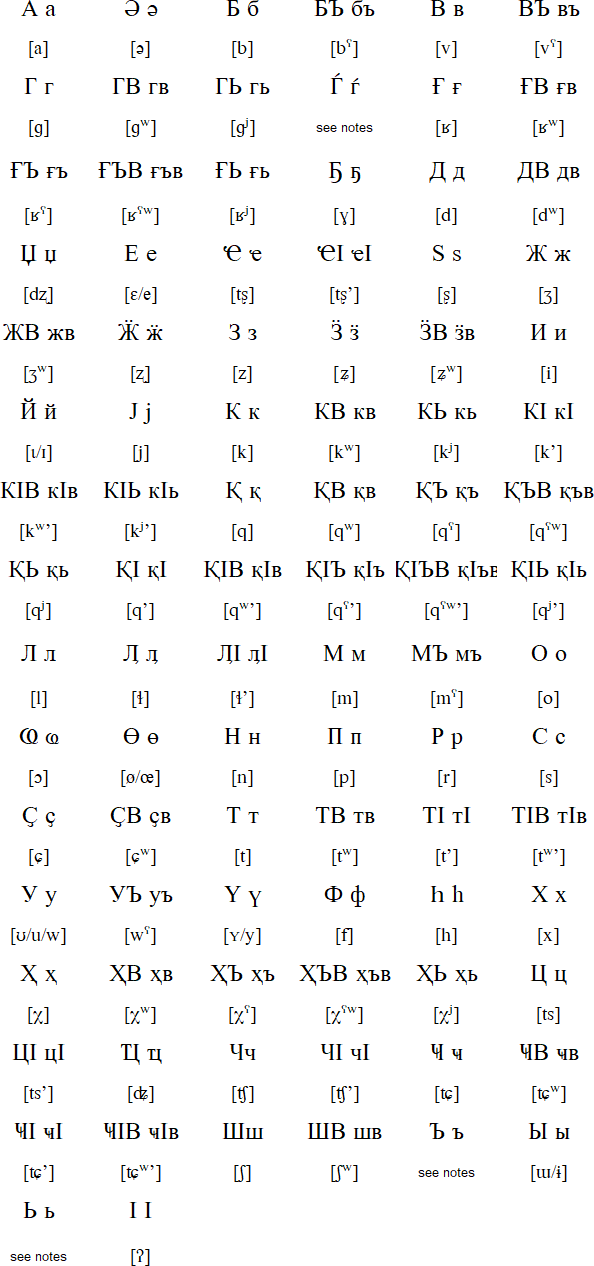
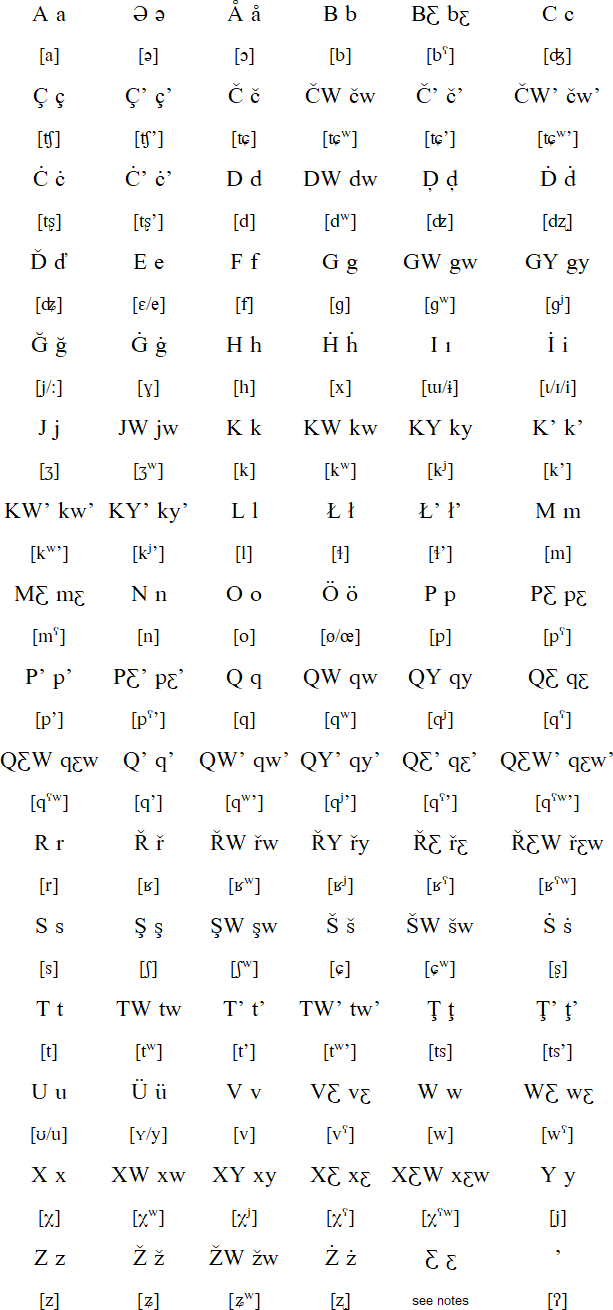
NB: The IPA transliterations in these notes are given in X-SAMPA. For more details of X-SAMPA see: www.answers.com/topic/x-sampa
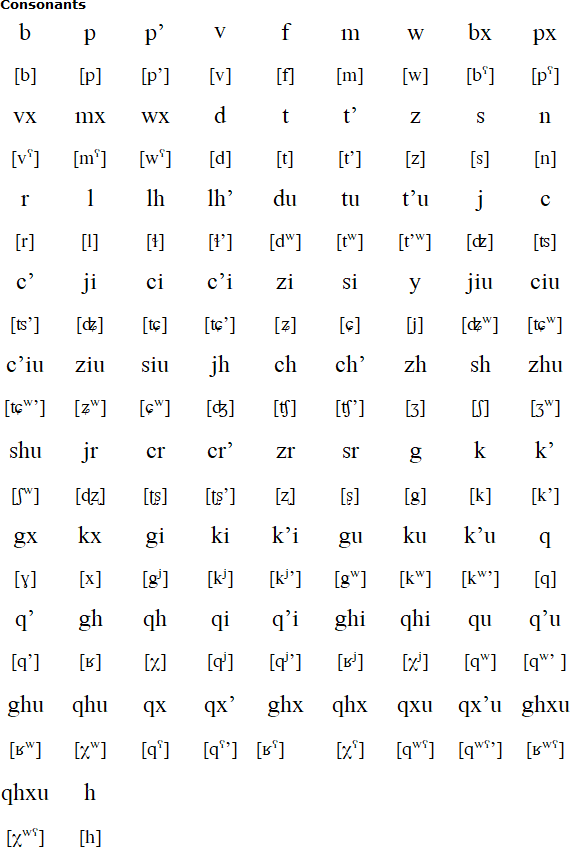
One of the reasons why so little attempt has been made at learning and teaching Ubykh may have been the lack of a stable and practical writing system for the language. Linguistic orthographies for Ubykh have been very unstable over the years, and no system has been devised for the accurate and easy transcription of Ubykh by people who might want to learn it. Hence, the following practical orthography is tentatively proposed by Rhona Fenwick, who intends to produce a learner's dictionary of Ubykh using this orthography in the near future.
The starting point of this orthography is the short fragment of Ubykh transcribed by a native speaker in the Turkish alphabet (perhaps the only fragment of Ubykh text ever to be natively written), found in Georges Dumézil's Documents anatoliens sur les langues et les traditions du Caucase III (1965, p. 267). Also at play is the principle that no character or diacritic should be used that cannot be found on the standard Turkish computer keyboard layout, as the vast majority of the surviving Ubykhs are found in Turkey. The rapidly growing availability of access to the Internet offers an excellent opportunity for developing the language as a literary or written form, which, given the fragmentation and spread of the Ubykh nation across Turkey and elsewhere, is very likely to be the necessary first step in any serious attempt at revival.
This orthography depends rather heavily upon digraphs, but such a system is less potentially confusing, and much less prone to typesetting error (a problem that has proven to be substantial with the diacritic-based orthographies of Dumézil, Vogt and Mészáros), than a system based more heavily on diacritics.
This orthography was published in A Grammar of Ubykh, by Rohan S.H. Fenwick in May 2011.
Note: when this book was published, the author was known as Rohan S.H. Fenwick. They are now known as Rhona S. H. Fenwick.
Download alphabet charts for Ubykh (Excel)
1. Фаҳье Адыҕеғе зенејншвгвере летвқӏе. 2. Уенејншв ғејуығье шқӏены рҳьедикӏвын ғеҳьетшенејтӏ. 3. «Зешвеблеӆеуегвереғе зерҳьедикӏвӆерыҳе лет,» эқӏегьы ғэқӏвқӏе. 4. Уепҳьедыкӏвын сенгьэфы псеӆыҳв ҳьејкӏьеқӏешегьы «Сығве сымгвычэқӏеҫе сыгьын ғецӏеӆы эдыҹӏенын сыджыкӏьеут,» қӏегьы элесқӏејтӏ. 5. Энејншв верҳьедыкӏв зеныбјеуме эјныуеутын ӆеқӏеуқӏе. 6. Эчеьғьевысын экӏьегьы дғеӟвепсевне зеқъэҫыгверен гьывын уешвуе везеқӏэле элесқӏе.
1. Faxie Adıĝeğe zeneynşuguere letuqʼe. 2. Weneynşu ğeywığie şqʼenı pxiedıkʼuın ğexueçeneytʼ. 3. «Zeşueblelheweguereğe zepxiedıkʼulherıxe let,» aqʼegiı ğaqʼuqʼe. 4. Wepxiedıkʼuın sengiafı pselhıxu xieykʼieqʼeşegiı «Sığue sımguıçaqʼeşie sıgiın ğetsʼelhı adıçʼienın sıcıkʼiewt,» qʼegiı alesqʼeytʼ. 5. Aneynşu wepxiedıkʼu zenıbyewme aynıwewtın lheqʼewqʼe. 6. Açebğiewısın akʼiegiı dğejüepsewne zeqhaşiıgueren giıwın weşuwe wezeqʼale alesqʼe.
IPA transcription
1. fɐχʲɜ ɐdɨɣɜʁɜ zɜnɜjnʃʷgʷɜrɜ lɜtʷqʼɜ. 2. wɜnɜjnʃʷ ʁɜjwɨʁʲɜ ʃqʼɜnɨ pχʲɜdɨkʷʼɨn ʁɜχʷɜʧɜnɜjtʼ. 3. «zɜʃʷɜblɜɬɜwɜgʷɜrɜʁɜ zɜpχʲɜdɨkʷʼɬɜrɨχɜ lɜt,» ɐqʼɜgʲɨ ʁɐqʷʼqʼɜ. 4. wɜpχʲɜdɨkʷʼɨn sɜngʲɐfɨ psɜɬɨχʷ χʲɜjkʲʼɜqʼɜʃɜgʲɨ «sɨʁʷɜ sɨmgʷɨʧɐqʼɜɕɜ sɨgʲɨn ʁɜʦʼɜɬɨ ɐdɨʨʼɜnɨn sɨʤɨkʲʼɜwt,» qʼɜgʲɨ ɐlɜsqʼɜjtʼ. 5. ɐnɜjnʃʷ wɜpχʲɜdɨkʷʼ zɜnɨbjɜwmɜ ɐjnɨwɜwtɨn ɬɜqʼɜwqʼɜ. 6. ɐʧɜbʁʲɜwɨsɨn ɐkʲʼɜgʲɨ dʁɜʑʷɜpsɜwnɜ zɜqˁɐɕɨgʷɜrɜn gʲɨwɨn wɜʃʷwɜ wɜzɜqʼɐlɜ ɐlɜsqʼɜ.
Free English translation
1. Once upon a time, in Circassia, there was a certain young man. 2. That young man, having become of an age to marry, was looking for a young woman. 3. “In a certain distant country,” he had heard them say, “there is a renowned young woman.” 4. That young woman remained unmarried, saying to whoever came to court her, “I will marry him who knows what is in my heart without my telling him.” 5. The young man took himself off to the young woman to marry her. 6. Getting on his horse, he went, and when night fell, he entered a certain village and stayed there.
Lines 1-6 of the fable “The Smart Young Girl”, published by Georges Dumézil in Transactions of the Philological Society 1961, pp. 56-67.
Information about the Ubykh language
http://en.wikipedia.org/wiki/Ubykh_language
Information about the Ubykh phonology
http://en.wikipedia.org/wiki/Ubykh_phonology
A collection recordings in Ubykh by Tevfik Saniç
http://lacito.vjf.cnrs.fr/archivage/tools/list_rsc.php?lg=Ubykh
Information about the Ubykh people
http://en.wikipedia.org/wiki/Ubykh_people
If you have any questions about this page, you can contact Adam Dean at adamedean@juno.com and Rohan Fenwick at the_famous_eccles1@hotmail.com
Abaza, Abkhaz, Adyghe, Kabardian, Ubykh
Abaza, Abkhaz, Adyghe, Aghul, Akhvakh, Akkala Sámi, Aleut, Altay, Alyutor, Andi, Archi, Assyrian / Neo-Assyrian, Avar, Azeri, Bagvalal, Balkar, Baraba Tatar, Bashkir, Belarusian, Besermyan, Bezhta, Bosnian, Botlikh, Budukh, Bulgarian, Buryat, Chamalal, Chechen, Chelkan, Chukchi, Chulym, Chuvash, Crimean Tatar, Dargwa, Daur, Dolgan, Dungan, Enets, Erzya, Even, Evenki, Gagauz, Godoberi, Hinukh, Hunzib, Ingush, Interslavic, Itelmen, Juhuri, Kabardian, Kaitag, Kalderash Romani, Kalmyk, Karaim, Karakalpak, Karata, Karelian, Kazakh, Ket, Khakas, Khanty, Khinalug, Khorasani Turkic, Khwarshi, Kildin Sámi, Kili, Komi, Komi-Permyak, Komi-Yazva, Komi-Zyrian, Koryak, Krymchak, Kryts, Kubachi, Kumandy, Kumyk, Kurdish, Kyrgyz, Lak, Lezgi, Lingua Franca Nova, Lithuanian, Ludic, Macedonian, Mansi, Mari, Moksha, Moldovan, Mongolian, Montenegrin, Nanai, Negidal, Nenets, Nganasan, Nivkh, Nogai, Old Church Slavonic, Oroch, Orok, Oroqen, Ossetian, Pontic Greek, Romanian, Rushani, Russian, Rusyn, Rutul, Selkup, Serbian, Shor, Shughni, Siberian Tatar, Sirenik, Slovio, Soyot, Tabassaran, Tajik, Talysh, Tat, Tatar, Teleut, Ter Sámi, Tindi, Tofa, Tsakhur, Tsez, Tsudaqar, Turkmen, Tuvan, Ubykh, Udege, Udi, Udmurt, Ukrainian, Ulch, Urum, Uyghur, Uzbek, Veps, Votic, Wakhi, West Polesian, Xibe, Yaghnobi, Yakut, Yazghulami, Yukaghir (Northern / Tundra), Yukaghir (Southern / Kolyma), Yupik (Central Siberian)
Languages written with the Latin alphabet
Page last modified: 04.10.25
[top]

You can support this site by Buying Me A Coffee, and if you like what you see on this page, you can use the buttons below to share it with people you know.

If you like this site and find it useful, you can support it by making a donation via PayPal or Patreon, or by contributing in other ways. Omniglot is how I make my living.

Note: all links on this site to Amazon.com


[top]


