
Mansi is a member of the Ob-Ugric branch of the Finno-Ugric language family and is spoken in Russia in the Khanty-Mansi Autonomous Okrug, along the Ob River and its tributaries, and in parts of Sverdlovsk Oblast. There are about 3,184 speakers. There are four main mutually unintelligible 'dialects': East, South, West and North Mansi, some of which are extinct. The language used to be known as Vogul.
Mansi first appeared in writing in a translation by G. Popov of The Gospel According to Matthew, which was published by the British Bible Society in London in 1868. A Mansi primer was published by Bishop Nikonor in 1903. Then in 1931, the Research Association of the Institute of the Nordic Peoples in Leningrad created a standard orthography for Mansi based on the Sosva dialect and using the Latin alphabet. In 1937 the Latin alphabet was replaced by the Cyrillic alphabet.
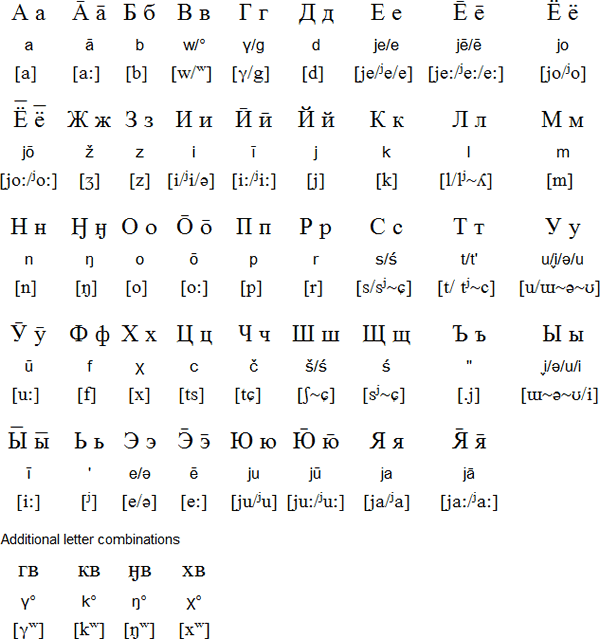
б, д, ж, з, ф, ч, щ are used only in names and loanwords
Information about Mansi pronunciation compiled by Wolfram Siegel, with additions and amendments by 이윤호
Пася олэн, няврамыт. Унтэн. Ёл унтэн ос хунтлэн, маныр ам нан лавегум. Тыхотал ман палт муйхотпа ёхтыс. Нан сака ёмас рупитэн, мен нётэлын. Тыхотал манах числа? Хумус лавев. Ёмас. Тетрадит палыг пусэлын, числа хансэн.
Source: http://www.shugur.edusite.ru/p51aa1.html
Pasja olen, njawramət. Unten. Jol unten os xuntlen, manər am nan lawegum. Təxotal man palt mujxotpa joxtəs. Nan saкa jomas rupiten, men njotelən. Təxotal manax čisla? Xumus lawew. Jomas. Tetradit paləg puselən, čisla xansen.
Hello, children, Sit down. Sit down and listen what I'm going to tell you. Today we have guests. You must work well and help me. What's the date today? How do we say, "Good". Open your notebooks and write it down.
Information about Mansi | Numbers
Information about the Mansi language and people
http://en.wikipedia.org/wiki/Mansi_language
http://www.eki.ee/books/redbook/mansis.shtml
http://lingsib.unesco.ru/en/round_table/papers/lalaeva.shtml.htm
http://russia.rin.ru/guides_e/4695.html
Online Mansi dictionary
http://www.sever.eduhmao.ru/info/3/5729/
Page last modified: 07.08.24
[top]

You can support this site by Buying Me A Coffee, and if you like what you see on this page, you can use the buttons below to share it with people you know.

If you like this site and find it useful, you can support it by making a donation via PayPal or Patreon, or by contributing in other ways. Omniglot is how I make my living.

Note: all links on this site to Amazon.com


[top]


