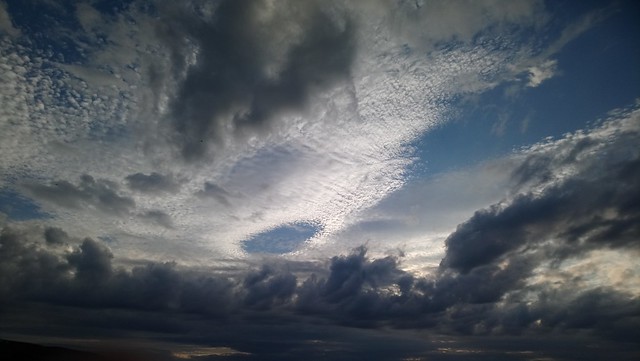
Stormy Weather

Words for storm and related things in Celtic languages.
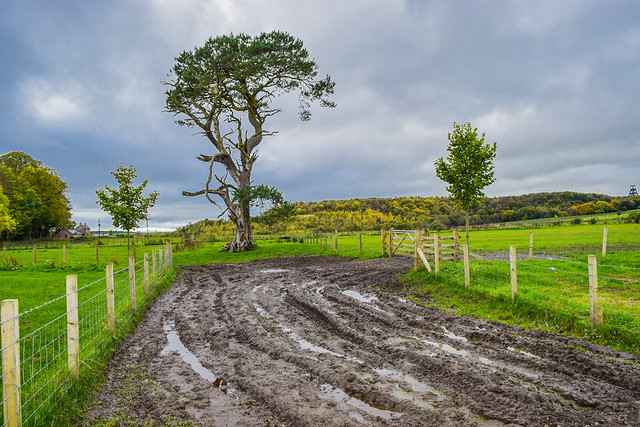
Gleann Cholm Cille

Words marked with a * are reconstructions.

Proto-Celtic *sīnā = weather
Old Irish (Goídelc) sín [ˈsʲiːn/ˈsʲiːnʲ] = storm, tempest, (bad) weather
Middle Irish (Gaoidhealg) sín = bad weather, storm, weather, season, circumstances, atmosphere, attitude
Irish (Gaeilge) síon = weather (usually bad, stormy)
síonra = atmospheric agencies, elements
Scottish Gaelic (Gàidhlig) sian [ʃiən] = violent weather, the elements, whizzing sound, squall, shriek
sianach [ʃiənəx] = stormy, squally, shrieking
sianail = (act of) shrieking, yelling
siantach [ʃiən̪ˠdəx] = pertaining to generally bad weather
marcach-siana = spindrift (spray coming off stormy sea), undulating (sheets of) rain
uisge nan seachd sian = almighty downpour, cloudburst, deluge, rainstorm
Middle Welsh (Kymraec) hin = (bad) weather, air
hinda, hindda = dry/fine/fair weather
hinon = (fair) weather, dry weather, sunshine
hinoni = to become fine, clear up, bask in the sun
Welsh (Cymraeg) hin = (bad) weather, air
hindreuliad = a weathering
hindreuliaf, hindreulio = to weather
hindda = dry/fine/fair weather
hinddanaf, hinddanu = to become fine, clear up (of weather)
hinfynag, = barometer
hinon = (fair) weather, dry weather, sunshine
hinonaf, hinoni = to become fine, clear up, bask in the sun
hinsawdd = climate
Cornish (Kernewek) hin = climate
hinek = climatic
Middle Breton (Brezonec) hynon = serene, clear weather
Breton (Brezhoneg) hin = climate
hinon = serene, serenity
hinoniñ = to have a peaceful time

Etymology: possibly related to Proto-Celtic *sīniti (to stretch, extend), from *sīros (long), from PIE *seh₁- (long, lasting), or *temp- (to stretch) [source].

Old Irish (Goídelc) anfud = tempest, storm
Middle Irish (Gaoidhealg) anbod, anfud = tempest, storm, turbulence, fury, rage
anfadach = stormy, perturbed, agitated
Irish (Gaeilge) anfa [ˈanˠəfˠə] =storm, tempest
anfach = stormy, rough, tempestuous
anfacht = storminess

Etymology: unknown [source].

Old Irish (Goídelc) doinenn = stormy weather, tempest
Middle Irish (Gaoidhealg) doinenn = foul or stormy weather, tempest
doinennta = stormy, tempestuous, inclement
Irish (Gaeilge) doineann [ˈd̪ˠɪn̠ʲən̪ˠ] = stormy weather, storm. wintriness, cheerlessness
doineanta = stormy, wild, inclement (weather), wintry, cheerless (person)
doineantach = cheerless, cold-mannered, person; gloomy old man
doineantacht = storminess, inclemency (weather), wintriness, cheerlessness (demeanour)
Scottish Gaelic (Gàidhlig) doineann [dɤn̪ʲan̪ˠ] = storm, tempest
doineannach [dɔn̪ʲən̪ˠəx] = stormy
doireannach [dɔrʲən̪ˠəx] = stormy
Manx (Gaelg) dorrin = storm, tempest
dorrinagh = stormy, tempestuous
dorrinys = storminess, tempestuousness, raging

Etymology: unknown [source].

Middle Irish (Gaoidhealg) stoirm = storm
Irish (Gaeilge) stoirm [ˈsˠt̪ˠɪɾʲəmʲ] = storm, bluster, rage
stoirmeach = stormy, tempestuous
Scottish Gaelic (Gàidhlig) stoirm [sdɤrʲɤm] = storm
stoirmeil [sdɤrʲɤmal] = stormy
Manx (Gaelg) sterrym = storm
sterrymagh = stormy
sterrymid = storminess
Middle Welsh (Kymraec) ystorm, ystorym = storm, tempest
Welsh (Cymraeg) (y)storm = storm, tempest
(y)stormio = to become stormy, bluster, rain heavily, rant, scold
(y)stormus = stormy, tempestuous, turbulent, boisterous

Etymology: from Middle English storm (storm, dispute, brawl, fight), from Old English storm (storm), from Proto-West-Germanic *sturm (storm), from Proto-Germanic *sturmaz (storm), from PIE *(s)twerH- (to stir up, agitate, urge on, propel) [source].

Middle Welsh (Kymraec) tywyd = weather
Welsh (Cymraeg) tywydd [ˈtəu̯.ɨ̞ð / ˈtəu̯.ɪð] = weather, bad or stormy weather
tywyddiant = meterology
tywyddol = pertaining to the weather
Cornish (Kernewek) tewedh = storm
tewedha = to weather

Etymology: unknown

More about words for weather (and time) in Celtic languages.

The Fastest Way to Learn Japanese Guaranteed with JapanesePod101.com

Sources: Wiktionary, Am Faclair Beag, Online Manx Dictionary, Teanglann.ie, eDIL – Electronic Dictionary of the Irish Language, In Dúil Bélrai English – Old Irish glossary, Geiriadur Prifysgol Cymru, Gerlyver Kernewek, Lexicon Cornu-britannicum: A Dictionary of the Ancient Celtic Language of Cornwall, Dictionaire Favereau, TermOfis, Le dictionnaire diachronique du breton, Etymological Dictionary Of Proto Celtic

Bees

Words for bee, sting and related things in Celtic languages.

Bee

Words marked with a * are reconstructions.

Proto-Celtic *bekos/*bikos = bee
Old Irish (Goídelc) bech [bʲex] = bee
Middle Irish bech [bʲex] = bee
bechlann [bʲex] = beehive
bechatoir, beachadoir = (hereditary) beekeeper
bechda = full of bees
Irish (Gaeilge) beach [bʲax] = bee
beachaire = beekeeper, beehive
beachaireacht = beekeeping
beachlann = apiary
Scottish Gaelic (Gàidhlig) beach [bɛx] = bee, wasp
beachach [bɛxəx] = pertaining to or abounding in bees or wasps
beachair [bɛxɪrʲ] = beehive
beachan [bjaxər̪ˠn̪ˠ] = small bees or wasps
Proto-Brythonic *bɨg = bee
Middle Welsh (Cymraeg) byg = bee
bedaf, bydaf = bees’ nest, beehive
bygegyr = drone
Welsh (Cymraeg) bygegyr, begegyr = drone
bydaf = swarm or nest of (wild) bees, bees’ nest and honey therein, beehive

Etymology: possibly from Proto-Indo-European *bʰik-/bʰoyk- (bee), from*bʰey- (bee) [source]. Words from the same roots include bee in English, and fuco (drone – male bee) in Italian [source].

Middle Irish teillenn = swarm of bees
Irish (Gaeilge) seileán = (wild) honey bee
Scottish Gaelic (Gàidhlig) seillean [ʃel̪ʲan] = bee
Manx (Gaelg) shellan [ˈʃɛlʲan] = bee
shelleig, shellaig = beehive, hive

Etymology: unknown [source].

Proto-Celtic *wan-inyo- = bee (?)
Middle Welsh (Cymraeg) gwanan, gwenyn = bees
gwenynen, guenenen = bee
gwenynllestyr = beehive
Welsh (Cymraeg) gwenyn = bees
gwenynen = bee
gwenynaf, gwenynu = to keep bees
gwenynllais = a humming (of bees)
gwenynlle = beehive
gwenynog = apiary, bee-garden, pertaining to bees, abounding in bees
gwenynydd = beekeeper, apiarist
gwenynyddiaeth = beekeeping
Middle Cornish (Cernewec) gwanan, gwenyn = bees
gwenynen, guenenen = bee
Cornish (Kernewek) gwenen = bees
gwenenen = bee
gwenen sia = bumble bee
Middle Breton (Brezonec) guenan, guënan = bees
guenanenn, guennanen = bee
Breton (Brezhoneg) gwenan, gwenen, gweren = bees
gwenanenn = bee
gwenaneg = apiary
gwenaner = beekeeper
gwenanerezh = beekeeping, apiculture

Etymology: from Proto-Celtic *wano- (tip, sting) [source], from PIE *gʷʰen- (to strike, slay, kill). Words from the same root include bane, defend, fence and gun , and words for to stab, sting, wound, etc. in Celtic languages (see below) [source].

Proto-Celtic *gʷaneti = to strike, wound, kill, slay
Old Irish (Goídelc) gonaid [ˈɡonɨðʲ] = to pierce, wound
con·goin = to pierce, wound
Middle Irish gonaid = to pierce, wound
Irish (Gaeilge) goin = to wound, stab, sting, hurt
goinbhlasta = piquant
goineach = wounding, piercing, hurtful
goineadóir = wounder, sharp-tongued person
goineog = stab, sting, prick, cutting remark, thrust, gibe
goineogacht = cutting remarks, gibing
Scottish Gaelic (Gàidhlig) goin [gɔn̪ʲ] = wound, stab, sting, stabbing, stinging
goineag [gɔnag] = nip, pinch, twitch, canine (tooth)
goineanta [gɔn̪ʲən̪ˠdə] = keen, piercing
gointe [gɔn̪ʲdʲə] = sorely wounded, bewitched
gointeach [gɔn̪ʲdʲəx] = wounding, stabbing, stinging, agonizing
Manx (Gaelg) guin = pain, stitch, pang
guinn = insect bite, pain, smart
guinney = needle, pain, sting, wound, wounding
gonnid = pain, peevishness, smarting, soreness
Proto-Brythonic *gwėnɨd [ɡwe̝ˈnɨːð] = to strike, kill
*ėdwėnɨd = to strike again
Middle Welsh (Cymraeg) gvant, guant, gwanu = to stab, prick, deeply, pierce
Welsh (Cymraeg) gwanu [ˈɡwanɨ̞ / ˈɡwa(ː)ni] = to stab, prick, deeply, pierce, perforate, penetrate, kill, strike, thrust (also written gwanaf or gwân)
Middle Cornish (Cernewec) gwane = to thrust, penetrate, pierce, stab, stick
gwenys, gwynys = pierced, stabbed, stung
Cornish (Kernewek) gwana = to pierce, stab, sting
gwan = jab, prick, sting
omwana = to stab oneself
Middle Breton (Brezonec) goano, goanaff, goan = to prick, grip, squeeze, annoy
Breton (Brezhoneg) gwanañ = to sting, punish, macerate
gwanerezh = maceration
gwanikennan = to prick

Etymology: from Proto-Indo-European *gʷʰénti (to be striking down, killing, slaying), from*gʷʰen- (to strike, slay, kill) [source].

The Fastest Way to Learn Japanese Guaranteed with JapanesePod101.com

Sources: Wiktionary, Am Faclair Beag, Online Manx Dictionary, Teanglann.ie, eDIL – Electronic Dictionary of the Irish Language, In Dúil Bélrai English – Old Irish glossary, Geiriadur Prifysgol Cymru, Gerlyver Kernewek, Lexicon Cornu-britannicum: A Dictionary of the Ancient Celtic Language of Cornwall, Dictionaire Favereau, TermOfis, Le dictionnaire diachronique du breton, Etymological Dictionary Of Proto Celtic

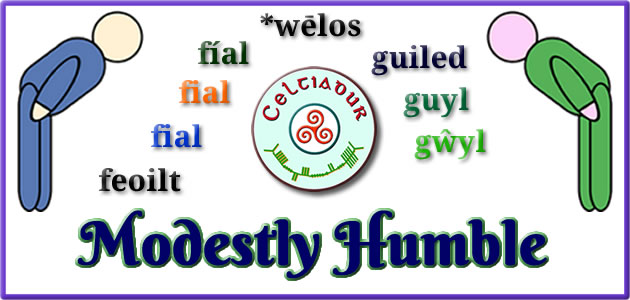
Modestly Humble

Words for modest and related things in Celtic languages.

Modestly Humble

Words marked with a * are reconstructions.

Proto-Celtic *wēlos = modest
Old Irish (Goídelc) fíal [fʲiːa̯l] = becoming, generous, genteel, seemly, well-bred
Middle Irish (Gaoidhleag) fíal = decorous becoming, seemly (of conduct or behavious), modest, chaste, well-bred, honourable, noble
fíalmar = noble-natured, generous
Irish (Gaeilge) fial [fʲiəlˠ] = seemly, proper, noble, generous, hospitable
fialmhaireacht = open-handedness, generosity
fialmhaitheas = goodness of heart, generosity
fialmhar = open-handed, generous
Scottish Gaelic (Gàidhlig) fial [fiəl̪ˠ] = generous, unstinting, liberal, open-handed, bountiful, hospitable
fial-chridheachd = altruism
fial-inntinneach = open-minded, liberal-minded
fialach [fiəl̪ˠəx] = generous, unstinting, liberal, open-handed, bountiful, hospitable
fialachd [fiəl̪ˠəxg] = generosity, liberality
fialaiche = provider of hospitality
Manx (Gaelg) feoilt = benevolent, bountiful, generous, munificent
feoiltagh = benevolent, bounteous, free, lavish, liberal, unselfish
Old Welsh (Kembraec) guiled = shame
Middle Welsh (Kymraec) guyl, gwyl, gŵyl = modest, bashful, unassuming, unobstrusive
guilat, gwylat = merry, glad, lively
gwylder = modesty, bashfulness, humility, feeling faint
gvilet, gwylet, gwyled = modesty, humility, gentleness, shame
Welsh (Cymraeg) gŵyl = [ɡuːɨ̯l/ɡʊi̯l] = modest, bashful, unassuming, unobstrusive, mild, tender, gentle, gracious, joyous, glad, generous, kind
gwylad = merry, glad, lively
gwyldeb = modesty, bashfulness
gwylader, gwyldra = modesty, bashfulness, humility, feeling faint
gwyledd = modesty, humility, gentleness, meekness, courtesy, graciousness, joy, shame

Etymology: possibly from the PIE *wey- (turn) or *wāg- (to be bent), which is related to vagus (wandering, roaming) in Latin, from which we get the English words vague and vagabond [source].

Old Irish (Goídelc) umal [ˈuṽal] = humble, obedient
umaldóit = humility
umlaigid = to humble
Middle Irish (Gaoidhleag) umal = humble, obedient, submissive
umaldóit, omaldóit, umallóit = humility
uimligid, huimligte, umlaigid = to humble
Irish (Gaeilge) umhal [uəl̪ˠ/uːlˠ] = humble, submissive, lithe, supple, plant
umhlaigh = to humble, bow, submit, obey, stoop
umhlaíocht = humility, submission, obedience, dutifulness, respect
umhlóid = humility, submission, lowly service, attendence, ministration, suppleness, pliancy
umhlú = genuflection, curtsey, obesiance, submission
Scottish Gaelic (Gàidhlig) umhal [ũ.əl̪ˠ] = submissive, obedient, humble, lowly, meek
Manx (Gaelg) imlee = humble, lowly, menial, simple
imlagh = humble, humbling
imlaghey = humble, stoop
Old Welsh (Kembraec) humil = humble
Middle Welsh (Kymraec) huvyll, uvell = merry, glad, lively
uỽyl, vffil = humble, meek, submissive
ufullder, uvyllder = humility
uỽyltaỽd, uvylldaỽt, vuildaud, vffyldaud = humility
Welsh (Cymraeg) ufyl = humble, meek, submissive
ufyllter, ufullter = humility
ufylltod, ufulltod, ufelltod, hufylltod = humility
hyful = humble
Old Cornish (Cernewec) huvel, hyvbl, evall = humble, lowly
huveldot = hunility
hyvla = tp be humble, to be obedient, to obey
Middle Cornish (Cernewec) huvel, hyvbl, evall = humble, lowly
huveldot = hunility
hyvla = tp be humble, to be obedient, to obey
Cornish (Kernewek) uvel = humble, lowly, modest
uvelder = humility
Middle Breton vuel, uuel = humble, meek, lowly
uffuelhat = to humiliate (oneself)
vuelaff, uvelañ = to humble oneself
vueldet, vuheltet = humility, humbleness, meekness
vulder, vuelder, uffuelter = humility, humbleness
Breton (Brezhoneg) uvel [ˈyː.vɛl] = humble, meek, lowly
uvelded, uvelder = humility, humbleness, meekness
uvelaat = to humiliate

Etymology: from the Latin humilis (low, lowly, small, slight, shallow), which is also the root of the English word humility, the French humilité (humility), and the humildad (humility, humbleness) [source].

The Cornish word klor means meek, mild, moderate, modest and klorder means modesty. Their origins are not known

The Fastest Way to Learn Japanese Guaranteed with JapanesePod101.com

Sources: Wiktionary, Am Faclair Beag, Online Manx Dictionary, Teanglann.ie, eDIL – Electronic Dictionary of the Irish Language, In Dúil Bélrai English – Old Irish glossary, Geiriadur Prifysgol Cymru, Gerlyver Kernewek, Lexicon Cornu-britannicum: A Dictionary of the Ancient Celtic Language of Cornwall, Dictionaire Favereau, TermOfis, Le dictionnaire diachronique du breton, Etymological Dictionary Of Proto Celtic
Barnacles & Limpets

Words for barnacle, limpet and related things in Celtic languages.

Limpet Family at Sunny Cove

Words marked with a * are reconstructions.

Proto-Celtic *barinākos = barnacle, limpet
Gaulish *barinākā = barnacle, limpet
Old Irish (Goídelc) *bairnech = limpet
Middle Irish (Gaoidhleag) bairnech, báirnech = limpet(s)
Irish (Gaeilge) bairneach [ˈbˠɑːɾˠn̠ʲəx] = limpet
Scottish Gaelic (Gàidhlig) bàirneach [baːr̪ˠn̪ʲəx] = barnacle, limpet
Manx (Gaelg) baarnagh, barnagh, bayrnagh = barnacle
guiy bayrnag = barnacle goose
Middle Welsh (Kymraec) brennik = limpets
Welsh (Cymraeg) brennig = limpets
brenigen = limpet
Middle Cornish brennic = limpets
brennigen = limpet
Cornish (Kernewek) brennik = limpets
brenigen, bernigen = limpet
Middle Breton brennik = limpet
Breton (Brezhoneg) brennig [ˈbrɛ.nːik] = barnacles, limpets
brennigenn = barnacle, limpet
brennika = to fish for limpets
brennikaer = limpet fisherman

Etymology: from the Proto-Celtic *barinā (rocky ground), and *-ākos (involved with, belonging to) [source].

Words from the same Proto-Celtic roots, via the Gaulish *barinākā and the Latin barnēca (barnacle goose, barnacle, limpet), include bernache (barnacle) in French, barnacle in English, barnacla (brent/brant goose – Branta bernicla) in Spanish [source].

Barnacle Geese

Old Irish (Goídelc) gigrann = barnacle goose
Middle Irish (Gaoidhleag) gigrann, giugrann = wild goose, barnacle goose
Irish (Gaeilge) giúrann = barnacle, shipworm, barnacle (goose)
giúrannach = encrusted with barnacles
Scottish Gaelic (Gàidhlig) giùran [gʲuːran] = barnacle
Middle Welsh (Kymraec) gwyran = barnacle goose, barnacles
Welsh (Cymraeg) gwyran = barnacle goose, barnacles
Old Breton (Brethonoc) goirann = barnacle goose, barnacles

Etymology: possibly from the Proto-Celtic *gezdā (goose) – probably of imitative origin [source]. For more details of words for goose in Celtic languages, this post.

Sources: Wiktionary, Am Faclair Beag, Online Manx Dictionary, Teanglann.ie, eDIL – Electronic Dictionary of the Irish Language, In Dúil Bélrai English – Old Irish glossary, Geiriadur Prifysgol Cymru, Gerlyver Kernewek, Lexicon Cornu-britannicum: A Dictionary of the Ancient Celtic Language of Cornwall, Dictionaire Favereau, TermOfis, Le dictionnaire diachronique du breton, Etymological Dictionary Of Proto Celtic
The Fastest Way to Learn Japanese Guaranteed with JapanesePod101.com

Dinner

Words for dinner and related things in Celtic languages.

Speakers' Dinner at the Polyglot Gathering

Words marked with a * are reconstructions.

Middle Irish (Gaoidhleag) din(n)ér = repast, meal
Irish (Gaeilge) dinnéar [dʲɪˈnʲeːɾˠ] = dinner
am dinnéir = dinner-time
foreann dinnéir = dinner-service
Scottish Gaelic (Gàidhlig) dinnear [dʲiːn̪ʲər] = dinner
àm dìnnearach = dinner-time
bòrd-dìnnearach = dinner table
seacaid-dìnnearach = dinner-jacket/suit, tuxedo
seòmar-dìnnearach = dining room
Manx (Gaelg) jinnair = dinner
co’heshaght yinnairagh = dinner party
forran buird = dinner service
jaggad yinnairagh = dinner jacket

Etymology: from Old French disner (to dine, eat the main meal of the day), from Vulgar Latin *disiūnāre, from Late Latin disieiūnō (to break the fast), from dis- (apart, reversal, utterly) and ieiūnō (to fast) [source].

Words from the same roots include dine and diner and dinner in English, and dîner (to dine, dinner) in French [source].

Proto-Brythonic *kinjọ = dinner (?)
Middle Welsh (Kymreac) kinyaỽ, kinyaw, kinio, kinnaw = dinner
kino echwydd, ciniaw echwydd, kinnechwydd = midday-dinner
kinnawha, kinawu, kinyawa = to dine, eat a meal
Welsh (Cymraeg) cinio [ˈkɪnjɔ] = dinner, breakfast
cinio echwydd, cinechwydd = midday-dinner
cin(i)awaf, cin(i)awu = to dine, eat a meal
ciniawdy = restaurant, café
ciniawfwyd = dinner, meal
Middle Cornish (Cernwec) cynyow, cidnio = dinner
Cornish (Kernwek) kinnyow, kidnyow = dinner
kinyewel = to dine

Etymology: cognate with or from Latin cēna (dinner), from Old Latin cesna, from Proto-Italic *kertsnā, from Proto-Indo-European *kért-sneh₂ (portion), from *(s)kert- (to cut), from *(s)ker- (to cut off, separate) [source].

Middle Welsh (Kymreac) cvin, kwyn = dinner, supper, feast, banquet
kvynnos, cwynos = supper, evening, meal, feast
kuynossa, cwynosa = to sup, take supper
cwynossauc, cwynossawc = giving (or one who gives) supper or a meal to a king or lord and his retinue on circuit
Welsh (Cymraeg) cwyn = dinner, supper, feast, banquet
cwynos = supper, evening, meal, feast
cwynosa(f) = to sup, take supper
cwynosfwyd = supper, tea, a light meal or lunch taken in the afternoon in the fields.
cwynosog = giving (or one who gives) supper or a meal to a king or lord and his retinue on circuit
Middle Cornish (Cernwec) coyn, cón = supper
Cornish (Kernwek) kon = dinner, supper
Middle Breton (Brezonec) coan = dinner, supper, to have supper
coan(i)aff, coanyaff, coania = to dine, to have supper
coanlech = place where one has supper
Breton (Brezhoneg) koan [ˈkwãːn] = supper, dinner, to have supper
koanan, koaniañ = to have dinner, to dine
koanier = dinner

Etymology: from Latin cēna (dinner), from Old Latin cesna, from Proto-Italic *kertsnā, from Proto-Indo-European *kért-sneh₂ (portion), from *(s)kert- (to cut), from *(s)ker- (to cut off, separate) [source].

Middle Irish (Gaoidhleag) béile = meal
Irish (Gaeilge) béile [ˈbʲeːlʲə] = meal
béile maidine = breakfast
béile meán lae = lunch
béile oíche = supper, dinner
ní fiú a bhéilí é = he is not worth his keep
Scottish Gaelic (Gàidhlig) beil = diet, meal of meat (archaic)

Etymology: from Middle English mel (a time, occasion, meal, feast), from Old English mǣl (measure, mark, sign, time, occasion), from Proto-Germanic *mēlą (measure, time, occasion, meal), from PIE *meh₁- (to measure) [source].

Words from the same roots include meal in English, maal (meal, time) in Dutch, Mahl (meal) in German, and mål (target, goal, meal) in Swedish [source].

Sources: Wiktionary, Am Faclair Beag, Online Manx Dictionary, Teanglann.ie, eDIL – Electronic Dictionary of the Irish Language, In Dúil Bélrai English – Old Irish glossary, Geiriadur Prifysgol Cymru, Gerlyver Kernewek, Lexicon Cornu-britannicum: A Dictionary of the Ancient Celtic Language of Cornwall, Dictionaire Favereau, TermOfis, Le dictionnaire diachronique du breton, Etymological Dictionary Of Proto Celtic

The Fastest Way to Learn Japanese Guaranteed with JapanesePod101.com

Worms & Maggots

Today we’re looking at the words for worm, maggot and related things in Celtic languages.

Earth Worm

Words marked with a * are reconstructions.

Proto-Celtic *kʷrimis = worm
Old Irish (Goídelc) cruim [kruṽʲ] = maggot, worm
crumdoma = maggot heap
Middle Irish (Gaoidhleag) cruim, crúim = worm, maggot
crumach = full of reptiles
crumdoma = dunghill
cromóc = maggot
Irish (Gaeilge) cruimh = maggot, larva, grub, tiny insect, worm
crumhóg = maggot
cruimheach = maggoty
cruimheachán = venemous person
Scottish Gaelic (Gàidhlig) cnuimh [krɯ̃ĩv] = maggot, grub, worm
cnuimheach [krɯ̃ĩvəx] = maggoty
cnuimheag [krɯ̃ĩvag] = maggot, grub, worm
cnuimhneag [krɯ̃ĩvn̪ˠʲag] = maggot, worm
Manx (Gaelg) crooag = (flesh) worm, grub, maggot, worm
crooagagh = maggoty, wormy
Proto-Brythonic *prɨβ̃ [ˈprɨβ̃] = worm
Old Welsh prem = insect, fly, larva, maggot, grub, worm
Middle Welsh (Kymraec) pryuet, pryf = insect, fly, larva, maggot, grub, worm
pryuyedic = abounding in / infested with worms or maggots
Welsh (Cymraeg) pryf [prɨːv/priːv] = insect, fly, larva, maggot, grub, worm
pryfedaf, pryfedu, pryfedo = to breed worms of maggots, to become infested with worms or maggots
pryfediad = worm or maggot infestation
pryfedig = wormeaten, maggoty
pryfeteg = entomology
pryfiedig = abounding in / infested with worms or maggots
Middle Cornish (Cernewec) pref, prêv, pryf = any small animal, a vermin, an insect, a worm, a reptile
Cornish (Kernewek) pryv, prev = crawling animal, grub, insect, worm, weevil
pryv del = caterpillar
pryv prenn woodworm
pryvladher = insecticide
Middle Breton (Brezonec) preff, preuet, prenvv = worm
Breton (Brezhoneg) preñv = worm
preñvedik = vermiculated
preñvek = vermicular, wormlike, wormy
eneppreñveg, eneppreñvek = wormable

Etymology: from PIE *kʷŕ̥mis (worm) [source]. Words from the same root include cirmenis (maggot, grub) in Latvian, kirmis (worm) in Lithuanian, käärme (snake) in Finnish, کرم (kerm – worm) in Persian, and červ (worm, maggot) in Czech and Slovak [source].

Old Irish (Goídelc) dorb = worm, larva
Middle Irish (Gaoidhleag) dorb = small insect or worm
Irish (Gaeilge) doirb [kɑbʲ/kabʲ] = water beelte
doirbeach = infested with water beetles
Scottish Gaelic (Gàidhlig) doirb [dɤrʲɤb] = unspecific term for a small/tiny/insignificant creature (e.g. minnow, worm, leech, small person)
Manx (Gaelg) durrag = cabbage worm, larva of cabbage moth

Etymology: unknown

Sources: Wiktionary, Am Faclair Beag, Online Manx Dictionary, Teanglann.ie, eDIL – Electronic Dictionary of the Irish Language, In Dúil Bélrai English – Old Irish glossary, Geiriadur Prifysgol Cymru, Gerlyver Kernewek, Lexicon Cornu-britannicum: A Dictionary of the Ancient Celtic Language of Cornwall, Dictionaire Favereau, TermOfis, Le dictionnaire diachronique du breton, Etymological Dictionary Of Proto Celtic
italki - Win cash rewards for learning any language

Axes and Hatchets

In this post we’re looking at the words for axe and related things in Celtic languages.

Axe in wood

Words marked with a * are reconstructions.

Proto-Celtic *tāxslo- = axe
Old Irish (Goídelc) tál = adze
Middle Irish (Gaoidhleag) tál = adze
Irish (Gaeilge) tál [t̪ˠɑːlˠ/t̪ˠæːlˠ] = adze
Scottish Gaelic (Gàidhlig) tàl [taːl̪ˠ] = adze
tàl-fuinn = hoe
Manx (Gaelg) taal = adze

An adze cutting tool that has a curved blade set at a right angle to the handle and is used in shaping wood. [source].

Etymology possibly from the Proto-Indo-European *tetḱ-(dʰ)lo-, from *teḱ- (to sire, beget) [source]. Words from the same roots include architect, technical, text and textile in English, цясла́ [t͡sʲasˈɫa] (adze) in Belausian, тесло [tʲɪsˈɫo] (adze) in Russian, and teslă (adze) in Romanian [source].

Old Irish (Goídelc) túag = axe, hatchet
Middle Irish (Gaoidhleag) túag = axe, hatchet
túagaid = to hew, chop, strike with an axe
túagrótae = roadway cleared with an axe
Irish (Gaeilge) tua [t̪ˠuə] = axe, hatchet
tuadóir = axe-man, hewer, chopper
tuadóireacht = (act of) hewing, shaping, chopping
tuaigh = to chop (with an axe)
Scottish Gaelic (Gàidhlig) tuagh [tuəɣ] = axe
tuaghadair = axeman, axe-wielder
Manx (Gaelg) teigh = axe, chopper, hatchet

Etymology possibly from the Proto-Indo-European *(s)tewk- (to push, press, strike, beat, pierce), from *(s)tew- (to push, hit) [source]. Words from the same roots include tkát (to weave) in Czech, tkać (to weave, stick, tuck) in Polish, and тъка [tɐˈkɤ] (to spin, plait, entwine, weave) in Bulgarian [source], and words for hole & hollow in Celtic languages.

Proto-Celtic *biyatlis = (?)
Old Irish (Goídelc) biáil [ˈbʲi.aːlʲ] = axe, hatchet
Middle Irish (Gaoidhleag) bíail, biáil = axe, hatchet, battle-axe
Irish (Gaeilge) biail [bʲiəlʲ] = hatchet
Scottish Gaelic (Gàidhlig) biail = axe, hatchet (archaic)
Old Welsh bahell = axe
Middle Welsh (Kymraec) buyall, bwell, bwyeill = axe
bwyellic = small axe, hatchet
bwyallawt = axe stroke
bwiallawc = bearing an axe, armed with an axe; like an axe
Welsh (Cymraeg) bwyall, bwyell, bwell = axe, battle-axe
bwyellan, bwyellig = small axe, hatchet
bwyellangaib = pickaxe, hoe
bwyellod, bwyallod = stroke or cut with an axe, axe stroke
bwyellog, bwyallog = bearing an axe, armed with an axe; like an axe
bwyellwr = woodman
Middle Cornish (Cernewec) biail, boell, bool = axe, hatchet
Cornish (Kernewek) bool = axe, chopper, hachet
bolik = (small) axe, chopper, hachet
Middle Breton (Brezonec) bouhazl, bouchazl, bouchal, boc’hal = axe
Breton (Brezhoneg) bouc’hal [ˈbuː.ɣal] = axe, hammered
bouc’halig = hatchet

Etymology: from Proto-Celtic *bināti (to strike, hit, beat) from the Proto-Indo-European *bʰi-né-h₂-ti, from bʰeyh₂- (to strike, hew) [source]. Words from the same roots include billhook and bone in English, bain (to extract, separate, strike) and béim (a blow, emphasis, beat) in Irish, gofid (grief, sorrow, regret) in Welsh [source].

Sources: Wiktionary, Am Faclair Beag, Online Manx Dictionary, Teanglann.ie, eDIL – Electronic Dictionary of the Irish Language, In Dúil Bélrai English – Old Irish glossary, Geiriadur Prifysgol Cymru, Gerlyver Kernewek, Lexicon Cornu-britannicum: A Dictionary of the Ancient Celtic Language of Cornwall, Dictionaire Favereau, TermOfis, Le dictionnaire diachronique du breton, Etymological Dictionary Of Proto Celtic

italki - Win cash rewards for learning any language

Flowing Slowly

Words for slow and related things in Celtic languages.

sloth

Words marked with a * are reconstructions.

Proto-Celtic *malnos/*mallo- = slow, lazy
Old Irish (Goídelc) mall [mal͈] = slow, tardy, late
utmall = unsteady, restless
Middle Irish (Gaoidhealg) mall = slow, sluggish
mallaigid = to make slow, retard
maill, moill = tardiness, delay
maillech = slowly-moving, leisurely, gentle
admall = very slow, dilatory
immall = very slow, wearisome, sad, sluggish
utmall = unstable, fickle, restless
Irish (Gaeilge) mall [mˠɑul̪ˠ/mˠɑːl̪ˠ/mˠal̪ˠ] = slow, late
mallachar = slowness, dullness, dimness
mallacharach = slow, dim
mallaibh = of late, lately
udhmhall = unstable, restless, unceratin, nimble, quick
Scottish Gaelic (Gàidhlig) mall [maul̪ˠ] = slow, deliberate, placid
mallan [mal̪ˠan] = sluggard, slowcoach
mallanach [mal̪ˠanəx] = slow, dilatory
Manx (Gaelg) moal = slow, sorry, tardy, unimpressive, backward, deliberate, dull, feeble, gradual, meagre

Etymology: possibly from PIE *mel- (to be late, hesitate) and *-nós (creates verbal adjectives) [source].

Old Irish (Goídelc) slaet = heap, layer, pile
Middle Irish (Gaoidhealg) slaet = a swathe, layer, pile, illness, disease
slaetach, slaebach = in layers, sweeping (hair)
Irish (Gaeilge) slaod = swath, layer, flowing mass, prostration, stupefication, float, raft; to mow down, lay low, flow, drag, trail, trudge
slaodach = in swaths, in layers, flowing, prostrating, heavy, oppressive, viscous
slaodacht = viscosity
slaodaí = trudger, slowcoach, lazy-bones
slaodaíocht = trudging, slowness, laziness
slaodchiallach = slow-witted
Scottish Gaelic (Gàidhlig) slaod [sl̪ˠɯːd] = raft, float, sledge, tow, drag, sluggard, slowcoach
slaodach [sl̪ˠɯːdəx] = slow, sluggish, dilatory, dragging, pulling, awkward, clumsy
slaodachadh [sl̪ˠɯːdəxəɣ] = dragging, hauling, slowing down
slaodachd [sl̪ˠɯːdəxg] = slowness, drowsiness, awkwardness
Manx (Gaelg) sleayd = dredge, trail, sledge, trailer
sleaydagh = trailing
sleayder = lug, trailing

Etymology: unknown [source].

Proto-Celtic *aramo- = quiet
Middle Welsh (Kymraec) araf, arav [ˈarav] = slow, leisurely, calm, quiet
arafu = to be(come) or make slow, slow down
arafaidd, arauaidd = slow, gradual, mild, gentle
arafhau = to make or become quiet or calm,
Welsh (Cymraeg) araf [ˈarav] = slow, gradual, tedious, tiresome, mild, meek, gentle, tender
arafu = to be(come) or make slow, slow down, retard
arafaidd = slow, gradual, mild, gentle, lovely, pleasant
arafedd = slowness, gentleness, tenderness
arafhau = to make or become quiet or calm, ease, abate, moderate
arafol = slow, gradual, slowing, delaying

Etymology: from PIE *h₁r̥h₃-mo-, from *h₁reh₃- (rest). Words from the same roots include Ruhe (calm, quietness, rest) in German, ro (calmness) in Danish, ro (peace, quiet, tranquility) in Swedish, and unruly in English [source].

Proto-Brythonic *segʉr = idle
Middle Welsh (Kymraec) segur = idle
segyra, segura, seguru, segvro = to (be) idle
segyrllyt, segurllyd = idle, lazy, sluggish, slothful
Welsh (Cymraeg) segur [ˈsɛɡɨ̞r / ˈseːɡɪr] = idle, unoccupied, inactive, lazy, slothful, disused, idle
seguro = to (be) idle, laze, linger, lounge around, rest
segurdod = idleness, laziness
segurllyd = idle, lazy, sluggish, slothful
segurwr = idler, lazy person
Middle Cornish (Cernewec) sigyr, zigyr = sluggish, lazy
Cornish (Kernewek) syger = idle, lazy, lethargic, slow
sygera = to seep, trickle
sygerans = seep(age)
sygerneth = idleness, laziness, lethargy
sygerus = at leisure, leisurely

Etymology: from Latin sēcūrus (careless, carefree, negligent, safe, secure), from sē- (without) and‎ cūra (care). Words from the same root include secure and sure in English, sicuru (safe, secure, sure) in Italian, seguro (secure, safe, sure) in Spanish and säker (safe, secure, sure, certain) in Swedish [source].

Proto-Celtic *uɸostatos = stable
Old Irish (Goídelc) fossad = firm, steady
Middle Irish (Gaoidhealg) fossad, fossud = stationary, fixed, firm, steady, steadfast, consistent, flat surface, level place, stopping-place, abode
Irish (Gaeilge) fosadh = stop, stay, rest, stable position, steadiness, stability
Scottish Gaelic (Gàidhlig) fosadh [fɔsəɣ] = cessation, desisting, recess, respite, (act of) abiding
Proto-Brythonic *gwostad = (?)
Middle Welsh (Kymraec) gwastat, guastat = flat, level, smooth
Welsh (Cymraeg) gwastad [ˈɡwastad] = flat, level, smooth, even, horizontal, continual, constant, quiet, peaceful, gentle, plain, level
Cornish (Kernewek) gwastas = flat, open, plain, smooth
Middle Breton (Brezonec) goustat, goustadic, goustadec, goustadic = gently, slowly
Breton (Brezhoneg) gou(e)stad = slow, slowly
doustadik = slow, slowly

Etymology: unknown [source].

Another word for slow in Cornish is lent, and lenthe means to slow down. This is possibly from (Old) French lent (slow), or from Latin lentus (sticky, slow, flexible).

In Middle Cornish the word hel means slow or tardy, and cosel/kozal means soft, quiet, slow or sluggish, which became kosel (calm, quiet, restful, still, tranquil) in revived Cornish.

Another Proto-Celtic word for slow is *dwāyo-. This became doé / doe (slow, sluggish) in Old Irish and Middle Irish, but has no descendents I can find in the modern Celtic languages.

The Fastest Way to Learn Japanese Guaranteed with JapanesePod101.com

Sources: Wiktionary, Am Faclair Beag, Online Manx Dictionary, Teanglann.ie, eDIL – Electronic Dictionary of the Irish Language, In Dúil Bélrai English – Old Irish glossary, Geiriadur Prifysgol Cymru, Gerlyver Kernewek, Lexicon Cornu-britannicum: A Dictionary of the Ancient Celtic Language of Cornwall, Dictionaire Favereau, TermOfis, Le dictionnaire diachronique du breton, Etymological Dictionary Of Proto Celtic
Facing Opposition

Words for face, honour and related things in Celtic languages.

Mr. Funny Face

Words marked with a * are reconstructions.

Proto-Celtic *gnūstis = face
Old Irish (Goídelc) gnúis [ɡnuːsʲ] = face
Middle Irish (Gaoidhealg) gnúis = face, countenance, disc (of sun or moon), aspect, kind, form, species
dognúisach = ill-featured, ill-favoured
Irish (Gaeilge) gnúis [ɡn̪ˠuːʃ/ɡɾˠuːʃ] = face, mien, countenance, sour expression, frown, aspect, kind, form
gnúiseach = well-favoured, good-looking.
gnúiseachán = sour-faced person.
gnúisgheal = bright-faced
gnúis-searbh = sour-faced
Scottish Gaelic (Gàidhlig) gnùis [gruːʃ] = face, countenance, visage
gnùis-dhreach = aspect
gnùis-bhrat = veil
samhla-gnùis = smiley ☺️, emoticon
maise-gnùis = cosmetics
ruadhadh-gnùis = blush
Manx (Gaelg) grooish = countenance, visage, aspect
grooish-volley = deceit, deceive
geyre-ghrooishagh = sharp-faced
sharroo-ghrooishagh = vinegar-faced
Middle Welsh (Kymraec) gnis = jaw, chin, countenance, face
Welsh (Cymraeg) gnis [miːl] = jaw, chin, countenance, face
gnisiaf, gnisio = to low, neigh, sigh, pant, groan, grumble
Cornish (Kernewek) greuv = face, front

Etymology: from the Proto-Indo-European *ǵneh₃- (to recognise, know) [source]. Words from the same roots include cognition, cunning, gnome, ignorant, know, noble and uncouth in English [source].

Proto-Celtic *enekʷos = face
Old Irish (Goídelc) enech = face, honour, reputation
Middle Irish (Gaoidhealg) enech, ainech = face, front, opposite, against, in opposition to
enechgris = face-flushing
enechlóg = honour-price
Irish (Gaeilge) oineach = honour, good name, reputation, generosity, hospitality, bounty, favour
oineachúil = generous, good-natured
eineach = face (literary)
eineachlann = ‘honour-price’, proportionate compensation, satisfaction for injury, etc
eineachras = safeguard, protection
Scottish Gaelic (Gàidhlig) eanach [ɛnəx] = honour, praise
Proto-Brythonic *ėnib = face
Old Welsh enep = face
Middle Welsh (Kymraec) wynep, wyneb, vynep = face
wynebiat, wnepiat, wynepiat = surface, facing, behaviour, aspect
wynebion, wynebyon = surface, scum, froth,
Welsh (Cymraeg) wyneb [ˈwɨnɛb / ˈwɨnab] = face, countenance, expression, grimace, surface, area, front, side, honour, respect, status, effrontery, impudence, audacity, cheek
wynebaf, wynebu = to face, look towards, confront, oppose, encourage, support
(g)wynebiad = surface, facing, behaviour, aspect
wynebion = surface, scum, froth, head (of beer), cream
(g)wynebol = honourable, worthy, facial, front, facing, promising, favourable, handsome, beautiful
Old Cornish eneb = face
Middle Cornish (Cernewec) enep, enap = face, countenance, page (of a book)
Cornish (Kernewek) enep = face, surface
enebi = to face, oppose
enebieth = opposition
Old Breton enep = face
Middle Breton (Brezonec) enep = face, resistance, opposition, opposite
Breton (Brezhoneg) eneb [ˈẽːnep] = face, opposite, honour
enebenn [e.ˈneː.bɛn] = upper, front, page
eneberezh = opposition
enebiñ = to oppose

Etymology: from the PIE *h₁enih₃kʷos (face), from animālis (animate, living), from *h₁én (in) and *h₃ókʷs (eye), and okno (window) in Czech [source].

Words from the same roots include eye in English, acs (eye, vision, attention) in Latvian, akis (eye, loop) in Lithuanian [source].

Proto-Celtic *antonos = forehead
Old Irish (Goídelc) étan = brow, forehead
Middle Irish (Gaoidhealg) étan, édan = front, brow, forehead
étanán = frontlet
Irish (Gaeilge) éadan [ˈeːd̪ˠən̪ˠ/ˈeːd̪ˠənˠ] = front, face, flat surface, facet, table, end
éadána = timid, diffident
éadánacht = timidity, diffidence
éadanchlár = fascia
Scottish Gaelic (Gàidhlig) aodann [ɯːdən̪ˠ] = face, front, dial, side
aodannach [ɯːdən̪ˠəx] = little face, mask, frontispiece
aodann-clò = typeface
aodann-coimheach = mask
aodann creige = rockface, cliff-face
Manx (Gaelg) eddin = face, facade, feature, front, apron, dial, impudence, cheek
eddinagh = facial

Etymology: from the Proto-Indo-European *h₂ent- (face, forehead, front). Words from the same roots include answer, end in English, and anë (side, edge, verge, brink) in Albanian [source].

Old Irish (Goídelc) agad [ˈaɣəð] = face, honour, surface
Middle Irish (Gaoidhealg) agad, aiged = face, countenance, surface, front
Irish (Gaeilge) aghaidh [əiɟ/ai/əi̯] = face, front, aspect, dial (of clock), obverse (of coin)
aghaidhbhéasach = civil-looking
aghaidh-dhána = bold-faced
Scottish Gaelic (Gàidhlig) aghaidh [ɤː.ɪ] = face, visage, facade, front, facing, cheek, impudence, nerve
aghaidheachd [ɤː.ɪjəxg] = resistance
aghaidhich = oppose, face, confront, affront
aghaidhichte = opposed, opposing, fronting, facing, confronted
Manx (Gaelg) oai = countenance
oaie = dial, exposure, facade, face, facial, front, frontage
oaieagh = blasphemous, sepulchral

Etymology: uncertain, possibly related to the Old Irish aigid (to drive), from Proto-Celtic *ageti (to drive), from Proto-Indo-European *h₂éǵeti (to be driving) [source].

Proto-Celtic *drikā = face, front
*ɸaredrikā = face, front
Old Irish (Goídelc) drech = face
Middle Irish (Gaoidhealg) drech, dreach = face, countenance, front, surface
drechach = fair, comely, graceful, shapely
Irish (Gaeilge) dreach [dʲɾʲax] = facial appearance, look, expression, aspect, face, surface
dreachadh =delineation, portrayal, make-up
dreachadóir = delineator
dreachúil = good-looking, comely
Scottish Gaelic (Gàidhlig) dreach [drɛx] = figure, form, shape, appearance, complexion
dreachmhor [drɛxvər] = comely, handsome, a healthy complexion
dreachadh [drɛxəɣ] = portraying, shaping, adorning
dreachail [drɛxal] = handsome, personable
dreachalachd [drɛxəl̪ˠəxg] = handsomeness
Manx (Gaelg) dreagh = expression
Middle Welsh (Kymraec) dyrch = face
drychiolaeth = apparition, ghost, spectre, phantom
edrich, edrych = to look, view, observe
Welsh (Cymraeg) drych [drɨːχ / driːχ] = mirror, looking-glass, reflection, example, magnifying-glass, glasses, countenance, appearance, aspect
drachaf, drychu = to mirror, see, make apparent
drychiolaeth = apparition, ghost, spectre, phantom
edrych = regard, appearance
edrych(af) = to look, view, observe, watch, search
Middle Breton (Brezonec) derch = shape, aspect, appearance

Etymology: from Proto-Indo-European *dr̥ḱ-eh₂ from *derḱ- (to see) [source]. Words from the same roots include dragon, drake and tarragon in English [source].

Old Irish (Goídelc) onóir = honour
Middle Irish (Gaoidhealg) onóir, anóir = honour, respect, dignity
Irish (Gaeilge) onóir = honour
onórach = honourable, upright, honoured, esteemed, honorary
onóraigh = to honour
onórú = honouring, reverence, worship
Scottish Gaelic (Gàidhlig) onair [ɔnɪrʲ] = honour, respect, honesty
onaireach [ɔnɪrʲəx] = honourable, honest
Manx (Gaelg) honor, onnor = honour
onnoragh, onneragh = honest, honorary, creditable, worshipful
onnoraghey = to honour
onnorey = to honour
onnoroil = honourable, upstanding
Middle Welsh (Kymraec) anaỽr, anhaur, anawr = honour, praise, might, force, vigour
Welsh (Cymraeg) anawr = honour, praise, might, force, vigour
Middle Breton (Brezonec) enor, onour = honour
enorif, enoraff = to honour
Breton (Brezhoneg) enor [ˈẽː.nɔr] = honour
enoriñ = to honour
enorus = honourable

Etymology: from Anglo-Norman honur (honour), from Old French honor (honour), from Latin honor (honour, esteem, dignity, reputation, office), from Old Latin honōs (honour, etc), of unknown origin [source].

Words from the same roots may include honour and honest in English, onore (honour, reputation, credit) in Italian, honneur (honour) in French, and honrar (to honour) in Spanish [source].

Sources: Wiktionary, Am Faclair Beag, Online Manx Dictionary, Teanglann.ie, eDIL – Electronic Dictionary of the Irish Language, In Dúil Bélrai English – Old Irish glossary, Geiriadur Prifysgol Cymru, Gerlyver Kernewek, Lexicon Cornu-britannicum: A Dictionary of the Ancient Celtic Language of Cornwall, Dictionaire Favereau, TermOfis, Le dictionnaire diachronique du breton, Etymological Dictionary Of Proto Celtic

Sure, Certainly

Words for sure, certain and related words in Celtic languages.

Sure, Certainly

Words marked * are reconstructions.

Proto-Celtic *derwos = firm (as an oak), oak
Old Irish (Goídelc) derb = sure, certain, fixed, certainty
derba = certainty
derbaid = to certify, confirm, prove
derbda = certain, fixed
Middle Irish (Gaoidhealg) derb = sure, certain, fixed, determinate, reliable, genuine
derba = certainty
derbaid = to certify, confirm, prove, attest
derbda(e) = certain, fixed
Irish (Gaeilge) dearbh [ˈdʲaɾˠəvˠ] = sure, certain
dearbhaigh = to declare, affirm, confirm, attest, prove
dearbháil = to test, check
dearbhú = declaration, affirmation, attestation, confirmation
dearfa = attested, proved, sure, certain
dearfach = affrimative, positive
dearfacht = positiveness, certainty
deartháir = brother (“certain brother” from derb & bráthair [brother])
deirfiúr = sister (“certain sister” from derb & siur [sister])
Scottish Gaelic (Gàidhlig) dearbh [dʲɛrɛv] = ceratin, sure, positive
dearbh-aithne = identity, indentification
dearbhaich [dʲɛrɛvɪç] = prove, attest, verify, demonstrate
dearbhadh [dʲɛrɛvəɣ] = proving, attesting, verifying
dearbhachd [dʲɛrɛvəxg] = proof, experience, assurance
dearbhair [dʲɛrɛvɛrʲ] = affirmer, checker
dearbhte [dʲɛrɛvdʲə] = ascertained, confirmed, proved
dearbhach [dʲɛrɛvəx] = sure, affirmative, positive
dearbhachail [dʲɛrɛvəxal] = conclusive, decisive
Manx (Gaelg) jarroo = absolute, actual, even, explicit, express, identical, indubitable
jarrooagh = affirmative, categorical, confirmative, definitive, positive
jarrooid = positiveness
dy jarroo = actually
Old Welsh ceintiru = first cousin (male)
Middle Welsh (Kymraec) keuynderv, keuyndyru, keuynderw = first cousin (male)
cyfnitherw, kefnithderw, cyvnither = first cousin (female)
Welsh (Cymraeg) derw = sure, true (only appears in words below)
cefnder(w) = first cousin (male)
cyfnither(w) = first cousin (female)
Middle Cornish (Cernewec) handeru = first cousin
Cornish (Kernewek) kenderow, keniterow = cousin
Middle Breton (Brezonec) quenderu = cousin
Breton (Brezhoneg) kenderv = cousin (male)
keniterv = cousin (female)

Etymology: from the Proto-Indo-European *drewh₂- (steady, firm), from *dóru (tree), which possibly related to *deru-/*drew- (hard, firm, strong, solid) [source].

Words from the same roots include words for oak trees in Celtic languages, and tar, tree, trough and trim in English [source].

Proto-Celtic *kengeti =to step
Old Irish (Goídelc) cingid [ˈkʲiŋʲɡʲiðʲ] = to step, proceed
do·cing = to advance, step forward
Middle Irish (Gaoidhealg) cingid, cinnid, cinnit = to step, pace, proceed, go, overcome, surpass, excel, exceed
do-cing, to-cing = to step, stride forward, advance, come
Irish (Gaeilge) cinn [cəiɲ / ciːnʲ] = to fix, determine, decree, decide
cinnte = certain, definite, mean, stingy, constant
cinnteach = fixed, definite, definitive
cinnteachaí = determinist
cinnteachas = determinism
cinnteacht = certainty, stinginess, limitation
cinntigh = to make certain, confirm, assure
cinntiú = confirmation, determination
Scottish Gaelic (Gàidhlig) cinnt [kʲĩːn̪ʲdʲ] = certainty
cinnteach = certain, definite, sure, accurate
cinnteachas = determinism
cinnteachd = certainty, actuality, assurance
cinnteachadh = checking, confirming, determining
cinntich = (to) check, confirm, determine, ascertain
Manx (Gaelg) kinjagh = constant, continual, continuous, definite

Etymology: possibly from Proto-Indo-European *(s)keng- (limp) [source].

Words from the same roots include words for step in Celtic languages, shank in English, hinken (to limp, hobble) in Dutch and German [source].

Middle Welsh (Kymraec) dyogel, diogel = safe, secure, certain, sure, reliable, immovable
diogelu = to make save, secure
diogelhay = to make safe or fast, secure, assure
diogelrwydd, diogelrỼyd = safety, security, assurance, certainty
diogelwch = safety, security, caution
diogelwr = defender, protector
Welsh (Cymraeg) diogel [dɪˈɔɡɛl/dɪˈoːɡɛl] = safe, secure, certain, sure, reliable, immovable
diogelaf, diogelu = to make save, secure, assure, confirm
diogeldeb, diolgelder = safety, security
diogelfa = safe place, fortress, stronghold, place of refuge
diogelhaf, diogelhau = to make safe or fast, secure, assure
diogelrwydd = safety, security, assurance, certainty
diogelwch = safety, security, caution
diogelwr, diogelydd = defender, protector
Middle Cornish (Cernewec) diogel, dyowgel, dyogel, diûgel, diougel = unexposed, secure, safe, certain
Cornish (Kernewek) diogel = certain, reliable, secure, sure
diogeldeh = security
diogeli = to safeguard, secure
Middle Breton (Brezonec) diouguel, dioguel, dyougel = certain, sure, surely, security, safety
diouguelhat = to defend, guard, protect
diouguelroez, dyouguelroez = security, protection
Breton (Brezhoneg) diogel [diˈoːɡɛl] = size, dimension, measure, format
diougelaat = to defend, guard, protect
diougeladur = affirmation, assertion
diougeler = protecter
diogeliñ = to assert
diogelroez = security, protection
diogelus = affirmative

Etymology: from di- (intensifying prefix) and gogel (to guard), from Proto-Celtic *uɸo- (sub-, under) and *kelo (to hide), from PIE *ḱel (to cover) [source].

Words from the same roots include Celt(ic), heel and occult in English [source].

Scottish Gaelic (Gàidhlig) sicir [ʃiçgʲɪrʲ] = shrewd, acute, accurate, sure
sicireachd [ʃiçgʲɪrʲəxg] = shrewdness, acuteness, accurateness, sureness
Manx (Gaelg) shickyr = certain, confident, definite, firm
shickyraghey = to ensure, ratify, verify, affirmation
shickyrys = assurance, certainty, security, stability
Middle Welsh (Kymraec) sicr, sikr = safe, secure, certain, sure, reliable, immovable
sickrwydd, sicrwydd, siccrwydd = certainity, sureness, assurance
siwr, sywr = sure, certain, inevitable, unfailing
Welsh (Cymraeg) sicr [ˈsɪkɪr] = sure, certain, inevitable, secure, safe
sicrhau = to ensure, make certain, fasten, secure
sicrwydd = certainity, sureness, assurance
siŵr, siwr [ʃuːr]= sure, certain, inevitable, unfailing
siwr(i)af, siwr(i)o = to assure, ensure
siwrans, siwrens = certainity, assurance
Middle Cornish (Cernewec) secer = secure
secerder = security
Cornish (Kernewek) sur = certain(ly), sure(ly)
surhe = to assure, ensure, insure
surheans = insurance
surneth = certainity
surredi = certainly, surely
Middle Breton (Brezonec) sigur = sure, certain, assured
Breton (Brezhoneg) sygur, sigur [ˈsiːɡyr] = sure, certain, assured
siguriñ = to generalize, pretext

Etymology: from Middle English siker (safe, secure), from Old English sicor (secure, safe, sure), from Proto-West Germanic *sikur (secure, safe, sure, certain), from Latin sēcūrus (worryless; carefree; secure), from sē- (without) and cūra (care); [source].

Note: the Welsh word sikr comes from Middle English siker, while siŵr/siwr comes from modern English sure. They both come from the same ultimate roots. Similarly, the Middle Cornish secer comes from Middle English, while sur in modern Cornish comes from modern English. I’m not sure if the Breton words are related, or what their etymology is.

Blubrry podcast hosting

Sources: Wiktionary, Am Faclair Beag, Online Manx Dictionary, Teanglann.ie, eDIL – Electronic Dictionary of the Irish Language, In Dúil Bélrai English – Old Irish glossary, Geiriadur Prifysgol Cymru, Gerlyver Kernewek, Gerlyvyr Cernewec, Lexicon Cornu-britannicum: A Dictionary of the Ancient Celtic Language of Cornwall, Dictionaire Favereau, TermOfis, Le dictionnaire diachronique du breton, Geriafurch, English – ProtoCeltic WordList (PDF), Etymological Dictionary Of Proto Celtic
