Omniglot News (17/04/22)

Here’s the latest news from the world of Omniglot.

This week there are new language pages about:

  • Belhare (आठपहरिया / aṭhpariya), a Kiranti language spoken in Province No. 1 in eastern Nepal.
  • Bantayanon, a Central Bisayan language spoken mainly on Bantayan Island in Cebu Province the Philippines.
  • Pumi (prēn mì), a Qiangic language spoken in Sichuan and Yunnan provinces in southwestern China.

Sample text in Kakemoji

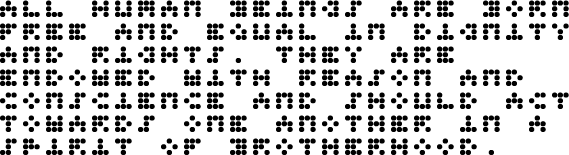
There’s a new constructed script called Kakemoji, an alternative way to write Japanese invented by Heesu Kim and based on the Manchu alphabet.

There are a new numbers pages in:

  • Brahui (براوی), a Dravidian language spoken mainly in the Balochistan region of Pakistan.
  • Susu (Sosoxui), a Mande language spoken in Guinea, Guinea-Bissau, Senegal and Sierra Leone.
  • Kirundi (Ikirundi), a Bantu language spoken mainly in Burundi.

The new Omniglot blog post this week is called Together Living, about words for community and society in Dutch and English, and there’s the usual Language Quiz – see if you can guess what language this is.

The mystery language in last week’s language quiz was Pumi (prēn mì), a Qiangic language spoken in Yunnan and Sichuan Provinces in southwestern China.

The new Celtiadur posts this week are about words for fathers, mothers and related people in Celtic languages.

In the Adventure in Etymology this week we look into the origins of the word pique.

I also made improvements to the following pages: Võro numbers, Susu language, Tower of Babel in Võro, Mandarin Chinese and Classical Chinese, and I have recordings of Võro phrases which I’ll be adding when I have a spare moment or two.

For more Omniglot News see:
https://www.omniglot.com/news/
https://twitter.com/Omniglossia
https://www.facebook.com/groups/omniglot/
https://www.facebook.com/Omniglot-100430558332117

You can also listen to this podcast on: Apple Podcasts, Amazon Music, Stitcher, TuneIn, Podchaser, PlayerFM or podtail.

If you would like to support this podcast, you can make a donation via PayPal or Patreon, or contribute to Omniglot in other ways.

The Fastest Way to Learn Japanese Guaranteed with JapanesePod101.com

Omniglot News (10/04/22)

Here’s the latest news from the world of Omniglot.

This week there are new pages about:

  • Gogo (Cigogo), a Bantu language spoken mainly in the Dodoma Region in central Tanzania.
  • Kuria (Igikuria), a Bantu language spoken in Tanzania and Kenya.
  • Gusii (EkeGusii), a Bantu language spoken mainly in Kenya and also in Tanzania.

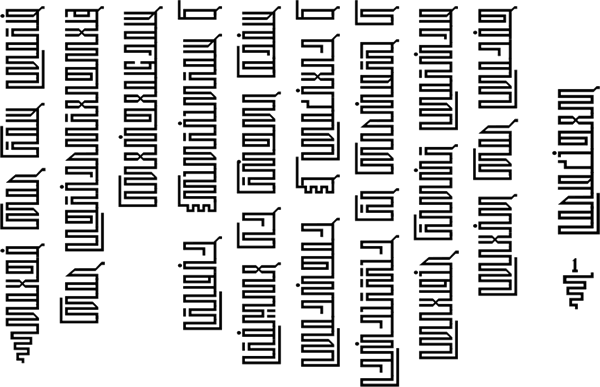
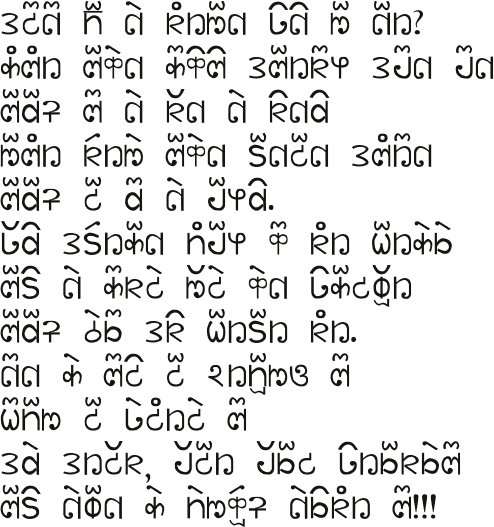
There are two new scripts for Karbi, a Sino-Tibetan language spoken in northern India. These are: Arleng / Karbi alphabet, which was created by Sarthe Teron Milik

Sample text in the Arleng / Karbi alphabet

and Karbi Mek’lek, which was invented by Ripu Rahang:

Sample text in Karbi Mek'lek (horizontal)

There’s a new constructed script for Malay called Humaira, which was invented by Abdul Latif Hamidin and is based on the Jawi (Arabic) script for Malay.

Sample text in Humaira

There are a new numbers pages in:

  • Lakota (Lakȟótiyapi) and Dakota (Dakhótiyapi), Siouan languages spoken in parts of the USA and Canada.
  • Gusii (EkeGusii), a Bantu language spoken in Kenya and Tanzania.

The new Omniglot blog post this week is called Dawning, and there’s the usual Language Quiz as well – see if you can guess what language this is.

The mystery language in last week’s language quiz was Kosraean (Kosrae), a Micronesian language spoken in Kosrae State in the Federated States of Micronesia.

The Celtiadur post this week is about words for dough and related things in Celtic languages.

In the Adventure in Etymology this week we look into the origins of the word anniversary, as yesterday was my birthday, or the anniversary of my birth, and anniversary is etymologically more interesting than birthday.

For more Omniglot News see:
https://www.omniglot.com/news/
https://twitter.com/Omniglossia
https://www.facebook.com/groups/omniglot/
https://www.facebook.com/Omniglot-100430558332117

You can also listen to this podcast on: Apple Podcasts, Amazon Music, Stitcher, TuneIn, Podchaser, PlayerFM or podtail.

If you would like to support this podcast, you can make a donation via PayPal or Patreon, or contribute to Omniglot in other ways.

The Fastest Way to Learn Japanese Guaranteed with JapanesePod101.com

Omniglot News (03/04/22)

Here’s the latest news from the world of Omniglot.

The new language pages this week are:

  • Tonga (Chitonga / iciTonga), a Bantu language spoken mainly in Zambia, and also in Zimbabwe.
  • Nande (Kinande), a Bantu language spoken in the Democratic Republic of the Congo.
  • Mogholi (مُغُلی), a Mongolic language spoken the Herat region of Afghanistan.

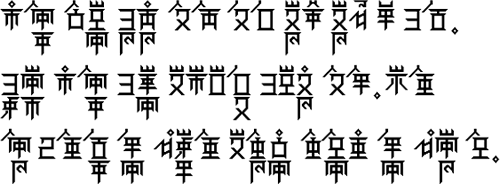
There as new constructed script – Evhmelish / Abechedário Ejméliko, which is an alternative way to write Spanish invented Arturo Jiménez Zavala and based on the Mongolian Folded Script (Evhmel Bichig).

Sample text in Evhmelish

There a new adapated script – Cyrillic for Brazilian Portuguese, which was devised by Guilherme E. S.

There are a new numbers pages in: Northern Sotho (Sesotho sa Leboa), Southern Sotho (seSotho) and Swati (siSwati), which are all Bantu languages.

The new Omniglot blog posts this week are Rush Reeds and Unapologetic Accents, and the usual Language Quiz – see if you can guess what language this is.

The mystery language in last week’s language quiz was Turoyo (Sūrayṯ / ܛܘܪܝܐ), a Neo-Aramaic language spoken in southeastern Turkey and northern Syria.

The Celtiadur post this week is about words for knots, bulges and related things in Celtic languages.

In the Adventure in Etymology this week we look into the origins of the word fool,

For more Omniglot News see:
https://www.omniglot.com/news/
https://twitter.com/Omniglossia
https://www.facebook.com/groups/omniglot/
https://www.facebook.com/Omniglot-100430558332117

You can also listen to this podcast on: Apple Podcasts, Amazon Music, Stitcher, TuneIn, Podchaser, PlayerFM or podtail.

If you would like to support this podcast, you can make a donation via PayPal or Patreon, or contribute to Omniglot in other ways.

The Fastest Way to Learn Japanese Guaranteed with JapanesePod101.com

Omniglot News (27/03/22)

Here is the latest news from Omniglot.

The new language pages this week are:

  • Galo (`Galoo), a Tani language spoken in the states of Arunachal Pradesh and Assam in the northeast of India.
  • Songe (Kisonge), a Bantu language spoken in the south of the Democratic Republic of the Congo.
  • Goral (Górolski), a group of West Slavic dialects spoken in the Goral Lands in southern Poland, northern Slovakia and northeastern Czechia.

There are a new numbers pages in: Southern Ndebele (isiNdebele), Luganda (Oluganda), Comorian (shiKomori) and Tsonga (Xitsonga), which are all Bantu languages.

New page about telling the time and other time-related expressions in: Basque (euskera).

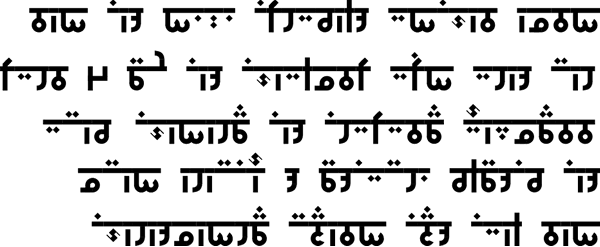
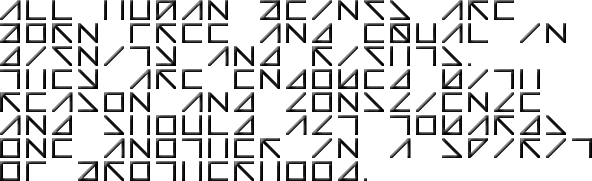
There are new constructed scripts: Siekoo and Quadoo, which are tactile alphabets developed by Alexander Fakoó.

Siekoo
Sample text in the Siekoo alphabet

Quadoo
Sample text in the Quadoo alphabet

There’s new Omniglot blog post entitled Sleeve Monkeys, which is about Dutch and English idioms related to monkeys, sleeves, cats and bags, and the usual Language Quiz – see if you can guess what language this is.

The mystery language in last week’s language quiz was Gciriku (Rumanyo), a Bantu language spoken in Namibia, Bostwana and Angola.

The new Celtiadur posts this week are entitled Festive Feasts and Salt, and are about words for festivals, feasts, banquets, salt and related things in Celtic languages.

In the Adventure in Etymology this week we explore the origins of the English word salt, and discover that words such as salad, salami, salsa, sauce and sausage come from the same root.

I made improvements to the Greek, Basque and Vai language pages, and made a separate page about the Vai syllabary.

For more Omniglot News see:
https://www.omniglot.com/news/
https://twitter.com/Omniglossia
https://www.facebook.com/groups/omniglot/
https://www.facebook.com/Omniglot-100430558332117

You can also listen to this podcast on: Apple Podcasts, Amazon Music, Stitcher, TuneIn, Podchaser, PlayerFM or podtail.

If you would like to support this podcast, you can make a donation via PayPal or Patreon, or contribute to Omniglot in other ways.

The Fastest Way to Learn Japanese Guaranteed with JapanesePod101.com

Omniglot News (20/03/22)

Here are details of the latest developments on Omniglot websites and blogs.

The new language pages this week are:

  • Punu (Yipunu), a Bantu language spoken mainly in southern Gabon, and also in south of the Republic of Congo.
  • Nyungwe (Cinyungwe), a Bantu language spoken in northern and central Mozambique.
  • Masaaba (Lumasaaba), a Bantu language spoken in the Eastern Region of Uganda.

There are a new numbers pages in: Punu, Makhuwa and
Nyungwe, which are all Bantu languages.

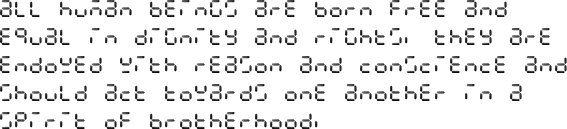
There a new constructed script: Fakoo, a tactile alphabet developed by Alexander Fakoó which can be read by blind and sighted people.

Sample text in the Fakoo alphabet

There’s a new adapated script: Cyringit (Сірінгіт), a way to write Tlingit with the Cyrillic alphabet devised by Marc Harder.

Чьъ йеь гогэьнкь ъьвэь ъ каӿ шокълисьоьӿ һа тлъгу ԟваьнӿьи адэь с ԟонугу йэь. Һа лілквь һъьс адэь йеь с йинейи йеь ъьвэь, дэ аь ъвтолхажи ъьт ъьвэь, аь һа ваԟкійъԟа. Ъьч ъьвэь къкъвтовъкэьль.

There are new Omniglot blog post titled Enlisted Fathers about the origins of the name Patrick, and the usual Language Quiz – see if you can guess what language this is.

The mystery language in last week’s language quiz was Kaska (Dene Zágéʼ), a Northern Athabaskan language spoken in the Kaska Dena region, which is part of the Canadian provinces of British Columbia, Yukon, and Northwest Territories.

There’s a Celtiadur post about words for Yearning, longing and related things in Celtic languages.

In the Adventure in Etymology this week we explore the origins of the word sloom, which is found in English dialects, as well as Scots, and is related to the word slumber.

I also made improvements to the Makhuwa language page, and to the Toki Pona pages.

For more Omniglot News see:
https://www.omniglot.com/news/
https://twitter.com/Omniglossia
https://www.facebook.com/groups/omniglot/
https://www.facebook.com/Omniglot-100430558332117

You can also listen to this podcast on: Apple Podcasts, Amazon Music, Stitcher, TuneIn, Podchaser, PlayerFM or podtail.

If you would like to support this podcast, you can make a donation via PayPal or Patreon, or contribute to Omniglot in other ways.

The Fastest Way to Learn Japanese Guaranteed with JapanesePod101.com

Omniglot News (13/03/22)

Here are details of the latest developments on Omniglot websites and blogs.

This week we have new languages pages in Bantu and Bantoid languages, which are:

  • Tiv (dzwa Tiv), a Southern Bantoid language spoken mainly in Benue State in the southeast of Nigeria.
  • Nyamwezi (Kinyamwezi), a Bantu language spoken in western Tanzania
  • Luvale (Chiluvale), a Bantu language spoken in southern Angola and northern Zambia
  • Mbunda (Chimbúùnda), a Bantu language spoken in south west Angola and north west Zambia

There are a new phrases in Chokwe, a Bantu language spoken in Angola, the Democratic Republic of Congo and Zambia, and Tiv.

There are a new numbers pages in: Chokwe, Tiv, Luvale, Mbunda, and Shona, a Bantu language spoken mainly in Zimbabwe.

There are new Omniglot blog posts about Charlatan Snake Oil, and the Japanese word Perapera, and the usual Language Quiz – see if you can guess what language this is:

The mystery language in last week’s language quiz was Arrente (Arrernte angkentye), a Pama-Nyungan language spoken in and around Alice Springs in the Northern Territory of Australia.

There’s a Celtiadur post about words for roofs and related things in Celtic languages, in which we discover that English words such as protect, stegosaurus, thatch, tile and toga come from the same root as Welsh words for roof and house, among other things.

In the Adventure in Etymology this week we untangle the origins of the word knot, and find connections to such words as knit, node, nodule and noose, and the name Canute.

I also made improvements to the Greenlandic and Shona language pages.

For more Omniglot News see:
https://www.omniglot.com/news/
https://twitter.com/Omniglossia
https://www.facebook.com/groups/omniglot/
https://www.facebook.com/Omniglot-100430558332117

You can also listen to this podcast on: Apple Podcasts, Amazon Music, Stitcher, TuneIn, Podchaser, PlayerFM or podtail.

If you would like to support this podcast, you can make a donation via PayPal or Patreon, or contribute to Omniglot in other ways.

The Fastest Way to Learn Japanese Guaranteed with JapanesePod101.com

Omniglot News (06/03/22)

Here are details of the latest developments on Omniglot websites and blogs.

This week the new language and numbers pages on Omniglot are all in Zapotecan languages, which belong to the Oto-Manguean language family and are spoken mainly in the state of Oaxaca in southern Mexico. The new language pages are:

  • San Dionisio Ocotepec Zapotec (Diza), which is spoken in the town of San Dionisio Ocotepec in Oaxaca.
  • Güilá Zapotec (Diza), which is spoken in the town of San Pablo Güilá in Oaxaca.
  • Choápam Zapotec (Diꞌidzaꞌ xidzaꞌ), which is spoken in Comaltepec in Oaxaxa, and in Arena and Playa Vincente in the state of Verzcruz.
  • Rincón Zapotec (Didza Xidza), which is spoken in the Villa Alta District of the Sierra Norte Region of Oaxaca.
  • Miahuatlán Zapotec (Diiste), which is spoken in the town of Santa Catarina Cuixtla in the Miahuatlán District in the south of the Sierra Sur Region of Oaxaca.
  • Zoogocho Zapotec (Diža’xon), which is spoken in the Villa Alta District of the Sierra Norte Region of Oaxaca, and also in Oaxaca City.

There are a new numbers pages in: Choápam Zapotec, Rincón Zapotec and Isthmus Zapotec, which is spoken in the southeast of Oaxaca.

There a new constructed script called Rahmat, which is a way to write English, Indonesian and other languages devised by Zackye Rahmat.

It looks something like this:

Sample text in the Rahmat alphabet

On the Omniglot blog this week there’s a post called Fiery Lakes about the French idiom Il n’y a pas le feu au lac (“There’s no fire on the lake”), and the usual Language Quiz – see if you can guess what language this is.

The mystery language in last week’s language quiz was Otomi (Hñähñu), an Oto-Manguean language spoken in central Mexico.

There’s a Celtiadur post about words for keys and related things in Celtic languages.

In the Adventure in Etymology we explore the origins of the word deck.

I also made improvements to the Yiddish language and Yiddish phrases pages.

For more Omniglot News see:
https://www.omniglot.com/news/
https://twitter.com/Omniglossia
https://www.facebook.com/groups/omniglot/
https://www.facebook.com/Omniglot-100430558332117

You can also listen to this podcast on: Apple Podcasts, Amazon Music, Stitcher, TuneIn, Podchaser, PlayerFM or podtail.

If you would like to support this podcast, you can make a donation via PayPal or Patreon, or contribute to Omniglot in other ways.

The Fastest Way to Learn Korean with KoreanClass101

Omniglot News (27/02/22)

Here are details of the latest developments on Omniglot websites and blogs.

This week there are new language pages in:

  • Nso (Lamnsɔ’), a Southern Bantoid language spoken in Western Cameroon.
  • Sirenik (Сиӷы́ных), an Eskimo-Aleut language that was spoken in and around Sireniki (Сиреники), a village in the Providensky District of the Chukotka Autonomous Okrug in the Russian Far East region.
  • Molbog, a Philippine language spoken in the south of Palawan province in the Mimaropa region of the Philippines.

There are a new numbers pages in:

  • Central Siberian Yupik (Юпик), an Eskimo-Aleut language spoken along the coast of Chukotka Autonomous Okrug in the Russian Far East region, and on St Lawrence Island in Alasaka.
  • Central Alaskan Yup’ik (Yugtun), an Eskimo-Aleut language spoken in southwestern Alaska in the USA.
  • Yao (chiYao), a Bantu language spoken mainly in Malawai, Tanzania and Mozambique.

I created a separate page for the Hanifi Rohingya script, and made improvements to the Rohingya and Chittagonian language pages.

On the Omniglot blog this week there’s a post called Stellar Stars about some differences between Romance languages, and the usual Language Quiz – see if you can guess what language this is.

The mystery language in last week’s language quiz was Western Cham (Chăm), a Chamic language spoken mainly in Cambodia, and also in Vietnam, Thailand and Laos.

There are Celtiadur posts about words for arrows and druids and related things in Celtic languages.

In the Adventure in Etymology we explore the origins of the word timber.

For more Omniglot News see:
https://www.omniglot.com/news/
https://twitter.com/Omniglossia
https://www.facebook.com/groups/omniglot/
https://www.facebook.com/Omniglot-100430558332117

You can also listen to this podcast on: Apple Podcasts, Amazon Music, Stitcher, TuneIn, Podchaser, PlayerFM or podtail.

If you would like to support this podcast, you can make a donation via PayPal or Patreon, or contribute to Omniglot in other ways.

Talk in Arabic - Learn Egyptian, Iraqi, Levantine, Sundanese, Moroccan, Algerian or Saudi Arabic

Omniglot News (20/02/22)

Here are the latest developments on the Omniglot websites.

This week there are new language pages about:

  • Tawbuid (Batangan / Bangon), a South Mangyan language spoken in the centre of Mindoro Island in the Mimaropa region of the Philippines.
  • Ambala (Ayta Ambala), a Sambalic language spoken in the Central Luzon region of the Philippines.
  • Hatang Kayi, a Central Philippine language spoken in the provinces of Quezon and Rizal on the island of Luzon in the Philippines.

There’s a new adapated script: Greek Arabic (Αλ-γ̲αραπυιιατȣ λ-ιωνάνυιιαχ̌), a way to write Arabic with the Greek alphabet devised by Mohammad Shakeb Baig.

There are new numbers pages in:

  • Andi (къIaваннаб мицци), a Northeast Caucasian language spoken in Dagestan in the Russian Federation.
  • Kodava, (ಕೊಡವ ತಕ್ಕು), a Dravidian language spoken in Karnataka state in southern India.
  • Aheri Gondi, a South-Central Dravidian language spoken in the Indian states of Maharashtra and Telangan.

There’s a new article about Ancient language and extra-Indo-European language in Britain.

I wrote a new song – a lullaby called Lillilu, which is a Scots word for lullaby, inspired by this video by misspunnypennie on TikTok.

On the Omniglot blog we have a post about words for lullabys, a post about the Norfolk dialect word gadwaddick, which means to go on a pleasure trip or jaunt, or to gad about, and a new Language Quiz

The mystery language in last week’s language quiz was Dovahzul, or the Dragon Language, a constructed language that appears in some of the Elder Scrolls series of video games. The recording was from an original song called Vokul Fen Mah (Evil Will Fall) by Malukah, a wonderful singer-songwriter from Mexico.

Another version of this song with Malukah and Peter Hollens:

There are Celtiadur posts about words for smiths and walls and related things in Celtic languages.

The Adventure in Etymology this week tries to see the wood for the trees by looking into the origins of the word wood.

For more Omniglot News see:
https://www.omniglot.com/news/
https://twitter.com/Omniglossia
https://www.facebook.com/groups/omniglot/
https://www.facebook.com/Omniglot-100430558332117

You can also listen to this podcast on: Apple Podcasts, Amazon Music, Stitcher, TuneIn, Podchaser, PlayerFM or podtail.

If you would like to support this podcast, you can make a donation via PayPal or Patreon, or contribute to Omniglot in other ways.

Blubrry podcast hosting

Omniglot News (13/02/22)

The new language pages on Omniglot this week are:

  • Khorchin (ᠬᠣᠷᠴᠢᠨ), a variety of of Mongolian spoken in the Hinggan League in the east of Inner Mongolia in the north of China.
  • Bugan (Pakan), a Pakanic language spoken in the southeast of Yunnan province in the southwest China.
  • Khamnigan Mongol (ᠬᠠᠮᠨᠢᠭᠠᠨ), a Mongolic language spoken mainly in the Chen Baehru Banner of the Hulunbuir League in the northeast of Inner Mongolia in northern China.

There are two new adapated scripts:

There are new numbers pages in: Wa (Va), Nyah Kur (ญัฮกุ้ร) and Mon (ဘာသာ မန်), which are Austroasiatic languages spoken in Myanmar, Thailand and China.

On the Omniglot blog this week there’s a post about Language Politics, which discusses some criticisms that are often made of minority and endangered languages, and the usual Language Quiz.

The mystery language in last week’s language quiz was Selkup (шӧльӄумыт әты), a Samoyedic language spoken along the River Taz in Siberia in northern Russia.

The Celtiadur post this week is about words for material and related things in Celtic languages.

In the Adventure in Etymology this week we look into the origins of the word paint.

For more Omniglot News see:
https://www.omniglot.com/news/
https://twitter.com/Omniglossia
https://www.facebook.com/groups/omniglot/
https://www.facebook.com/Omniglot-100430558332117

You can also listen to this podcast on: Apple Podcasts, Amazon Music, Stitcher, TuneIn, Podchaser, PlayerFM or podtail.

If you would like to support this podcast, you can make a donation via PayPal or Patreon, or contribute to Omniglot in other ways.


Banner 7