I’m taking a break from making podcasts and videos over Christmas. Radio Omniglot will return soon.
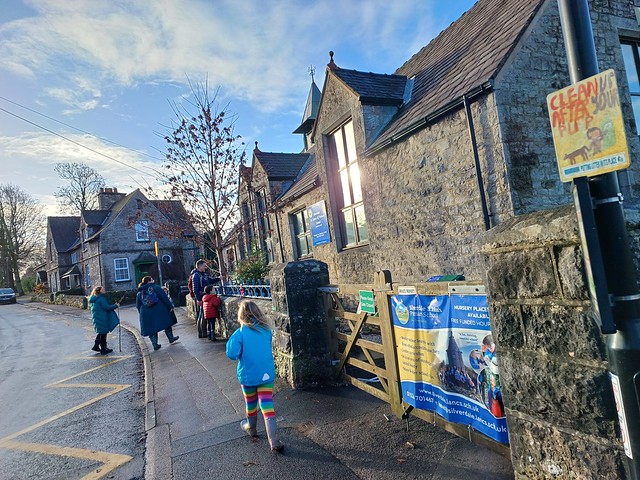
Silverdale School, where my brother, sister and I all went
In the meantime, I’m spending Christmas with my mum, brother, sister and their families in the wilds of Lancashire in the north west of England. This is the first time I’ve seen them all for 3 years, and the first time I’ve been outside Wales.
Here’s the latest news from the world of Omniglot.
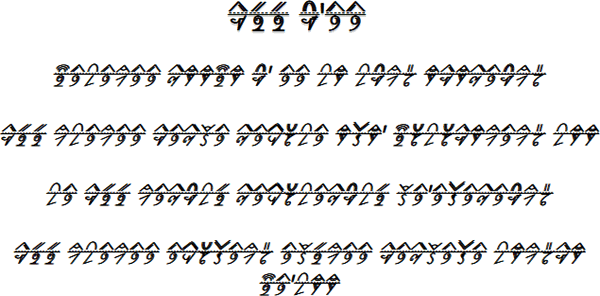
There’s a new writing system called the Naasioi Otomaung Alphabet, which was created by Chief Peter Karatapi to write Naasioi, a language spoken on the island of Bougainville in Papua New Guinea.
There are new language pages about:
Ghari, an Oceanic language spoken in Vaturanga in the northwest of Guadalcanal Island in the Solomon Islands.
Naasioi, a South Bougainville language spoken Kieta District of the Autonomous Region of Bougainville in Papua New Guinea.
Selaru (tel Masylarkwe), a Malayo-Polynesian language spoken in the Tanimbar Islands in the Maluku Tenggara Barat Regency of Maluku Province in the south of Malaysia.
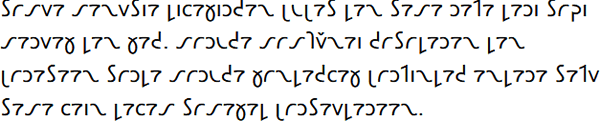
New adapted script: Malay Shavian (𐑳𐑚𐑡𐑳𐑛 𐑥𐑩𐑤𐑳𐑘𐑫 𐑖𐑳𐑢𐑦), which was devised by Damian Izrullah bin Abdullah as an alternative way to write Malay, Indonesian and other Austronesian languages with the Shavian alphabet.
New adapated script: Magyargari (मजगरि), a way to write Hungarian with the Devanagari script devised by Xavier Merica.
Ghari, an Oceanic language spoken in Vaturanga in the northwest of Guadalcanal Island in the Solomon Islands.
Selaru (tel Masylarkwe), a Malayo-Polynesian language spoken in the Tanimbar Islands in the Maluku Tenggara Barat Regency of Maluku Province in the south of Malaysia.
Ida’an, a North Bornean language spoken in Sabah, Malaysia.
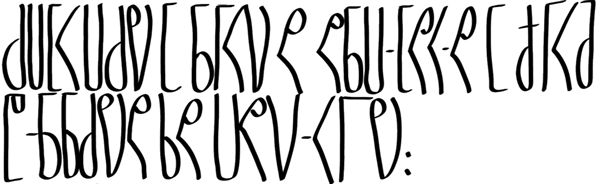
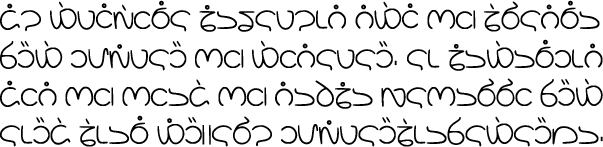
On the Omniglot blog there’s a new post about the Japanese expression 歩行者天国 (hokōsha tengoku), which means a pedestrianised area, or literally “Pedestrian Paradise”, and there’s the usual Language Quiz. See if you can guess what language this is:
Here’s a clue: this is language is spoken in Nigeria.
The mystery language in last week’s language quiz was Bakhtiari Luri (بختیاری), a Western Iranian language spoken mainly in Chaharmahal and Bakhtiari Province in southwestern Iran.
Here’s the latest news from the world of Omniglot.
There are new language pages about:
Bola (Bola-Bakovi), a Western Oceanic language spoken in West New Britain province of Papua New Guinea.
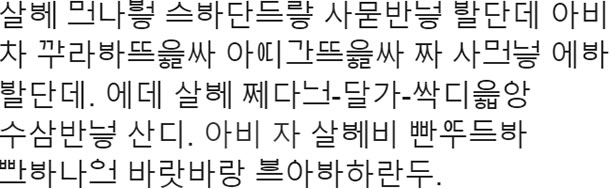
New constructed script: Geolmgeul (걺글), which is an alternative way to write Korean created by Heesu Kim, and was inspired by Korean handwriting and Japanese hiragana.
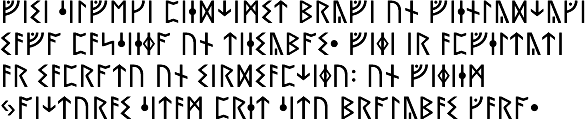
New adapated script: Latvian Runes (ᛚᚨᛏᚡᛁᛃᚨᛊ ᚱᚤᚾᚨᛊ / Latvijas Rūnas) (걺글), a way to write Latvian with Runes devised by Xavier Merica.
There are new numbers pages in:
Wiradjuri, a Pama-Nyungan language spoken in New South Wales in Australia.
Bola (Bola-Bakovi), a Western Oceanic language spoken in West New Britain province of Papua New Guinea.
Kwara’ae, an Oceanic language spoken mainly on Malaita Island in the Solomon Islands.
There are new translations of the Tower of Babel story in Gonja and Kwara’ae
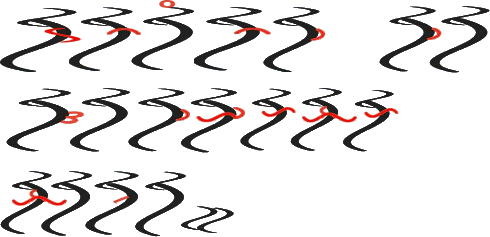
On the Omniglot blog there’s a new post about the latest UK Census, which shows a fall in the number of Welsh speakers, and there’s the usual Language Quiz. See if you can guess what language this is:
Here’s a clue: this is language is spoken in parts of Iran.
The mystery language in last week’s language quiz was Tombulu (a.k.a. Minahasan), a Philippine language spoken in the Minahasa Regency of North Sulawesi Province in Indonesia.
Here’s the latest news from the world of Omniglot.
There are new language pages about:
Akkala Sámi (Аһккэла саамь киилл), an Eastern Sámi language that was spoken on the Kola Peninsula in the Murmansk Oblast in the northwest of Russia.
East (James Bay) Cree (ᐄᔨᔫ ᐊᔨᒨᓐ / Îyiyû Ayimûn), a Cree language spoken around James Bay in northern Quebec in Canada.
Vitu, a Western Oceanic language spoken on the islands of Big Vitu (Garove) and Mudua in West New Britain Province in Papua New Guinea.
New constructed script: Ladowshand, which was created by Arcee Gonepike as an alternative way to write English
There are new numbers pages in:
Vitu, a Western Oceanic language spoken in West New Britain Province in Papua New Guinea.
Yelmek, a Bulaka River language spoken in West Papua in Indonesia.
Biak (wós Vyak), a Malayo-Polynesian language spoken in the Biak Islands in Papua Province in eastern Indonesia.
Kelabit (karuh Kelabit), a North Bornean language spoken in Sarawak in Malaysia.
There a new translation of the Tower of Babel story in Eastern Arrernte, a Pama-Nyungan language spoken in Central Australia.
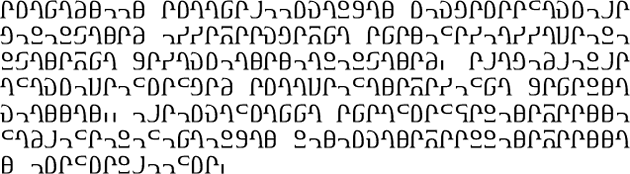
On the Omniglot blog there’s a new post about idiomatic ways to say you’re happy in English and Scottish Gaelic called As Happy As A Shoe, and there’s the usual Language Quiz. See if you can guess what language this is:
Here’s a clue: this is a Phippine language, but isn’t spoken in the Philippines
The mystery language in last week’s language quiz was Susu (Sosoxui), a Western Mande language spoken in Guinea, Guinea-Bissau, Senegal and Sierra Leone in West Africa.
On the Omniglot blog there’s a new post called Water Trumpets, which is about the French phrase une trombe d’eau (cloudburst, downpour), and there’s the usual Language Quiz. See if you can guess what language this is:
Here’s a clue: this language is spoken in parts of West Africa.
The mystery language in last week’s language quiz was Inuinnaqtun, an Inuit language spoken in Nunavut and the Northwest Territories, of Canada.
There’s a new Celtiadur post about words for Sticks and Rods and related things in Celtic languages.
On the Celtic Pathways podcast we’re examining some words for flowers and related things.
In the Adventure in Etymology we’re looking into the origins of the word quiver, both the quiver for arrows, and quiver as in to shake, which come from different roots.
In other news, I went to a concert this week featuring N’famady Kouyaté, a singer and musician from Guinea in West Africa, who is based in Cardiff in Wales. He sings in Mandinka and Susu, and possibly in other languages, and also adds bits of English and Welsh in some songs. It was great fun. Here are a couple of his songs:
Here’s the latest news from the world of Omniglot.
There are new language pages about:
Nengone (p’ene nengone), a Southern Oceanic language spoken mainly on Maré and Tiga islands, which are part Loyalty Islands Province in New Caledonia.
Daakaka, a Southern Oceanic language spoken in the southwest of Ambrym Island in Malampa Province of Vanuatu
Sa (Lokit), a Southern Oceanic language spoken in the south of Pentecost Island in Penama Province of Vanuatu.
New constructed script: Cebuano Script (Suwat Sinugbu), which was created by John Clement Husain and Mares Barrioquinto as an alternative way to write Cebuano (Bisaya), a Philippine language spoken mainly in the Central Visayas region of the Philippines.
There are new numbers pages in:
Etruscan (mekh Rasnal), a language that was spoken in Eturia in Italy from about 600 BC to the 5th century AD.
Nengone (p’ene nengone), a Southern Oceanic language spoken mainly on Maré and Tiga islands in New Caledonia.
Ingrian (Ižoran keeli), a Finno-Ugric language spoken in the Ingria region in the northwest of the Russian Federation.
There’s a new version of the Tower of Babel story in Lun Bawang, a North Bornean language spoken in the Sesayap river area of North Kalimantan province in Indonesia.
There’s an Omniglot blog post about the word Myriad and other ways to refer to a large or countless number, and the usual Language Quiz. See if you can guess what language this is:
Here’s a clue: this language is spoken in the Northern Territory of Australia.
The mystery language in last week’s language quiz was Cimbrian (Tzimbrisch), a Germanic language spoken in northeastern Italy.
There’s a new Celtiadur post about words for Up Above and related things in Celtic languages.
I joined Mastodon this week, specifically Polyglot City. I’ll be posting there fairly regularly as Omniglot. Join me if you’d like to.
In other news, I went to a concert this week featuring the Welsh harpist, Catrin Finch, and the Senegalese kora player, Seckou Keita, who sang in Wolof and Mandinka – not languages you hear very often in Bangor.
Here’s the latest news from the world of Omniglot.
There are new language pages about:
Big Numbas (V’ënen Taut), an Oceanic language spoken in the Big Numbas region in the northwest of Malekula Island in Malampa Province of Vanuatu.
Neverver, a Southern Oceanic language spoken on Malekula Island in Malampa Province of Vanuatu.
Tamambo (Tamabo), a Remote Oceanic language spoken mainly on Malo Island in Sanma province of Vanuatu.
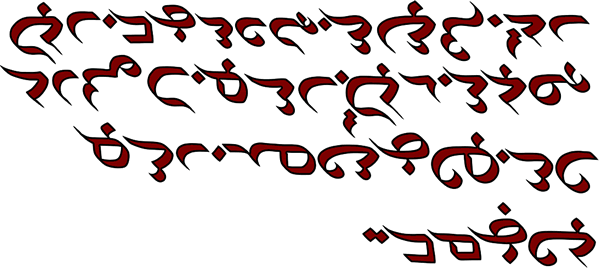
New constructed script: Katemayar, which was created by Bryson Schnaitmann to write his constructed language, Kynaatt.
There are new numbers pages in:
Ambel (galí Ambél), a Malayo-Polynesian spoken mainly on Waigeo island in West Papua province in eastern Indonesia.
Big Numbas (V’ënen Taut), an Oceanic language spoken in the Big Numbas region in the northwest of Malekula Island in Malampa Province of Vanuatu.
Paku, an East Barito language spoken in Central Kalimantan province of Indonesia.
Warao, a language isolate spoken in Delta Amacuro, Monagas and Sucre states of Venezuela.
There’s an Omniglot blog post called Tidy! about Dutch words for tidying and cleaning, and the usual Language Quiz. See if you can guess what language this is:
Here’s a clue: this language is spoken in Italy.
The mystery language in last week’s language quiz was Tamahaq, a Northern Berber language spoken in southern Algeria, western Libya and northern Niger.
Here’s the latest news from the world of Omniglot.
There are new language pages about:
Batak Angkola, a Southern Batak language spoken in the province of North Sumatra in Indonesia
Batak Dairi (Kata Pakpak), a Northern Batak language spoken in the provinces of Aceh and North Sumatra in Indonesia.
Batak Karo (cakap Karo), a Northern Batak language spoken in the provinces of Aceh and North Sumatra in Indonesia.
Batak Simalungun (Sahap Simalungun), a Southern Batak language spoken in the province of North Sumatra in Indonesia.
Batak Mandailing (Saro Mandailing), a Southern Batak language spoken in North Sumatra Province in Indonesia.
Batak Toba (Hata Batak Toba), a Southern Batak language spoken in the province of North Sumatra in Indonesia.
Makalero, a Timor-Alor-Pantar language in the municipality of Lautém in the east of East Timor.
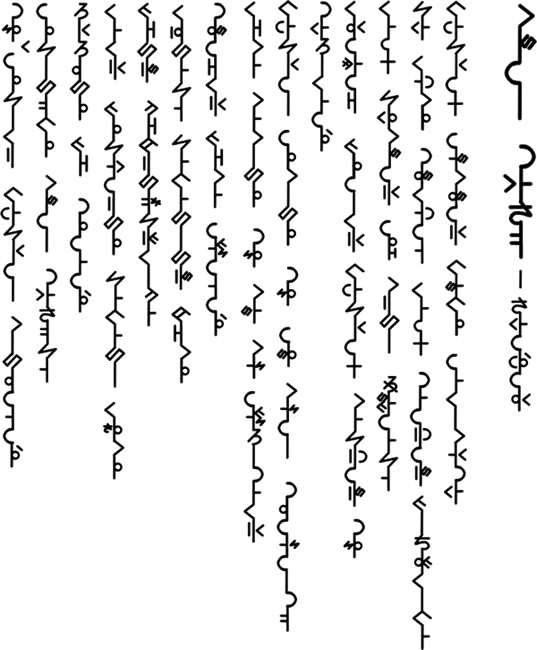
New constructed script: Jierimse, which was invented by Kobey Hill as an alternative way to write Austalian English, and was inspired by the Glagolitic and Ge’ez scripts.
There are new numbers pages in:
Tobelo, a West Papuan language spoken in the provinces of North Maluku and Papua in Indonesia.
Kembayan, a Southern Land Dayak language spoken in West Kalimantan province of Indonesia
Kambera (hilu Humba), a Malayo-Polynesian language spoken in Sumba Island in eastern Indonesia.
Yali, a Dani language spoken in Papua province of Indonesia
Talaud, a Philippine language spoken in the Talaud Islands in North Sulawesi province of Indonesia.
There’s an Omniglot blog post about spelling and Miss Pelling, and the usual Language Quiz. See if you can guess what language this is:
Here’s a clue: this language is spoken in parts of North Africa
The mystery language in last week’s language quiz was Äynu (Äynú / ئهﻳنوُ), a Turkic language spoke in the Xinjiang Uyghur Autonomous Region in the northwest of China.
There’s a new Celtiadur post about words for Heels and related things in Celtic languages.
On the Celtic Pathways podcast we find out what links the word Clan with words such as children, plant and plantain.
As it’s near the end of October, in the Adventure in Etymology we’re investigating the origins of the word hallow, as in Halloween.
I also made improvements to the Batak script, and made separate pages for Batak languages (mentioned above).
Here’s the latest news from the world of Omniglot.
There are new language pages about:
Wapishana (Wapixana), a Northern Arawakan language spoken in Guyana and Brazil.
Ketengban, an Eastern Mek language spoken in Highland Papua Province in Indonesia.
New constructed script: High Gavellian, which was created in 2020 by the developers of the Minecraft MMORPG Wynncraft, and is used to write English and Irish in the game.
New adapated script Glagoñol (Ⰳⱉⰰⰳⱁⰾⰹⱌⱏ), which is a way to write Spanish with the Glagolitic alphabet devised by Rodrigo Bustamante Solano.
There are new numbers pages in:
Dawan (Uab Metô), a Timoric language spoken in East Nusa Tenggara province on the island of West Timor in Indonesia.
Ngalum, am Ok language spoken in Papua province of Indonesia, and in Sandaun province of Papua New Guinea.
Lepki, a South Pauwasi language spoken in Western New Guinea.
Mao (Emela), an Angami-Pochuri language spoken in Manipur and Nagaland in northeastern India
Ketengban, an Eastern Mek language spoken in Highland Papua Province in Indonesia.
There’s an Omniglot blog post about the Scots word Snoozle, which means to snooze or doze, or to nuzzle, poke with the nose or snuggle, and the usual Language Quiz. See if you can guess what language this is:
Here’s a clue: this language is in the northwest of China.
The mystery language in last week’s language quiz was Boro / Bodo (बर’ राव), a member of the Sal branch of the Sino-Tibetan language family spoken in northeast India and eastern Nepal.
On the Celtic Pathways podcast we look into the origins of words for sacks, bags, bellys and related things in Celtic languages, and discover that the English words bulge, bilge and budget have Celtic roots.
Here’s the latest news from the world of Omniglot.
There are new language pages about:
Löyöp, an Oceanic language spoken in the east of Ureparapara Island in northern Vanuatu.
Lehali (Loli), an Oceanic language spoken in the west of Ureparapara Island in northern Vanuatu.
Mao (Emela), an Angami-Pochuri language spoken in Manipur and Nagaland the northeast of India.
There are new numbers pages in:
Aleut (Unangam Tunuu), an Eskimo-Aleut language spoken on the Alaskan Peninsula, and the Aleutian, Pribilof and Commander Islands.
Ge’ez (ግዕዝ), the classical language of Ethiopia which is still used as a liturgical language by Ethiopian christians and the Beta Israel Jewish community of Ethiopia.
Ketengban (Oktengban), a Trans-New Guinea language spoken West Papua in Indonesia.
On the Omniglot blog this week there’s a post called Jealous Envy, which is about the differences between the words jealousy and envy, and the usual Language Quiz. See if you can guess what language this is:
Here’s a clue: this language is spoken in the northeast of India and in eastern Nepal.
The mystery language in last week’s language quiz was Louisiana Creole (Kréyòl La Lwizyàn), a French-based creole spoken mainly in Louisiana in the USA.