White

Words for white in Celtic languages.

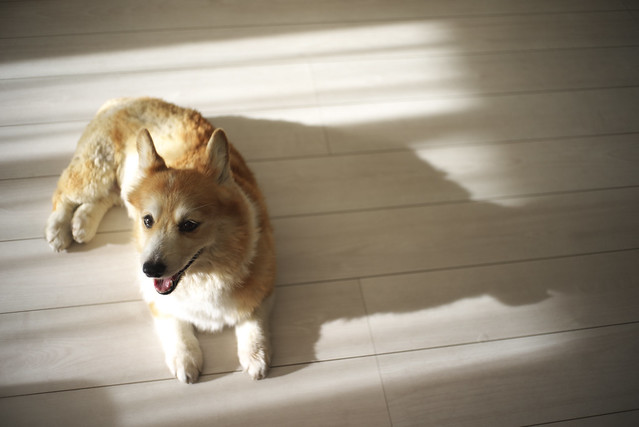
My cousin's overweight dog

Words marked with a * are reconstructions.

Proto-Celtic *windos [ˈwin.dos] = white
Gaulish *windos/uindos = white
Old Irish (Goídelc) finn [fʲin͈] = white, bright, blessed
Middle Irish (Gaoidhealg) finn = white, bright, lustrous, fair, light-hued (complexion, hair, etc), handsome, blessed, fair, just, true
finnaid = make white, becomes white
finne = fairness, brightness
finnemail = whitish
Irish (Gaeilge) fionn [fʲũːn̪ˠ/fʲɨ̞n̪ˠ] = white, fair-haired, blond, bright, clear; to whiten, make white, clear, brighten, scorch, singe, set alight
finne = whiteness, fairness
Scottish Gaelic (Gàidhlig) fionn [fjũːn̪ˠ] = white, fair, pale; sincere, true, certain; small; fine, pleasant; wan; lilac; resplendent, bright; prudent
finne [fin̪ʲə] = whiteness, fairness, fair maiden
Manx (Gaelg) fynn = blond(e), fair (hair, skin), pure white, sprite; cataract
fynnid = whiteness
Proto-Brythonic *gwinn [ˈɡwɨnː] = white (m)
*gwenn = white (f)
Middle Welsh (Kymraec) guin(n), gỽynn, gwyn(n) = white (m)
guenn, gwenn = white (f)
gwyn(n)der, gỽynnder = whiteness, pallor
gwyndawd, gwyndawt = felicity, bliss, happiness, success, gain, good
gwynhaa, gwynhau = to whiten, bleach, blanch
Welsh (Cymraeg) gwyn [ɡwɨ̞n / ɡwɪn] = white (m), greyish-white, pale; light, shining, bright; brilliant, white-hot; silver; amber-coloured; fair-haired, fair-faced, of fair complexion; holy, blessed, beatific, good, happy; splendid, excellent, beautiful, fair, pleasant; favourite, darling, white-headed
gwen = white (f)
gwynder = whiteness, pallor, brilliance, brightness, radiance
gwyndod = felicity, bliss, happiness, success, gain, good
gwynhaf, gwynhau = to whiten, bleach, blanch
Old Cornish guyn = white
Middle Cornish (Cernewec) gwyn (m)= white, fair, pleasant, glorious, blessed
gwen = white (f)
gwynna = to make white, whiten
Cornish (Kernewek) gwynn/gwydn [gwɪn:] = white, fair, pale, blessed
gwynnik = whitish
gwynnrudh = pink, whiteish pink
gwynnvys = blessed, fortunate, lucky
Old Breton (Brethonoc) guinn = white, pale
Middle Breton (Brezonec) guen(n) = white, blond
guenna, gwenna = to whiten
guender = whiteness
Breton (Brezhoneg) gwenn [ɡwɛnː] = white, pale, pure, bright, sacred, useless, vain
gwennañ [ˈɡɥɛnː.ã] = to whiten, planing (wood), exonerate
gwennder [ˈɡwɛn.dɛr/ˈɡɥɛn.dɛr] = whiteness
gwennerezh = laundry

Etymology: from Proto-Indo-Etymology *weyd- (to see) [source]. English words from the same roots include advice, clairvoyant, druid, guide, history, idea, wit, wise and wisdom [source].

Proto-Celtic *banos = white
Old Irish (Goídelc) bán [baːn] = white, pure
Middle Irish (Gaoidhealg) bán = white, fair, bright, pure, holy, blessed, blank
bánad = act of turning pale, the paleness of death
bánaid, bánaigid = turns pale, whitens
Irish (Gaeilge) bán [bˠɑːn̪ˠ / bˠæːn̪ˠ] = white, white-headed, fair, pale, blank, empty, idle, wild crazy
bánach = fair-haired person, white person
bánaí = albino (person)
bánaigh = to whiten, bleach, blanch, dawn, clear out, empty
bánú = whitening, dawning, clearance, dispersal
Scottish Gaelic (Gàidhlig) bàn [baːn] = fair(-haired), white (haired); blank, empty, unoccupied, vacant; pallid, pale; fallow
bànachadh [baːnəxəɣ] = (act of) whitening, making pale
bànachd [baːnəxg] = whiteness, paleness
bànaich [baːnɪç] = whiten, make pale, vacate
Manx (Gaelg) bane = white, blank, fair, blond(e), pallid; fallow, unbroken (ground)
banee = albino, pale, white
baneid = whiteness, blankness, paleness, lightness
baneaghey = whiten, whitening
Welsh (Cymraeg) bân [baːn] = white, whitish, grey, pale (borrowed from Irish)

Etymology: from Proto-Indo-European *bʰeh₂- (to shine) [source]. Words from the same PIE root include beacon, buoy and phantasm in English [source].

Proto-Celtic *gelos = shining, white
Gaulish *gelā
Old Irish (Goídelc) gel = bright, clear, white
gile = brightness, whiteness
Middle Irish (Gaoidhealg) gel = fair, white, bright, shining
gelach = moon
gelaid = to make white, bleach, make fair
gelaigid = to brighten, give light to
gelán = brightness, a flash, whiteness
gelcaid = to whiten
geldae = fair, bright
Irish (Gaeilge) geal [ɟalˠ] = white, bright, pure, glad, happy, beloved, fond
gealach [ɟəˈl̪ˠɑx] = moon
gealacht = brightening
gealán = gleam, flash, bright, spell
gealánach = gleaming, flashing, bright
gealas = gleam of light, brightness
Scottish Gaelic (Gàidhlig) geal [gʲal̪ˠ] = white, fine
gealach [gʲal̪ˠəx] = moon
gealachd [gʲal̪ˠəxg] = whiteness
gealadh [gʲal̪ˠag] = blight, whitening, fade-in
gealaich [gʲal̪ɪç] = blanch, bleach, whiten
gealaichte [gʲal̪ɪçdʲə] = blanched, bleached, whitened
Manx (Gaelg) gial = bright, clear, white, shining, snowy, light-coloured, fulgent
giallagh = moon
gialan = egg white
giallaghey = to blanch, bleach, brighten, whiten
gillid = brightness, clearness, light, lustre
Middle Welsh (Kymraec) gell = bay, brown, auburn
Welsh (Cymraeg) gell = bay, brown, auburn, orange, yellow, tawny-coloured
Cornish (Kernewek) gell [gɛl:] = fawn, light brown, tan
gellburpur = puce
gellrudh = auburn, russet brown
gellvelyn = tawny brown
Middle Breton (Brezonec) guel(l) = bay, fawn, red
Breton (Brezhoneg) gell [ˈɡɛlː] = bay, brown, ripe, exhausted
gellaat [ɡɛˈlɑːt] = to make or become brown
gellan, gellañ = = to brown, ripen
gelleg = bay colour

Etymology: from Proto-Indo-European *ǵʰelh₂os, from *ǵʰelh₂- (to shine) [source]. English words from the same PIE roots include arsenic, gall, gild, gild, gold and yellow [source].

The Fastest Way to Learn Japanese Guaranteed with JapanesePod101.com

Sources: Wiktionary, Am Faclair Beag, Online Manx Dictionary, Teanglann.ie, eDIL – Electronic Dictionary of the Irish Language, In Dúil Bélrai English – Old Irish glossary, Geiriadur Prifysgol Cymru, Gerlyver Kernewek, Lexicon Cornu-britannicum: A Dictionary of the Ancient Celtic Language of Cornwall, Dictionaire Favereau, TermOfis, Le dictionnaire diachronique du breton, Etymological Dictionary Of Proto Celtic
Black

Words for black and related things in Celtic languages.

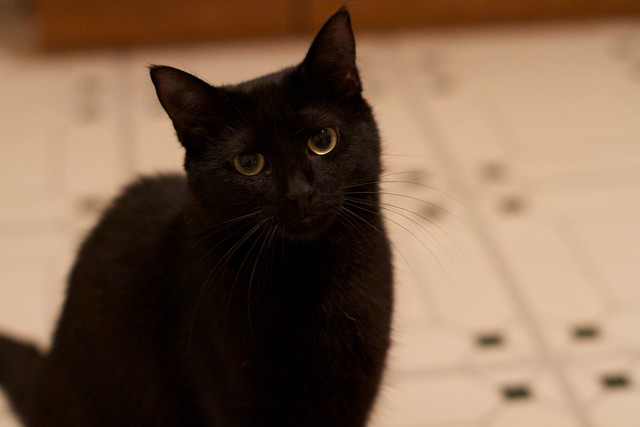
Black Beauty

Words marked with a * are reconstructions.

Proto-Celtic *dubus = black
Old Irish (Goídelc) dub [duv] = black; morally dark, dire, gloomy, melancholy
Middle Irish (Gaoidhealg) dub = black, swarthy, dark, dire, gloomy, melancholy
dubach = ink
dubachas = gloom, heaviness, grief
dubaid = to grow dark, turn black or discoloured, blacken
Irish (Gaeilge) dubh [d̪ˠʊvˠ / d̪ˠʊw] = black; evil; darkness; sable; black-hearted
dubhach = dismal, gloomy, melancholy, sorrowful, black, dark
dubhachas = gloom, sorrow
dubhaigh = to blacken, darken, blight, sadden, oppress
dúchan = blackening, darkening, sadness
Scottish Gaelic (Gàidhlig) dubh [duh] = black, dark, sad, inky, blackness, darkness
dubhach [du.əx] = ink, blackening, alum
dubhachadh [du.əxəɣ] = (act of) blackening, darkening, blackout, tarnishing
dubhachas [du.əxəs] = sadness, sorrow
dubhaich = blacken, darken, tarnish
Manx (Gaelg) doo = black, black-haired, black headed, inky, dark, ink, dirty, sable, bold
dooey = blacker, black
doo(a)ghey = to black, darken, ink
dooid = blackness, darkness
Proto-Brythonic *duβ = black
MIddle Welsh (Kymraec) du = black, dark; sad, gloomy
duaw, duo = to turn black, darken, eclipse, obscure
Welsh (Cymraeg) du [dɨː / diː] = black, sable, dark; sad, gloomy; angry; bitter; lowering; calamitous; wicked, villainous, infernal
duad = a blackening, a darkening
duaf, duo = to turn black, darken, eclipse, obscure
duaidd = blackish, dark, swarthy
duair = sarcasm
duder = blackness, darkness, gloominess
Middle Cornish (Cernewec) du = black, sable, dark, gloomy
Cornish (Kernewek) du [dy:/diˑʊ] = black, dark
duhe = blacken
duik = blackish
Old Breton (Brethonoc) du = black
Middle Breton (Brezonec) du = black, swollen, starved
duat = black, charcoal
duaff = to blacken
Breton (Brezhoneg) du [dyː] = black, swollen, starved
duaat = to become or make blacker
duad = black, charcoal
duadenn = darkness, nimbus (cloud)
duadur = blackening
duañ [dyːã] = to blacken, dirty, waste away
duder [ˈdyː.dɛr] = darkness, tan, wickedness

Etymology: from Proto-Indo-European *dʰewbʰ- (hazy, unclear, dark, deep) [source]. Words from the same roots include deaf, deep and dumb in English [source].

The Fastest Way to Learn Japanese Guaranteed with JapanesePod101.com

Sources: Wiktionary, Am Faclair Beag, Online Manx Dictionary, Teanglann.ie, eDIL – Electronic Dictionary of the Irish Language, In Dúil Bélrai English – Old Irish glossary, Geiriadur Prifysgol Cymru, Gerlyver Kernewek, Lexicon Cornu-britannicum: A Dictionary of the Ancient Celtic Language of Cornwall, Dictionaire Favereau, TermOfis, Le dictionnaire diachronique du breton, Etymological Dictionary Of Proto Celtic

Old

Words for old and related things in Celtic languages.

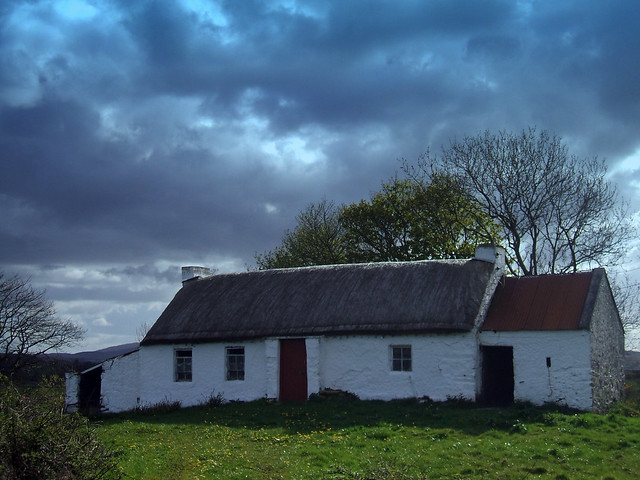
Old Irish Cottage & Out House

Words marked with a * are reconstructions.

Proto-Celtic *senos = old
Gaulish *senos = old
Old Irish (Goídelc) sen = old, ancester, old person,
sendatu = longevity, old age
senóir = elder, old person, senior
senórdacht = elderliness, old age
sentonn = old woman
sentu = old age
Middle Irish (Gaoidhealg) sen = old, ancient, long-standing, ancestor
sendatu = old age, long life
senóir, seanóir = senior, elder, old person
senórdacht, senordacht = old age, seniority
sentonn, sentuinne, sentain = old woman
sentu = old age
Irish (Gaeilge) sean [ʃanˠ] = old, aged, mature; senior, ancestor; long-established, old fashioned; great, exceeding
seanaimsir = old times
seanaois = old age
seanársa = primitive
seanda = old, aged, ancient, antique, stale
seanóir = old person, senior, elder
Scottish Gaelic (Gàidhlig) sean [ʃɛn] = old, aged, elderly; former
seanachd [ʃɛnəxg] = ancientness, oldness
seanair [ʃɛnɪrʲ] = grandfather, elder, ancestor
seanmhair [ʃɛnɛvɪrʲ] = grandmother, grandma
seannda [ʃãũndə] = ancient, old-fashioned
seanndaidh [ʃãũn̪ˠdɪ] = ancient, old-fashioned, infirm, frail
seantaidh [ʃan̪ˠdɪ] = primeval, primitive, shanty
Manx (Gaelg) shenn = old, stale, aged, former, time-fusty, inveterate, ancient, vintage, veteran, old-established, olden, antiquarian, worn, elderly, consecrated, archaic, ex, senile, long-standing
shennaghys = annals, antiquity, history, story-telling, tradition
shennayr, shaner = ancestor, father, forebear, grandfather
shenndeeagh = ancient, historical
Proto-Brythonic *hen = old
Middle Welsh (Kymraec) hen = old
henadur, henadûr = alderman, elder, presbyter, (church) father, senior in rank
henv, henu, hena = to grow old or decrepit, weaken, deteriorate, fail
henaidd = oldish, old, aged, ancient, archaic, antiquated
heneint, henaint = old age, oldness, antiquity, the aged
Welsh (Cymraeg) hen [heːn] = old, aged; ancient, antique, pristine, former; inveterate, chronic; original; senior, elder; stale, mouldy, musty, fusty
henadur = alderman, elder, presbyter, (church) father, senior in rank
henaf, henu = to grow old or decrepit, weaken, deteriorate, fail
henaidd = oldish, old, aged, ancient, archaic, antiquated
henaint = old age, oldness, antiquity, the aged
Middle Cornish (Cernewec) hen, hén, hên = old, ancient, antique
hendas = grandfather
hengog = great great grandfather
Cornish (Kernewek) hen [hɛ:n / he:n] = old, archaic, long-standing
henavek, henavoges = elder(ly), senior, older
hendas = ancestor, forefather
hendedhyow = the olden days
hendheskonieth = archaeology
henedh = generation
hengov = tradition
henlavar = proverb
Middle Breton (Brezonec) hen = old, ancient
henaff = elder, senior
henavelezh = birthright, right of primogeniture
Breton (Brezhoneg) hen = old, ancient
henadur = = archaism
henamzer = antiquity
henañ = elder, senior
henanded = primogeniture
henavelezh = birthright, right of primogeniture

Etymology: from the Proto-Indo-European *sénos (old) [source]. Words from the same PIE roots include senate and senior in English, sens (ancient, old) in Latvian, sẽnas (old) in Lithuanian [source].

Sources: Wiktionary, Am Faclair Beag, Online Manx Dictionary, Teanglann.ie, eDIL – Electronic Dictionary of the Irish Language, In Dúil Bélrai English – Old Irish glossary, Geiriadur Prifysgol Cymru, Gerlyver Kernewek, Lexicon Cornu-britannicum: A Dictionary of the Ancient Celtic Language of Cornwall, Dictionaire Favereau, TermOfis, Le dictionnaire diachronique du breton, Etymological Dictionary Of Proto Celtic
italki - Win cash rewards for learning any language

Young

Words for young in Celtic languages.

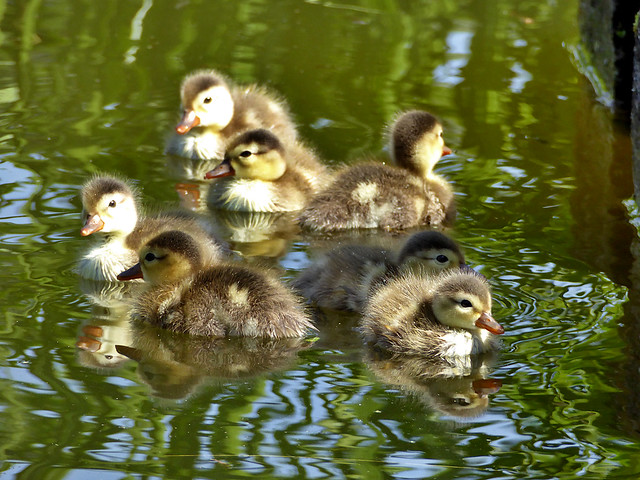
Young

Words marked with a * are reconstructions.

Proto-Celtic *yowankos = young
Gaulish Iouinca = name (?)
Old Irish (Goídelc) óc [oːɡ] = young, young man, warrior
ócbad = young people, youths
óclach = young man, warrior, servant
Middle Irish (Gaoidhealg) óc = young, young man, warrior, poet
ócbad, ócbud = young folk, youths, youth
óclach, ócleach = young man, warrior, attendant, servant, vassal
Irish (Gaeilge) óg [oːɡ/ɔːɡ] = young (person, animal, bird), youth, junior, minor, new, fresh, early
ógánach = young man, youth, crafty person, boyo, trickster
óigeanta = youthful, youthful-looking
óigeantacht = youthfulness
óglach = young man, (young) warrior), attendant, servant, vassal, volunteer
óglachas = manhood, warriorship, armed service, vassalage
ógra = young people, youths
Scottish Gaelic (Gàidhlig) òg [ɔːg] = young, youthful
ògail [ɔːgal] = adolescent, youthful
ògalachd [ɔːgəl̪ˠəxg] = youthfulness, youth, youthful conduct
ògan [ɔːgan] = tendril, twig, seedling, lambkin
òganach [ɔːganəx] = youth, young man, bough
òganta [ɔːgən̪ˠdə] = juvenile
Manx (Gaelg) aeg [ɛːɡ] = young, adolescent, immature, juvenile
aegey = young, juvenile
aegid = adolescence, immaturity, young people, youth
aeglagh = adolescent, juvenile, young ones, youth
aegoil = youngish, youthful
Proto-Brythonic *jowank = young
Middle Welsh (Kymraec) ieuangc, yeueing, yeuejg, yefeink, ieuanc, ieueinc = young, juvenille, unmarried
ieu, iau = younger
yeuhaf, yeuaw, ieuhaf, ieuaf = (the) youngest
euectyt, euenctit, ieuegtit, ieuengtit = youth, adolescence
Welsh (Cymraeg) ifanc [ˈɪvaŋk / ˈiːvaŋk] = young, youthful, adolescent; inexperienced, immature; recent; unmarried, newly wed
iau, ieuach, ifach = younger, not as old
ieuaf, i(e)faf = (the) youngest, the younger (of two), junior
ieuant = young person, youth, adolescence
ieuenctid = youth, adolescence
Old Cornish iouenc, youonc = young
Middle Cornish yowync, iouenc, youonc = young, youthful
yonc = young, youthful, juvenile
yowyncneth = youth, youthfulness
Cornish (Kernewek) yowynk, yonk [‘jɔwɪŋk/jɔˑŋk] = juvenille, young, youthful
yowynka, yonka = younger
yonker, yonkores = youngster, youth
yowynkneth, yonkneth = youth
Middle Breton youanc, ioanc, iouanc = young
yaouancquat, youancat, youanchat = to rejuvenate
yaouanctet, iaouanctet = youth(fulness)
Breton (Brezhoneg) yaouank = young
yaouankaat = to rejunvenate
yaouankadur = rejunvenation
yaouank(t)iz = youth
yaouankted = youth(fulness)

Etymology: from the Proto-Indo-European *h₂yuh₁n̥ḱós (young), from *h₂yéwHō (young), from *h₂óyu (long time, lifetime) [source].

Words from the same roots include young and youth in English, jeudg (youth) in Dutch, Jugend (youth) in German, jeune (young) in French and joven (young(ster), youth(ful), young person) in Spanish [source].

The Fastest Way to Learn Japanese Guaranteed with JapanesePod101.com

Sources: Wiktionary, Am Faclair Beag, Online Manx Dictionary, Teanglann.ie, eDIL – Electronic Dictionary of the Irish Language, In Dúil Bélrai English – Old Irish glossary, Geiriadur Prifysgol Cymru, Gerlyver Kernewek, Lexicon Cornu-britannicum: A Dictionary of the Ancient Celtic Language of Cornwall, Dictionaire Favereau, TermOfis, Le dictionnaire diachronique du breton, Etymological Dictionary Of Proto Celtic
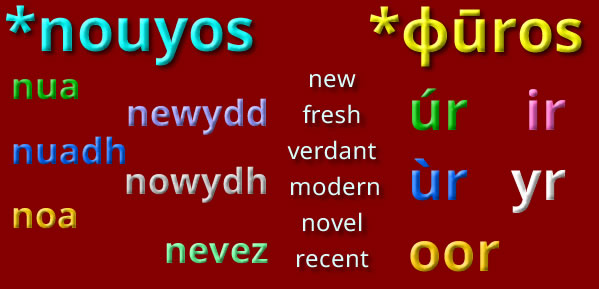
Fresh & New

Words for fresh and new in Celtic languages.

Words for new in Celtic languages

Proto-Celtic *ɸūros = new
Old Irish (Goídelc) úr = fresh, new
Middle Irish (Gaoidhealg) úr = fresh, new, bright, noble, generous, fair, active, recent
Irish (Gaeilge) úr [uːɾˠ] = fresh; free, liberal, moist
úrach = green timber
úraigh = to freshen, scour, cleanse, become moist, damp
úras = new milk
úrchneasach = fresh-complexioned
Scottish Gaelic (Gàidhlig) ùr [uːr] = new, fresh
ùrachadh = refreshing, renewing, renovating, renewal
ùr-ghnàthaich = innovative, innovatory
ùr-ghnàthaichear = innovator
ùrad = degree of newness, novelty
Manx (Gaelg) oor = new, sweet, novel, sappy, crisp, span, fresh, hour, raw
ooragh = hourly, refreshing
ooraghey = to freshen, purify, refresh, relieve, sweeten
ooraghtoil, oorey = refreshing
Welsh (Cymraeg) ir [iːr] = verdant, green, juicy, sappy, moist, succulent, not withered, not dried up or coagulated, fresh, undried; mild; alive, thriving, lively, vigorous; new, fresh, young, unripe
iraidd = fresh, verdant, green, juicy, sappy, moist, liquid
Cornish (Kernewek) yr [ɪ:r/iːr] = fresh

Etymology: from the Proto-Indo-European *puHrós (wheat), possibly from *pewH- (to be clean, pure) [Source].

Words from the same PIE roots include pure in English, პური (ṗuri – bread, wheat) in Georgian, and պուրի (puri – a type of bread) in Armenian [Source].

Proto-Celtic *nouyos = new
Gaulish *novios = (used in place names)
Celtiberian nouiza = new
Old Irish (Goídelc) núa [n͈uːa̯] = new
Middle Irish (Gaoidhealg) núa(e) = new, recent, fresh, lusty, vigorous, fair, clear, bright, lately, anew, again, recently
Irish (Gaeilge) nua [n̪ˠuə / n̪ˠuː] = new, fresh, recent, novel; newness, new thing
nua-aimseartha = modern
nuachan = novation
nuacht = news, novelty
nuachtóir = reporter, journalist
Scottish Gaelic (Gàidhlig) nuadh [nuəɣ] = new, fresh, recent, novel, modern, unfamiliar
a-nuadh = anew
nua-aimsireach = modern, up to date
nua-fhasanta = newfangled
nuadhachadh = renewing, renovating
nuadhachas = novelty, innovation
Manx (Gaelg) noa = fresh, modern, new, novel, original, recent, unused
noa-emshiragh = modern
noaght = freshness, modernity, newness, novelty
noaid = freshness, innovation, newness, novelty, originality
aanoaghey = to rejuvenate, renew, renovate
Proto-Brythonic *newɨð = new
Old Welsh neguid = new
Middle Welsh (Kymraec) newyt, newyd = new, recent, modern, late, novel
newydhau, newyddhau = to renew, renovate, restore
Welsh (Cymraeg) newydd [ˈnɛu̯.ɨ̞ð/ˈnɛu̯.ɪð] = new, recent, newly-grown, modern, late, novel, changed, different; new (moon), unused, fresh
newyddaf, newyddu = to renew, renovate, restore, be renewed or restored, replace, change, reform, modernize, innovate
newyddaidd = newish, new, modern, newfangled, fresh, renewed
newyddair = neologism, new word or spelling
newyddeb = novelty, innovation
newyddiadur = newspaper
newyddiadura = to be a journalist
newyddiadureg = jouralese, journalism
Middle Cornish (Cernewec) newydh, nowydh, nowedh = new, fresh, late, recent
Cornish nowydh = fresh, new, novel, newly, just
nowydh flamm = brand new
nowydh genys = newborn
Old Breton nouuid = new
Breton (Brezhoneg) nevez [ˈne.ve] = new
nevezadeg restoration campaign
nevezadenn = innovation
nevezadenniñ = to innovate
nevezadur = innovation, updating, actualisation
nevezer = innovator

Etymology: from the Proto-Indo-European *néw(y)os (new) [Source]. The town of Noia in A Coruña in Galicia in the northwest of Spain probably gets its new from the same Proto-Celtic root possibly via Celtiberian [Source].

Words marked with a * are reconstructions.

Sources: Wiktionary, Am Faclair Beag, Online Manx Dictionary, Teanglann.ie, eDIL – Electronic Dictionary of the Irish Language, In Dúil Bélrai English – Old Irish glossary, Geiriadur Prifysgol Cymru, Gerlyver Kernewek, Dictionaire Favereau, TermOfis, English – ProtoCeltic WordList (PDF), Etymological Dictionary Of Proto Celtic

The Fastest Way to Learn Japanese Guaranteed with JapanesePod101.com

Expensive Fools

Words for expensive, unfree & foolish in Celtic languages.

Jester

Words marked with a * are reconstructions.

Old Irish (Goídelc) dóer, doír [doːi̯r/doːi̯rʲ] = servile, unfree, serf
Middle Irish (Gaoidhealg) dóer, doír = unfree, lowborn, serf, base, ignoble, slavish, enslaved, subject, guilty
doíraid = to debase, take, captive, enslave, condemn
Irish (Gaeilge) daor [d̪ˠeːɾˠ / d̪ˠiːɾˠ] = unfree; base, servile; convicted, condemned; hard, severe; costly; dear, high-priced
daoradh = enslavement, conviction, condemnation
daorán = slave, servile creature
daoránach = convict
daorobair = servile work, hard labour
Scottish Gaelic (Gàidhlig) daor [dɯːr] = condemned; enslaved, in bondage
daorachadh = condemning, dooming, condemnation, enslaving
daoran [dɯːran] = ned, lout
daorsa [dɯːr̪ˠsə] = bondage, captivity
daorsanach [dɯːr̪ˠsanəx] = convict
Manx (Gaelg) deyr = unfree, serf
deyrey = to condemn, convict doom; condemnation, conviction
deyrsnys = bondage, enslavement, serfdom, servitude, slavery, subjection
deyraneagh = convict

Etymology: from the Old Irish do- (to) & fer (man, husband) [source].

Proto-Celtic *drūtos = foolish, lewd; costly; daring, wanton; furious, grievous
Gaulish Trutiknos (personal name)
Old Irish (Goídelc) drúth = buffoon, jester, moron
Middle Irish (Gaoidhealg) drúth = professional jester, buffoon, poet, learned man, imbecile
drúthacht = buffoonery
drúthán = little jester, little fool
drúthlach = cuckold, foolish man
Irish (Gaeilge) drúth = irresponsible person, imbecile; jester, buffoon
drúthacht = buffioonery
Scottish Gaelic (Gàidhlig) drùth = lecherous, lascivious, foolish
drùthach = obscene
Middle Welsh (Kymraec) drut, drud = dear, expensive
drudwr = brave warrior
Welsh (Cymraeg) drud = dear, high-priced, costly, expensive; precious, valuable; daring, brave, valiant, courageous, bold; rash, reckless, foolish
drudedd = obstinacy
drudfawr = expensive, precious, courageous, valiant
drudlew = valiant and daring
Cornish (Kernewek) drudh = cherished, favourite, precious

Etymology: unknown [source].

The Fastest Way to Learn Japanese Guaranteed with JapanesePod101.com

Sources: Wiktionary, Am Faclair Beag, Online Manx Dictionary, Teanglann.ie, eDIL – Electronic Dictionary of the Irish Language, In Dúil Bélrai English – Old Irish glossary, Geiriadur Prifysgol Cymru, Gerlyver Kernewek, Lexicon Cornu-britannicum: A Dictionary of the Ancient Celtic Language of Cornwall, Dictionaire Favereau, TermOfis, Le dictionnaire diachronique du breton, Etymological Dictionary Of Proto Celtic

Free

Words for free and related things in Celtic languages.

Freedom

Words marked with a * are reconstructions.

Proto-Celtic *su-wiros = free (“good man”)
Old Irish (Goídelc) saer [soːi̯r] = free, freeman, noble, craftsman
saeraid [ˈsoːi̯rɨðʲ] = to free, liberate, deliver, save, exempt
saire [ˈsai̯.rʲe] = freedom, liberty
Middle Irish saer, soer, sóer = free, freeman, noble, ready, skilled,
sáeraid = to free, liberate, save, rescue, deliver
saíre, sóire = freedom, liberty, nobility,
Irish (Gaeilge) saor [sˠeːɾˠ/sˠiːɾˠ] = free, enfranchised; noble; independent
saoradh = liberation, deliverance, release, acquittal, assurance, confirmation
saoráid = ease, facility, ease, freedom from constraint
saoráideach = easy, facile
saoráidí = easiness, facileness
saoráil = freedom, bargin
saorálach = voluntary, free, unconstrained
saorálaí = volunteer
saoirse = freedom, immunity, exemption
Scottish Gaelic (Gàidhlig) saor [sɯːr] = free (not captive); cheap; frank
saora [sɯːr̪ˠsə] = freedom, liberty, redemption
saorachd [sɯːrəxg] = freedom, cheapness
saoradair [sɯːrədɪrʲ] = liberator
saoradh [sɯːrəɣ] = freeing, libterating, liberation
saorsach = [sɯːr̪ˠsəx] = free, unrestrained
saorsachd = [sɯːr̪ˠsəxg] = freedom, exemption
saorsainn [sɯːr̪ˠsɪn̪ʲ] = liberty
Manx (Gaelg) seyr [seːr] = free, gratuitous, gratis, complimentary, immune, floating, independent, unforced
seyrsnys = autonomy, exemption, freedom, immunity, independence
seyrey = absolution, exemption, liberation; to absolve, acquite, exempt, free, libterate

Etymology: from Proto-Celtic *su- (good, well), from PIE *h₁su- (good, well), and Proto-Celtic *wiros (man, husband), from PIE *wiHrós (man, husband) [source]

The Irish name Fearghal (Fergal, Feargal), and the English name Farrell come from the Proto-Celtic name *Wirogalos, from *wiros (man) and‎ *galā (valour, ability) [source], and the Irish name Fearghas and the English version, Fergus, come from the Proto-Celtic name *Wirogustus, from *wiros (man) and‎ *gustus (excellence, force) [source]

Proto-Celtic *ɸriyos = free
Proto-Brythonic *rɨð [ˈrɨːð] = free
Middle Welsh (Cymraeg) ryd, rit = free, nonconformist; unrestricted, unrestrained; open; liberal
ryddd-dab, rydd-deb = freedom, liberation, deliverance, immunity
ryddhâd, rhyddhaad = release, libteration, freedom
rydhaw, rydhaa, rytha = to free, release, liberate
Welsh (Cymraeg) rhydd [r̥ɨːð / r̥iːð] = free, nonconformist; unrestricted, unrestrained; open; liberal
rhyddd-deb = freedom, liberation, deliverance, immunity
rhyddhad = release, libteration, freedom
rhyddhaf, rhyddhau = to free, release, liberate
Old Cornish rid = free
Middle Cornish (Cernewec) rid, ruid = free, unconstrained
Cornish (Kernewek) rydh [rɪ:ð / ri:ð] = free
rydhses = freedom, liberty
Old Breton (Brethonoc rid = free

Etymology: possibly from Proto-Indo-European *priHós (dear, beloved, happy, free), from *preyH- (like, love) [source]. English words from the same PIE roots include free(dom), friend and proper [source].

The Fastest Way to Learn Japanese Guaranteed with JapanesePod101.com

Sources: Wiktionary, Am Faclair Beag, Online Manx Dictionary, Teanglann.ie, eDIL – Electronic Dictionary of the Irish Language, In Dúil Bélrai English – Old Irish glossary, Geiriadur Prifysgol Cymru, Gerlyver Kernewek, Lexicon Cornu-britannicum: A Dictionary of the Ancient Celtic Language of Cornwall, Dictionaire Favereau, TermOfis, Le dictionnaire diachronique du breton, Etymological Dictionary Of Proto Celtic

Sorrow & sadness

Words for sorrow, sadness and related things in Celtic languages.

sad pug

Proto-Celtic *trougos/*trowgo- = sorry, sad, wretched
Old Irish (Goídelc) trúag, tróg = miserable, wretched, emaciated, wretch
trúagdae = miserable, wretched
trógán, trúagán = miserable person, wretch, pauper
trúaige = affliction, compassion, misery, pity, wretchedness
Middle Irish (Gaedhealg) trúag = wretched, pititable, miserable, sad; thin, lean, emaciated; wretch, miserable person
trúagdae, trogdae, trúagdai, troghda = miserable, wretched. piteous
trúagán = miserable person, wretch, pauper
trúagnait, trógnait = wretch, miserable person
trúaige = misery, wretchedness, affliction
trúaigméil = pitiable, sorrowful
Irish (Gaeilge) trua [t̪ˠɾˠuə] = pity, sympathy, compassion, miserable person, wretch; pitiable, miserable, wretched; lean, thin, emaciated
truacánta = piteous, plaintive
truacántacht = piteousness, plaintiveness
truachroíoch = kind-hearted, compassionate, heartrending, piteous
truacht = leanness
atruach = compassionate
truán = miserable person, wretch; thin, emaciated creature, importunate person
truanairt = wretch
truánta = wretched; thin, emaciated
truántacht = wretchedness; thinness, emaciation
Scottish Gaelic (Gàidhlig) truagh [truəɣ] = abject, forlorn, miserable, pitiful, poor, sorry
truaghan [truəɣan] = poor soul/thing, wretch
truaghag [truəɣag] = poor/pitiful thing, poor wee thing (female)
truaghaileachd [truəɣaləxg] = compassionateness, tender-heartedness
truaghanachd [truəɣən̪ˠəxg] = abjectness, miserableness, wretchedness
truas [truəs] = pity, compassion, sympathy
Manx (Gaelg) truan = misery
truanagh = miserable, mournful, sorrowful person
truanys = misery
treih = abject, deplorable, feeble, forlorn, fragile, miserable, pathetic, piteous, pitiful, regrettable, rueful
treihaght = misery, pitifullness, pitifulness
treihnagh = mournful
treihys = abjection, abjectness, fragility, misery
Gaulish *trugan = wretch
Middle Welsh (Kymraec) tru, trv = wretched, miserable, deplorable, pitiful, pathetic
truan = wretch, miserable person
truanu = to take pity, feel compassion
truaneid, truanaidd = wretched, miserable, deplorable
tryanedd, tayyrnedd = wretchedness
trueni = misery, wretchedness, abjectness, degradation
truanus = wretched, miserable, deplorable, poor
trỽch, troch, truch = unfortunate, sad, wretched
Welsh (Cymraeg) tru [trɨː/triː] = wretched, miserable, deplorable, pitiful, pathetic
truan = wretch, miserable person; wretched, miserable, deplorable, pitiful, pathetic, poor, weak
truanaf, truanu = to take pity, feel compassion
truanaidd = wretched, miserable, deplorable, pitiful
truanedd = wretchedness
trueni = misery, wretchedness, abjectness, degradation
truenus = wretched, miserable, deplorable, poor
trwch = unfortunate, sad, wretched, poor; bad, evil, wicked; unfortunate person, wretch, scoundrel
Old Cornish troc = miser
Middle Cornish (Cernewec) tru = alas, pity, sad, woe
trueth = pity, compassion
troc = wretched, miser
Cornish (Kernewek) tru = alas
truan = sadly, miserable, unfortunate, wretched
truedh = pity, sympathy
truedhek = sadly, pathetic, pitiful, plaintive, sad
trogh = broken, wretched
Middle Breton (Brezonec) tru = pitiful, wretched, miserable
truant = pitiful, wretched, miserable
trugarez = pity, mercy, forgiveness, thanks, misery
Breton (Brezhoneg) tru = pitiful, wretched, miserable, wretch
trugarez = thank you, mercy, forgiveness
truant = beggar
truanter = cheater, supplicant

Etymology: possibly from the Proto-Indo-European *terh₁- (to rub, turn, drill, pierce). Words from the same roots possibly include truant in English, and truand (crook, gangster, beggar) in French [source].

Proto-Celtic *brugnos = saddness, pain
Old Irish (Goídelc) brón [broːn] = sorrow, grief, lamentation, distress, burden
Irish (Gaeilge) brón [bˠɾˠoːnˠ] = sorrow, grief, grieving, lamentation; distress, burden
brónach [ˈbˠɾˠoːnˠəx] = sad, sorrowful
Scottish Gaelic (Gàidhlig) bròn [brɔːn] = grief, sadness, sorrow, mourning, affliction
brònach [ˈbrɔːnəx] = doleful, miserable, rueful, sad, sorrowful; disconsolate
Manx (Gaelg) bran = sorrow, blackness of soul
branagh = mournful, black (as outlook)
Welsh (Cymraeg) brwyn [bruːɨ̯n / brʊi̯n] = sorrow, grief, sadness; sorrowful, grievous, sad, heavy; pensive

Etymology: possibly from Proto-Indo-European *gʷruHǵʰ-nó-, from *gʷrewHǵʰ- (to bite) + *-nós, or from *bʰreg- (to break) [source].

Welsh (Cymraeg) trist [triːst / trɪst] = sad, unhappy, sorrowful, mournful, pensive, downhearted, miserable, anxious
Cornish (Kernewek) trist = sad, mournful
Breton (Brezhoneg) trist = sad

Etymology: from Latin trīstis (sad, unhappy, melancholy, morose), from Proto-Indo-European *tréystis (stubborn, in a bad mood) [source].

Words marked with a * are reconstructions.

Sources: Wiktionary, Am Faclair Beag, Online Manx Dictionary, Teanglann.ie, eDIL – Electronic Dictionary of the Irish Language, In Dúil Bélrai English – Old Irish glossary, Geiriadur Prifysgol Cymru, Gerlyver Kernewek, Gerlyvyr Cernewec, Dictionaire Favereau, TermOfis, Le dictionnaire diachronique du breton, Geriafurch, English – ProtoCeltic WordList (PDF), Etymological Dictionary Of Proto Celtic

Happy & fortunate

Words for happy, forunate and related things in Celtic languages.

have a happy weekend!

Words marked with a * are reconstructions.

Proto-Celtic *sognāwos = well-grown
Old Irish (Goídelc) sona [ˈsona] = happy, fortunate
sonaide = prosperous, fortunate, happy, lucky
Middle Irish (Gaoidhealg) sona = prosperous, fortunate, lucky
sonaide = prosperous, fortunate, happy, lucky
sonaige = happiness
sonann = properous land
Irish (Gaeilge) sona [ˈsˠʊn̪ˠə] = happy, lucky, fortunate
sonaídeach = easy, untroubled
sonas = happiness, good luck, good fortune
sonasach = happy, lucky, fortunate
Scottish Gaelic (Gàidhlig) sona [sɔnə] = content, happy
sonas [sɔnəs] = happiness, contentment
Manx (Gaelg) sonney = affluent, lucky, fortunate, happy

Etymology: from Proto-European *ǵneh₃- (to recognise, know) [source]. Words from the same root include gnomon (a pointer on a sundail), ignore, noble, normal, glory in English, the Irish word gnúis (face) in Irish, gnùis (face) in Scottish Gaelic, and gnis (jaw, chin, face) in Welsh [source].

Proto-Celtic *lowenos = merry, joyful
Gaulish *Lawenos = name
Proto-Brythonic *llowen = happy
Middle Welsh (Kymraec) llauen, llewyn, llawen = merry, jovial, glad, cheerful, happy
llawena, llawenu = to make happy, gladden, cheer, delight
llawenhau, llywenhav, lawenhäu = to rejoice, be/make joyful
Welsh (Cymraeg) llawen [ˈɬau̯ɛn / ˈɬau̯an] = merry, jovial, glad, cheerful, happy, blithe, joyful, joyous, jubilant; bringing happiness, pleasant, delightful
llawenaf, llawenau = to make happy, gladden, cheer, delight
llawenaidd = glad, cheerful, happy, pleasant, delightful
llawender = gladness, happiness, joy
llawenhaf, llawenhau = to rejoice, be joyful, be/make glad, be joyous, exult, be cheerful, gladden, cheer (up), hearten
llawenol = glad, cheerful, happy, jubilant
Old Cornish louen = happy
Middle Cornish (Cernewec) lowen = glad, joyful, merry
loweneder = joy, mirth
lowene, lowené = joy, bliss, gladness, mirth
lowenec, lowenek = glad, joyful, merry
lowenhe, lowenhé = to cause, rejoice, make/be glad, gladden, comfort
Cornish (Kernewek) lowen [‘lɔwɛn / ‘lu:ɐn] = glad, happy
lowenek [lɔ’wɛnɛk / lə’wɛnɐk] = cheerful, gay, happy, joyful, merry
lowena = bliss, cheer, happiness, joy
lowender = mirth
lowenek = cheerful, happy, joyful, merry
lowenhe = to rejoice, delight, make happy
Middle Breton (Brezonec) louen, laouen = happy, cheerful, cordial, warm
louenhat, louenhaff = to become more cheerful, rejoice
Breton (Brezhoneg) laouen [ˈlɔwːɛn] = happy; willingly, gladly
laouenaat = to rejoice, satisfy
laouenek = friendly, convival

Etymology: from the Proto-Indo-European *leh₂w- (to seize, gain, benefit, prize) [source]. Words from the same roots include golud (wealth, riches) in Welsh, luach (value, price, reward) in Irish, lucre and galore in English, and lön (reward, salary, wage) in Swedish [source].

The Welsh word hapus [ˈhapɨ̞s/ˈhapɪs] (happy, cheerful, blessed, satisfactory, fortunate, successful, prosperous) comes from English hap (chance, fortune, luck, fortuitous event), from Middle English hap(pe) (chance, luck, fortune), from Old English ġehæp (fit, convenient) and/or Old Norse happ (chance, good luck) [source].

Sources: Wiktionary, Am Faclair Beag, Online Manx Dictionary, Teanglann.ie, eDIL – Electronic Dictionary of the Irish Language, In Dúil Bélrai English – Old Irish glossary, Geiriadur Prifysgol Cymru, Gerlyver Kernewek, Lexicon Cornu-britannicum: A Dictionary of the Ancient Celtic Language of Cornwall, Dictionaire Favereau, TermOfis, Le dictionnaire diachronique du breton, Etymological Dictionary Of Proto Celtic

Quick, Fast & Lively

Words for quick, fast, crazy, lively, ready and related things in Celtic languages.

Faster!

Words marked with a * are reconstructions.

Middle Irish (Gaoidhealg) tap = sudden
tapad = suddenness, haste, quickness, bravery
tapaid = quick, swift, active
Irish (Gaeilge) tapa [ˈt̪ˠapˠə] = quick(ness), ready, active, speed, vigour
tapaigean = sudden start, spring, jump, mishap
tapaigh = to quicken, grasp quickly
tapaíoch = quick, active, alert person
tapaíocht = quickness, activeness, alertness
tapóg = tendency to jump, nerviness, sudden impulse
tapógach = jumpy, nervy, impulsive
Scottish Gaelic (Gàidhlig) tapadh [tahbəɣ] = cleverness, smartness, thanks, alertness, feat, achievement
tapadh leat/leibh = thank you
tapaidh [tahbɪ] = clever, smart, brave, heroic, active, vigorous
all-tapadh = mishap, accident, misfortune
Manx (Gaelg) tappee = fast, hasty, quick, rapid, speedy, swift
tappeeid= quickness, rapidity, speed
tappeeys = quickness, rapidity, speed, nimbleness

Etymology: uncertain

Old Irish (Goídelc) opunn = fast, prompt, quick
Middle Irish (Gaoidhealg) opunn, obunn, opund, topund = quick, swift, prompt, hasty, precipitate
Irish (Gaeilge) tobann [ˈt̪ˠɔbˠən̪ˠ] =sudden, unexpected, hasty, impulsive, quick-tempered
Scottish Gaelic (Gàidhlig) obann [obən̪ˠ] = sudden, unexpected
gu h-obann = suddenly

Etymology: uncertain

Old Irish (Goídelc) ellam, ollam, ullam = quick, ready, soon, speedy
Middle Irish (Gaoidhealg) ellam, ollam, ullam = quick, prompt, speedy, soon, readily, ready, prepared, finished, complete
ellma = speed, rapidity, promptness, speedily, soon, prompty, soon enough, ready, prepared
ellmaigid = to prepare, make ready
Irish (Gaeilge) ullamh [ˈɔl̪ˠəvˠ/ˈʊl̪ˠuː] = ready, willing, prompt, prepared, predisposed inclined, finished
ullmhacht = readiness, preparedness
ullmhaigh = to make ready, prepare
ullmhaitheach = preparative
ullmhaitheoir = preparer
ullmhú = preparation
ullmhúchán = preparative, preparation
Scottish Gaelic (Gàidhlig) ullamh [ul̪ˠəv] = done, finished, ready, prepared, mature, handy, prone to
ullamhachadh [ul̪ˠəvəxəɣ] = preparing, getting ready, preparation, arranging, arrangement, providing, provision
ullamhachd [ul̪ˠəvəxg] = readiness, preparedness, proneness, aptitude, aptness
Manx (Gaelg) ullee = conversant, operational, prepared, ready

Etymology: from Old Irish ar (for, on), fo- (under, sub-) and lám (arm, hand) [source].

Old Irish (Goídelc) mer = crazy
meraige = crazy person, fool
Middle Irish (Gaoidhealg) mer = demented, crazy, wild, rash
meraige = a muddle-headed or scatter-brained person; aberration, derangement
Irish (Gaeilge) mear [mʲaɾˠ] = quick, fast, nimble, lively, spirited; precipitate, hasty, rash; quick-tempered, fiery; mad, crazy; furious, raging, angry
mearadh = madness, insanity, craze, craving
mearaí = crazed person, distracted, bewildered, person, craziness, distraction, bewilderment
mearaigh = to derange, distract, bewilder, confuse, to become distracted
mearaitheoir = distracter, bewilderer, infuriating person.
Scottish Gaelic (Gàidhlig) mear [mɛr] = merry, joyful, frisky, lively
mearachas [mɛrəxəs] = mirth, merriment
mearachd [mɛrəxg] = merriness
mearaiche = droll / merry person
Manx (Gaelg) merre [mɛr] = frenzy
Welsh (Cymraeg) miri = merry, gay, fun, merriment, mirth, tumult, fuss, bother, predicament
miriman = fool, clown, wild and unruly person
miriol = merry, gay

Etymology: possibly from English merry, or Middle English mery (happy, joyful, pleased), from Old English myrġe (pleasant, attractive, enjoyable), from Proto-West Germanic *murgī (short, slow, leisurely), from Proto-Germanic *murgijaz/*murguz (short, brief slow, leisurely), from Proto-Indo-European *mréǵʰus (short, brief) [source].

Proto-Celtic *lim-ā- = to sharpen, polish
Old Irish (Goídelc) límaid = to polish, sharpen
Middle Irish (Gaoidhealg) límaid, límad = sharpens, grinds, polishes
límtha = sharpened, burnished, keen, polished, fluent
límugud = act of sharpening
Irish (Gaeilge) líomh [mʲaɾˠ] = to grind, sharpen, file, smooth, polish, erode, destroy
líomhadh = to grind, polish, erosion, destruction
líomhadóir = grinder, filer, polisher
líomhán = file
Scottish Gaelic (Gàidhlig) lìomh [l̪ʲiəv] = polish, gloss, burnish, refinement
Manx (Gaelg) shleeu = to grind, sharpen, whet, grinding, sharpening
shleeuan = file
shleeuee = grinder
Middle Welsh (Kymraec) llim, llym, lem = sharp, pointed, keen, harsh, shill, quick, swift
lllymu = to whet, file, sharpen
llymaidd = sharp, keen, piercing, harsh, severe, eager, ardent
llymder = sharpness, keenness, harshness, severity
cyflym, kyflym = quick, swift, speedy, brisk, quick-witted, intelligent, ready, clever, sharp, keen, acute
kymlymder, cyflymdra = swiftness, quickness, rapidity
Welsh (Cymraeg) llym [ɬɨ̞m/ɬɪm] = sharp, pointed, keen, harsh, shill, quick, swift
llymaf, llymu = to whet, file, sharpen, speak severly
llymaidd = sharp, keen, piercing, harsh, severe, eager, ardent
llymder = sharpness, keenness, harshness, severity
cyflym = quick, swift, speedy, brisk, quick-witted, intelligent, ready, clever, sharp, keen, acut
cyflymaf, cyflymu = to quicken, accelerate, hasten, expedite
cyflymder = swiftness, quickness, rapidity
Middle Cornish (Cernewec) lemma, leamn, lemen, lemmen, lemyn, lemmyn, lymmyn = to sharpen, whet
Cornish (Kernewek) lymm, lebm = sharp, acute, keen, piercing, insightful
llymma = to sharpen
Middle Breton (Brezonec) lem, lemm = sharp, pointed, acute
lemaff, lemmaff = to sharpen, make sharp
lemder = acuity
lemer = sharpener
Breton (Brezhoneg) lemm = pointed, sharp, acute
lemmañ, lemmiñ = to sharpen, make sharp
lemmded = acuity
lemmell = sharp
lemmerez = sharpener
lemmet = sharp(ened), keen, pointed

Etymology: probably from PIE *sley- (smooth, slick, sticky), or from Latin līma (file), from the same PIE root [source]. Words from the same roots include slime in English, and llif (saw) in Welsh [source].

Proto-Celtic *bīwonos = ?
Middle Welsh (Kymraec) buan= fast, swift, rapid
buander = quickness, alacrity, swiftness, speed
buaned, buanez = quickness, swiftness, speed
Welsh (Cymraeg) buan [ˈbɨː.an/ˈbiː.an] = fast, swift, rapid
yn fuan = soon
mor fuan â phosibl = as soon as possible
buanaf, buanu = to accelerate, hasten, move swiftly
buander = quickness, alacrity, swiftness, speed
buanedd = quickness, swiftness, speed
Cornish (Kernewek) buan = lively, quick
Old Breton buenion = quck, fast
Middle Breton (Brezonec) buan = quck, fast
Breton (Brezhoneg) buan = quick, fast
buanaat = to accelerate
buanaer = accelerater
buanded = speed, rapidity

Etymology: probably from Proto-Celtic *biwos ((alive, living, mortal) from PIE *gʷeyh₃- (to live) [source]. Words for life and food come from the same roots, as do English words such as bioology, quick, vital, vivid and zoo [source].

Proto-Brythonic *parọd = ready, prepared
Middle Welsh (Kymraec) paraut, paravt, parawt = ready, prepared, arranged, quick, prompt, immediate, sudden, nimble, easy, available, convenient
paroded = readiness, prepardness, willingness
parotruyd, parodrwyd = readiness, willingness
embaratoi, ymbarot(t)oi = to prepare (oneself), provide oneself with necessities
Welsh (Cymraeg) parod [ˈpa(ː)rɔd] = ready, prepared, arranged, ready-made, instant (coffee, etc), quick, prompt, immediate, sudden, nimble, easy, available, convenient, absolute, downright
parodaf, parodi = to make ready, prepare
parodrwdd = readiness, willingness
paratoi [paraˈtɔi̯] = to prepare
ymbaratoi = to prepare (oneself), provide oneself with necessities
Middle Cornish (Cernewec) parys = ready
Old Cornish parot = prepared, ready
Middle Cornish (Cernewec) parys = prepared, ready
parusy = to make ready, prepare
Cornish (Kernewek) parys = conventient, handy, ready
pareusi, paruji = to cook, edit, make ready, prepare
ombareusi, ombaruji = to get ready, prepare oneself
Middle Breton (Brezonec) paret = cooked, boiled
paredet = cooked, boiled
pareiff = to boil, cook
Breton (Brezhoneg) pared [ˈpɑː.rɛt] = cooked, boiled
paredigezh = heat wave
paredin, parediñ = to cook
paredus = heating

Etymology: from Latin parātus ((alive, living, mortal) from PIE parō (I prepare), from PIE *perh₃-o (providing), from *perh₃- (to grant) [source].

Words from the same PIE roots include pare (to remove the outer covering or skin of something with a cutting device) in English, paràre (to adorn, protect, shield) in Italian, parar (to stop, put up, lift, raise) in Spanish [source] and words for grace and favour in Celtic languages.

Proto-Celtic *skīto- = tired
*exs-skīto- = tireless
Old Irish (Goídelc) scíth = irksome, tired, wearisome, weary
éscaid = eager, quick, willing
Middle Irish (Gaoidhealg) scíth = weary, tired, sad, dejected
éscaid, esceth, esced, esgaid = prompt, willing, alert, quick, eager, speedy, swift
éscaidecht, éscaidhecht, éasgaidheacht = promptness, readiness, speed
ainéscaid = slow, unhurried
airéscaid = very active, nimble
Irish (Gaeilge) scíth = tiredness, fatigue, rest
scítheach = tired, weary
scíthigh = to become tired, exhausted
éasca = swift, nimble, free, fluent, easy, ready
éascaiagh = to make easy, hurry, expedite
éascaíocht = speed, expedition, nimbleness, quickness, fluency, ease, readiness, promptness
Scottish Gaelic (Gàidhlig) sgìth [sgʲiː] = tired, weary, fatigued
sgìtheachadh [sgʲiː.əxəɣ] = fatiguing, wearing, (act of) trying someone’s paticence
sgìth [sgʲiː] =
èasgaidh [iəsgɪ] = active, energetic, nimble, readiness to oblige
èasgaidheachd = facility, nimbleness, readiness to oblige
Manx (Gaelg) skee = fatigued, tired, weary
skeeagh = tired, tiresome, wearisome, wearying
easkey = rapids
Middle Welsh (Kymraec) escud, esgud, escut, esgut = quick, swift, fleet,ready, lively, nimble, active, dexterous, diligent
escudruyd, escydrwydd = quickness, swiftness, fleetness, liveliness, agility, diligence
Welsh (Cymraeg) esgud = quick, swift, fleet,ready, lively, nimble, active, dexterous, diligent
esgudrwydd = quickness, swiftness, fleetness, liveliness, agility, diligence
esgutâf, esgutáu = to quicken
Cornish (Kernewek) skwith = sleepy, tired, weary
skwitha, skitha = to exhaust, tire, weary
skwithans = fatigue, lassitude, tediousness, tiredness, weariness
skwithhe = to tire, exhaust, weary
uskis = express, fast, quick, rapid, speedy, swift
uskisell = accelerator
uskishe = to accelerate
uskitter = velocity
Middle Breton (Brezonec) scuyz, scuih = tired, weary, fatigue
scuyzaff = to make tied
Breton (Brezhoneg) skuizh = tied, weary, fatigue
skuizhadur = lassitude
skuizhañ = to make tied
eskuit = agile, alert, diligent, prompt
eskuited = agility, diligence, promptness

Etymology: uncertain

For other words for quick see the Celtiadur posts: Early and Soon

The Fastest Way to Learn Japanese Guaranteed with JapanesePod101.com

Sources: Wiktionary, Etymological Dictionary Of Proto Celtic, In Dúil Bélrai English – Old Irish glossary, eDIL – Electronic Dictionary of the Irish Language, Teanglann.ie, Am Faclair Beag, An etymological dictionary of the Gaelic language, Fockleyreen: Manx – English Dictionary, Online Manx Dictionary, Gaelg Corpus, Geiriadur Prifysgol Cymru, Lexicon cornu-britannicum : a dictionary of the ancient Celtic language of Cornwall, Gerlyver Kernewek, Devri : Le dictionaire diachronique du breton, Geriafurch, TermOfis