Iron

Today we’re looking at the words for iron and related things in Celtic languages.
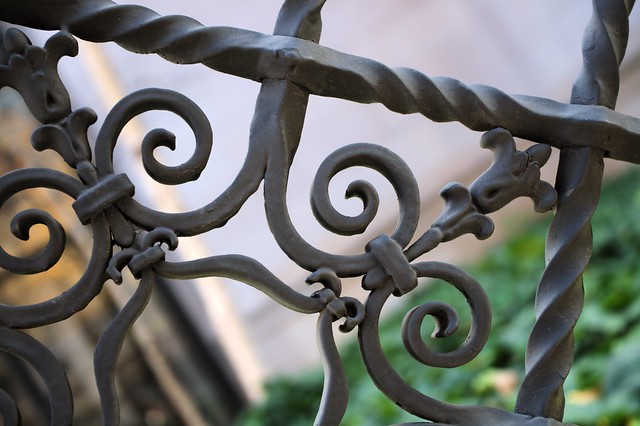
iron fence

Proto-Celtic *īsarnom = iron
Old Irish (Goídelc) íarn [iːa̯rn] = iron
Irish (Gaeilge) iarann [ˈiəɾˠən̪ˠ] = iron (element, appliance, golf club); iron part of a tool; brass (money)
amhiarann, iarnmhian = iron ore
iarann rocach = corrugated iron
iaranach = irons, iron implements, fetters, ploughshare
iaranaigh = to put in irons, fit, cover with iron
iaranaí = (made of) iron, iron-hard
iaranáil = to iron (clothes)
iarnmhangaire = ironmonger
iarannaois = the Iron Age
iarna = hardware
iarnród = railway
iarnúil = iron-like, ferrous
Scottish Gaelic (Gàidhlig) iarann [iər̪ˠən̪ˠ] = iron, (metal) blade; day’s worth cutting peat (for two)
iarnaidh = ferrous, iron-hard, iron-coloured, stingy
iarnaigeadh, iarnachadh = (act of) ironing
iarnair = ironmonger
iarainn-tàthainn, iarann-sobhdraidh = soldering iron
iarann-dreasaigidh = clothes iron
iarann mòlltaichte = cast iron
iarann preasach = corrugated iron
rathad-iarainn = railway
Manx (Gaelg) yiarn = iron; tool, scythe, blade; dough (money); tip (gratuity)
yiarnagh = ferric
yiarnal = iron, ironing
yiarneyder = ironmonger
yiarnrey = hardware
yiarnaghey, yiarney = to cover with iron, to iron
yiarnoil = ferrous
Proto-Brythonic *hijarn = hard, hard metal, iron
Middle Welsh (Kymraec) heirn, hyarn, heyrn, hayarnn, haearn = iron
Welsh (Cymraeg) haearn = iron, iron bar, hardness, strength, resoluteness, hard, strong, unyielding; sword, spear, lance; iron armour, coat of mail; fetters, shackles; branding-iron, pincers; flat-iron; spur
haearnaidd = like iron, ferrous; strong, hard, callous, oppressive
haearneiddio = to harden, make (one) unfeeling or callous
haearnol = of iron, iron-like, hard, unfeeling, rigid, stern
haearnwr = ironmonger, ironworker
haearn bwrw = cast iron
haearn gwaith = wrought iron
haearn gwrymiog = corrugated iron
Middle Cornish heorn, horn, hôrn = iron
Cornish (Kernewek) horn = iron
hornek = ferric, iron
hornell = iron (for clothes)
hornella = to iron
horner = ironmonger
horn margh = horseshoe
hyns horn = railway
Old Breton hoiarn = iron
Middle Breton houarnn = iron
Breton (Brezhoneg) houarn [ˈhuː.arn] = iron; flat iron; horseshoe
houarnek = ferric
houarnus = ferrous
houarnaj = scrap iron
houarnajer = scrap merchant
houarnañ = to shoe (a horse)
houarn-marc’h = horseshoe
houarn da zistennañ = iron (for clothes)
hent-houarn = railway

Words marked with a * are reconstructions.

Etymology: probably from the Proto-Indo-European *h₁ēsh₂r̥no- (bloody, red), from *h₁ésh₂r̥ (blood) [source].

Words for iron in Germanic languages come from the same Proto-Celtic root, via the Proto-Germanic *īsarną (iron), including iron in English, ijzer in Dutch, Eisen in German, and järn in Swedish [source].

Words for blood in Romance languages come from the same PIE root, via the Latin sanguīs (blood, descent, progeny, family), including sang in Catalan and French, sangue in Italian and Portuguese, and sangre in Spanish, and also the English word sanguine (blood red; warm, optimistic, confident) [source].

Sources: Wiktionary, Am Faclair Beag, Online Manx Dictionary, Teanglann.ie, eDIL – Electronic Dictionary of the Irish Language, In Dúil Bélrai English – Old Irish glossary, Geiriadur Prifysgol Cymru, Gerlyver Kernewek, Gerlyvyr Cernewec, Dictionaire Favereau, TermOfis, Le dictionnaire diachronique du breton, Geriafurch, English – ProtoCeltic WordList (PDF), Etymological Dictionary Of Proto Celtic

The Fastest Way to Learn Japanese Guaranteed with JapanesePod101.com

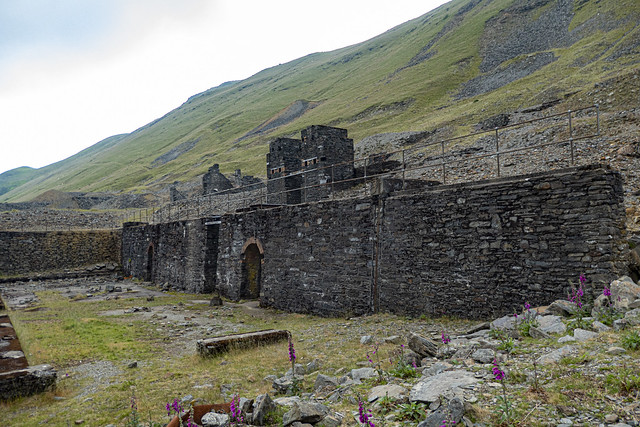
Hard Steel

Today we’re looking at the words for steel and related things in Celtic languages.

Steel

Old Irish (Goídelc) dúr = hard, hardy, resolute, rigid
Middle Irish (Gaoidhealg) dúr = rigid, hard, solid; difficult; hard to bear; strict, austere; hardy, resolute; unfeeling, dour, obdurate
Irish (Gaeilge) dúr = hard, rigid, solid; dour, grim, obstinate; dense, stupid, blunt, insensitive; sluggish
dúramán = dull-witted, stupid person
dúramánta = dull-witted, stupid
dúranta = dour, grim, morose, sullen
dúrantacht = dourness, sullenness
dúrapóg = surly person
dúrchroí = hard heart, hardness of heart
dúrchroíoch = hard hearted
Scottish Gaelic (Gàidhlig) dùr [duːr] = stubborn, intractable; obstinate, dull, stupid; persevering
durganta = rigid, stiff, hardened; robust, rigorous; obstinate, dogged; sullen, morose; grim, forbidding
Manx (Gaelg) douyr = mournful, uncomfortable, unhappy, afflicting
Proto-Brythonic *dʉr = hard, hard metal, steel
Middle Welsh (Kymraec) dur = steel
Welsh (Cymraeg) dur [dɨːr / diːr] = steel, steel weapon; hard, cruel
duraidd = steely, hard, faithful, true
durawdr = steel sword or lance
dur bwrw = cast steel
edau ddur = wire
fel y dur = true as steel, like steel
llifddur = file, rasp
Cornish (Kernewek) dur = steel
dur dinamm = stainless steel
Breton (Brezhoneg) dir = steel
dir disvergi = stainless steel
kazeg-dir = bicycle (“steel mare”)

Etymology from the Latin dūrus (hard, rough, harsh), from the Proto-Indo-European *drew- (hard, fast), from *dóru (tree) [source].

Words from the same Latin root include the Scots word dour (hard, stern, severe, relentless), possibly via Middle Irish, which was also borrowed into English and means stern, harsh or forbidding; the French word dur (hard, tough, harsh), the Italian word duro (hard, tough, harsh), and the Spanish word duro (hard, form, solid) [source].

Words from the same PIE root include Celtic words for oak (tree), and the English words true, trough and trim [source].

Irish (Gaeilge) cruach [kɾˠuəx / kɾˠɔx] = steel
cruachghreanadóireacht = steel-engraving
cruachobair = steelwork
cruachphláta = steel-plate
cruachphlátáilte = steel-plated
Scottish Gaelic (Gàidhlig) cruaidh [kruəj] = steel; stone anchor; hard, rocky ground
Manx (Gaelg) creoighey = steel

Etymology from the Irish crua (hard), from the Old Irish crúaid (hard, hardy, harsh, stern, strict), from the Proto-Celtic *kroudis (rude), possibly from *krū- (blood), from the Proto-Indo-European *krewh₂-. (blood) [source].

Scottish Gaelic (Gàidhlig) stàilinn [sdaːl̪ʲɪn̪ʲ] = steel
clòimh-stàilinn = steel wool
obraiche-stàilinn = steelworker
ionad-stàilinn = steelworks
Manx (Gaelg) staillin, steillyn, steillin = steel
staillinagh = steel-maker, steel
obbyr staillinagh = steelwork
ollan staillinagh = steel wool
snaie staillinagh = steel wire
towse staillinagh = steelyard

Etymology from the Old Norse stál (steel, sword), from the Proto-Germanic stahlą (steel), from the Proto-Indo-European *stek- (to be firm, stand fast) [source].

Words from the same Proto-Germanic root include steel in English, staal (steel) in Dutch, Stahl (steel) in German, and stål (steel, tool) in Danish [source].

Words marked with a * are reconstructions.

Sources: Wiktionary, Am Faclair Beag, Online Manx Dictionary, Teanglann.ie, eDIL – Electronic Dictionary of the Irish Language, In Dúil Bélrai English – Old Irish glossary, Geiriadur Prifysgol Cymru, Gerlyver Kernewek, Gerlyvyr Cernewec, Dictionaire Favereau, TermOfis, Le dictionnaire diachronique du breton, Geriafurch, English – ProtoCeltic WordList (PDF), Etymological Dictionary Of Proto Celtic
The Fastest Way to Learn Japanese Guaranteed with JapanesePod101.com

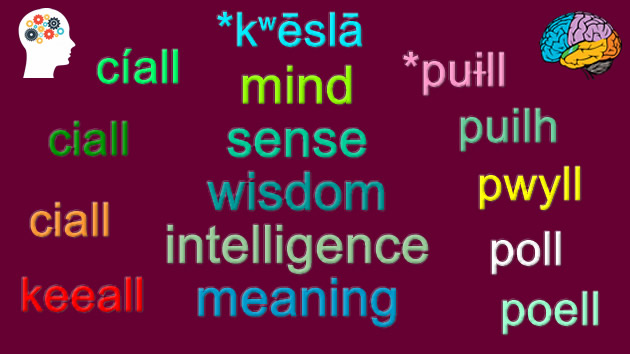
Mind Sense

Today we’re looking at the words for mind, sense and related things in Celtic languages.

Mind, Sense, Widom, Intelligence, Meaning

Proto-Celtic *kʷēslā = mind; sense, wisdom, intelligence; meaning
Old Irish (Goídelc) cíall [kʲiːa̯l͈] = sense, intelligence, mind; wisdom, good sense, skill; intention, cause, reason, idea; signification, meaning, function
Irish (Gaeilge) ciall [kiəl̪ˠ/kʲal̪ˠ] = sense, sanity; normal state of mind; common sense; perception; meaning; reason, cause
ciallaigh = to mean, signify; explain, interpret
ciallchogar = confidential whisper
ciallmhaireacht = sensibleness, reasonableness
ciallmhar = sensible, reasonable, common sense
aingiall = unreason
fochiall = secondary meaning, connotation
gan chiall = meaningless, misguided, unmeaning, callow, lunatic, senseless, silly
Scottish Gaelic (Gàidhlig) ciall [kʲiəl̪ˠ] = meaning, sense, significance, connotation, implication, understanding, reason
ciallach = prudent, sensible, sane, tame
ciallaich = to mean, signify, imply
gun chiall = without sense, senseless, insane
eu-céillidheachd = insanity, madness, irrationality, foolishness
Manx (Gaelg) keeall = sense, significance
keeaylagh = eloquent, prudent
meecheeall = senselessness
meecheeallagh = senseless, unadvisedly
bun-cheeal = moral
gyn keeall = unmeaning, senseless
Proto-Brythonic *puɨll = mind; sense, wisdom, intelligence; meaning
Middle Welsh (Kymraec) puil, puilh = deliberation, consideration, care, caution
Welsh (Cymraeg) pwyll [puːɨ̯ɬ / pʊi̯ɬ] = deliberation, consideration, care, caution; discretion, prudence, wisdom, patience, understanding, intelligence, perception, judgement; nature, disposition; meaning, significance, sense
pwyll(i)ad = intention, intent, goal, aim, design
pwyllaf, pwyllo = to exercise discretion, deliberate, consider, contemplate
pwyllgor = committee, meeting
pwyllog = discreet, wise, intelligent, sane, rational, reasonable
pwyllwr, pwyllwraig = discreet, sensible or wise person
gan bwyll = gently, gradually, carefully, slowly
iawnbwyll = sanity, saneness, sane, sensible
o’i bwyll = out of one’s mind, beside oneself, insane
Cornish (Kernewek) poll = intelligence, reason
pollek = brainy, intelligent
Breton (Brezhoneg) poell = logical, logic
poellata = to reason, argue
poellakaat = to rationalize
poellel = logical, logic
poellelour = rationalist
poellgor = committee

Etymology from the Proto-Indo-European *kʷeyt- (to notice) [source].

Words from the same PIE root include číst (to read) and čítat (to count) in Czech, šķist (to seem, appear) and skaitīt (to count) in Latvian, skaitýti (to read) in Lithuanian, and चित्त [t͡ʃɪt̪t̪] (mind, heart) in Hindi [source].

Words marked with a * are reconstructions.

Sources: Wiktionary, Am Faclair Beag, Online Manx Dictionary, Teanglann.ie, eDIL – Electronic Dictionary of the Irish Language, In Dúil Bélrai English – Old Irish glossary, Geiriadur Prifysgol Cymru, Gerlyver Kernewek, Gerlyvyr Cernewec, Dictionaire Favereau, TermOfis, Le dictionnaire diachronique du breton, Geriafurch, English – ProtoCeltic WordList (PDF), Etymological Dictionary Of Proto Celtic

The Fastest Way to Learn Japanese Guaranteed with JapanesePod101.com

Wood Intelligence

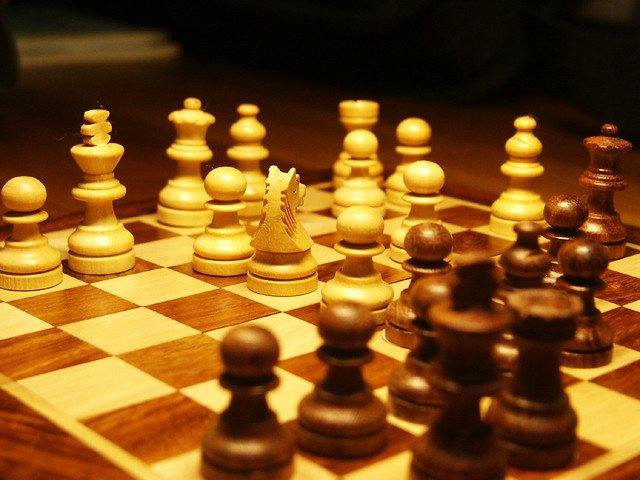
Today we’re looking at the words for chess and related things in Celtic languages.

Chess

According to legend, the ancient Irish game of fidchell was invented by Lugh (god of light and inspiration) in the 9th century. It played an important role in the celebrations at the Festival of Lughnasa (in August), and was played by kings, druids, warriors – more details. See also: https://totallyirishgifts.com/fidchell-the-ancient-celtic-chess-game/.

The old Welsh game of gwyddbwyll is mentioned in medieval Welsh literature, however there are no surviving examples of the game.

Chess is thought to have originated in India in the 6th century AD, and was brought to Britian by the Normans in the 12th century.

See also: https://lornasmithers.wordpress.com/2017/06/16/gwyddbwyll-why-the-war-games/.

Old Irish (Goídelc) fidchell [ˈfɪðʲçɛlː] = an old Irish board game similar to chess
Irish (Gaeilge) ficheall [ˈfʲɪhəl̪ˠ / ˈfʲɪhəl̪ˠ / ˈfʲɪçəl̪ˠ] = chess, chessboard
flcheallacht = chess-playing
flcheallaí = chess-player
clár fichille = chessboard
fear fichille = chessman
fíann/forieann fichille = set of chessmen
Scottish Gaelic (Gàidhlig) fidhcheall = Celtic chess
Manx (Gaelg) feeal = chess
feealee = chess player
fer feeal, babban feeal = chess piece
claare feeal = chessboard
Proto-Brythonic *gwɨðbuɨll = a board-game similar to chess
Middle Welsh (Kymraec) gvytbuill, gvydbvll, gvydbvyll = one of the twenty-four feats of skill or prowess performed in Wales in medieval times; a board-game similar to chess
Welsh (Cymraeg) gwyddbwyll [ˈɡwɨ̞ðbʊɨ̯ɬ] / ˈɡʊi̯ðbʊi̯ɬ] = chess; knowledge, learning, science; reason, sense, discretion
gwyddbwyllwr = chess player, chess piece, chess man
Cornish (Kernewek) gwydhbol = chess
Old Breton guidpoill, guidpull = chess
Breton (Brezhoneg) gwezboell = (Celtic) chess
gwezboellet = chequered

Etymology from the Proto-Celtic *widukʷēslā [source], *widu (wood), from the Proto-Indo-European *h₁widʰ(h₁)-u-s [source]; and *kʷēslā (mind, sense, wisdom, intelligence, meaning), from the Proto-Indo-European *kʷeyt- (to notice) [source].

The English word wood also comes from the PIE root *h₁widʰ(h₁)-u-s, via the Middle English wode (wood), the Old English widu, wudu (wood) the Proto-West-Germanic *widu (forest, tree, wood), and the Proto-Germanic *widuz (wood) [source].

See also the post about Trees, Wood(s) & Forests

In Welsh, chess is also sies or ses, which were borrowed from the Middle English ches(se) (chess, chess set, chessboard, chess pieces) [source].

Middle Irish (Gaoidhealg) táiplis, táibhleis = tables, backgammon, backgammon-board
Scottish Gaelic (Gàidhlig) tàileasg [taːl̪ˠəsg] = chess, backgammon, draughts / checkers
Manx (Gaelg) tawlish = draughts / checkers
tawlish beg = draughts / checkers
tawlish mooar = backgammon
Welsh (Cymraeg) tawlfwrdd, towlfwrdd, tolfwrdd = a board game similar to chess, game-board; chess; chessboard, draughtboard

Etymology: from the Old Norse tafl (chess-like game, chess, backgammon), from the Latin tabula (tablet; board, plank) [source].

Words marked with a * are reconstructions.

Sources: Wiktionary, Am Faclair Beag, Online Manx Dictionary, Teanglann.ie, eDIL – Electronic Dictionary of the Irish Language, In Dúil Bélrai English – Old Irish glossary, Geiriadur Prifysgol Cymru, Gerlyver Kernewek, Gerlyvyr Cernewec, Dictionaire Favereau, TermOfis, Le dictionnaire diachronique du breton, Geriafurch, English – ProtoCeltic WordList (PDF), Etymological Dictionary Of Proto Celtic
The Fastest Way to Learn Japanese Guaranteed with JapanesePod101.com

Nephews

Today we’re looking at the words for nephew and related people in Celtic languages.

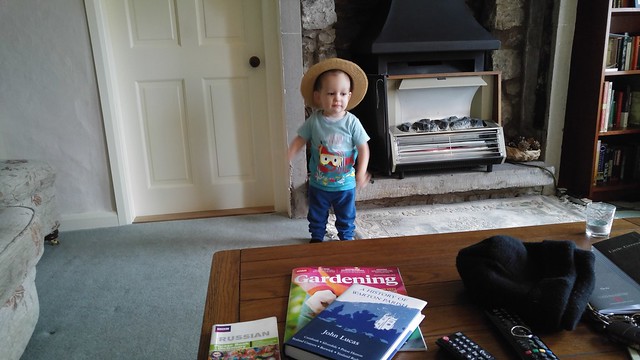
My nephew in a hat
My nephew. Mo nia. Mac my shayrey. Fy nai. Ma noy. Ma niz.

Proto-Celtic *neɸūss = nephew
Primitive Irish ᚅᚔᚑᚈᚈᚐ (niotta) = nephew (sister’s son)
Old Irish (Goídelc) nia [ˈn͈ʲi.a] = nephew, sister’s son
Irish (Gaeilge) nia [n̪ʲiə] = nephew
garneacht = great-nephew
Scottish Gaelic (Gàidhlig) nia [n̪ʲiə] = nephew (sister’s son)
Manx (Gaelg) neear = nephew
Proto-Brythonic *nei = nephew
Old Welsh nei = nephew
Middle Welsh (Kymraec) ney, nei = nephew
Welsh (Cymraeg) nai [nai̯] = nephew, first cousin’s son
nai fab brawd = nephew (brother’s son)
nai fab chwaer = nephew (sister’s son)
mab nai = great-nephew
naigarwch = nepotism
Middle Cornish noi = nephew
Cornish (Kernwek) noy = nephew
Old Breton ny = nephew
Middle Breton ni = nephew
Breton (Brezhoneg) niz = nephew
gourniz = great-nephew

Etymology from the Proto-Indo-European *népōts (grandson, descendent, nephew), possibly from *ne (not) and *pótis (master, lord, husband) [source].

Other words for nephew:

  • Irish: mac deirféar (sister’s son), mac dearthár (brother’s son)
  • Scottish Gaelic: mac-peathar (sister’s son), mac-bràthar (brother’s son)
  • Manx: mac shayrey (sister’s son), mac braarey (brother’s son)

See also the post about sons.

Words in Germanic language that come from the same PIE root, via the Proto-Germanic *nefô (nephew, grandson), include: Neffe (nephew) in German, neef (male cousin, nephew) in Dutch, and the obsolete English word neve (nephew, male cousin, grandson) [source].

The English word nephew comes from the same PIE root, via the Middle English nevew, neveu (nephew, grandson), the Old French neveu (nephew), and the Latin nepos (grandson, granddaughter, nephew, niece, descendent) [source].

Words marked with a * are reconstructions.

Sources: Wiktionary, Am Faclair Beag, Online Manx Dictionary, Teanglann.ie, eDIL – Electronic Dictionary of the Irish Language, In Dúil Bélrai English – Old Irish glossary, Geiriadur Prifysgol Cymru, Gerlyver Kernewek, Gerlyvyr Cernewec, Dictionaire Favereau, TermOfis, Le dictionnaire diachronique du breton, Geriafurch, English – ProtoCeltic WordList (PDF), Etymological Dictionary Of Proto Celtic
italki - Win cash rewards for learning any language

Nieces

Today we’re looking at the words for niece and related people in Celtic languages.

Sasha and Nick
My brother and my niece

Words marked with a * are reconstructions.

Proto-Celtic *nextī = niece
Old Irish (Goídelc) necht = niece, grand-daughter
Middle Irish (Gaoidhealg) necht, neachd = niece, grand-daughter
Irish (Gaeilge) neacht [n̠ʲæxt̪ˠ] = niece
garneacht = grand-niece
Scottish Gaelic (Gàidhlig) nigh [n̪iːj] = daughter, niece
Proto-Brythonic *nėθ = niece
Middle Welsh (Kymraec) nith = niece
Welsh (Cymraeg) nith [niːθ] = niece
gor-nith = great-niece
Old Cornish noit = niece
Middle Cornish (Cernwec) noit = niece
Cornish (Kernwek) nith = niece
Old Breton nith = niece
Middle Breton nyz, niz = niece
Breton (Brezhoneg) nizh, nizez = niece
gou(r)nizez = great-niece

Etymology from the Proto-Indo-European *néptih₂ (niece, granddaughter) [source].

Words in Germanic language the come from the same PIE root, via the Proto-Germanic *niftiz (female descendent, granddaughter, niece), including: Nichte (niece) in German, nicht (female cousin, niece) in Dutch, and the obsolete English word nift (niece) [source].

The English word niece comes from the same PIE root, via the Middle English nece (niece, granddaughter), from the Old French nece (niece, granddaughter), from the Vulgar Latin *neptia (niece), from the Latin neptis (granddaughter) [source].

Other words for niece:

  • Irish: iníon deirféar (sister’s daughter), iníon dearthár (brother’s daughter)
  • Scottish Gaelic: nighean-pheathar (sister’s daughter), nighean-bhràthar (brother’s daughter), ban-ogha = granddaughter, niece
  • Manx: inneen shayrey (sister’s daughter), inneen vraarey (brother’s daughter)

See also the post about daughters.

The Fastest Way to Learn Japanese Guaranteed with JapanesePod101.com

Sources: Wiktionary, Am Faclair Beag, Online Manx Dictionary, Teanglann.ie, eDIL – Electronic Dictionary of the Irish Language, In Dúil Bélrai English – Old Irish glossary, Geiriadur Prifysgol Cymru, Gerlyver Kernewek, Lexicon Cornu-britannicum: A Dictionary of the Ancient Celtic Language of Cornwall, Dictionaire Favereau, TermOfis, Le dictionnaire diachronique du breton, Etymological Dictionary Of Proto Celtic

Festive Feasts

Today we’re looking at the words for festival, feast and related things in Celtic languages.

Crowds with St David's Flags / Tyrfa, Baner Dewi Sant

Words marked with a * are reconstructions.

Proto-Celtic *lītus = feast, celebration
Old Irish (Goídelc) líth [l͈ʲiːθ] = festival, feast-day, festivity, luck
Middle Irish (Gaoidhleag) líth = festival, feast-day, festivity, entertainment, rejoicing, luck, properity
líthech = festive
Irish (Gaeilge) líth [ˈfʲeːlʲə] = festival, festivity, rejoicing; (good) omen, good luck, prosperity
lítheach = festive
Scottish Gaelic (Gàidhlig) lì, lìthe [l̪ʲiː] =paint, colour, tinge, hue, complexion, properity, happiness
Middle Breton (Brezonec) lyt, lid = ceremony, rite
Breton (Brezhoneg) lid = ceremony, rite, worship, jubilation

Etymology possibly from the Proto-Indo-European *leyH- (flow) [source].

Proto-Celtic *westā = food, feast
Old Irish (Goídelc) feis, fess, feiss = entertainment, feast; night’s lodging
Middle Irish (Gaoidhleag) feis(s), fess = spending the night, sleeping, accommodation for the night, entertainment for the night, food, supper, feast, festival
fes(s)id = spend the night, stops (in a place), remains
Irish (Gaeilge) feis [fʲɛʃ] = festival, carnival; act of sleeping, accommodation, entertainment, bed and supper
Scottish Gaelic (Gàidhlig) fèis [feːʃ] = festival
fèist [feʃdʲ] = entertainment, feast
fèistear [feːʃdʲər] = entertainer
fèisteas [feːʃdʲəs] = entertainment
Manx (Gaelg) feish = assembly, carnival, festival, fete
Middle Welsh (Kymraec) gwest = night’s stay/lodging, night’s sleep/rest, lodging, hospitality
guestei, gwestai = guest, visitor, visiting stranger, sojourner; beggar, parasite, host
guesti, gwesti = to stay, rest, remain, lodge, lodging, abode, welcome, reception, sustenance, guest, lodger
gwestwyr, gwestywr = guest visitor, host
Welsh (Cymraeg) gwest [ɡweːsd/ɡwɛsd] = night’s stay/lodging, night’s sleep/rest, lodging, hospitality, welcome, entertainment, provision, maintenance, food-rent, feast, banquet; guest, visitor
gwestai = guest, visitor, visiting stranger, sojourner; beggar, parasite, host
gwesti = to stay, rest, remain, lodge, lodging, abode, welcome, reception, sustenance, guest, lodger
gwest(i)wr = guest visitor, host
gwestu = to spend a night, sleep, rest, lodge, visit, feast, borrow, beg, sponge (upon)
gwesty = lodging, guest-house, inn, hotel
gwestya = to lodge, live in lodgings, show hospitality to (guests), welcome
Cornish (Kernewek) gwester = guest
gwesti = guesthouse
gwestva = hospitality
Old Breton guest = feast

Etymology possibly from the Proto-Indo-European *h₂wes- (to reside) [source].

Proto-Celtic *wlidā = food, feast
Old Irish (Goídelc) fled [fʲlʲeð] = banquet, feast
Middle Irish (Gaoidhleag) fled = feast, banquet, carousal, beverage
fletech = a banqueting-house or hall
Irish (Gaeilge) fleá [fʲlʲaː / fʲlʲɑː / fʲlʲæː] = (drinking) feast
fleá cheoil = festival of music
fleách = festive, convivial
fleáchas = festivity, conviviality
fleadhaigh = to feast, carouse<
Scottish Gaelic (Gàidhlig) fleadh [flɤɣ] = feast, reception
fleadh-bainnse = wedding reception
fleadhach [flɤɣəx] = feasting, banqueting, entertaining
fleadhadh = (act of) conviving, gathering for feasting/td>
Manx (Gaelg) fleah = banquet, feast
fleah foalley = barbeque
Proto-Brythonic *gwleð [ˈɡwlɛːð] = feast, banquet
Old Welsh guled = feast, banquet
Middle Welsh (Kymraec) gwledd = feast, banquet
Welsh (Cymraeg) gwledd [ɡwleːð] = feast, banquet, repast, carousal, revelry, sumptuous meal
gwleddu = to partake of a feast or banquet, feed with relish or enjoyment, carouse, revel, observe a festival
gwleddol = convivial, festive, banqueting, feasting, feaster
gwleddoldeb = festivity
gwleddwr = banqueter, guest, frequenter of feasts, reveller, carouser
Cornish (Kernewek) gwledh = banquet
Old Breton gloê = feast, banquet

Etymology possibly from the Proto-Indo-European *wldeh₂, from *welh₁- (to wish, desire, want) [source].

Old Irish (Goídelc) féil = festival, feast-day
Middle Irish (Gaoidhleag) féil, fel = a festival, feast-day
féilire = a calendar, almanac
fletech = a banqueting-house or hall
Irish (Gaeilge) féile [ˈfʲeːlʲə] = festival, feast (day)
féilire = calendar
féiltiúil = pertaining to festival, festive; periodic, recurrent, regular, punctual
féiltiúlacht = observance of feast days, seasonableness, regularity, punctuality
Scottish Gaelic (Gàidhlig) féill [feːl̪ˠ(ə)] = feast, festival, holy day fair, sale, market
féilleachd [feːl̪ˠəxɡ] = festivity, festivities
Manx (Gaelg) feaill [ˈsolan] = festival, holy day
feailley = feast, festival, fête, holiday, holy day, sacred
feaillys = festivity, sacredness, vacation
Middle Welsh (Kymraec) gwyl, gŵyl = holiday, holy-day, religious festival
Welsh (Cymraeg) gŵyl [ˈhalɛn / ˈhalan] = holiday, holy-day, religious festival, fête; watch, guard, vigil
gŵyl y Banc = Bank Holiday
Middle Cornish goil = festival, holiday
Cornish (Kernewek) gool = fair, feast, festival, vigil, wake
Gool Enys = carnival
Middle Breton (Brezonec) goel = (religious) festival, fête
Breton (Brezhoneg) gouel = (religious) festival, fête

Etymology from the Latin vigilia (wakefulness, watch), from vigil (awake), from the Proto-Indo-European *weǵ- (to be strong) [source].

The English words vigil, vigilant come from the same Latin root, and wake and watch come from the same PIE root, via Proto-Germanic [source].

Sources: Wiktionary, Am Faclair Beag, Online Manx Dictionary, Teanglann.ie, eDIL – Electronic Dictionary of the Irish Language, In Dúil Bélrai English – Old Irish glossary, Geiriadur Prifysgol Cymru, Gerlyver Kernewek, Lexicon Cornu-britannicum: A Dictionary of the Ancient Celtic Language of Cornwall, Dictionaire Favereau, TermOfis, Le dictionnaire diachronique du breton, Etymological Dictionary Of Proto Celtic

italki - Win cash rewards for learning any language

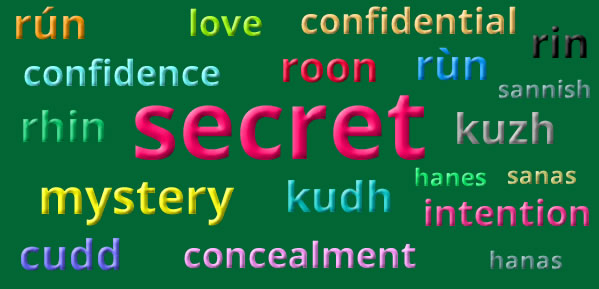
Mysterious Secrets

In this post we’re looking at words for secret and mystery, and related words, in Celtic languages.

Secret words

Words marked with a * are reconstructions.

Proto-Celtic *rūnā = secret, mystery, magic
Gaulish Cobrunus = personal name
com(b)runos = (?)
Leptonic Runatis = personal name
Old Irish (Goídelc) rún [r͈uːn] = mystery, secret
rúnde [ˈr͈uːn͈de] = mysterious, mystical
Middle Irish (Gaoidhealg) rún, rúun, rúin = something hidden or occult, a mystery, mystic or hidden meaning, a secret, secret thoughts or wishes, intention, purpose, design
Irish (Gaeilge) rún [ɾˠuːnˠ] = mystery, secret, intention, purpose, resolution, love, affection
rúnach = darling, sweetheart; runic, secret, mysterious
rúnaí = secretary, confidant, secretary-bird
rúnchara = confidant(e)
rúnda = mystical, mysterious, secret, confidential
rúndacht = secrecy
rúnmhar = close, secretive
rúnscríbhin = runic script, secret writing, cipher
comhrún = joint secret, common intent
Scottish Gaelic (Gàidhlig) rùn [r̪ˠuːn] = secret, intention, design, resolution, motive, purpose, desire, love
rùnach = secretarial, mysterious, mystical, beloved, runic
rùnag = small secret, dearie, sweetie
rùnaire = secretary
rùinean = small secret, quietly
co-rùn = collusion
Manx (Gaelg) roon = rune
roon-screeu = cipher
roonagh = runic
Proto-Brythonic *rrin = mystery
Middle Welsh (Kymraec) rin = mystery, charm
Welsh (Cymraeg) rhin [r̥iːn] = secret, mystery, miracle; privacy, intimacy, intercourse; enchanment, magic spell, charm, sorcery, witchcraft, rune; virtue, attribute, property, quality, essence; secret, private, mysterious, occult
rhin(i)af / rhin(i)o = to whisper, speak secretly, charm, enchant, secrete
rhiniwr = charmer, enchanter, sorcerer, magician
rhinaidd = obscure, profound, enchanting
rhinwedd = virtue, rectitude, moral excellence, nature, quality
cyfrin = mysterious, esoteric; mystic, mystery, secret.
cyfrinach = secret, mystery, deliberation
Cornish (Kernewek) rin = mystery
kevrin(ek) = secret
Middle Breton queffrin = secret
queffrinez = mystical spirit
Breton (Brezhoneg) rin [rĩːn] = secret, mystery, arcane
kevrin [ˈkeː.vrĩn] = secret, mystery
kevrin(ad)egezh = mysticism
kevrinek, kevrinus [keˈvrĩːnek / ke.ˈvrĩː.nys] = mystical, mysterious, occult, secret

Etymology: possibly from the Proto-Indo-European *rewHn-, from *rewH-/*rēwH- (to roar, grumble, murmur, mumble, whisper). The Proto-Germanic word *rūnō (secret, mystery, rune) and related words in modern Germanic languages, including rune in English and Dutch, and runa (rune) in Swedish, possibly come from the same Proto-Celtic root, or from the same PIE root [source].

Proto-Celtic *kowdo- = hiding place, concealment
*koudeti = hide
Proto-Brythonic *kʉðɨd = to hide
Middle Welsh (Kymraec) cud = concealment, covering, hidden
Welsh (Cymraeg) cudd [kɨð/kɪð] = concealment, hiding-place, secrecy, covering, veil; concealed, hidden, dark, hiding
cuddedig = hidden, concealed, unknown, covered,mysterious, secret, dark
cuddfa = hiding-place, retreat, hoard
cuddiad = a hiding, concealment, secret
cuddio = to hide, conceal, bury, cover
Middle Cornish (Cernewec) cudhe, cidha, citha, cudhb = to hide, conceal, cover
cudhygyc = one that conceals himself, bashful, ashamed
Cornish (Kernewek) kudh = concealed, hidden, secret
kudha (rag) = to conceal, hide (from)
kudhlen = cover, veil
kudhoberys = underhand
kudhva = hideout, lair
kudhys = veiled
Middle Breton cuzaff = secret, confidential
Breton (Brezhoneg kuzh = secret, confidential
kuzh(iadell) / toull-kuzh = hiding place
kuzhat = to hide (oneself)
kuzhet = masked
kuzhadur = eclipse, blanking, concealment
kuzhuter = confidant(e)

Etymology: from the Proto-Indo-European *(s)kewdʰ- from *(s)kewH- (to hide, cover, wrap). Words from the same roots include custodian, hide, house, hut and sky in English [source].

Proto-Celtic *sanestos = secret (advice), whisper, counsel, history
Old Irish (Goídelc) sana(i)s = advice, counsel, whisper, privacy
Irish (Gaeilge) sanas [ˈsˠanˠasˠ] = whisper, hint, suggestion, gloss, glossary
sanasaí = etymologist
sanasaíocht = etymology
Scottish Gaelic (Gàidhlig) sanas [ˈsanəs] = notice, sign, signal, warning, hint, cue, whisper
sanasach = warning, hinting
Manx (Gaelg) sannish = whisper, hint, allusion, suggestion
sansheraght = to whisper, annunciate, speak under breath, whispering
Proto-Brythonic *hanes = history, secret
Middle Welsh (Kymraec) hanes = history, secret
Welsh (Cymraeg) hanes [ˈhanɛs/ˈhanas] = history, chronicle, tale, account, narrative, record, report, intelligence; secret, mystery, whisper, murmur
hanesaf / hanesu = to narrate/write history
hanesydd = historian, historiographer, chronicler
Middle Cornish (Cernewec) hanas = a low sound, whisper
Cornish (Kernewek) hanas = groan, murmur, sigh, whisper
hanasa = to groan, murmur, sigh, whisper

Etymology: uncertain [source].

The Fastest Way to Learn Japanese Guaranteed with JapanesePod101.com

Sources: Wiktionary, Am Faclair Beag, Online Manx Dictionary, Teanglann.ie, eDIL – Electronic Dictionary of the Irish Language, In Dúil Bélrai English – Old Irish glossary, Geiriadur Prifysgol Cymru, Gerlyver Kernewek, Dictionaire Favereau, TermOfis, English – ProtoCeltic WordList (PDF), Etymological Dictionary Of Proto Celtic

Unlimited Web Hosting - Kualo

Forks

Today we’re looking at words for fork, and related words, in Celtic languages.

A Fork In The Road

Proto-Celtic *gablā = fork
Gaulish gab(a)los = fork
Old Irish (Goídelc) gabul [ˈɡavul] = fork, branch, gallows, gibbet
Irish (Gaeilge) gabhal [ɡoːəl̪ˠ] = bifurcation, fork, crotch, junction
gabahlán = martin, fork
gabahlóg = fork, forked stick, forked implement
Scottish Gaelic (Gàidhlig) gobahl [ɡoːəl̪ˠ] = bifurcation, fork, crotch, junction
gobahl-gleusaidh = tuning fork
gobahl-roinn = pair of compasses
gobahl-rathaid = road junction
Manx (Gaelg) goal = fork, branch, crotch, crutch, junction, perineum
goal twoaie = rainbow
Proto-Brythonic *gaβl [ˈɡaβl] =fork
Middle Welsh (Kymraec) gafl, gauyl = fork
Welsh (Cymraeg) gafl [gafl] = fork, stride, lap, inner part of the thigh, groin, angle, nook
gaflach arrow, dart, lance, spear, javelin, sickle; fork, stride, hind-legs, groin
gaflachaf, gaflachu = to straddle, walk with the feet wide apart
gaflachog = armed with javelins or spears; astride, bandy-legged, furcated, forked
gaflaw = split open, cleft, forked, in two
gafliaf, gaflio = to straddle, place/sit with the legs wide apart
Cornish (Kernewek) gowl = crotch, fork
gowlek = forked
Old Breton gabl = fork
Breton (Brezhoneg) gaol = fork
gaoliek = forkful
gaoliañ = to mount, bestride, ride (a horse or bicycle)

Etymology: from the Proto-Indo-European *gʰeh₁bʰ- (to grab, take) [source]. The English word gable comes from the Gaulish wood gab(a)los (fork), via the Old French gable [source].

Proto-Celtic *awsetlo- = (flesh-)fork
Old Irish (Goídelc) áel [ɯːl] = trident, meatfork, flesh-fork
Irish (Gaeilge) adhal = fork, trident
Scottish Gaelic (Gàidhlig) adhal [ɤ.əl̪ˠ] = flesh-hook, flesh fork
Manx (Gaelg) aall = table fork, fleshhook

Etymology: possibly from the Proto-Indo-European *h₁ólos (awl) or *ēl- (awl, prong) [source].

Old Irish (Goídelc) forc [fork] = fork, pronged spear
Irish (Gaeilge) forc [fˠoɾˠk] = fork
forc éisc = fish fork
forc féir = hay-fork
forcáil = to fork
Scottish Gaelic (Gàidhlig) forca [ˈfɔr̪ˠxgə] = fork, cramp
forca-fheòir = hayfork
forca-spòlaidh = carving fork
Welsh (Cymraeg) fforc, fforch [fɔrk/fɔrχ]= (table) fork
fforc gig = carving-fork
fforc diwnio = tuning-fork
Cornish (Kernewek) forgh = fork
yn forgh = in fork (in good order = dry and work well – uesd in mining)
forghyes = forked
Breton (Brezhoneg) forc’h = fork
forc’had = gap, spread, distance
forc’hek = forked, bifurcated

Etymology: from the English fork, from the Middle English forke (fork, gallows), from the Old English forca (fork), from the Proto-West-Germanic *furkō (fork), from the Latin furca (fork). The Breton word comes directly from Latin [source].

Words marked with a * are reconstructions.

Sources: Wiktionary, Am Faclair Beag, Online Manx Dictionary, Teanglann.ie, eDIL – Electronic Dictionary of the Irish Language, logainm.ie, In Dúil Bélrai English – Old Irish glossary, Geiriadur Prifysgol Cymru, Gerlyver Kernewek, Dictionaire Favereau, TermOfis, Le dictionnaire diachronique du breton, Geriafurch, English – ProtoCeltic WordList (PDF), Etymological Dictionary Of Proto Celtic
Blubrry podcast hosting

Ladles and Spoons

Ladles and Jellyspoons, or if you prefer, Ladies and Gentlemen, today we are look at words for spoon, ladle and related words in Celtic languages.

Welsh Love Spoon

Proto-Celtic *lēgā = spoon
Old Irish (Goídelc) líach [l͈ʲiːa̯x] = spoon, laddle
Irish (Gaeilge) liach [l̠ʲiəx] = laddle, ladleful, measure
liachlán = ladleful
Scottish Gaelic (Gàidhlig) liogh [l̪ʲɤɣ] = blade (of an oar, helicopter), vane (of a mill), ladle, hero
liogh ràimh = oar blade
Manx (Gaelg) lheegh = ladle
lheegh awree = soup ladle
Proto-Brythonic *lluɨɣ = spoon, scoop, ladle, trowel
Middle Welsh (Kymraec) llwy = spoon, ladle, trowel
Welsh (Cymraeg) llwy [ɬuːɨ̯] = spoon, ladle, scoop, trowel, spatula, bucket, float, paddle (of a water-wheel)
llwy de = teaspoon
llwy fwrdd = tablespoon
llwy gawl = soup spoon
llwy grochan, llwy droetir = ladle
llwy bren = wooden spoon
llwy serch = love-spoon
llwyaid = spoonful, shovelful
llwyar(n) = trowel, fire-shovel, slive, scoop, corer, spatula
llwyar(n)u = to spread and smooth with a trowel or shovel
llwyo = to spoon or ladle (out)
llwywr = spoon-maker
Old Cornish loe = spoon
Cornish (Kernewek) lo = spoon
lo balas = trowel
lo de = teaspoon
lo ledan = ladle
lo vras = tablespoon
Old Breton loi = spoon
Middle Breton loa = spoon
Breton (Brezhoneg) loa = spoon, striker, gouge, trowel, pliers
loa-dizourañ = slotted spoon
loa goad = wooden spoon
loa-gafe = teaspoon
loa-voued = soup spoon

Etymology: from the Proto-Indo-European *leyǵʰ- (lick) [source]. The English word lick comes from the same PIE root via the Middle English likken (to lick), the Old English liccian (to lick), the Proto-West Germanic *likkōn (to lick), and the Proto-Germanic *likkōną (to lick) [source]

Irish (Gaeilge) spúnóg [sˠpˠuːˈn̪ˠoːɡ / ˈsˠpˠuːnˠaɡ] = spoon, spoonful
spúnóg tae / spúnóg bheag / taespúnóg = teaspoon
spúnóg mhór / spúnóg bhoird = tablespoon
Scottish Gaelic (Gàidhlig) spàin [sbaːn̪ʲ] = spoon, blade (of an oar)
spàin-bhùird = tablespoon
spàin-fhiodha = wooden spoon
spàin-teatha, spàin-tì = teaspoon
spàinach = like or pertaining to spoons
spàineag = small spoon, small spoonful
Manx (Gaelg) spein = spoon
spein ambee = dessert spoon
spein ooh = egg spoon

Etymology (Irish): from the English spoon, from the Middle English spo(u)ne/spo(o)n (spoon, chip of wood), from the Old English spōn (sliver, chip of wood, shaving), from the Proto-West Germanic *spānu (chip, shaving, spoon), from the Proto-Germanic *spēnuz (chip, flake, shaving), from the Proto-Indo-European *(s)peh₂- (chip, shaving, log, length of wood) [source].

Etymology (Scottish Gaelic and Manx): from the Old Norse spánn/spónn (chip, shaving, spoon), from the Proto-Germanic *spēnuz [source].

Words marked with a * are reconstructions.

Sources: Wiktionary, Am Faclair Beag, Online Manx Dictionary, Teanglann.ie, eDIL – Electronic Dictionary of the Irish Language, logainm.ie, In Dúil Bélrai English – Old Irish glossary, Geiriadur Prifysgol Cymru, Gerlyver Kernewek, Dictionaire Favereau, TermOfis, Le dictionnaire diachronique du breton, Geriafurch, English – ProtoCeltic WordList (PDF), Etymological Dictionary Of Proto Celtic

Blubrry podcast hosting