Hurdle Fences

Words for hurdles, fences and related words in Celtic languages.

timeless gateway

Proto-Celtic *klētā = wattled frame, palisade, hurdle
Gaulish *cleta = hurdle
Old Irish (Goídelc) clíath = hurdle, litter, stretcher, wattlework
Middle Irish (Gaoidhealg) clíath = hurdle; wattle panels of walls, doors or gates; woven fence, palisade, outwork
Irish (Gaeilge) cliath [klʲiə] = wattled, latticed, frame, hurdle, phalanx, staff, stave (music)
cliathach = ribbed frame, engagement, battle
cliathobair = wattle-work, wickerwork
cliathóg = (small) hurdle
cliathóir = hurdler, hurdle-maker
cliathrás = hurdle race
cliathreathaí = hurdler
cliathreathaíocht = hurdling
Baile Átha Cliath Dublin (“Hurdle Ford Settlement”)
Scottish Gaelic (Gàidhlig) cliath [kliə] = grid, lattice, grate, grating, shoal (of fish), hurdle, harrow, stockade, stave, staff (music)
cliathag = small hurdle
cliath-bhogsa = crate
cliath-dhuilleag = spreadsheet
obair-chliath = trellis
Manx (Gaelg) cleeah = lattice, wicker, fret, darn, stave, staff, grid, stretcher, grate, grating, criss-cross, school of fish
cleea = hurdle
cleeader = hurdler
Proto-Brythonic *kluɨd = palisade, hurdle
Middle Welsh (Kymraec cluyt, clwyt = hurdle
Welsh (Cymraeg) clwyd [kluːɨ̯d / klʊi̯d] = movable hurdle, wattle, lattice, rack, crate, gate, door; protection, cover, defence
clwydo = to wattle, weave, hurdle, tangle; roost, sleep
clwydaid = a crateful, pannierful, kilnful
clwydedd = door, gate
clwydwaith = wickerwork, wattle
clwydwr = gate-keeper, porter
Old Cornish cluit = hurdle
Middle Cornish (Cernewec) cluit, clita = hurdle, wattle, crate, wattled gate
Cornish (Kernewek) kloos = fence, rack
Middle Breton klouet, cloet, kloued, klwed = hurdle
Breton (Brezhoneg) kloued = fence, barrier, gate, railings, grating, grid
klouedenn = openwork, fence, skylight, harrow, portcullis

Etymology: from the Proto-Indo-European *ḱléyteh₂ (leaning, sloped, inclined) from *ḱley- (to lean, incline) [source].

Words from the same Proto-Celtic root, via Gaulish and Latin, include claie (wicker rack, trellis, hurdle) in French and cheda (wattled laterals at the base of a traditional cart) in Galician [source].

Words from the same PIE root include client, climate, clinic, incline and lean in English, leunen (to lean) in Dutch, lehnen (to lean) in German, chinàre (to bend) in Italian, clemente (lenient) in Spanish [source], clé (left) and cleith (pole, cudgel, wattle) in Irish, cledd (left hand/side) in Welsh, and related words in Celtic languages [more details].

Sources: Wiktionary, Am Faclair Beag, Online Manx Dictionary, Teanglann.ie, eDIL – Electronic Dictionary of the Irish Language, In Dúil Bélrai English – Old Irish glossary, Geiriadur Prifysgol Cymru, Gerlyver Kernewek, Dictionaire Favereau, TermOfis, English – ProtoCeltic WordList (PDF), Etymological Dictionary Of Proto Celtic

Kitchens

Words for kitchens and related words in Celtic languages.

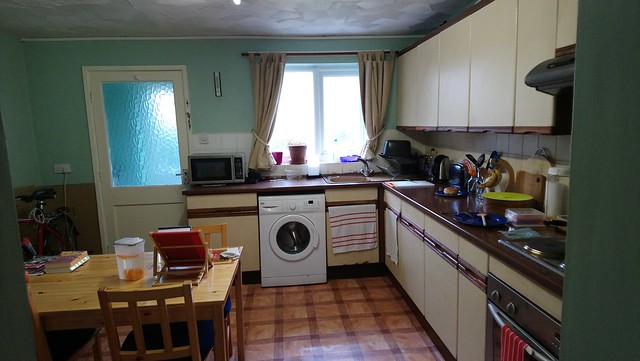
My kitchen / Fy nghegin

Middle Irish (Goídelc) cisten = kitchen
Irish (Gaeilge) cistin [ˈcɪʃtʲənʲ] = kitchen, cook-house
cistineach = culinary
cistin phoiblí = soup kitchen
cistin taistil = travelling kitchen
cúlchistin = back-kitchen, scullery
sorn cistine = cooker
Scottish Gaelic (Gàidhlig) cidsin/citsin [kʲidʲɪn/kʲiʃdʲɪn] = kitchen
cidsin-dubh = scullery
cidsineach/citsineach = culinary, pertaining to or abounding in kitchens
Manx (Gaelg) kishteen = cookhouse
kishteen cooyl = back kitchen
sorn kishteen = cooking range, cooker

Etymology: from Middle English kychyn (kitchen, cooking, cuisine), from Old English cyċene [ˈky.t͡ʃe.ne] (kitchen), from Proto-West-Germanic *kukinā (kitchen), from Late Latin cocīna (kitchen), from coquīna (cooking, cookery, kitchen). from Latin coquō (to cook, prepare food, ripen, roast), ultimately from PIE *pekʷ- (to cook, become ripe) [source].

English words from the same roots include kitchen, cook, cuisine, biscuit and kiln [source].

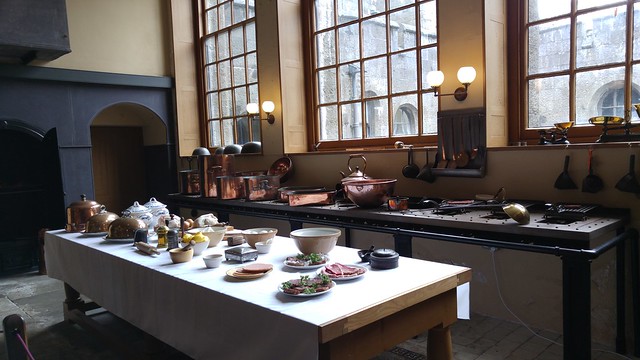
Cegin Castell Penrhyn Castle Kitchen

Proto-Brythonic *kėgin = kitchen
Middle Welsh (Kymraec) kegyn, kecyn = kitchen
Welsh (Cymraeg) cegin [ˈkɛɡɪn/ˈkeːɡɪn] = kitchen
cegin(i)af, cegin(i)o = to cook, prepare food
ceginaidd = culinary, commonplace
cegindy = eating-house, cook-shop
ceginfa = galley
ceginiaeth = cookery, the culinary art, cuisine
ceginol = culinary
ceginwaith = kitchen work, cookery
ceginwas = scullion, kitchen-knave
ceginwr / ceginwraig = cook
cegin gefn/fach = back kitchen
cegin groes = scullery
cegin orau = parlour, sitting-room
Old Cornish keghin = kitchen
Cornish (Kernewek) kegin [ˈkɛɡɪn] = kitchen
kegina = to cook
keginer / keginores = chef
keginieth = cookery
Breton (Brezhoneg) kegin = kitchen
keginañ = to cook, culinary
keginer = cook, chef cooker
keginerezh = cooking, cuisine
keginouriezh = art of cooking, culinary art, cuisine

Etymology: from the Vulgar Latin cucīna (cooking, kitchen), from the Latin coquō (to cook), from the Proto-Indo-European *pekʷ- (to cook, become ripe) [source].

Manx (Gaelg) shamyr aarlagh / shamyr aarlee = kitchen, galley, caboose
shamyreen aarlee = kitchenette
sorn aarlee = kitchen range
greieyn aarlee = kitchen utensils

Etymology: from shamyr (room) and aarlee (to cook, prepare, train) [source].

Incidentally, one of the rivers near Bangor is called Afon Cegin (see below), which I’ve always thought meant ‘Kitchen River’, and wondered what it had to do with kitchens. However, cegin also means green woodpecker or jay, and is cognate with the Breton kegin (jay). Or it can mean ridge or hog’s back. The River of the Green Woodpecker / Jay, sounds more poetic and likely than the Kitchen River.

Afon River Cegin

Sources: Wiktionary, Am Faclair Beag, Online Manx Dictionary, Teanglann.ie, eDIL – Electronic Dictionary of the Irish Language, In Dúil Bélrai English – Old Irish glossary, Geiriadur Prifysgol Cymru, Gerlyver Kernewek, Dictionaire Favereau, TermOfis, English – ProtoCeltic WordList (PDF), Etymological Dictionary Of Proto Celtic

River Mouths

Words for estuary / mouth (of a river) in Celtic languages.

Aberaeron

Proto-Celtic *adberos = mouth, confluence (of a river)
Pictish *ᚐᚁᚓᚏ (aber) = mouth, confluence (of a river)
Old Irish (Goídelc) abar [ˈfʲilʲi] = confluence, river mouth
Irish (Gaeilge) abar [ˈabˠəɾˠ] = boggy ground, morass
abarach = boggy, muddy, sloughy
abracht = boggy place
Scottish Gaelic (Gàidhlig) abar / obar = confluence, place where two or more streams meet; marsh, bog, fen
Manx (Gaelg) aber = range, pasturage, river mouth, bunker, run
Proto-Brythonic *aber [aˈbɛːr] = mouth, confluence (of a river)
Old Welsh) oper, aper = estuary, mouth of a river
Middle Welsh (Kymraec) aber = estuary, mouth of a river
Welsh (Cymraeg) aber [ˈabɛr/ˈaːbɛr] = river mouth, estuary, confluence, bay, harbour, port, anchorage
Old Cornish aber = estuary, mouth of a river
Middle Cornish (Cernewec) aber = confluence of waters, the junction of rivers
Cornish (Kernewek) aber = river mouth
Old Breton aperou = estuary, mouth of a river
Breton (Brezhoneg) aber = estuary, mouth of a river, confluence, creek

Etymology: from the Proto-Celtic *ad- (to(wards), at) and *beros (bearer, flow) [source].

Proto-Celtic *eni-berom = carrying in
Old Irish (Goídelc) *in(d)ber = river mouth
Middle Irish (Gaoidhealg) inber, indber, inbir = rivermouth
Irish (Gaeilge) inbhear / inbhir [ˈabˠəɾˠ] = river mouth, estuary, firth
inbhearach = having many estuaries
Scottish Gaelic (Gàidhlig) inbhir [in̪ʲɪrʲ] = estuary, river mouth, (internet) feed
Manx (Gaelg) inver = estuary, river mouth

Etymology: from the Proto-Celtic *eni- (in) and *beros (bearer, flow), from Proto-Indo-European *bʰer- (to bear, carry) [source].

Notes
These words appear mainly in placenames such as Aberaeron, Abererch, Aberffraw, Abergavenny (Y Fenni), Abergynolwyn, Aberystwyth, Abergwaun (Fishguard), Aberhonddu (Brecon), Aberteifi (Cardigan), Aberdaugleddau (Milford Haven), Aberpennar (Mountain Ash) and Abertawe (Swansea) in Wales.

Aberdeen (Obar Dheathain) , Aberfeldy (Obar Pheallaidh), Aberfoyle (Obar Phuill), Abernethy (Obar Neithich), Arbroath (Aber Brothaig), Invergowrie (Inbhir Ghobharaidh), Inverkeithing (Inbhir Chèitinn), Inverness (Inbhir Nis), Inbhir Nàrann (Nairn), Inbhir Pheofharain (Dingwall), Inbhir Ùige (Wick) in Scotland.

Aber/Obar appear in Scottish placenames of Pictish origin, and may have been borrowed from Pictish. Inbhir/Inver appear in other placenames [source].

More details of placenames featuring Aber and Inver.

Old Irish (Goídelc) gáeth = the sea, a stream, an estuary
Middle Irish (Gaoidhealg) gáeth, gáoth, gaoth = the sea, a stream, an estuary
gáethlach = marsh, swamp
Irish (Gaeilge) gaoth [ɡeːh / ɡiːh] = inlet of sea, estuary
Gaoth Dobhair [ɡiːˈd̪ˠoːɾʲ] = Gweedore (a parish in County Donegal)
Scottish Gaelic (Gàidhlig) geodha [gʲɔ.ə] = inlet, cove, gully (by the sea), indent(ation)
Manx (Gaelg) giau = creek, inlet, cove
Giau Vooar ny Pershey = Persian Gulf

Etymology: possibly from the Old Norse gjá (chasm, rift, crack) [source].

Words marked with a * are reconstructions.

Sources: Wiktionary, Am Faclair Beag, Online Manx Dictionary, Teanglann.ie, eDIL – Electronic Dictionary of the Irish Language, In Dúil Bélrai English – Old Irish glossary, Geiriadur Prifysgol Cymru, Gerlyver Kernewek, Dictionaire Favereau, TermOfis, English – ProtoCeltic WordList (PDF), Etymological Dictionary Of Proto Celtic

Blubrry podcast hosting

Blackberries

Words for blackberries and related words, in Celtic languages.

Blackberries

Proto-Celtic *smiyoros = berry, berries
Old Irish (Goídelc) smér = blackberry
Middle Irish (Gaoidhealg) smér = blackberry
Irish (Gaeilge) sméar [sˠmʲiaɾˠ/sˠmʲeːɾˠ] = berry, blackberry
sméarach = abounding in blackberries
sméardhris = blackberry bush, bramble
sméara dubha = blackberries
púca na sméar = fruit-destroying pooka, herald of winter
Scottish Gaelic (Gàidhlig) smeur [smiar] = bramble, blackberry, mulberry
smeur-dhubh = blackberry
smeur-craoibhe = mulberry
smeur-loganach = loganberry
smeur-Artaigeach = nagoonberry, Arctic bramble/raspberry (Rubus arcticus)
craobh nan smeur = mulberry tree (Morus)
Manx (Gaelg) smeyr = blackberry, berry
smeyr ghoo = blackberry
smeyr churree = cranberry
smeyr fannag = crowberry
smeyr loaganagh = cloudberry
crouw smeyr = mulberry
Proto-Brythonic *muɨar = blackberries, berries
Welsh (Cymraeg) mwyar(en) [ˈmʊɨ̯.ar/ˈmʊi̯.ar] = blackberries, dewberries, brambles, briers, berries
mwyara = to gather blackberries; to be idle
mwyarbren = mulberry bush, blackberry bush, bramble
mwyar Berwyn/ mwyar Doewan = wild raspberries, (Rubus idæus), cloudberries, (Rubus chamæmorus)
mwyar y brain = bilberries, whimberries, whortleberries (Vaccinium myrtillus)
mwyar y ddaear = dewberries (Rubus cæsius), cloudberries
mwyar du(on) = blackberries (Rubus fruticosus)
mwyar Ffrengig = mulberries, blackberries
mwyar glas = dewberries
mwyar Mair = mulberries, dewberries
Old Cornish moyr(bren) = berries
Cornish (Kernewek) mor(en) = berries
mora = to gather blackberries
mor du = blackberries
Old Breton moiaroc = berries
Breton (Brezhoneg) mouar(enn) = blackberries, berries; bramble, mulberry tree
mouar du / mouar gouez = blackberries, dewberries
mouar gwenn = mulberries
mouar ruz = red mulberries

Etmology: unknown

Words marked with a * are reconstructions.

Sources: Wiktionary, Am Faclair Beag, Online Manx Dictionary, Teanglann.ie, eDIL – Electronic Dictionary of the Irish Language, In Dúil Bélrai English – Old Irish glossary, Geiriadur Prifysgol Cymru, Gerlyver Kernewek, Dictionaire Favereau, TermOfis, English – ProtoCeltic WordList (PDF)

Plums

Words for plums, damsons, sloes, and related words, in Celtic languages.

Plums

Words marked with a * are reconstructions.

Proto-Celtic *agrinyom/*agrinyā = sloe, small plum, berry
Old Irish (Goídelc) áirne = sloe
Middle Irish (Gaoidhealg) áirne, airnne = sloe, kernel
áirnech = abounding in sloes
áirnechán = little sloe
Irish (Gaeilge) airne [ˈɑːɾˠn̠ʲə / ˈæːɾˠn̠ʲə] = sloe, gland
airneog = sloe tree, blackthorn
biotáille airní = sloe gin
Scottish Gaelic (Gàidhlig) àirne [aːr̪n̪ʲə] = blackthorn, sloe (berry), wild plum (prunus domestica), damson (prunus domestica insititia)
àirneag = sloe bush
Manx (Gaelg) airn = sloe, bullace
airnagh = sloe-covered
soo airney = sloe jam
drine airn = blackthorn, sloe tree (Prunus spinosa)
Middle Welsh (Kymraec) eirin(en) = plum(s), damson(s), sloe(s)
eirinha = to collect sloes or bullace
eirinwyd = plum trees, sloe trees, blackthorn
Welsh (Cymraeg) eirin(en) [ˈei̯rɪn] = plum(s), damson(s), sloe(s), bullace, berries, testicle(s)
eirina = to collect sloes or bullace
eirinog = bearing plums or sloes
eirinwydd = plum trees, sloe trees, blackthorn
eirin bwlas = bullace, wild plums (Prunus insititia), damsons
eirin damasg/Damasgus = damson
eirin Ffrainc/Ffrengig = prunes
eirin gwlanog = peaches, apricots
eirin gwynion = greengages
eirin Mair = gooseberries
eirin y moch = haws, hawthorn berries
eirin morwydd = mulberries
eirin peatus = nectarines
eirin ysgaw = elderberries
eirin y gors = crowberries
Old Cornish yryn = sloes
Cornish (Kernewek) eyrin(en) = sloe(s)
Middle Breton (Brezonec) <hirin, irin = sloes
yrinenn = blackthorn
Breton (Brezhoneg) irin(enn) [ˈiː.rĩn(n)] = sloe(s), sloe gin; pupil, eye
irina = to look for sloes
irineg = a place with sloes
irinenn = blackthorn

Etmology: from the Proto-Indo-European *h₂ógeh₂ (berry) [source]. The English word acorn comes from the same root, via the Proto-Germanic *h₂ógeh₂ [source]

Damsons

Irish (Gaeilge) pluma [ˈpˠlˠʊmˠə] = plum
daimsín [ˈpˠlˠʊmˠə] = damson
Scottish Gaelic (Gàidhlig) plumais / plùmbais [pl̪ˠumɪʃ / pl̪ˠuːmbɪʃ] = plum
daimsin [dãĩmʃɪn] = damson
Manx (Gaelg) plumbis = plum
damsyl = damson
Welsh (Cymraeg) plemys(en) = plum(s)
Middle Cornish (Cernewec) pluman = plum
plumbren = plum tree
Cornish (Kernewek) ploum(en) = plum(s)
ploum(en) sygh = prune(s)
Middle Breton (Brezonec) prun(enn), prun(en) = plum(s), testicule(s)
prunec = sloe grove
prunenn, prunen = plum tree
Breton (Brezhoneg) prun(enn) = plum(s), testicule(s)
pruneg, prunek = plum grove
prunenn = plum tree

Etmology (plum): from the Middle English ploume/plomme (plum) from the Old English plūme/plume (plum), from the Proto-West Germanic *plūmā (plum), from the Latin prūnum (plum), from the Ancient Greek προῦμνον (proûmnon – plum). Prune comes from the same root [source]

Etmology (damson): from the Middle English damascene/damasyn/damacene (damson), from the Latin prūnum damascēnum (Damascene plum, plum of Damascus), from the Ancient Greek προῦμνον (proûmnon – plum) [source].

The Fastest Way to Learn Japanese Guaranteed with JapanesePod101.com

Sources: Wiktionary, Am Faclair Beag, Online Manx Dictionary, Teanglann.ie, eDIL – Electronic Dictionary of the Irish Language, In Dúil Bélrai English – Old Irish glossary, Geiriadur Prifysgol Cymru, Gerlyver Kernewek, Dictionaire Favereau, TermOfis, English – ProtoCeltic WordList (PDF), Etymological Dictionary Of Proto Celtic

Unlimited Web Hosting - Kualo

Milk

Words for milk, and related words, in Celtic languages.

North versus South

Words marked with a * are reconstructions.

Proto-Celtic *laxto- = milk
Old Irish (Goídelc) lacht [l͈axt] = milk
Irish (Gaeilge) lacht [l̪ˠɑxt̪ˠ / l̪ˠaxt̪ˠ] = milk, yield of milk; tears
lachtadh = lacation; flooding (of eyes)
lachaí = nursling
lachtach = lactic, milky; tearful
lachtbhán = milkwhite
lachtmhar = lactiferous, milky, abounding in milk
Scottish Gaelic (Gàidhlig) lac, lachd = sweet milk
Manx (Gaelg) laghtveih = milk gauge, milk tester
Proto-Brythonic *llaɨθ = milk
Middle Welsh (Kymraec) llaeth = milk
Welsh (Cymraeg) llaeth [ɬaːɨ̯θ / ɬai̯θ] = milk; milk-like substance, latex; milt, soft roe
llaetha(f), llaethu = to yield milk, lactate, feed with milk, turn to milk
llaetheiddrwydd = milkiness, lactescence
llaethiad = lactation
llaethlyd = milk-like, milky
llaethog = milky, abounding in milk
llaethogrwydd, llaethedd = milkiness
llaethwraig = milkmaid, dairymaid, good milker
llaethyddol = dairy, dairying
y Llwybr Llaethog the Milky Way
Old Cornish lait = milk
Middle Cornish leth, leyth = milk
Cornish (Kernewek) leth = milk
Breton (Brezhoneg) laezh [ˈlɛːs] = milk

Etmology: from the Vulgar Latin *lacte (milk), from the Latin *lac (milk), from the Proto-Indo-European *ǵlákt [source].

Proto-Celtic *mlixtus = milk
Old Irish (Goídelc) mlicht [mʲlʲixt] = milch, in milk (of cattle)
Middle Irish (Gaoidhealg) blicht = milk
Irish (Gaeilge) bleacht [bʲlʲaxt̪ˠ] = milk, milk yield
Scottish Gaelic (Gàidhlig) bliochd [blixg] = milkiness, milk
bliochdmhor [blixg(v)ər] = milky, full of milk
bliochdach = milky, like milk, lacteous
Manx (Gaelg) bluight = lactiferous, lacteal, galactic
bluightagh, ollagh vluight = milking cows
Proto-Brythonic *bliθ = milk
Middle Welsh (Kymraec) blyth = milk
lleurith = milk
Welsh (Cymraeg) blith [bliːθ] = milch, lactating (of cow, etc), full of milk, in calf, in lamb, pregant, fruitful, productive, nourising; milk, dairy produce, lactation, dairying; profit, gain, advantage
blithog, blithiog = milch, giving milk, full of milk, fruitful, productive, bearing offspring
llefrith [ˈɬɛvrɪθ] = milk, new milk, sweet milk, fresh milk
Old Cornish leuerid = milk
Breton (Brezhoneg) livrizh = milk

Etmology: from the Proto-Indo-European *h₂ml̥ǵtus, from *h₂melǵ- (milk, to milk) [source].

The Welsh word llefrith, which is used in North Wales, comes from llef (weak) and blith (milk) [source].

Proto-Celtic *bandyo- = drop
Old Irish (Goídelc) banne = drop, pustule
bannán = small drop, droplet
Middle Irish (Gaoidhealg) bannae, bainne, banne = drop, pustule, milk
Irish (Gaeilge) bainne [ˈbˠaɲə / ˈbˠan̠ʲə] = milk
bainniúil = milky, milk-yielding
bainniúilacht = milkiness
Scottish Gaelic (Gàidhlig) bainne = milk
boinne [bɔn̪ʲə] = drop, small quantity, liquid measure
boinneag [bɔn̪ʲag] = droplet, little/small drop, (alcoholic) drink
boinnean [bɔn̪ʲan] = droplet, wee drop
Manx (Gaelg) bainney [banʲə] = milk
Middle Welsh (Kymraec) ban = drop (?)
Middle Cornish (Cernewec) ban, banna, banné = drop, a jot, the smallest portion of anything
Cornish (Kernewek) banna = bit, drop
Middle Breton (Brezonec) banne, bannhe, bannech = drop, droplet
Breton (Brezhoneg) banne [ˈbã.nːe] = drop, droplet, glass
banneata = to drink shots

Etymology: uncertain. Possibly related to French bain (bath) in French, baño (bath, bathroom, toilet), bagno (bath, to swin, bathe, bathroom) in Italian, and bania (jug, can, container, churn) in Polish [source].

Other words for milk in Proto-Celtic include: *glaxtā-, *melgos-, *mlig-e/o-, *seigi- and *sutu-.

The Fastest Way to Learn Japanese Guaranteed with JapanesePod101.com

Sources: Wiktionary, Etymological Dictionary Of Proto Celtic, In Dúil Bélrai English – Old Irish glossary, eDIL – Electronic Dictionary of the Irish Language, Teanglann.ie, Am Faclair Beag, An etymological dictionary of the Gaelic language, Fockleyreen: Manx – English Dictionary, Online Manx Dictionary, Gaelg Corpus, Geiriadur Prifysgol Cymru, Lexicon cornu-britannicum : a dictionary of the ancient Celtic language of Cornwall, Gerlyver Kernewek, Devri : Le dictionaire diachronique du breton, Dictionnaires bilingues de Francis Favereau / Edition Skol Vreizh, TermOfis

Unlimited Web Hosting - Kualo

Bread

Words for bread and related words in Celtic languages.

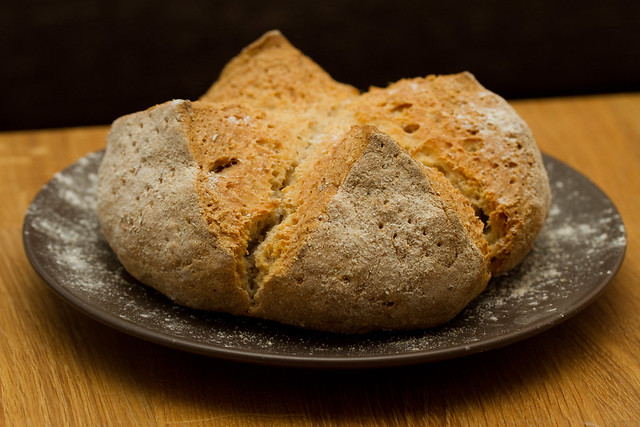
Soda Bread

Proto-Celtic *ar(-akno)- = bread
Old Irish (Goídelc) arán [ˈaraːn] = bread, loaf of bread
Middle Irish (Gaoidhealg) arán [ˈaraːn] = bread
Irish (Gaeilge) arán [əˈɾˠɑːn̪ˠ / ˈaɾˠanˠ] = bread
arán baile = home-baked bread
arán bán = white bread, baker’s bread
arán coirce = oatbread, oatcake
arán donn, arán rua = brown bread
arán prátaí = potato cake
Scottish Gaelic (Gàidhlig) aran [aɾan] = bread, loaf; livelihood, sustenance
aran-coircearan-donn, aran ruadharan-eòrnaaran milisaran-seagail
Manx (Gaelg) arran = bread
arran Albinagh = shortbread
arran bainney = bread roll
arran bane = white bread
arran dhone, arran ruy = brown bread
arran greddan(it) = toast
arran shoggyl = rye bread

Etymology: from the Proto-Celtic *arankā- (grain) [source].

Proto-Celtic *bargo / *baragenā / *barginā = cake, bread
Old Irish (Goídelc) barigen [ˈˈbarʲ.ɣʲən] = bread, loaf of bread
Irish (Gaeilge) bairín = loaf
bairín breac = barmbreac
Scottish Gaelic (Gàidhlig) bairghin = bread, cake
Manx (Gaelg) berreen = cake
Welsh (Cymraeg) bara [ˈbara / ˈbaːra] = bread, loaf, slice; food, meal, sustenance, livelihood
bara barlys = barley bread
bara beunyddiol = daily bread
bara brith = currant bread
bara byr = buscuit
bara ceirch = oat bread, oatcake
bara coch = brown bread, barley bread
bara drwg = bad bread, bad state, difficulties
bara gwyn = white bread
bara lawr = laverbread (made with edible seaweed)
bara poeth = gingerbread, hot bread
Old Cornish bara = bread
Cornish (Kernewek) bara = bread
bara byghan/bian = roll
bara gwaneth = wheaten bread
bara leun = wholemeal bread
bara sugal = rye bread
Breton (Brezhoneg) bara [ˈbɑː.ra] = bread
bara bis = brown bread
bara brazed = wholemeal bread
bara brizh = currant bread
bara gwenn = white bread
bara kras = toast

Etymology: from the Proto-Indo-European *bʰars- (spike, prickle). Words from the same root include the English barley, the Scots bere/beir (barley), the Swedish barr (pine/fir needle), the Icelandic barr (pine needle), the Old Norse barr (corn, grain, barley), and the Latin far (spelt, coarse meal, grits), and words for flour in Romance languages, such as farine in French [source].

Words marked with a * are reconstructions.

You can find the origins of the English words bread and loaf on Radio Omniglot.

Sources: Wiktionary, Am Faclair Beag, Online Manx Dictionary, Teanglann.ie, eDIL – Electronic Dictionary of the Irish Language, Geiriadur Prifysgol Cymru, Gerlyver Kernewek, Dictionaire Favereau, TermOfis

Hillsides

Words for hillsides, cliffs and related words in Celtic languages.

Snowdonia in the sun

Proto-Celtic *altos = height, cliff
Old Irish (Goídelc) alt, allt = height, cliff, valley, abyss
Middle Irish (Gaoidhealg) als = hillock
Irish (Gaeilge) ailt = steep-sided glen, ravine, height, cliff
ailteán = small ravine
alt = steep-sided ravine, hillock
altach = undulating (road), wavy (hair)
altán = streamlet, ravine, hillock
Scottish Gaelic (Gàidhlig) alt [al̪ˠd] = rugged/steep bank, precipice
allt [aul̪ˠd] = brook, burn, stream, brook, rill, river with precipitous banks
alltan = brook, little stream, streamlet
Manx (Gaelg) alt = mountain stream, glen in mountains, high place, altitude, alto
Middle Welsh (Kymraec) alt, allt = hill(side)
Welsh (Cymraeg) allt [aːɬt / aɬt] = hill(side), (steep) gradient or slope, steep road or path, (steep) ascent, cliff, woods, wooded slope
allt (o) goed = wood, grove
allt (y) môr, allt fôr = sea-cliff
yr allt bren = staircase, facet (“the wooden hill”)
Old Cornish als = cliff
Cornish (Kernewek) als [ɒlz / ælz] = cliff
Middle Breton a(o)ut = coast, shore, bank
Breton (Brezhoneg) aod = coast, shore
aod bili = pebble beach
aod vev = foreshore

Etymology: from the Proto-Indo-European *h₂eltós, from Proto-Indo-European *h₂el- (to grow, nourish) [source].

English words such as altitude, adult and old come from the same PIE root, as do alt (old, ancient, elderly) in German, oud (old) in Dutch, haut (high, tall) in French and alto (high, tall, deep, loud) in Italian [source].

Words marked with a * are reconstructions.

Slieve League / Sliabh Liag

Sources: Wiktionary, Am Faclair Beag, Online Manx Dictionary, Teanglann.ie, eDIL – Electronic Dictionary of the Irish Language, Geiriadur Prifysgol Cymru, Gerlyver Kernewek, Dictionaire Favereau, TermOfis

Bridges

Words for bridges and related words in Celtic languages.

Menai Bridge / Pont y Borth

Words marked with a * are reconstructions.

Old Irish (Goídelc) drochet [ˈdroxʲed] = bridge
Middle Irish (Gaoidhealg) drochet, drochat, droichet = bridge, causeway
drochetech, drochetóir = bridge-maker
Irish (Gaeilge) droichead [ˈd̪ˠɾˠɛçəd̪ˠ] = bridge
droichead crochta = suspension bridge
droichead tógála = drawbridge
droichead meáite = weigh bridge
droichead veidhlín = bridge of a violin
droichead sróine = bridge of the nose
Scottish Gaelic (Gàidhlig) drochaid [drɔxɪdʲ] = bridge
drochaid air fleodradh = pontoon
drochaid-thogalach, drochaid-thogail = drawbridge
drochaid-choise = footbridge
drochaid-rathaid = road bridge, viaduct
drochaid-thionndain = swing bridge
Manx (Gaelg) droghad = bridge, bridge of ship, arch, gantry
droghad aae = viaduct
droghad cassee = swing bridge
droghad coshey = gangway, footbridge
droghad croghit = suspension bridge
droghad keesh = toll bridge
droichead meihaghey = weigh bridge

Etymology: from Old Irish droch (wheel, circlet) and sét (path) [source].

Gaulish ponto = bridge
Proto-Brythonic *pont = bridge
Cumbric *pont = bridge
Old Welsh (Kembraec) pont = bridge
Middle Welsh (Kymraec) pont, pynt = bridge, drawbridge
Welsh (Cymraeg) pont [pɔnt] = bridge, drawbridge, viaduct, aqueduct
pontio = to bridge (a gap), to transition
pont godi = drawbridge
pont grog = suspension bridge
pont trwyn = bridge of the nose
pont y glaw, pont law = rainbow
pont ysgwydd = collar-bone, clavicle
pontio = to bridge, span, arch
pont(i)og = like a bridge, arched of the nature of a bridge
pont(i)wr, pontydd = a bridge-builder
pontyddiaeth = bridge-building
Old Cornish (Cernewec) pons = bridge
Middle Cornish (Cernewec) pons = bridge
Cornish (Kernewek) pons = bridge
ponsfordh = viaduct
pons travalya = travelling bridge
Middle Breton (Brezonec) pont = bridge
Breton (Brezhoneg) pont [pɔ̃nt] = bridge, top of the furrow, culvert, trigger guard
pontan, pontañ = to bridge, lay flat stones (on a ditch or stream)
pont-tro = swing bridge
pont hent-houarn = railway bridge
pont dilestrañ = bridge, deck (of ship)
pont kargañ = loading deck
pont-tro = swing bridge

Etymology: from Latin pōns (bridge, deck), from Proto-Indo-European *pónteh₁s (path, road), from *pent- (path). Words from the same roots include pont (bridge) in French, puente (bridge) in Spanish, път [pɤt] (road, way, path, journey, way) in Bulgarian source].

Proto-Celtic *brīwā = bridge
Gaulish briua = bridge
Leptonic 𐌐𐌓𐌖𐌉𐌀𐌌 (pruiam) = funerary construction (perhaps a grave)

Etymology: from Proto-Indo-European *bʰerw/*bʰrēw (wooden flooring, decking, bridge), which is also the root of the English words bridge and brig, and Brücke (bridge) in German [source].

The Fastest Way to Learn Japanese Guaranteed with JapanesePod101.com

Sources: Wiktionary, Am Faclair Beag, Online Manx Dictionary, Teanglann.ie, eDIL – Electronic Dictionary of the Irish Language, In Dúil Bélrai English – Old Irish glossary, Geiriadur Prifysgol Cymru, Gerlyver Kernewek, Dictionaire Favereau, TermOfis, English – ProtoCeltic WordList (PDF), Etymological Dictionary Of Proto Celtic

Unlimited Web Hosting - Kualo

Peaks

Words for peaks and tops and related words in Celtic languages.

View from Snowdon

Words marked with a * are reconstructions.

Proto-Celtic *bandā = top, peak; horn
*benno- = peak, top
Gaulish benn/*bannā = peak
Old Irish (Goídelc) benn [bʲen͈] = mountain, crag, peak, point, crest, summit, pinnacle, spire; gable, corner, horn (of animal), drinking horn, prong, crest
bennán = horned animal, cow, calf; horned or peaked object
Middle Irish (Gaoidhealg) benn = mountain, crag, peak, point, crest, summit, pinnacle, spire, gable, corner, prong, crest
bennacán = little horned one, calf
bennach = pointed, peaked, horned
bennán = a horned animal, calf
bennchopor = steeple, tower
Irish (Gaeilge) beann = horn, antler; drinking horn; prong (of fork)
beannach = horned, antlered, pronged, peaked, gabled, angular
beannógach = peaked,angular
binn = peak; gable; cliff; corner, edge, margin; lap; side, portion
Scottish Gaelic (Gàidhlig) beann [bjaun̪ˠ] = horn, peak, top, corner, skirt
beannach = [bjan̪ˠəx] = pointed, horned
beinn [bein̪ʲ] = mountain, mount, high hill
beinn-theine = volcano
eigh-bheinn = iceberg
Manx (Gaelg) beinn = mountain, ben, summit, pinnacle, apex, tine of deer
beinn rioee = iceberg
Proto-Brythonic *bann = top, peak
Middle Welsh (Kymraec) bann, = top, tip, peak, summit
Welsh (Cymraeg) ban [ban] = top, tip, peak, summit, crest, peak, beacon, height, pinnacle, turret, hill, mountain, bare hill; chief; drinking horn, horn (of animal); arm, branch, beam, point (of cross)
bannau’r byd = corners, quarters or regions of the world, the ends of the earth
ban caer, ban y gaer = rampart of a fort; top or height of a fortess
ban lleuad = quarters of the moon, new moon
Middle Cornish (Cernewec) ban = that which is high, a height, mountain, summit
Cornish (Kernewek) ban = prominence
Breton (Brezhoneg) bann = rising, uphill, upright, post, column

Etymology: from the Proto-Indo-European *bn̥dʰéh₂ from *bendʰ- (pin, point). The Scots word ben (mountain, hill) comes from the Scottish Gaelic beinn. From Gaulish we get the Catalan words banya (horn) and banyut (horned, unfaithful), and the Occitan bana (horn), and the English word pin comes from the same PIE root [source].

See the post about Mountains for other mountain-related words, such as sliabh in Irish and Scottish Gaelic, and mynydd in Welsh.

The Fastest Way to Learn Japanese Guaranteed with JapanesePod101.com

Sources: Wiktionary, Am Faclair Beag, Online Manx Dictionary, Teanglann.ie, eDIL – Electronic Dictionary of the Irish Language, In Dúil Bélrai English – Old Irish glossary, Geiriadur Prifysgol Cymru, Gerlyver Kernewek, Dictionaire Favereau, TermOfis, English – ProtoCeltic WordList (PDF), Etymological Dictionary Of Proto Celtic

Unlimited Web Hosting - Kualo