Thunder

Words for thunder and related words in Celtic languages.

Thunder

Proto-Celtic *toranos = thunder
Gaulish *taranus = thunder
Tanaris / *Toranos / *Tonaros / *Tanaros = Celtic god of thunder.
Old Irish (Goídelc) torann = thunder
Irish (Gaeilge) torann [ˈt̪ˠɔɾˠən̪ˠ/ˈt̪ˠʌɾˠən̪ˠ] = noise, thunder, (tumult of) battle
toirneach [ˈt̪ˠoːɾˠn̠ʲəx/ˈt̪ˠaːɾˠn̠ʲa(x)] = thunder, thunderclap
toirniúil = thundery, thundering, noisy
torannach / toranda = noisy
torannáil = (act of) making noise, rumbling
marbhthoirneach = subdued, distant thunder
Scottish Gaelic (Gàidhlig) torrann [tɔr̪ˠən̪ˠ] = loud murmur, rumble, thunder
torrunn [tɔr̪ˠən̪ˠ] = loud murmur, rumble, thunder
toireann [tɤrʲən̪ˠ] = thunder
tàirneach [taːr̪ˠn̪ʲəx] = thunder
tàirneanach [taːr̪ˠn̪ʲənəx] = thunder
torrann-sgòth = thundercloud
mòthar an tàirneanaich = the roar of thunder
Manx (Gaelg) taarnagh / taarnaghey = thunder, thundering
rooit haarnee = thunder-clap
bodjal taarnee = thunder cloud
frass taarnee = thunder shower
Proto-Brythonic *taran = thunder
Middle Welsh (Kymraec) taran = (peal of) thunder, thunderclap
Welsh (Cymraeg) taran [ˈtaran/ˈtaːran] = thunder, thunderclap, thunderbolt
taranau = thunder
taranu = to thunder, roar, fulminate, vociferate, cause/give forth thunder
taran(i)ad = thundering, clap of thunder, roar, loud noise like thunder
mellt a tharanau = thunder and lightning
Old Cornish taran = thunder
Cornish (Kernewek) taran = thunder
tarenna, taredna = to thunder
taran sonek = sonic boom
tardh taran = thunderclap
Old Breton taran = thunder
Breton (Brezhoneg) taran = thunder, thundering, flashes, growls, grumbling

Etymology: from the Proto-Indo-European *(s)tenh₂- (to thunder) [source].

Words for thunder in Germanic languages come from the same PIE root, via the Proto-Germanic *þunraz (thunder, Germanic deity), including thunder in English, donder in Dutch, Donner in German, and torden in Norwegian, and also the Old Norse Þórr (Thor – god of thunder), from whom we get the word Thursday [source].

The English word tornado comes from the same PIE root, via the Spanish tronada (thunderstorm), from tronar (to thunder), from the Latin tonō (to thunder), from which we also get words for thunder in Romance languages [source].

The name of the River Tanaro in northwestern Italy comes from the Latin Tanarus, from the Gaulish *Tanaros [source].

Words marked with a * are reconstructions.

Sources: Wiktionary, Am Faclair Beag, Online Manx Dictionary, Teanglann.ie, eDIL – Electronic Dictionary of the Irish Language, logainm.ie, In Dúil Bélrai English – Old Irish glossary, Geiriadur Prifysgol Cymru, Gerlyver Kernewek, Dictionaire Favereau, TermOfis, Le dictionnaire diachronique du breton, Geriafurch, English – ProtoCeltic WordList (PDF), Etymological Dictionary Of Proto Celtic

Blubrry podcast hosting

Parts and Portions

Words for part, portion, piece, thing and related words in Celtic languages.

Words marked with a * are reconstructions.

Puzzle pieces

Proto-Celtic *rannā = part
Old Irish (Goídelc) rann = part (of a whole)
randatu = the property of belonging to a part of speech
rannaid = to divide (into parts), to apportion
ranngabáil = participle
Middle Irish (Gaoidhealg) rann, rand, ran, rán = part, lot, portion, faction, alliance
Irish (Gaeilge) rann [ɾˠanˠ] = part, side (in dispute), partition
rannach = apportioning, sharing, open-handed
rannadóir = divider, sharer
rannán = division
rannóg = section
rannpháirt = participation, part, share
roinn = share, portion, distribution, dealing, trading, division
Scottish Gaelic (Gàidhlig) rann [r̪ˠaun̪ˠ] = stanza, quatrain, verse, bond, deed, division, part, portion, section
rann-phàirt = participation, portion, participle
roinn [r̪ˠɤin̪ʲ / r̪ˠɤn̪ʲə] = dividing, partitioning, section, share, allotment, partition, department, division
roinneadair = divider, divisor, sorter
Manx (Gaelg) rheynn = divide, classify, distribute, dispense, share
fo-rheynn = section
so-rheynn = divisible
Proto-Brythonic *rrann = part
Middle Welsh (Kymraec) rann = part
Welsh (Cymraeg) rhan [r̥an] = part (of something), portion, division, element, constituent, component
rhanadwy = divisible, dividend
rhanedig = shared (out), divided, parted, split, separate
rhannu = to divide, separate, part, divide
Old Cornish radn = part, portion
Cornish (Kernewek) radn = lot, part, portion, role, share
ranna = to share
Middle Breton (Brezonec) rannaff = to share, separate, divide, pronounce, split
Breton (Brezhoneg) rann [rãnː] = part, fraction, division, slot
rannañ [ˈrã.nːã] = to share, separate, divide, pronounce, split
ranned [ˈrã.nːet] = dividend
ranngalon [ʁɑ̃nˈɡɑːlɔ̃n] = deep sorrow, desolation, heartbreak
rann

Etymology: from the Proto-Indo-European *per- (to sell) [source], which is also the root of such English words as depart, jeopardy, parcel, part, partition and portion [source].

Proto-Celtic *kʷezdis = piece, portion
Old Irish (Goídelc) cuit [kudʲ] = part, portion, share
cuit adaill, cuit adíll = a passing visit, a brief visit
cuitigid = to share, partake
Middle Irish (Gaoidhealg) cuit = share, part, portion
cuit(gi)d = to share, partake, participate
Irish (Gaeilge) cuid [kɪdʲ] = part (of whole), share, portion, some,
cuideach = wealthy, prosperous
cuideachta = company, companionship, social amusement, fun
cuideachtaigh = to bring together, associate
cuideachtúil = companionable, sociable
cuideachtúlacht = sociableness
cuidí = component
cuidigh = to share, help, requite, repay (usually for misdeed), do for, do away with
cuiditheoir = helper, supporter, seconder
cuidiú = to help, assistance
cuidiúil = helpful, cocky, conceited
Scottish Gaelic (Gàidhlig) cuid [kudʲ] = portion, share, allotment, ration, effects, means, belongings, some (people), accommodation, victuals
cuid-eigin [kudʲegʲɪn] = someone, somebody
cuideachail [kudʲəxal] = helpful, constructive, subsidiary
cuideachair [kudʲəxɛrʲ] = auxiliary, helper
cuideachas [kudʲəxəs] = help, suppprt
cuideachd [kudʲəxg] = company, society, throng, troop; also, too, jointly, together
cuideachdadh [kudʲəxgəɣ] = accompanying
cuideag [kudʲag] = small portion / share
Manx (Gaelg) cooid = certain, some, stuff, assets, goods, helping, means, part, possessions, proportion, resources
cooidjagh = accompanying, jointly, together, inclusive
cooidjaghtagh = companion, companionable
Gaulish *pettiā, = (?)
Pictish *ᚚᚔᚈ (pit) = (a parcel of) land, a portion (?) – found in placenames like Pitlochry
Proto-Brythonic *peθ = part
Old Welsh (Kembraec) ped = thing, object
Middle Welsh (Kymraec) peth = thing, object
Welsh (Cymraeg) peth [peːθ] = thing, object, material, suff, substance, device, instrument, personal possessions, belongings, tools, equipment, something, anything
peth(eu)ach = (unimportant) things, trifles
pethdod = thingness, thinghood, reality, substantiality
petheiddio = to reify, make real or concrete
Middle Cornish (Cernewec) peth, pêth, peyth, pŷth = thing, something, article
pethow = things, riches, wealth
Cornish (Kernewek) pyth, peth [pɪːθ / pɛθ] = commodity, material, matter, possession, property, thing, that which, what, appliance
pyth ha da, peth ha da = possessions
pythek, pethek = concrete
pythow, pethow = belongings, wealth
Middle Breton (Brezonec) pez, pezz = piece, bit, part
Breton (Brezhoneg) pezh [peːs] = piece, bit, room, part, what
pezhiad = (big) piece, piece (of)
pezhig = (an) ugly piece

Etymology: unknown, possibly borrowed from a non-Indo-European substrate source [source]. Words from the same roots via Gaulish *pettyā and Latin pettia (piece, portion), include piece in English, pièce (room, patch, piece, play, document) in French, peza (piece, fragment, part) in Galician, pieze (piece, part) in Spanish, biisi (song) in Finnish, and ピース (pīsu – piece) in Japanese [source].

Middle Irish (Gaoidhealg) písa, pissa = piece, fragment, coin
Irish (Gaeilge) piosa [ˈpʲiːsˠə] = piece, bit, patch, piece-work, literary or musical composition, coin
piosaáil = to piece together, patch
Scottish Gaelic (Gàidhlig) pìos [piːs] = bit, piece, sandwich, piece, (musical) composition, hunk (person)
pìosach [piːsəx] = in pieces / fragments
pìosail [piːsal] = sexy, attractive
pìosan [piːsan] = small piece / bit
Manx (Gaelg) peesh = bit, cutting, patch, piece, length (of thread), parcel
Cornish (Kernewek) pis = piece

Etymology: from Middle English pece (piece, morsel, bit), from Anglo-Norman piece (piece, bit, part), from Late Latin petttia (piece, portion), from Gaulish *pettyā, from Proto-Celtic *kʷezdis (piece, portion) – see above [source].

Proto-Celtic *darnos, *darnā = piece, part
Old Irish (Goídelc) drécht [dʲrʲeːxt] = portion, part
Middle Irish (Gaoidhealg) drecht, drécht = part, portion, section; poem, literary composition
dréchtach = numerous; skilled in song or poetry
dréchtfaid = to divide up
Irish (Gaeilge) dréacht [dʲɾʲeːxt̪ˠ]= part, portion, draft, detachment, number; (literary) piece, composition; draft
dréachtach = composer, poet; skilled in/diligent at compostion
dréachtaigh = to draft
dréachtín = versicle, stanza
dréachtóir = drafter, draughtsman (of documents)
Scottish Gaelic (Gàidhlig) dreachd [drɛxg] = draft
dreachd-aithisge = draft report
dreachd-dhealbh = working drawing
Manx (Gaelg) draght, dreaght = draft
draghtey = to draw up
dreaght feeleeaght = a piece of poetry
Gaulish *darnā = piece
Proto-Brythonic *darn = piece (?)
Middle Welsh (Kymraec) darn = piece, fragment, part
darnaw, darnio, darnu = to break or tear in pieces
Welsh (Cymraeg) darn [darn] = piece, fragment, part, coin, passage
darn(i), darnu = to break or tear in pieces
darn(i)edig = broken or torn to pieces
darniog = broken, shattered, fragmentary
Middle Cornish (Cernewec) darn = fragment, piece
pethow = things, riches, wealth
Cornish (Kernewek) darn = bit, fragment, part, piece
darnas = portion
Middle Breton (Brezonec) darn = fragment, part
darnaou = broken, very tired
darnaouet = torn to pieces, very tired, bored
Breton (Brezhoneg) darn [peːs] = fragment, part, some
darnan, darnañ = to fragment, chip, shorten
darnaou = broken, very tired
darnaouin = to break
darnek = partial

Etymology: from PIE *der- (to split, separate, tear, crack, shatter). The French word darne (steak, fillet) was borrowed from Breton darn (fragment, part, some). Words from the same PIE root include dermal, tear and tier in English, and tirar (to throw) in Spanish, zehren (to live on, feed on, undermine, wear out) in German, and драть [dratʲ] (to tear to pieces) in Russian [source].

The Fastest Way to Learn Japanese Guaranteed with JapanesePod101.com

Sources: Wiktionary, Am Faclair Beag, Online Manx Dictionary, Teanglann.ie, eDIL – Electronic Dictionary of the Irish Language, In Dúil Bélrai English – Old Irish glossary, An Etymological Dictionary of the Gaelic Language, Geiriadur Prifysgol Cymru, Gerlyver Kernewek, Dictionaire Favereau, TermOfis, English – ProtoCeltic WordList (PDF), Etymological Dictionary Of Proto Celtic

Unlimited Web Hosting - Kualo

Bark and Beehives

Words for bark, beehives and related words in Celtic languages.

Beehives

Proto-Celtic *ruskos = bark, beehive
Gaulish rusca / ruskā = bark, beehive
Old Irish (Goídelc) rúsc [ruːsk] = (tree) bark, basket, covering
Irish (Gaeilge) rúsc [ɾˠuːsˠk] = (tree) bark, vessel made of bark
rúscach = bark-like; rough, wrinkled (skin)
rúscán = strip of bark, vessel made of bark, kind of seaweed
Scottish Gaelic (Gàidhlig) rùsg [r̪ˠuːsg] = (tree) bark, peel, rind, husk, crust, fleece
rùsg-caorach = sheep’s fleece
rùsg-abhaill = apple peel
rùsg na Talmhainn = crust of the Earth
rùsgan [r̪ˠuːsgan] = thin (tree) bark, thin peel/rind/husk, thin crust, small fleece, bark boat
rùsgach = fleecy
Manx (Gaelg) roost [ruːst] = peel, bark, rind
roostey = strip, peel, hull, rob, bare, rind, debunk, rifle, unbark, deprive, peeling, exposure
Proto-Brythonic *rrisk = bark
Middle Welsh (Kymraec) risgl, risg, rhisg, risc = bark
Welsh (Cymraeg) rhisg(l) [ˈr̥ɪsɡ(l)/ˈr̥ɪsɡɪ(l)] = (piece of) bark, rind, peel (of fruit) husk (of grain)
rhisg(l)ach = pieces of bark
rhisgen = (bark) dish or pan
rhisglen = (piece of) bark, rind; hackle, flax comb
rhisgl(i)af, rhisgaf, rhisgl(i)o, rhisgo = to bark, decorticate, peel (off), develop bark (on), encrust
rhisg(l)aidd = having bark or rind, corticate(d), covered with bark
Old Cornish rusc = bark
Middle Cornish risc = bark
Cornish (Kernewek) rusken = bark, peel
ruskek = rough-barked
Middle Breton rusquenn = beehive
Breton (Brezhoneg) rusk = bark, peel, zest
ruskek = rough, rugged, coarse
ruskenn = (bee)hive, apiary
ruskennad = beehive
ruskenner = beehive maker

Etymology: from the Proto-Indo-European *h₃rewk- (to dig up), possibly from *h₃er- (to move, stir) [source].

The French word ruche (beehive, ruffle, flounce) and the Catalan word rusc (beehive) come from the Gaulish root rusca, via the Late Latin rusca (bark), and the English word ruche (pleated fabric, ruff), and the German word Rüsche (ruffle, ruche) were borrowed from French [source].

Words marked with a * are reconstructions.

Sources: Wiktionary, Am Faclair Beag, Online Manx Dictionary, Teanglann.ie, eDIL – Electronic Dictionary of the Irish Language, logainm.ie, In Dúil Bélrai English – Old Irish glossary, Geiriadur Prifysgol Cymru, Gerlyver Kernewek, Dictionaire Favereau, TermOfis, English – ProtoCeltic WordList (PDF), Etymological Dictionary Of Proto Celtic

Blubrry podcast hosting

Calling Words

Words for word, call, cry and related things in Celtic languages.
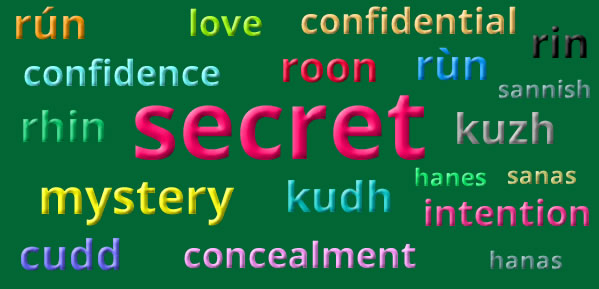
words is various languages
Word cloud created with WordItOut

Words marked with a * are reconstructions.

Proto-Celtic *gāri = shout, call
*garyeti = to cry, shout
*gar(r)man- = cry, shout
*garyo- = word, command
*garyos = call, cry
Gaulish *Garomaros / Garo-marus = personal name
adgarion = accuser (?)
Old Irish (Goídelc) gairm = call, name, summons
gairid [ˈɡarʲiðʲ] = to call, cry out, summon
adgair [aðˈɡarʲ] = to summon
congair [konˈɡarʲ] = to call, summon; invite
dogair = to call
Middle Irish (Goídelc) gairm = call, name, summons, cry, name, title, calling, employment, profession
gairid = to call
Irish (Gaeilge) gáir [ɡɑːɾʲ/ɡæːɾʲ] = cry, shout; report, fame, notoriety; to cry shout; laugh
gáire = to laugh
gáieach = laughing, smiling
gáieachtach = noisy, vociferous; laughing, merry
gairm [ˈɡaɾʲəmʲ/ˈɡɪɾʲəmʲ] = call, calling, acclaim
(an tuiseal) gairmeach = vocative (case)
gairmí = professional
gairmiúil = vocational, professional
slua gairm = slogan
Scottish Gaelic (Gàidhlig) goir [gɤrʲ] = to call, cry, hoot, crow
gàir [gaːrʲ] = to laugh, cry shout; outcry, shout, clamour
gàir nan tonn = the roar of the waves
gairm [ɡɤrʲɤm] = calling, crying, call, cry, announcing, declaring, convenning, call of the cockerel
gairmeachadh = (act of) calling
gairm-choileach = cock-crow
gairm-chatha, gairm-chogaidh = war-cry
sluagh-gairm = slogan
tuiseal gairmeach = vocative case
Manx (Gaelg) gerr = crow, shout
gerr chah = war cry
gerrym = crowing, outcry, shouting, whoop, whooping, (cock) crow), avocation, mission, profession, vocation
gerrymagh = vocative
gerrymoil = professional, vocational
gerrym caggee = battle cry, call up, war cry
gerrym chellee = cock crow
sleih gerrym = slogan
Proto-Brythonic *gėr [ɡe̝ːr] = word, speech
Middle Welsh (Kymraec) geir = word
gaur, gawr = shout, cry
garddu = groan
garym, garm = shout, cry, outcry, clamour
garymleis, garamleis = scream, clamour
Welsh (Cymraeg) gair [ɡai̯r] = word, speech, phrase, greeting, salutation, short exhortation, saying, proverb; verb; line of poetry, verse; report, rumour, information, letter, reputation, fame, praise
geiriad = wording, phraseology, phrase
geiriadaf, geiriadu = to word, phrase, express
geiriadur = dictionary
geiriaduraf, geiriaduro, geiriadura = to compile a dictionary
geiriaduriaeth, geiriaduraeth = lexicography; vocabulary; grammar
geiriadurwr = lexicographer, dictionary-maker
geiriog = wordy, verbose
garm = shout, cry, outcry, clamour
garmlais = scream, clamour
Middle Cornish (Cernewec) garm = a cry, shout, outcry
garme = to shout, raise a shout, cry aloud, cry out
Cornish (Kernewek) ger [ɡɛːr/ɡeːr] = word, saying, report
gerdhal = dyslexic
gerdhalni = dyslexia
gerlyver = dictionary
garm = to shout, whoop, yell
garm argemynna = (advertising) slogan
garm vresel = battle cry
garm wormola = ovation
garma = to cry out, whoop, yell
garma yn lowen = to cheer
Old Breton gerent = word. say
Middle Breton guer = word
garm = loud crying, yelping of a fox, war cry, cry
garmadeg, garmadenn = clamour
garmer = to cry, crying, brawler
garmiñ = to cry, bellow, yelp
Breton (Brezhoneg) ger [ɡeːr] = word
geriadur = dictionary
garm = cry, clamour, weeping

Etymology: from the Proto-Indo-European *ǵeh₂r- (to shout, call) [source]. The English words garrulous (excessively talkative), care and charm (sound of many voices (esp. of birds or children), a flock or group (esp. of finches)) come from the same PIE root [source].

Proto-Celtic *woxtlom = dispute
Old Irish (Goídelc) focul [ˈɸokul] = word
Middle Irish (Gaoidhealg) focal, foc(c)ull, focla, facul = word, vocable, phrase, estimate, award, judgement, promise
Irish (Gaeilge) focal [ˈfˠɞkəl̪ˠ/ˈfˠɔkəlˠ] = word, phrase, remark, observation, saying, intelligence, message, promise, assurance
focalhbhá = ellipsis …
foclach = wordy, verbose
foclachas = wordiness, verbiage
focleolaí = philologist
focleolaíoch = philological
focleolaíocht = philology
foclóir = dictionary, lexicon, vocabulary
foclóireacht = lexicography
foclóireolaíocht/strong> = lexicology
foclóirí = lexicographer
foclóirín = word-list, vocabulary
Scottish Gaelic (Gàidhlig) facal [faxgəl̪] = word, comment, remark
facal air an fhacal = word for word, literally, verbatim
facal-faire = password
facal-fhreumhail = etymology
facal-mùirne = an endearment
facal-toisich = introduction, preamble
Manx (Gaelg) fockle [ˈfɔːɡəl] = word, charm, vocable
focklagh = wordy, verbose, voluble, loquacious
focklaghys = wordiness, verbiage
fockleyr = dictionary, lexicon, thesaurus
fockleyragh = lexicographic
fockleyreen = vocabulary, wordbook
fockleyreyder = lexicographer
fockleyrys = lexicography
Proto-Brythonic *gwoɨθl = dispute
Middle Welsh (Kymraec) gwaethyl = debate, dispute, contention, battle
gwaethyl uann, gwaethyluann = loud in dispute, strenuous, striving
gwaethyl gwyr = fighter, warrior
Welsh (Cymraeg) gwaethl = debate, dispute, contention, battle
gwaethlfan = loud in dispute, strenuous, striving
gwaethlwr = fighter, warrior
gwaethl =

Etymology: from Proto-Indo-European *wókʷtlom, from *wekʷ- (to speak, sound out) [source]. Words from the same PIE roots include advocate, epic, vocal, voice, vouch and , vowel in English; gewagen (to report, notify) in Dutch; voce (voice, call, word) in Italian; and उक्ति (ukti – saying, expression) in Hindi [source].

Proto-Celtic *brētrā = word, battle
Old Irish (Goídelc) bríathar [ˈbʲrʲiːa̯θər] = word, speech, utterance, verb, discourse
Middle Irish (Gaoidhealg) bríathar, briathor = word, utterance, talk, saying, speech, discourse, blessing, prayer, curse, promise, vow, pledge, verb
bríathardae = wordy, verbal
bríatharach = wordy, verbose
bríathad = act of speaking
bríatharaigid = to speak, pronounce
Irish (Gaeilge) briathar [ˈbʲɾʲiəhəɾˠ / ˈbʲɾʲiːhəɾˠ] = word, verb
briathartha = verbal
briathrach = wordy, verbose
briathrachas = wordiness, verbosity
briathraíocht = diction
Scottish Gaelic (Gàidhlig) briathar [brʲiəhər] = word, term
briathrail [brʲiəral] = loquacious, talkative, wordy, verbose
briathrach [brʲiərəx] = talkative, loquacious, wordy, verbose
Manx (Gaelg) breear = verb
breearagh = verbal
Middle Welsh (Kymraec) brwyder, brwydyr = battle
brwydraw = to battle, fight, struggle, attack
brwydrin = battle, conflict, fierce, pugnacious
brwydyrdaer = resolute in battle, fighting with all one’s might
brwytyrgar, brwydyrgar = delighting in fighting, eager for battle, bellicose
brwydryar = tumult of battle, battle-cry
brwydr-wr = fighter, warrior, combatant
Welsh (Cymraeg) brwydr [ˈbrʊɨ̯dr / ˈbrʊi̯dr] = pitched battle, conflict, attack, campaign, struggle, bother, dispute, controversy, host, army
brwydrin = battle, conflict, fierce, pugnacious
brwydro = to battle, fight, struggle, attack
brwydrwr = fighter, warrior, combatant

Etymology: possibly from Proto-Indo-European *bʰerH- (to strike, pierce) [source]. Words from the same PIE root include boren (to) bore in English, (to drill) in Dutch, and foràre (to pierce, puncture) in Italian [source].

Proto-Celtic *galw-o- = call
Old Irish (Goídelc) gláed = shout, loud call
gláedach = noisy, blustering, adjective
gláedid = to cry out, name; verb
gláedem = wolf
glegrach = noisy
Middle Irish (Gaoidhealg) gláed, glaid = shout, loud call
gláedach = calling, crying out, shouting, noisy, blustering
gláedid = to cry out, to name
glegrach = noisy, resounding, clamorous
Irish (Gaeilge) glao [ɡl̪ˠeː/ɡlˠiː] = call, shout
glaoch = calling, to call
glaoigh = to call, cry out, shout
glaoiteach = calling, vociferous
glaomaire = loud-mouthing, vociferous, boastful person
glaomaireacht = shouting, bragging, boastfulness
Scottish Gaelic (Gàidhlig) glaodh [gl̪ˠɯː] = cry, shout, yell, proclamation
glaodhach [gl̪ˠɯː.əx] = crying, shouting, yelling
glaodhaire [gl̪ˠɯː.ɪrʲə] = crier, loudspeaker
glaodhar [gl̪ˠɯː.ər] = noise, rattling, clang, clash
glaodhte = cried, shouted, yelled
Manx (Gaelg) gyllagh = calling, crying
gyllaghey = to cry, roar, shout
Proto-Brythonic *gėlwɨd = to call
Middle Welsh (Kymraec) galw = a call, calling, shout, cry, invitation
gelwi, galw, galwaf = to call, shout, bawl, summon, invite
galwedic, galwedig = called, named, summoned
galwedigaeth, galwedygaeth = call, a calling, vocation, profession, occupation
Welsh (Cymraeg) galw [ˈɡalu / ˈɡaːlu] = a call, calling, shout, cry, invitation
galwad = a calling, call, shout, sounding
galwaf, galw, gelwain = to call, shout, bawl, summon, invite
galwdig = called, named, summoned
galwdigaeth = call, a calling, vocation, profession, occupation
galwdigaethol = vocational, occupational, professional
Middle Cornish (Cernewec) galow = a call, invitation
gelwel, gylwel = to call (for), invoke, name
Cornish (Kernewek) galow = appeal, call, calling, invitation, vocation
galwansek = vocational
galwen = call
galwesigeth = calling, profession, vocation
galwesik = professional
gelwel = to call, appeal, invite, summon
Old Breton (Brethonoc) galu = appeal, summons
Middle Breton (Brezonec) galu = appeal, summons
gueruell, gueluer = to call, summon
Breton (Brezhoneg) galv [ˈɡalw/ˈɡalɥ/ˈɡalf] = appeal, summons
galvedigezh [ɡalveˈdiːɡɛs] = vocation, calling
galvel, galven, galver, gervel = to call, summon

Etymology: from the Proto-Indo-European *gal(o)s- (voice, cry). The English word call comes from the same PIE root, as do galsas (sound, echo) in Lithuanian, голос [ˈɡoɫəs] (voice, word, remark, vote) in Russian, hlas (voice, vote) in Czech, and gallo (rooter, cockerel) in Spanish [Source].

The Fastest Way to Learn Japanese Guaranteed with JapanesePod101.com

Sources: Wiktionary, Am Faclair Beag, Online Manx Dictionary, Teanglann.ie, eDIL – Electronic Dictionary of the Irish Language, In Dúil Bélrai English – Old Irish glossary, Geiriadur Prifysgol Cymru, Gerlyver Kernewek, Dictionaire Favereau, TermOfis, English – ProtoCeltic WordList (PDF), Etymological Dictionary Of Proto Celtic

Unlimited Web Hosting - Kualo

Ditches and Trenches

Words for ditches, trenches and related words in Celtic languages.

irrigation_ditch

Words marked with a * are reconstructions.

Proto-Celtic *klado- = to dig, bury
*klādos = trench
*kladeti = to dig, thrust
*kladyā = digging
Gaulish Vindo-cladia = place name
Old Irish (Gaoidhealg) clad = ditch, dyke
claide [ˈkla.ðʲe] = to dig
con·claid = to dig, excavate
do·claid = to dig up, uproot
claidid = to dig
Middle Irish (Gaoidhealg) clad, clod = hole dug in the ground, trench
claide = digging, trenching, ditch, trench, excavation
claidid = to dig, excavate, undermine
clas = ditch, trench, furrow, pit, cooking-pit, burning-pit, grave
Irish (Gaeilge) cladh = ditch, trench (literary)
cladhach = ridged, furrowed
cladhaire = ditcher
claidh = to dig (a trench), build (a dike)
clais [klˠæʃ] = water channel, gully, ditch, trench, furrow, rut, groove, deep cut, gash, put, trough, soft mass, large quantity
clasach = channelled, trenched, grooved, gashed
clasaigh = to channel, trench, gash, groove
Scottish Gaelic (Gàidhlig) cladh [kl̪ˠɤɣ] = burial ground, cemetry, graveyard, ditch
cladhach [kl̪ɤ.əx] = digging, dig, excavation
clais [kl̪ˠaʃ] = furrow, groove, ditch, drain, gutter, rut, trench
claiseach [kl̪ˠaʃəx] = furrowed, grooved, fluted, abounding in trenches/ditches
claisean [kl̪ˠaʃan] = small furrow, small groove, small ditch, drain
claisearachd [kl̪ˠaʃərəxg] = ditching, act of digging a ditch
clais-mhòr = gorge
Manx (Gaelg) clash = channel, cleft, gorge, hollow, furrow, trench, sewer
clashal = to trench
clashag = furrowed, grooved
Proto-Brythonic *klėðɨd [kle̝ˈðɨːd] = to dig, thrust
Middle Welsh (Kymraec) clad, clat = hole, put, ditch, trench, grave
cladedic, kladdedig = buried, interred, dug up
cladedigaeth, klydigeth = burial, funeral
claddfa = cemetry, graveyard, burial-ground
cladu, kladu, kladdy, cladv = to bury, hide, forget, dig, burrow
cleis, clais = bruise, would, break, line, groove, rut, fissure, ditch, trench, rivulet
Welsh (Cymraeg) cladd = hole, put, ditch, trench, grave
claddedig = buried, interred, dug up
claddedigaeth = burial, funeral
claddfa = cemetry, graveyard, burial-ground
claddu [ˈklaðɨ̞/ˈklaːði] = to bury, hide, forget, dig, burrow, stab, pierce
clais [klai̯s/klai̯ʃ] = bruise, would, break, line, groove, rut, fissure, ditch, trench, rivulet
clawdd [ˈklaːu̯ð/ˈklau̯ð] = mound, dyke, earthwork, bulwark, boundary, hedge, fence; ditch, gutter, trench, pit, quarry, mine, moat, fosse
cloddio = to dig, delve, trench, ditch, excavate
clodd(i)wr, clawddwr = ditcher, navvy, digger, miner, quarryman, hedger, excavator
mwyn i’r clawdd to be unsuccessful, fail (“to go to the ditch/wall”)
Middle Cornish (Cernewec) cledh, clêdh = dyke, ditch, trench, fence
cladhva = a burying place
ancledhy = to bury, inter
ancledhyas, anclydhyas, encledhyes = burial, funeral
Cornish (Kernewek) kleudh = ditch
kleudhik = groove
kleudhya = to dig a trench, ditch, excavate
ynkleudhva = cemetry, graveyard
ynkleudhyans = burial, funeral
ynkleudhyas = to bury, inter
ynkleudhyer / ynkleudhyores = funeral director, undertaker
Old Breton (Brethonoc) clud = hollow
Middle Breton (Brezonec) creux, cleus, cleuz = hollow, cave
Breton (Brezhoneg) kleuz [kløː(s)] = hollow, slope, earth embankment, fence (of earth), hedge (of thorns, etc)
kleuziad
kleuz(i)añ [ˈkløː.z(i)ã] = to dig
kleuzier

Etymology: from the Proto-Indo-European *kelh- (to beat, break) [source].

Irish (Gaeilge) díog = ditch, trench, drain
díogach = trenched, having trenches
Scottish Gaelic (Gàidhlig) dìg [dʲiːg] = ditch, dyke, drain
Manx (Gaelg) jeeg = ditch, gutter, moat, trench
jeeig = conduit, cut, ditch, drain, gully, put, trench, waterway, sewer
jeeigagh = ditched
jeeigit = ditched, drained

Etymology: unknown.

Irish (Gaeilge) fos = prop, buttress, wall
Scottish Gaelic (Gàidhlig) fos [fɔs] = ditch, wall, buttress (archaic)
Middle Welsh (Kymraec) fos, foss = ditch, dike
Welsh (Cymraeg) ffos [fɔs] = ditch, dike, gutter, moat, trench, furrow, groove, pit
ffos(i)af, ffosi(o) = to ditch, trench, furrow, chamfer
ffosedig = trenched, moated, furrowed, lined
ffos gaeedig = drain
ffos y clawdd, ffos glawdd = roadside ditch
ffos ddyfrio conduit
ffos melin, ffos y felin = mill-race
Middle Cornish (Cernewec) fos = ditch, moat, trench, intrenchment, wall
Cornish (Kernewek) fos = wall
paper fos = wallpaper
toll y’n fos = cash dispenser, ATM (“hole in the wall”)
Middle Breton (Brezonec) fos, foss, fôs = ditch, gap, pit, (river) bed
Breton (Brezhoneg) foz = ditch, gap, sand trap
foz disac’hañ = rift (valley), collapsed ditch
foz-kronniañ = holding tank, retention pit

Etymology: from the Latin fossa (ditch, trench, moat, gutter, furrow), from fossa terra (dug-up earth) [source].

Proto-Celtic *kʷantyos = flat hill, valley
Old Irish (Goídelc) céite = hill, mound, race-course, assembly
Middle Irish (Gaoidhealg) céide, céite = hill, mound, eminence, open space
Irish (Gaeilge) céide [ˈlʲɛtʲəɾʲ/ˈl̠ʲɛtʲəɾʲ] = flat-topped hill, place of assembly
Scottish Gaelic (Gàidhlig) cèide = market, fair, green, hillock
Pictish ᚘᚐᚅᚈ = hollow
Middle Welsh (Kymraec) pant = hollow, depression, valley, dent
Welsh (Cymraeg) pant [pant] = hollow, depression, valley, dent
pant (y) llaw = palm of the hand
pant a thalar = hilla and dale, everywhere
pantiad = hollow, depression
pant(i)af, pantio, pantu = to be(come) hollow, make an impression, sink (in the middle)
pant(i)og = hollow, sunken, uneven, holed, sinking, sagging, concave
pantir = dale-land, valley-bottom, lowland
pantlawr = uneven/concave floor
pantlle = hollow, dell, small valley, place full of hollows
Cornish (Kernewek) pans = dell, dingle, hollow
Old Breton pantet = curved, curve
Middle Breton (Brezonec) pant = curved, curve, bend
Breton (Brezhoneg) pant = slope, hillside

Etymology: possibly from the PIE *kwem-t (hill)

The Fastest Way to Learn Japanese Guaranteed with JapanesePod101.com

Sources: Wiktionary, Am Faclair Beag, Online Manx Dictionary, Teanglann.ie, eDIL – Electronic Dictionary of the Irish Language, In Dúil Bélrai English – Old Irish glossary, Geiriadur Prifysgol Cymru, Gerlyver Kernewek, Lexicon Cornu-britannicum: A Dictionary of the Ancient Celtic Language of Cornwall, Dictionaire Favereau, TermOfis, Le dictionnaire diachronique du breton, Etymological Dictionary Of Proto Celtic
Lakes and Ponds

Words for lakes, ponds and related things in Celtic languages.

Llyn Idwal

Proto-Celtic *lindā = pool, lake
Gaulish lindon = pool, lake; sea, ocean
Old Irish (Goídelc) lind [l̠ʲiːn̠ʲ / l̠ʲɪn̠ʲ] = pool, pond, body of water, lake, sea
Irish (Gaeilge) linn = pool, pond, body of water, lake, sea
linn mhuilinn = mill-pond
linn lachan = duck pond
linneach = full of pools, watery
linneolaíocht = limnology (freshwater science)
linntreog = small pool, puddle, pot-hole
Scottish Gaelic (Gàidhlig) linne [l̪ʲin̪ʲə] deep pool; strait, sound, firth
linne-thuathal, faochag-linne = whirlpool
Linne Giùdain = Firth of Forth
Linne Shalmhaigh = Solway Firth
éisg-linn = fishpond
Manx (Gaelg) lhingey = pool, pond, backwater
lhingey chassee = small whirlpool
lhingey eeast = fishpond
Proto-Brythonic *llɨnn = lake, liquid
Middle Welsh (Kymraec) llynn = lake, liquid
Welsh (Cymraeg) llyn [ɬɨ̞n/ɬɪn] = lake, pool, pond, puddle, moat
llyn anoddun = bottomless pit, the deep
llyn melin = mill pond
llyn tro = whirlpool
Old Cornish lin = lake
Cornish (Kernewek) lynn, lydn = lake
Old Breton lin = lake
Breton (Brezhoneg) lenn = lake, basin, washhouse, fishpond, body of water

Etymology: possibly from the Proto-Indo-European *liH-nd-o-/*liH-nd-u [source].

These words appear in places names such as Lincoln in England, Dublin in Ireland, Lintgen in Luxembourg, Limmat – a river in Switzerland (originally Lindimacus), and possibly strong>Lindern in Germany.

Proto-Celtic *loku = lake, pool
Old Irish (Goídelc) loch [l͈ox] = lake, inlet of the sea
Irish (Gaeilge) loch [l̪ˠɔx] = lake, pool, (body of) water, arm of the sea, lough, fiord
lochach = having (many) lakes
lochán = small lake, pond
lochánach = having (many) small lakes
loch-chuach = lake basin
Scottish Gaelic (Gàidhlig) loch [l̪ˠɔx] = loch, lake
lochach = pertaining to or abounding in lochs/lakes
lochan = small lake, loch
loch-mara = sea loch
loch-tasgaidh = reservoir
loch-uisge = freshwater loch/lake
feur-lochan = small grassy loch (which tends to dry up)
Manx (Gaelg) logh [laːx] = lake, lough, loch, arm of the sea
loghan = small lake, pond, dam, tank, dock, pool
loghanagh = full of lakes
logh-hailjey = saltwater lake
logh-ushtey = freshwater lake
Old Welsh lichou = lake, pool
Middle Welsh (Kymraec) luch, lluch = lake, pool
Welsh (Cymraeg) llwch [ɬuːχ] = lake, pool, stagnant water, bog, swamp, marsh, mud, mire, grime, filth, dung
Cornish (Kernewek) logh = inlet
Middle Breton laguenn = flooded field
Breton (Brezhoneg) loc’h = pond, lagoon, flooded meadow

Etymology: from the Proto-Indo-European *lókus (pond, pool), which is also the root of the Icelandic lögur (liquid, fluid, lake, sea), and words for lake in Romance languages, including lac in French, Occitan and Romanian, and lago in Galician, Italian, Spanish and Portuguese [source].

Words marked with a * are reconstructions.

Sources: Wiktionary, Am Faclair Beag, Online Manx Dictionary, Teanglann.ie, eDIL – Electronic Dictionary of the Irish Language, In Dúil Bélrai English – Old Irish glossary, Geiriadur Prifysgol Cymru, Gerlyver Kernewek, Dictionaire Favereau, TermOfis, English – ProtoCeltic WordList (PDF), Etymological Dictionary Of Proto Celtic

Blubrry podcast hosting

Ale and Beer

Words for ale, beer and related words in Celtic languages.

beer haul

Proto-Celtic *lindo- = drink
Gaulish linda = drink
Old Irish (Goídelc) linn [ˈl͈ʲin͈ʲ] = drink, liquid, brew, ale, beer, intoxicating drink
lind = liquid, drink, ale
Irish (Gaeilge) leann = (pale) ale, beer; liquid, fluid
lionn = humour (of the body)
lionndubhach = melancholy, depressed
leannadóir = ale-merchant
leannlus = hop
leann bó = milk
leann donn = brown ale
leann dubh = stout
leann piorra = perry
leann sinséir = ginger ale
leann úll = cider
iarleann = small, weak beer
seomra leanna = tap-room
teach leanna = ale-house
Scottish Gaelic (Gàidhlig) leann [l̪ʲãũn̪ˠ] / lionn [l̪ʲũːn̪ˠ]= ale, beer; humour (of the body); fluid, liquid
lionn-dubh = dejection, melancholy
lionn searbh = bitter (ale)
lionn-ubhal = cider
Manx (Gaelg) lhune = ale, beer
lhune doo = stout, porter
lhune freillagh = lager
lhune jinshar = ginger beer
lhune ooyl = cider
lhune peear = perry
lhune sharroo = bitter (beer/ale)
shamyr lhionney = bar room, lounge bar, tap room
thie lhionney = ale house, pub
Middle Welsh (Kymraec) llynn = drink
Welsh (Cymraeg) llyn [ɬɨ̞n/ɬɪn] = drink, beverage, intoxicating liquor, cordial, juice; liquid, humour
llyn afalau = cider, apple juice
llyn y bustl = bile
llyn gellyg = perry
Old Cornish lin = fluid, liquid, lotion
Cornish (Kernewek) lin = fluid, liquid, lotion
lin-golghi = washing detergent
lin leur = floor cleaner
lin sebon = detergent, washing-up liquid
Old Breton linnou = drink
Breton (Brezhoneg) liñvenn = liquid

Etymology: possibly from the Proto-Indo-European *liH-nd-o- [source].

Proto-Celtic *kormi, *kurman = beer
Gaulish curmi, curmím, κόρμα (kórma), κούρμι (koúrmi) = beer
Old Irish (Goídelc) cuirm = ale, beer
Irish (Gaeilge) coirm, cuirm [kɞɾʲəmʲ] = ale, drinking-party, feast, banquet
coirmeach = ale-drinking, festive
coirmtheach = ale-house
coirm cheoil, ceolchoirm = concert
Scottish Gaelic (Gàidhlig) cuirm [kurʲum] = feast, banquet, entertainment; ale, beer (archaic)
co(i)rm = ale, beer
cuirm-chiùil = concert
cuirm-chnuic = picnic
Manx (Gaelg) cuirrey = banquet, feast
cuirrey kiaull = concert
Proto-Brythonic *kuruβ ̃, *kurβ̃ = beer, ale
Old Welsh curum = beer, ale
Middle Welsh (Kymraec) kuref, kwryf, kwrwf, cwrwf, cyryw = beer, ale
Welsh (Cymraeg) cwrw [ˈkʊru / ˈkuːru] = beer, ale
cwrw Adda = Adam’s ale, water
cwrw casgen = draught beer
cwrw coch = brown ale
cwrw cychwyn = a drink of beer on setting out on a journey, one for the road
coesau cwrw = a drunken gait (“beer legs”)
Old Cornish coref, coruf = ale, beer
Middle Cornish (CerneweC) cor = ale, beer
coref = ale, beer
Cornish (Kernewek) korev, kor = ale, beer
Breton (Brezhoneg) korev = ale, beer

Etymology: possibly from the Proto-Indo-Eurpean *kremH- (to burn) [source], or *ḱr̥h₃-m- (porridge, soup), or *ḱh₁erh₂- (to mix) [source].

The Latin word cervēs(i)a (beer) comes from the same Proto-Celtic root, as do words for beer in several Romance languages, including Spanish (cerveza), Portuguese (cerveja), Galician (cervexa) and Catalan (cervesa) [source].

More about words for beer in European languages.

Irish (Gaeilge) beoir [bʲoːɾʲ] = beer, a woman (rare, colloquial)
beoir bhairille = draught beer
beoir shinséir = ginger beer
Scottish Gaelic (Gàidhlig) beòir [bjɔːrʲ] = beer
beòir chaol = small beer
roipean beòir = beer moustache
Manx (Gaelg) beer = beer
Middle Welsh (Kymraec) ber, berr, berre = beer, ale
Welsh (Cymraeg) bir = beer, ale
Breton (Brezhoneg) bier = ale, beer

Etymology (Irish, Scottish Gaelic and Manx): from the Old Norse bjórr, from the Proto-Germanic *beuzą (beer), from the Proto-Indo-Eurpean *bʰews- (dross, sediment) [source].

Etymology (Welsh): from the English beer, from the Middle English bere (beer), from the Old English bēor (beer), from the Proto-West Germanic *beuʀ (beer), from the Proto-Germanic *beuzą (beer) [source].

Etymology (Breton): from the French bière (beer), from the Old French biere (beer), from the Middle Dutch bier/bēr (beer), from the Frankish *bior (beer), from Proto-Germanic *beuzą (beer) [source].

Words marked with a * are reconstructions.

Sources: Wiktionary, Am Faclair Beag, Online Manx Dictionary, Teanglann.ie, eDIL – Electronic Dictionary of the Irish Language, In Dúil Bélrai English – Old Irish glossary, Geiriadur Prifysgol Cymru, Gerlyver Kernewek, Dictionaire Favereau, TermOfis, English – ProtoCeltic WordList (PDF), Etymological Dictionary Of Proto Celtic

Blubrry podcast hosting

Cloaks and Veils

Words for cloak, blanket and related things in Celtic languages.

The Pumpkin Whisperer

Words marked with a * are reconstructions.

Proto-Celtic linnā = veil, cloak
Gaulish linna = veil, cloak
Old Irish (Goídelc) lenn = cloak, mantle
Middle Irish (Gaoidhealg) lenn = cloak, mantle
Irish (Gaeilge) leann = cloak, mantle
Old Welsh lenn = curtain, veil, screen, covering, sheet
Middle Welsh (Kymraec) lenn = curtain, veil, screen, covering, sheet
Welsh (Cymraeg) llen [ɬɛn] = curtain, hanging, veil, screen, covering, canopy, tapestry, sheet, pall, mantle, shawl
llen amdo = winding-sheet, shroud
llen iâ = ice sheet
llen olaf = final curtain (after a theatrical performance)
llen rhwydog = net curtains
llen dân = safter curtain
Old Cornish len = blanket, cloth
Middle Cornish (Cernewec) len = blanket, cloak, whittle
Cornish (Kernewek) lenn = blanket, cloth
lenn dhu = blind
brithlen = tapestry
Breton (Brezhoneg) lenn = flag, coat
lenn-wele = bedspread, bed-cover

Etymology: possibly from the Proto-Indo-European *linom (flax) [source].

Proto-Celtic *brattos = cloak, mantle
Old Irish (Goídelc) bratt [ˈbr͈at] = cloak, mantle
brattach = banner, clothing, flag
Middle Irish (Gaoidhealg) brat, bratt = cloak, mantle, cover, cloth
brattach = having a clock, mantled; clothing, shielf, banner, standard
Irish (Gaeilge) brat [bˠɾˠɑt̪ˠ / bˠɾˠat̪ˠ] = mantle, cloak, covering, curtain
brata (le) = carpeted, covered (with)
aerbhrat = atmosphere
brat brád = neckerchief
bratach = flag
bratóg = small cloak, covering, rag, flake
bratógach = ragged, in rags
Scottish Gaelic (Gàidhlig) brat [brahd] = carpet, mat, cloak, mantle, cover(ing), sheet, drape, drapery
brat-cùil = backdrop
brat-deighe = ice-sheet
brat-dorais = doormat
brat-dubhair = awning
brat-dorais = tapestry
brat-gréise = bed cover, coverlet
brat-ùrlair = carpet, rug, mat
bratach = flag, banner, colours, ensign
Manx (Gaelg) brat = covering, cover, coat, layer, film, pall, curtain, cloak, sheet, wrap, coating
brat jaagh = smokescreen
brat laare = carpet
brat lhiabbagh = coverlet, bedcover
brat peintey = coat of paint
brattagh = banner, colour, ensign, flag
Middle Welsh (Kymraec) brat, bratt = rag, clout, tatter, piece, apron, pinafore
brethyn, bredhyn = woollen, cotton, cloth, covering, bedspread, hanging, tapestry
Welsh (Cymraeg) brat = rag, clout, tatter, piece, apron, pinafore (possibly borrowed from Irish)
brethyn = woollen, cotton, cloth, covering, bedspread, hanging, tapestry
brethyn arwyl = funeral pall, bier-cloth
brethyn bord = tablecloth
brethyn cyfrwy = saddlecloth
brethyn neuadd = tapestry
Old Breton brothrac = skirt
Middle Breton broz = skirt
Breton (Brezhoneg) brozh = skirt
brozh-dan = petticoat, underskirt
korf-brozh = bodice, corset

Etymology: unknown [source].

Old Irish (Goídelc) culpait = hood, cowl
culpatach = hooded
Middle Irish (Gaoidhealg) culpait, clupait = hood, cowl
culpatach = having a hood, hooded, folded
Irish (Gaeilge) clupaid [ˈklˠʊpˠədʲ] = fold, tuck (in cloth)
clupaideach = gathered, puckered, wrinkled
Scottish Gaelic (Gàidhlig) crùbag [kruːbag] = wrinkle(d), bent, shrunk, fold, plait, gather
criopag [krʲihbag] = wrinkle, clew, hag, horrible old woman
Manx (Gaelg) craplag = fold, furrow, line, wrinkle
Proto-Brythonic *külkɨd = ?
Old Welsh cichet = coverlet, sheet, blanket, bedclothes, bed, couch
Middle Welsh (Kymraec) kylchet, cylched, kylched = coverlet, sheet, blanket, bedclothes, bed, couch
Welsh (Cymraeg) cylched [ˈkəlχɛd] = coverlet, sheet, blanket, bedclothes, bed, couch
cylchedlen = valanec, curtain, hangings
Cornish (Kernewek) kolghes = duvet, quilt
Old Breton (Brethonoc) colcet = quilt
Middle Breton (Brezonec) golchet = quilt
Breton (Brezhoneg) golch’ed [ˈɡolxet] = duvet, quilt
golch’edad = contents of a duvet
golch’edenn = pad (under a saddle, etc), straw mattress
golch’edenniñ = to fill with a pad

Etymology: from Latin culcita (mattress, pillow, cushion), which is of uncertain origin. Words from the same roots include quilt in English, and couette (duvet, quilt) in French [source].

The Fastest Way to Learn Japanese Guaranteed with JapanesePod101.com

Sources: Wiktionary, Am Faclair Beag, Online Manx Dictionary, Teanglann.ie, eDIL – Electronic Dictionary of the Irish Language, In Dúil Bélrai English – Old Irish glossary, Geiriadur Prifysgol Cymru, Gerlyver Kernewek, Dictionaire Favereau, TermOfis, English – ProtoCeltic WordList (PDF), Etymological Dictionary Of Proto Celtic
Unlimited Web Hosting - Kualo

Victory

Words for victory and related things in Celtic languages.

Boudica

Words marked with a * are reconstructions.

Proto-Celtic *boudi = profit, gain, victory
*boudīkos = victorious
*Boudīkā = a female given name
Gaulish *boudi = profit, gain, victory
*Boudīkā = a female given name
Old Irish (Goídelc) búaid [buːa̯ðʲ] = benefit, gift, profit, quality, triumph, victory, virtue
búadach = gifted, triumphant, victorious
Middle Irish (Gaoidhealg) búaid, boid, boad = victory, triumph, virtue, attribute, gift, advantage, profit, benefit
búadred = act of troubling, distrubing, confusing; trouble, disturbance, perturbation, confusion; act of stirring up, making turbid, turbidity
Irish (Gaeilge) bua [bˠuə] = victory, truimph; gift, talent; virtue merit; special quality
bua morálta = moral victory
ollbhua [ˈɔl̪ˠˌwuə] = landslide victory
buach = victorious
buachan = gain, victory
buaigh = to win, gain; defeat, overcome; succeed
Scottish Gaelic (Gàidhlig) buaidh [buəj] = success, conquest, victory, consequence, effect, impact, influence, sway, mastery, predominance
buaidh-làrach = decisive victory
buaidh-chaithream = triumph, triumphant shout or song
buaidheach = victorious, effective
buadhach = victorious, effective, influential, talented, gifted
buadhalach = victorious, triumphant
diombuaidheach = unsuccessful, unlucky, defeatist
Buaidheach = Boudica (female given name)
Manx (Gaelg) booie = victorious, victory, triumph
Proto-Brythonic *bʉd = profit
*bʉðig = victorious
*Bʉðig = a female given name
Middle Welsh (Kymraec) ysbud, bud, but = profit, gain, booty
butic, budic = victorious, truimphant, prosperous, successful, beneficial, generous, kind
Welsh (Cymraeg) budd [bɨːð / biːð] = profit, gain, booty, riches, wealth, blessing, favour, advantage, emolument, benefit, usefulness
buddfawr = bearing much booty or spoils, profitable, beneficial
buddfawredd = generosity, gain
buddgar = conferring blessings, beneficial, generous, covetous
buddged = benefit, adventage, gain, gift, reward
buddio = to profit, succeed, prosper, benefit
buddig / buddug = victorious, truimphant, prosperous, successful, beneficial, generous, kind
Buddug = Boudica (female given name)
buddugaf, buddugo = to triumph, gain a victory, conquer
buddugiol = victorious, conquering, triumphant, mighty, successful
buddugioliaeth = victory, conquest, supremacy, precedence, glory, triumph, exulation, jubliation
Cornish (Kernewek) budh = profit
budhek = victorious
Old Breton bud = profit
Breton (Brezhoneg) buz [byː(s)] = profit
Budic = Boudica (female given name)

Etymology: from the Proto-Indo-European *bʰówdʰi (victory) [source]. Words from the same Proto-Celtic root possibly include booty in English, butin (loot, booty) in French, botí (booty, spoils) in Catalan, bottino (booty, loot, cesspit, swag) in Italian, and Beute (booty, spoils, haul, prey, quarry) in German [source].

The name Boudica (the Queen of the Iceni who led an uprising against the Romans in 60/61 AD) comes from the Latin Boudicca / Boadicea, from the Gaulish *Boudīkā [source].

The Fastest Way to Learn Japanese Guaranteed with JapanesePod101.com

Sources: Wiktionary, Etymological Dictionary Of Proto Celtic, In Dúil Bélrai English – Old Irish glossary, eDIL – Electronic Dictionary of the Irish Language, Teanglann.ie, Am Faclair Beag, An etymological dictionary of the Gaelic language, Fockleyreen: Manx – English Dictionary, Online Manx Dictionary, Gaelg Corpus, Geiriadur Prifysgol Cymru, Lexicon cornu-britannicum : a dictionary of the ancient Celtic language of Cornwall, Gerlyver Kernewek, Devri : Le dictionaire diachronique du breton, Dictionnaires bilingues de Francis Favereau / Edition Skol Vreizh, TermOfis

Unlimited Web Hosting - Kualo

Battle

Words for battle and related things in Celtic languages.

St Fagan's National Museum of Wales

Words marked with a * are reconstructions.

Proto-Celtic *katus = battle
*Katutigernos = “battle lord/master” (male name)
*Katuwelnāmnos = “battle ruler” (male name)
Gaulish catu, katu = battle
Katutigernos (male name)
Primitive Irish ᚉᚐᚈᚈᚒ (cattu) = battle
Old Irish (Goídelc) cath [kaθ] = battle, fight, troop, battalion
cathach = bellicose, warlike
cathaigecht = warfare
cathaige = warrior
cathaigid = to fight, give battle
cocad = war, conflict (from com (with) and cath)
Middle Irish (Gaoidhealg) cath, = battle, fight, troop, battalion
cathach = bellicose, vehement
cathaigecht = warfare
cathaige = fighter, warrior
cathaigid = to fight, give battle
cocad = war, conflict, act of waging war
Irish (Gaeilge) cath [kah] = battle, conflict, trial, battalion
cathach = battling, warlike
cathaí = battler, fighter
cathaigh to battle, fight, tempt
cogadh [ˈkɔɡə/ˈkʌɡu] = war, warfare
Scottish Gaelic (Gàidhlig) cath [kah] = battle, fight, contest, struggle, battalion, warfare
cathach = warlike
cath nan con = dogfight
cath-thuagh = battle axe
blàr-catha = battlefield
gairm-chatha = warcry
cogadh [kogəɣ] = war, fighting, warfare
Manx (Gaelg) cah = military action battle
crooseyr cah = battle-cruiser
caggey [ˈkaːɣə] = war, fight, scrap, combat, campaign, clash, battle
Proto-Brythonic *kad = battle
*Kadüdɨɣern (male name)
*Kaduwallọn (male name)
Old Welsh Categern, Catigern (male name)
Cadwallawn (male name)
Categern, Catigern (male name)
Middle Welsh (Kymraec) kad, kat = battle
Cattegirn (male name)
Catgollaun, Catguallaun, Katwallaun (male name)
Welsh (Cymraeg) cad [kaːd] = battle, conflict, war, strife, struggle, trouble, army, host, throng, multitude, band
cad ar faes = at loggerheads
cadfan = battlefield
Cadfan (male name) = 6th century Breton missionary to Wales [more details]
Cadeyrn (male name)
Cadwallon (male name)
Middle Cornish (Cernewec) cad, câs = battle, war
cadlys = camp, intrenchment
cadwur = warrior, soldier, champion
Cornish (Kernewek) kas = armed conflict, battle, war
kasor, kasores = fighter
kasorek = militant
Kaswallawn (male name)
Old Breton Kaduuallon, Catuuallon (male name)
Middle Breton (Brezonec) kad = combat
Breton (Brezhoneg) kad = battle
Kadwallawn (male name)

Etymology: possibly from the Proto-Indo-European *kéh₃tus (fight), which is also the root of the German words Hader (dispute, quarrel) and hadern (to bicker, quarrel, struggle) [source].

Proto-Celtic *agrom = slaughter, battle
Old Irish (Goídelc) ár = slaugter
Middle Irish (Gaoidhealg) ár = slaugter, carnage, defeat, destruction
Irish (Gaeilge) ár [ɑːɾˠ] = slaughter, havoc
ármhá = battlefied, scene of slaughter
ármhach = slaughter
ármhar = slaugterous, destructive
Scottish Gaelic (Gàidhlig) àr [aːr] = battle, battlefield, slaughter, death
àr-fhaich, àr-mhagh = battlefield
àrmhach = destructive
Manx (Gaelg) haar [ˈhɛːr] = slaughter, slaughtering
Proto-Brythonic *aɨr [aɨ̯r] = battle, carnage
Old Welsh hair = battle, fight, war
Middle Welsh (Kymraec) aer = battle, fight, war
aerbeir, aerbair = battle-lord, battle-leader
aerbais = coat of mail
aerbar = battle-spear, spear of slaughter
aerbybyr = bright, fine, valiant, zealous, strong in battle
aerdawelỽch, aerdawelwch = silence after battle
Welsh (Cymraeg) aer [aːɨ̯r / ai̯r] = battle, fight, war, skirmish, carnage, slaughter, army
Old Cornish hair = slaughter, battle
Middle Cornish (Cernewec) ar, hâr, har = slaughter, battle
Old Breton (Brethonoc) air = battle, combat, carnage, massacre
airma = battlefield
Middle Breton (Brezonec) hair, aer, ár = battle, combat, carnage, massacre
aerva, aerfa, ármag = battlefield
Breton (Brezhoneg) aer [ɛːr] = battle, combat, carnage (archaic)
aergi [ˈɛrɡi] = fighting dog, war dog, warrior (archaic)
aerva [ˈɛr.va] = battlefield (archaic)

Etymology: from the Proto-Indo-European *h₂eǵros (field, pasturage), possibly from *h₂eǵ- (to drive). Words from the same roots include act, action, agent and agile in English [source].

The Fastest Way to Learn Japanese Guaranteed with JapanesePod101.com

Sources: Wiktionary, Am Faclair Beag, Online Manx Dictionary, Teanglann.ie, eDIL – Electronic Dictionary of the Irish Language, In Dúil Bélrai English – Old Irish glossary, Geiriadur Prifysgol Cymru, Gerlyver Kernewek, Dictionaire Favereau, TermOfis, English – ProtoCeltic WordList (PDF), Etymological Dictionary Of Proto Celtic

Unlimited Web Hosting - Kualo