Lakes and Ponds

Words for lakes, ponds and related things in Celtic languages.

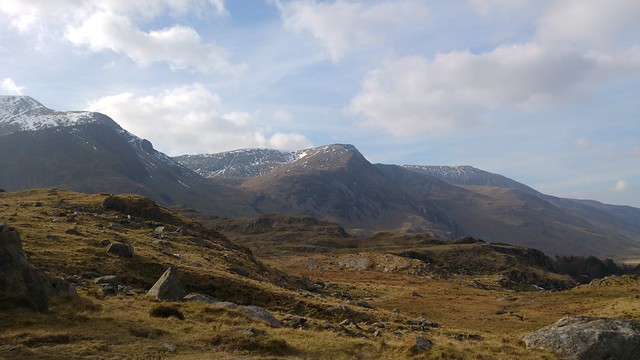
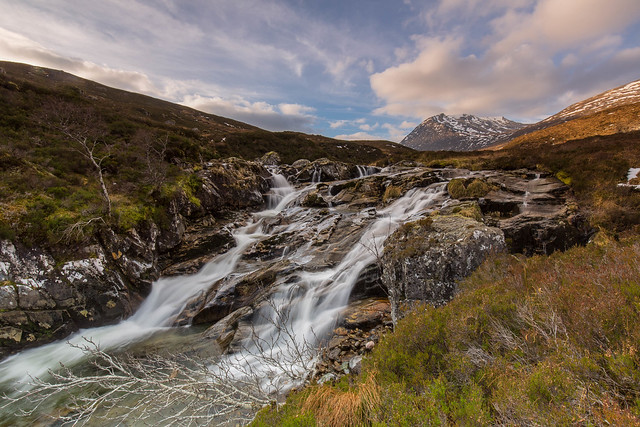
Llyn Idwal

Proto-Celtic *lindā = pool, lake
Gaulish lindon = pool, lake; sea, ocean
Old Irish (Goídelc) lind [l̠ʲiːn̠ʲ / l̠ʲɪn̠ʲ] = pool, pond, body of water, lake, sea
Irish (Gaeilge) linn = pool, pond, body of water, lake, sea
linn mhuilinn = mill-pond
linn lachan = duck pond
linneach = full of pools, watery
linneolaíocht = limnology (freshwater science)
linntreog = small pool, puddle, pot-hole
Scottish Gaelic (Gàidhlig) linne [l̪ʲin̪ʲə] deep pool; strait, sound, firth
linne-thuathal, faochag-linne = whirlpool
Linne Giùdain = Firth of Forth
Linne Shalmhaigh = Solway Firth
éisg-linn = fishpond
Manx (Gaelg) lhingey = pool, pond, backwater
lhingey chassee = small whirlpool
lhingey eeast = fishpond
Proto-Brythonic *llɨnn = lake, liquid
Middle Welsh (Kymraec) llynn = lake, liquid
Welsh (Cymraeg) llyn [ɬɨ̞n/ɬɪn] = lake, pool, pond, puddle, moat
llyn anoddun = bottomless pit, the deep
llyn melin = mill pond
llyn tro = whirlpool
Old Cornish lin = lake
Cornish (Kernewek) lynn, lydn = lake
Old Breton lin = lake
Breton (Brezhoneg) lenn = lake, basin, washhouse, fishpond, body of water

Etymology: possibly from the Proto-Indo-European *liH-nd-o-/*liH-nd-u [source].

These words appear in places names such as Lincoln in England, Dublin in Ireland, Lintgen in Luxembourg, Limmat – a river in Switzerland (originally Lindimacus), and possibly strong>Lindern in Germany.

Proto-Celtic *loku = lake, pool
Old Irish (Goídelc) loch [l͈ox] = lake, inlet of the sea
Irish (Gaeilge) loch [l̪ˠɔx] = lake, pool, (body of) water, arm of the sea, lough, fiord
lochach = having (many) lakes
lochán = small lake, pond
lochánach = having (many) small lakes
loch-chuach = lake basin
Scottish Gaelic (Gàidhlig) loch [l̪ˠɔx] = loch, lake
lochach = pertaining to or abounding in lochs/lakes
lochan = small lake, loch
loch-mara = sea loch
loch-tasgaidh = reservoir
loch-uisge = freshwater loch/lake
feur-lochan = small grassy loch (which tends to dry up)
Manx (Gaelg) logh [laːx] = lake, lough, loch, arm of the sea
loghan = small lake, pond, dam, tank, dock, pool
loghanagh = full of lakes
logh-hailjey = saltwater lake
logh-ushtey = freshwater lake
Old Welsh lichou = lake, pool
Middle Welsh (Kymraec) luch, lluch = lake, pool
Welsh (Cymraeg) llwch [ɬuːχ] = lake, pool, stagnant water, bog, swamp, marsh, mud, mire, grime, filth, dung
Cornish (Kernewek) logh = inlet
Middle Breton laguenn = flooded field
Breton (Brezhoneg) loc’h = pond, lagoon, flooded meadow

Etymology: from the Proto-Indo-European *lókus (pond, pool), which is also the root of the Icelandic lögur (liquid, fluid, lake, sea), and words for lake in Romance languages, including lac in French, Occitan and Romanian, and lago in Galician, Italian, Spanish and Portuguese [source].

Words marked with a * are reconstructions.

Sources: Wiktionary, Am Faclair Beag, Online Manx Dictionary, Teanglann.ie, eDIL – Electronic Dictionary of the Irish Language, In Dúil Bélrai English – Old Irish glossary, Geiriadur Prifysgol Cymru, Gerlyver Kernewek, Dictionaire Favereau, TermOfis, English – ProtoCeltic WordList (PDF), Etymological Dictionary Of Proto Celtic

Blubrry podcast hosting

Circles

Words for circle, ring and related words in Celtic languages.

There are three words for circle in Proto-Celtic: *kerk-injo-, *kerkinn- and *kuro-. They don’t appear to have descendents in modern Celtic languages.

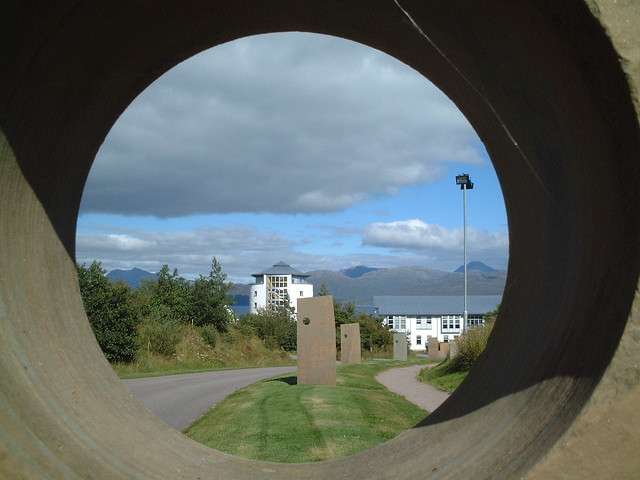
Sabhal Mòr Ostaig

Proto-Celtic *ānniyos = ring
Old Irish (Goídelc) áinne = ring
Middle Irish (Gaoidhealg) áinne, ánne = ring, circuit, anusm posterior
Irish (Gaeilge) fáinne [ˈfˠɑːɲə/ˈfˠæːn̠ʲə] = ring, circle, ringlet, curl, halo
fáinneach = annular, ring-like, ringed, ringleted, whorled, adorned, beautiful
fáinneadóir = ring-maker, dealer in rings
fáinneáil = (act of) circling, fluttering
fáinneán -= ampitheatre, circus
fáinneog = ringlet, curl
fáinneoir = person who rings animals
fáinnigh = to ring, encircle, dawn
fáinniú = encirclement, dawning
Scottish Gaelic (Gàidhlig) fàinne [faːn̪ʲə] = ring, ringlet, circle
fàinneach [faːn̪ʲəx] = pertaining to or like a ring, ringed
fàinneachadh [faːn̪ʲəxəɣ] = (act of) curling, ringing
fàinneag [faːn̪ʲag] = small ring, ringlet
Manx (Gaelg) fainey = circle, puck, whorl, wreathe, ring
fainnit = ringed

Etymology: from Proto-Indo-European *h₁eh₂no- (ring). Cognate with the Latin ānus (ring, anus), and anus in English, French, Catalan and Romanian [source].

The English word phon(e)y (fraudulent, fake) possibly comes from the old slang word fawney (a gilt brass ring used by swindlers; a finger ring), from the Irish fáinne (ring) [source].

Old Irish (Goídelc) circul = circle, orbit, zone, hoop
Middle Irish (Gaoidhealg) circul = circle, orbit, zone, hoop
Irish (Gaeilge) ciorcal [ˈkiɾˠkəlˠ] = circle
ciorcalach = circular, cyclic
ciorcalaigh = to encircle, circle
ciorclán = circular (letter)
Scottish Gaelic (Gàidhlig) cearcall [kʲɛrxgl̪ˠ] = circle, cycle, ring (circus, etc), hoop
cearclach = circular, cyclic(al)
Manx (Gaelg) kiarkyl = ring, circle, rim, coterie
kiarklagh = cyclic(al), rotund, circulatory
kiarkylagh = circular
daachiarkyl = bicycle
Proto-Brythonic *kɨrxl [aˈbɛːr] = circle, ring
Old Welsh circhl = circle, ring
Middle Welsh (Kymraec) kylch, kylc = circle, ring
Welsh (Cymraeg) cylch [kɨ̞lχ/kɪlχ] = circle, ring, compass, scope, range, circumference, environs, surroundsing, precints, zone, belt, hoop, social circle, orbit, revolution, period, cycle, halo
cylchai = halo
cylchaidd = circular, round(ish)
cylchig = circlet, small circle
cylch(i)ol = circular, orbital, surrounding, itinerant, periodic, cyclic
cylchu, cylch(i)af, cylcho = to hoop, rim (a wheel)
Cornish (Kernewek) kelgh, kylgh = circle, hoop, round, ring
kylghek = circular
kylghigow = hoop-la
kylghlavar = circumlocution
kylghvusur = perimeter
Middle Breton (Brezonec) kelc’h = circle, disc, halo
kelc’hdro = orbit
kelc’hennva = ampitheatre
kelc’hiad = circumference
kelc’hiek = circular
Breton (Brezhoneg) kelc’h = circle, halo
kelc’hiañ = to surround, define, figure out
kelc’hier = compass
kelc’htreiñ = to orbit
kelc’htro = orbit
kelc’htroel = orbital

Etymology: from the Latin circulus (circle), from circus (circle, ring, racecourse, circus), from the Ancient Greek κίρκος (kírkos – circle, ring) from the Proto-Indo-European *(s)ker- (to bend, turn) [source].

Words marked with a * are reconstructions.

Sources: Wiktionary, Am Faclair Beag, Online Manx Dictionary, Teanglann.ie, eDIL – Electronic Dictionary of the Irish Language, In Dúil Bélrai English – Old Irish glossary, Geiriadur Prifysgol Cymru, Gerlyver Kernewek, Dictionaire Favereau, TermOfis, English – ProtoCeltic WordList (PDF), Etymological Dictionary Of Proto Celtic

Blubrry podcast hosting

Victory

Words for victory and related things in Celtic languages.

Boudica

Words marked with a * are reconstructions.

Proto-Celtic *boudi = profit, gain, victory
*boudīkos = victorious
*Boudīkā = a female given name
Gaulish *boudi = profit, gain, victory
*Boudīkā = a female given name
Old Irish (Goídelc) búaid [buːa̯ðʲ] = benefit, gift, profit, quality, triumph, victory, virtue
búadach = gifted, triumphant, victorious
Middle Irish (Gaoidhealg) búaid, boid, boad = victory, triumph, virtue, attribute, gift, advantage, profit, benefit
búadred = act of troubling, distrubing, confusing; trouble, disturbance, perturbation, confusion; act of stirring up, making turbid, turbidity
Irish (Gaeilge) bua [bˠuə] = victory, truimph; gift, talent; virtue merit; special quality
bua morálta = moral victory
ollbhua [ˈɔl̪ˠˌwuə] = landslide victory
buach = victorious
buachan = gain, victory
buaigh = to win, gain; defeat, overcome; succeed
Scottish Gaelic (Gàidhlig) buaidh [buəj] = success, conquest, victory, consequence, effect, impact, influence, sway, mastery, predominance
buaidh-làrach = decisive victory
buaidh-chaithream = triumph, triumphant shout or song
buaidheach = victorious, effective
buadhach = victorious, effective, influential, talented, gifted
buadhalach = victorious, triumphant
diombuaidheach = unsuccessful, unlucky, defeatist
Buaidheach = Boudica (female given name)
Manx (Gaelg) booie = victorious, victory, triumph
Proto-Brythonic *bʉd = profit
*bʉðig = victorious
*Bʉðig = a female given name
Middle Welsh (Kymraec) ysbud, bud, but = profit, gain, booty
butic, budic = victorious, truimphant, prosperous, successful, beneficial, generous, kind
Welsh (Cymraeg) budd [bɨːð / biːð] = profit, gain, booty, riches, wealth, blessing, favour, advantage, emolument, benefit, usefulness
buddfawr = bearing much booty or spoils, profitable, beneficial
buddfawredd = generosity, gain
buddgar = conferring blessings, beneficial, generous, covetous
buddged = benefit, adventage, gain, gift, reward
buddio = to profit, succeed, prosper, benefit
buddig / buddug = victorious, truimphant, prosperous, successful, beneficial, generous, kind
Buddug = Boudica (female given name)
buddugaf, buddugo = to triumph, gain a victory, conquer
buddugiol = victorious, conquering, triumphant, mighty, successful
buddugioliaeth = victory, conquest, supremacy, precedence, glory, triumph, exulation, jubliation
Cornish (Kernewek) budh = profit
budhek = victorious
Old Breton bud = profit
Breton (Brezhoneg) buz [byː(s)] = profit
Budic = Boudica (female given name)

Etymology: from the Proto-Indo-European *bʰówdʰi (victory) [source]. Words from the same Proto-Celtic root possibly include booty in English, butin (loot, booty) in French, botí (booty, spoils) in Catalan, bottino (booty, loot, cesspit, swag) in Italian, and Beute (booty, spoils, haul, prey, quarry) in German [source].

The name Boudica (the Queen of the Iceni who led an uprising against the Romans in 60/61 AD) comes from the Latin Boudicca / Boadicea, from the Gaulish *Boudīkā [source].

The Fastest Way to Learn Japanese Guaranteed with JapanesePod101.com

Sources: Wiktionary, Etymological Dictionary Of Proto Celtic, In Dúil Bélrai English – Old Irish glossary, eDIL – Electronic Dictionary of the Irish Language, Teanglann.ie, Am Faclair Beag, An etymological dictionary of the Gaelic language, Fockleyreen: Manx – English Dictionary, Online Manx Dictionary, Gaelg Corpus, Geiriadur Prifysgol Cymru, Lexicon cornu-britannicum : a dictionary of the ancient Celtic language of Cornwall, Gerlyver Kernewek, Devri : Le dictionaire diachronique du breton, Dictionnaires bilingues de Francis Favereau / Edition Skol Vreizh, TermOfis

Unlimited Web Hosting - Kualo

Battle

Words for battle and related things in Celtic languages.

St Fagan's National Museum of Wales

Words marked with a * are reconstructions.

Proto-Celtic *katus = battle
*Katutigernos = “battle lord/master” (male name)
*Katuwelnāmnos = “battle ruler” (male name)
Gaulish catu, katu = battle
Katutigernos (male name)
Primitive Irish ᚉᚐᚈᚈᚒ (cattu) = battle
Old Irish (Goídelc) cath [kaθ] = battle, fight, troop, battalion
cathach = bellicose, warlike
cathaigecht = warfare
cathaige = warrior
cathaigid = to fight, give battle
cocad = war, conflict (from com (with) and cath)
Middle Irish (Gaoidhealg) cath, = battle, fight, troop, battalion
cathach = bellicose, vehement
cathaigecht = warfare
cathaige = fighter, warrior
cathaigid = to fight, give battle
cocad = war, conflict, act of waging war
Irish (Gaeilge) cath [kah] = battle, conflict, trial, battalion
cathach = battling, warlike
cathaí = battler, fighter
cathaigh to battle, fight, tempt
cogadh [ˈkɔɡə/ˈkʌɡu] = war, warfare
Scottish Gaelic (Gàidhlig) cath [kah] = battle, fight, contest, struggle, battalion, warfare
cathach = warlike
cath nan con = dogfight
cath-thuagh = battle axe
blàr-catha = battlefield
gairm-chatha = warcry
cogadh [kogəɣ] = war, fighting, warfare
Manx (Gaelg) cah = military action battle
crooseyr cah = battle-cruiser
caggey [ˈkaːɣə] = war, fight, scrap, combat, campaign, clash, battle
Proto-Brythonic *kad = battle
*Kadüdɨɣern (male name)
*Kaduwallọn (male name)
Old Welsh Categern, Catigern (male name)
Cadwallawn (male name)
Categern, Catigern (male name)
Middle Welsh (Kymraec) kad, kat = battle
Cattegirn (male name)
Catgollaun, Catguallaun, Katwallaun (male name)
Welsh (Cymraeg) cad [kaːd] = battle, conflict, war, strife, struggle, trouble, army, host, throng, multitude, band
cad ar faes = at loggerheads
cadfan = battlefield
Cadfan (male name) = 6th century Breton missionary to Wales [more details]
Cadeyrn (male name)
Cadwallon (male name)
Middle Cornish (Cernewec) cad, câs = battle, war
cadlys = camp, intrenchment
cadwur = warrior, soldier, champion
Cornish (Kernewek) kas = armed conflict, battle, war
kasor, kasores = fighter
kasorek = militant
Kaswallawn (male name)
Old Breton Kaduuallon, Catuuallon (male name)
Middle Breton (Brezonec) kad = combat
Breton (Brezhoneg) kad = battle
Kadwallawn (male name)

Etymology: possibly from the Proto-Indo-European *kéh₃tus (fight), which is also the root of the German words Hader (dispute, quarrel) and hadern (to bicker, quarrel, struggle) [source].

Proto-Celtic *agrom = slaughter, battle
Old Irish (Goídelc) ár = slaugter
Middle Irish (Gaoidhealg) ár = slaugter, carnage, defeat, destruction
Irish (Gaeilge) ár [ɑːɾˠ] = slaughter, havoc
ármhá = battlefied, scene of slaughter
ármhach = slaughter
ármhar = slaugterous, destructive
Scottish Gaelic (Gàidhlig) àr [aːr] = battle, battlefield, slaughter, death
àr-fhaich, àr-mhagh = battlefield
àrmhach = destructive
Manx (Gaelg) haar [ˈhɛːr] = slaughter, slaughtering
Proto-Brythonic *aɨr [aɨ̯r] = battle, carnage
Old Welsh hair = battle, fight, war
Middle Welsh (Kymraec) aer = battle, fight, war
aerbeir, aerbair = battle-lord, battle-leader
aerbais = coat of mail
aerbar = battle-spear, spear of slaughter
aerbybyr = bright, fine, valiant, zealous, strong in battle
aerdawelỽch, aerdawelwch = silence after battle
Welsh (Cymraeg) aer [aːɨ̯r / ai̯r] = battle, fight, war, skirmish, carnage, slaughter, army
Old Cornish hair = slaughter, battle
Middle Cornish (Cernewec) ar, hâr, har = slaughter, battle
Old Breton (Brethonoc) air = battle, combat, carnage, massacre
airma = battlefield
Middle Breton (Brezonec) hair, aer, ár = battle, combat, carnage, massacre
aerva, aerfa, ármag = battlefield
Breton (Brezhoneg) aer [ɛːr] = battle, combat, carnage (archaic)
aergi [ˈɛrɡi] = fighting dog, war dog, warrior (archaic)
aerva [ˈɛr.va] = battlefield (archaic)

Etymology: from the Proto-Indo-European *h₂eǵros (field, pasturage), possibly from *h₂eǵ- (to drive). Words from the same roots include act, action, agent and agile in English [source].

The Fastest Way to Learn Japanese Guaranteed with JapanesePod101.com

Sources: Wiktionary, Am Faclair Beag, Online Manx Dictionary, Teanglann.ie, eDIL – Electronic Dictionary of the Irish Language, In Dúil Bélrai English – Old Irish glossary, Geiriadur Prifysgol Cymru, Gerlyver Kernewek, Dictionaire Favereau, TermOfis, English – ProtoCeltic WordList (PDF), Etymological Dictionary Of Proto Celtic

Unlimited Web Hosting - Kualo

Wool

Words for wool and related words in Celtic languages.

Glorious wool

Proto-Celtic *ulanā, *wlanā, *w(u)lāno-, *w(u)lano- = wool
Gaulish *wlanā = wool
Old Irish (Goídelc) olann [ˈolan͈] = wool
ollach = woolly
Irish (Gaeilge) olann [ˈɔlˠən̪ˠ] = wool, woolly hair, mop of hair; woollen
olanda = woolly
olannacht = woolliness
olanntáirgeach = wool-bearing
ollach = woolly, fleecy
ollacht = woolliness, fleeciness
Scottish Gaelic (Gàidhlig) olann [ˈɔl̪ˠən̪ˠ] = wool (usually while on sheep)
ola = woollen, made of wool
olach = woolly, fleecy
Manx (Gaelg) ollan = wool
ollanagh, olley = woolly
ollanaght = woolliness
Proto-Brythonic *gwlan [ˈɡwlaːn] = wool
Old Welsh gulan = wool
Middle Welsh (Kymraec) gluan, gwlan = wool
Welsh (Cymraeg) gwlân [ɡwlaːn] = wool, down, soft hair, grass, herbage; woollen, soft, made of wool
gwlana = to gather wool, beg or solicit wool
gwlanen = flannel, face-cloth; man of weak character, spineless person, unreliable person
gwlanendra = softness, lack of backbone
gwlanenêd = flannelette
gwlanel = flannel
gwlanennaidd, gwlanennog = flannelly, flannel-like, soft; weak-willed, without backbone, spineless (person), unreliable
gwlanennu = to provide with woollen clothing
gwlanennwr, gwlanennydd = flannel-maker, woollen-manufacturer, flannel-merchant, woollen-draper
gwlanog = woollen
Old Cornish gluan = wool
Middle Cornish glan, glawn = wool
Cornish (Kernewek) gwlan = wool
gwlanek = woollen, woolly
Middle Breton glan, gloan = wool
Breton (Brezhoneg) gloan = wool
gloanaj, gloanenn = woollen garment / material
gloanegenn = cozy, soft, snug
gloanell = cotten

Etymology: from the Proto-Indo-European *h₂wĺ̥h₁neh₂ (wool). The English word flannel comes ultimately from the Gaulish *wlanā, via Old French and Norman [source].

Sources: Wiktionary, Am Faclair Beag, Online Manx Dictionary, Teanglann.ie, eDIL – Electronic Dictionary of the Irish Language, In Dúil Bélrai English – Old Irish glossary, Geiriadur Prifysgol Cymru, Gerlyver Kernewek, Dictionaire Favereau, TermOfis, English – ProtoCeltic WordList (PDF), Etymological Dictionary Of Proto Celtic

Kitchens

Words for kitchens and related words in Celtic languages.

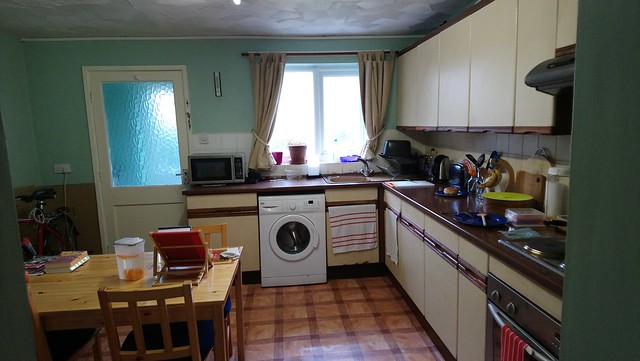
My kitchen / Fy nghegin

Middle Irish (Goídelc) cisten = kitchen
Irish (Gaeilge) cistin [ˈcɪʃtʲənʲ] = kitchen, cook-house
cistineach = culinary
cistin phoiblí = soup kitchen
cistin taistil = travelling kitchen
cúlchistin = back-kitchen, scullery
sorn cistine = cooker
Scottish Gaelic (Gàidhlig) cidsin/citsin [kʲidʲɪn/kʲiʃdʲɪn] = kitchen
cidsin-dubh = scullery
cidsineach/citsineach = culinary, pertaining to or abounding in kitchens
Manx (Gaelg) kishteen = cookhouse
kishteen cooyl = back kitchen
sorn kishteen = cooking range, cooker

Etymology: from Middle English kychyn (kitchen, cooking, cuisine), from Old English cyċene [ˈky.t͡ʃe.ne] (kitchen), from Proto-West-Germanic *kukinā (kitchen), from Late Latin cocīna (kitchen), from coquīna (cooking, cookery, kitchen). from Latin coquō (to cook, prepare food, ripen, roast), ultimately from PIE *pekʷ- (to cook, become ripe) [source].

English words from the same roots include kitchen, cook, cuisine, biscuit and kiln [source].

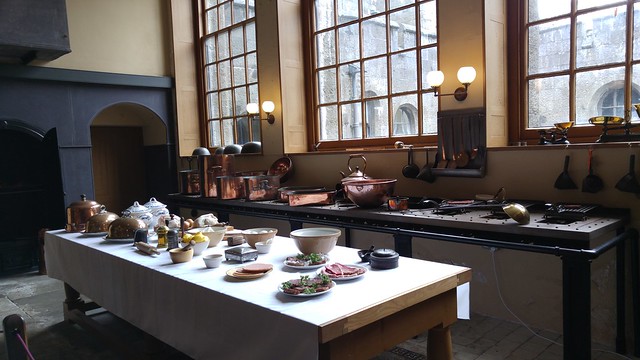
Cegin Castell Penrhyn Castle Kitchen

Proto-Brythonic *kėgin = kitchen
Middle Welsh (Kymraec) kegyn, kecyn = kitchen
Welsh (Cymraeg) cegin [ˈkɛɡɪn/ˈkeːɡɪn] = kitchen
cegin(i)af, cegin(i)o = to cook, prepare food
ceginaidd = culinary, commonplace
cegindy = eating-house, cook-shop
ceginfa = galley
ceginiaeth = cookery, the culinary art, cuisine
ceginol = culinary
ceginwaith = kitchen work, cookery
ceginwas = scullion, kitchen-knave
ceginwr / ceginwraig = cook
cegin gefn/fach = back kitchen
cegin groes = scullery
cegin orau = parlour, sitting-room
Old Cornish keghin = kitchen
Cornish (Kernewek) kegin [ˈkɛɡɪn] = kitchen
kegina = to cook
keginer / keginores = chef
keginieth = cookery
Breton (Brezhoneg) kegin = kitchen
keginañ = to cook, culinary
keginer = cook, chef cooker
keginerezh = cooking, cuisine
keginouriezh = art of cooking, culinary art, cuisine

Etymology: from the Vulgar Latin cucīna (cooking, kitchen), from the Latin coquō (to cook), from the Proto-Indo-European *pekʷ- (to cook, become ripe) [source].

Manx (Gaelg) shamyr aarlagh / shamyr aarlee = kitchen, galley, caboose
shamyreen aarlee = kitchenette
sorn aarlee = kitchen range
greieyn aarlee = kitchen utensils

Etymology: from shamyr (room) and aarlee (to cook, prepare, train) [source].

Incidentally, one of the rivers near Bangor is called Afon Cegin (see below), which I’ve always thought meant ‘Kitchen River’, and wondered what it had to do with kitchens. However, cegin also means green woodpecker or jay, and is cognate with the Breton kegin (jay). Or it can mean ridge or hog’s back. The River of the Green Woodpecker / Jay, sounds more poetic and likely than the Kitchen River.

Afon River Cegin

Sources: Wiktionary, Am Faclair Beag, Online Manx Dictionary, Teanglann.ie, eDIL – Electronic Dictionary of the Irish Language, In Dúil Bélrai English – Old Irish glossary, Geiriadur Prifysgol Cymru, Gerlyver Kernewek, Dictionaire Favereau, TermOfis, English – ProtoCeltic WordList (PDF), Etymological Dictionary Of Proto Celtic

Country and Land

Words for land, country and related words in Celtic languages.

Cwm Idwal

Proto-Celtic *tīros = dry land, land, earth
*wo-tīro- = piece of land
Old Irish (Goídelc) tír = land, country, territory, ground
Tír inna n-Óc = (mythical) Land of Youth
Irish (Gaeilge) tír [tʲiːɾʲ] = country, land, state, nation; region, district. territory, rural district, country native, ordinary
tírdhreach = landscape
tíreach = native, of the country
tíreachas = domesticity
tíreánach = mainlander
tíreolaí = geographer
tíreolaíocht = geography
tírghrá = patriotism
tírghrách = patriotic
tírghráthóir = patriot
Tír na nÓg = (mythical) Land of the Young/Youth
Scottish Gaelic (Gàidhlig) tìr [tʲiːrʲ] = land, country, territory
tìreach = countryman, patriot
tìr-eòlas = geography
tìr-ghràdhaiche = patriot
tìr-mór = mainland, continent
Tìr nan Òg = (mythical) Land of the Young/Youth
àrd-tìr = highland
Manx (Gaelg) çheer = land, country, state, territory, shore
çheeragh = native
çheer-ghraihagh = patriotic
çheer-oayllee = geographer
çheer-oaylleeaght = geography
çheer vooar = mainland
çheer yalloo = landscape
Çheer ny Aeg = (mythical) Land of Youth
Proto-Brythonic *tir [ˈtiːr] = land
Old Welsh tir = land
Middle Welsh (Kymraec) tir, tyr = land
Welsh (Cymraeg) tir [tiːr] = land, ground, soil, turf, estate, open land, region, territory, domain, country, earth, ridge
tiriaf, tirio = to land, come ashore, disembark, arrive, reach
tir(i)og = landowning, landed
tiriogaeth = territory, realm, district, tract, (piece of) land
tiriogaethol = territorial
tirwedd = landscape, scenery, (geographic) relief
Cornish (Kernewek) tir = land, earth
tira = to land, come ashore
tiredh = territory
tirlanow = landfill
tir meur = mainland
tirnos = landmark
tirwedh = landscape
konna tir = peninsula
penn tir = headland
Breton (Brezhoneg) tir = land
penn-tir = headland

Etymology: possibly from the Proto-Indo-European *tērs-os/tḗrs (to heap up, increase, enlarge) [source].

Princes Street Gardens

Proto-Celtic *wlatis = sovereignty, rule
*walo- = prince, chief
*walatro- = ruler
Old Irish (Goídelc) flaith [flaθʲ] = lordship, sovereignty, rule, kingdom, realm, prince, ruler
flaithem = prince, ruler
flaithemail = princely, munificent
flaithemnacht = rule
flaithemnas, flaithius = rule, sovereignty
flaithiúlacht = princeliness, munificence, lavishness, generosity
Irish (Gaeilge) flaith [fˠlˠah/fˠlˠa] = lordship, sovereignty, ruler, prince, lord, chief
banfhlaith = princess
flaithbheartach = princely, generous
flaithbhile = princely scion, noble champion
flaitheas = rule, sovereignty, kingdom, realm
flaitheasach = heavenly, celestial
co-fhlaitheas = confederation
flaithiúil = princely, munificent, lavish, generous
flaithiúlach = lavish, generous
flaithiúnta = sovereign, heavenly
mì-fhlathail = ignoble
Scottish Gaelic (Gàidhlig) flath [fl̪ˠah] = king, prince, ruler, noble
banfhlath = wife of a chieftain, noblewoman
flath-shonas [fl̪ˠahənəs] = dominion, kingdom, heaven, the heavens
flathail = noble, gallant, patrician, princely, majestic; blithesome
mì-fhlathail = ignoble
Manx (Gaelg) flah = prince, potentate
flaunys = heaven, utopia, paradise
Proto-Brythonic *gwlad [ˈɡwlaːd] = sovereignty, country
*gwlėdig = civil, secular, established, national
*gwaladr [ɡwaˈladr̩] = ruler
Old Welsh gulat = country, realm
Middle Welsh (Kymraec) gulat, gulad, gwlat, gwlad = country, realm
Welsh (Cymraeg) gwlad [ɡwlaːd/ɡlaːd] = country, land, province, region, district, kingdom, realm, domain; nation, the people of a country
gwaladr = ruler, sovereign
gwladaidd = rural, rustic countrified, homely, plain, mean, poor, boorish, vulgar, rough, clumsy, awkward
gwladiath = native tongue, mother tongue
gwladwr = countryman, peasant, rustic, compatriot, inhabitant, citizen
gwledig = rural
rhyngwladol = international
Old Cornish gulat = country
Cornish (Kernewek) gwlas = country
gwlaskar = patriotic
gwlaskarer / gwlaskarores = patriot
gwlaskarenja / gwlaskerensa = patriotism
gwlaskor = kingdom, realm
Old Breton guletic = prince
Middle Breton gloat = kingdom, wealth
gloedic = count
Breton (Brezhoneg) glad [ɡlɑːt] = inheritance, heritage, patrimony

Etymology: from the Proto-Indo-European *h₂wélh₁tis/*h₂wl̥h₁téy-, from *h₂welh₁- (to rule, strong, powerful) [source].

Proto-Celtic *talamū = earth
Gaulish *talamon = ?
Old Irish (Goídelc) talam [ˈtalaṽ] = earth, (dry) land, country, soil, dirt, clay
Irish (Gaeilge) talamh [ˈt̪ˠɑlˠəvˠ/ˈt̪ˠalˠə/ˈt̪ˠalˠu] = earth, ground, land, dry land, soil, soild base (for discussion, understanding)
talamhchreathach = seismic
talamhchrith = earthquake
talamhiata = land-locked
talamhluas = ground speed
Scottish Gaelic (Gàidhlig) talamh [tal̪ˠav] = earth, ground, Earth
talamh bàn = fallow/unmanured ground
talamh-dearg = tiled soil, ploughed land
talamh-làidir, talamh-glas = unploughed land
talamh-rèisg = marshy/boggy ground
talamh-àitich = arable land, cultivable land
Manx (Gaelg) thalloo = country, land, shore, terrain, territory, clod, earth, ground , soil
thallooinaghey = to earth, earthing

Etymology: from the Proto-Indo-European *telh₂- (ground) [source]. The French surname Talmont, and the placenames Talmont-sur-Gironde and Talmont-Saint-Hilaire come from the same Proto-Celtic root, via the Gaulish *talamon, and the Latin Talamone / Talmun.

Words from the same PIE root include tellurian (of or relating to the earth) in English, тло [tɫɔ] (background, environment, ground, basis) in Ukrainian, потолок [pətɐˈɫok] (ceiling, upper limit, roof) in Russian, tło [twɔ] (background) in Polish, तल [t̪əl] (bottom, level, storey, floor) in Hindi [source].

Sources: Wiktionary, Am Faclair Beag, Online Manx Dictionary, Teanglann.ie, eDIL – Electronic Dictionary of the Irish Language, In Dúil Bélrai English – Old Irish glossary, Geiriadur Prifysgol Cymru, Gerlyver Kernewek, Dictionaire Favereau, TermOfis, English – ProtoCeltic WordList (PDF), Etymological Dictionary Of Proto Celtic

The Fastest Way to Learn Japanese Guaranteed with JapanesePod101.com

Weaving Words

Words for weave and related words, in Celtic languages.

Weaving

Proto-Celtic *wegyeti = to weave, compose
Old Irish (Goídelc) figid = to weave, plait, intertwine
Irish (Gaeilge) figh = to weave, put together, contrive, compose (a story, etc)
fián = grain (in meat)
fíochán = (act of) weaving, weave, web, plaiting, tissue, tracery
fíodóir = weaver, spider
idirfhigh = to interweave
Scottish Gaelic (Gàidhlig) fighe [fi.ə] = weaving, to weave, knitting
figheadair [fi.ədɛrʲ] = weaver, knitter
fighiche [fi.ɪçə] = weaver
Manx (Gaelg) fee = weave, plait, knit, interlace, braid, intertwine, mat; ravens
feeder, fidder = weaver
fidderaght = texture, weave, weaving
fidderagh = weaving
fidderys = weaving
Middle Welsh (Kymraec) ywehu, weaf, gweawdd, wav, gweheu = to weave, plait, knit
Welsh (Cymraeg) gweu, gwau, gweaf, gweuaf = to weave, plait, knit, spin in a web; to weave or compose poems
gwau [ɡwaɨ̯/ɡwai̯] = weaving, knitting
gwe [ɡweː] = (spider) web, gauze, the Web
gwefan = website
gwead = weave
gweadog, gweadol = weaving, plaiting, twisting
gweadur = weaver, knitter, plaiter, spiner, composer
gwëydd, gwehydd, gwŷdd = weaver, composer of poetry, weaver of songs
gwehyddu = to weave
Cornish (Kernewek) gwia = to weave
gwiader/gwiadores = weaver
gwias = web, fabric. tissue, consistency
gwiasva = website
Middle Breton gueaff = to weave
Breton (Brezhoneg) gweañ = to wring, twist, bend, buckle, writhe; to braid, plait, weave
gwiad = fabric, cloth, tissue, canvas; spider’s web, cobweb
gwiader = weaver
gwiadiñ = to weave

Etmology: from the Proto-Indo-European *weg- (to spin, weave) [source].

Words marked with a * are reconstructions.

Sources: Wiktionary, Am Faclair Beag, Online Manx Dictionary, Teanglann.ie, eDIL – Electronic Dictionary of the Irish Language, In Dúil Bélrai English – Old Irish glossary, Geiriadur Prifysgol Cymru, Gerlyver Kernewek, Dictionaire Favereau, TermOfis, English – ProtoCeltic WordList (PDF)

Wild Ones of the Woods

Words for Gael, Irish person and other wild types, in Celtic languages.

Ciarán, Caitlín & Cathal

Proto-Celtic *wēdelos = savage, woodsman
Old Irish (Goídelc) Goídel [ˈɡoːi̯ðʲel] = Gael, Irishman
Goídelc [ˈɡoːi̯ðʲelɡ] = Irish (language)
goídelach = Gaelic, Irish, Gaelic-speaking
Goídelta = Gaelic, Irish
Irish (Gaeilge) Gael [ɡeːlˠ] = Gael, Irish person; (Scottish) Highlander
Gaeilge/Gaelainn = Irish (language)
Gaeilgeoir = Irish speaker/learner
Gaeilgeoireacht = (act of) speaking Irish
Gaelach = Irish; attached to the Irish language/culture; native to ireland, homely, pleasant, common, ordinary
Gaelachas = Irish characteristic(s); attachment to Irish culture
Gaelaigh = to Gaelicize
Gaeltacht = Irish(-speaking) people; Irish-speaking area; Gaelic-speaking area of Scotland.
Gaelú = Gaelicization
Scottish Gaelic (Gàidhlig) Gàidheal [gɛː.əl̪ˠ] = Gael, Highlander
Gàidhlig [gaːlɪgʲ] = (Scottish) Gaelic (language)
A’ Ghàidhealtachd = Highlands
Gàidhealach [gɛː.əl̪ˠəx] = (culturally) Gaelic; Highland-related
Gàidhealachadh [gɛː.əl̪ˠəx] = making Gaelic; Gaelification, Gaelicisation
Gàidheileamailteach [gɛː.aləmaldʲəx] = German learner of Gaelic
Manx (Gaelg) Gael = Gael
Gaelg, Gailck = Gaelic, Manx (language)
Gaelgagh, Gailckagh = highland people, Manx, Gaelic, Scottish Gaelic
Gaelgeyr = (Manx) Gaelic speaker
Gaeltaght = Gaelic speaking area
Proto-Brythonic *guɨðel = wild
Middle Welsh (Kymraec) Guoidel, Guodel, Gwydyl = Irishman
Welsh (Cymraeg) Gwyddel [ˈɡʊɨ̯ðɛl/ˈɡʊi̯ðɛl] = Irishman
Gwyddeles = Irishwoman
Gwyddeleg = Irish (language)
Gwyddelegwr = Irish speaker, Irish scholar
Gwyddelig = Irish, Hibernian; savage, barbarous
Cornish (Kernewek) Godhal = Gael
Godhalek = Gaelic (language)
Breton (Brezhoneg) Gouezel = Gael
gouezel = Gaelic
gouezeleg = Gaelic (language)
gouezeleger = Gaelic speaker
gouezelegva = Gaelic speaking area

Etmology: from the Proto-Celtic *wēdus (wild), from the Proto-Indo-European *weydʰ- (wood, wilderness). The Irish, Scottish Gaelic and Manx words for Gael were borrowed from Proto-Brythonic [source].

Words marked with a * are reconstructions.

Sources: Wiktionary, Am Faclair Beag, Online Manx Dictionary, Teanglann.ie, eDIL – Electronic Dictionary of the Irish Language, In Dúil Bélrai English – Old Irish glossary, Geiriadur Prifysgol Cymru, Gerlyver Kernewek, Dictionaire Favereau, TermOfis, English – ProtoCeltic WordList (PDF)

Wild

Words for wild and related words, in Celtic languages.

Gleann Nam Fiadh ..

Proto-Celtic *wēdus/*weido- [ˈweː.dus] = wild
*weido-mokku- wild pig
Old Irish (Goídelc) fíad [fʲiːa̯ð] = wasteland, wilderness; uncultivated land, territory, land
Irish (Gaeilge) fia [fʲiːɾˠ] = waste, wilderness; land, territory
fiabheatha = wildlife
fiáin = wild, uncultivated, undomesticated, uncontrolled, tempestuous, intensely eager
fiánta = wild, fierce, savage
fiántas = wildness, fierceness, savageness; wilderness
fiata = wild, fierce, angry; shy
fiatacht = wildness, fierceness, sternness, anger
fiatúil = wild, coarse, rough
Scottish Gaelic (Gàidhlig) fiadh [fiəɣ] = lord; wildness, wilderness (archaic)
fiadhan [fiə.an] = wildness, shyness, feral
fiadhaich [fiə.ɪç] = untamed, uncultivated, wild; fierce; off (food & drink); extremely
fiadhaichead [fiə.ɪçəd] = savageness, wildness, savagery
fiadhain [fia.ɛn̯ʲ] = wild, untamed
fiadhtachd [fiəhdəxg] = wildness, fierceness
faoileachail [fɯːləxal] = wild, savage
Manx (Gaelg) feie = natural, wild, savage
faasagh = wild, desolate, wilderness, waste place, desert
feiar, feiaragh = savage
Proto-Brythonic *guɨð = wild
Middle Welsh (Kymraec) gŵydd, gvyd = rude (uncultivated), savage, wild
Welsh (Cymraeg) gŵydd [ɡuːɨ̯ð/ɡʊi̯ð] = wild, untamed, savage, untilled, uncultivated, woody, overgrown, desolate, desert; unploughed land, fallow land
Old Cornish guir = wild
Middle Cornish gwyr, guyr = wild
Cornish (Kernewek) goodh = wild
Old Breton guoid, guoed = wild
Middle Breton goez = wild
Breton (Brezhoneg) gouez = wild, fierce, ferocious, brutal, rustic

Etmology: possibly from the Proto-Indo-European *weydʰ- (wood, wilderness). Words for Gael(ic) come from the same root [source].

Disambiguation
There are several words in Welsh similar to gŵydd, each of which has different meanings and origins:

  • gŵydd = wild, untamed, savage
  • gŵydd = presence, sight, face, from the Proto-Celtic *wēdos (sight, presence) [source]
  • gŵydd = goose, simpleton. From the Proto-Celtic *gesdā (goose) [source]
  • gŵydd = grave, sepulchre, burial-mound, tumulus. Possibly related to gwŷdd (tree), or to gŵydd (wild)
  • gwŷdd/gŵydd = knowledge, science. Related to gwybod (to know)
  • gwŷdd = tree(s), branches, twigs, forest, woods, shrub(s), lineage. From the Proto-Celtic *widus (wood, trees) [more details]
  • gwëydd/gwehydd/gwŷdd = weaver, composer of poetry, weaver of songs. From gwau (to weave), from the Proto-Celtic *wegyeti (to weave) [source]
Proto-Celtic *gʷeltis wild
Old Irish (Goídelc) geilt [fʲiːa̯ð] = wasteland, wilderness; uncultivated land, territory, land
Middle Irish (Gaoidhealg) geilt/gelt = madman, lunatic
Irish (Gaeilge) gealt [ɟal̪ˠt̪ˠ] = crazy person, lunatic; panic-stricken person, naked fugitive
gealtach = crazed, insane, wild, panic-stricken person or animal
gealtachas = craziness, lunacy, panic, terror
gealtacht = lunacy, insanity, wildness, panic
gealtlann = lunatic asylum
gealtra = (gang of) wild, mischievous children
Scottish Gaelic (Gàidhlig) geilt [gʲeldʲ] = terror, fear, dread, skittishness
gaelachan [gʲal̪ˠəxan] = lunatic
tinneas na gealaich = lunacy, madness, insanity (archaic)
Manx (Gaelg) doghanagh = ill, diseased, disoredered, morbid, sickly
eayst-ghoghanagh = lunatic
far-ghoghanagh = malingerer
Proto-Brythonic *gwɨlt [ˈɡwiːr] = wild
Middle Welsh (Kymraec) guyll, gwyllt = rude (uncultivated), savage, wild
Welsh (Cymraeg) gwyllt [ɡwɨːɬt/ɡwɪɬt] = wild, timid, untamed, angry, furious, fierce; uncultivated, uninhabited, desolate, desert; stormy, tempestuous, raging, turbulent
gwylltineb = wildness, rashness, rage, fury
gwylltio = to lose one’s temper, be scared, flee, grow wild
gwylltaidd = wildish, turbulent, unruly, irresponsible
gwylltâf/gwylltáu = to become wild, grow wild
Old Cornish guill = wild
Cornish (Kernewek) gwyls = wild, fierce, savage, violent
gwylvos = wilderness
Old Breton gueld = wild, untamed

Etmology: from the Proto-Indo-European *gʷʰel-t- [source].

Words marked with a * are reconstructions.

Sources: Wiktionary, Am Faclair Beag, Online Manx Dictionary, Teanglann.ie, eDIL – Electronic Dictionary of the Irish Language, In Dúil Bélrai English – Old Irish glossary, Geiriadur Prifysgol Cymru, Gerlyver Kernewek, Dictionaire Favereau, TermOfis, English – ProtoCeltic WordList (PDF)