Today we’re looking at the words for roof and related things in Celtic languages.
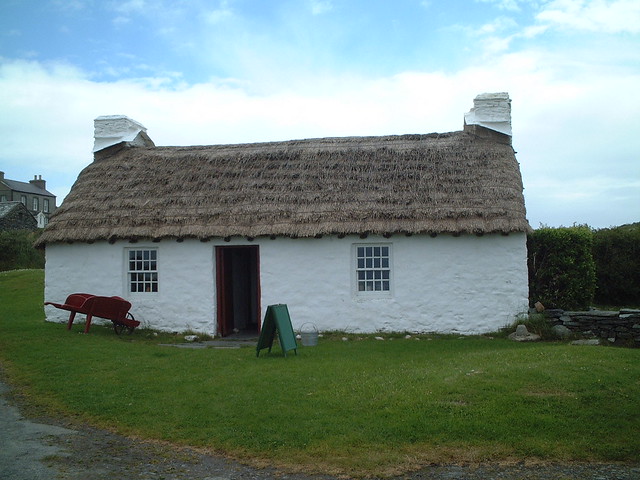
| Proto-Celtic | *togos = roof |
|---|---|
| Old Irish (Goídelc) | tuige = thatching, roofing material, straw tugae = covering, cover, thatching |
| Irish (Gaeilge) | tuí [t̪ˠiː] = thatch, straw tuíodóir = thatcher tuíodóireacht = thatching |
| Scottish Gaelic (Gàidhlig) | tugha [tu.ə] = thatch tughadair [tu.ədɪrʲ] = thatcher tughadaireachd [tu.ədɪrʲəxɡ] = thatching |
| Manx (Gaelg) | thoo = thatch |
| Proto-Brythonic | *toɣ = roof, covering |
| Middle Welsh (Kymraec) | to, tô = roof, ceiling, thatch |
| Welsh (Cymraeg) | to [toː] = roof, ceiling, roofing, (straw) thatch, sheaf (of wheat), layer; penthouse; set, row; generation, lineage, order toeau = roofscape toi = to roof, roofing töwr = roofer to bach = circumflex to gwellt = thatched roof, thatch |
| Old Cornish | to = roof |
| Middle Cornish | to = roof |
| Cornish (Kernewek) | to = roof |
| Middle Breton | toenn = roof |
| Breton (Brezhoneg) | to = roofing, covering toenn = roof toennoù = covering |
Etymology: from the Proto-Indo-European *(s)teg- (to cover) [source].
From the same PIE root we get words for house, household and family in Celtic languages, the English words protect, stegosaurus, thatch, tile and toga in English, [source].
| Old Irish (Goídelc) | mullach [ˈmul͈əx] = top |
|---|---|
| Irish (Gaeilge) | mullach [mˠəˈl̪ˠɑx / ˈmˠʊl̪ˠəx] = top, highest point, summit, crown, height, eminence, capital, round top, heaped load |
| Scottish Gaelic (Gàidhlig) | mullach [mul̪ˠəx] = roof, peak, summit, top, lid, crest, crown, height,upland mullach-taighe = house roof |
| Manx (Gaelg) | mullagh = top, ridge, apex, peak, crest, pinnacle, summit, eminence, roofing, crest, crisis, ceiling, capital mullagh-thie = roof mullagh-thooee = straw/thatched roof mullagh sclate = slated roof |
Etymology: possibly from the Old Irish mul (lump, heap) [source].
| Proto-Celtic | *dênu |
|---|---|
| Old Irish (Goídelc) | dín = protection, defence, shelter, covering, thatch, roofing |
| Irish (Gaeilge) | díon [dʲiːnˠ] = protection, shelter, covering, roof; to protect, shelter, make watertight, roof, thatch, immunize díonach = protective, impermeable, proof díonacht = protectiveness, impermeability, staunchness díonadóir = protector, roofer, thatcher díonadóireacht = roofing, thatching |
| Scottish Gaelic (Gàidhlig) | dìon [dʲiən] = protecting, safeguarding, protection, safeguard, sheltering, shelter, defening, defence. guard dìonach = airtight, waterproof, watertight, secure, firm dìonachd = security, shelter, watertightness, immunity dìonadach = defensive, preventive dìonadair = defender, defendant, safeguarder, fender |
| Manx (Gaelg) | jeen = dry, impermeable, proof, staunch, waterproof, watertight, weatherproof jeenagh = impermeable, resistant, rinsing, staunch, waterproof felt jeen = roofing felt |
Etymology: possibly from the Proto-Indo-European *dʰeh₁- (to do, put, place) [source].
Words marked with a * are reconstructions.
Sources: Wiktionary, Am Faclair Beag, Online Manx Dictionary, Teanglann.ie, eDIL – Electronic Dictionary of the Irish Language, In Dúil Bélrai English – Old Irish glossary, Geiriadur Prifysgol Cymru, Gerlyver Kernewek, Gerlyvyr Cernewec, Dictionaire Favereau, TermOfis, Le dictionnaire diachronique du breton, Geriafurch, English – ProtoCeltic WordList (PDF), Etymological Dictionary Of Proto Celtic