Doctor

Words for doctor and related things in Celtic languages.

Doctor

Words marked with a * are reconstructions.

Middle Irish (Gaoidhealg) dochtúir, doctúir = learned ma, teacher, professor, physician
Irish (Gaeilge) dochtúir [d̪ˠɔxˈt̪ˠuːɾʲ / ˈd̪ˠʌxt̪ˠuɾʲ] = doctor
dochtúireacht = doctorate, medical practice, doctoring
Scottish Gaelic (Gàidhlig) dotair [dɔhdɛrʲ] = doctor, surgeon, physician
dotaireachd [dɔhdɪrʲəxg] = doctorate, knowledge of medicine, (act of) curing, healing
dotaireas [dɔhdɪrʲəs] = doctorate, knowledge of medicine
Manx (Gaelg) doghtoor = doctor
doghtoorahgt = doctorate
Middle Welsh (Kymraec) doethur = doctor, teacher, sage, learned man
Welsh (Cymraeg) doethur, doethor = doctor, teacher, sage, learned man
Cornish (Kernewek) doktour = doctor

Etymology: from the Latin doctor (teacher, instructor), from doceō (teach), from the Proto-Italic *dokeō (tell, inform, teach, instruct), from the Proto-Indo-European *deḱ- (to take) [source].

Proto-Celtic *lī(φ)agi- = doctor
Old Irish (Goídelc) líaig = leech, doctor, physician
fáithlíaig = doctor, physician
leiges = healing, medicine, curing
Middle Irish (Gaoidhealg) líaig, liag, leaga, lega, lieig = leech, doctor, physician, adviser, healer
leiges. leges, leighis = healing, medical treatment, cure, remedey, medicine, medicament, curing, healing
leigesamail = medicinal, healing
leigisid, leigiste = medicinal, healing, to cure, to heal
Irish (Gaeilge) lia [l̠ʲiə] = healer, physician
lia ban = gynaecologist
lia súl = oculist
leigheas = art of healing, medicine, medical treatment
leigheasach = healing, curative, medicinal
leigheasóir = healer, curer
leigheasra = cures, medicines
Scottish Gaelic (Gàidhlig) lèigh [l̪ʲeː] = physician, surgeon
lèighadair = pharmacist
lèigheadairachd = pharmacy
lèigheadh = (act of) healing
leigheas [l̪ʲe.əs] = curing, healing, medicine
lèigheil = medical
lighiche [l̪ʲi.ɪçə] = healer, physician, surgeon
Manx (Gaelg) (fer/ben) lhee = (male/female) doctor, physician
lheihys = cure, curing, heal(ing), remedy
lheihyssagh = curable, curative, healing

Etymology: possibly from Proto-Germaic *lēkiz (healing, medicine, healer), or directly from the Proto-Indo-European *h₂leg- (to care for) [source]. Words from the same Proto-Celtic / PIE root possibly include leech in English, læknir (medical practitioner, doctor) in Icelandic, läkare (doctor, physician) and läka (to heal) in Swedish, lääkäri (phyisican, doctor) in Finnish, and læge (doctor, physician, surgeon) in Danish [source].

Old Irish (Goídelc) midach = physician
Middle Irish (Gaoidhealg) midach, midech, midaig = physician
Proto-Brythonic *meðïg = doctor
Middle Welsh (Kymraec) metic, medyc, med(d)ic, meddig = doctor, medical practitioner, physician, surgeon, healer
methygaeth = (science of) medicine, surgery, drug
medyges, meddyges female doctor or healer, female herbalist
medegynyaeth, medeginyaeth, medegynyaeth = medicine, remedy, medical treatment, surgery, cure, healing
Welsh (Cymraeg) meddyg [ˈmɛðɪɡ / ˈmeːðɪɡ] = doctor, medical practitioner, physician, surgeon, healer
meddyg(i)adwy = curable, treatable
meddyg(i)aeth = (science of) medicine, surgery, drug
meddygu = to practise medicine, to treat medically, to prescribe, to heal, to cure
meddyges female doctor or healer, female herbalist
meddygfa = surgery, clinic, pharmacy, hospital
meddygin(i)aeth = medicine, remedy, medical treatment, surgery, cure, healing
meddygol = medical, medicinal, healing, curative
Old Cornish medhec = physician
Middle Cornish (Cernewec) methic, medhic = physician
Cornish (Kernewek) medhek [mɛðɛk / ‘mɛðɐk] = doctor, physician
medhegel = medical
medhegieth = medical science, medicine
medhegiethel = medicinal
medhegneth = medication, medicine
medhegva = clinic, (doctor’s) surgery
medhegvael = clinical
Middle Breton (Brezonec) mezec = doctor
mezeyaff = to treat, to care for
mezeyet, mezeguet = medicine
mezegioez = medicine
Breton (Brezhoneg) mezeg [ˈmeː(z)ek] = doctor
mezegañ [meˈ(z)eː.ɡã] = to care for (medically), to treat
mezegiezh [me(z)eˈɡiːɛs] = medicine

Etymology: from the Latin medicus (doctor), from medeor (I heal, cure, remedy), from the Proto-Italic *medēōr (to heal), from Proto-Indo-European *med- (to measure, give advice, heal). Words from the same roots include medico (doctor, physician, medical) in Italian, medicus (doctor, physician) in Dutch, medic, medical, medicine, meditate and remedy in English, and médico (doctor, physician) in Spanish [source].

Sources: Wiktionary, Etymological Dictionary Of Proto Celtic, In Dúil Bélrai English – Old Irish glossary, eDIL – Electronic Dictionary of the Irish Language, Teanglann.ie, Am Faclair Beag, An etymological dictionary of the Gaelic language, Fockleyreen: Manx – English Dictionary, Online Manx Dictionary, Gaelg Corpus, Geiriadur Prifysgol Cymru, Lexicon cornu-britannicum : a dictionary of the ancient Celtic language of Cornwall, Gerlyver Kernewek, Devri : Le dictionaire diachronique du breton, Geriafurch, TermOfis

Old Woman, Crone, Hag

Words for old woman, crone, hag in Celtic languages.

Old Irish (Goídelc) caillech = nun, housekeeper, elderly woman, crone, hag
Irish (Gaeilge) cailleach = nun, old woman; hag; precocious girl; spineless fellow, coward; spent, shrivelled, thing; stump; truss, bundle (of straw)
Scottish Gaelic (Gàidhlig) cailleach [kaʎəx] = old lady, old woman; old biddy, hag; her indoors, the wife, the old lady; landlady
Manx (Gaelg) caillagh = witch, crone, old woman, single woman; glaucous gull

Etymology: from the Old Irish caille (veil), from the Latin pallium (cloak, coverlet) [source].

Sources: Wiktionary, Am Faclair Beag, teanglann.ie, On-Line Manx Dictionary

Proto-Celtic *wrakkā = woman
Old Irish (Goídelc) frac = woman
Welsh (Cymraeg) gwrach = ugly old woman, crone, hag, witch, sorceress
Old Cornish gruah = old woman
Cornish (Kernewek) gwragh [gwra:x / gwræ:h] = hag, witch, wrasse (fish), woodlouse
Breton (Brezhoneg) gwrac’h = old woman, witch, fairy, mermaid

Words marked with a * are reconstructions.

Sources: Wiktionary, Proto-Celtic English Word List, Geiriadur Prifysgol Cymru, Gerlyver Kernewek, Dictionnaire Favereau

Kings and Queens

Words for king and related things in Celtic languages.

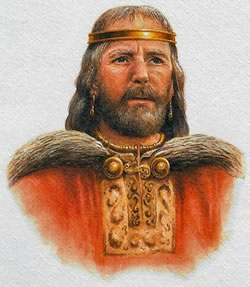
Brian Boru, High King of Ireland (1002-1014)
Brian Boru, High King of Ireland (1002-1014) / Brian Bóruma mac Cennétig, Ard-Rí ar Éirinn

Words marked with a * are reconstructions.

Proto-Celtic *rīxs/*rig- = king
Celtiberian reikis = king
Gaulish rīx = king – appears in names like Katurīx, Suādurīx, *Werkingetorīx (Vercingetorix) and Asterix
Primitive Irish ᚏᚔᚌᚐᚄ (rigas) = (of the) king
Old Irish (Goídelc) [r͈ʲiː] = king
rígdae = regal, kingly
rígdún = palace
Middle Irish (Gaoidhealg) rí, ríg, rig = king, head, chief
rígán = a sub-king, chief
rígamail, rioghamhail = royal
rígdacht = kingliness, kingly qualities, a kingdom
rígda(e) = a royal dwelling place, palace
rígrach = = royal, kingly
Irish (Gaeilge) [ɾˠiː] = king, sovereign, monarch
ríoga = regal, royal
ríora = kings, royal persons, royalty, dynasty
Scottish Gaelic (Gàidhlig) rìgh [r̪ʲiː] = king
banrìgh = queen
àrd-rìgh = high king
mòr-rìgh = emperor
rìoghachadh = reigning, reign
rìoghachd = kingdom, realm
Manx (Gaelg) ree = king
reejerey = cavalier, chevalier, king, knight, lord, paladin, prince
reeoil = kinglike, monarchy, regal, royal
reeaght, reeriaght, riaght, ream = kingdom
Proto-Brythonic *riɣ [ˈriːɣ] = king
Old Welsh rig = king
Middle Welsh (Kymraec) ri, rhi = king
rhiaidd, rhïaidd = regal, royal, noble, generous
rieu, riav = king, lord, ruler, chieftain
rriawdr, riawdr = lord, ruler, chieftain, God
Welsh (Cymraeg) rhi [r̥iː] = king, prince, lord, ruler, chieftain
rhiaidd = regal, noble, aristocratic, dignified
rhiau = king, lord, ruler, chieftain
rhiawdr = lord, ruler, chieftain, God
Middle Cornish (Cernewec) ruy, ruif = king, sovereign, ruler
ryal, real = royal, kingly
Cornish (Kernewek) riel = regal, royal
Old Breton ri = king
Middle Breton (Brezonec) ri, rí = king
Breton (Brezhoneg) ri [ˈʁiː] = king

Etymology: from Proto-Indo-European *h₃rḗǵs (king, ruler) [source]. Words from the same Proto-Celtic root include rich in English, ryk (rich, wealthy) in Afrikaans, ricco (rich, wealthy, affluent) in Italian, riche (rich) in French, Reich (empire, realm) in German, and rikas (rich, wealthy, opulent, plentiful) in Finnish [source].

English words with the suffix -ric, such as bishopric (a diocese or region of a church which a bishop governs), and comes from the same Proto-Celtic root [source].

Proto-Celtic *rīganī= queen
Gaulish rigani = queen
Old Irish (Goídelc) rígan = queen
Middle Irish (Gaoidhealg) rígain, rígan, rígnae = queen, noble lady
Irish (Gaeilge) ríon = queen, queenly, noble, lady, fair maiden
banríon = queen
(ban)ríonacht = queenship
ríonaí = queenly
ríonaigh = to queen (chess)
Scottish Gaelic (Gàidhlig) rìghinn [r̪ʲi.ɪn̪ʲ] = princess (archaic)
rìbhinn [r̪ʲiːvɪn̪ʲ] = maid, maiden, girl, Venus, adder, queen (archaic)
banrìgh = queen
Manx (Gaelg) reeven = queen
rein = queen
ben-rein = queen
Proto-Brythonic *rriɣėn [r͈iˈɣe̝ːn] = queen
Middle Welsh (Kymraec) riein, riain = (young) woman, girl, damsel, lass, maiden, virgin, queen, noble girl, lady
Welsh (Cymraeg) rhiain = (young) woman, girl, damsel, lass, maiden, virgin, queen, noble girl, lady

Etymology: from Proto-Indo-European *h₃rḗǵnih₂ (queen), from *h₃rḗǵs (king, ruler) [source]. Words from the same roots include reine (queen) in French, reina (queen) in Spanish, erregina (queen) in Basque, and regină (queen) in Romanian [source].

Middle Welsh (Kymraec) rhỼyf, rwyf, rỼy = king, lord, ruler, chieftain, leader
rwyfaỼ, rwyfaỼ = to have dominion over, govern, rule
rwyuannus, rhwyvanus = royal, kinglike, governing
ruyvenit = prince, king, ruler
rhwyfiadur, ruyfadur, rwyfyadur, rỼyfyadur = chief(tain), lord, leader, ruler, protector
Welsh (Cymraeg) rhwy(f) = king, lord, ruler, chieftain, leader
rhwyfo = to have dominion over, govern, rule, lead, be ostentatious, live in splendour
rhwyfanes = queen, lady
rhwyfaniad = reign, government, rule, kingdom
rhwyfanus = royal, kinglike, governing
rhwyfenydd = prince, king, ruler
rhwyf(i)adur = chief(tain), lord, leader, ruler, protector
Old Cornish ruifanes = queen
ruifadur = chief(tain), lord, leader
Middle Cornish (Cernewec) ruy, ruif = king, sovereign, ruler
ruifanes, ruivanes = a female ruler, queen
Cornish (Kernewek) ruvanes = queen
ruvaneth = kingdom
Old Breton roe = king
Middle Breton (Brezonec) roe, roé, roue, rouè = king
rouanes, roanez, rouanés = queen
rouantelez, roeantelez = kingdom
roueel = royal
roueeler = royalist
roueelezh = royalty
roueelouriezh = royalism
roueoni = reign
Breton (Brezhoneg) roue = king
rouanez = queen
rouantelezh = kingdom, monarchy
roueel = royal
roueelezh = royalty
roueelouriezh = royalism

Etymology: from Old French roi (king), from Latin rēgem (king, ruler, despot, tyrant), from Proto-Italic *rēks (king), from Proto-Indo-European *h₃rḗǵs (king, ruler) [source].

Words from the same Latin root include re (king) in Italian, roi (king) in French, viceroy in English and rey (king) in Spanish [source].

Proto-Celtic *brigantīnos = (someone) pre-eminent, outstanding
Proto-Brythonic *brɨɣėntin [brɨɣe̝nˈtiːn] = lord, king
Middle Welsh (Kymraec) breenhin, breennin, breyenhin, brenhin = king
brenhynes, brenhines = queen, goddess, queen bee
brenineiziaw = to become kingly
brenhynyaeth, brenhinyaeth = royalty, kingship, reign
Welsh (Cymraeg) brenin [ˈbrɛnɪn / ˈbreːnɪn] = king, sovereign, monarch, head of region
brenineiddio = to make/become regal/kingly, make (sb) a king
breninesaidd = queen-like, queenly
breninesol = queen-like, queenly, pertaining to a queen
breningarol = royalist
breniniaethu = to reign, govern
breninoldeb = kingship, royalty
brenhines = queen, goddess, queen bee
brenhiniaeth = royalty, kingship, reign, government
Middle Cornish (Cernewec) brentyn, bryntyn = privileged, sovereign, noble, excellent
Cornish (KerneweK) bryntin, brentin = grand, great, noble, splendid, superb
Old Breton brientin, brientinion = king
Middle Breton (Brezonec) brientin = aristocrat
brientinelezh = aristocracy
Breton (Brezhoneg) brientin = aristocrat
brientinel = aristocratic
brientinelezh = aristocracy
brienteg, brientek = privileged
brientekaat = to favour
briental = royalties

Etymology: from Proto-Indo-European *bʰérǵʰonts (high), from *bʰerǵʰ- (to rise up, ascend) [source].

From the same Proto-Celtic root, , we get the tribal name *Brigantī (Brigantes – a Celtic tribe that occupied much of what is now northern England), Brigantia (a Celtic goddess of victory, and the territory of the Brigantes), the name Bridget, the Irish name Bríd, the Scottish Gaelic name Brìghde, the Manx name Breeshey, and the placenames such as Bragança (a city in northeastern Portugal), Bregenz (a city in western Austria) and Brianza (a city in northern Italy), [source].

English words from the same PIE root include bourgeois, burrow, fort and maybe burgler [source].

Middle Welsh (Kymraec) mechdeyrn, mychdeyrn, machdeyrn = king, lord, monarch, emperor
mechteyrnged, mychteyrnged = tribute due to an overlord from an inferior lord
Welsh (Cymraeg) mechdeyrn, mychdeyrn, machdeyrn = king, lord, monarch, emperor, God, tributary prince, viceroy
mechdeyrnged, mychdeyrnged = tribute due to an overlord from an inferior lord
Middle Cornish (Cernewec) mychtern = sovereign, king
mychternes = queen
mychterneth = sovereignity, dominion, royalty, kingdom
Cornish (Kernewek) myghtern, metern [mɪx’tɛrn] = king, monarch
myghternes, meternes = monarch, queen
myghterneth, meterneth = kingdom
myghternses, meternses = kingship, monarchy
Old Breton machtiern = king

Etymology: from Welsh mach (surety, guarantor, sponsor, hostage) and teyrn (sovereign, monarch, king) [source].

Sources: Wiktionary, Am Faclair Beag, Online Manx Dictionary, Teanglann.ie, eDIL – Electronic Dictionary of the Irish Language, In Dúil Bélrai English – Old Irish glossary, Geiriadur Prifysgol Cymru, Gerlyver Kernewek, Dictionaire Favereau, TermOfis, English – ProtoCeltic WordList (PDF), Etymological Dictionary Of Proto Celtic

Blubrry podcast hosting

Fire Angels

Words for fire in Celtic languages.

Proto-Celtic *teɸnets = fire
Old Irish (Goídelc) teine [ˈtʲenʲe] = fire
Irish (Gaeilge) tine [ˈtʲɪnʲə] = fire, conflagration; incandescence, flame; luminosity, glow; flash; inflammation
Scottish Gaelic (Gàidhlig) teine [tʲenə] = fire, flame, conflagration
Manx (Gaelg) çhenney = elemental fire, lightning, rickets
Middle Welsh (Kymraec) tan [taːn] = fire
Welsh (Cymraeg) tân [taːn] = fire, conflagration, bonfire, flame, spark, light (for a cigarette), match; high temperature (from fever)
Cornish (Kernewek) tan [ta:n / tæ:n] = fire
Breton (Brezhoneg) tan [ˈtɑ̃ːn] = fire

Etymology: from the Proto-Indo-European *tep- (to be warm) [source].

Old Irish (Goídelc) aingel [ˈaŋʲɡʲel] = angel
Irish (Gaeilge) aingeal [ˈæɲɟəl] = angel; fire, lighted coal
Scottish Gaelic (Gàidhlig) aingeal [ˈãĩŋʲgʲəl̪ˠ] = angel, messenger, fire, light, sunshine; brightness, light; signal fire, beacon; warmth
Manx (Gaelg) aile [ail] = fire
ainle = angel
Welsh (Cymraeg) angel [ˈaŋɛl] = angel
Cornish (Kernewek) eledh = angel
Breton (Brezhoneg) ael = angel

Etymology: from the Late Latin angelus (angel, messenger), from the Ancient Greek ἄγγελος (ángelos – messenger) [source].

Sources: Wiktionary, Am Faclair Beag, teanglann.ie, On-Line Manx Dictionary, Geiriadur Prifysgol Cymru, Gerlyver Kernewek, Dictionnaire Favereau

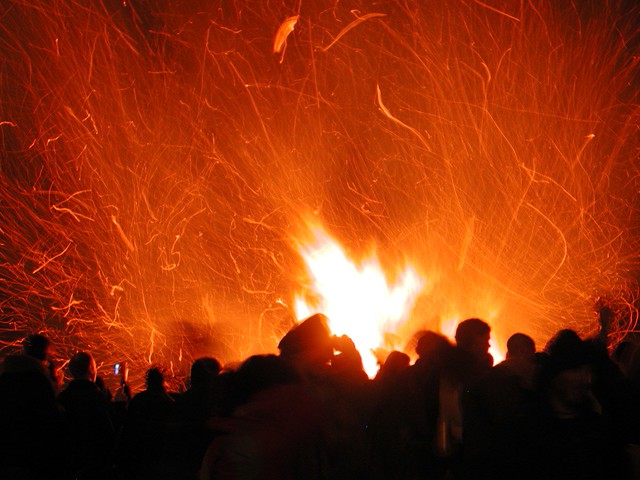
Beltane

Dry

Words for dry and to dry in Celtic languages.

Old Irish (Goídelc) tírim = dry
Irish (Gaeilge) tirim [tʲɾʲɪmʲ] = dry, parched, thirsty, without mortar, solid, bare
triomú = to dry
Scottish Gaelic (Gàidhlig) tirim [tʲirʲɪm] = arid, dry; droughty, mealy
tiormaich [tʲirəmɪç] = to dry, make dry, parch, dry up
Manx (Gaelg) çhirrym [tʲɾʲɪmʲ] = arid, dry, waterless, sapless
chyrmaghey = to dry, dry up

Sources: Wiktionary, Am Faclair Beag, teanglann.ie, On-Line Manx Dictionary

Proto-Brythonic *sɨx [ˈsɨːx] = dry
Old Welsh sech = dry, arid
Middle Welsh (Kymraec) sych = dry, arid
Welsh (Cymraeg) sych [sɨːχ / siːχ] = dry, arid
sychu [ˈsəχɨ / ˈsəχi] = to dry; drain, deplete; become dry, dry up, wither; heal, wipe
Cornish (Kernewek) segh [ze:h] / sygh [sɪ:x] = arid, dry
segha [‘sɛha / ‘zɛhɐ] = to dry, wipe
Breton (Brezhoneg) sec’h [ˈsɛːχ] = dry, unproductive (field)
sec’hañ = to dry

Etymology: from the Latin siccus (dry, sober, thirsty) [source].

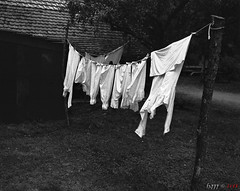
Drying Laundry

Sources: Wiktionary, Geiriadur Prifysgol Cymru, Gerlyver Kernewek, Dictionnaire Favereau

To Stand

Words for to stand in Celtic languages.

Proto-Celtic *sista- = to stand
Celtiberian sistat = to stand
Old Irish (Gaídelc) sessam = standing (by/fast), defending, standing resisting, holding out, making a stand
Irish (Gaeilge) seas [ʃasˠ] = to stand, stop, stay, last, keep, remain valid, bear, endure, resist, withstand, stand up for, defend
Scottish Gaelic (Gàidhlig) seas [ʃes] = to stand, maintain, support, defend, continue, endure, stop, stand by
Manx (Gaelg) shass [ʃas] = to stand
Proto-Brythonic *stab- = to stand
Welsh (Cymraeg) sefyll [ˈsɛvɨ̞ɬ / ˈseːvɪɬ] = to stand, be standing or upright, be or remain on one’s feet; stand (up), get up; stand or tread (on); to be located, lie; to come to a halt, stand still, stop, come to end, cease, fail
Cornish (Kernewek) sevel [‘sɛvɛl / ‘zɛvɐl] = to stand, arise, get up, rise, halt, raise up, abstain from
Breton (Brezhoneg) sevel = to rise, lift, remove, draw, build, train, compose, sell, invent, push, repay

Polyglot Conference 2018

Note: the Brythonic words may not come from the same root as the Goidelic words.

Etymology: from the Proto-Indo-European *stísteh₂ti (to be standing up, be getting up), from *steh₂- (to stand) [source].

The sist part of exist, resist, desist, consist, etc comes from the same root, via the Latin sisto (I stand, set, place, appear) [source]

Sources: Wiktionary, Am Faclair Beag, teanglann.ie, On-Line Manx Dictionary, Geiriadur Prifysgol Cymru, Gerlyver Kernewek, Dictionnaire Favereau

To Write

Words for writing, script and related things in Celtic languages:

Illuminated manuscript

Old Irish (Goídelc) scríbaid [ˈsʲkʲrʲiːviðʲ] = to write (down), compose
Middle Irish (Gaoidhealg) scríbaid = to write (down), compose
aithscríbaid = rewrites
scríbend = the act of writing
Irish (Gaeilge) scriobh [ʃcɾʲiːvˠ / ʃcɾʲiːw] = to write, fill in, compose; (hand)writing
scriobhaí = scribe, amanuensis
scríobhneóir = writer, author
scríobhneóireacht = writing, penmanship, literary work
scríofa = written
Scottish Gaelic (Gàidhlig) sgrìobh [sgrʲiːv] = to write, compose, inscribe
sgrìobhadh [sgrʲiːvəɣ] = writing, composing, inscribing, inscription, penmanship, writings, works
sgrìobhaiche = scribe, correspondent, writer
sgrìobhair = writer, scribe
Manx (Gaelg) screeu = document, writing; to inscribe, pen, scribe, write
screeuee = of writing
screeudeyr = scribe, secretary, secretary bird, writer
scrudeyr = scribe, secretary
screeudeyrys = writing
screeuit, screeut, scruit = written
Proto-Brythonic *skriβenn = writing, something written
Old Welsh scribenn = writing
Middle Welsh (Kymraec) yscriven, ysgriuen = writing
escryuennu, ysgriuennv, sgriuenv = to write
Welsh (Cymraeg) (y)sgrifen [əsˈɡrɪvɛn / ˈsɡrɪvɛn] = writing, manuscript, inscription, handwriting, letter, document, writ, deed, certificate, bill
(y)sgrifenedig = written, recorded, signed
(y)sgrifenlyfr = manuscript, writing-book
(y)sgrifennaf, (y)sgrifennu, sgwennu = to write, note (down), take a census
(y)sgrifennydd = secretary, scribe, clerk, copyist, writer, author
(y)sgrifennyddiaeth = orthography, spelling, handwriting
ysgrafo = to scratch, claw
Old Cornish scriuen = writing
Middle Cornish (Cernewec) screfa, scrife = to write
screft = scripture
scrife = writing
scriven = writing, letter, missive
scriviniat, scriuinat = writer
scrivit, scriut = writing
Cornish (Kernewek) skrif [skriːf] = document, script, writing, article
skrifa = to write, script, writ, writing
skrienyas, skrienyades = secretary
skrifenyaseth = secretariat
skrifer, skrifores = writer
skrifwas = clerk
Middle Breton (Brezonec) skriv, scrihuë = written
skrivadenn = something written
skrivadur = spelling, way of writing
skrivagner = scribe, secretary
skrivailher, skrivantour, skrivagnerez = writer
skrivañ, skriviñ, skriv = to write
Breton (Brezhoneg) skrivad = writing
skrivadenn = dictation
skrivagner = writer
skrivañ = to write

Etymology: from Latin scrībō (I write), from Proto-Italic *skreiβō (I carve), from Proto-Indo-European *(s)kreybʰ- (to scratch, to tear) [source].

Words from the same roots include scribble, scribe, script, shrift and shrive in English, and scritta (writing, notice, sign) and scrìvere (to write, spell) in Italian [source].

Sources: Wiktionary, Am Faclair Beag, Online Manx Dictionary, Teanglann.ie, eDIL – Electronic Dictionary of the Irish Language, In Dúil Bélrai English – Old Irish glossary, Geiriadur Prifysgol Cymru, Gerlyver Kernewek, Gerlyvyr Cernewec, Dictionaire Favereau, TermOfis, Le dictionnaire diachronique du breton, Geriafurch, English – ProtoCeltic WordList (PDF), Etymological Dictionary Of Proto Celtic

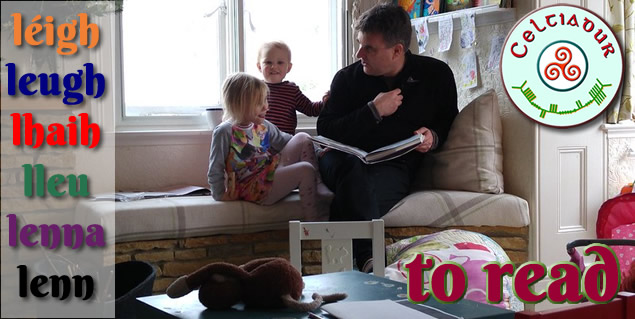
To Read

Words for to read and related things in Celtic languages.

To read photo

Words marked with a * are reconstructions.

Old Irish (Goídelc) légaid = to read, study, read aloud, recite
Middle Irish (Gaoidhealg) légad = reading, studying
légaid = to read, study, recite
légthóracht = reading, perusal, learning, study
Irish (Gaeilge) léigh [lʲeːɟ] = to read
léamh = reading
léitheoir = reader
léitheoireacht = reading
Scottish Gaelic (Gàidhlig) leugh [l̪ːev] = to read
leughadair, leughamh = reader
leughadh, leughamh = reading, perusing, perusal
leughair [l̪ʲeːvər] = reader (person)
Manx (Gaelg) lhaih = to read
lhait, lhaiht = read
lhaihagh = bookish, legible, studious
lhaihder = reader, lector
lhaihderys = art of reading, perusal
lhaihoil = legible, readable
Middle Welsh (Kymraec) lleir, lleu, lleawr = to read
Welsh (Cymraeg) lleaf, lleu [ˈɬeav/ɬei̯] = to read

Etymology: from Latin legō (to choose, appoint, collect, extract, read), from the Proto-Italic *legō (to gather, collect) , from the Proto-Indo-European *leǵ- (to gather, collect) [source].

Old Irish (Goídelc) léigenn = education, learning, reading, study
léignid = scholar
Middle Irish (Gaoidhealg) léigenn = studying, reading, learning, doctrine
léigaid = to read, study, recite
léigenta = learned
léignid = learned man, scholar
Irish (Gaeilge) léann [l̠ʲeːn̪ˠ] = learning, education, study
léannta = learned, erudite, scholarly
léanntacht = learnedness, erudition
Scottish Gaelic (Gàidhlig) léigheann [l̪ʲeː.ən̪] = (act of ) reading
Proto-Brythonic *lleɣenn = literature, learning
Middle Welsh (Kymraec) llen, llên = literature, lore
darllein, darllain= to read
Welsh (Cymraeg) llên [ɬeːn] = literature, lore, scholar, priest, cleric, ecclesiastic, clerical, learned
llenyddiaeth = literature, scholarship
darllen(af) [ˈdarɬɛn(av) / ˈdarɬɛn(av)] = to read (aloud), peruse; learn; discern by observation, understand a person’s character; scrutinize
Middle Cornish (Cernewec) lyen = literature, learning, erudition, scholarship
lenn = to read
lenner = reader
Cornish (Kernewek) lien [ˈliːɛn] = literature
liennek = literary
lenna [‘lɛn:a / ‘lɛnɐ] = to read
lenner, lenores = reader
Middle Breton (Brezonec) lenn, leenn, leen = reading. to read
lenniff = to read
Breton (Brezhoneg) lenn [lɛnː] = to read
lennadur [lɛˈnɑː.dyr] = reading
lennañ = to read
lennegezh = literature
lenner [ˈlɛnː.ɛr] = reader
lennus [ˈlɛ.nːys] = legible
lennusted [ˈlɛ.nːys] = legibility, readability

Etymology: from Latin legendum/legendā, from Latin legō (to choose, appoint, collect, extract, read), from the Proto-Italic *legō (to gather, collect) , from the Proto-Indo-European *leǵ- (to gather, collect) [source].

English words from the same roots include collect, dialect, dyslexia, elect, intellect, lectern, lection and legion [source].

Middle Cornish (Cernewec) redi, redyé = to read
redyans = reading
redior, rediores = reader
Cornish (Kernewek) redya = to read
redyans = reading
redyer, redyores = reader

Etymology: from English read, from Middle English reden (to counsel, advise, study, read), from Old English rǣdan (to read, advise, guess), from Proto-West Germanic *rādan, from Proto-Germanic *rēdaną (to advise, counsel), from Proto-Indo-European *Hreh₁dʰ- (to think, arrange [source].

The Fastest Way to Learn Japanese Guaranteed with JapanesePod101.com

Sources: Wiktionary, Am Faclair Beag, Online Manx Dictionary, Teanglann.ie, eDIL – Electronic Dictionary of the Irish Language, In Dúil Bélrai English – Old Irish glossary, Geiriadur Prifysgol Cymru, Gerlyver Kernewek, Lexicon Cornu-britannicum: A Dictionary of the Ancient Celtic Language of Cornwall, Dictionaire Favereau, TermOfis, Le dictionnaire diachronique du breton, Etymological Dictionary Of Proto Celtic

Alive & Living

Words for alive & living in Celtic languages.

Proto-Celtic *biwos = alive, living, mortal
Old Irish (Goídelc) béo [bʲeːu̯] = alive, living
Irish (Gaeilge) beo [bʲoː / bʲɔː] = living, alive; live, active; living being; life; livelihood; quick; to live
Scottish Gaelic (Gàidhlig) beò [bjɔː] = alive, live, living; lively; vivid; vital; quick, lively, sprightly
Manx (Gaelg) bio [bʲoː] = alive, live, lifelike, bright, hot, activated, pictorial, afloat, live person, spring tide after neap
Proto-Brythonic *bɨw = alive, living
Welsh (Cymraeg) byw [bɨu̯ / bɪu̯] = alive, living, having life, animate, quick, existing, actual; lively, full of life, vivacious, vigorous, sprightly, spirited, eager, sparkling; vivid, graphic; susceptible to
byw (verb) = to live, lead one’s life, subsist, exist; dwell, inhabit, to animate, revive
Cornish (Kernewek) bew [beˑʊ] = active, agile, alive, lively, living,
switched on
bewa = to live, be alive
Breton (Brezhoneg) bev = alive, living, lively
bevañ = to live, feed

Etymology: from Proto-Indo-European *gʷih₃wós (alive, living) [source].

Old Irish (Goídelc) forig, fuirset = to remain, stay
Irish (Gaeilge) fuirigh = to hold back, delay, wait, stay
Scottish Gaelic (Gàidhlig) fuirich [fuɾʲɪç] = to stay, wait, delay, linger, abide
Manx (Gaelg) fariagh [bʲoː] = to stay
Old Irish (Goídelc) cómnuigim = I rest
congaib [konˈɡavʲ] = to contain, preserve, keep, uphold
Middle Irish (Gaoidhealg) cómnuigim = I rest
congaib [konˈɡavʲ] = to contain, preserve, keep, uphold
Irish (Gaeilge) cónaigh [ˈkoːn̪ˠɪɟ / ˈkoːnˠə / ˈkɔːnˠi] = living, alive; live, active; living being; life; livelihood; quick; to live
Scottish Gaelic (Gàidhlig) cumail [kumal] = (act of) keeping, holding, retaining; witholding; celebrating, observing
còmhnaidh [kɔ̃ːnɪ] = (act of) occupying, inhabiting, dwelling, residing; occupancy, occupation, habitation, residence; (act of) abiding; abode
Manx (Gaelg) cummal = to grip, hold, keep, arrest, contain, retain, live, inhabit

Etymology: from the Old Irish com- (with) and gaibid (to hold, grasp, take, seize, capture) [source].

Old Irish (Goídelc) maraid [ˈma.rəðʲ] = to last, persist, remain; to survive, live
Irish (Gaeilge) mair = to live, to last
Scottish Gaelic (Gàidhlig) mair [marʲ] = to live, to exist, to continue

Etymology: from Proto-Indo-European *merh₂- (to seize, grip) [source].

Welsh (Cymraeg) trigio = to live (in), dwell, reside, lodge, stay, remain, delay, linger
godrig(af) = to stay, tarry, remain, abide, dwell, sojourn; stay or tarry for; rest upon, insist; linger, delay.
Middle Cornish trege, trega, tryga, tryge = to remain, stay, dwell
Cornish (Kernewek) triga = to remain, stay, dwell
Old Breton guotric = to stay

Etymology: from Latin trīcō (to delay) [source].

The word for to live in Breton, chom, comes from the Old French chômer (to be idle, to be out of work), from the Late Latin caumāre, from caumō (I rest during the heat), from the Ancient Greek καῦμα (kaûma – heat). [source].

Words marked with a * are reconstructions.

Sources: Wiktionary, Am Faclair Beag, Online Manx Dictionary, Teanglann.ie, Geiriadur Prifysgol Cymru, Gerlyver Kernewek, Dictionnaire Favereau

Elbows

Words for elbow in Celtic languages.

Eoin Dillon & Frank Tate

Proto-Celtic *olīnā = elbow, angle, corner
Old Irish (Goídelc) uilen = elbow, forearm; angle, corner
uilnech = angled, cornered, squared-off
Middle Irish (Gaoidhealg) uilen, uille, uile, uilenn, uillenn = elbow, forearm; angle, corner
uillennach = having angles, angular
uilnech, uillech = having elbows, angles, corners
Irish (Gaeilge) uillinn = elbow, angle
uillinntomhas = protractor
uilleannach = having prominent elbows, elbowing, nudging
uilleach = angular
uilleachas = angularity
Scottish Gaelic (Gàidhlig) uileann [ulən̪ˠ] = elbow, angle
ceart-uileann = right angle
uileann tilgidh = trajectory
Manx (Gaelg) uillin = elbow, elbow joint, crook, angle, corner, nudge
uilliney = elbow
uillinaghey = to elbow, jostle
Old Welsh elin = elbow, forearm
Middle Welsh (Kymraec) elin, elyn = elbow, forearm
elin(i)oc = elbow-shaped, angular
penn y elined, penn (yr) elin = elbow, bend
Welsh (Cymraeg) elin [ˈɛlɪn / ˈeːlɪn] = elbow, forearm; angle, bend
elinaf, elino = to elbow, jostle, project, jut out
elin(i)og = elbow-shaped, angular, having arms (of chair)
penelin, pen elin = elbow, bend, projection, corner
Middle Cornish (CerneweC) elin, elyn = angle, elbow
Cornish (Kernewek) elin [‘ɛlɪn] = elbow, angle
elin pedrek = right angle
Middle Breton (Brezonec) elin, ilin = elbow, bend
elinar, elinat, ilinad = bent, angled
Breton (Brezhoneg) ilin [ˈiːlin] = elbow, bend
ilinad = bent, angled
ilinañ = to lean
ilinata = to elbow, jostle
ilinañ = to lean
iliner = armrest
ilinwisk = elbow pad/brace/support

Etymology: from Proto-Indo-European *Heh₃l- (to bend). Cognate with the Latin ulna (elbow, arm), and the English elbow and ulna (one of the bones in the forearm, a.k.a. elbow bone) [source].

Words marked with a * are reconstructions.

Sources: Wiktionary, Am Faclair Beag, Online Manx Dictionary, Teanglann.ie, eDIL – Electronic Dictionary of the Irish Language, In Dúil Bélrai English – Old Irish glossary, Geiriadur Prifysgol Cymru, Gerlyver Kernewek, Dictionaire Favereau, TermOfis, English – ProtoCeltic WordList (PDF), Etymological Dictionary Of Proto Celtic

Blubrry podcast hosting