Celtic Pathways – Druids

In this episode we’re looking at words for druids and related people.

pondering

The Proto-Celtic *druwits means priest or druid, and comes from the Proto-Celtic *daru (oak) and *wid-/*windeti (to know, to see), from the Proto-Indo-European *dóru (tree) and *weyd (to see, know) [source].

Descendants in the modern Celtic languages include:

  • draoi [d̪ˠɾˠiː] = druid, wizard, magician, augur, diviner, trickster, and draoíocht (magic, druidism, witchcraft, enchantment) in Irish
  • draoidh [drɯj] = druid, sorcerer, magician, wizard, and draoidheachd (magic, sorcery, druidism) in Scottish Gaelic
  • druaight = charm, druid and druaightagh (smithcraft, smithery) in Manx
  • dryw [drɨu̯/drɪu̯] = druid, seer, and derwydd (prophet, wise man, druid) in Welsh
  • drewydh = druid in Cornish
  • drouiz = druid in Breton

The English word druid comes from the French druide (druid), from the Latin as druidae (the druids), from the Gaulish *druwits (druid) [source].

The Proto-Brythonic word *drüw (druid) was borrowed into Old English as drȳ (sorcerer, magician), which became drī(mann)/driʒ(mann) (sorcerer, magician) in Middle English [source]. A few modern druids use the word drymann, or something similiar, to refer to themselves.

Here’s a traditional Welsh tune called Y Derwydd (The Druid) played by me on the mandolin:

Here’s another version of it:

You can find the dots for this tune on The Session.

More details about these words on Celtiadur, a blog where I explore connections between Celtic languages in more depth.

I also write about words, etymology and other language-related topics on the Omniglot Blog.

You can also listen to this podcast on: Apple Podcasts, Amazon Music, Stitcher, TuneIn, Podchaser, PlayerFM or podtail.

If you would like to support this podcast, you can make a donation via PayPal or Patreon, or contribute to Omniglot in other ways.


The Fastest Way to Learn Japanese Guaranteed with JapanesePod101.com

Omniglot News (14/08/22)

Here’s the latest news from the world of Omniglot.

This week there are new language pages about:

  • Ambel (galí Ambél), a Malayo-Polynesian language spoken on the island of Waigeo, which is part of the Raja Ampat Regency in West Papua Province in eastern Indonesia.
  • North Marquesan (Te èo ènana), an Eastern Polynesian language spoken in the Marquesas Islands in French Polynesia.
  • South Marquesan (Te èo ènata), an Eastern Polynesian language spoken in the Marquesas Islands in French Polynesia.

There are new numbers pages in:

  • North Marquesan (Te èo ènana)
  • South Marquesan (Te èo ènata)
  • Shan (လိၵ်ႈတႆး), a Southwestern Tai language spoken in northern Myanmar, southern China and northern Thailand.
  • Tai Lue (ᦅᧄᦺᦑᦟᦹᧉ), a Southwestern Tai language spoken in China, Laos, Thailand and Myanmar.
  • Ahom (𑜒𑜑𑜪𑜨), a Tai-Kadai language formerly spoken in the Indian state of Assam, which is being revived.

There’s an Omniglot blog post about the French word Essuie-tout (paper towel) and related things, and the usual Language Quiz. See if you can guess what language this is:

Here’s a clue: this language was once widely spoken across North Africa and the Middle East, but there are now only small numbers of speakers.

The mystery language in last week’s language quiz was Akawaio (Ka’pon), a Cariban language spoken in northern Brazil and eastern Venezuela.

There’s a new Celtiadur post are about words for Sailing and related things in Celtic languages.

There’s an episode of the Celtic Pathways podcast about words for Bards and Poets and related people.

In the Adventure in Etymology we find out what links the word Sneeze with words like pneumatic, pneumonia and pneu (tire/tyre in French).

I wrote a new song this week called That’s When We’ll Do That Thing. It’s based on idioms for things that are very unlikely to happen or will never happen, like pigs flying or hell freezing over. It sounds a bit like this:

I also made improvements to the Dehong Dai / Tai Le script page, Tai Nuea and Tai Lue language pages, and there are now recordings of all the Western Armenian phrases.

For more Omniglot News see:
https://www.omniglot.com/news/
https://twitter.com/Omniglossia
https://www.facebook.com/groups/omniglot/
https://www.facebook.com/Omniglot-100430558332117

You can also listen to this podcast on: Apple Podcasts, Amazon Music, Stitcher, TuneIn, Podchaser, PlayerFM or podtail.

If you would like to support this podcast, you can make a donation via PayPal or Patreon, or contribute to Omniglot in other ways.
The Fastest Way to Learn Korean with KoreanClass101

Adventures in Etymology – Sneeze

Today we’re investigating the origins of the word sneeze.

Sneeze

Sneeze [sniːz] means:

  • to emit air or breath suddenly, forcibly, and audibly through the nose and mouth by involuntary, spasmodic action.

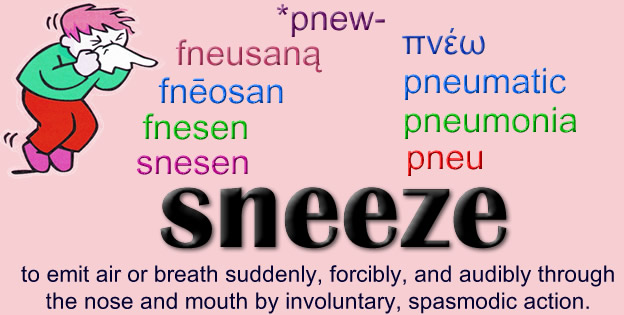
It comes from the Middle English snesen [ˈsneːzən] (to sneeze), from fnesen [ˈfneːzən] (to sneeze) from the Old English fnēosan [ˈfne͜oː.zɑn] (to sneeze), from the Proto-Germanic *fneusaną [ɸneu̯.sɑ.nɑ̃] (to sneeze), from the Proto-Indo-European *pnew- (to pant, breathe, snort, sneeze) [source].

A related word in Middle English was fnesy [fneːziː] (having a tendency to wheeze or sneeze) [source]. Other words that began with fn in Middle Engilsh included fnoren and fnorten which became snore and snort in Modern English.

An old word for to sneeze in English was neeze, which is or was used in some dialects in the UK. It came from the Middle English nesen (to sneeze), from the Old English *hnēosan (to sneeze), from the Proto-Germanic *hneusaną (to sneeze), from the PIE *(s)knus- (to sneeze) and *pnew- (to pant, breathe) [source].

Words from the PIE root *pnew- include pneumatic and pneumonia in English, pneu (tyre/tire) in French, and πνέω [ˈpne.o] (to blow) in Greek [source].

Here’s a video I made of this information:

Video made with Doodly [afflilate link].

I also write about words, etymology and other language-related topics on the Omniglot Blog, and I explore etymological connections between Celtic languages on the Celtiadur.

You can also listen to this podcast on: Apple Podcasts, Amazon Music, Stitcher, TuneIn, Podchaser, PlayerFM or podtail.

If you would like to support this podcast, you can make a donation via PayPal or Patreon, or contribute to Omniglot in other ways.
The Fastest Way to Learn Japanese Guaranteed with JapanesePod101.com

Celtic Pathways – Bards and Poets

In this episode we’re looking at words for bards, poets and related people.

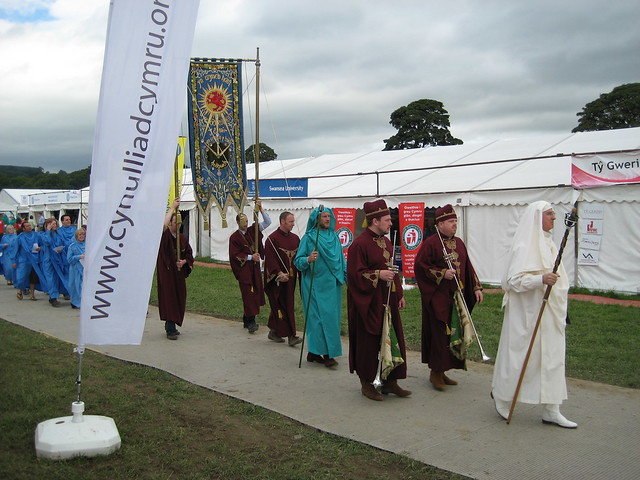
Eisteddfod Maes 2009

In Proto-Celtic one word for bard was *bardos, which comes from the Proto-Indo-European *gʷr̥dʰh₁-ó-s from *gʷerH- (to express approval, praise, elevate) [source].

Descendants in the modern Celtic languages include:

  • bard [bˠɑːɾˠd̪ˠ / bˠæːɾˠd̪ˠ] = poet, bard, scold in Irish
  • bàrd [baːr̪ˠd] = poet, versifier, bard, rhymer in Scottish Gaelic
  • bard = poet, bard in Manx
  • bardd [barð] = poet, bard, literary person, author, prophet, philosopher, priest in Welsh
  • bardh [barð] = bard, poet in Cornish
  • barzh = bard, poet in Breton

The English word bard was borrowed from Scottish Gaelic in the 15th century. The Proto-Celtic word *bardos was borrowed into Latin as bardus (bard), which became barde in French and bardo in Italian, Spanish and Portuguese [source]

The Proto-Celtic word *weless means seer or poet. It comes from the Proto-Celtic *weleti (to see) from the PIE *wel (to see) [source].

Descendants in modern Celtic languages include:

  • file [ˈfʲɪlʲə] = poet, song-maker, lyricist, satirist, scold in Irish
  • filidh [filɪ] = minstrel, poet (traditionally a member of one of the seven ranks of poets, all of which are above the bàrd) in Scottish Gaelic
  • feelee = poet in Manx

Words for to see in Welsh (gweld), Cornish (gweles) and Breton (gwelet) come from the Proto-Celtic *weleti, as to parts of the verb to be in Irish (bhfuil), Scottish Gaelic (bheil) and Manx (vel) – apparently they came from the imperative form of the verb and the meaning shifted from “see!” to “there is” to “is” [source].

The Swedish word leta (to search, look for) comes from the same PIE root, as does the word lait (to seek, search for, inquire), which is or was found in some UK dialects of English [source].

More details about these words on Celtiadur, a blog where I explore connections between Celtic languages in more depth.

I also write about words, etymology and other language-related topics on the Omniglot Blog.

You can also listen to this podcast on: Apple Podcasts, Amazon Music, Stitcher, TuneIn, Podchaser, PlayerFM or podtail.

If you would like to support this podcast, you can make a donation via PayPal or Patreon, or contribute to Omniglot in other ways.
The Fastest Way to Learn Japanese Guaranteed with JapanesePod101.com

Adventures in Etymology – Fever

Last weekend I went to Aberystwyth to see a friend, which was nice, and also why I didn’t manage to record a new Adventure in Etymology. Unfortunately one souvenir I brought back was a dose of Corona virus. I felt quite feverish earlier this week, so today we’re uncovering the origins of the word fever.

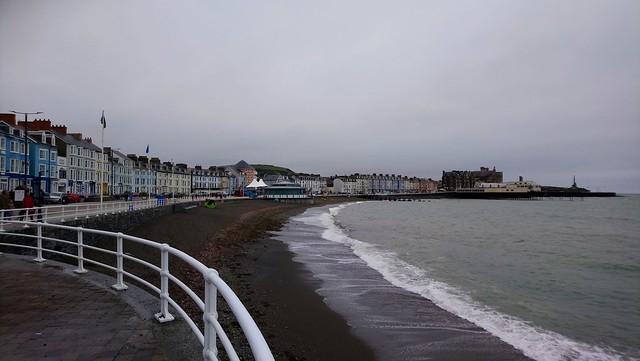
Promenâd Aberystwyth Promenade

A fever [ˈfiːvə / ˈfivɚ] is:

  • A higher than normal body temperature of a person (or, generally, a mammal), usually caused by disease.
  • Any of various diseases, such as scarlet fever
  • A state of excitement or anxiety.
  • A group of stingrays.

It comes from the Middle English fever(e) (fever), from the Old English fefer / fefor (fever), from the Latin febris (fever), from the Proto-Italic *feɣʷris (fever), from the Proto-Indo-European *dʰegʷʰris from *dʰegʷʰ- (to burn, warm, hot) [source].

Words from the same PIE root include day in English, and words for day in other Germanic languages, daigh (flame, fire, pain, pang) in Irish, and possibly defio [ˈdəɨ̯vjɔ] (to scorch, singe, blast, blight) in Welsh [source].

In Old English the word for fever was hriþ [r̥iθ], which comes from the Proto-Germanic *hriþiz (trembling, the shakes, the shivers, fever) from the PIE *kret- (to shake, quiver, tremble) [source].

Words from the same PIE root possibly include cryd [krɨːd / kriːd] (shivering, trembling, fever) in Welsh, and crith (a/to shake, quiver, tremble) in Irish [source].

Here’s a video I made of this information:

Video made with Doodly [afflilate link].

I also write about words, etymology and other language-related topics on the Omniglot Blog, and I explore etymological connections between Celtic languages on the Celtiadur.

You can also listen to this podcast on: Apple Podcasts, Amazon Music, Stitcher, TuneIn, Podchaser, PlayerFM or podtail.

If you would like to support this podcast, you can make a donation via PayPal or Patreon, or contribute to Omniglot in other ways.
The Fastest Way to Learn Japanese Guaranteed with JapanesePod101.com

Celtic Pathways – Family

In this episode we’re looking at words for family, tribe and related things.

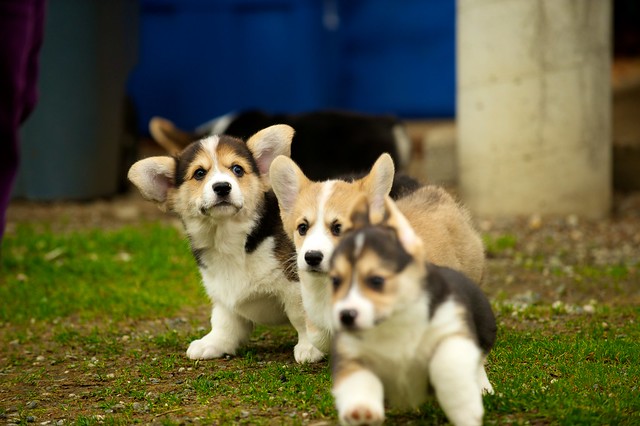
Corgi Puppies 21

In Proto-Celtic a word for family or kindred was *wenyā, which comes from the Proto-Indo-European *wenh₁- (to wish, seek, desire, love, win) [source].

Descendents in the modern Celtic languages include:

  • fine [ˈfʲɪnʲə] = family, kin, clan, tribe, race in Irish
  • fine [finə] = family group, race, territory of a family group in Scottish Gaelic
  • gouenn = race in Breton

The name of Vannes [van], a town in Brittany, comes from the same Proto-Celtic root, via the Latin Veneti [source]

Words from the same PIE root include venom, Venus, wonder, wean and winsome in English, vän (friend) in Swedish, and gwenwyn (poison, venom) in Welsh [source]

The Proto-Celtic word *genos (family, clan, birth) is the root of iníon [ˈɪnʲiːnʲ] (daughter, girl maiden, (young) woman, Miss) in Irish, nighean [ɲiː.an̪ˠ] (daughter, girl, lass) in Scottish Gaelic, and inneen [ɪnˈjiːn] (daughter, girl) in Manx [source].

It also makes up part of the Irish name Eoghan [oːn̪ˠ], the Scottish Gaelic name Eòghan [joː.ən̪ˠ], both of which are thought to come from the Proto-Celtic name *Iwogenos, from *iwos (yew) and *genos (born, family) [source].

The name Morgan possibly comes from the Old Welsh name Morgen from *mor (sea) and *gen (born), from the Proto-Celtic *genos [source].

The Proto-Celtic word *tegeso-slougo- means family or household. It comes from the Proto-Indo-European *tegos (cover, roof) [source] and *slowgʰos / *slowgos (entourage) [source].

Descendents in modern Celtic languages include:

  • teaghlach [ˈtʲalˠəx] = household, family, domestic establishment, retinue in Irish
  • teaghlach [ˈtʲɤːɫ̪ˠəx] = family, household in Scottish Gaelic
  • thielagh = family, household in Manx
  • teulu = family, tribe, nation, household in Welsh
  • teylu = family in Cornish
  • tiegezh = household, farm, family in Breton

More details about these words on Celtiadur, a blog where I explore connections between Celtic languages in more depth.

I also write about words, etymology and other language-related topics on the Omniglot Blog.

You can also listen to this podcast on: Apple Podcasts, Amazon Music, Stitcher, TuneIn, Podchaser, PlayerFM or podtail.

If you would like to support this podcast, you can make a donation via PayPal or Patreon, or contribute to Omniglot in other ways.
The Fastest Way to Learn Japanese Guaranteed with JapanesePod101.com

Omniglot News (31/07/22)

Here’s the latest news from the world of Omniglot.

This week there are new language pages about:

  • Hadza (Hadzane), a language isolate spoken around Lake Eyasi in northern Tanzania
  • Hejazi Arabic (حجازي), a variety of Arabic spoken mainly in the Hejaz region of western Saudi Arabia.

There are new numbers pages in:

  • Budukh (Будад мез), a North East Caucasian language spoken in the northeast of Azerbaijan.
  • Tindi (Идараб мицци), a Northeast Caucasian language spoken in the southwest of Dagestan in the Russian Republic.
  • Hejazi Arabic (حجازي), a variety of Arabic spoken mainly in the Hejaz region of western Saudi Arabia.

On the Omniglot blog this week we have a post called Kenning, about the words ken and kenning, and related words in English and other languages, and the usual Language Quiz. See if you can guess what language this is:

Here’s a clue: this language is spoken in the west of the Russian Federation.

The mystery language in last week’s language quiz was Hlai, a group of Kam-Tai languages spoken in central Hainan Province in southern China.

There’s a new Celtiadur post are about words for Lamentation and related things in Celtic languages.

Here’s a song I released this week, though actually wrote back in April 2022:

For more Omniglot News see:
https://www.omniglot.com/news/
https://twitter.com/Omniglossia
https://www.facebook.com/groups/omniglot/
https://www.facebook.com/Omniglot-100430558332117

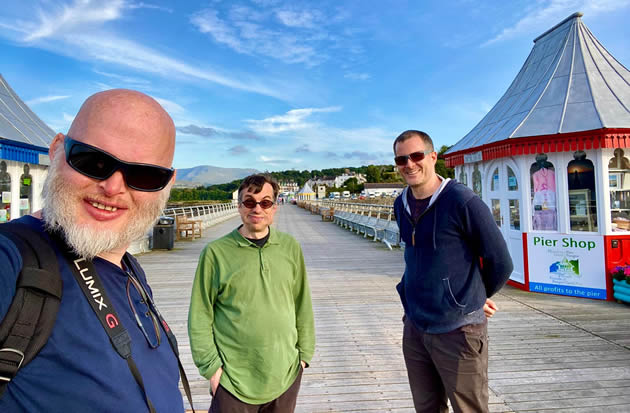
The Polyglottals (Richard Simcott, Simon Ager and Chris Taylor)
Some friends who came to visit Bangor this week (Photo by Richard Simcott)

You can also listen to this podcast on: Apple Podcasts, Amazon Music, Stitcher, TuneIn, Podchaser, PlayerFM or podtail.

If you would like to support this podcast, you can make a donation via PayPal or Patreon, or contribute to Omniglot in other ways.

The Fastest Way to Learn Korean with KoreanClass101

Omniglot News (24/07/22)

Here’s the latest news from the world of Omniglot.

This week there are new language pages about:

  • Porohanon, a Central Bisayan language spoken in the Camotes Islands in Cebu province in the Philippines.
  • Athpare (आठपहरिया‎), an Eastern Kiranti language spoken in the Dhankuta District in eastern Nepal.
  • Bukusu (Lubukusu), a Bantu language spoken in southwestern Kenya.

There are new numbers pages in:

  • Pingelapese, a Micronesian language spoken mainly in Pingelap and Pohnpei in Micronesia.
  • Bonggi, a North Bornean language spoken mainly on Banggi Island in Sabah, Malaysia.
  • Tobian (ramarih Hatohobei), a Micronesian language spoken in the Hatohobei and Koro states in Palau.

There’s a new article about Scottish Gaelic dialects of Arran.

On the Omniglot blog this week we have a post about Japanese words and idioms related to tatami called Tatami Swimming, and the usual Language Quiz. See if you can guess what language this is:

Here’s a clue: this language is distantly related to Thai and Lao.

The mystery language in last week’s language quiz was Ronga (XiRonga), a Central Bantu language spoken mainly in southern Mozambique, and also eastern South Africa

There are new Celtiadur posts are about words for Raw, Rotten and related things in Celtic languages.

There’s an episode of the Celtic Pathways podcast about words for person, human and related things.

In the Adventure in Etymology we find out what links the word Dean with words such as doyen, decimal and December.

During the heatwave earlier this week I wrote a new song called Melting, which goes something like this:

Normal service has been resumed and the weather, at least here in Bangor, is now it bit cooler.

For more Omniglot News see:
https://www.omniglot.com/news/
https://twitter.com/Omniglossia
https://www.facebook.com/groups/omniglot/
https://www.facebook.com/Omniglot-100430558332117

You can also listen to this podcast on: Apple Podcasts, Amazon Music, Stitcher, TuneIn, Podchaser, PlayerFM or podtail.

If you would like to support this podcast, you can make a donation via PayPal or Patreon, or contribute to Omniglot in other ways.

The Fastest Way to Learn Korean with KoreanClass101

Celtic Pathways – People

In this episode we’re looking at words for person, human and related things.

Fem Fest

In Proto-Celtic a word for person was *gdonyos, which comes from the Proto-Indo-European *dʰéǵʰom-yo- (earthling, human), from *dʰéǵʰōm (earth, human) [source].

Descendents in the modern Celtic languages include:

  • duine [ˈd̪ˠɪnʲə] = human, man, mankind, person in Irish
  • duine [dɯn̪ʲə] = fellow, person, man, husband in Scottish Gaelic
  • dooinney [ˈd̪uːnʲə] = human, man, fellow, husband in Manx
  • dyn [dɨːn / diːn] = man, human being; person, and dynes [ˈdənɛs] = woman in Welsh
  • den [dɛ:n / de:n] = man, guy, human, person in Cornish
  • den [ˈdẽːn] = human being, person, man, husband in Breton

Another Proto-Celitc word from the same PIE root is *gdū (place), which became (place, inheritance; native, natural, proper, fitting) in Modern Irish, dùth (natural, hereditary, proper, fit, suitable) in Scottish Gaelic, and dooie (complement, inherent, natural, patriotic) in Manx [source].

Other words from the same PIE root include: human, humus, bridegroom in English; goom, an old word for man in northern English dialects and Scots; gumi, a poetic word for a man in Icelandic, and hombre (man, husband) in Spanish [source].

Incidentally, the English word dean is not related to these words – it comes from the Middle English de(e)n (dean), from the Anglo-Norman deen and from the Old French deien, from Latin decānus (chief of ten people, dean), from decem (ten) and -ānus (of or pertaining to) [source].

Words for man and people in some Native American languages sound similar to, though are not related to these Celtic words. For example, diné (person, man, people) in Navajo comes from di- (thematic prefix relating to action performed with the arms and legs) and -né (man, person) [source].

There are also words for people in Celtic languages that were borrowed from the Latin populus (people, nation, community):

  • pobal [ˈpˠɔbˠəlˠ] = people, community, parish, population in Irish
  • poball [pobəl̪ˠ] = folk, people, community in Scottish Gaelic
  • pobble = people, population, community in Manx
  • pobl [ˈpʰɔbl̩ˠ / ˈpɔbɔl] = people, public, nation, tribe in Welsh
  • pobel = people in Cornish
  • pobl = people, multitude in Breton

More details about these words on Celtiadur, a blog where I explore connections between Celtic languages in more depth.

I also write about words, etymology and other language-related topics on the Omniglot Blog.

You can also listen to this podcast on: Apple Podcasts, Amazon Music, Stitcher, TuneIn, Podchaser, PlayerFM or podtail.

If you would like to support this podcast, you can make a donation via PayPal or Patreon, or contribute to Omniglot in other ways.

Omniglot News (17/07/22)

Here’s the latest news from the world of Omniglot.

This week there are new language pages about:

  • Haroi, a Chamic language spoken in southern Vietnam.
  • Palikúr (Pa’ikwaki), a Northern Arawakan language spoken in Brazil and French Guiana.
  • Suwawa, a Philippine language spoken in the district of Suwawa in the Bone Bolango Regency in Gorontalo Province on the island of Sulawesi in Indonesia.

There are new numbers pages in:

  • Bambassi (Màwés Aasʼè), an Omotic language spoken in the Benishangul-Gumuz Region of western Ethiopia.
  • Apurinã (ドゥナンムヌイ), an Arawakan language spoken in the states of Amazonas and Mato Grosso in Brazil.
  • Ewondo, a Bantu language spoken in Cameroon.

On the Omniglot blog this week we have posts about Wurbling Wurblers, about Scots words for crawling, worms and related things; the League of the Lexicon, a new language-based game that was launched this week, and the usual Language Quiz. See if you can guess what language this is:

Here’s a clue: this language is spoken mainly in Mozambique.

The mystery language in last week’s language quiz was Dogri (डोगरी / ڈوگری‬), a Western Pahari language spoken in the states of Jammu and Kashmir, Himachal Pradesh and Punjab in northern India.

There are new Celtiadur posts are about words for Brushes and Broom, Ferns and Bracken and related things in Celtic languages.

I started a new series on Radio Omniglot this week called Celtic Pathways, in which I explore connections between Celtic languages, and search for Celtic roots in other languages. such as English, French and Spanish. This is something I’ve been thinking about doing for quite a while, and finally got round to. The first episode looks at words for Languages and Tongues.

In the Adventure in Etymology we’re uncovering the mysterious and puzzling origins of the word riddle.

I also made improvements to the general page about Quechua, adding details of Classical Quechua and making a separate page about Cuzco Quechua.

For more Omniglot News see:
https://www.omniglot.com/news/
https://twitter.com/Omniglossia
https://www.facebook.com/groups/omniglot/
https://www.facebook.com/Omniglot-100430558332117

You can also listen to this podcast on: Apple Podcasts, Amazon Music, Stitcher, TuneIn, Podchaser, PlayerFM or podtail.

If you would like to support this podcast, you can make a donation via PayPal or Patreon, or contribute to Omniglot in other ways.

The Fastest Way to Learn Korean with KoreanClass101