Boats and Ships

Words for boat, ship and related vessels in Celtic languages.

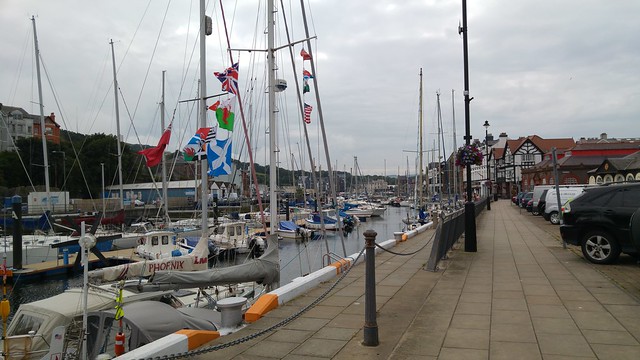
Douglas / Doolish

Words marked with a * are reconstructions.

Proto-Celtic *longā = boat, vessel
*longestā = fleet
Old Irish (Goídelc) long [l͈oŋɡ] = boat, ship
loinges = ships, fleet, expedition, exile
longfort = camp, encampment, stronghold
Middle Irish (Gaoidhealg) long, longa = boat, ship, vessel, long-ship, galley; vessel, container; house; bed
loinges = fleet, ships, shipping, naval expedition, invasion by sea, banishment, exile, band of sea-rovers, invaders
loingsech = exile, banished man, wanderer, sea-rover, pirate
loingseóir = seaman, pilot
longphort, lonngport = camp, encampment, temporary stronghold, mansion, princely dwelling; stronghold, fortress
Irish (Gaeilge) long [l̪ˠɔŋ] = ship, vessel, container, house
longbhá = shipwreck
longbhac = embargo (on ships), naval blockade
longbhoth = (navel) dock
longbhriste = shipwrecked
longcheárta, longchlós = shipyard
longfort = camp, stronghold, fortified residence
longlann = dockyard
longmhar = abounding in ships
longtheach = boat-house
longthógáil = shipbuilding
loingeas [ˈl̪ˠɪɲ(ɟ)əsˠ] = ships, shipping, fleet, naval expedition, (band of) sea-rovers, banishment, exile
loingseach = mariner, seaman, sea-rover, pirate, exile, wanderer; abounding in ships
loingseoir = mariner, seaman, navigator
loingseoireacht = seamanship, (skill in) navigation, (act of) seafaring, voyaging
Scottish Gaelic (Gàidhlig) long [l̪ˠɔuŋg] = ship
longas = shipping, shipment
longart = seaport
long-adhair = airship
long-bhriste = shipwreck
long-chasgadh = embargo
long-fhada = galley (ship)
long-fhànais = spaceship
long-lann = dockyard
long-phort = seaport
long-thogail = shipbuilding
loingeas [l̪ˠɔiŋʲgʲəs] = shipping, fleet, ships
Manx (Gaelg) lhong [loŋ] = ship, vessel
lhong aer = airship
lhong-chaardee = boatyard, shipyard
lhong chrowal = hovercraft
lhong liauyr = longship
lhong-phurt = basin, seaport
lhong spoar = spaceship
lhong spooillee = pirate ship
lhuingys = fleet, shipping
lhuingyssagh = naval, navigable
lhuingysser = navigator
lhuingysseyraght = navigation
Proto-Brythonic *llong = ship, vessel
*llunges = fleet (?)
Middle Welsh (Kymraec) loggou, log, llogeu, llong = ship, boat
llongi = to embark, ship
llongeidiev, llongaid = shipload, shipful, shipment, cargo
llog porth, llogborth, llong-borth = seaport, haven, harbour
long-dorr = shipwreck
longhawl, llonghavl. llongawl = nautical, maritime, naval
llongỼyr, llongwr = seaman, sailor, mariner
llyghes, llynghes, llynges = navy, squadron, convoy, fleet
llynghesan = flotilla, small fleet or navy
llyghessawc, llyghessavc, llyngesawg = naval, seafarer, leader of a fleet, admiral
llyghesswr = seaman, sailor, seafarer
Welsh (Cymraeg) llong [ɬɔŋ] = ship, boat; the Great Bear (Ursa Major)
llongaf, llongi = to embark, ship
llongaid = shipload, shipful, shipment, cargo
llongborth = seaport, harbour, dock, quay
llongdor = shipwreck
llongol = nautical, maritime, naval
llongwr = seaman, sailor, mariner
llong awyr = airship, aeroplane
llong y diffeithwch, llong dir = ship of the desert, camel
llong ofod = spaceship, spacecraft
llong hofran = hovercraft
llong danfor(ol) = submarine
llynges = navy, squadron, convoy, fleet
llyngesu = to sail
llyngesan = flotilla, small fleet or navy
llyngesol = naval
llyng(h)esog = naval, seafarer, leader of a fleet, admiral
llyng(h)eswr = seaman, sailor, seafarer
Old Breton locou = ship, boat

Etymology: possibly from the Latin (navis) longa ([long] boat), or from an unknown source [Source].

Proto-Celtic *nāwā- = boat
Old Irish (Goídelc) nau, nó = boat
Middle Irish (Gaoidhealg) nó, noe = boat (generally a small one, propelled by oars)
Irish (Gaeilge) nae [n̪ˠeː] = boat
Middle Welsh (Kymraec) noe = large vase, bowl
Welsh (Cymraeg) noe = (wooden) vessel used in making butter, kneading dough, etc. shallow dish, bowl, pan, basin, laver, wooden trough
noeaid = dishful
Cornish (Kernewek) new = sink, trough, washbasin
new doos = trough
new-droghya = sheep dip
Middle Breton (Brezonec) néau, néff, neo, nev = trough, bucket
néay-doas, neo-doaz, nev-doaz = kneading-trough
Breton (Brezhoneg) nev = trough, bucket

Etymology: from Proto-Indo-European *néh₂us (boat), from *(s)neh₂- (to swim) [Source]. Words from the same roots include navy, navigate, and nautical in English [Source].

Old Irish (Goídelic) bát = boat
Middle Irish (Gaoidhealg) bát, bád = boat
Irish (Gaeilge) bád [bˠɑːd̪ˠ/bˠaːd̪ˠ] = boat
bádóireacht = (act of) boating
bád iascaigh = fishing boat
bád seoil = sailing boat
bád tarrthála = lifeboat
Scottish Gaelic (Gàidhlig) bàta [baːhdə] = boat, craft
bàtaireachd = boating
bàta-aigeil = submarine
bàta-asieig = ferry boat
bàta-falbhain = hovercraft
bàta-iasgaich = fishing boat
bàta-sàbhalaidh = lifeboat
bàta-siùil = sailing boat
Manx (Gaelg) baatey [ˈbɛːðə] = boat, even keel
baateyrys = boating
baatey assaig = ferry boat
baatey bieauid = speedboat
baatey eeastee = fishing boat
baatey etlagh = seaplane
baatey sauaillagh = lifeboat
baatey
Middle Welsh (Kymraec) bat, bad = boat
badwr = boatman, waterman, ferryman
Welsh (Cymraeg) bad = boat, barge, (small) ship
badaid = boatful
badlong = ketch, pinnace
badwr = boatman, waterman, ferryman
bad acbub = lifeboat
bad pysgota = fishing boat

Etymology: from Old English bāt (boat) or from Old Norse bátr (boat), both of which come from Proto-Germanic *baitaz (boat, ship), from Proto-Indo-European *bʰeyd- (to break, split) [Source].

The English word boat comes from the same roots, as do words for boat in many other languages [Source].

Middle Irish (Gaoidhealg) scaf, scaffu, scafa = ship
Irish (Gaeilge) scafa [sˠkɑfˠə] = ship
Scottish Gaelic (Gàidhlig) sgoth [sgɔh] = skiff
sgothag = little skiff, small yacht, cutter
sgiof [sgʲif] = skiff (boat)
sgib [sgʲib] = small ship (archaic)
Manx (Gaelg) skiff = skiff
Middle Welsh (Kymraec) esgraff, yscraff, ysgraff = boat, barge, ferry
Welsh (Cymraeg) ysgraff, sgraff = boat, barge, skiff, ferry, ship, raft
ysgraffbont = pontoon
ysgraffwr, ysgraffydd = ferryman, boatman, bargee
Middle Cornish (Cernewec) scath = boat
scath hîr = long boat
Cornish (Kernewek) skath = boat
skathik = dinghy
skath hir = barge
skath kloos = raft
skath tan = motor-boat
skath sawya = lifeboat
skath-wolya = sailing boat
Middle Breton (Brezonec) scaph, scaff, sqaff, skaf = skiff
skavat, skafad = contents of a skiff
Breton (Brezhoneg) skaf = skiff, landing net

Etymology: possibly from Latin scapha (a light boat, skiff), from Ancient Greek σκάφη (skáphē – light boat, skiff), from σκᾰ́πτω (skáptō – to dig, delve); or from Old Norse skúta (small craft, cutter) [Source].

Proto-Celtic *lestrom = vessel, pot
Old Irish (Goídelic) lestar = vessel, container, beehive
Middle Irish (Gaoidhealg) lestar = vessel, container, beehive, ship, boat
lestarach = frequented by ships
Irish (Gaeilge) leastar [ˈl̠ʲasˠt̪ˠəɾˠ] = vessel, container (for liquids), cask, firkin, (wash) tub, punt (boat), tub; squat, dumpy person
Scottish Gaelic (Gàidhlig) leastar = small boat, cup, vessel, furniture of a house
Proto-Brythonic *llestr = vessel, container
Old Welsh lestir = vessel, container
Middle Welsh (Kymraec) llestri, llestyr = vessel, container
llestreit, llestraid, llestred = vesselful, caskful, tubful, bushel
llestryn, llestrun = small vessel, small barrel, boat
Welsh (Cymraeg) llestr [ɬɛstr/ˈɬɛstɛr] = vessel, bushel, ship, boat, beehive, womb, uterus
llestraid = vesselful, caskful, tubful, bushel
llestrwr = maker of vessels, potter
llestryn = small vessel, small barrel, boat, human body
Old Cornish lester = vessel, container
Middle Cornish (Cernewec) lester = vessel, ship
golowlester = a light-vessel, a lamp
Cornish (Kernewek) lester = dish, ship, utensil vessel
lester eth = steam boat
lester-bargesi = hovercraft
lester=gwari = yacht
lester-sedhi = submarine
annedh lester = houseboat
lestrier = (kitchen) dresser
lestriva = dockyard
lestryn = container
Old Breton lestr = ship, vessel, container
Middle Breton (Brezonec) lestr = ship, vessel, container
lestr-dre-dan = steamship
lestr-kroazer, lestr-reder = cruiser
Breton (Brezhoneg) lestr [ˈlɛstʁ] = vessel, container, ship
lestr-spluj[lɛs.ˈplyːʃ] = submarine
aerlestr [ˈɛʁlestʁ] = aircraft
lestrañ [ˈlɛstrã] = to board, load (a vehicle)
dilestrañ [diˈlɛsːtrã] = to disemark

Etymology: possibly from Proto-Indo-European *pleḱ- (to fold, weave). The Goidelic words were possibly borrowed from Proto-Brythonic [Source].

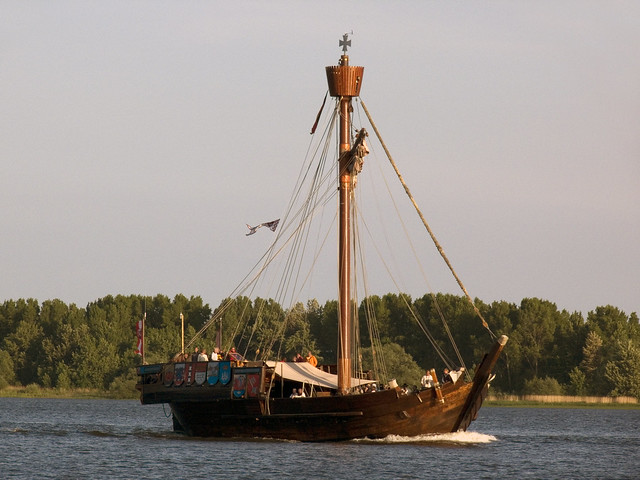
Kogge

Middle Welsh (Kymraec) cwch, cŵch = boat, beehive
Welsh (Cymraeg) cwch [kʊχ] = boat, beehive
Middle Cornish (Cernewec) coc = boat
Cornish (Kernewek) kok = fishing boat
Middle Breton (Brezonec) couc’h = cover of a beehive, hull (of a boat)
Breton (Brezhoneg) kouc’h = cover of a beehive, hull (of a boat)
kouc’hañ = to cover (a beehive)

Etymology: possibly cognate with the English word cog (a clinker-built, flat-bottomed, square-rigged mediaeval ship of burden, or war with a round, bulky hull and a single mast; a small fishing boat), which comes from Middle Dutch cogghe (clinker-built, flat-bottomed sailing cargo ship of the Middle Ages), from Proto-Germanic *kuggō, from PIE *gugā (hump, ball) [Source].

Sources: Wiktionary, Etymological Dictionary Of Proto Celtic, In Dúil Bélrai English – Old Irish glossary, eDIL – Electronic Dictionary of the Irish Language, Teanglann.ie, Am Faclair Beag, An etymological dictionary of the Gaelic language, Fockleyreen: Manx – English Dictionary, Online Manx Dictionary, Gaelg Corpus, Geiriadur Prifysgol Cymru, Lexicon cornu-britannicum : a dictionary of the ancient Celtic language of Cornwall, Gerlyver Kernewek, Devri : Le dictionaire diachronique du breton, Geriafurch, TermOfis


Near and Close

Words for near, close and and and related things in Celtic languages.
A group of meerkats

Words marked with a * are reconstructions.

Proto-Celtic *adgostus = near
Old Irish (Goídelc) ocus [ˈoɡus] = near, close, nearness, proximity, and
Middle Irish (Gaoidhealg) ocus, acus = and, near, nearness, proximity
com(ḟ)ocus, comacus = near, proximate, neighbouring; equidistant, proximity; relationship
focus = near, close
bean fagas, bean ḟogas = kinswoman
Irish (Gaeilge) agus (⁊) [ˈɑɡəsˠ/ˈaɡəsˠ] = and, while, although, as
agusóir = halting, inarticulate, speaker
aguisín = addition, addendum
fogas [ˈfˠʌɡəsˠ] = nearness, closeness, near, close
fogasghaol = near relationship, near relative
foisceacht = nearness, proximity
bráthair fogas = near kinsman
Scottish Gaelic (Gàidhlig) agus (⁊) [agəs] = and, plus, as, while, although
agusan = Tironian/Gaelic ampersand (⁊)
fagas [fagəs] = close, near
fagasg [fagəsg] = proximity, nearness
fagasachd [fagəsəxg] = adjacency, nearness, proximity
fagasach [fagəsəx] = adjacent
faisg [faʃgʲ] = close, near
faisgead [faʃgʲəd] = degree of nearness/proximity
Manx (Gaelg) as = and, as
faggys = almost, close, contiguous, handy, near, nearby, neighbouring
faggys-yalloo = closeup
faggysaght = adjacency, nearness
Middle Welsh (Kymraec) agos = near, close
agoseieit = close relations or friends
Welsh (Cymraeg) agos [ˈaɡɔs / ˈa(ː)ɡɔs] = near, close, almost, nearly, on the verge of, about to
agosâd = a drawing near, approach
agosaf, agosi = to draw near, approach
agosaol = approaching
agoseiaid = close relations or friends
agosiad = close relation or friend
agosrwydd = closeness, nearness, proximity
agoster = closeness, nearness, proximity
Old Cornish ogos = near, close
Middle Cornish (CerneweC) ogas, oges, ogos, agos = near, neighbouring
Cornish (Kernewek) ogas = adjoining, close, near, almost, nearly, vicinity
ogas ha = approximately
ogas lowr = approximate
yn ogas, en ogas = closely, nearby
ogasti, ogatti = almost, nearly
Old Breton ocos = near, close
Middle Breton (Brezonec) hogos, hegos, ogos, egos = almost, barely, close, near
hogoster, hogosder = proximity
hogozik, hogosicq, hogosic = almost, close, near
Breton (Brezhoneg) hogos = near, close, almost
hogosder = proximity

Etymology: from Proto-Celtic *ad- (to, at towards), from Proto-Indo-European *h₂éd (to, at), and PIE *ǵʰes- (hand, to take, give in exchange) [source]. Words from the same PIE roots include chiropractor, host, million, surgeon and words beginning with kilo- and milli- in English [source].

Proto-Celtic *nessais, *nezdais = nearer, closer
*nessamos = nearest, next
Gaulish neđđamon = nearest (?)
Old Irish (Goídelc) nessa [ˈn̠ʲe.sa] = nearer, closer
nessam = nearest
Middle Irish (Gaoidhealg) nes(s)a, nes(s)o, nes(s)u = nearer
nes(s)a, nes(s)am = nearest
Irish (Gaeilge) neas [nʲasˠ / n̠ʲasˠ] = approximate, near
neasa = nearer, nearest
neasach = proximal
neasacht = nearness, proximity
neasaigh = approximate
Scottish Gaelic (Gàidhlig) neasan† = next, or nearest place
Manx (Gaelg) niessey = nearer
s’niessey = closer, closest, nearer, nearest
sniessey = adjacent, nearer, next, proximate
niessid = contiguity, nearness, proximity, compactness
Proto-Brythonic *nes = nearer (?)
Old Welsh (Kembraec) nes = nearer
Middle Welsh (Kymraec) nes = nearer, until
nessaw, nessaf, nesaf = neatest, closest, next (to)
nessa, nesa, nessu = to draw near, come nearer, approach, bring near
nes(e)d, nesset = as near as, so near, how near
nesder = nearness, proximity
Welsh (Cymraeg) nes [neːs] = nearer, until, till
nesâd = an approach(ing), a coming
nesaf = nearest, closest, next (to)
nesaf, nesu, nesyd = to draw near, come nearer, approach, bring near
nesed = as near as, so near, how near
nester = nearness, proximity
Old Cornish nes = nearer, near
Middle Cornish (CerneweC) nes, nês = nearer, near, again
neshevin = neighbour
nessa = nearest, next, hithermost, second
nesse = to draw near, approach
Cornish (Kernewek) nes = close, nearer
yn-nes, en-nes = closer, nearer
nesa = to approach
nesadow = approachable
neshe = to approach, close, near
neshevin, neskar = next of kin, relative, cognate
nesogas = approximate
nessa = nearer, next, second, secondary
nester = proximity
Old Breton nes = close, next
nesham = next
Middle Breton (Brezonec) nes = close, next
nessaff = closest, next
nessat = to approach, get closer
Breton (Brezhoneg) nes [ˈneːs] = close, next, intimate
nesaat [ne.ˈsɑːt] = to approach, get closer
nesadur = approximation
nesaek = intimate
nesaet = approximate
nesañ [ˈnesː.ã] = closest, next, other
nesañded = alliance, proximity, genealogy

Etymology: uncertain [source].

Proto-Brythonic *atkʷe = and
Old Welsh ha, hac, hay, ac = and
Middle Welsh (Kymraec) ha, a, hac, hay, ac = and
Welsh (Cymraeg) a, ac [a(k), a(ɡ)] = and, considering, in view of
a(c) … a(c) = both … and, not only … but also
Old Cornish ha = and
Middle Cornish (CerneweC) ha(g), a = and
Cornish (Kernewek) ha(g) [ha(ɡ)] = and, plus, while
hag erel (h.e.) = etc.
hag oll = moreover
Old Breton a, ha, hac = and
Middle Breton (Brezonec) ha, hag, ham, haz = and
hag all, ha a, hag e-se = etc.
Breton (Brezhoneg) ha(g) = and
hag all (h.a.) = etc.

Etymology: from Proto-Indo-European *h₂ét-kʷe. The Latin word atque (and, yet, nevertheless, as, than) comes from the same root [source].

Language skills in just 10 minutes a day with Ling

Sources: Wiktionary, Etymological Dictionary Of Proto Celtic, In Dúil Bélrai English – Old Irish glossary, eDIL – Electronic Dictionary of the Irish Language, Teanglann.ie, Am Faclair Beag, An etymological dictionary of the Gaelic language, Fockleyreen: Manx – English Dictionary, Online Manx Dictionary, Gaelg Corpus, Geiriadur Prifysgol Cymru, Lexicon cornu-britannicum : a dictionary of the ancient Celtic language of Cornwall, Gerlyver Kernewek, Devri : Le dictionaire diachronique du breton, Geriafurch, TermOfis

Unlimited Web Hosting - Kualo

Beaks and Snouts

Words for beak, snout and related things in Celtic languages.

Waiting for chip's

Proto-Celtic *gobbos = muzzle, snout, beak
Gaulish *gobbos [ˈɡob.bos] = mouth
Old Irish (Goídelc) gop = beak, snout, muzzle
Middle Irish (Gaoidhealg) gop, guib, guip = muzzle, snout, beak, point/head of a spear, thin-mouthed, sharp-pointed
Irish (Gaeilge) gob [ɡɔbˠ/ɡɞbˠ/ɡʌbˠ] = beak, bill, tip, point, projection
gobach = beaked, long-billed, sharp (expression), pointed, lipped (jug)
gobachán = sharp-featured person, beak-nosed person, sharp-tongued person, inquisitive/interfering person, chatterer, gossip
gobadh = protrusion, shooting, springing, sprouting
gobaí = bird with a long beak, person with pointed features
gobaireacht = picking, pecking, chattering, chatter, gossip
gobán = (small) tip, point, gag, dummy
goblach = beakful, mouthful, morsel, lump, chunk
Scottish Gaelic (Gàidhlig) gob [gob] = beak, bill, gob, pointed/sharp end, corner, spit (of land), point (of a fishing hook)
gobachadh = pecking, rising (wind), poking through
gobad [gobag] = talkative female, little bill, cabin hook
goban = small mouth, small beak
gobaire = chatterbox, chattterer, tell-tale
gobach [gobəx] = beaked, snouty, cheeky, chatty
Manx (Gaelg) gob = apex, headland, hook, jet, jut, nose(piece), point, prominence, promontory, beak, nib, spout, mouth, muzzle, bow (of ship)
gobbagh = beaked, billed, nibbed, prominent, salient
gob-rollian = talkative person

Etymology: from the Proto-Indo-European *ǵebʰ- (jaw, mouth). Words from the same Proto-Celtic root include gober (to swallow hole) and gobelet (goblet, cup, beaker) in French, and gob (a slang word for mouth) and goblet in English, [source].

Proto-Celtic *bekkos = beak, snout
Gaulish *bekkos = beak, snout
Proto-Brythonic *bek = beak, snout
Middle Breton (Brezonec) becq, beeg, bêg, beg = mouth, beak, snout, point, cape, summit
Breton (Brezhoneg) beg = beak, mouth, point, mouthpiece, embouchure
beg-douar = point
beg-hir = dolphin

Etymology: possibly from the Proto-Indo-European *bak- (peg, club) [source].

Words from the same roots, via the Gaulish *bekkos and the Latin beccus (beak, bill), include bec (beak, bill, mouth) in French, beco (beak, mouthpiece, burner) in Italian, bico (beak, bill, snout, rostrum) in Portuguese, pico (beak, sharp point, pickaxe, peak, spout) in Portuguese, bek (beak, snout, mouth) in Dutch, and beak in English [source].

Proto-Celtic *gulbā, *gulbīnos = beak, bill
Gaulish *gulbiā = beak, bill
Old Irish (Goídelc) gulban, gulpan = bird’s beak
Middle Irish (Gaoidhealg) gulba = beak, mouth, jaw
gulban = beak, sting
gulbanda = beaked, piercing
gulbnech = beaked, sharp-beaked
gulbnén = small beak
gulbnide = biting
gulbniugad nibbing, biting
Irish (Gaeilge) gulba = beak, bill, tip, point, projection
guilbneach = (sharp-)beaked, curlew
guilbnéan = little beak
guilbnigh = to peck
Scottish Gaelic (Gàidhlig) gulb [gul̪ˠub] = beak, nose
gulban [gul̪ˠuban] = beak, nose
guilbneach [gulubnəx] = curlew
Proto-Brythonic *gulbino- = beak, snout
Old Welsh (Kembraec) gilb = sharp point, beak, bill, snout
Middle Welsh (Kymraec) gelef, gylyf = sharp point, beak, bill, snout
gilbin, gyluin, gylfin = bird’s beak, snout
gylfinir, gelvinir, gylfinhir = curlew
Welsh (Cymraeg) gylf, glyfyf = sharp point, sharp-pointed instrument, knife, bird’s beak, bird’s bill, snout, nose, grimace
gylfin = bird’s beak, bill, snout, sharp-pointed nose, mouth, lip
gylfinaid = beakful, mouthful
gylfinir = curlew
gylfinog = beaked, rostrated, wild daffodil, narcissus
Old Cornish geluin = beak, bill
Middle Cornish (Cernewec) gelvin = beak, bill
gelvinac, gylvinac = curlew
Cornish (Kernewek) gelvin = beak, bill
gelvinek = curlew
Breton (Brezhoneg) gwlib, glawlib = curlew, whimbrel (?)

Etymology: probably of non-Proto-Indo-European origin. Words from the same root, via Gaulish *gulbiā and the Latin gulbia (piercer, chisel), gulbia (gouge) in Galician, gubia (gouge) in Spanish, gorbia (ferrule) in Italian, and gouge in English and French [source].

Words marked with a * are reconstructions.

Sources: Wiktionary, Am Faclair Beag, Online Manx Dictionary, Teanglann.ie, eDIL – Electronic Dictionary of the Irish Language, In Dúil Bélrai English – Old Irish glossary, Geiriadur Prifysgol Cymru, Gerlyver Kernewek, Dictionaire Favereau, TermOfis, English – ProtoCeltic WordList (PDF), Etymological Dictionary Of Proto Celtic

Blubrry podcast hosting

Hundred

Words for a hundred and related things in Celtic languages:

hundred

Proto-Celtic *kantom = hundred
*kantometos = hundredth
Gaulish *canta = hundred
Old Irish (Goídelc) cét [kʲeːd] = hundred, a hundred people/warriors, troops, battalions
cétmad [ˈkʲeːdṽað] = hundredth
Middle Irish (Gaoidhealg) ced, céit, cét = hundred, a hundred people/warriors, troops, battalions
cétach, cetach = hundredfold, possossing a hundred
cétmad = hundredth
Irish (Gaeilge) céad [ciːa̯d̪ˠ/ceːd̪ˠ] = hundred, century, hundredweight, great, long
céadach = hundredfold, great, immense
céadú = hundredth
céadchosach = centipede
céad míle fáilte = a hundred thousand welcomes
Scottish Gaelic (Gàidhlig) ceud [kʲiəd] = hundred
ceudamh [kʲiadəv] (100ᵐʰ) = hundredth 100ᵗʰ)
ceudad [kʲiədəd] = percent, percentage
ceud mìle fàilte = a hundred thousand welcomes
ceudameatair = centimetre
ceudamhail [kʲiədəval] = percentile
ceud-chasach = centipede
ceudach [kʲiədəx] = hundredfold
Manx (Gaelg) keead [kiːəd] = hundred, century
keeadoo = hundredth
keead blein = centenary
keead filley = hundredfold
keead liauyr/mooar = long hundred
keead-choshagh = centipede
Proto-Brythonic *kant [kant] = hundred
Old Welsh cant = hundred
Middle Welsh (Kymraec) cant, can = hundred
canvet, canuet, kannvet, canved = hundredth
cantref, cantrew, cantreuyt = hundred, cantred, province, district
Welsh (Cymraeg) cant, can [kant/kan] = hundred, a host, hundredweight, percentage; century
canfed (100fed) = hundredth (100th), centesimal, century
canrif = century
cantref = hundred, cantred, province, district
cantro = a hundred times, many times, twisted many times
cantroed = centipede, a hundred feet
cantwll = a hundred holes, riddled with holes
hanner cant = fifty
cant a mil = a hundred and one, a large number
can diolch = many thanks
Middle Cornish (Cernewec) cans = hundred
canquyth, canswyth = a hundred times
Cornish (Kernewek) kans = hundred
kansves = hundredth
kansbledhen = century
kanskradh = centigrade
kanskweyth = a hundred times
kansplek = hundredfold
kansran = percent(age)
Old Breton cant = hundred
Middle Breton (Brezonec) cant, cantt, can, chant = hundred, 100 pounds (lb)
canuet, cantvet, cantved = hundredth
cantved = century
candad, cantad = around hundred
cant(-)doubl = centuple
cantenier, candener, candenyer = centurion
Breton (Brezhoneg) kant [kãn(t)] = hundred
kantvet [ˈkãn.vet] = hundredth
kantved [ˈkãn.vet] = century
kantad [ˈkãn.tat] = around hundred

Etymology: from Proto-Indo-European *ḱm̥tóm (hundred) [source].

Words from the same roots include hundred, century, centigrade, hecatontome (a very large number of books) and hecatologue (a code of 100 rules) in English, and words related to hundred in other Indo-European languages [source].

Sources: Wiktionary, Am Faclair Beag, Online Manx Dictionary, Teanglann.ie, eDIL – Electronic Dictionary of the Irish Language, In Dúil Bélrai English – Old Irish glossary, Geiriadur Prifysgol Cymru, Gerlyver Kernewek, Gerlyvyr Cernewec, Dictionaire Favereau, TermOfis, Le dictionnaire diachronique du breton, Geriafurch, English – ProtoCeltic WordList (PDF), Etymological Dictionary Of Proto Celtic

Twenty

Words for twenty and related things in Celtic languages:

twenty

Proto-Celtic *wikantī = twenty
Gaulish uoconti = twenty
Old Irish (Goídelc) fiche [ˈfʲixʲe] = twenty
fichetmad = twentieth
fichtige = twenty day/year period
Middle Irish (Gaoidhealg) fiche, fichet, fichit, fichtea = twenty, a score
fichetmad, fichatmath, fichetmudh = twentieth
fichetech = pertaining to twenty
fichtige = a period of twenty (days, years, etc)
Irish (Gaeilge) fiche [ˈfʲɪhə/ˈfʲɪçə/fʲiː] = twenty
(an) fichiú = twentieth
Scottish Gaelic (Gàidhlig) fichead [fiçəd] = twenty, a score
ficheadamh [fiçədəv] (20ᵐʰ) = twentieth (20ᵗʰ)
fichead-shliosnach = icosahedron (a polyhedron with 20 faces)
fichead-fillte = twentyfold
Manx (Gaelg) feed [fiːdʒ] = twenty, a score
feedoo, (yn) eedoo = (the) twentieth
feed cheead = two thousand (twenty hundred)
Proto-Brythonic *ʉgėnt = twenty
Cumbric giggy, jiggit = twenty
Old Welsh uceint = twenty
Middle Welsh (Kymraec) ugein, ugeint, vgein = twenty
vgeinvet, ugeinuet = twentieth
ugeinwyr, vgainwyr, vgain-wr, vgain-ŵr = twenty men
Welsh (Cymraeg) ugain [ˈɪɡai̯n/ˈiːɡai̯n] = twenty, score, twenty-pound note
ugeinfed [ɪˈɡei̯nvɛd] (20fed) = twentieth
ugeiniol = pertaining to twenty, denoting twenty
ugeinw(y)r = twenty men
Middle Cornish (Cernewec) ugans, hugens = twenty, a score
Cornish (Kernewek) ugens, ugans = twenty
ugensves = twentieth
Old Breton ucent = twenty
Middle Breton (Brezonec) vgent, uiguent, ugent = twenty
ugentved = twentieth
ugentvedenn = twentieth part
ugentad = around twenty
ugentvedenni, ugentvedenna = to divide by twenty
ugentveder = a commemoration of 20 years
ugentvederel = vigesimal (20-base numeral system)
Breton (Brezhoneg) ugent [ˈyːɡẽn(t)] = twenty
ugentvet = twentieth
ugentvedenn = twentieth part
ugentad = around twenty

Etymology: from Proto-Indo-European *dwi(h₁)dḱm̥ti (twenty) from *wídḱm̥ti (twenty) [source].

Words from the same roots include بیست‎ (bist – twenty) in Persian (Farsi), बीस (bīs – twenty) in Hindi and Nepali, বিশ (biś – twenty) in Bengali and વીસ (vīs – twenty) in Gujarati, and words for twenty in some other Indo-European languages languages [source].

Incidentally, the English words twenty, and words for twenty in other Germanic languages, are not cognate. Instead they come from the Proto-Germanic roots *twain- (two) ‎and *-tigaz (group of ten) [source].

Sources: Wiktionary, Am Faclair Beag, Online Manx Dictionary, Teanglann.ie, eDIL – Electronic Dictionary of the Irish Language, In Dúil Bélrai English – Old Irish glossary, Geiriadur Prifysgol Cymru, Gerlyver Kernewek, Gerlyvyr Cernewec, Dictionaire Favereau, TermOfis, Le dictionnaire diachronique du breton, Geriafurch, English – ProtoCeltic WordList (PDF), Etymological Dictionary Of Proto Celtic

Decades

Words for ten and related things in Celtic languages:

ten

Proto-Celtic *dekam = ten
*dekametos = tenth
Celtiberian tekametam = tenth
Gaulish decan = ten
decametos = tenth
Old Irish (Goídelc) deich [dʲexʲ] = ten
dechmad = tenth, ten days
deichenbor = ten people
Middle Irish (Gaoidhealg) deich, dech = ten
dechmad, deachmadh = tenth, ten days
deichenbor, dechnabar, dechnebur = ten people
deichenborach = belonging to a company of ten
deichthriub = The Ten Tribes of Israel
Irish (Gaeilge) deich [dʲɛç/dʲɛh/dʲɛ] = ten
(an) deichiú = tenth, tenth part
deichniúr = ten people
deichbhliantúil = decennial (consisting of or lasting 10 years; occuring every 10 years)
deachú = tenth part, tithe
deachúil = decimal
deachúlaigh = to decimalize
deachúlú = decimalization
Scottish Gaelic (Gàidhlig) deich [dʲeç] = ten
deicheamh [dʲeçəv] (10ᵐʰ) = tenth (10ᵗʰ)
deichnear [dʲeçnər] = ten (people)
deich ar fhichead = thirty
Na Deich Àitheantan = The Ten Commandments
deichead [dʲeçəd] = decade, decimal
deicheachadh = (act of) decimalising, decimalisation
deich-fillte = tenfold
Manx (Gaelg) jeih [d͡ʒɛi] = ten
(yn) jeihoo = (the) tenth
jeihaght = decade, ten
jeih keead = thousand
jeih filley = ten-fold
Jeih Annaghyn = Ten Commandments
Proto-Brythonic *deg [dɛːɡ] = ten
*degβ̃ed [dɛɡˈβ̃ɛːd] = tenth
Cumbric dig, dick, dik = ten
Old Welsh dec = ten
Middle Welsh (Kymraec) dec = ten
decuet, decvet, decfed = tenth
decuettyd = tenth day
dec a hugein(t) = thirty
dec a dugein(t) = fifty
dec a phedwar ugein(t) = ninety
degeir = the Ten Commandments, Decalogue
degniev = ten days
deguyr, degwyr = ten men
Welsh (Cymraeg) deg [deːɡ] = ten
degfed [ˈdɛɡvɛd/ˈdɛɡvad] (10fed) = tenth
degfetydd = tenth day
deg ar hugain = thirty
deg a thrigain = seventy
deg a phedwar ugain = ninety
dega(w)d = decade
degiad = decimal
degoes = ten ages or lifetimes, prolonged life
degol = decimal, metric, tenth part
degolaf, degoli = to decimalize; decimate, tithe
degoliad = decimalization, decmiation, a tithing
dengair = the Ten Commandments, Decalogue
dengnïau = ten days
dengnyn, dengw(y)r = ten men, ten persons
Middle Cornish (Cernewec) dec, dék, dég = ten
dege, degves = tenth
dek warn-ugens, dék war-nugens, degwarnygnas = thirty
deg ha dugans = fifty
Cornish (Kernewek) deg = ten
degves = tenth
deg warn ugens = thirty
deg ha dew ugens = fifty
deg ha tri ugens = seventy
deg ha peswar ugens = ninety
degowek, degoweges = teenage, teenager
degvledhen = decade
Old Breton dec = ten
Middle Breton (Brezonec) dec, dêc, deg, dégeu, dek = ten
decuet, dekved = tenth
dec ha triuguent, dec ha tri vguent = seventy
dec ha peuaruguent = ninety
dek kant, dec-cant, dek-kant = thousand
Breton (Brezhoneg) dek = ten
dekvet = tenth
dek ha tri-ugent = seventy
dek ha pevar-ugent = ninety
Dekalog = Decalogue, the Ten Commandments

Etymology: from Proto-Indo-European *déḱm̥ (ten) and *deḱm̥tós (tenth) [source].

English words from the same roots include ten, decade, decimal and decathlon [source].

Sources: Wiktionary, Am Faclair Beag, Online Manx Dictionary, Teanglann.ie, eDIL – Electronic Dictionary of the Irish Language, In Dúil Bélrai English – Old Irish glossary, Geiriadur Prifysgol Cymru, Gerlyver Kernewek, Gerlyvyr Cernewec, Dictionaire Favereau, TermOfis, Le dictionnaire diachronique du breton, Geriafurch, English – ProtoCeltic WordList (PDF), Etymological Dictionary Of Proto Celtic
Nine

Words for nine and related things in Celtic languages:

nine

Proto-Celtic *nowan = nine
*naumetos = ninth
Gaulish *nau = nine
nametos = ninth
Old Irish (Goídelc) noí [n͈oːi̯] = nine
nómad = ninth
nónbor = nine people
noínden = nine days
Middle Irish (Gaoidhealg) noí, noi = nine
nómad, nomad = ninth
nónbor = nine people
noínden = nine days
noíchtige = a period of 29 days
nócha, nocha, nochat = ninety
Irish (Gaeilge) naoi [n̪ˠiː/n̪ˠɰiː] = nine
(an) naoú = ninth
naonúr = nine people
naoi déag = nineteen
nócha = ninety
naoichodach = ninefold, having nine parts
Scottish Gaelic (Gàidhlig) naoi(dh) [n̪ˠɯj] = nine
naodh [n̪ˠɯːɣ] = nine
naoitheamh [n̪ˠɤjəv] (9ᵐʰ) = ninth (9ᵗʰ)
naoinear [n̪ˠɯːn̪ʲər] = nine (people)
naoi deug = nineteen
naochad [n̪ˠɯːxəd] = ninety
naoidh-fillte = nonuple, ninefold, nine-ply
Manx (Gaelg) nuy [nɛi/niː] = nine
(yn) nuyoo = (the) ninth
nuy jeig = nineteen
nuy-cheayrtyn, nuy-filley = ninefold
nuy-uillinagh = nonagonal, nonagon
Proto-Brythonic *naw [n͈oːi̯] = nine
*nọβ̃ed = ninth
Old Welsh naw = nine
Middle Welsh (Kymraec) nav, nau, naw = nine
navuet, nauuet, nawued, nawuet = ninth
naw deg, naw-deg = ninety
nawkan, naw cant, nawcant = nine hundred, many, numerous
naw ugein(t) = 180
nawbann, nowban = (having) nine syllables (in Welsh poetry)
nawwell, nawell = nine times better (than), much better
naun, nawn, naon = the ninth hour of the day
naw nyn, nawnyn = nine men
Welsh (Cymraeg) naw [naːu̯/nau̯] = nine
nawfed [ˈnau̯vɛd/ˈnau̯vad] (9fed) = ninth, one of nine, nones (in Roman calendar)
deunaw = eighteen (two nines)
naw deg = ninety
nawcant = nine hundred, many, numerous
nawban, naw ban = (having) nine syllables (in Welsh poetry)
nawell = nine times better (than), much better
nawn = the ninth hour of the day (approx. 3pm) midday, nooon, afternoon
nawnbryd = evening meal, dinner, supper
nawnyn, naw nyn = nine men
nawplyg = ninefold
Middle Cornish (Cernewec) naw = nine
nawnzac, nawntek, nownsec, nowndzhak = nineteen
naiv cans = nine hundred
Cornish (Kernewek) naw = nine
nawves = ninth
nownsek = nineteen
nowsegves = nineteenth
Old Breton nau = nine
Middle Breton (Brezonec) nau, nao, naou, naff, nauë, naü = nine
navet = ninth
nauntec, nantec, nandec = nineteen
naontecvet, nandecvèd, naontekved, naoñteget = nineteenth
nao ugent = 180
Breton (Brezhoneg) nav [ˈnaw] = nine
navet = ninth
naontek = nineteen

Etymology: from Proto-Indo-European *h₁néwn̥ (nine) and *h₁newn̥nós (ninth) [source].

English words from the same roots include nine, and words beginning with ennea-, such as enneagon (a 9-sided polygon) and enneastyle (having 9 columns) [source].

Sources: Wiktionary, Am Faclair Beag, Online Manx Dictionary, Teanglann.ie, eDIL – Electronic Dictionary of the Irish Language, In Dúil Bélrai English – Old Irish glossary, Geiriadur Prifysgol Cymru, Gerlyver Kernewek, Gerlyvyr Cernewec, Dictionaire Favereau, TermOfis, Le dictionnaire diachronique du breton, Geriafurch, English – ProtoCeltic WordList (PDF), Etymological Dictionary Of Proto Celtic
Eightsome

Words for eight and related things in Celtic languages:

eight

Proto-Celtic *oxtū = eight
*oxtūmetos = eighth
Old Irish (Goídelc) ocht [ˈoxt] = eight
ochtmad [ˈoxtṽað] = eighth
ochtar = a group of eight people
ochtmoga = eighty
Middle Irish (Gaoidhealg) ocht = eight
ochtmad = eighth
ochtur, ochtor, ochtar = eight people/things
ochta = a group of eight things, an octad
ochtmoga, ochtmogo, ochtmogat = eighty
Irish (Gaeilge) ocht [ɔxt̪ˠ/ʌxt̪ˠ]= eight
ochtar = eight (people)
ochtú = eighth, eighth part
ocht déag = eighteen
ochtó = eighty
ochtddach = having eight parts, eightfold
ochtábhó = octavo
ochtach, ochtáibh = octave
ochtagán = octagon
ochtapas = octopus
Scottish Gaelic (Gàidhlig) ochd [ɔxg] = eight
ochdamh [ɔxgəv] (8ᵐʰ) = eighth (8ᵗʰ)
ochdnar [ɔxgnər] = eight people
ochd-fillte = octuple, eightfold, eight-ply
ochd-shliosach = octagon, octahedron
ochd-chasach = octopus
Manx (Gaelg) hoght [hoːx(t)] = eight, octuple
hoghtoo = eighth
hoght jeig = eighteen
hoghtad = eighty
hoght filley, hoght keayrtyn = eightfold
oght-lhiatteeane, hoghtin = octagon
hoght lhiatteeagh = octagonal
hoght-choshagh = octopus
Gaulish oxtu = eight
oxtumetos = eighth
Proto-Brythonic *üiθ [yɨ̯θ] = eight
*üɨθβ̃ed = eighth
Cumbric owera, hovera, haoves = eight
Old Welsh oith = eight
Middle Welsh (Kymraec) uith, wyth, vyth, ỽyth, oeth [sei̯θ] = eight
wythuet, wythued, ỽythuet = eighth
wythnos, vythnos, ỽythnos = week
petheunos, pytheonos, pethawnos = fortnight (two weeks)
Welsh (Cymraeg) wyth [uːɨ̯θ/ʊi̯θ] = eight, octave,
wythfed (8fed) [ˈʊɨ̯θvɛd/ˈʊi̯θvɛd] = eighth, one of eight
wyth deg = eighty
wythdegai = eighties
wythawd = octet, octave
wythblyg = octavo, eightfold, having eight parts
wythnyn = eight persons, eight men
wythochr = octahedron, octagon, octagonal
wythnos [ˈʊɨ̯θnɔs] = week
penwythnos = weekend
pythefnos = fortnight (two weeks)
Middle Cornish (Cernewec) eath = eight
eathas = eighth
eitag, eythek = eighteen
Cornish (Kernewek) eth = eight
ethves = eighth. octave
etek = eighteen
etegves = eighteenth
Old Breton (Brethonoc) eith = eight
Middle Breton (Brezonec) eiz = eight
eizuet, aihuet, eizved = eighth
eiz-ugeñt, heiz-ugent = 160
eiz-cognecq = octagonal
eiz-cornecq = octagonal, octagon
eizuet, aihuet, eizvet, eizved, eihvet = eighth
éih dyad, ein-déad, eih-diat = about eight
eizdezyeg, eizdeziek = weekly
eizvedi = to divide into eight
Breton (Brezhoneg) eizh = eight
eizhved = eighth
eikont = eighty (usually pevar-ugent)
eizhkognek = octagonal

Etymology: from Proto-Indo-European *oḱtṓw (eight) [source]. Words from the same PIE root include eight, and words beginning with octa-/octo-, such as October, octane and octopus in English, and words related to eight in other Indo-European languages [source].

Sources: Wiktionary, Am Faclair Beag, Online Manx Dictionary, Teanglann.ie, eDIL – Electronic Dictionary of the Irish Language, In Dúil Bélrai English – Old Irish glossary, Geiriadur Prifysgol Cymru, Gerlyver Kernewek, Gerlyvyr Cernewec, Dictionaire Favereau, TermOfis, Le dictionnaire diachronique du breton, Geriafurch, English – ProtoCeltic WordList (PDF), Etymological Dictionary Of Proto Celtic
Merciful

Words for merciful and related things in Celtic languages.

Winter Sunshine

Proto-Celtic *trougokaros/*trowkkaro- = merciful
Old Irish (Goídelc) trócar = merciful
trócaire = mercy
Middle Irish (Gaedhealg) trócar, trócair, trocor = merciful, leniency
trócaire, trocaire = mercy, leniency, equity, piety
Irish (Gaeilge) trócaire [ˈt̪ˠɾˠoːkəɾʲə] = mercy, pity, compassion, clemency, leniency
trócaireach = merciful, clement, lenient, compassionate
Scottish Gaelic (Gàidhlig) tròcair [trɔːxgɪrʲ] = mercy, pity, pardon, quarter
tròcaireach [trɔːxgɪrʲəx] = merciful, compassionate
tròcaireachd [trɔːxgɪrʲəxg] = mercifulness, compassion
Manx (Gaelg) trocair = mercifulness, mercy, pity
trocairagh = clement, lenient, merciful
trocairaght = mercy
trocairys = affection, clemency, leniency, mercifulness, ruth
trocairaght = mercy
trochoil = lenient
trochoilys = leniency, mercifulness
Old Welsh trucarauc = merciful, compassionate, kind
Middle Welsh (Kymraec) trugar, trûgar = merciful, tender-hearted, compassionate
trugaret, trugared = mercy, compassion, pity
trigareddva = mercy-seat, throne (of God), mercy or reconcilliation
trugarha, trukarhaa = to have mercy (on), be kind (to) forgive
trugaraỽc, trugarock, trugaroc = merciful, compassionate, kind
Welsh (Cymraeg) trugar [ˈtrɨgar/ˈtrigar] = merciful, tender-hearted, compassionate
trugaredd = mercy, compassion, pity, tender-heartedness, kindness, humanity, good will; paraphernalia, bits and pieces, knick-knacks
trugareddfa = mercy-seat, throne (of God), mercy or reconcilliation
trugareddol, trugareddus = merciful, compassionate
trugarhaf, trugarhau = to have mercy (on), be kind (to) forgive
trugarog = merciful, compassionate, kind, tender-hearted, gentle, humane, forgiving
Middle Cornish (Cernewec) tregereth = compassion, pity, mercy, love
Cornish (Kernewek) tregeredh = compassion, mercy, sympathy
tregeredhus = sensitive, sympathetic
Old Breton trugar = pitiful, wretched, miserable
Middle Breton (Brezonec) trugar = pitiful, wretched, miserable
trugarez = pity, mercy, forgiveness, thanks, misery
Breton (Brezhoneg) trugarez = thank you, mercy, clemency, indulgence
trugarekaat = to thank, pity

Etymology: from Proto-Celtic *trougos/*trowgo- (sorry, sad, wretched) and *-karos (loving) [source].

Words marked with a * are reconstructions.

Sources: Wiktionary, Am Faclair Beag, Online Manx Dictionary, Teanglann.ie, eDIL – Electronic Dictionary of the Irish Language, In Dúil Bélrai English – Old Irish glossary, Geiriadur Prifysgol Cymru, Gerlyver Kernewek, Gerlyvyr Cernewec, Dictionaire Favereau, TermOfis, Le dictionnaire diachronique du breton, Geriafurch, English – ProtoCeltic WordList (PDF), Etymological Dictionary Of Proto Celtic

Hexagonal

Words for six and related things in Celtic languages:

Six

Proto-Celtic *swexs = six
*suexos = sixth
Old Irish (Goídelc) [sʲeː] = six
seisser = six people
séda = six things
seissed [ˈsʲesʲeð] = sixth
sesca [ˈsʲeska] = sixty
Middle Irish (Gaoidhealg) sé, se, sē = six
seisser, seissiur, seissir = six people
seissed, sesset, sesedh, seisedh = sixth, one of six
sé déc = sixteen
sesca, sescot, sescat = sixty
Irish (Gaeilge) [ʃeː/ʃɛ/ʃə]= six
(an) seú = sixth
seisear = six people
sé déag = sixteen
seasca = sixty
Scottish Gaelic (Gàidhlig) sia [ʃia] = six
(an) siathamh [ʃiə.əv] (6ᵐʰ) = sixth (6ᵗʰ)
sianar [ʃianər] = six people
sia deug = sixteen
seasgad [ʃesgəd] = sixty
sia-cheàrnach = hexagon
Manx (Gaelg) shey = six, sextet
sheyoo, (yn) çheyoo = sixth
shey jeig = sixteen
shey jeigoo = sixteenth
shey keayrtyn = sextuple, six times
shey pingyn = sixpence
Gaulish suex = six
suexos = sixth
Proto-Brythonic *hwex [ˈhwɛːx] = six
*hwexed [hwɛˈxɛːd] = sixth
Cumbric sethera, hither = six
Old Welsh chwech = six
Middle Welsh (Kymraec) chwech, whech, whe, hwech, chwe = six
hhuechet, cchuehet, chwechet, whechet = sixth
Welsh (Cymraeg) chwech [χweːχ/hweːχ] = six, sixpence
chweched (6ed) [ˈχwɛχɛd/ˈχwɛχad] = sixth
chwedeg = sixty
chwedegfed = sixieth
chwechant = six hundred
chwecheiniog = sixpenny bit, sixpence
Middle Cornish (Cernewec) huih, hweh, whéh = six
hweffas, wheffes = sixth
whehdeg = sixteen
whehdegvas = sixteenth
Cornish (Kernewek) hwegh = six
hweghves, hweffes = sixth
hwetek = sixteen
hwetegves = sixteenth
hweghmis = semester
Old Breton (Brethonoc) chouech = six
Middle Breton (Brezonec) huech, huec, c’huec’h, chouech, hueh = six
huechuet, huehuet, c’huec’hved = sixth
c’huezec, c’houezek = sixteen
c’houezekved = sixteenth
Breton (Brezhoneg) c’hwec’h [ˈxwɛx] = six
c’hwec’hvet = sixth
c’hwezek = sixteen
c’hwezekvet = sixteenth
c’hwec’h-ugent = 120 (6*20)
c’hwec’h-kement = sextuple
c’hwec’h-kogn = hexagon
c’hwec’h-miz = semester

Etymology: from Proto-Indo-European swéḱs (six). Words from the same PIE root include six, sextuple, and words beginning with hex-, such as hexagon in English, and words for six in other Indo-European languages [source].

Sources: Wiktionary, Am Faclair Beag, Online Manx Dictionary, Teanglann.ie, eDIL – Electronic Dictionary of the Irish Language, In Dúil Bélrai English – Old Irish glossary, Geiriadur Prifysgol Cymru, Gerlyver Kernewek, Gerlyvyr Cernewec, Dictionaire Favereau, TermOfis, Le dictionnaire diachronique du breton, Geriafurch, English – ProtoCeltic WordList (PDF), Etymological Dictionary Of Proto Celtic