Words for six and related things in Celtic languages:
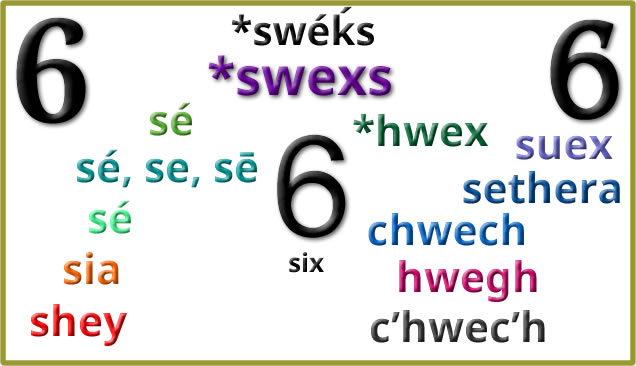
| Proto-Celtic | *swexs = six *suexos = sixth |
|---|---|
| Old Irish (Goídelc) | sé [sʲeː] = six seisser = six people séda = six things seissed [ˈsʲesʲeð] = sixth sesca [ˈsʲeska] = sixty |
| Middle Irish (Gaoidhealg) | sé, se, sē = six seisser, seissiur, seissir = six people seissed, sesset, sesedh, seisedh = sixth, one of six sé déc = sixteen sesca, sescot, sescat = sixty |
| Irish (Gaeilge) | sé [ʃeː/ʃɛ/ʃə]= six (an) seú = sixth seisear = six people sé déag = sixteen seasca = sixty |
| Scottish Gaelic (Gàidhlig) | sia [ʃia] = six (an) siathamh [ʃiə.əv] (6ᵐʰ) = sixth (6ᵗʰ) sianar [ʃianər] = six people sia deug = sixteen seasgad [ʃesgəd] = sixty sia-cheàrnach = hexagon |
| Manx (Gaelg) | shey = six, sextet sheyoo, (yn) çheyoo = sixth shey jeig = sixteen shey jeigoo = sixteenth shey keayrtyn = sextuple, six times shey pingyn = sixpence |
| Gaulish | suex = six suexos = sixth |
| Proto-Brythonic | *hwex [ˈhwɛːx] = six *hwexed [hwɛˈxɛːd] = sixth |
| Cumbric | sethera, hither = six |
| Old Welsh | chwech = six |
| Middle Welsh (Kymraec) | chwech, whech, whe, hwech, chwe = six hhuechet, cchuehet, chwechet, whechet = sixth |
| Welsh (Cymraeg) | chwech [χweːχ/hweːχ] = six, sixpence chweched (6ed) [ˈχwɛχɛd/ˈχwɛχad] = sixth chwedeg = sixty chwedegfed = sixieth chwechant = six hundred chwecheiniog = sixpenny bit, sixpence |
| Middle Cornish (Cernewec) | huih, hweh, whéh = six hweffas, wheffes = sixth whehdeg = sixteen whehdegvas = sixteenth |
| Cornish (Kernewek) | hwegh = six hweghves, hweffes = sixth hwetek = sixteen hwetegves = sixteenth hweghmis = semester |
| Old Breton (Brethonoc) | chouech = six |
| Middle Breton (Brezonec) | huech, huec, c’huec’h, chouech, hueh = six huechuet, huehuet, c’huec’hved = sixth c’huezec, c’houezek = sixteen c’houezekved = sixteenth |
| Breton (Brezhoneg) | c’hwec’h [ˈxwɛx] = six c’hwec’hvet = sixth c’hwezek = sixteen c’hwezekvet = sixteenth c’hwec’h-ugent = 120 (6*20) c’hwec’h-kement = sextuple c’hwec’h-kogn = hexagon c’hwec’h-miz = semester |
Etymology: from Proto-Indo-European swéḱs (six). Words from the same PIE root include six, sextuple, and words beginning with hex-, such as hexagon in English, and words for six in other Indo-European languages [source].
Sources: Wiktionary, Am Faclair Beag, Online Manx Dictionary, Teanglann.ie, eDIL – Electronic Dictionary of the Irish Language, In Dúil Bélrai English – Old Irish glossary, Geiriadur Prifysgol Cymru, Gerlyver Kernewek, Gerlyvyr Cernewec, Dictionaire Favereau, TermOfis, Le dictionnaire diachronique du breton, Geriafurch, English – ProtoCeltic WordList (PDF), Etymological Dictionary Of Proto Celtic