Celtic Pathways – Beer

In this episode we are investigating words for beer and related things.
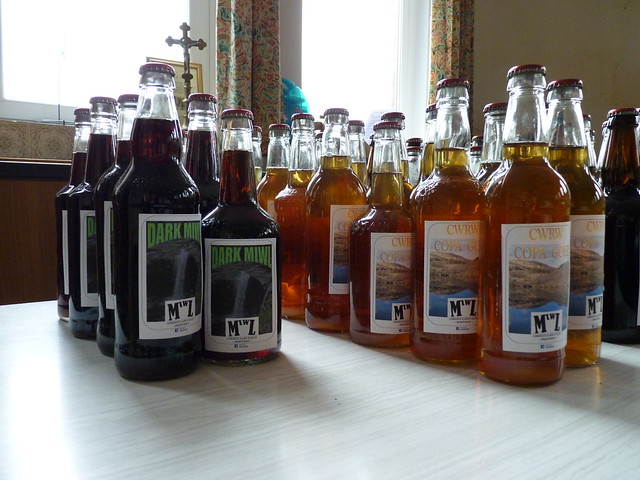
P1020436

In Proto-Celtic beer was *kormi or *kurman, which comes from the Proto-Indo-European *kremH- (to burn), or from *ḱr̥h₃-m- (porridge, soup), or from *ḱh₁erh₂- (to mix) [source].

Descendants in the Celtic languages include:

  • coirm [kɞɾʲəmʲ] = ale, drinking-party, feast, banquet in Irish
  • cuirm [kurʲum] = feast, banquet, entertainment; ale, beer (archaic) in Scottish Gaulish
  • cuirrey = banquet, feast in Manx
  • cwrw [ˈkʊru / ˈkuːru] = beer, ale in Welsh
  • korev, kor = ale, beer in Cornish
  • korev = ale, beer in Breton

The Latin word cervēsa (beer) comes from the same Proto-Celtic roots. From this we get the Spanish word cerveza (beer), the Portuguese word cerveja (beer), the French word cervoise (ale, beer – archaic), and the Italian word cervogia (beer – archaic) [source].

Other words for beer in Celtic languages include:

  • beoir [bʲoːɾʲ] = beer in Irish
  • beòir [bjɔːrʲ] = beer in Scottish Gaulish
  • beer = beer in Manx
  • bir = beer, ale in Welsh
  • bier = ale, beer in Breton

The words in the Goidelic languages come from the Old Norse bjórr (beer), from the Proto-Germanic *beuzą [ˈbeu̯.zɑ̃] (beer), from the Proto-Indo-Eurpean *bʰews- (dross, sediment) [source]. The Welsh word were borrowed from English, and the Breton word was borrowed from French.

Sláinte! Slàinte! Slaynt! Iechyd da! Yeghes da! Yec’hed mat! (Good health! / Cheers!)

More details about these words on Celtiadur, a blog where I explore connections between Celtic languages in more depth. I also write about words, etymology and other language-related topics on the Omniglot Blog.

You can also listen to this podcast on: Apple Podcasts, Amazon Music, Stitcher, TuneIn, Podchaser, PlayerFM or podtail.

If you would like to support this podcast, you can make a donation via PayPal or Patreon, or contribute to Omniglot in other ways.

The Fastest Way to Learn Japanese Guaranteed with JapanesePod101.com

Adventures in Etymology – Campus

Sabhal Mòr Ostaig

Today we are exploring origins of the word campus.

A campus [ˈkæmpəs / ˈkæmpʊs] is:

  • The grounds or property of a school, college, university, business, church, or hospital, often understood to include buildings and other structures.

It comes from the Latin campus (field. plain), from the Proto-Italic *kampos, from the Proto-Indo-European *kh₂ém-po-s, from *kh₂emp- (to bend, curve, smooth) [source].

Words from the same roots include camp, campaign and champagne in English, campo (field) in Italian, campo (country(side), field) in Portuguese, and champ (field) in French [source].

The southern Italian region of Campania, the name of which comes from the Latin campus, was the source of bronze used to make bells, which were known as campāna in Latin Latin. This comes from Campāna (of Campania) [source].

Words from the same Latin roots include: campanile (bell tower, belfry) and campanology (the study of bells) in English, campana (bell) in Italian, campana (bell, bell-shaped object, hood) in Spanish, and cumpănă (balance, scales, equilibirum) in Romanian [source].

Here’s a video I made of this information:

Video made with Doodly [afflilate link].

I also write about words, etymology and other language-related topics on the Omniglot Blog, and I explore etymological connections between Celtic languages on the Celtiadur.

You can also listen to this podcast on: Apple Podcasts, Amazon Music, Stitcher, TuneIn, Podchaser, PlayerFM or podtail.

If you would like to support this podcast, you can make a donation via PayPal or Patreon, or contribute to Omniglot in other ways.

The Fastest Way to Learn Japanese Guaranteed with JapanesePod101.com

Celtic Pathways – Wagons and Carts

In this episode we’re looking at words for wagons, carts and related vehicles.

Chariot

One Proto-Celtic word for wagon was *karros, which comes from the Proto-Indo-European *ḱr̥sós (vehicle), from *ḱers- (to run) [source].

Descendants in the Celtic languages include:

  • *karros = wagon in Gaulish
  • carr [kɑːɾˠ / kæːɾˠ] = car in Irish
  • càr [kar] = car, cart, raft in Scottish Gaulish
  • carr = car, cab, van in Manx
  • car [kar] = vehicle, car, sled, dray; rack, stand in Welsh
  • karr [karː / kær] = car in Cornish
  • karr = car, coach, carriage, trailer, vehicle in Breton

The Gaulish word *karros was borrowed into Latin as carrus (wagon, cart, cartload), which became carro (wagon, cart, van, lorry, truck) in Italian; carro (cart, car, bus) in Spanish; car (bus, coach) in French, car, carriage and chariot in English, and related words in most other Indo-European languages [source].

Words from the same PIE roots include currus (chariot, car, wagon) in Latin, horse in English, hors (mare, female foal, frivolous woman) in Norwegian (Nynorsk), and hross (horse) in Icelandic [source].

The Proto-Celtic word *karbantos means (war) chariot or wagon and is possibly related to the Proto-Celtic word *korbos (wagon, basket). [source].

Descendants in the Celtic languages include:

  • carbad [ˈkaɾˠəbˠəd̪ˠ] = chariot in Irish
  • carbad [karabad] = chariot, coach, carriage, wagon, vehicle, bier, jaw(bone) in Scottish Gaulish
  • carbyd = bus, coach, vehicle, bier, hearse in Manx
  • cerbyd [ˈkɛrbɨ̞d / ˈkɛrbɪd] = car, carriage, chariot, wagon, coach; clumsy fellow, bungler in Welsh
  • cerpit = chariot, wagon in Old Cornish
  • karbed = vehicle in Breton

The French word charpente (framework, structure) comes from the same Proto-Celtic root, via the Gaulish carbantos and the Latin carpentum (carriage, chariot, wagon, cart) [source].

More details about these words on Celtiadur, a blog where I explore connections between Celtic languages in more depth. I also write about words, etymology and other language-related topics on the Omniglot Blog.

You can also listen to this podcast on: Apple Podcasts, Amazon Music, Stitcher, TuneIn, Podchaser, PlayerFM or podtail.

If you would like to support this podcast, you can make a donation via PayPal or Patreon, or contribute to Omniglot in other ways.

The Fastest Way to Learn Japanese Guaranteed with JapanesePod101.com

Celtic Pathways – Horses

In this episode we’re looking at words for horses and related beasts.

Horse in a field / Capall i bpáirc

One Proto-Celtic word for horse was *kaballos, which possibly comes from an Asiatic source, and may ultimately come from the Proto-Indo-European *kebʰ- (worn-out horse, nag) [source].

Descendants in the Celtic languages include:

  • *caballos = horse in Gaulish
  • capall [ˈkapˠəl̪ˠ] = horse, mare in Irish
  • capall [kahbəl̪ˠ] = mare, colt, horse, small horse in Scottish Gaulish
  • cabbyl = horse in Manx
  • ceffyl [ˈkɛfɨ̞l / ˈkɛfɪl] = horse, nag in Welsh
  • cevil, kevil = horse in Middle Cornish, and kevelek (woodcock) in Revived Cornish
  • cefel = horse in Old Breton, and kefeleg (woodcock) in modern Breton

The Gaulish word *caballos was borrowed into Latin as caballus. In Classical Latin it was only used in poetry, while equus was the usual word for horse. In Vulgar Latin and Late Latin caballus was more commonly used, and mean a horse, nag, pack-horse, jade or hack.

Words for horse in various other languages come from the same Latin root, including cavallo in Italian, caballo in Spanish, cavalo in Portuguese and cheval in French [source]. The English words cavalry, chivalry and cavalier also come from the same Latin roots [source].

Another Proto-Celtic word for horse was *ekʷos, which comes from the Proto-Indo-European *h₁éḱwos (stallion, horse) [source].

Descendants in the Celtic languages include:

  • epos = horse in Gaulish
  • each [ax] = horse (archaic) Irish
  • each [ɛx] = horse in Scottish Gaulish
  • eagh = steed, riding horse in Manx
  • ebol [ˈɛbɔl / ˈeːbɔl] = colt, foal, sucker in Welsh
  • ebel = horse in Cornish
  • ebeul [ˈe.bøl] = foal in Breton

The English words equine, equestrian come from the same PIE root, via Latin [source], as do words beginning with hippo-, such as hippopotamus, hippodrome and hippomancy (divination by the interpretation of the appearance and behaviour of horses) the via Ancient Greek [source].

Another Proto-Celtic word for horse was *markos, which possibly comes from the Proto-Indo-European *márkos (horse) [source].

Descendants in the Celtic languages include:

  • marc [mˠaɾˠk] = horse (literary, archaic) Irish
  • marc [marxk] = charger, warhorse (literary) in Scottish Gaulish
  • mark = horse in Manx
  • march [marχ] = horse, stallion, war-horse, steed in Welsh
  • margh [ˈmaɾx] = horse in Cornish
  • marc’h [ˈmaʁχ] = horse, easel in Breton

The English words mare and marshal possibly come from the same roots [source].

More details about these words on Celtiadur, a blog where I explore connections between Celtic languages in more depth. I also write about words, etymology and other language-related topics on the Omniglot Blog.

You can also listen to this podcast on: Apple Podcasts, Amazon Music, Stitcher, TuneIn, Podchaser, PlayerFM or podtail.

If you would like to support this podcast, you can make a donation via PayPal or Patreon, or contribute to Omniglot in other ways.
The Fastest Way to Learn Japanese Guaranteed with JapanesePod101.com

Celtic Pathways – Bards and Poets

In this episode we’re looking at words for bards, poets and related people.

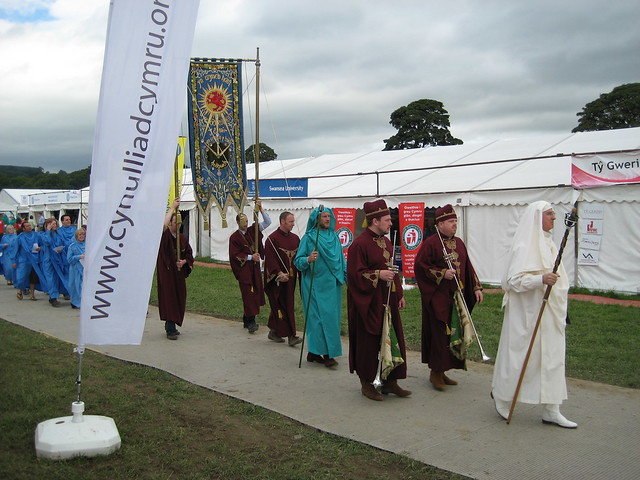
Eisteddfod Maes 2009

In Proto-Celtic one word for bard was *bardos, which comes from the Proto-Indo-European *gʷr̥dʰh₁-ó-s from *gʷerH- (to express approval, praise, elevate) [source].

Descendants in the modern Celtic languages include:

  • bard [bˠɑːɾˠd̪ˠ / bˠæːɾˠd̪ˠ] = poet, bard, scold in Irish
  • bàrd [baːr̪ˠd] = poet, versifier, bard, rhymer in Scottish Gaelic
  • bard = poet, bard in Manx
  • bardd [barð] = poet, bard, literary person, author, prophet, philosopher, priest in Welsh
  • bardh [barð] = bard, poet in Cornish
  • barzh = bard, poet in Breton

The English word bard was borrowed from Scottish Gaelic in the 15th century. The Proto-Celtic word *bardos was borrowed into Latin as bardus (bard), which became barde in French and bardo in Italian, Spanish and Portuguese [source]

The Proto-Celtic word *weless means seer or poet. It comes from the Proto-Celtic *weleti (to see) from the PIE *wel (to see) [source].

Descendants in modern Celtic languages include:

  • file [ˈfʲɪlʲə] = poet, song-maker, lyricist, satirist, scold in Irish
  • filidh [filɪ] = minstrel, poet (traditionally a member of one of the seven ranks of poets, all of which are above the bàrd) in Scottish Gaelic
  • feelee = poet in Manx

Words for to see in Welsh (gweld), Cornish (gweles) and Breton (gwelet) come from the Proto-Celtic *weleti, as to parts of the verb to be in Irish (bhfuil), Scottish Gaelic (bheil) and Manx (vel) – apparently they came from the imperative form of the verb and the meaning shifted from “see!” to “there is” to “is” [source].

The Swedish word leta (to search, look for) comes from the same PIE root, as does the word lait (to seek, search for, inquire), which is or was found in some UK dialects of English [source].

More details about these words on Celtiadur, a blog where I explore connections between Celtic languages in more depth.

I also write about words, etymology and other language-related topics on the Omniglot Blog.

You can also listen to this podcast on: Apple Podcasts, Amazon Music, Stitcher, TuneIn, Podchaser, PlayerFM or podtail.

If you would like to support this podcast, you can make a donation via PayPal or Patreon, or contribute to Omniglot in other ways.

The Fastest Way to Learn Japanese Guaranteed with JapanesePod101.com

Adventures in Etymology – Secret

Today we’re exploring the origins of the word secret.

Secret

A secret [ˈsiːkɹɪt / ˈsiːkɹət] is:

  • A piece of knowledge that is hidden and intended to be kept hidden.
  • The key or principle by which something is made clear; the knack.
  • Something not understood or known.

It comes from the Middle English secrette (secret), from the Old French secret (secret), from the Latin sēcrētus (put apart, separated, severed), from sēcernō (to separate, set aside), from sē- (aside, by itself) and cernō (to see, discern), from the PIE *krey (to sift, separate, divide) [source].

English words from the same PIE root include: certain, concern, crime, crisis, critic, discreet and hypocrisy [source].

Words in other languages from the same PIE root include: crynu [ˈkrənɨ/ˈkrəni] (to tremble, shiver, shudder) in Welsh, κρίνω [ˈkɾi.no] (to judge, assess, decide) in Greek, cernere [ˈt͡ʃɛr.ne.re] to separate, distinguish, choose) in Italian, and kraj [kraj] (country, land, border) in Polish [source].

In Old English a secret was a dēagol [ˈdæ͜ɑː.ɣol], which also meant hidden, obscure or (poetically) dark, which became diȝel in Middle English. It comes from the Proto-West Germanic *daugul (hidden, secret) [source].

Here’s a video I made of this information:

Video made with Doodly [afflilate link].

I also write about words, etymology and other language-related topics on the Omniglot Blog, and I explore etymological connections between Celtic languages on the Celtiadur.

You can also listen to this podcast on: Apple Podcasts, Amazon Music, Stitcher, TuneIn, Podchaser, PlayerFM or podtail.

If you would like to support this podcast, you can make a donation via PayPal or Patreon, or contribute to Omniglot in other ways.

The Fastest Way to Learn Japanese Guaranteed with JapanesePod101.com

Adventures in Etymology – Nepotism

Today we’re looking into the origins of the word nepotism.

Nepotism

Nepotism [ˈnɛp.ə.tɪ.zəm] is:

  • The favoring of relatives or personal friends because of their relationship rather than because of their abilities.
  • Patronage bestowed or favoritism shown on the basis of family relationship, as in business and politics.

It comes from the French népotisme [ne.pɔ.tism] (nepotism), from the Italian nepotismo [ne.poˈti.zmo] (nepotism) from nepote/nipote (grandchild, nephew, niece), from the Latin nepōs (grandchild, nephew, niece, descendent), from the Proto-Italic *nepōts (grandson, nephew), from PIE *népōts (grandson, descendent) [source].

Apparently during the Middle Ages and Renaissance, popes liked to appoint relatives (especially nephews – a euphemism for their natural sons) as cardinals, and this practice became known as nepotism [source].

The word nephew comes from the same PIE root, via the Middle English nevew/neveu (nephew, grandson), the Old French neveu (nephew), and the Latin nepōs (grandson, granddaughter, nephew, niece, descendent) [source].

It displaced or absorbed the Middle English word neve [ˈnɛːv(ə)] (nephew), which came from the Old English nefa [ˈne.fɑ] (nephew, grandson, stepson), from the Proto-Germanic *nefô [ˈne.ɸɔːː] (nephew, grandson), from the PIE *népōts [source].

Incidentally, the word knave (a tricky, deceitful fellow) sounds similar but comes from a different root: from the Middle English knave/knafe [ˈknaːv(ə)] (son, boy, lad, servant, peasant), from the Old English cnafa [ˈknɑ.fɑ] (boy, lad, young man), from the Proto-Germanic *knabō/*knappō (boy), which is of unknown origin [source].

Here’s a video I made of this information:

Video made with Doodly [afflilate link].

I also write about words, etymology and other language-related topics on the Omniglot Blog, and I explore etymological connections between Celtic languages on the Celtiadur.

You can also listen to this podcast on: Apple Podcasts, Amazon Music, Stitcher, TuneIn, Podchaser, PlayerFM or podtail.

If you would like to support this podcast, you can make a donation via PayPal or Patreon, or contribute to Omniglot in other ways.

The Fastest Way to Learn Korean with KoreanClass101

Adventures of Etymology – Pique

Today we’re exploring the origins of the word pique.

aiiiiiiiiie ça-pique

Pique [piːk / pik] means:

  • to affect with sharp irritation and resentment, especially by some wound to pride
  • to wound (the pride, vanity, etc.)
  • to excite (interest, curiosity, etc.)
  • a feeling of irritation or resentment

It comes from the French piquer (to prick, sting, annoy, get angry, provoke), from the Old French piquer (to pierce with the tip of a sword), from the Vulgar Latin *pīccāre (to sting, strike, puncture), which is either onomatopoeic, or from the Frankish *pikkōn (to peck, strike), from the Proto-Germanic *pikkōną (to knock, peck, pick, prick) [source].

English words from the same Proto-Germanic root include pick and pitch. The pie in magpie possibly comes from the same root, via the Old French pie (magpie), and the Latin pīca (magpie) [source].

The Latin word pīca is the root of such words as the Spanish pica (pike, lance, pick, spade ♠), and picar (to itch, sting, chop, bite), and the Italian pica (magpie) [source].

Incidentally, the name of the Pokemon character Pikachu has nothing to do with stings or magpies. Instead it comes from the Japanese onomatopoeic word ピカピカ (pikapika – glittery, sparkly), and チューチュー (chūchū – squeak, cheep, peep, slurp, mouse) [source].

Here’s a video I made of this information:

Video made with Doodly [afflilate link].

I also write about words, etymology and other language-related topics on the Omniglot Blog, and I explore etymological connections between Celtic languages on the Celtiadur.

You can also listen to this podcast on: Apple Podcasts, Amazon Music, Stitcher, TuneIn, Podchaser, PlayerFM or podtail.

If you would like to support this podcast, you can make a donation via PayPal or Patreon, or contribute to Omniglot in other ways.

The Fastest Way to Learn Japanese Guaranteed with JapanesePod101.com

Adventures in Etymology – Timber

In this week’s Adventures in Etymology we’re exploring the origins of the word timber.

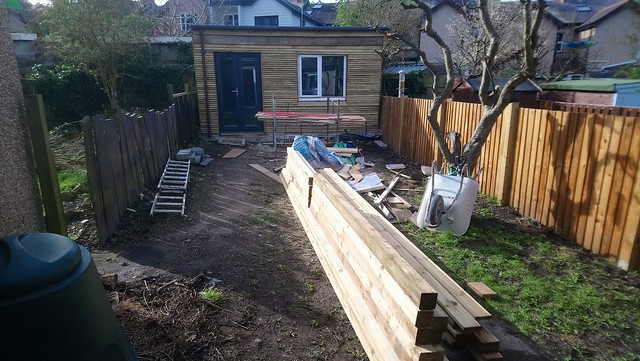
Studio / Stwdio

Timber [ˈtɪmbə/ˈtɪmbɚ] means:

  • Trees in a forest regarded as a source of wood.
  • Wood that has been pre-cut and is ready for use in construction.
  • A heavy wooden beam, generally a whole log that has been squared off and used to provide heavy support for something such as a roof.

It comes from the Middle English tymber/timber (timber), from the Old English timber [ˈtim.ber] (timber, a building, the act of building), from the Proto-Germanic *timrą [ˈtim.rɑ̃] (building, timber), from the PIE *dem- (to build) [source].

Words from the same Proto-Germanic root include timmeren (to build, put together) in Dutch, Zimmer [ˈt͡sɪmɐ] (room) in German, timmer (timber) in Swedish, and timbur (wood, timber) in Icelandic [source].

Words from the same PIE root include domus (house, home) in Latin, duomo [ˈdwɔ.mo] (cathedral) in Italian, дом [dom] (house, building, home) in Russian and most other Slavic languages, and dome, domestic and despot in English [source].

Here’s a video I made of this information:

Video made with Doodly [afflilate link].

I also write about words, etymology, and other language-related topics, on the Omniglot Blog, and I explore etymological connections between Celtic languages on the Celtiadur.

You can also listen to this podcast on: Apple Podcasts, Amazon Music, Stitcher, TuneIn, Podchaser, PlayerFM or podtail.

If you would like to support this podcast, you can make a donation via PayPal or Patreon, or contribute to Omniglot in other ways.
The Fastest Way to Learn Korean with KoreanClass101

Adventures in Etymology – New Year

As today is New Year’s Day, I decided to look at the origins of the words new and year. Happy New Year, by the way.

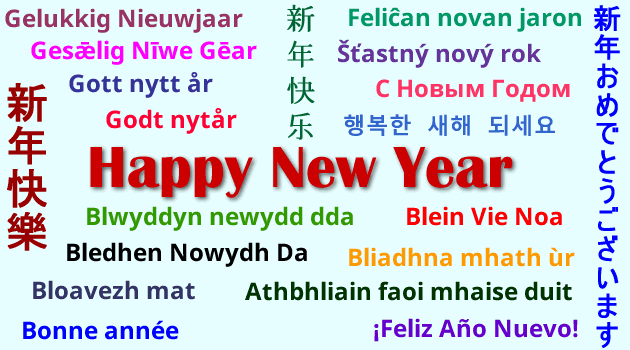
Happy New Year in various languages

New [njuː/nu] means:

  • recently made, or created
  • additional; recently discovered

It comes from the Middle English newe [ˈniu̯(ə)] (new), from the Old English nīewe [ˈni͜yː.we] (new), from Proto-Germanic *niwjaz [ˈniu̯.jɑz] (new), from Proto-Indo-European *néwyos (new), from *néwos (new). [source].

Other English words from the same root include innovate, novice and novel [source].

Year [jɪə/jɪɹ] means:

  • the time it takes any astronomical object to complete one revolution of its star

It comes from the Middle English yeer/yere (year), from the Old English ġēar [jæ͜ɑːr] (year), from the Proto-Germanic *jērą [ˈjɛː.rɑ̃] (year), from the Proto-Indo-European *yóh₁r̥ (year) [source].

Words from the same root, via the Latin hōra (hour, time, o’clock, season), include: hora (hour, time, period) in Spanish, ora (hour, time) in Italian, heure (hour, time, o’clock) in French, and hour in English [source].

Here’s a video I made of this information:

Video made with Doodly – an easy-to-use animated video creator [affiliate link].

I also write about words, etymology, and other language-related topics, on the Omniglot Blog, and I explore etymological connections between Celtic languages on the Celtiadur.

You can also listen to this podcast on: Apple Podcasts, Amazon Music, Stitcher, TuneIn, Podchaser, PlayerFM or podtail.

If you would like to support this podcast, you can make a donation via PayPal or Patreon, or contribute to Omniglot in other ways.
Blubrry podcast hosting
