Woman / Wife

Words for woman / wife in Celtic languages.

Proto-Celtic *benā = woman
Gaulish benā = woman, wife
Old Irish (Goídelc) ben [bʲen] = woman
Irish (Gaeilge) bean [bʲanˠ] = woman, wife
Scottish Gaelic (Gàidhlig) bean [bɛn] = woman, wife
Manx (Gaelg) ben = woman, lady, wife
Proto-Brythonic *ben = woman
Old Welsh ben = woman
Welsh (Cymraeg) benyw = female, girl, woman, feminine
menyw = woman, female, feminine
Old Cornish benen = woman
Cornish (Kernewek) benyn [‘bɛnɪn / ‘bɛnən] = woman
Old Breton ban = woman
Breton (Brezhoneg) e-ben = woman

Etymology
From the Proto-Indo-European *gʷḗn (woman) [source], which is also the root of the English words queen and gynecology, words for woman in some other Germanic languages, such as kvinna in Swedish, and words for woman / wife in Slavic languages, such as žena in Czech.

Words marked with a * are reconstructions.

Sources: Wiktionary, Am Faclair Beag, teanglann.ie, On-Line Manx Dictionary, Geiriadur Prifysgol Cymru, Gerlyver Kernewek, Dictionnaire Favereau

Proto-Celtic *wrakkā = woman
Old Irish (Goídelc) frac = woman
Proto-Brythonic *gwrėg [ˈɡwre̝ːɡ] = woman, (human) female, wife
Middle Welsh (Kymraec) gureic, gwreic = wife, woman
Welsh (Cymraeg) gwraig [ɡuˈrai̯ɡ] = wife, woman, (human) female
Old Cornish greg, grueg = wife
Middle Cornish gurek = wife
Cornish (Kernewek) gwreg [gwrɛ:g / gwre:g] = wife
Middle Breton gruec = wife
Breton (Brezhoneg) gwreg [ˈɡwʁɛːk] = wife

Words marked with a * are reconstructions.

Sources: Wiktionary, Proto-Celtic English Word List, Geiriadur Prifysgol Cymru, Gerlyver Kernewek, Dictionnaire Favereau

Man / Husband

Words for man / husband in Celtic languages.

Proto-Celtic *wiros = man, husband
Celtiberian *uiros = man, husband
Gaulish *wiros = man, husband
Primitive Irish *ᚃᚔᚏᚐᚄ (*viras) [u̯irah] = man
Old Irish (Goídelc) fer [fʲer] = man, husband
Irish (Gaeilge) fear [fʲaɾˠ] = man, husband
Scottish Gaelic (Gàidhlig) fear [fɛr] = man, husband, male
Manx (Gaelg) fer [fɛr] = male, man, gentleman, individual, fellow, bloke, chap
Proto-Brythonic *gwur [ˈˠwur] = man, husband
Old Welsh gur = man, husband
Middle Welsh (Kymraec) gur = man, husband
Welsh (Cymraeg) gŵr [ɡuːr] = man, person, anyone, valiant warrior, brave man, hero; vassal; married man, husband; chessman, pawn
Old Cornish uir = husband
Cornish (Kernewek) gour [ɡu:r] = husband
Middle Breton gur = man, husband
Breton (Brezhoneg) gour [ˈɡuːʁ] = man, person, husband (rare)

Selfie / Hunlun

Etymology
From the Proto-Indo-European *wiHrós (man, husband, warrior, hero) [source], which is also the root of the English words virile and werewolf.

Words marked with a * are reconstructions.

Sources: Wiktionary, Am Faclair Beag, teanglann.ie, On-Line Manx Dictionary, Geiriadur Prifysgol Cymru, Gerlyver Kernewek, Dictionnaire Favereau

Troop, host, throng

Today we’re looking at troop, host, throng and related word in Celtic languages.

The crowd grows ...

Proto-Celtic *slougos = troop, army
Gaulish *slugi = troop, army
Old Irish (Goídelc) slóg, slúag = army, host; throng, crowd, company, assembly
Middle Irish (Gaoidhealg) slúagh = army, host; throng, crowd, company, assembly
Irish (Gaeilge) slua [sˠl̪ˠuə] = host, force, army; crowd, multitude, throng
sluaghán = slogan
sluamhar = having large forces, multitudinous
slógadh = mobilization, hosting
Scottish Gaelic (Gàidhlig) sluagh [sl̪ˠuəɣ] = folk, people, populace; the fairy host; crowd
sluaghmhor = populous, densely, inhabited
sluagh-ghairm = slogan
an sluagh cumanta = the common folk
sluagh na sìthe = the fairies (poetic)
sluagh Innse Fàil = the people of Ireland (poetic)
Manx (Gaelg) sleih = commonalty, crowd, family, inhabitants, people, populace, public, relations
sleih gerrym = slogan
Proto-Brythonic *lʉɣ [ˈlʉːɣ] = troop
Middle Welsh (Kymraec) llu, llv = host, throng, multitude
Welsh (Cymraeg) llu [ɬɨː / ɬiː] = host, a large number (of people), a great many, multitude, throng, crowd, flock (of birds); army, body of armed men, regiment
lluaf, lluo = to throng, crowd, flock together, gather, bring together
lluarth = military camp
lluarthaf, lluarthu = to pitch camp, encamp, camp
heddlu = police
Old Cornish lu = army
Middle Cornish (Cernewec) lu = a great multitude, host, army
Cornish (Kernewek) lu [ly: / liˑʊ] = army, military, troop
morlu, lu lestri = navy
Old Breton lu = army
Middle Breton (Brezonec) lu = army
morlu = navy
Breton (Brezhoneg) lu = army
aerlu = airforce
morlu = navy

Etymology: from the Proto-Indo-European *slowgʰos / *slowgos (entourage), which is also the root of the English word slew [source].

The English word slogan comes from the Scottish Gaelic sluagh-ghairm [ˈsɫ̪uəɣɤɾʲəm] (battle cry) from the Old Irish slóg/slúag (army, host, throng, crowd), and gairm (call, cry, crow, proclamation) [source].

Sources: Wiktionary, Am Faclair Beag, Online Manx Dictionary, Teanglann.ie, eDIL – Electronic Dictionary of the Irish Language, In Dúil Bélrai English – Old Irish glossary, Geiriadur Prifysgol Cymru, Gerlyver Kernewek, Dictionaire Favereau, TermOfis, English – ProtoCeltic WordList (PDF), Etymological Dictionary Of Proto Celtic

The Fastest Way to Learn Japanese Guaranteed with JapanesePod101.com

Person, people, human

Words for person, people and related words in Celtic languages.

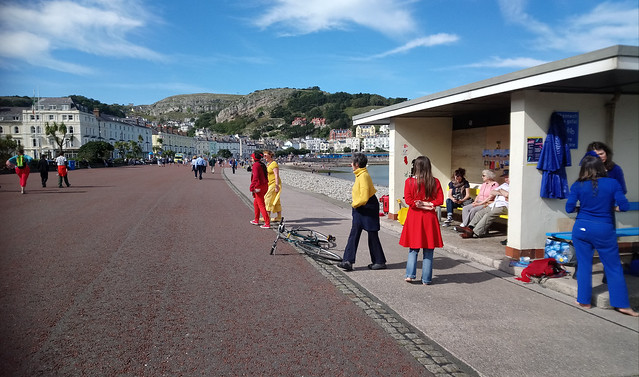
Colourful people in Llandudno

Proto-Celtic *gdonyos = person
Old Irish (Goídelc) duine [ˈdunʲe] = person
duineta = human
dóenacht [ˈdoːi̯naxt] = humanity
Middle Irish (Gaoidhealg) duine = human, human being, man, mankind, person
Irish (Gaeilge) duine [ˈd̪ˠɪnʲə] = human being, man, mankind, person, people, one
duineata = human, kindly
duineatacht = humaneness, kindliness
duiniúil = human, natural, kindly
duiniúlacht = humanity, kindliness
Scottish Gaelic (Gàidhlig) duine [dɯn̪ʲə] = fellow, person, man, husband, (any)one
daonnachd [dɯːn̪ˠəxg] = humanity, charity, benevolence, liberality, hospitality
duine-uasal = gentleman
Manx (Gaelg) dooinney [ˈd̪uːnʲə] = human, man, fellow, husband
deiney = human, man, menfolk
dooinnalys = humanity, human nature
dooinnidaght = humaneness
Proto-Brythonic *dün [ˈdyːn] = human, person
Middle Welsh (Kymraec) din, dyn = man, human being
Welsh (Cymraeg) dyn [dɨːn / diːn] = man, human being; person, one, anyone; mankind, the human race; manservant, vassal; manly or competent person
dynes [ˈdənɛs] = woman
dynegwr, dynegydd = anthropologist
dynfarch [ˈdənvarχ] = centaur
dyneidd(i)o = to render man-like or human, personify, humanize, civilize, tame, refine
dyneiddiol = humanistic, humanitarian, humanizing, civilizing
Old Cornish den = man, person
Cornish (Kernewek) den [dɛ:n / de:n] = man, guy, human, person
dengerenjedhek, dengerensedhek = humanitarian
denladh = homicide, manslaughter
denladhyas = assassin, killer, murderer
denses = humanity
Old Breton den / don = man, person
Middle Breton den = man, person
Breton (Brezhoneg) den [ˈdẽːn] = human being, person, man, husband

Etymology: from the Proto-Indo-European *dʰéǵʰom-yo- (earthling, human), from *dʰéǵʰōm (earth), which is also the root of the English words human, humus and (bride)groom [source].

Old Irish (Goídelc) popul [ˈpobul] = people; tribe, nation, inhabitants; folk; populace, crowd
Middle Irish (Gaoidhealg) popul = people
Irish (Gaeilge) pobal [ˈpˠɔbˠəlˠ / ˈpˠʌbˠəlˠ] = people, community; parish, congregation; population
pobalscoil = community school
poblacht = republic
poblachtach = republican
teach pobail = church, chapel
teange an phobail = vernacular
Scottish Gaelic (Gàidhlig) poball [pobəl̪ˠ] = folk, people; community; laity, lay people
poballach [pobəl̪ˠəx] = popular, populous
poblachd [pɔbl̪ˠəxg] = republic
Manx (Gaelg) pobble = people, population, community, folk, congregation, masses
pobbylagh = public, populous
pobblaght = republic
Proto-Brythonic *pobl = people
Middle Welsh (Kymraec) pobyl = people
Welsh (Cymraeg) pobl [ˈpʰɔbl̩ˠ / ˈpʰɔbl̩] = people, public, nation, tribe, crowd, inhabitants
pybl = people, the common person, folk
poblog = populous, peopled, populated; popular, acceptable; common
poblogaeth = population, populousness
poblogedig = populated, inhabited
poblogeiddio = to popularize
poblogi = to populate, people, inhabit; to popularize
Old Cornish popel = people
Cornish (Kernewek) pobel = people
pobla = to populate
poblans = population
poblansorieth = demographics
poblansoriethek = demographic
Breton (Brezhoneg) pobl = people, multitude

Etymology: from the Latin populus (people, nation, community), from the Proto-Italic *poplos (army) [source].

Words marked with a * are reconstructions.

Sources: Wiktionary, Am Faclair Beag, Online Manx Dictionary, Teanglann.ie, eDIL – Electronic Dictionary of the Irish Language, In Dúil Bélrai English – Old Irish glossary, Geiriadur Prifysgol Cymru, Gerlyver Kernewek, Gerlyvyr Cernewec, Dictionaire Favereau, TermOfis, Le dictionnaire diachronique du breton, Geriafurch, English – ProtoCeltic WordList (PDF), Etymological Dictionary Of Proto Celtic

The Fastest Way to Learn Japanese Guaranteed with JapanesePod101.com

To Carry / Flow

Words for to carry, to flow and related things in Celtic languages.

Carrying a Catch

Words marked with a * are reconstructions.

Proto-Celtic *bereti = to carry
*ɸarebereti = to use
Old Irish (Gaídelc) beirid [ˈbʲerʲiðʲ] = to carry, bear, bring forth, judge
ar·beir [arˈbʲerʲ] = to live, use, employ, eat, reproach, subdue, express
Middle Irish (Gaoidhealg) beirid, berid = to carry, infer, bear, bring forth, be born, yield, produce, judge, pass judgement
ar-beir, airbir = to live, eat, use, employ, plead, subdue, express
Irish (Gaeilge) beir [bʲɛɾʲ] = to bear, give birth to; lay (eggs); bear away, win; bring, take; catch, overtake; proceed, advance
Scottish Gaelic (Gàidhlig) beir [berʲ] = to take hold; bring forth, bear, produce; carry
beirachd [berʲəxg] = bearing (children), giving birth, birthing, bringing forth, birth, nativity, taking hold, holding, catching up with
Manx (Gaelg) behr = to bear (give birth to)
ruggyr = birth, nativity
laa ruggyr, laa ruggyree = birthday
Proto-Brythonic *bėrɨd [be̝ˈrɨːd] = to flow, carry
*ėrβėrɨd [be̝ˈrɨːd] = to make use of, employ, take
Middle Welsh (Kymraec) beru = to flow
Welsh (Cymraeg) beru = to flow, drip; drizzle
arfer [ˈarvɛr] = to use, be used to, be accustomed to; custom, practice, procedure, habit
Middle Cornish (Cernewec) berthy = to bear, carry, sustain, entertain, take
perthy = to bear, carry, sustain, entertain, take
porthy = to bear (with), carry, endure, sustain, suffer
Cornish (Kernewek) perthi = to bear, endure, put up with, stand, suffer, tolerate
perthyans = endurance, patience, tolerance
Middle Breton beraff = to flow
Breton (Brezhoneg) berañ [ˈbeːrã] = to drip, flow

Etymology: from the Proto-Indo-European *bʰéreti (to be carrying), from *bʰer- (to bear, carry) [source]. Words from the same roots include: barn, barrow, (to) bear, birth, broad and (to) thole (to endure) in English, bie (to bring, deliver) Albanian, բերել (berel – to bring, fetch) Armenian, and berti (to throw, strew, scatter, shed) Lithuanian [source].

The Fastest Way to Learn Japanese Guaranteed with JapanesePod101.com

Sources: Wiktionary, Etymological Dictionary Of Proto Celtic, In Dúil Bélrai English – Old Irish glossary, eDIL – Electronic Dictionary of the Irish Language, Teanglann.ie, Am Faclair Beag, An etymological dictionary of the Gaelic language, Fockleyreen: Manx – English Dictionary, Online Manx Dictionary, Gaelg Corpus, Geiriadur Prifysgol Cymru, Lexicon cornu-britannicum : a dictionary of the ancient Celtic language of Cornwall, Gerlyver Kernewek, Devri : Le dictionaire diachronique du breton, Dictionnaires bilingues de Francis Favereau / Edition Skol Vreizh, TermOfis

Unlimited Web Hosting - Kualo

To Praise

Words for to praise in Celtic languages.

Proto-Celtic molātor = to praise, laud
Old Irish (Goídelc) molaidir = to praise
Irish (Gaeilge) mol = to praise, commend, recommend, award (verb noun = moladh)
Scottish Gaelic (Gàidhlig) mol [mɔl̪ˠ] = to praise, extol, recommend, advise, exalt, magnify (verb noun = moladh)
Manx (Gaelg) moyl = to cheer (praise), bamboozle, recommend, compliment, commend, applaud, laud (verb noun = moylley)
Old Welsh molim = to praise
Middle Welsh (Kymraec) moli = to praise
Welsh (Cymraeg) moli = to praise, laud, eulogize, extol, magnify, honour, cheer
Middle Breton meuliff = to praise
Breton (Brezhoneg) meuliñ = to praise, flatter, stroke

Praise

Etymology: possibly related to the Proto-Indo-European *meldʰ- (praise) [source].

Sources: Wiktionary, Am Faclair Beag, teanglann.ie, On-Line Manx Dictionary, Geiriadur Prifysgol Cymru, Dictionnaire Favereau

To Choke

Words for to choke and related things in Celtic languages.

*choke*

Words marked with a * are reconstructions.

Proto-Celtic *taketi/*tageti = to choke, strangle
Old Irish (Goídelc) tachtad = choking, strangulation
Middle Irish (Gaoidhealg) tachtad, teachtadh = choking, strangulation
tachtaid = to choke, stifle, strangle, hang, oppress, vex, seize, arrest
Irish (Gaeilge) tacht [t̪ˠɑxt̪ˠ] = to choke, strangle,suffocate
tachtadh = choking, stangulation
tachtaire = choker, strangler
tachtarnach = (act of) choking, choking sound
Scottish Gaelic (Gàidhlig) tachd [taxg] = choke, smother, strangle, throttle, clog
tachdach = choking, strangulation
tachdadair [taxgədɪrʲ] = choker, throttler, strangler, choke, throttle
Manx (Gaelg) toght = to strangulate
toaghtey = to choke, strangle, throttle, clog; choking, strangulation, clogging
toaghteyr = choke
Middle Welsh (Kymraec) tag = choke, choking, suffocation, strangulation
tagedic, tagedig choked, strangled
tagell = jowl, wattle
tacua, tagfa = choking, throttling
tagu, tagy = to choke, stifle, strangle, throttle, suffocate
Welsh (Cymraeg) tag = choke, choking, suffocation, strangulation
tagedig choked, strangled
tagell = jowl, wattle, double chin, throat, windpipe, barb, snare
tagfa = choking, throttling, bottleneck
tagiad = choking, strangulation, obstruction
tagu = to choke, stifle, strangle, throttle, suffocate; to cough (in North Wales)
tagwr, tagydd = choker, strangler, choke (in an engine)
Middle Cornish (Cernewec) tag, tâg = choking, strangling
taga = to stifle, strangle, choke, throttle
Cornish (Kernewek) tag = choking
taga = to choke, clog, strangle, suffocate
Middle Breton (Brezonec) tag = acrid, strangulation
tagaff = to attack, devour, suffocate, smother, strangle
Breton (Brezhoneg) tag [tɑːk] = acrid, strangulation
tagañ [ˈtɑː.ɡã] = to attack, devour, suffocate, smother, strangle
tagus [ˈtɑːɡys] = offensive, suffocation, acrid, acidic

Etymology: possibly from Proto-Indo-European *tak-, which is also the root of tacit (implied) in English, taire (to be/keep quiet, shut up) in French, and tiga (to keep silent, deliberately ignore) in Swedish [source].

Sources: Wiktionary, Am Faclair Beag, teanglann.ie, On-Line Manx Dictionary, Geiriadur Prifysgol Cymru, Gerlyver Kernewek, Dictionnaire Favereau
Fire Angels

Words for fire in Celtic languages.

Proto-Celtic *teɸnets = fire
Old Irish (Goídelc) teine [ˈtʲenʲe] = fire
Irish (Gaeilge) tine [ˈtʲɪnʲə] = fire, conflagration; incandescence, flame; luminosity, glow; flash; inflammation
Scottish Gaelic (Gàidhlig) teine [tʲenə] = fire, flame, conflagration
Manx (Gaelg) çhenney = elemental fire, lightning, rickets
Middle Welsh (Kymraec) tan [taːn] = fire
Welsh (Cymraeg) tân [taːn] = fire, conflagration, bonfire, flame, spark, light (for a cigarette), match; high temperature (from fever)
Cornish (Kernewek) tan [ta:n / tæ:n] = fire
Breton (Brezhoneg) tan [ˈtɑ̃ːn] = fire

Etymology: from the Proto-Indo-European *tep- (to be warm) [source].

Old Irish (Goídelc) aingel [ˈaŋʲɡʲel] = angel
Irish (Gaeilge) aingeal [ˈæɲɟəl] = angel; fire, lighted coal
Scottish Gaelic (Gàidhlig) aingeal [ˈãĩŋʲgʲəl̪ˠ] = angel, messenger, fire, light, sunshine; brightness, light; signal fire, beacon; warmth
Manx (Gaelg) aile [ail] = fire
ainle = angel
Welsh (Cymraeg) angel [ˈaŋɛl] = angel
Cornish (Kernewek) eledh = angel
Breton (Brezhoneg) ael = angel

Etymology: from the Late Latin angelus (angel, messenger), from the Ancient Greek ἄγγελος (ángelos – messenger) [source].

Sources: Wiktionary, Am Faclair Beag, teanglann.ie, On-Line Manx Dictionary, Geiriadur Prifysgol Cymru, Gerlyver Kernewek, Dictionnaire Favereau

Beltane

To Burn

Words for to burn and related things in Celtic languages.

Junior Jarl squad

Words marked with a * are reconstructions.

Proto-Celtic *lasketi = to burn
*laxsaros = shining, burning
*losk-os = ?
Old Irish (Goídelc) loscid = to burn
loiscnech = burning
loscud = burning, fire
fo·loisci = to scorch
Middle Irish (Gaoidhealg) loscid, laiscedh, losced = to burn, consume by fire, lay waste by fire, inflame, afflict, revile
Irish (Gaeilge) loisc = to burn, fire, scorch, sear, sting – (verb noun = loscadh)
loiscadh = burning, searing, scorching, stinging
loisceanta = flaming, fiery
loisceantacht = fieriness
loisceoir = incinerator
loiscneach = firing, firewood, caustic, burning, stinging, pain, scorched, arid, fiery, fierce
loiscní = fiery intensity, fieriness, aridity, burned, parched, condition
Scottish Gaelic (Gàidhlig) loisg [l̪ˠɔʃɡ̊ʲ] = to burn, inflame, consume, parch, singe; scorch, scald; fire (a gun) – (verb noun = losagadh)
loisgeach [l̪ˠɔʃgʲəx] = burning, fiery, flaming, incendiary, inflammatory, igneous, caustic, corroding
loisgeadair [l̪ˠɔʃgʲədɪrʲ] = burner, incinerator
loisgte [l̪ˠɔʃdʲə] = burnt, scorched, scalded, drunk
Manx (Gaelg) losht = to burn, burn up, burn away, incinerate, cremate, fire, alight – (verb noun = lostey)
loshtee, loshtit = igneous, burnt
loshteyr = arsonist, firebrand, incendiarist
loshteyder = arsonist, burner, incinerator
yn-loshtey = combustible
Middle Welsh (Kymraec) llosc = burning, scalding, burn
lloscadwy = combustible, burning, fiery, scorching
lloscy, llosci, llosgi = to be on fire, blaze, be alight
lloscetic, lloskedic, llosgedic, lloscedic = burnt, charred, burning, fiery
Welsh (Cymraeg) llosg = burning, scalding, burn, scald, fire, conflagration, blaze, arson, singeing, inflammation
llosgadwy = combustible, burning, fiery, scorching
llosgi [ˈɬɔskɪ / ˈɬɔski] = to be on fire, blaze, be alight, be burnt or be fired, burn up, burn down, burn away; be inflamed, smart, sting, be sunburnt; be inflamed with anger, passion, etc
llosg(i)edig = burnt, charred, burning, fiery
Middle Cornish (Cernewec) losc = a burning, inflammation, searing
lescy, loscy = to burn, to be burning
losow, lusow = ashes
Cornish (Kernewek) leski [lɛski] = to burn
losk = burning, combustion
loskadow = flammable
loskrias, loskriades = arsonist
loskrians = arson
loskven = sulphur
loskvenydh, loskvena = volcano
Old Breton lescsit = to burn
Middle Breton (Brezonec) lisquiff, lesquiff, losquan = to burn
losquadur [los.ˈkɑː.dyr] = burning
Breton (Brezhoneg) leskiñ, loskañ [ˈles.kɪ̃] = to burn, calcine, irriate
losk = burnt, burning
loskadur [los.ˈkɑː.dyr] = burning
loskus = burning

Etymology: from the Proto-Indo-European *lh₂p-sḱéti, from *leh₂p- (to light, shine), or from PIE *luk-s-ko-s, from *lewk- (bright, to shine, to see) [source]. Words from the same roots include lamp in English, λάμπω (lámpo – to shine) in Greek, and lāpa (torch) in Latvian.

The Fastest Way to Learn Japanese Guaranteed with JapanesePod101.com

Sources: Wiktionary, Etymological Dictionary Of Proto Celtic, In Dúil Bélrai English – Old Irish glossary, eDIL – Electronic Dictionary of the Irish Language, Teanglann.ie, Am Faclair Beag, An etymological dictionary of the Gaelic language, Fockleyreen: Manx – English Dictionary, Online Manx Dictionary, Gaelg Corpus, Geiriadur Prifysgol Cymru, Lexicon cornu-britannicum : a dictionary of the ancient Celtic language of Cornwall, Gerlyver Kernewek, Devri : Le dictionaire diachronique du breton, Dictionnaires bilingues de Francis Favereau / Edition Skol Vreizh, TermOfis

Unlimited Web Hosting - Kualo

To search

Words for to search, track and related things in Celtic languages.

Searching

Words marked with a * are reconstructions.

Proto-Celtic *lorgom, *lergo- = track, trace
Old Irish (Goídelc) lorg = path, track, trace
Middle Irish (Gaoidhealg) lorg = trace, vestige, mark, impression, track, trail, path, course
Irish (Gaeilge) lorg [ˈl̪ˠɔɾˠəɡ / ˈl̪ˠʌɾˠəɡ] = to track, trace; seek, search for; trace, vestige, mark, impresssion, track, trail, path, course
lorgaire = tracker, pursuer, detective, seeker, searcher, follower, adherent
lorgaireacht = (act of) tracking, tracing, pursuing, seeking, searching, detection
Scottish Gaelic (Gàidhlig) lorg [ˈl̪ˠɔrɔg] = to trace, track, search, pursue, follow by scent or footprints
air lorg = on the track of, in search of, found, located
lorgadh [l̪ˠɔrɔgɪç] = (act of) discovering, finding
lorgaich = track! trace! pry! ferret out!
lorgadh [l̪ˠɔrɔgɛrʲə] = detective, detector, finder, tracker
lorganach [l̪ˠɔrɔganəx] = sluggard, slowcoach, trail, track
meur-lorg = fingerprint
Manx (Gaelg) lorg = trace, track, trail, vestige, spoor
lorgey = to trace, to track, to pursue, pursuit, tracing, trailing, urging
lorgaghey = to drive (on/along), to urge on, urging
Proto-Brythonic *llurɣ, ˈɬuːru = track, trail (?)
Middle Welsh (Kymraec) llwrw, llwry = track, trail, path, way, direction
Welsh (Cymraeg) llwrw, llwry [ˈɬʊru / ˈɬuːru] = track, trail, path, way, direction, course, career, manner, mode, form, semblance; tax, fee, fine, penalty; opportunity, convenince
Middle Cornish (Cernewec) lerch, lyrch, ler = trace, vestige, footstep
war lerch = after
Cornish (Kernewek) lergh = track, trail, trace
a-lergh = lately, recently
war-lergh = according to, after, behind
Old Breton (Brethonoc) lerg = trace, sequel
Middle Breton (Brezonec) lerch = trace, sequel
Breton (Brezhoneg) lerc’h [ˈlɛrx] = trace, sequel, continued
lerc’h-ouzh-lerc’h = next, right away, successively
lerc’henn = postposition
dilercʼh = remainder, consequence, delay
war-lercʼh = after, behind, because of

Etymology: uncertain [source] or from Proto-Indo-European *lerg- (slippery, even) [source]

Proto-Celtic *swelos = to turn
Old Irish (Goídelc) sel = a turn, a while, a spell
dessel = sunwise, clockwise
túaithbel = anticlockwise, widdershins, lefthandwise
Middle Irish (Gaoidhealg) sel, seal = a turn, a time, a while
dessel, deisell, dessiul = direction of the sun, right-hand course, sunwise, clockwise
túaithbel, tuaithbil, tuaithbiul = against the sun, withershins, lefthandwise
Irish (Gaeilge) seal [ˈʃal̪ˠ] = turn, while, spell, span
sealad = turn, while, space of time
sealadach = temporary, provisional
sealaíocht = (act of) alternating, taking turns, alternation
deiseal [ˈdʲeʃəlˠ] = righthand direction, direction of the sun, clockwise, sunwise
tuathal [ˈt̪ˠuəhəl̪ˠ] = anticlockwise, counterclockwise
Scottish Gaelic (Gàidhlig) seal [ʃal̪ˠ] = while, space of time
sealach [ʃal̪ˠəx] = temporary, transient, transitory
sealad [ʃal̪ˠəd] = while, period of time
sealadach [ʃal̪ˠədəx] = transitional, transitory, caretaker, provisional
sealaidheachd [ʃal̪ʲɪjəxg] = course of time, transitoriness, relay
sealan [ʃal̪ˠan] = a little/short while
deiseal [dʲeʃal] = clockwise, facing south, finished, ready, poised, prepared, handy, dexterous
tuathal [tuəhəl̪ˠ] = anticlockwise, counterclockwise, unlucky, ill-omened, confused, agitated, disorien(ta)ted
Manx (Gaelg) shalee = design, intention, project, purpose, pursuit, quest
shayll = piece of work, spell, turn
shallidagh = provisional, provisory, temporary, transient, interim
jeshal = clockwise
Proto-Brythonic *hwel = (?)
Old Welsh (Kembraec) chwel, cheil = turn, course, period
Middle Welsh (Kymraec) chwyl = turn of events, course, destiny
whel = turn, course, period
chwilyaw, chwiliaw, chwilio = to search, seek, trace, investigate, examine, rummage, ransack, try
Welsh (Cymraeg) chwŷl [χwɨːl / χwiːl] = turn of events, course, destiny
chwyl(i)ad = a turning round, roation, revolution
chwyl(i)o = to revolve, rotate, turn around
chwêl = turn, course, period, while, commotion, disturbance
chwilio [ˈχwɪljɔ / ˈχwɪljɔ] = to search, seek, trace, investigate, examine, rummage, ransack, try
chwiliadur = search engine
chwiliedydd = searcher, examiner, investigator
chwiliwr = searcher, investigator, examiner, trier, inquirer, spy, inquisitor
chwilys = inquisition
chwilyswr = inquisitor
chwiliota(f) = to rummage, pry, grope for, grabble, pilfer
Middle Cornish (Cernewec) chwila, whela(s), hwila(s), hwillaz = to seek, to seach for
hwiliog a searcher, seeker, conjuror
Cornish (Kernewek) hwilas [‘ʍilas / ‘ʍilɐz] = to seek, look for, attempt, try, search
hwilerbownder, hwiler hyns = pathfinder
hwilreseger = orienteer
hwilresek = orienteering
hwilva = laboratory
Middle Breton (Brezonec) chouilia = to search, look for
Breton (Brezhoneg) hoal = age, ascendancy, attractiveness
hoal-vat = happiness, prosperity
hoalad = career, era, epoc, period
hoaladur = delectation
hoalat = to seduce, to delight
holc’hiñ = to search

Etymology: possibly from Proto-Indo-European *welH- (to turn, revolve). Words from the same roots in English include helicopter, helix, valve, wallow, whelk, and deiseal (clockwise, sunwise – borrowed from Irish) [source]

Sources: Wiktionary, Etymological Dictionary Of Proto Celtic, In Dúil Bélrai English – Old Irish glossary, eDIL – Electronic Dictionary of the Irish Language, Teanglann.ie, Am Faclair Beag, An etymological dictionary of the Gaelic language, Fockleyreen: Manx – English Dictionary, Online Manx Dictionary, Gaelg Corpus, Geiriadur Prifysgol Cymru, Lexicon cornu-britannicum : a dictionary of the ancient Celtic language of Cornwall, Gerlyver Kernewek, Devri : Le dictionaire diachronique du breton, Geriafurch, TermOfis