
Limbu belongs to the Kiranti branch of the Sino-Tibetan language family. It is spoken mainly in parts of Nepal and India by about 407,000 people. There were about 366,200 speakers of Limbu in Nepal in 2011, particularly in the Kosi and Mechi zones in eastern Nepal. There are also about 40,800 speakers in the northeast of India, mainly in Assam, Sikkim and West Bengal states.
The word limbu means an archer. The native name of the Limbu language is ᤕᤠᤰᤌᤢᤱ ᤐᤠᤴ (yakthung pān).
In Nepal Limbu is used in schools, literature, newspapers, radio and TV. In Sikkim in India it is taught at all levels of education from primary schools to universities.
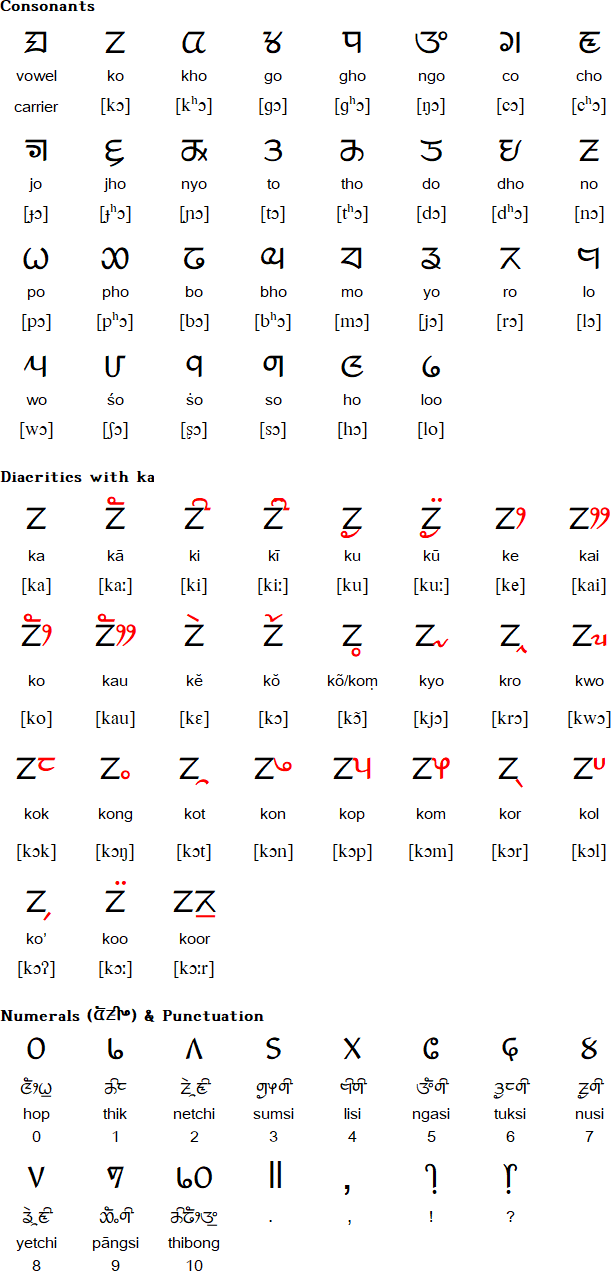
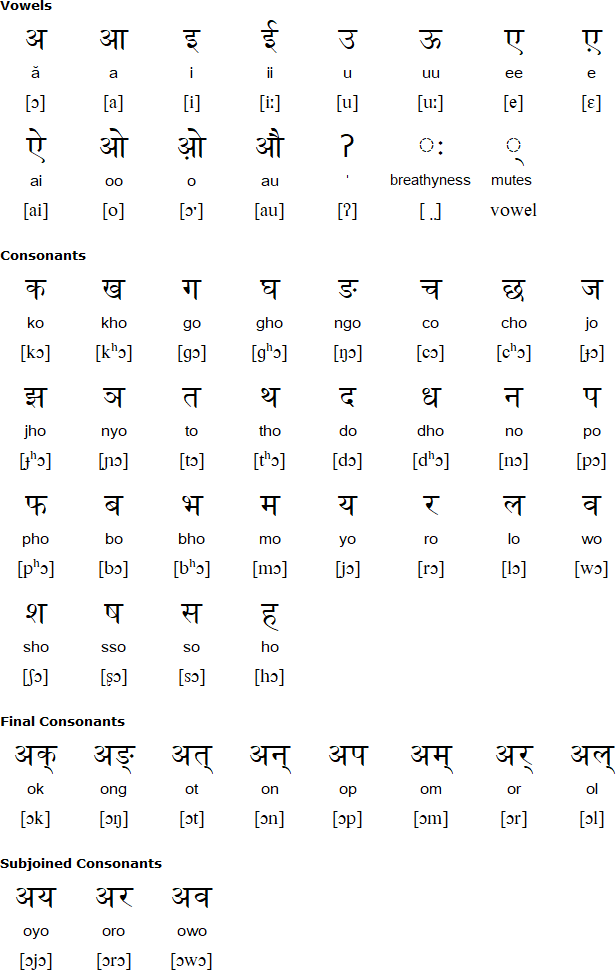
Limbu is and has been written with a number of different writing systems, including the Lephca / Rong, Sirijanga and Devanagari scripts.
The Limbu or Kirati alphabet was probably modelled on the Lepcha alphabet, which is thought to have derived from the Tibetan alphabet. According to many historians, King Sirijonga invented the "Kirat-Sirijonga Script" in the late 9th century. It disappeared for many years and was then reintroduced by Te-ongsi Sirijonga (believed to be reincarnation of King Sirijonga), in the 17th century. In 1925, Iman Singh Chemjong, a Limbu scholar, named the script after Sirijonga who had laid down his life for the preservation and promotion of script in 1743.
Source: http://www.chumlung.org.np
Hear how to pronounce Limbu:
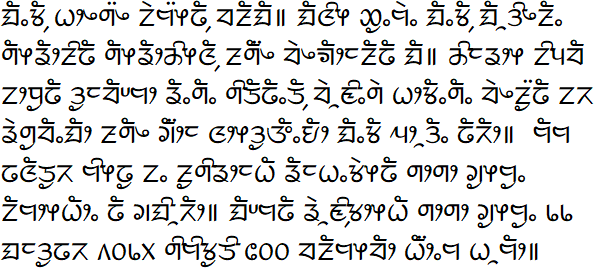
āṅgāʔ pensa꞉n kĕla꞉mbāʔ manāā.. āhim phuṅlĕṅ, āṅgāʔ āttinnāṅ sāmyonibā, sāmyothimhāʔ nasā꞉n mĕnjoknābā ā.. thikyem kipmā keghubā tukmālle yāṅsāṅ, sidābāṅdāʔ mĕtchiṅsĕ pegāṅsāṅ mĕnnūbā kara yĕsumāṅo nasān co꞉k hemtuṅāṅdho āṅgā vettāṅ bāro.. - lāla bahādura limbu. kaṅ nusiyekpā yākpaṅgĕmbā sese cumluṅ kālempoṅ bā caïtro.. āllabā yĕtchiʔgempā sese cumluṅ 11 aktubara 2014 siligudi 500 manālammo po꞉ṅla patlo..
Source: https://aksharamukha.appspot.com/describe/Limbu
Details provided by Biswajit Mandal (biswajitmandal[dot]bm90[at]gmail[dot]com)
Information about Limbu | Numbers
Information about the Limbu language
http://en.wikipedia.org/wiki/Limbu_language
http://meropaila.wordpress.com/kirat-rai/
https://aksharamukha.appspot.com/describe/Limbu
Kirat Yakthung Chumlung - an organisation dedicated to the
promotion and preservation of the Limbu language and culture
http://www.chumlung.org.np
Limbua Fonts
https://software.sil.org/namdhinggo/
http://www.wazu.jp/gallery/Fonts_Limbu.html
https://calligraphicunicodefont.blogspot.com/2014/05/Limboo-unicode-fonts.html
Athpare, Bahing, Bantawa, Belhare, Chamling, Dhimal, Dumi, Khaling, Limbu, Sunwar, Toto, Wambule, Yakkha
Ahom, Aima, Arleng, Badagu, Badlit, Basahan, Balinese, Balti-A, Balti-B, Batak, Baybayin, Bengali, Bhaiksuki, Bhujimol, Bilang-bilang, Bima, Blackfoot, Brahmi, Buhid, Burmese, Carrier, Chakma, Cham, Cree, Dehong Dai, Devanagari, Dham Lipi, Dhankari / Sirmauri, Ditema, Dives Akuru, Dogra, Ethiopic, Evēla Akuru, Fox, Fraser, Gond, Goykanadi, Grantha, Gujarati, Gunjala Gondi, Gupta, Gurmukhi, Halbi Lipi, Hanifi, Hanuno'o, Hočąk, Ibalnan, Incung, Inuktitut, Jaunsari Takri, Javanese, Kaithi, Kadamba, Kamarupi, Kannada, Kawi, Kharosthi, Khema, Khe Prih, Khmer, Khojki, Khudabadi, Kirat Rai, Kōchi, Kodava Lipi, Komering, Kulitan, Kurukh Banna, Lai Tay (Tai Yo), Lampung, Lanna, Lao, Leke, Lepcha, Limbu, Lontara/Makasar, Lota Ende, Magar Akkha, Mahajani, Malayalam, Meitei (Modern), Manpuri (Old), Marchen, Meetei Yelhou Mayek, Meroïtic, Masarm Gondi, Modi, Mon, Mongolian Horizontal Square Script, Multani, Nandinagari, Newa, New Tai Lue, Ojibwe, Odia, Ogan, Pahawh Hmong, Pallava, Phags-pa, Purva Licchavi, Qiang / Rma, Ranjana, Rejang (Kaganga), Sasak, Savara, Satera Jontal, Shan, Sharda, Sheek Bakrii Saphaloo, Siddham, Sinhala, Sorang Sompeng, Sourashtra, Soyombo, Sukhothai, Sundanese, Syloti Nagri, Tagbanwa, Tai Noi, Takri, Tamil, Tanchangya (Ka-Pat), Tani, Thaana, Telugu, Thai, Thirke, Tibetan, Tigalari, Tikamuli, Tocharian, Tolong Siki, Vatteluttu, Warang Citi
Aka-Jeru, Angika, Athpare, Avestan, Awadhi, Bahing, Balti, Bantawa, Belhare, Bhili, Bhumij, Bilaspuri, Bodo, Bhojpuri, Braj, Car, Chamling, Chhantyal, Chhattisgarhi, Chambeali, Danwar, Dhatki, Dhimal, Dhundari, Digaro Mishmi, Dogri, Doteli, Gaddi, Garhwali, Gondi, Gurung, Halbi, Haryanvi, Hill Miri, Hindi, Ho, Jarawa, Jaunsari, Jirel, Jumli, Kagate, Kannauji, Kham, Kangri, Kashmiri, Khaling, Khandeshi, Kharia, Khortha, Korku, Konkani, Kullui, Kumaoni, Kurmali, Kurukh, Kusunda, Lambadi, Limbu, Lhomi, Lhowa, Magahi, Magar, Mahasu Pahari, Maithili, Maldivian, Malto, Mandeali, Marathi, Marwari, Mewari, Mundari, Nancowry. Newar, Nepali, Nimadi, Nishi, Onge, Pahari, Pali, Pangwali, Rajasthani, Rajbanshi, Rangpuri, Sadri, Sanskrit, Santali, Saraiki, Sirmauri, Sherpa, Shina, Sindhi, Sunwar, Sylheti, Tamang, Thakali, Thangmi, Wambule, Wancho, Yakkha, Yolmo
Page last modified: 03.05.24
[top]

You can support this site by Buying Me A Coffee, and if you like what you see on this page, you can use the buttons below to share it with people you know.

If you like this site and find it useful, you can support it by making a donation via PayPal or Patreon, or by contributing in other ways. Omniglot is how I make my living.
Note: all links on this site to Amazon.com


[top]


