
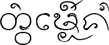
The Lanna script is a descendant of the Old Mon script like the Lao religious scripts and Burmese script. It was used to write the Lanna language (also called Northern Thai or Kam Muang - คำเมือง). It was used during the time of the Lanna kingdom, founded in 1259 and conquered by Burma in 1558. The script is also known as Tai Tham or Tua Mueang (ᨲ᩠ᩅᩫᨾᩮᩥᩬᨦ).
The Lanna alphabet is used to write Northern Thai (ᨣᩴᩤᨾᩮᩬᩥᨦ / Kam Mueang), Tai Lue and Khün languages. It is also used for religious purposes to write Lao Tham (Old Lao), and can be found as the alphabet of old manuscripts in temples in Northern Thailand.
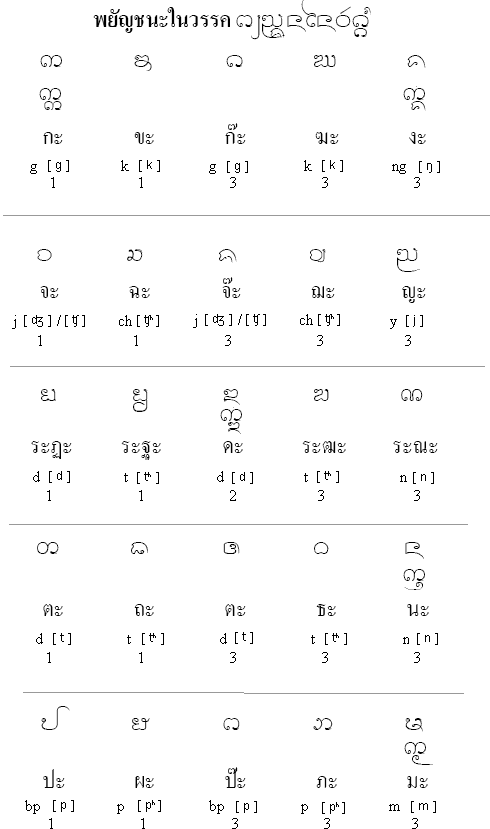
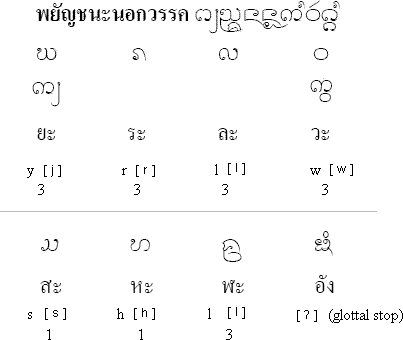
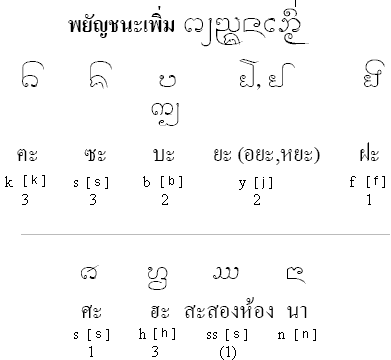
Consonants are divided into three classes which help to determine the tone of a syllable (indicated by the numbers below). In the chart below is given first the Lanna letter, then the "Payanchana Sagot – พยัญชนะสะกด" if it exists (shown with the letter as a place holder), then the Thai equivalent, then the English equivalent (followed by IPA in square brackets). The numbers indicate the class of the consonant (used in determining the tone of the syllable). 1 – high, 2 – mid, 3 – low.
Payanchana Nai Wak - Categorized letters
Payanchana Nok Wak - Noncategorized letters
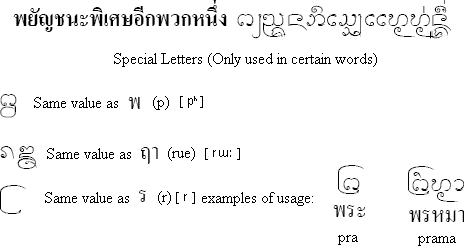
Payanchana Perm - Extra letters
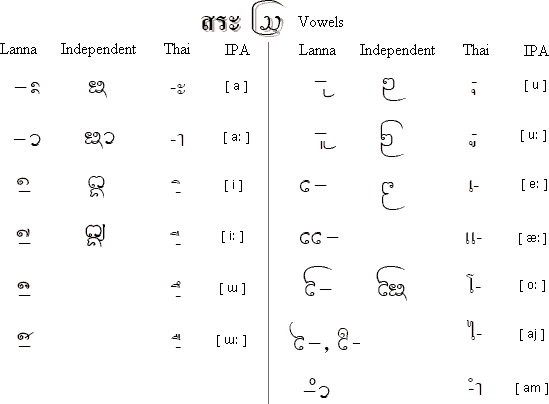
The vowels in the first column are the diacritic marks used to modify consonants. In the second column are the corresponding independent forms. Only certain vowels have this form. These are used for writing words borrowed from Pali. The third column is the Thai equivalent and the fourth is IPA. The dash in the Lanna column indicates the position of the consonant that the vowel is attached to.
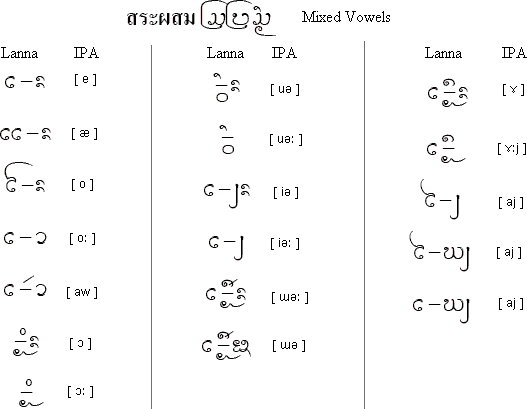
Lanna has two sets of numerals. The first set, Lek Nai Tam, is reserved for special purposes such as religious texts. The second set, Lek Hora, is the set usually used in everyday life. Its name (Hora) suggests that it is also used for astrological purposes.
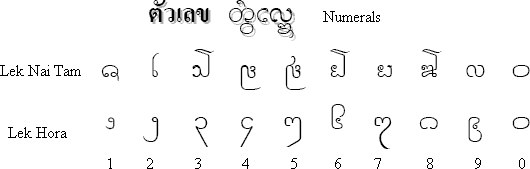
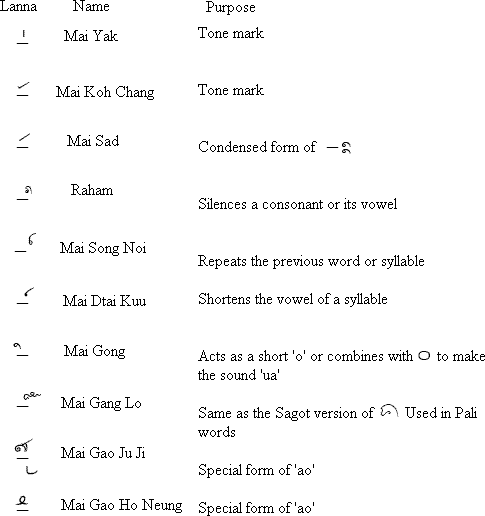
The dash indicates the position of the letter that the diacritic mark is attached to.

คติสอรไจโบราณล้านนา
๑ ทุกข์บ่ได้กิน บ่มีไผตามไฟส่องท้อง ทุกข์บ่ได้นุ่งอย้อง พี่น้องดูแฅวร
๒ เตมว่าที่กิน ที่นอรค่ดีคับ ยังอดอยู่ได้นานไพ คับค่ดีช้อม หัวอกหัวไจ จักอดอยู่ไพ หัวไจบิ่นบ้าง
Kadii Sawn Jai Boran Lanna
1. Dtuk bong dai gin biim ai tam fai sawn dtaang dtuk bong dai nung dai yawng bii nawng duu kwaen
2. Dtem wa dii gin dii non gaw dii gan yang od yuu doo non bpai gap gaw dii ngawm hua ok hua jai jak ok yuu boo hua jai bin baang
Lanna Fonts (TrueType, 597K)
Introduction to Lanna Alphabet (PDF, 201K, in Thai)
Thanks to "Keen" for the fonts and much of the information used to make this page.
Information about Lanna
http://en.wikipedia.org/wiki/Tai_Tham_script
https://en.wikipedia.org/wiki/Northern_Thai_language
https://r12a.github.io/scripts/lana/nod.html
https://www.endangeredalphabets.net/alphabets/lanna-aka-tai-tham/
Lanna Fonts
https://fonts.google.com/noto/specimen/Noto+Sans+Tai+Tham
https://github.com/norto/taitham-lanna/tree/master/Tai-tham-script
Ahom, Aima, Arleng, Badagu, Badlit, Basahan, Balinese, Balti-A, Balti-B, Batak, Baybayin, Bengali, Bhaiksuki, Bhujimol, Bilang-bilang, Bima, Blackfoot, Brahmi, Buhid, Burmese, Carrier, Chakma, Cham, Cree, Dehong Dai, Devanagari, Dham Lipi, Dhankari / Sirmauri, Ditema, Dives Akuru, Dogra, Ethiopic, Evēla Akuru, Fox, Fraser, Gond, Goykanadi, Grantha, Gujarati, Gunjala Gondi, Gupta, Gurmukhi, Halbi Lipi, Hanifi, Hanuno'o, Hočąk, Ibalnan, Incung, Inuktitut, Jaunsari Takri, Javanese, Kaithi, Kadamba, Kamarupi, Kannada, Kawi, Kharosthi, Khema, Khe Prih, Khmer, Khojki, Khom Thai, Khudabadi, Kirat Rai, Kōchi, Kodava Lipi, Komering, Kulitan, Kurukh Banna, Lai Tay (Tai Yo), Lampung, Lanna, Lao, Leke, Lepcha, Limbu, Lontara/Makasar, Lota Ende, Magar Akkha, Mahajani, Malayalam, Meitei (Modern), Manpuri (Old), Marchen, Meetei Yelhou Mayek, Meroïtic, Masarm Gondi, Modi, Mon, Mongolian Horizontal Square Script, Multani, Nandinagari, Newa, New Tai Lue, Ojibwe, Odia, Ogan, Pahawh Hmong, Pallava, Phags-pa, Purva Licchavi, Qiang / Rma, Ranjana, Rejang (Kaganga), Sasak, Savara, Satera Jontal, Shan, Sharda, Sheek Bakrii Saphaloo, Siddham, Sinhala, Sorang Sompeng, Sourashtra, Soyombo, Sukhothai, Sundanese, Syloti Nagri, Tagbanwa, Tai Noi, Takri, Tamil, Tanchangya (Ka-Pat), Tani, Thaana, Telugu, Thai, Thirke, Tibetan, Tigalari, Tikamuli, Tocharian, Tolong Siki, Vatteluttu, Warang Citi
Page last modified: 26.06.25
[top]

Note: all links on this site to Amazon.com


You can support this site by Buying Me A Coffee, via PayPal or Patreon, or by contributing in other ways.
If you find all the adverts annoying, there is now an Ad-free version of Omniglot which you can access for a small monthly or annual donation.

This website and its content is copyright of Simon Ager - © Simon Ager 1998-2026. All rights reserved. All images were created by me, unless otherwise indicated. More details

[top]


