

The Sharda or Śāradā alphabet developed from the Brahmi script during the second half of the 8th century AD. The earliest known inscription in the Sharda alphabet dates from 774 AD and was discovered in a village called Hund in the west of Pakistan. It was used in that area until the 12th century.
Today only a small group of Brahmins continue to use the Sharda alphabet for writing and calculating astrological and ritual formulations.
Sharda is also known as Sharada, Sarada or Śāradā.
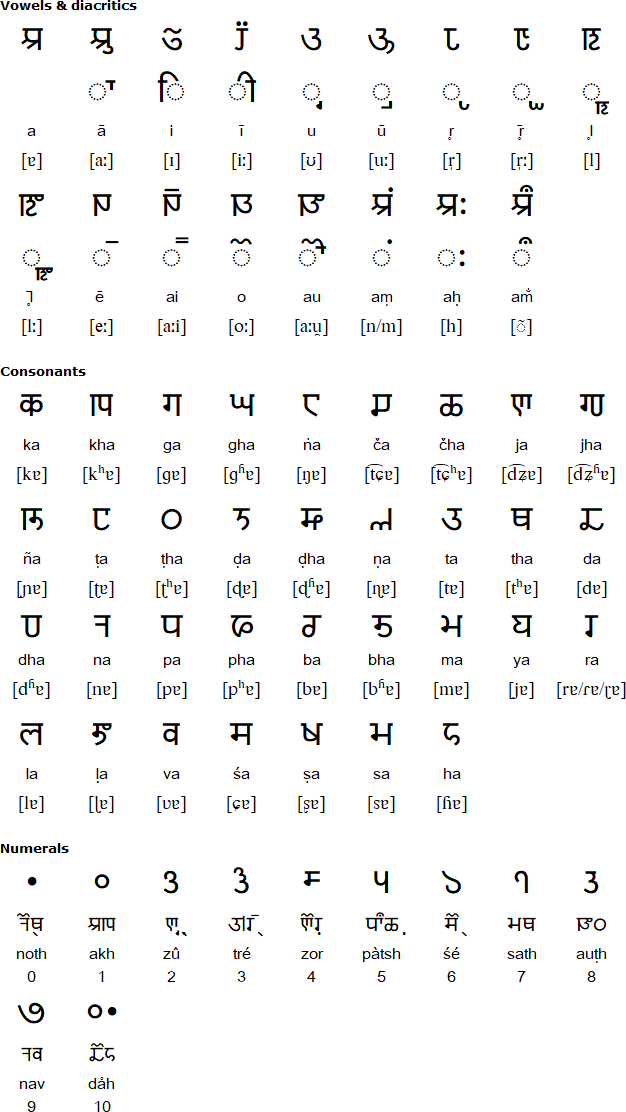
The numbers shown here are in Kashmiri.
Download alphabet charts for Sharda (Excel)
Some details supplied by Biswajit Mandal (biswajitmandal[dot]bm90[at]gmail[dot]com)
See how to write the Sharda letters:
More videos about the Sharada script
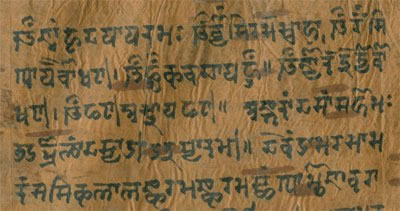
Source: http://en.wikipedia.org/wiki/Śāradā_script
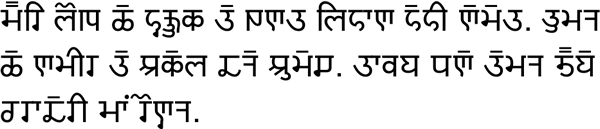
Saerey loukh tche huquq te ezzat lihaaz hehey zamit. Teman tche zameer te aqel dene aamech. Tawai paze teman bhae baraderi saan rozun.
Hear a recording of this text by Waqar Shah
All human beings are born free and equal in dignity and rights. They are endowed with reason and conscience and should act towards one another in a spirit of brotherhood.
(Article 1 of the Universal Declaration of Human Rights)
Information about Sharda
https://en.wikipedia.org/wiki/Sharada_script
https://www.endangeredalphabets.net/alphabets/sharada/
https://satisarsharada.appspot.com/learn-sharada
Sharda fonts
http://koshur.org/scripts.html
https://fonts.google.com/noto/specimen/Noto+Sans+Sharada
Bhaiksuki, Brāhmi, Devanāgari, Galik, Grantha, Gupta, Kadamba, Kharosthi, Nandinagari, Sharda, Siddham, Thai, Tibetan
Ahom, Aima, Arleng, Badagu, Badlit, Basahan, Balinese, Balti-A, Balti-B, Batak, Baybayin, Bengali, Bhaiksuki, Bhujimol, Bilang-bilang, Bima, Blackfoot, Brahmi, Buhid, Burmese, Carrier, Chakma, Cham, Cree, Dehong Dai, Devanagari, Dham Lipi, Dhankari / Sirmauri, Ditema, Dives Akuru, Dogra, Ethiopic, Evēla Akuru, Fox, Fraser, Gond, Goykanadi, Grantha, Gujarati, Gunjala Gondi, Gupta, Gurmukhi, Halbi Lipi, Hanifi, Hanuno'o, Hočąk, Ibalnan, Incung, Inuktitut, Jaunsari Takri, Javanese, Kaithi, Kadamba, Kamarupi, Kannada, Kawi, Kharosthi, Khema, Khe Prih, Khmer, Khojki, Khudabadi, Kirat Rai, Kōchi, Kodava Lipi, Komering, Kulitan, Kurukh Banna, Lai Tay (Tai Yo), Lampung, Lanna, Lao, Leke, Lepcha, Limbu, Lontara/Makasar, Lota Ende, Magar Akkha, Mahajani, Malayalam, Meitei (Modern), Manpuri (Old), Marchen, Meetei Yelhou Mayek, Meroïtic, Masarm Gondi, Modi, Mon, Mongolian Horizontal Square Script, Multani, Nandinagari, Newa, New Tai Lue, Ojibwe, Odia, Ogan, Pahawh Hmong, Pallava, Phags-pa, Purva Licchavi, Qiang / Rma, Ranjana, Rejang (Kaganga), Sasak, Savara, Satera Jontal, Shan, Sharda, Sheek Bakrii Saphaloo, Siddham, Sinhala, Sorang Sompeng, Sourashtra, Soyombo, Sukhothai, Sundanese, Syloti Nagri, Tagbanwa, Tai Noi, Takri, Tamil, Tanchangya (Ka-Pat), Tani, Thaana, Telugu, Thai, Thirke, Tibetan, Tigalari, Tikamuli, Tocharian, Tolong Siki, Vatteluttu, Warang Citi
Page last modified: 26.04.23
[top]

You can support this site by Buying Me A Coffee, and if you like what you see on this page, you can use the buttons below to share it with people you know.

If you like this site and find it useful, you can support it by making a donation via PayPal or Patreon, or by contributing in other ways. Omniglot is how I make my living.
Note: all links on this site to Amazon.com


[top]


