
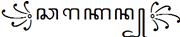
The earliest known writing in Javanese dates from the 4th Century AD, at which time Javanese was written with the Pallava alphabet. By the 10th Century the Kawi alphabet, which developed from Pallava, had a distinct Javanese form.
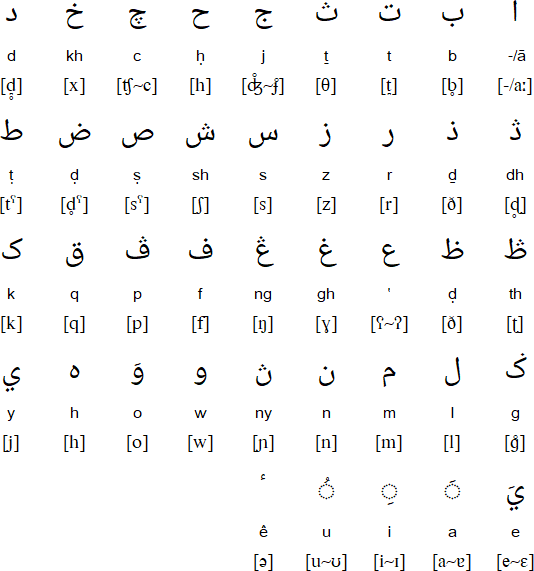
For a period from the 15th century onwards, Javanese was also written with a version of the Arabic alphabet, called pegon (ن ݢ ٙ ڤٙي ٙ).
By the 17th Century, the Javanese alphabet had developed into its current form. During the Japanese occupation of Indonesia between 1942 and 1945, the alphabet was prohibited.
Since the Dutch introduced the Latin alphabet to Indonesia in the 19th Century, the Javanese alphabet has gradually been supplanted. Today it is used almost exclusively by scholars and for decoration. Those who can read and write it are held in high esteem.
Javanese (Basa Jawa / ꦧꦱꦗꦮ), an Austronesian language spoken by about 80 million people in Indonesia and Suriname. In Indonesia Javanese is spoken in Java, particularly in central and east Java, and on the north coast of West Java, and in Madura, Bali, Lombok, and in the Sunda region of West Java. The Javanese alphabet also can be used to write old Javanese.
Javanese was used as the court language in Palembang, South Sumatra until the late 18th century and has been used as a literary language for over a millenium. It currently has no official status though is recognised as a regional language in Central Java, Yogyakarta, and East Java. It is taught in some schools, and there are some radio and TV programmes in Javanese, as well as a number of magazines. The Javanese alphabet was also used to write Balinese and Sundanese, but has been replaced by the Latin alphabet.
Also used to write Sundanese and Madurese.
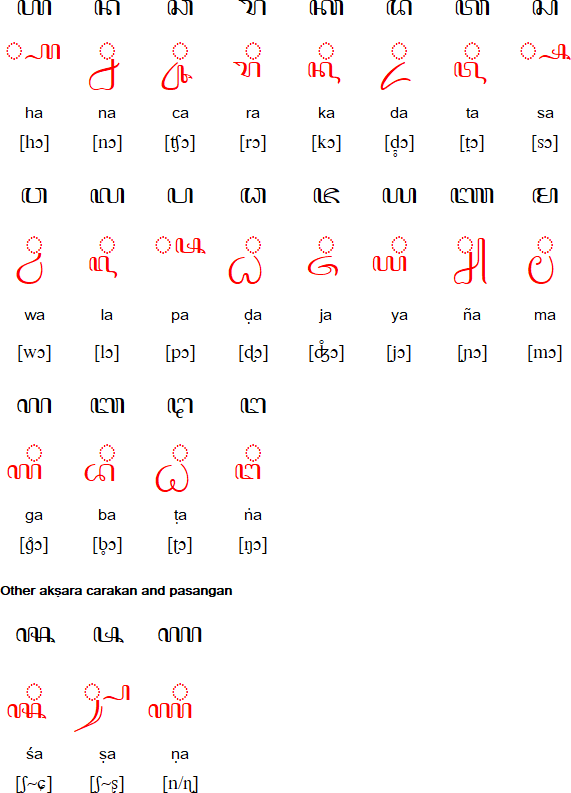
Hear a recording of the Javanese consonants by Faishal.
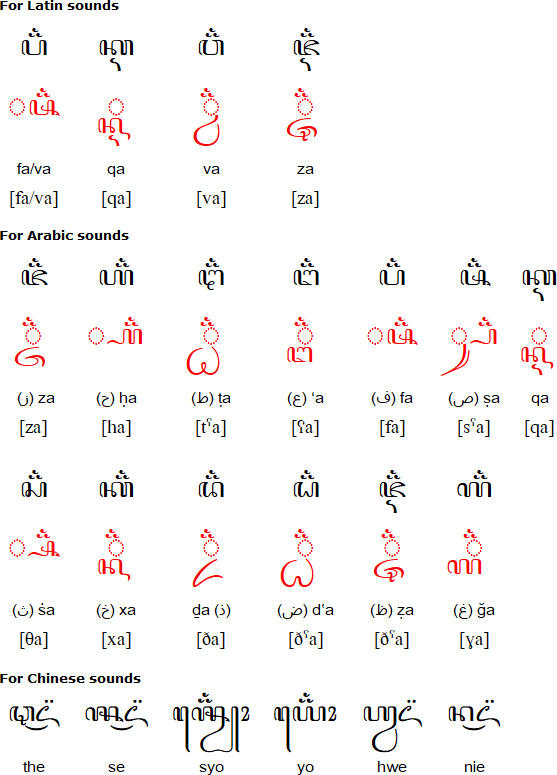
The pasangan (final consonants) are shown in red. ka, ta, pa, ga and ba are most commonly used. The others are rarely used.
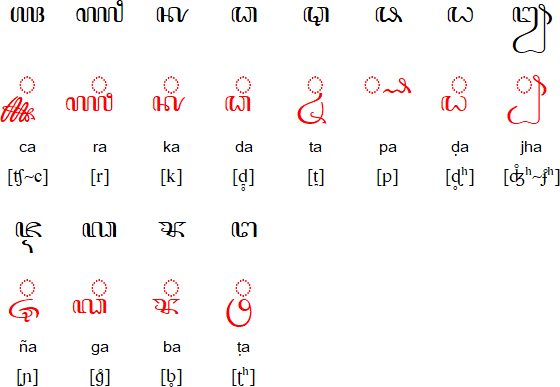
To write old Javanese some of the letters are aspirated. The arrangement of consonants is based on standard Sanskrit.
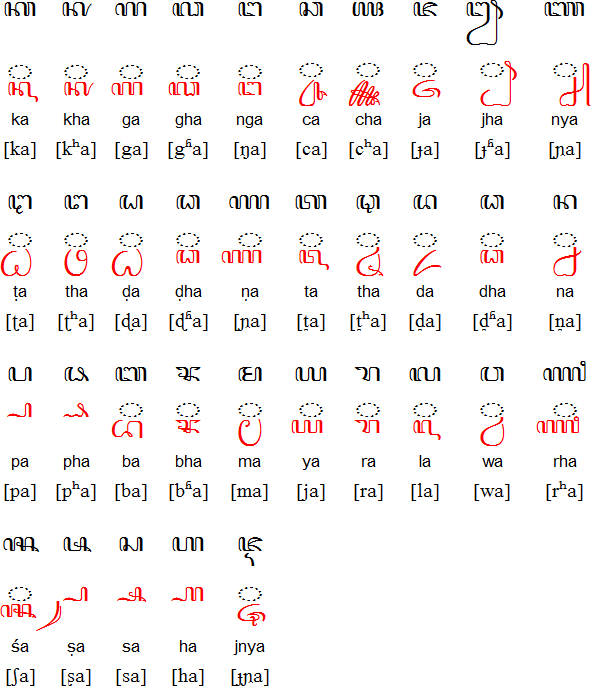
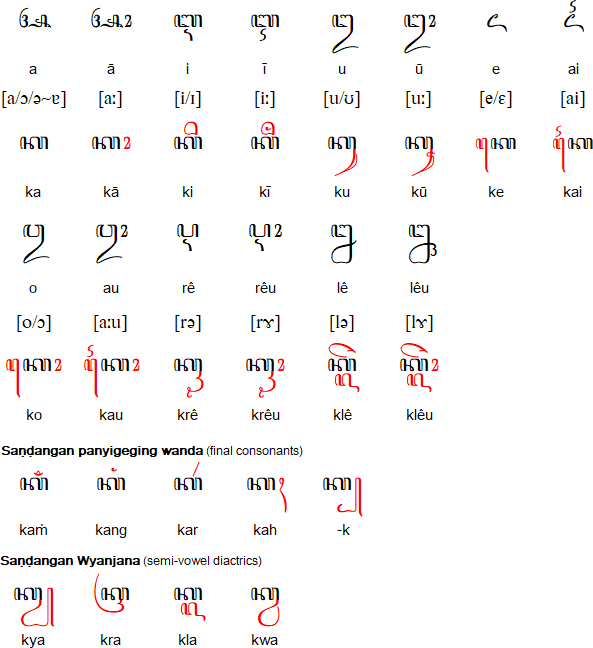
Note: rê, rêu, lê, and lêu are also treated as consonants. So they have pasangan:
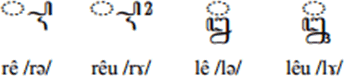
The long vowels (ā, êu, ī, ai, rêu, lêu, ū, and au) are no longer used in modern Javanese, but just for special purposes like writing old Javanese and transliterating foreign sounds.


The first line of numbers are native Javanese ones; the second line of number are adapted from Sanskrit.
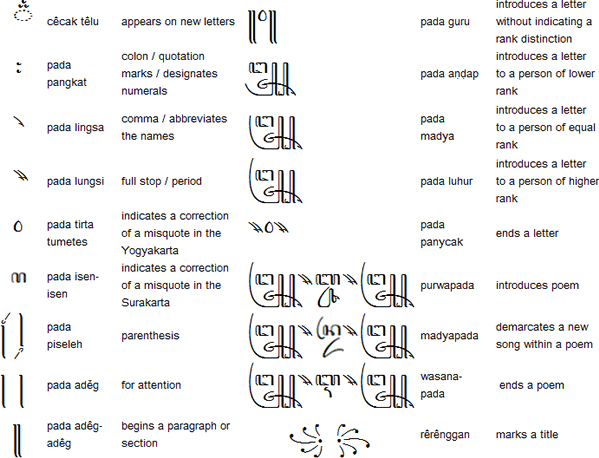
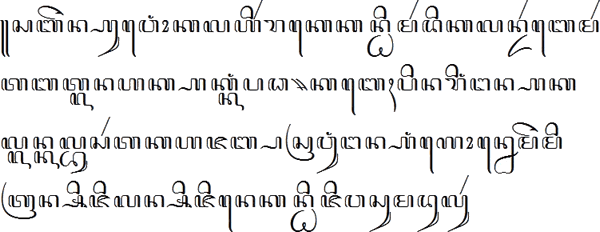
Text provided by Aditya Bayu, with corrections by Hafidh Ihromi and Arif Budiarto
Saben uwong kalairake kanthi mardika lan darbe martabat lan hak-hak kang padha. Kabeh pinaringan akal lan kalbu sarta kaajab pasrawungan anggone memitran siji lan sijine kanthi jiwo sumadulur.
Hear a recording of this text by Faishal.
All human beings are born free and equal in dignity and rights. They are endowed with reason and conscience and should act towards one another in a spirit of brotherhood.
(Article 1 of the Universal Declaration of Human Rights)
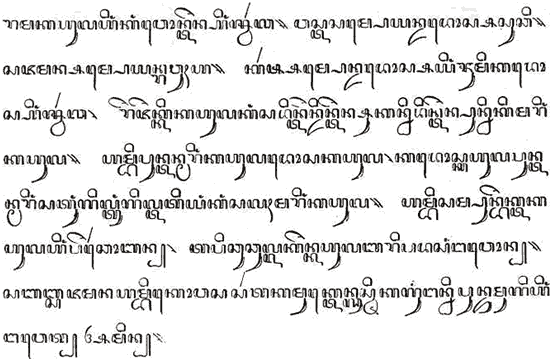
Rama kaula ingkang wonten ing swarga. Wasta Sampeyan dadosa suci. Sajaman Sampeyan rawuha. Kars Sampean dadosa ying bumi kados ing swarga. Rejeki kaula kang sadinten-dinten sukani dinten puniki maring kaula. Ambi puntan maring kaula dosa kaula, kados kaula puntan maring satunggil-tunggil tiyang kang salah maring kaula. Ami sampun bekta kaula ing percoban. Tapi cuculaken kaula bari pada sang awon. Sabab sajamana ambi kowasa sarta kamukten Gusti kagunganipun dumugi ing awet. Amin.
Saben uwong kalairake kanthi mardika lan darbe martabat lan hak-hak kang padha. Kabeh pinaringan akal lan kalbu sarta kaajab pasrawungan anggone memitran siji lan sijine kanthi jiwo sumadulur.
Hear a recording of this text by Faishal.
All human beings are born free and equal in dignity and rights. They are endowed with reason and conscience and should act towards one another in a spirit of brotherhood.
(Article 1 of the Universal Declaration of Human Rights)
Download an alphabet charts for Javanese in Excel or PDF format
Information, corrections and additions provided by Wolfram Siegel, Nurrahim Dwi Saputra and Michael Peter Füstumum
Information about Javanese | Phrases | Numbers | Family words | Tower of Babel | Learning materials
Information about Javanese
https://en.wikipedia.org/wiki/Javanese_language
https://en.wikipedia.org/wiki/Javanese_script
https://de.wikipedia.org/wiki/Javanische_Sprache
https://jv.wikipedia.org/wiki/Éjaan_Basa_Jawa http://www.joglosemar.co.id/hanacaraka/hanacaraka.html
http://geonames.de/alphfj.html;
http://glottolog.org/resource/languoid/id/java1254
https://www.ethnologue.com/language/jav
http://www.joglosemar.co.id/hanacaraka/hanacaraka.html
https://de.wikipedia.org/wiki/Pegon
https://en.wikipedia.org/wiki/Pegon_script
Online Javanese lessons
http://www.seasite.niu.edu/Indonesian/jawa/jawa.htm
The Official Site of Akṣara Jawa - free fonts and a tutorial on how to write with the Javanese alphabet (in Javanese and Indonesian)
http://hanacaraka.fateback.com
Javanese fonts
http://www.adjisaka.com
https://sites.google.com/site/jawaunicode/main-page
http://www.reocities.com/jglavy/asian.html
Alorese, Ambai, Ambel, Anuki, Baduy, Balinese, Batuley, Bawean, Bawm, Biak, Bima, Chamorro, Enggano, Fijian, Fordata, Gayo, Iban, Javanese, Kedang, Kei, Kenyah, Komering, Lamaholot, Lampung, Madurese, Mbula, Mentawai, Mualang, Musi, Ngaju, Nias, Nuaulu, Ogan, Palauan, Sasak, Sawai, Selaru, Sumbawa, Sundanese, Toqabaqita, Wakasihu, Wamesa, Wooi, Yamdena
Languages written with the Latin alphabet
Ahom, Aima, Arleng, Badagu, Badlit, Basahan, Balinese, Balti-A, Balti-B, Batak, Baybayin, Bengali, Bhaiksuki, Bhujimol, Bilang-bilang, Bima, Blackfoot, Brahmi, Buhid, Burmese, Carrier, Chakma, Cham, Cree, Dehong Dai, Devanagari, Dham Lipi, Dhankari / Sirmauri, Ditema, Dives Akuru, Dogra, Ethiopic, Evēla Akuru, Fox, Fraser, Gond, Goykanadi, Grantha, Gujarati, Gunjala Gondi, Gupta, Gurmukhi, Halbi Lipi, Hanifi, Hanuno'o, Hočąk, Ibalnan, Incung, Inuktitut, Jaunsari Takri, Javanese, Kaithi, Kadamba, Kamarupi, Kannada, Kawi, Kharosthi, Khema, Khe Prih, Khmer, Khojki, Khom Thai, Khudabadi, Kirat Rai, Kōchi, Kodava Lipi, Komering, Kulitan, Kurukh Banna, Lai Tay (Tai Yo), Lampung, Lanna, Lao, Leke, Lepcha, Limbu, Lontara/Makasar, Lota Ende, Magar Akkha, Mahajani, Malayalam, Meitei (Modern), Manpuri (Old), Marchen, Meetei Yelhou Mayek, Meroïtic, Masarm Gondi, Modi, Mon, Mongolian Horizontal Square Script, Multani, Nandinagari, Newa, New Tai Lue, Ojibwe, Odia, Ogan, Pahawh Hmong, Pallava, Phags-pa, Purva Licchavi, Qiang / Rma, Ranjana, Rejang (Kaganga), Sasak, Savara, Satera Jontal, Shan, Sharda, Sheek Bakrii Saphaloo, Siddham, Sinhala, Sorang Sompeng, Sourashtra, Soyombo, Sukhothai, Sundanese, Syloti Nagri, Tagbanwa, Tai Noi, Takri, Tamil, Tanchangya (Ka-Pat), Tani, Thaana, Telugu, Thai, Thirke, Tibetan, Tigalari, Tikamuli, Tocharian, Tolong Siki, Vatteluttu, Warang Citi
Page last modified: 06.01.25
[top]

You can support this site by Buying Me A Coffee, and if you like what you see on this page, you can use the buttons below to share it with people you know.

If you like this site and find it useful, you can support it by making a donation via PayPal or Patreon, or by contributing in other ways. Omniglot is how I make my living.

Note: all links on this site to Amazon.com


[top]


