
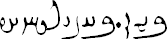
The Avestan alphabet was created in the 3rd and 4th centuries AD for writing the hymns of Zarathustra (a.k.a Zoroaster), the Avesta. Many of the letters are derived from the old Pahlavi alphabet of Persia, which itself was derived from the Aramaic alphabet. Greek influence, in the form of the full representation of vowel sounds, is also present.
The Avestan alphabet was replaced by the Arabic alphabet after Persia converted to Islam during the 7th century AD. The Parsi or Zoroastrian community in India uses the Devanagari or Gujarati alphabets for Avestan.
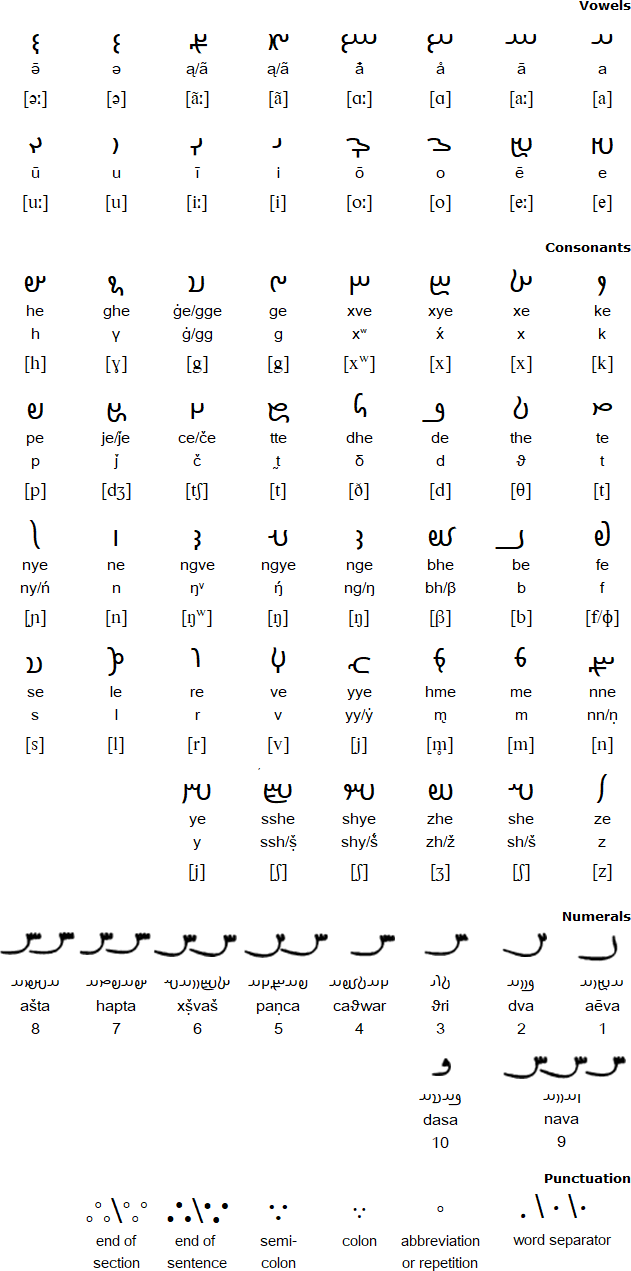
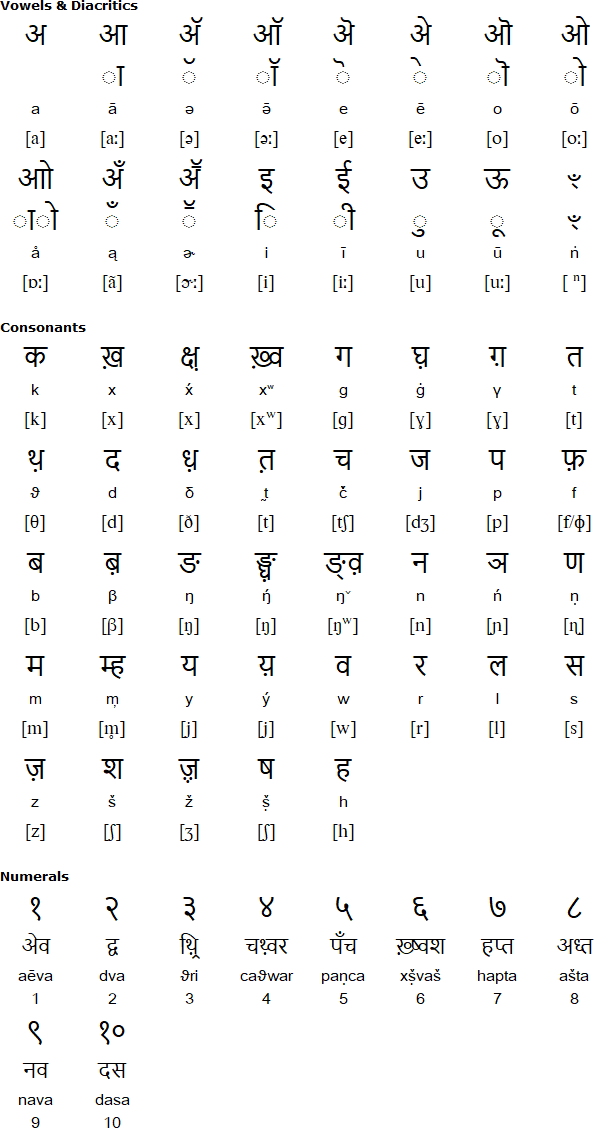
Download alphabet charts for Avestan (Excel format)
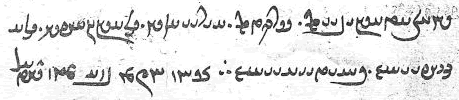
Source: http://www.avesta.org/gifs/samples.htm
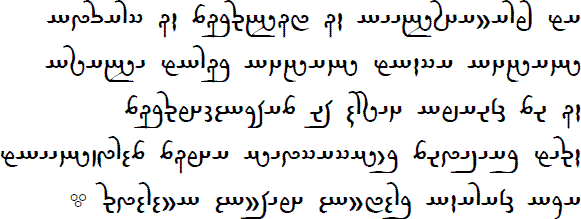
Extract from Yasna 45.I (www.avesta.org/yasna/y43to46.htm) provided by Ian James
at fravaxshyâ nû gûshôdûm nû sraotâ ýaêcâ asnât ýaêcâ dûrât ishathâ nû îm vîspâ cithrê zî mazdånghô-dûm nôit daibitîm dush-sastish ahûm merãshyât akâ varanâ dregvå hizvå âveretô.
I will speak forth: hear now and hearken now, ye from near and ye from far that desire (instruction). Now observe this in your mind, all of you, for he is revealed. Never shall the false Teacher destroy the Second Life, the Liar, in perversion by his tongue into evil belief.
क्ष᳝थ़्राइश् युजॕन् करपनो कावयस्-चा।
अकाइश् श्यऒथ़नाइश् अहूम् मॅरॅꣳगॅद्याइ मषीम् ।।
यॕꣳग् ख़्वॕ उर्वा ख़्वअे-चा ख़्रऒदत़् दअेना ।।
ह्यत़् अइबी-गॅमॅन् यथ्रा चिन्वतो पॅरॅतुश् ।।
यवोइ वीस्पाइ द्रूजो दॅमानाइ अस्तयो ।।
xaθraːiʃ juːdʒɚːn karpano kaːwajas-tʃaː
akaːiʃ ʃjaoθanaːiʃ ahuːm mərəⁿɡəidjaːi maʃiːm
jɚːⁿɡ xʷɚː urwaː xʷaeː-tʃaː xraodat daeːnaː
hjat aibiː-ɡɚːmɚːn jaθraː tʃiːnwatoː pɚrɚːtuʃ
jawoːi wiːspaːi druːdʒoː dəmaːnaːi astajoː
During their regimes, the Karpans [a type of priest] and the Kavis [a princes] yoked (us) with evil actions in order to destroy the world and mankind. But their own soul and their own conception [daena] did vex them when they reached the Bridge of the Judge, (there to become guests in the House of Deceit forever.
Some details supplied by Biswajit Mandal (biswajitmandal[dot]bm90[at]gmail[dot]com)
Information about Avestan | Numbers
Infomartion about Avestan
http://www.avesta.org
http://en.wikipedia.org/wiki/Avestan_language
http://www.farvardyn.com/avesta.php
http://titus.fkidg1.uni-frankfurt.de/didact/idg/iran/avest/avestbs.htm
https://aksharamukha.appspot.com/describe/Avestan
Avestan Digital Archive
http://ada.usal.es
Avestan fonts
http://www.skytower.org/~ernstjtremel/Ahuramazda/AhuramzdaFont.htm
http://minerva.stkate.edu/offices/academic/classics.nsf/pages/avestafonts/
Avestan, Bactrian Baluchi, Bartangi, Dari, Gilaki, Hazaragi, Ishkashimi, Judeo-Persian, Juhuri, Khufi, Kumzari, Kurdish, Luri, Mazandarani, Munji, Ossetian, Ormuri, Oroshor, Persian, Parthian, Pashto, Rushani, Sanglechi, Sarikoli, Shabaki, Shughni, Tajik, Talysh, Tat, Wakhi, Wanetsi, Yaghnobi, Yazghulami, Yidgha, Zazaki
Aka-Jeru, Angika, Athpare, Avestan, Awadhi, Bahing, Balti, Bantawa, Belhare, Bhili, Bhumij, Bilaspuri, Bodo, Bhojpuri, Braj, Car, Chamling, Chepang, Chhantyal, Chhattisgarhi, Chambeali, Danwar, Dhatki, Dhimal, Dhundari, Digaro Mishmi, Dogri, Doteli, Gaddi, Garhwali, Gondi, Gurung, Halbi, Haryanvi, Hill Miri, Hindi, Ho, Jarawa, Jaunsari, Jirel, Jumli, Kagate, Kannauji, Kham, Kangri, Kashmiri, Khaling, Khandeshi, Kharia, Khortha, Korku, Konkani, Kullui, Kumaoni, Kurmali, Kurukh, Kusunda, Lambadi, Limbu, Lhomi, Lhowa, Magahi, Magar, Mahasu Pahari, Maithili, Maldivian, Malto, Mandeali, Marathi, Marwari, Mewari, Mundari, Nancowry. Newar, Nepali, Nimadi, Nishi, Onge, Pahari, Pali, Pangwali, Rajasthani, Rajbanshi, Rangpuri, Sadri, Sanskrit, Santali, Saraiki, Sirmauri, Sherpa, Shina, Sindhi, Sunwar, Sylheti, Tamang, Thakali, Thangmi, Wambule, Wancho, Yakkha, Yolmo
A-chik Tokbirim, Adinkra, ADLaM, Armenian, Avestan, Avoiuli, Bactrian, Bassa (Vah), Beitha Kukju, Berati, Beria (Zaghawa), Borama / Gadabuursi, Carian, Carpathian Basin Rovas, Chinuk pipa, Chisoi, Coorgi-Cox, Coptic, Cyrillic, Dalecarlian runes, Elbasan, Etruscan, Faliscan, Fox, Galik, Georgian (Asomtavruli), Georgian (Nuskhuri), Georgian (Mkhedruli), Glagolitic, Global Alphabet, Gothic, Greek, Hurûf-ı munfasıla, Irish (Uncial), Kaddare, Kayah Li, Khatt-i-Badíʼ, Khazarian Rovas, Koch, Korean, Latin, Lepontic, Luo Lakeside Script, Lycian, Lydian, Manchu, Mandaic, Mandombe, Marsiliana, Medefaidrin, Messapic, Mongolian, Mro, Mundari Bani, Nag Chiki, Naasioi Otomaung, N'Ko, North Picene, Novo Tupi, Nyiakeng Puachue Hmong, Odùduwà, Ogham, Old Church Slavonic, Oirat Clear Script, Ol Chiki (Ol Cemet' / Santali), Old Italic, Old Nubian, Old Permic, Ol Onal, Orkhon, Osage, Oscan, Osmanya (Somali), Pau Cin Hau, Phrygian, Pollard script, Quốc âm tân tự, Runic, Székely-Hungarian Rovás (Hungarian Runes), South Picene, Sutton SignWriting, Sunuwar, Tai Viet, Tangsa, Todhri, Toto, Umbrian, (Old) Uyghur, Vellara, Veso Bey, Wancho, Yezidi, Zoulai
ALPHABETUM - a Unicode font
for ancient scripts, including Classical & Medieval Latin, Ancient Greek, Etruscan, Oscan, Umbrian, Faliscan, Messapic, Picene, Iberian, Celtiberian, Gothic, Runic, Old & Middle English, Hebrew, Sanskrit, Old Nordic, Ogham, Kharosthi, Glagolitic, Anatolian scripts, Phoenician, Brahmi, Imperial Aramaic, Old Turkic, Old Permic, Ugaritic, Linear B, Phaistos Disc, Meroitic, Coptic, Cypriot and Avestan.
https://www.typofonts.com/alphabetum.html
Page last modified: 03.01.26
[top]

You can support this site by Buying Me A Coffee, via PayPal or Patreon, or by contributing in other ways.
If you find all the adverts annoying, there is now an Ad-free version of Omniglot which you can access for a small monthly or annual donation.

Note: all links on this site to Amazon.com



[top]


