
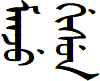
 Manchu alphabet
The Manchu alphabet was commissioned in 1599 by the Manchu leader Nurhaci (1559-1626), the founder of the Manchu state. The letters are based on the Classical Mongolian alphabet while the phonetics are based on Jurchen, an earlier Manchu script. The alphabet was modified slightly in 1632.
In 1644 the Manchus conquered China and established the Ch'ing (Qing) dynasty, which lasted until 1911. For the first 200 years or so of the Ch'ing dynasty, Manchu was the main language of government in China and served as a lingua franca. By the mid 19th century many of the Manchus had adopted Chinese as their first language, however they continued to produce Manchu version of Chinese documents until the end of the dynasty and for sometime afterwards.
Manchu (ᠮᠠᠨᠵᡠ
ᡤᡳᠰᡠᠨ / manju gisun), a Southern Tungusic language. There are currently about 10 million Manchus living mainly in north-eastern China, of whom about 100 speak Manchu and only 20 can read and write it. Most speak only Mandarin.
A version of the Manchu script is used to write Xibe, a Southern Tungusic language closely related to Manchu and spoken in Xinjiang in the north west of China by 30,000 people.
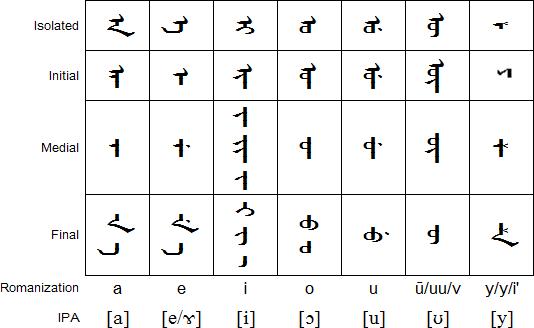
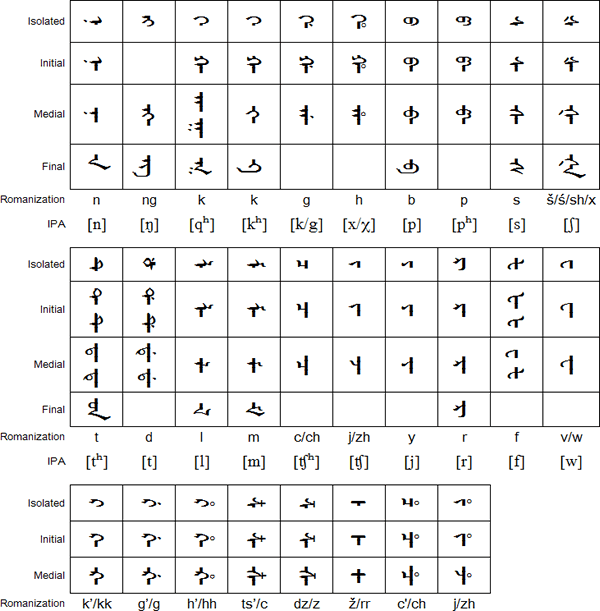

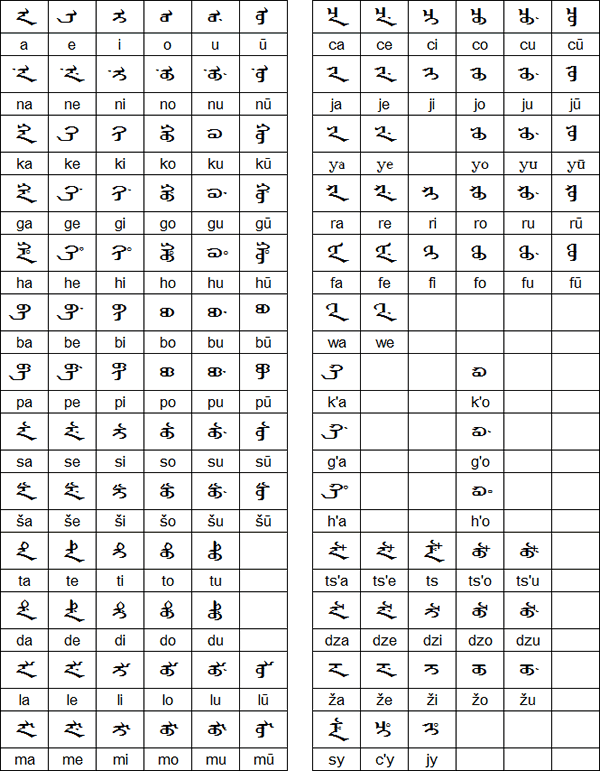
How to write and pronounce Manchu letters:
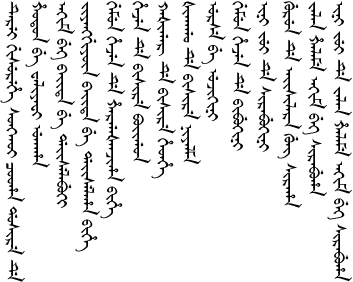
Following his advice, when the army was about to enter the town, he abandoned the town and fled. Akim Bek volunteered to handle the affairs, so he did the duty on behalf of the General. He had been to the capital city to present himself before the Emperor. His estate in the city and property in Kashgar, were used to provide the people living in Shikago, left in the capital city, or inherited by his son. He inherited the title of the Duke of Assisting the Nation, and was bestowed the hereditary title of Akim Bek. His son inherited the hereditary title of Akim Bek.
Source: http://www.chinahistoryforum.com
Information about Manchu | Numbers
Information about Manchu
http://en.wikipedia.org/wiki/Manchu_language
https://www.ethnologue.com/language/mnc
http://zh.wikipedia.org/wiki/满文
http://baike.baidu.com/view/56403.htm
Some Manchu words and phrases and part of a story (with audio)
http://online.wsj.com/public/resources/documents/MANCHU-LANGUAGE.html
Manchu fonts
http://sourceforge.net/projects/manchufont/
http://fedoraproject.org/wiki/Mang_Manchu_fonts
http://www.daicing.com/manchu/index.php?page=fonts-downloads
http://www.xenotypetech.com/osxManchu.html
满文输入工具 (Manchu Script Creator)
http://www.soft8.net/c25/1734.htm
Manchu in Unicode
http://www.babelstone.co.uk/Test/Manchu.html
Even, Evenki, Jurchen, Kili, Manchu, Nanai, Negidal, Oroch, Orok / Uilta, Oroqen, Udege Ulch, Xibe
A-chik Tokbirim, Adinkra, ADLaM, Armenian, Avestan, Avoiuli, Bactrian, Bassa (Vah), Beitha Kukju, Berati, Beria (Zaghawa), Borama / Gadabuursi, Carian, Carpathian Basin Rovas, Chinuk pipa, Chisoi, Coorgi-Cox, Coptic, Cyrillic, Dalecarlian runes, Elbasan, Etruscan, Faliscan, Fox, Galik, Georgian (Asomtavruli), Georgian (Nuskhuri), Georgian (Mkhedruli), Glagolitic, Global Alphabet, Gothic, Greek, Hurûf-ı munfasıla, Irish (Uncial), Kaddare, Kayah Li, Khatt-i-Badíʼ, Khazarian Rovas, Koch, Korean, Latin, Lepontic, Luo Lakeside Script, Lycian, Lydian, Manchu, Mandaic, Mandombe, Marsiliana, Medefaidrin, Messapic, Mongolian, Mro, Mundari Bani, Nag Chiki, Naasioi Otomaung, N'Ko, North Picene, Novo Tupi, Nyiakeng Puachue Hmong, Odùduwà, Ogham, Old Church Slavonic, Oirat Clear Script, Ol Chiki (Ol Cemet' / Santali), Old Italic, Old Nubian, Old Permic, Ol Onal, Orkhon, Osage, Oscan, Osmanya (Somali), Pau Cin Hau, Phrygian, Pollard script, Quốc âm tân tự, Runic, Székely-Hungarian Rovás (Hungarian Runes), South Picene, Sutton SignWriting, Sunuwar, Tai Viet, Tangsa, Todhri, Toto, Umbrian, (Old) Uyghur, Vellara, Veso Bey, Wancho, Yezidi, Zoulai
Page last modified: 27.11.23
[top]

You can support this site by Buying Me A Coffee, and if you like what you see on this page, you can use the buttons below to share it with people you know.

If you like this site and find it useful, you can support it by making a donation via PayPal or Patreon, or by contributing in other ways. Omniglot is how I make my living.

Note: all links on this site to Amazon.com


[top]


