Celtic Pathways – Truant

In this episode we find out what links the word truant with words for beggar, wretch and related things in Celtic and other languages.

Begging

Truant [ˈtɹʊənt/ˈtɹuː.ənt] means:

  • Absent without permission, especially from school.
  • Wandering from business or duty; straying; loitering; idle, and shirking duty
  • One who is absent without permission, especially from school.

It comes from Middle English truant/truand (one who receives alms, a begger, vagabond, vagrant, scoundrel, rogue, shiftless or good-for-nothing fellow) from Old French truand (vagabond, beggar, rogue), either from Gaulish *trugan (wretch), or from Breton truant (beggar), possibly from Proto-Indo-European *terh₁- (to rub, turn, drill, pierce) [source].

Related words in the modern Celtic languages include:

  • trua [t̪ˠɾˠuə] = pity, sympathy, compassion, miserable person or wretch in Irish.
  • truaghan [truəɣan] = poor soul, poor thing or wretch in Scottish Gaelic
  • truanagh = miserable, mournful or sorrowful person in Manx
  • truan = wretch, miserable person; wretched, miserable, pathetic, poor or weak in Welsh
  • truan = sad, miserable, unfortunate or wretched in Cornish
  • truant = beggar in Breton

Other words from the same Proto-Celtic root include truand [tʁy.ɑ̃] (crook, gangster, beggar) in French [source], truhan [tɾuˈan] (scoundrel, scammer, swindler, rogue, crook, [historically] jester, buffoon) in Spanish, truão (jester) in Portuguese, and trogo (jester) in Galician [source].

Incidentally, words for truant in Celtic languages include: fánach in Irish, air falach in Scottish Gaelic, truggan in Manx, and triwant in Welsh.

What do you call the action of playing truant?

For me its skiving (off) and when you do it, you’re a skiver.

Here’s a video I made of this information:

Video made with Doodly [afflilate link].

You can find more details of these words on the Celtiadur blog. I also write about words, etymology and other language-related topics on the Omniglot Blog.

Radio Omniglot podcasts are brought to you in association with Blubrry Podcast Hosting, a great place to host your podcasts. Get your first month free with the promo code omniglot.

The Fastest Way to Learn Japanese Guaranteed with JapanesePod101.com

Adventures in Etymology – Friend

In this Adventure we find out what links the word friend with words like afraid, free and Friday.

The winning quiz team

A friend [fɹɛnd] is:

  • A person, typically someone other than a family member, spouse or lover, whose company one enjoys and towards whom one feels affection.
  • A person with whom one is vaguely or indirectly acquainted.

It comes from Middle English fre(e)nd [freːnd] (A friend or compatriot; a close associate; A patron, philanthropist, or supporter; A family member; one of one’s kin), from Old English frēond [fre͜oːnd] (friend, lover) from Proto-West-Germanic *friund (friend), from Proto-Germanic *frijōndz (friend, loved one), from PIE *preyH- (to love, to please) [source].

English words from the same roots include afraid, free, proper and possibly Friday [source].

Friday? It comes from Old English frīġedæġ [ˈfriː.jeˌdæj] (Friday), from Proto-Western-Germanic *Frījā dag (Friday, “Frigg’s day”), a calque of the Latin diēs Veneris (Friday, “day of Venus”). Frījā/Frigg was the Norse goddess of love, and associated with the Roman goddess Venus. Her name possibly comes from Proto-Germanic *frijōną (to love, free, like), from *frijaz (free), from PIE *priHós (dear, beloved, happy, free), from *preyH- (to love, to please) [source].

So you could say that Friday is the day of freedom, or friendship or love, or all three. Whichever you prefer.

Incidentally, the second syllables of the names Geoffrey/Jeffrey, Godfrey, Siegfried and Winfred come ultimately from PIE *preyH- as well [source]. However, the name Winifred comes from Welsh Gwenfrewi, from gwen (white, fair, blessed) and ffrwd (brook, stream) [source].

Here’s a video I made of this information:

Video made with Doodly [afflilate link].

I also write about words, etymology and other language-related topics on the Omniglot Blog, and I explore etymological connections between Celtic languages on the Celtiadur.

You can also listen to this podcast on: Apple Podcasts, Amazon Music, Stitcher, TuneIn, Podchaser, PlayerFM or podtail.

If you would like to support this podcast, you can make a donation via PayPal or Patreon, or contribute to Omniglot in other ways.

Radio Omniglot podcasts are brought to you in association with Blubrry Podcast Hosting, a great place to host your podcasts. Get your first month free with the promo code omniglot.

The Fastest Way to Learn Japanese Guaranteed with JapanesePod101.com

Celtic Pathways – Berets

In this episode we’re uncovering the Celtic origins of the word beret.

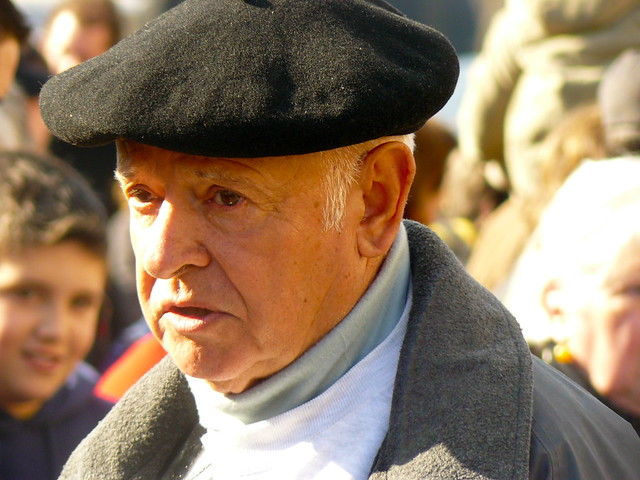
Fête du Boeuf Gras à Bazas

A beret [ˈbɛɹ.eɪ/bəˈɹeɪ] is:

  • A type of round, brimless cap with a soft top and a headband to secure it to the head; usually culturally associated with France.

It comes from the French béret (beret), from the Occitan (Gascon) berret (cap), from the Medieval Latin birretum (a kind of hat), from the Late Latin birrus (a large hooded cloak, a cloak to keep off rain, made of silk or wool), from the Gaulish birrus (a coarse kind of thick woollen cloth; a woollen cap or hood worn over the shoulders or head), from the Proto-Celtic *birros (short), the origins of which are not known [source]

Descendents in the modern Celtic languages include:

  • bearr [bˠɑːɾˠ] = to clip, cut, trim, shave, skim (milk), crop or pare (photos) in Irish.
  • beàrr [baːr̪ˠ] = to shave, cut (hair), clip, shear or prune in Scottish Gaelic
  • baarey = to bare, clip, cut, dress, poll, prune, shave or trimmed in Manx
  • byr [bɨ̞r/bɪr] = short, brief or concise in Welsh
  • berr [bɛɹ] = short or brief in Cornish
  • berr = short in Breton

Other words from the Proto-Celtic root *birros, via Latin and Gaulish, include biretta (a square cap worn by some Roman Catholic priests) and berretto (beanie, cap) in Italian, barrete (biretta, cap) in Portuguese, birrete (biretta) in French, and βίρρος [ˈβir.ros] (a type of cloak or mantle) in Ancient Greek [source].

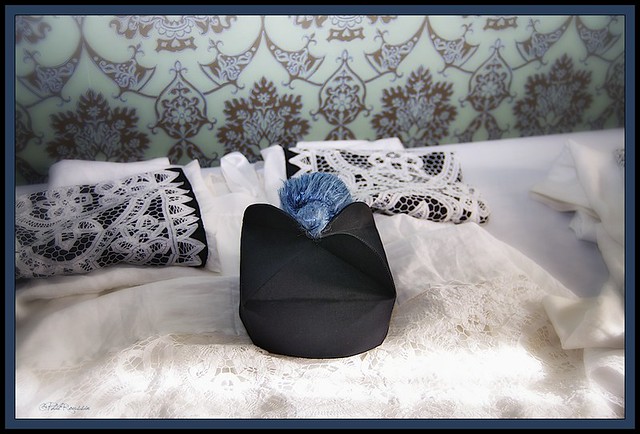
Biretta

Incidentally, words from beret in Celtic languages include: bairéad (beret, biretta, cap, hat, bonnet) in Irish, beeray or bayrn Frangagh (“French cap/hat”) in Manx, bere(t)/bered in Welsh, and béret/bered/boned in Breton.

You can find more details of these words on the Celtiadur blog. I also write about words, etymology and other language-related topics on the Omniglot Blog.

Here’s a video I made of this information:

Video made with Doodly [afflilate link].

Radio Omniglot podcasts are brought to you in association with Blubrry Podcast Hosting, a great place to host your podcasts. Get your first month free with the promo code omniglot.

The Fastest Way to Learn Japanese Guaranteed with JapanesePod101.com

Celtic Pathways – Top Tips

In this episode we’re looking into words for top, tip and related things in Celtic languages.

Snowdon / Yr Wyddfa

The Proto-Celtic word *barros means top, point or peak. Descendents in the modern Celtic languages include:

  • barr [bˠɑːɾˠ] = tip, point, top, summit, upper part, surface, etc in Irish.
  • bàrr [baːr̪ˠ] = apex, crest, crown, summit, tip, top, zenith, surface, etc in Scottish Gaelic
  • baare = apex, cap, climax, end, point, summit, tip, top, crest (of a wave), etc n in Manx
  • bar [bar] = head, top, summit, crest, bush, tuft or branch in Welsh
  • barr = summit in Cornish
  • barr = summit, surface, access or paroxysm in Breton [source]

Words from the same Proto-Celtic roots, via Gaulish and Latin, include baràz (bramble) in Romansh, and barra (garret, loft, upper platform) in Galician [source].

Words from the same PIE roots include barley in English, farine (flour) in French, bara (bread) in Welsh, Cornish and Breton, bairín (loaf) in Irish, and related words in Celtic languages [source].

Incidentally, the unrelated Galician word barra (sandbank, bar, rod) possibly comes from a Gaulish word, via the Vulgar Latin barra [source].

You can find more details of these words on the Celtiadur blog. I also write about words, etymology and other language-related topics on the Omniglot Blog.

Radio Omniglot podcasts are brought to you in association with Blubrry Podcast Hosting, a great place to host your podcasts. Get your first month free with the promo code omniglot.

Celtic Pathways – Donkeys

In this episode we’re looking into words for donkey and related beasts in Celtic languages.

Donkeys

There don’t appear to be any Proto-Celtic words for donkey. Instead, the Celtic languages borrowed words from Latin. These include:

  • asal [ˈasˠəlˠ] = ass or donkey in Irish.
  • asal [asal̪ˠ] = ass or donkey in Scottish Gaelic
  • assyl = ass or donkey in Manx
  • asyn [ˈasɨ̞n / ˈasɪn] = (male) donkey / (he-)ass, or an absurd or stubborn person in Welsh
  • asen = ass or donkey in Cornish
  • azen = donkey in Breton [source]

The Brythonic words come from the Latin asina from asinus (donkey, ass), which is of unknown origin [source]. The Goidelic words come from the same root via the Latin asellus (young ass, donkey) [source].

The English word ass (donkey) was borrowed from an old Brythonic language, via the Middle English asse (ass, donkey) and the Old English assa and assen (she-ass) [source].

Other words from the same Latin roots include asinine (foolish, obstinate, donkeyish), asinicide (the killing of an idiot) in English [source], osel (donkey, ass, stupid person) in Czech, and osioł (male donkey) in Polish [source].

Incidentally, another word for donkey in Old English was esol [ˈe.zol], which came from Proto-West Germanic *asil (donkey), from Latin asellus (young ass, donkey) [source]. Related words in other Germanic languages include ezel (donkey, ass, fool, idiot, easel) in Dutch, Esel (ass, donkey, a stupid/stubborn person) in German, and æsel (ass, donkey) in Danish [source].

The English word easel also comes from the same roots, via Dutch ezel and Proto-West Germanic *asil [source].

Radio Omniglot podcasts are brought to you in association with Blubrry Podcast Hosting, a great place to host your podcasts. Get your first month free with the promo code omniglot.
You can find more details of these words on the Celtiadur blog. I also write about words, etymology and other language-related topics on the Omniglot Blog.

Celtic Pathways – Surface and Skin

In this episode we’re looking into words for surface, skin and related things in Celtic languages.

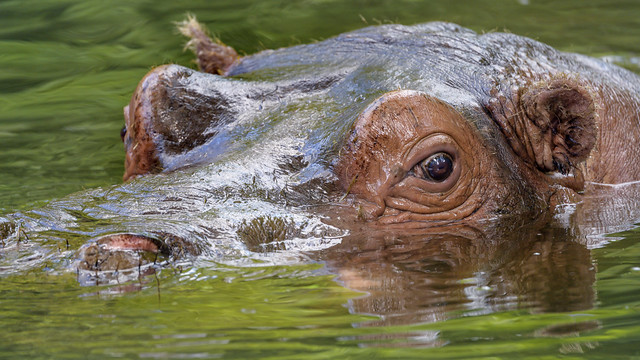
Hippo very close

The Proto-Celtic *tondā means surface or skin and comes from the Proto-Indo-European *tend- (to cut off) [source].

Descendents in the modern Celtic language include:

  • tonn [t̪ˠɑun̪ˠ] = surface or skin in Irish.
  • tonn [tɔun̪ˠ] = skin or hide in Scottish Gaelic
  • ton [tɔn] = rind, crust, peel, turf, unploughed land or lawn in Welsh
  • ton = grass in Cornish
  • ton [tɔn] = rind or surface in Breton

There doesn’t appear to be a cognate in Manx.

The English word tonne/ton comes from the same Proto-Celtic root, via French, Latin and Gaulish [source]. Other words from the same Proto-Celtic root include tonne (tonne/ton) in French, tona (tun – a type of cask, ton/tonne) and tonya (a type of sweet bun) in Catalan, tona (surface, skin, bark) and tonel (barrel, tun) in Galician, and tonel (barrel) in Spanish [source].

Incidentally, the English word tun (a large cask, fermenting vat) probably comes from the same roots, via Middle English, Old English, Proto-Germanic, Latin and Gaulish, as does the German word Tonne (barrel, vat, tun, drum), the Dutch word ton (barrel, ton, large amount), and the Irish word tunna (cask), which was borrowed from Latin [source].
(A bit of bonus content that’s not included in the recording.)

You can find more details of these words on the Celtiadur blog. I also write about words, etymology and other language-related topics on the Omniglot Blog.

Omniglot News (19/03/2023)

Here’s the latest news from the world of Omniglot.

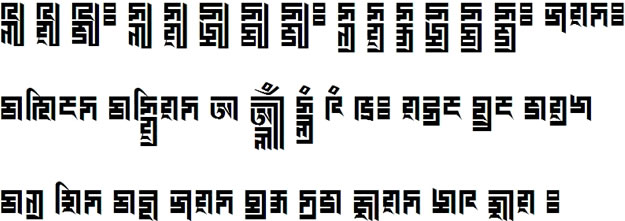
New writing system: Marchen, an abudiga that developed from the Tibetan script in about the 7th century AD and was used until the 10th century to write Zhang-Zhung, an extinct Sino-Tibetan language that was spoken mainly in western Tibet.

Sample text in the Marchen script

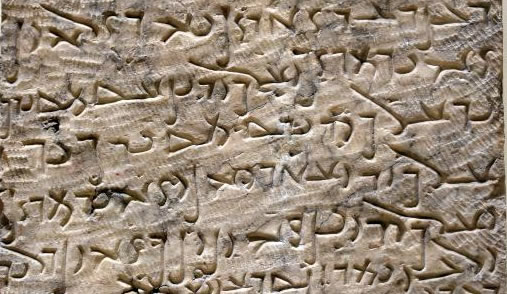
New writing system: Hatran, an abudiga that was used in what is now northern Iraq to write Hatran Aramaic, a Middle Aramaic dialect that was spoken in northeastern Mesopotamia from about the 3rd Century BC to the 3rd Century AD.

A sample text in the Hatran script

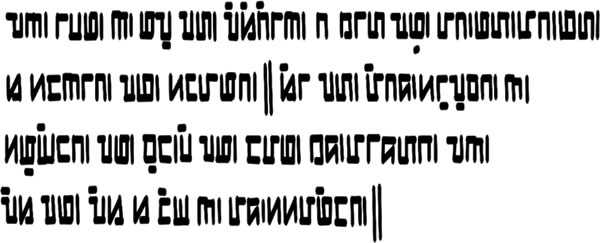
New constructed script: Badlit Anituun, was created by Ace Paloma as an alternative way to write Filipino.

Sample text in Badlit Anituun

There are new language pages about:

  • Tajio, a Celebic language spoken in Central Sulawesi Province in Indonesia.
  • Jemez (Cáuijògà), a Tanoan language spoken in Jemez Pueblo in Sandoval County in the north of New Mexico in the south of the USA.

There are new numbers pages in:

  • Tajio, a Celebic language spoken in Central Sulawesi Province in Indonesia.
  • Nagaibak, a variety of Tatar spoken in the Chelyabinsk Oblast in the southwest of the Russian Federation.

On the Omniglot blog there’s a post about Script Families, about how writing systems can be grouped into families, and the usual Language Quiz. See if you can guess what language this is:

Here’s a clue: this language is spoken in northern Sweden and northern Finland.

The mystery language in last week’s language quiz was
Futunan (Fakafutuna), a Polynesian language spoken on the islands of Funtuna and Alofi in the French territory of Wallis and Futuna in the South-West Pacific Ocean.

In this week’s Adventure in Etymology we find out what links the words Kith and Kin with words like cunning, uncouth, gnome, gentle, genius and engine.

On the Celtiadur blog there’s a new post about words for Bright Lights and related things in Celtic languages.

There’s a new Celtic Pathways podcast about words for Shamrock and Clover and related things in Celtic languages.

I also made improvements to the The Bardic Alphabet (Coelbren y Beirdd) page.

I wrote a new song this week called Upside Down which goes something like this:

What do you do when the world’s all askew
and everything’s out of its place?
Nothing is right and try as you might
You just can’t stand the pace.

Chorus
Upside-down and downside up
Back to front and front to back
Inside out and outside in
It puts you in a spin.

What do you do when your life’s in a stew
and nothing is going your way?
It’s all too much to handle or touch
And you don’t know what to say.

What do you do when you’re feeling blue
and nothing makes any sense?
Maybe a song or a smile will help
to make you feel less tense.

I’ve written a chorus in Welsh as well, but haven’t recorded it yet:

Dibyn-dobyn, dobyn dibyn
ochr chwith ac ochr faes
miga-moga, igam-ogam
Mae popeth o ei le

For more Omniglot News see:
https://www.omniglot.com/news/
https://twitter.com/Omniglossia
https://www.facebook.com/groups/omniglot/
https://www.facebook.com/Omniglot-100430558332117

You can also listen to this podcast on: Apple Podcasts, Amazon Music, Stitcher, TuneIn, Podchaser, PlayerFM or podtail.

If you would like to support this podcast, you can make a donation via PayPal or Patreon, or contribute to Omniglot in other ways.

The Fastest Way to Learn Korean with KoreanClass101

Celtic Pathways – Shamrocks and Clover

In this episode we’re looking into words for shamrock, clover and related things in Celtic languages.

Shamrocks

A shamrock is the trefoil leaf of any small clover, especially Trifolium repens, commonly used as a symbol of Ireland. The word comes from the Irish seamróg (shamrock), from the Old Irish semróc, a diminutive of semar (clover, shamrock), from Proto-Celtic *semarā, possibly from Proto-Indo-European *semh₁r-/*smeh₁r- [source].

Related words in the modern Celtic language include:

  • seamróg [ˈʃamˠɾˠoːɡ] = shamrok and semair = clover in Irish.
  • siumrag [ʃumərag] = clover, shamrock, wood sorel, and semair [ʃɛmɪrʲ] = shamrock, clover in Scottish Gaelic
  • shamrag = clover, shamrock, wood sorel in Manx
  • siamroc/samrog = shamrock in Welsh (borrowed from English)

Shamrock in Cornish teyrdelen (“three leaves”). In Breton it’s trefle, which was borrowed from the French trèfle (clover, shamrock); or melchonenn, which is cognate with the Cornish mellyon (clover), and the Welsh meillion (clover, trefoil, clubs (a suit in cards)). The origin of these words is not known.

You can be find more information about connections between Celtic languages on the Celtiadur blog. I also write about words, etymology and other language-related topics on the Omniglot Blog.

Celtic Pathways – Towns and Beehives

In this episode we’re finding out how words for towns and related things in Celtic languages are linked to words for beehives in other languages.

Trefor

The Proto-Celtic word *trebā means dwelling, and comes from the Proto-Indo-European *treb- (dwelling, settlement) [source].

Related words in the modern Celtic language include:

  • treibh [ˈtʲɾʲɛv] = house, homestead, farmstead, household, family, tribe or race in Irish.
  • treubh [treːv] = tribe, family, clan or kin, and possibly treabh [tro] = farming village in Scottish Gaelic
  • tre(f) [treː(v)] = town; town centre; dwelling(-place), habitation, residence, home; house (and surrounding land), homestead or farm in Welsh
  • tre = [trɛ:/tre:] = farmstead, home, town or village in Cornish
  • trev = town in Breton

There doesn’t appear to be a cognate word in Manx.

Words from the same Proto-Celtic root (via Latin) possibly include trobo (beehive, skep) in Galician, and truébanu (beehive, barrel, basket) in Asturian [source].

The archaic English word thorp(e) (a group of houses standing together in the country; a hamlet; a village), which appears in place names such as Milnthorpe and Scunthorpe, comes from the same PIE roots [source].

Other words from the same PIE roots include Dorf (hamlet, village, town) in German, torp (farm, cottage, croft) in Swedish, þorp (village, farm) in Icelandic, and trevë (country, region, village) in Albanian [source].

You can be find more details of words for Towns and Tribes in Celtic languages on the Celtiadur, a blog where I explore connections between Celtic languages in more depth. I also write about words, etymology and other language-related topics on the Omniglot Blog.

Celtic Pathways – Heights

In this episode we’re looking up words for high and related things.

View from Snowdon

The Proto-Celtic word *ardwos means high, and comes from the Proto-Indo-European *h₃r̥dʰwós., from *h₃erdʰ- (to increase, grow; upright, high) [Source].

Related words in the modern Celtic language include:

  • ard [ɑːɾˠd̪ˠ/æːɾˠd̪ˠ] = height, hillock, top, high part; high, tall, loud, ambitious, chief, excellent, noble or advanced in Irish.
  • àrd [aːr̪ˠd] = high, lofty, tall; great; loud; chief, eminent, superior or supreme in Scottish Gaelic
  • ard = high, towering, tall, big, loud, height, high place, fell, incline, district, region, direction, compass point or pole in Manx
  • ardd [arð] = hill, highland, top, high or upland in Welsh
  • ardh = height or high place in Cornish
  • arz = high or elevated in Breton

The Ardennes, a region of forests and hills in mainly in Belgium, Luxembourg, and also in France and Germany, was known as Arduenna Silva in Latin. The first part of the Latin name probably comes from the Gaulish *arduenna (high), or from the Latin arduus (lofty, high, steep, tall), which comes from the same PIE root [source].

Other words from the same PIE roots include arbor, arduous, orthodox and orthography in English, arbre (tree) in French, árbol (tree, mast) in Spanish, and рост [rost] (growth, increase, rise, height, stature) in Russian [source].

You can be find more details of words for High, Elevated, Noble and related things in Celtic languages on the Celtiadur, a blog where I explore connections between Celtic languages in more depth. I also write about words, etymology and other language-related topics on the Omniglot Blog.