Adventures in Etymology – Sloom

Today we’re looking into the origins of the word sloom.

Slumber

In some dialects of English spoken in England sloom [sluːm] means:

  • A gentle sleep; slumber.
  • to doze, slumber
  • to become weak and flaccid (of plants)
  • to move or wander slowly or silently

In Scots sloom is:

  • A dreamy or sleepy state, a reverie, day-dream, a light sleep, slumber, an unsettled sleep
  • to sleep lightly, doze, slumber fitfully
  • to slip along easily and quietly, to glide smoothly
  • to make or become soft and flaccid as a result of frost, damp, etc

It comes from the Middle English sloum(b)e / slume, from the Old English slūma (sleep, slumber), from the Proto-Germaic *slūm- (slack, loose, limp, flabby), from the PIE *(s)lew- (slack, loose, limp, flabby) [source].

The English word slumber comes from the same Proto-Germanic root, as does the Dutch sluimeren (to slumber) and sloom (sluggish, lifeless), the German Schlummer (slumber) and schlummern (to doze, slumber), and the Danish slumre (to drowse) [source].

Here’s a video I made of this information:

Video made with Doodly [afflilate link].

I also write about words, etymology and other language-related topics on the Omniglot Blog, and I explore etymological connections between Celtic languages on the Celtiadur.

You can also listen to this podcast on: Apple Podcasts, Amazon Music, Stitcher, TuneIn, Podchaser, PlayerFM or podtail.

If you would like to support this podcast, you can make a donation via PayPal or Patreon, or contribute to Omniglot in other ways.

The Fastest Way to Learn Japanese Guaranteed with JapanesePod101.com

Adventures in Etymology – Deck

Today we’re exploring the origins of the word deck.

Sunset over Bangor pier

deck [dɛk] means:

  • Any raised flat surface that can be walked on: a balcony; a porch; a raised patio; a flat rooftop.
  • The floorlike covering of the horizontal sections, or compartments, of a ship.
  • A main aeroplane surface.

It comes from the Middle English dekke (the roof over any part of a boat or ship), from Middle Dutch dec (roof, covering), from decken (to roof, cover, protect), from Old Dutch thecken (to cover, roof), from Proto-West-Germanic *þakkjan (to cover), from Proto-Germanic *þakjaną [ˈθɑk.jɑ.nɑ̃] (to cover), *þaką (roof, cover), from PIE *(s)teg- (cover) [source].

Words from the same Proto-Germanic root (*þaką) include: thatch in English, dak (roof) and dekken [ˈdɛkə(n)] (to cover, set) in Dutch, Dach (roof) and decken (to cover, set) in German, tak (roof, ceiling) and täcka [tɛka] (to cover) in Swedish, and tag (roof) and tække (to thatch) in Danish [source].

Words from the same PIE root (*(s)teg-) include: detect, protect, tile and toga in English, (house) in Welsh, and teach (house) in Irish [source].

Here’s a video I made of this information:

Video made with Doodly [afflilate link].

I also write about words, etymology, and other language-related topics, on the Omniglot Blog, and I explore etymological connections between Celtic languages on the Celtiadur.

You can also listen to this podcast on: Apple Podcasts, Amazon Music, Stitcher, TuneIn, Podchaser, PlayerFM or podtail.

If you would like to support this podcast, you can make a donation via PayPal or Patreon, or contribute to Omniglot in other ways.

The Fastest Way to Learn Japanese Guaranteed with JapanesePod101.com

Adventures in Etymology – Timber

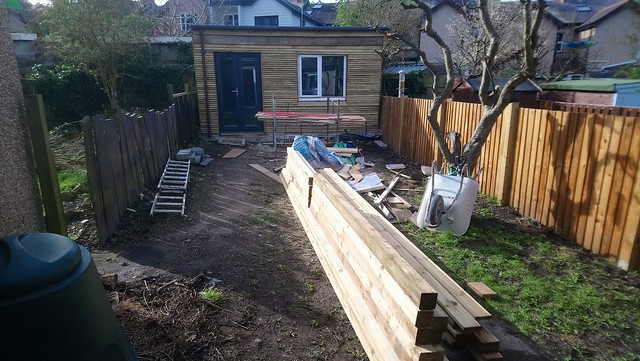
In this week’s Adventures in Etymology we’re exploring the origins of the word timber.

Studio / Stwdio

Timber [ˈtɪmbə/ˈtɪmbɚ] means:

  • Trees in a forest regarded as a source of wood.
  • Wood that has been pre-cut and is ready for use in construction.
  • A heavy wooden beam, generally a whole log that has been squared off and used to provide heavy support for something such as a roof.

It comes from the Middle English tymber/timber (timber), from the Old English timber [ˈtim.ber] (timber, a building, the act of building), from the Proto-Germanic *timrą [ˈtim.rɑ̃] (building, timber), from the PIE *dem- (to build) [source].

Words from the same Proto-Germanic root include timmeren (to build, put together) in Dutch, Zimmer [ˈt͡sɪmɐ] (room) in German, timmer (timber) in Swedish, and timbur (wood, timber) in Icelandic [source].

Words from the same PIE root include domus (house, home) in Latin, duomo [ˈdwɔ.mo] (cathedral) in Italian, дом [dom] (house, building, home) in Russian and most other Slavic languages, and dome, domestic and despot in English [source].

Here’s a video I made of this information:

Video made with Doodly [afflilate link].

I also write about words, etymology, and other language-related topics, on the Omniglot Blog, and I explore etymological connections between Celtic languages on the Celtiadur.

You can also listen to this podcast on: Apple Podcasts, Amazon Music, Stitcher, TuneIn, Podchaser, PlayerFM or podtail.

If you would like to support this podcast, you can make a donation via PayPal or Patreon, or contribute to Omniglot in other ways.

The Fastest Way to Learn Korean with KoreanClass101

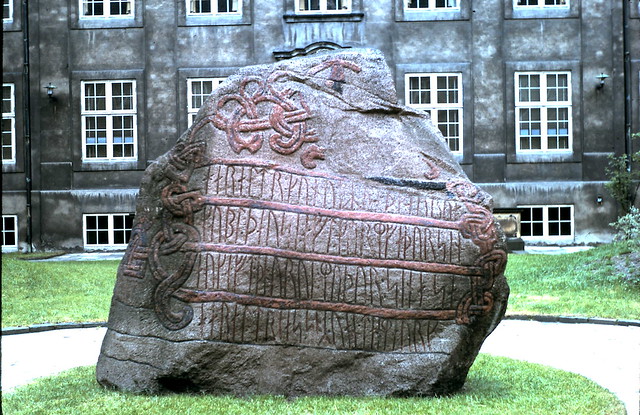
Adventures in Etymology – Runes (ᚱᚢᚾᛟ)

Today we’re delving into the secret and mysterious origins of the word rune.

Runic stone - National Museum, Copenhagen

Rune [ɹuːn] means:

  • any of the characters of certain ancient alphabets of Germanic languages, esp. of Scandinavia and Britain, from about the 3rd to 13th centuries.
  • something written or inscribed in such characters.
  • something secret or mysterious.

It comes from Old Norse rún (secret, rune), from Proto-Norse ᚱᚢᚾᛟ [ˈruː.noː] (runo – secret, mystery, rune, inscription, message), from Proto-Germanic *rūnō [ˈruː.nɔː] (secret, mystery, rune), possibly from Proto-Celtic *rūnā (secret, mystery) [source].

Words for runes in Germanic languages come from the same Proto-Germanic root, including rune [ˈrynə] in Dutch, rune [rʉːnə] Norwegian, and runa in Swedish [source].

Words from the same Proto-Celtic root include rún (mystery, secret, intention, purpose, love, affection) in Irish, and rhin (secret, mystery, enchantment, virute, occult) in Welsh [source].

In Irish a rún is used as a term of affection meaning “my dear/darling”. It appears in the traditional song Siúil a Rún:

Here’s a video I made of this information:

Video made with Doodly – an easy-to-use animated video creator [affiliate link].

I also write about words, etymology, and other language-related topics, on the Omniglot Blog, and I explore etymological connections between Celtic languages on the Celtiadur.

You can also listen to this podcast on: Apple Podcasts, Amazon Music, Stitcher, TuneIn, Podchaser, PlayerFM or podtail.

If you would like to support this podcast, you can make a donation via PayPal or Patreon, or contribute to Omniglot in other ways.
Blubrry podcast hosting

Adventures in Etymology – Telling Tales

In today’s Adventure in Etymology we’re telling tales about the origins of the word tale.

Telling Tales

A tale [teɪl] is:

  • a narrative that relates the details of some real or imaginary event, incident, or case; story
  • a literary composition having the form of such a narrative
  • a falsehood; lie
  • a rumor or piece of gossip, often malicious or untrue

It used to mean:

  • number, tally, quota
  • account, estimation, regard, heed
  • speech, language
  • a speech, a statement, talk, conversation, discourse
  • a count, declaration

It comes from the Middle English tale [ˈtaːl(ə)] (personal narrative, account), from the Old English talu [ˈtɑ.lu] (account, reckoning, tale, narration) from the Proto-West Germanic *talu (narration, report, assessment, judgement, calculation, counting), from the Proto-Germanic *talō (narration, report), from the PIE *dol-éh₂ (reckoning, calculation, fraud), from *del- (to reckon, calculate) [source].

Some words from the same Proto-Germanic root include tell in English, taal [taːl] (language) in Dutch and Afrikaans, Zahl [tsaːl] (number, numeral, figure) in German, tala [ˈtʰaːla] (a speech, button, number) in Icelandic, tala [ˈtɑːˌla] (to speak, tell, talk) in Swedish, and tale [ˈtˢæːlə] (speech, talk, discourse; to speak, talk) in Danish [source].

Here’s a video I made of this information:

Video made with Doodly – an easy-to-use animated video creator [affiliate link].

Here’s a silly little ditty I wrote in 2019 called Tall Tales:

I also write about words, etymology, and other language-related topics, on the Omniglot Blog, and I explore etymological connections between Celtic languages on the Celtiadur.

You can also listen to this podcast on: Apple Podcasts, Amazon Music, Stitcher, TuneIn, Podchaser, PlayerFM or podtail.

If you would like to support this podcast, you can make a donation via PayPal or Patreon, or contribute to Omniglot in other ways.

Blubrry podcast hosting

Adventures in Etymology – Gates & Streets

In today’s Adventure in Etymology we’re find out when a gate is not a gate.

A gate [ɡeɪt] is:

  • A doorlike structure outside a house.
  • A doorway, opening, or passage in a fence or wall.
  • A movable barrier.

It comes from the Middle English gat(e)/ȝat(e) [ɡa(ː)t/ja(ː)t] (gate), from the Old English ġe(a)t/gat [jæ͜ɑt] (gate) from the Proto-West Germanic *gat (hole, opening) from the Proto-Germaic *gatą [ˈɣɑ.tɑ̃] (hole, opening, passage), from *getaną [ˈɣe.tɑ.nɑ̃] (to attain, acquire, get, receive, hold) [source].

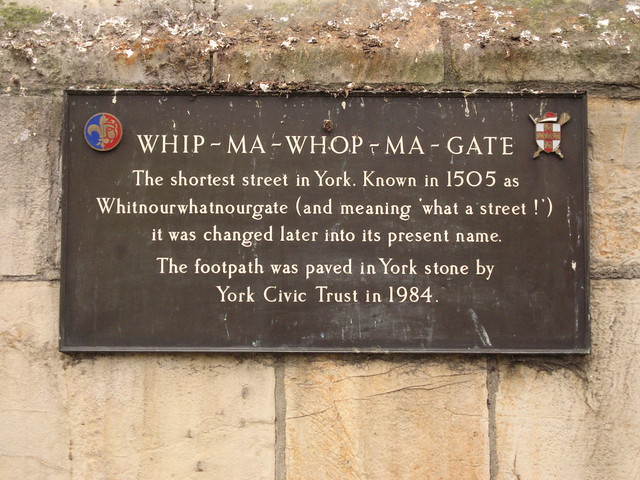
In parts of northern England the word gate means a way, path or street, and in Scots it means way, road, path or street. It appears mainly in street names such as Briggate (“bridge street”) and Kirkgate (“church street”). It comes from the Old Norse gata (street, road), from the Proto-Germanic *gatwǭ [ˈɣɑt.wɔ̃ː] (street, passage), which comes from the same Proto-Germanic root as the other kind of gate.

Whip-Ma-Whop-Ma-Gate

Words from the same Old Norse root include gata [ˈɡɑːˌta] (street, frontage, strip) in Swedish, gate (street) in Norwegian and gade [ˈɡ̊æːðə] (street, road) in Danish, Gasse [ˈɡasə] (alley) in German, and gas [χɑs/ɣɑs] (unpaved street) in Dutch [source].

Here’s a video I made of this information:

Video made with Doodly – an easy-to-use animated video creator [affiliate link].

I also write about words, etymology, and other language-related topics, on the Omniglot Blog, and I explore etymological connections between Celtic languages on the Celtiadur.

You can also listen to this podcast on: Apple Podcasts, Amazon Music, Stitcher, TuneIn, Podchaser, PlayerFM or podtail.

If you would like to support this podcast, you can make a donation via PayPal or Patreon, or contribute to Omniglot in other ways.
Blubrry podcast hosting

Episode 48 – Gamification

In this episode I talk about the gamification of language learning, and specifically how gamification is used in language learning apps like Duolingo.

What is Gamification?
According to Wikipedia, “Gamification is the strategic attempt to enhance systems, services, organizations, and activities in order to create similar experiences to those experienced when playing games in order to motivate and engage users.”

Theme tune

Friday Afternoon / Prynhawn Dydd Gwener

If you would like to support this podcast, you can make a donation via PayPal or Patreon, or contribute to Omniglot in other ways.
Find out more about StoryLearning [affiliate link]

Blubrry podcast hosting

Omniglot News (17/10/21)

There are three new language pages on Omniglot this week:

  • Tukang Besi, a Celebic language spoken mainly in the Tukangbesi Islands in Wakatobi district of Southeast Sulawesi Province in central Indonesia.
  • Chittagonian (চিটাইঙ্গা), an Eastern Bengali-Assamese language spoken in the Chittagong Division in southeast Bangladesh.
  • Wolio, a Celebic language spoken in the province of Southeast Sulawesi in Indonesia.

There’s a new adapated script: Malay-Indonesian Cyrillic (Алфабэт Кирил Мэлайу-Индонэсиа), a way to write Malay and Indonesian with the Cyrillic alphabet devised by Naufal Rizky Rahardian.

There are new phrases and numbers in Kven (kvääni), a Finnic language spoken in northern Norway.

The mystery language in last week’s language quiz was Kven, and I’ve just posted a new Language Quiz.

There’s a new post on the Omniglot blog called Fighting Combs, about the Scots word fecht (to fight), and related words in Dutch, English, German, Swedish and Russian.

There are two new Celtiadur posts this week: one about Ale and Beer and one about Lakes and Ponds.

In this week’s Adventure in Etymology we find connections between Words and Verbs.

I made improvements to Maithili phrases page, which now has translations of all the phrases thanks to Binu V Nair of Languages Home.

In other news, I went to a folk music session on Tuesday night and spoke, and sang in, Welsh most of the time. We also spoke some Irish, German, Dutch, Finnish and English – just a typical night in Bangor.

For more Omniglot News see:
https://www.omniglot.com/news/
https://twitter.com/Omniglossia
https://www.facebook.com/groups/omniglot/
https://www.facebook.com/Omniglot-100430558332117

You can also listen to this podcast on: Apple Podcasts, Stitcher, TuneIn, Podchaser, PlayerFM or podtail.

If you would like to support this podcast, you can make a donation via PayPal or Patreon, or contribute to Omniglot in other ways.
Blubrry podcast hosting

Adventures in Etymology 29 – Rain

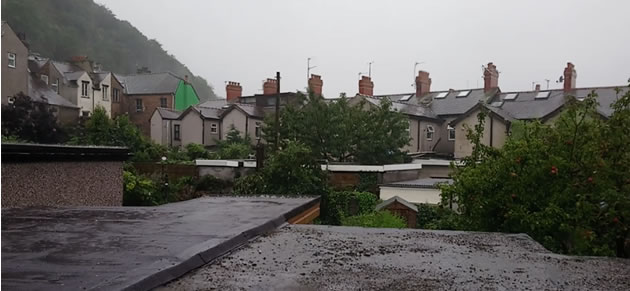
As quite a bit of wet stuff has been falling out of the sky this week, and it’s raining as I write this, I thought I’d look into the the origins of the word rain [ɹeɪn].

A photo of rain taken from my house

Definition:

  • condensed water falling from a cloud
  • any matter moving or falling, usually through air

[source]

It comes from the Middle English reyn/rein [rɛi̯n/reːn] (rain), from the Old English reġn [rejn] (rain), from the Proto-West Germanic *regn [rejn] (rain), from the Proto-Germanic *regną (rain), possibly from the PIE *Hreǵ- (to flow) [source], or from *reg- (to water, moisture, wetness) [source]

Words for rain in other Germanic languages come from the same Proto-Germanic root, including regen [ˈreɣə(n)] in Dutch, Regen [ˈʁeː.ɡŋ̍] in German, and regn in Danish, Swedish, Norwegian, Faroese and Icelandic, with different pronunciations in each language [source].

The English word irrigate comes from the same PIE root, via the Latin irrigare (to irrigate), from irrigō (I water, irrigate, flood), from in- (after) and rigō (I wet, moisten, water) [source].

Here’s a video I made of this information:

Here’s a song I wrote about rain:

A slightly different version can be heard at:

I also write about etymology, and other language-related topics, on the Omniglot Blog.

You can also listen to this podcast on: Apple Podcasts, Stitcher, TuneIn, Podchaser, PlayerFM or podtail.

If you would like to support this podcast, you can make a donation via PayPal or Patreon, or contribute to Omniglot in other ways.

Blubrry podcast hosting

Episode 47 – Emoji (🖼️✍️)

Today we are looking at the origins and use of emoji, those little symbols that appear
in text messages, emails and other electronic communications.

An emoji is a pictogram, logogram, ideogram or smiley used in electronic messages and web pages. Emoji are used to fill in emotional cues otherwise missing from typed conversations. They include facial expressions, common objects, places and types of weather and animals [source].

The word emoji comes from the Japanese word 絵文字 (emoji), which is also written えもじ or エモジ, and means emoji, pictorial symbol, pictograph or pictogram, or literally “picture writing” [source].

Emoji first appeared in 1997 on a Japanese mobile phone made by J-Phone called the SkyWalker DP-211SW, which included 90 black and white emoji. It didn’t sell well and the emoji were rarely used.

A set of 176 colour emoji were created in 1999 by Shigetaka Kurita (栗田穣崇), who was inspired by manga (漫画) comics, which use symbols known as manpu (漫符) to represent emotions, actions, etc. They appeared on the i-mode pager developed by NTT DoCoMo. The emoji became popular in Japan and other companies starting add similar symbols to their mobile systems.

Between 2007 and 2010, the Unicode Consortium and other standarization bodies in the USA, Europe and Japan discussed and eventually agreed on a set of 722 emoji. These were included in the version 6.0 of Unicode, which was released in 2010. More emoji have been added since then, and they have become popular worldwide.

In 2014 the founder of Emojipedia, Jeremy Bruge, declared 17th July as World Emoji Day [source].

In 2015 the face with tears of joy emoji 😂was named Word of the Year by the Oxford Dictionaries [source].

There have been several musicals based on emoji in Los Angeles and New York, and The Emoji Movie was released in 2017 [source]..

According to a 2017 study at the University of Michigan that analysed emoji use in over 1.2 billion messages, the most widely used emoji are the face with tears of joy (😂), the red heart (❤️) and the smiling face with heart eyes (😍). People in Australia, France and Czechia are more likely to use happy emoji, while these in Mexico, Colombia, Chile and Argentina prefer more negative emoji.

The emojitracker site shows realtime emoji use on Twitter. As I’m writing this, the face with tears of joy (😂) appears in the top spot, followed by the red heart (❤️), the loudly crying face (😭), the smiling face with heart eyes (😍), and the recycling symbol (♻️).

The appearance of emoji vary between different operating systems, and the way they’re interpreted can vary from person to person. Some have developed particular meanings in specific contexts or places. Some are culturally specific, such as the white flower emoji (💮), which is used by teachers in Japan when their students have done well. It is also used to indicate love, happiness and beauty on special occasions such as Valentine’s Day. If you include emoji in a message, the person or people receiving it might not get the same meaning from them as you intended.

The novel Moby Dick has been ‘translated’ into emoji to become Emoji Dick or 🐳 (spouting whale), and a few other stories have been written in emoji. Whether readers understand them or not is another matter. Judging by the comments on one of them, most don’t. [source].

If you would like to support this podcast, you can make a donation via PayPal or Patreon, or contribute to Omniglot in other ways.
Blubrry podcast hosting