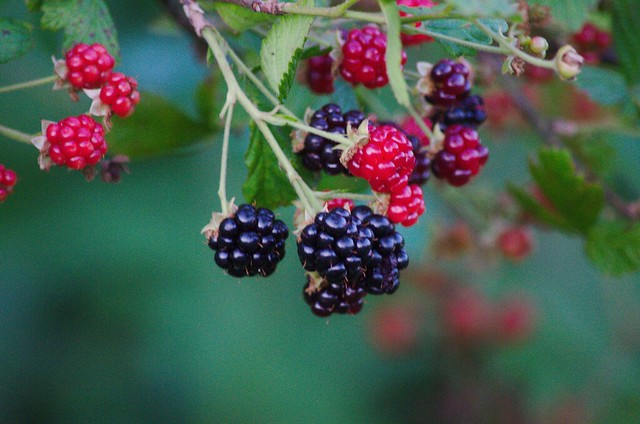
While putting together a post on the Celtiadur this week, I came across the Welsh word mwyara [mʊɨ̯ˈara/mʊi̯ˈaːra], which means to gather/pick blackberries, to go blackberrying, and also to be idle. I wouldn’t associate picking blackberries with being idle, but someone must have done in the past. Is picking blackberries or other fruit associated with idleness in other languages?
Mwyara comes from mwyar (blackberries, berries), from the Proto-Brythonic *muɨar (blackberries, berries), from the Proto-Celtic *smiyoros (berries) [source].
Idle means to pass time doing nothing, to move, loiter or saunter aimlessy, or (of a machine or engine) to operate at a low speed [source]. It comes from the Middle English idel/ydel, from the Old English īdel (empty, void, bereft, worthless, useless, vain), from the Proto-Germanic *īdalaz (idle, void, unused), from the Proto-Indo-European *yeh₁- [source].
Words from the same root include the Dutch ijdel (vain, idle, petty) and iel (thin, slender), the German eitel (vain), and the Welsh iâl (clearing, glade) [source].
In Dutch the word monster [ˈmɔnstər] means a sample, and also a monster. It was borrowed from the Old French word monstre (monster) in the 13th century and at first meant a monster or monstrosity, and later in the 14th century came to mean a sample, specimen or test piece as well. It is also used to describe something very large [source].
The Old French word monstre came from the Latin mōnstrāre (to show), from mōnstrum (a divine omen indicating misfortune, an evil omen, portent; monster), from monēre (to warn, admonish). From the same root we get such English words as monster, muster, monitor, admonish [source], and also money, which is named after the Roman goddess Juno Moneta, whose temple in Rome housed the mint [source].
Here are some examples of how monster is used (from Duolingo and Reverso):
We wegen het monster af = We weigh the sample (or monster)
Hij neemt een monster van onze koeien = He takes a sample from our cows
Een troebel monster moet worden gefiltreerd = When the sample is cloudy, it should be filtered
Hier kon ik het monster aanroepen = It’s where I was told I could summon the monster
Loch Ness is de perfecte bergplaats voor een prehistorisch monster = Loch Ness would be the perfect hiding place for a prehistoric monster
Een driekoppig monster en vliegende schotels = A three-headed sea monster and some flying saucers
The Dutch word blij [blɛi] means happy, glad, pleased or delighted. It comes from the Middle Dutch blide (happy, cheerful, joyous), from the Old Dutch *blīthi (calm, happy), from the Proto-West Germanic *blīþī (happy), from the Proto-Germanic *blīþiz (serene, mild, pleasant, pleasing, delightful, friendly), from Proto-Indo-European *bʰlī- (light, fine, pleasant) from *bʰleh₁-/*bʰel- (to shine) [source].
Here are some related words and examples of how it’s used (from bab.la and Reverso):
blijdschap = joy, gladness
verblijden = to gladden, delight
blij zijn = to be glad, rejoice, enjoy, be happy
blij maken = to gladden, cheer up
heel blij zijn = to burst with joy
blij zijn met een dode mus = to get all excited about nothing (“to be happy with a dead mouse”)
Ik ben blij dat je ervan zult genieten = I’m glad you’ll enjoy it
Ik ben blij je eindelijk te ontmoeten = I’m pleased to finally meet you
Niet iedereen zal hiermee blij zijn = Not everyone is going to be happy with this
Words from the same root include the Swedish word blid [bliːd] (mild, kind), the Danish word blid [ˈbliðˀ] (gentle) and the word blíður, which means kind, obliging, mild, tender, affable, friendly or good-natured in Icelandic, and hospitable, hearty, friendly, sincere, pleased, mild or smooth in Faroese [source].
The English word blithe [blaɪð / blaɪθ] also comes from the same root, via the Middle English blithe (glad, happy, joyful; gentle, mild; gracious, merciful; bright, shining; beautiful, fair), and the Old English bliþe [ˈbliː.θe/ˈbliː.ðe] (happy, gentle) (to shine) [source].
It means carefree and lighthearted, or very happy or cheerful, and also lacking or showing a lack of due concern, heedless, casual and indifferent [source].
It tends to be used in certain expressions, such as:
He spoke with blithe ignorance of the true situation.
She had a blithe disregard for their feelings.
Some related (and rarely-used) words include blitheful (joyous), blitheless (sorrowful, sad, pitiful, miserable, wretched), blithely (without care, concern or consideration; or in a joyful, carefree manner), blithen (to be(come) happy), and blithesome (happy or spriteful, carefree).
Blithe [bləið] is more commonly used in Scottish English and in Scots, and means joyous, cheerful, happy, glad or well-pleased. A related word, used particularly in Orkney and Shetland, is blithemeat, which is a thanksgiving feast after the birth of a child [source].
In Shetland blithe is written blyde and means glad. Here are the Blyde Lasses, a folk duo from Shetland:
Yesterday I added details of a language called Akawaio (Ka’pon) to Omniglot. It’s a Cariban language spoken mainly in northern Guyana, and also in northern Brazil and eastern Venezuela, by about 6,380 people.
You may be wondering why I mention this. What’s so special about this language? Well, it just happens to be the 1,500th language I’ve written about on Omniglot, and it feels like a significant milestone to me. There are many more languages out there: 7,139, according to Ethnologue – so only another 5,639 to go! That should keep me busy for a while.
Of the languages on Omniglot, the majority (1,107) are written with the Latin alphabet. There are also 126 written with the Cyrillic alphabet, 75 written with the Arabic alphabet, 72 written with the Devanagari alphabet, and smaller numbers of languages written with other alphabets and writing systems. [More language and writing stats]
It’s becoming increasingly challenging to find information about languages that don’t yet appear on Omniglot. About 4,065 of the world’s languages have a written form, although many are rarely written, and the remaining 3,074 are probably unwritten [source]. There is little or no documentation for many languages, and what documentation there is can be difficult to find. Inspite of this, I will continue to add new language profiles to Omniglot, and appreciate any help you can offer.
I’ve been working on Omniglot on my own since 1998 – there are no minions or other assistants to help me. However, many other people have contributed to Omniglot, by sending me corrections, new material, suggestions, donations and so on, and I am profoundly grateful to all of them.
This is the 3,414th post I’ve written on this blog since launching it in March 2006. At first I tried to write something every day, but soon realised that was too much. At the moment I aim to write two posts a week, plus the language quiz on Sundays.
In April 2007 I started uploading videos to YouTube. Some of the videos feature silly little conversations in languages I’m learning. Others involve music-related events I’ve taken part in, and tunes and songs I’ve written. In 2021 I started uploading videos more regularly, particularly videos about words and etymology, and some songs as well. As well as the Adventures in Etymology videos I upload on Sundays, I plan to make videos featuring alphabets, phrases, etc in a variety of languages. Here’s one I made of the Danish alphabet:
Since June 2018 I’ve made 42 episodes of the Radio Omniglot Podacast, and 5 episodes of Adventures in Etymology, a new series I started in March 2021. It started as a series of videos I made for Instagram and Facebook, then I posted them on Youtube as well, and decided to add them to the Radio Omniglot site. I have ideas for other series I could make for Radio Omniglot, and would welcome any suggestions you may have.
In September 2018 I launched the Celtiadur, a blog where I explore connections between Celtic languages. This is based the Celtic cognates part of Omniglot. So far I’ve written 227 posts, and add a new one every week.
Since 1998 I’ve become fluent in Welsh and Irish, regained my fluency in French, maintained my fluency in Mandarin Chinese, more or less, and have learned enough Esperanto, Scottish Gaelic, Manx, Spanish, Swedish, Danish and Dutch to have at least basic conversations. I’ve also learnt quite a bit of Russian and Czech, and some Romanian, Cantonese, Slovak, Slovenian, Serbian, Icelandic, Faroese, British Sign Language, Breton and Cornish.
I’m currently concentrating on Spanish, Swedish, Danish and Dutch, while trying to maintain my other languages, particularly French and Welsh. For the past 4 years or so I’ve studied languages every day on Duolingo – my current streak reached 1,369 today. I’ve also been using Mondly and Memrise. [More about my language learning adventures].
While not working on Omniglot or learning languages, I like to sing, play musical instruments and write songs and tunes. My musical adventures started long before Omniglot, but for many years after leaving school I only really listened to music. In 2005 I started going to Ireland every summer to learn Irish language, and also Irish songs, tunes and dances. This inspired me to take up music again. Since then I’ve learnt to play the guitar, mandolin, ukulele, cavaquinho and harp, and started playing the recorder, piano and tin whistle again. I’ve learnt songs in many different languages, and written quite a few songs and tunes.
Here’s a song I wrote in 33 different languages:
Enough of this shameless self-promotion. What about you? Have you reached any significant milestones recently?
An interesting expression that came up in my Dutch lessons recently is bakje troost [ˈbɑ.kjə troːst], which is slang for a cup of coffee, and a diminutive of bak troost. It could be translated literally as a “little cup of comfort” or a “little cup of solace”. It is also known as bakkie troost [source].
Here are some examples of how it’s used (from Reverso):
Hoe kom je hier aan een bakje troost? What do I have to do to get some more coffee around here?
Bakje troost voor ons Cup of Joe for the guys
Kijk eens aan, een bakje troost Here you go. Cup of joe
Bak means a bin, box, crate, tray or tub; a cup or mug; a jail, slammer or prison (slang), or a car. It comes from the French word bac (ferry, vat), from the Old French bas/bac (flat boat), possibly from the Vulgar Latin *baccu (container), from the Latin bacar (kind of wine glass). Or from a Celtic or Germanic word [source].
Some related words include:
afvalbak = rubbish bin, trashcan, dustbin
bloembak = flower pot, planter, window box, flower tub
engelenbak = the highest box at a theatre (“angel box”)
glasbak = bottle bank
ragbak = a run-down car
Troost means comfort or consolation. It comes from the Middle Dutch troost, from the Old Dutch trōst, from the Proto-Germanic *traustą (shelter, help, aid, trust, confidence, alliance), from *traustaz (firm, strong), from thge Proto-Indo-European *deru-/*drew-/*drū- (to be firm, hard, solid, tree) [source].
The English words trust and tryst come from the same Germanic root, as do the German word Trost (consolation), the Swedish word tröst (comfort, consolation, dummy / pacifier), and related words in other languages [source].
This week some of the lockdown restrictions were lifted here in Wales, and cafés are open again, at least for takeaways. Yesterday I saw a long queue of people outside a café, probably waiting for their bakjes troost.
In the beforetimes I did go to cafés now and then for a cup of hot chocolate or herbal/fruit tea, maybe a pastry, and a change of scenery. This is something I miss a bit, but as I don’t drink coffee and rarely drink tea, I have no craving for caffeine, and won’t be queueing outside any cafés.
An interesting Danish word I learnt today is pung, which means purse, wallet, pouch or scrotum. It comes from the Old Norse word pungr (purse) [source], and appears in words like:
The word penge [ˈpʰɛŋə / ˈpʰɛŋŋ̩] means money, and was originally a plural of penning (coin), from the Old Danish pænning, Old Norse peningr (coin, penny, piece of property, article) [source], which was borrowed from the Old Saxon penning or the Old English penning/peniġ, from the Proto-Germanic *panningaz (coin) [source].
From the same root we get the English words penny and pence, the Irish word pingin (penny), the Dutch penning (medal, commemoration coin; money, cash), the German Pfennig (pfennig, penny), the Swedish words penning (coin, penny, money, cash), pengar (money) and peng (coin, money), and related words in other Germanic languages [source].
I carry my cash, cards and other bits and bobs in a wallet. How about you? If you use a pecunary receptacle, what do you call it, and what do you keep in it?
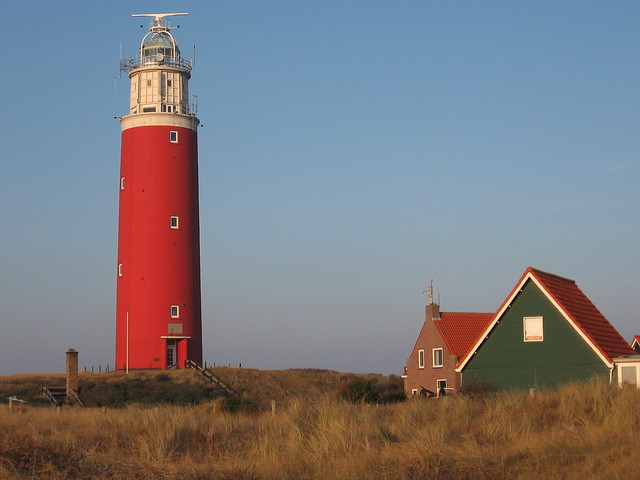
If you have red or ginger hair in the Netherlands or Dutch-speaking parts of Belgium you might be called a vuurtoren [ˈvyːrˌtoː.rə(n)], or literally a “fire tower”. This is apparently a rather rude way to refer to redheads. Other ways include roodhaar (red-hair), roodharige (red-haired), rosse (red), or rossekop (red-head) [source].
As well as meaning redhead, vuurtoren also means lighthouse or beacon, and was a nickname for the old 250 Guilder note, which had a lighthouse on it. Another name for a lighthouse is a lichttoren, and a lighthouse keeper is a vuurtorenwachter.
Vuur (fire, heat, heater, lighter) comes from the Middle Dutch vuur (fire, bonfire, passion), from Old Dutch fuir (fire), from Proto-West Germanic *fuir (fire), from Proto-Germanic *fōr (fire), ultimately from Proto-Indo-European *péh₂wr̥ (fire) [source].
Toren (tower, rook (in chess)) comes the Middle Dutch torre (tower), from the Old Dutch turn (tower), from the Old French tur/tor (tower), from the Latin turris (tower, rook), from the Ancient Greek τύρρις (túrrhis – tower) [source].
A YouTube Channel I found recently is Linguriosa, which is run by a redheaded Spanish lass (una pelirroja) who makes interesting and funny videos about the Spanish language. She talks clearly and not too fast, so it’s great if you’re learning Spanish, as I am at the moment, or are a fluent speaker. Here’s an example:
Do you know of similar channels in other languages?
The Dutch word onderrichten [ˌɔn.dərˈrɪx.tə(n)] means to teach, instruct or educate. It comes from onder (under-, sub-, lower) and richten (to direct, aim) [source]. So you could say that education in Dutch involves supporting and directing students.
Another Dutch word meaning to teach or educate is onderwijzen [ˌɔn.dərˈʋɛi̯.zə(n)], which comes from onder and wijzen (to point, indicate, direct) [source] – so it has a similiar sense to onderrichten.
An onderwijzer or onderwijzeres is a teacher in a primary / elementary school (lagere school / basisschool) and they provide onderwijs (education, teaching), or more specifically, basisonderwijs (primary / elementary education). A word for to teach is onderwijzen.
A teacher in a secondary school (middelbare school) is a leraar or lerares, they leren (teach) and they might be found in a leraarskamer / lerarenkamer (staffroom).
Other words for education are opleiding and opvoeding. Opleiding means education, training or a programme, and comes from opleiden (to lead up; to bring up, educate; to coach, train), from op (up) and leiden (to lead) [source].
Opvoeding means education (at home), upbringing, raising (children) and comes from opvoeden (to raise, to bring up (a child)), from op (up) and voeden (to feed) [source].
The English word education comes from the Middle French éducation (education, upbringing), from Latin ēducātiō (breeding, bringing up, rearing), from ēdūcō (I lead, draw, take out, raise up), from ex (out, away, up) and dūcō (I lead, guide, conduct) [source]. So it has a similar meaning to onderrichten and onderwijzen.
The English words teacher and teach come from the Old English tǣċan (to show, declare, demonstrate; teach, instruct, train), from the Proto-Germanic *taikijaną (to show), from the Proto-Indo-European *deyḱ- (to show) [source].
The Dutch word dier [diːr / diər] means animal and is cognate with the English word deer, which originally meant animal, but the meaning narrowed over time. They are also cognate with words for animal in other Germanic languages, such as Tier in German, dyr in Danish and Norwegian, dýr in Faroese and Icelandic, and djur in Swedish [source].
Dier comes from the Middle Dutch dier (animal), from the Old Dutch dier (animal), from the Proto-West Germanic *deuʀ ((wild) animal, beast), from the Proto-Germanic *deuzą ((wild) animal, beast), from the Proto-Indo-European *dʰewsóm [source], from *dʰews- (to breathe, breath, spirit, soul, creature) [source].
Deer comes from the same root, via the Middle English deere, dere, der, dier, deor (small animal, deer), from the Old English dēor (animal) [source].
From the PIE root *dʰews- we also get the Russian word душа [dʊˈʂa] (soul, spirit, darling), via the Old East Slavic доуша (duša – soul), and the Proto-Slavic *duša (soul, spirit), and related words in other slavic languages.
Another Dutch word for animal is beest [beːst] which is cognate with the English word beast. Both come from the same PIE root as dier/deer (*dʰews-): beest via the Middle Dutch beeste (animal), from the Old French beste (beast, animal), from the Latin bēstia (beast) [source], and beast via the Middle English beeste, beste (animal, creature, beast, merciless person) [source].
Some related words include:
feestbeest = party animal
knuffelbeest = stuffed toy animal (“cuddle-beast”)
podiumbeest = someone who enjoys being on stage and is often on stage
wildebeest = wildebeest, gnu
The English word animal is also related to souls and spirits as it comes via Middle English and Old French, from the Latin anima (soul, spirit, life, air, breeze, breath) [source].
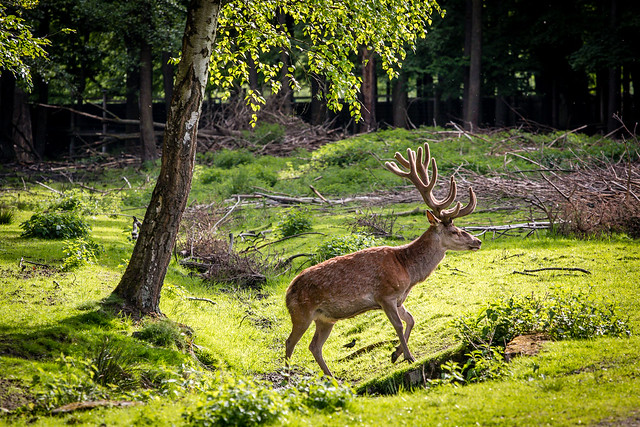
The Dutch word for deer is hert [ɦɛrt], which comes from the Old Dutch hirot, from the Proto-Germanic *herutaz (deer, stag), from the Proto-Indo-European *ḱerh₂- (horn). The English word hart comes from the same root via the Old English heorot (stag), and means a male deer, especially a male red deer after his fifth year [source].
Over the past year, and before, we’ve often been told that we’re all “in the same boat”, at least in the UK. The intention is to suggest that we are all in a similar situation or predicament, and the expression is often used by those in positions of power, wealth and privilege.
The idea of being in the same boat meaning ‘having the same fate’ first appeared in writing in 1584 in Thomas Hudson’s translation of Du Bartas’ Historie of Judith:
haue ye paine ? so likewise paine haue we :
For in one bote we both imbarked be.
Vpon one tide, one tempest doeth vs tosse,
Your common ill, it is our common losse.
It appeared more or less in the current form in writing by Thomas Taylor, a British cleryman in 1629. He said:
He is in the same boate which is tossed and threatned with the tempest, and is someway interessed in the common cause, and quarrell.
In other languages, such as Dutch, German, Italian, Spanish, Russian and Japanese, you can talk about being in the same boat. Are there any languages in which this idea is referred to without mentioning boats?