Young

Words for young in Celtic languages.

Young

Words marked with a * are reconstructions.

Proto-Celtic *yowankos = young
Gaulish Iouinca = name (?)
Old Irish (Goídelc) óc [oːɡ] = young, young man, warrior
ócbad = young people, youths
óclach = young man, warrior, servant
Middle Irish (Gaoidhealg) óc = young, young man, warrior, poet
ócbad, ócbud = young folk, youths, youth
óclach, ócleach = young man, warrior, attendant, servant, vassal
Irish (Gaeilge) óg [oːɡ/ɔːɡ] = young (person, animal, bird), youth, junior, minor, new, fresh, early
ógánach = young man, youth, crafty person, boyo, trickster
óigeanta = youthful, youthful-looking
óigeantacht = youthfulness
óglach = young man, (young) warrior), attendant, servant, vassal, volunteer
óglachas = manhood, warriorship, armed service, vassalage
ógra = young people, youths
Scottish Gaelic (Gàidhlig) òg [ɔːg] = young, youthful
ògail [ɔːgal] = adolescent, youthful
ògalachd [ɔːgəl̪ˠəxg] = youthfulness, youth, youthful conduct
ògan [ɔːgan] = tendril, twig, seedling, lambkin
òganach [ɔːganəx] = youth, young man, bough
òganta [ɔːgən̪ˠdə] = juvenile
Manx (Gaelg) aeg [ɛːɡ] = young, adolescent, immature, juvenile
aegey = young, juvenile
aegid = adolescence, immaturity, young people, youth
aeglagh = adolescent, juvenile, young ones, youth
aegoil = youngish, youthful
Proto-Brythonic *jowank = young
Middle Welsh (Kymraec) ieuangc, yeueing, yeuejg, yefeink, ieuanc, ieueinc = young, juvenille, unmarried
ieu, iau = younger
yeuhaf, yeuaw, ieuhaf, ieuaf = (the) youngest
euectyt, euenctit, ieuegtit, ieuengtit = youth, adolescence
Welsh (Cymraeg) ifanc [ˈɪvaŋk / ˈiːvaŋk] = young, youthful, adolescent; inexperienced, immature; recent; unmarried, newly wed
iau, ieuach, ifach = younger, not as old
ieuaf, i(e)faf = (the) youngest, the younger (of two), junior
ieuant = young person, youth, adolescence
ieuenctid = youth, adolescence
Old Cornish iouenc, youonc = young
Middle Cornish yowync, iouenc, youonc = young, youthful
yonc = young, youthful, juvenile
yowyncneth = youth, youthfulness
Cornish (Kernewek) yowynk, yonk [‘jɔwɪŋk/jɔˑŋk] = juvenille, young, youthful
yowynka, yonka = younger
yonker, yonkores = youngster, youth
yowynkneth, yonkneth = youth
Middle Breton youanc, ioanc, iouanc = young
yaouancquat, youancat, youanchat = to rejuvenate
yaouanctet, iaouanctet = youth(fulness)
Breton (Brezhoneg) yaouank = young
yaouankaat = to rejunvenate
yaouankadur = rejunvenation
yaouank(t)iz = youth
yaouankted = youth(fulness)

Etymology: from the Proto-Indo-European *h₂yuh₁n̥ḱós (young), from *h₂yéwHō (young), from *h₂óyu (long time, lifetime) [source].

Words from the same roots include young and youth in English, jeudg (youth) in Dutch, Jugend (youth) in German, jeune (young) in French and joven (young(ster), youth(ful), young person) in Spanish [source].

The Fastest Way to Learn Japanese Guaranteed with JapanesePod101.com

Sources: Wiktionary, Am Faclair Beag, Online Manx Dictionary, Teanglann.ie, eDIL – Electronic Dictionary of the Irish Language, In Dúil Bélrai English – Old Irish glossary, Geiriadur Prifysgol Cymru, Gerlyver Kernewek, Lexicon Cornu-britannicum: A Dictionary of the Ancient Celtic Language of Cornwall, Dictionaire Favereau, TermOfis, Le dictionnaire diachronique du breton, Etymological Dictionary Of Proto Celtic
Free

Words for free and related things in Celtic languages.

Freedom

Words marked with a * are reconstructions.

Proto-Celtic *su-wiros = free (“good man”)
Old Irish (Goídelc) saer [soːi̯r] = free, freeman, noble, craftsman
saeraid [ˈsoːi̯rɨðʲ] = to free, liberate, deliver, save, exempt
saire [ˈsai̯.rʲe] = freedom, liberty
Middle Irish saer, soer, sóer = free, freeman, noble, ready, skilled,
sáeraid = to free, liberate, save, rescue, deliver
saíre, sóire = freedom, liberty, nobility,
Irish (Gaeilge) saor [sˠeːɾˠ/sˠiːɾˠ] = free, enfranchised; noble; independent
saoradh = liberation, deliverance, release, acquittal, assurance, confirmation
saoráid = ease, facility, ease, freedom from constraint
saoráideach = easy, facile
saoráidí = easiness, facileness
saoráil = freedom, bargin
saorálach = voluntary, free, unconstrained
saorálaí = volunteer
saoirse = freedom, immunity, exemption
Scottish Gaelic (Gàidhlig) saor [sɯːr] = free (not captive); cheap; frank
saora [sɯːr̪ˠsə] = freedom, liberty, redemption
saorachd [sɯːrəxg] = freedom, cheapness
saoradair [sɯːrədɪrʲ] = liberator
saoradh [sɯːrəɣ] = freeing, libterating, liberation
saorsach = [sɯːr̪ˠsəx] = free, unrestrained
saorsachd = [sɯːr̪ˠsəxg] = freedom, exemption
saorsainn [sɯːr̪ˠsɪn̪ʲ] = liberty
Manx (Gaelg) seyr [seːr] = free, gratuitous, gratis, complimentary, immune, floating, independent, unforced
seyrsnys = autonomy, exemption, freedom, immunity, independence
seyrey = absolution, exemption, liberation; to absolve, acquite, exempt, free, libterate

Etymology: from Proto-Celtic *su- (good, well), from PIE *h₁su- (good, well), and Proto-Celtic *wiros (man, husband), from PIE *wiHrós (man, husband) [source]

The Irish name Fearghal (Fergal, Feargal), and the English name Farrell come from the Proto-Celtic name *Wirogalos, from *wiros (man) and‎ *galā (valour, ability) [source], and the Irish name Fearghas and the English version, Fergus, come from the Proto-Celtic name *Wirogustus, from *wiros (man) and‎ *gustus (excellence, force) [source]

Proto-Celtic *ɸriyos = free
Proto-Brythonic *rɨð [ˈrɨːð] = free
Middle Welsh (Cymraeg) ryd, rit = free, nonconformist; unrestricted, unrestrained; open; liberal
ryddd-dab, rydd-deb = freedom, liberation, deliverance, immunity
ryddhâd, rhyddhaad = release, libteration, freedom
rydhaw, rydhaa, rytha = to free, release, liberate
Welsh (Cymraeg) rhydd [r̥ɨːð / r̥iːð] = free, nonconformist; unrestricted, unrestrained; open; liberal
rhyddd-deb = freedom, liberation, deliverance, immunity
rhyddhad = release, libteration, freedom
rhyddhaf, rhyddhau = to free, release, liberate
Old Cornish rid = free
Middle Cornish (Cernewec) rid, ruid = free, unconstrained
Cornish (Kernewek) rydh [rɪ:ð / ri:ð] = free
rydhses = freedom, liberty
Old Breton (Brethonoc rid = free

Etymology: possibly from Proto-Indo-European *priHós (dear, beloved, happy, free), from *preyH- (like, love) [source]. English words from the same PIE roots include free(dom), friend and proper [source].

The Fastest Way to Learn Japanese Guaranteed with JapanesePod101.com

Sources: Wiktionary, Am Faclair Beag, Online Manx Dictionary, Teanglann.ie, eDIL – Electronic Dictionary of the Irish Language, In Dúil Bélrai English – Old Irish glossary, Geiriadur Prifysgol Cymru, Gerlyver Kernewek, Lexicon Cornu-britannicum: A Dictionary of the Ancient Celtic Language of Cornwall, Dictionaire Favereau, TermOfis, Le dictionnaire diachronique du breton, Etymological Dictionary Of Proto Celtic

Sorrow & sadness

Words for sorrow, sadness and related things in Celtic languages.

sad pug

Proto-Celtic *trougos/*trowgo- = sorry, sad, wretched
Old Irish (Goídelc) trúag, tróg = miserable, wretched, emaciated, wretch
trúagdae = miserable, wretched
trógán, trúagán = miserable person, wretch, pauper
trúaige = affliction, compassion, misery, pity, wretchedness
Middle Irish (Gaedhealg) trúag = wretched, pititable, miserable, sad; thin, lean, emaciated; wretch, miserable person
trúagdae, trogdae, trúagdai, troghda = miserable, wretched. piteous
trúagán = miserable person, wretch, pauper
trúagnait, trógnait = wretch, miserable person
trúaige = misery, wretchedness, affliction
trúaigméil = pitiable, sorrowful
Irish (Gaeilge) trua [t̪ˠɾˠuə] = pity, sympathy, compassion, miserable person, wretch; pitiable, miserable, wretched; lean, thin, emaciated
truacánta = piteous, plaintive
truacántacht = piteousness, plaintiveness
truachroíoch = kind-hearted, compassionate, heartrending, piteous
truacht = leanness
atruach = compassionate
truán = miserable person, wretch; thin, emaciated creature, importunate person
truanairt = wretch
truánta = wretched; thin, emaciated
truántacht = wretchedness; thinness, emaciation
Scottish Gaelic (Gàidhlig) truagh [truəɣ] = abject, forlorn, miserable, pitiful, poor, sorry
truaghan [truəɣan] = poor soul/thing, wretch
truaghag [truəɣag] = poor/pitiful thing, poor wee thing (female)
truaghaileachd [truəɣaləxg] = compassionateness, tender-heartedness
truaghanachd [truəɣən̪ˠəxg] = abjectness, miserableness, wretchedness
truas [truəs] = pity, compassion, sympathy
Manx (Gaelg) truan = misery
truanagh = miserable, mournful, sorrowful person
truanys = misery
treih = abject, deplorable, feeble, forlorn, fragile, miserable, pathetic, piteous, pitiful, regrettable, rueful
treihaght = misery, pitifullness, pitifulness
treihnagh = mournful
treihys = abjection, abjectness, fragility, misery
Gaulish *trugan = wretch
Middle Welsh (Kymraec) tru, trv = wretched, miserable, deplorable, pitiful, pathetic
truan = wretch, miserable person
truanu = to take pity, feel compassion
truaneid, truanaidd = wretched, miserable, deplorable
tryanedd, tayyrnedd = wretchedness
trueni = misery, wretchedness, abjectness, degradation
truanus = wretched, miserable, deplorable, poor
trỽch, troch, truch = unfortunate, sad, wretched
Welsh (Cymraeg) tru [trɨː/triː] = wretched, miserable, deplorable, pitiful, pathetic
truan = wretch, miserable person; wretched, miserable, deplorable, pitiful, pathetic, poor, weak
truanaf, truanu = to take pity, feel compassion
truanaidd = wretched, miserable, deplorable, pitiful
truanedd = wretchedness
trueni = misery, wretchedness, abjectness, degradation
truenus = wretched, miserable, deplorable, poor
trwch = unfortunate, sad, wretched, poor; bad, evil, wicked; unfortunate person, wretch, scoundrel
Old Cornish troc = miser
Middle Cornish (Cernewec) tru = alas, pity, sad, woe
trueth = pity, compassion
troc = wretched, miser
Cornish (Kernewek) tru = alas
truan = sadly, miserable, unfortunate, wretched
truedh = pity, sympathy
truedhek = sadly, pathetic, pitiful, plaintive, sad
trogh = broken, wretched
Middle Breton (Brezonec) tru = pitiful, wretched, miserable
truant = pitiful, wretched, miserable
trugarez = pity, mercy, forgiveness, thanks, misery
Breton (Brezhoneg) tru = pitiful, wretched, miserable, wretch
trugarez = thank you, mercy, forgiveness
truant = beggar
truanter = cheater, supplicant

Etymology: possibly from the Proto-Indo-European *terh₁- (to rub, turn, drill, pierce). Words from the same roots possibly include truant in English, and truand (crook, gangster, beggar) in French [source].

Proto-Celtic *brugnos = saddness, pain
Old Irish (Goídelc) brón [broːn] = sorrow, grief, lamentation, distress, burden
Irish (Gaeilge) brón [bˠɾˠoːnˠ] = sorrow, grief, grieving, lamentation; distress, burden
brónach [ˈbˠɾˠoːnˠəx] = sad, sorrowful
Scottish Gaelic (Gàidhlig) bròn [brɔːn] = grief, sadness, sorrow, mourning, affliction
brònach [ˈbrɔːnəx] = doleful, miserable, rueful, sad, sorrowful; disconsolate
Manx (Gaelg) bran = sorrow, blackness of soul
branagh = mournful, black (as outlook)
Welsh (Cymraeg) brwyn [bruːɨ̯n / brʊi̯n] = sorrow, grief, sadness; sorrowful, grievous, sad, heavy; pensive

Etymology: possibly from Proto-Indo-European *gʷruHǵʰ-nó-, from *gʷrewHǵʰ- (to bite) + *-nós, or from *bʰreg- (to break) [source].

Welsh (Cymraeg) trist [triːst / trɪst] = sad, unhappy, sorrowful, mournful, pensive, downhearted, miserable, anxious
Cornish (Kernewek) trist = sad, mournful
Breton (Brezhoneg) trist = sad

Etymology: from Latin trīstis (sad, unhappy, melancholy, morose), from Proto-Indo-European *tréystis (stubborn, in a bad mood) [source].

Words marked with a * are reconstructions.

Sources: Wiktionary, Am Faclair Beag, Online Manx Dictionary, Teanglann.ie, eDIL – Electronic Dictionary of the Irish Language, In Dúil Bélrai English – Old Irish glossary, Geiriadur Prifysgol Cymru, Gerlyver Kernewek, Gerlyvyr Cernewec, Dictionaire Favereau, TermOfis, Le dictionnaire diachronique du breton, Geriafurch, English – ProtoCeltic WordList (PDF), Etymological Dictionary Of Proto Celtic
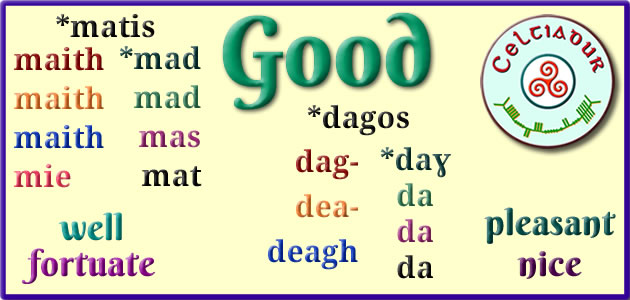
Good

Words for good and related things in Celtic languages.

Good

Proto-Celtic *matis = good
Old Irish (Goídelc) maith [maθʲ] = good
maithe = goodness
Middle Irish (Gaoidhealg) maith, maid = good, profiable, excellent, fitness, proficiency, wealth
Irish (Gaeilge) maith [mˠa(h) / mˠaɪ(h)] = good; goodness, kindness; good things; fertility
maithe = goodness, good
maitheamh = forgiveness, pardon, abatement, remission
maitheas = goodness, good, good thing, kindness, gift
maitheasach = good, useful, kind, obliging
maitheasaí = good worker
maithiúnas = forgiveness, pardon
Scottish Gaelic (Gàidhlig) math [mah] = good, well
maitheadh = forgiving, pardoning
maitheas = goodness
maitheanas = forgiveness, pardon
maitheamhnas = forgiveness
Manx (Gaelg) mie [maɪ] = good, nice, moral, fair, pious, ready, goodness, favourable, virtuous, virtue, goodly
mienys = favourableness, good, goodness
Proto-Brythonic *mad = good
Middle Welsh (Kymraec) mad, mat [maːd] = fortunate, lucky, good, etc
matweith, madwaith = good work, goodness
Welsh (Cymraeg) mad [maːd] = fortunate, lucky, auspicious, happy, suitable, proper, good, beneficial, holy, fair, pleasant, beautiful, goodness, fairness, benefit, good deed, kindness
madedd = goodness, generosity, bounteousness
madog = good man, good, just, righteous
madol = fair, good, beneficial
madwaith = good work, goodness
madwr = benefactor, patron
Old Cornish mad = good
Middle Cornish (Cernewec) mas, mat, mâs, mâd = good, beneficial
Cornish (Kernewek) mas [ma:z / mæ:z] = good, respectable, moral, virtuous
maseth = morality
Old Breton mat = good
Middle Breton (Brezonec) mat, mad = good
Breton (Brezhoneg) mat, mad [mɑːt/maːd] = good, good product, moral, well (done), sweet
madek = wealthy, gentle, soft
madelezh = kindness, benevolence
madelezhus = beneficent, generous
madig = sweet, bonbon
madoberer = benefactor, patron
mataat = to improve, moralize
demat [deˈmɑːt] = hello, good day
demata = to greet, say hello
peurvat [ˈpør.vat] = perfect

Etymology: from Proto-Indo-European *meh₂tis (ripe, good), from *meh₂- (to ripen, to mature) [source].

Words from the same roots include demure and mature in English, matin (morning) and mûr (mature, ripe) in French, and , mañana (tomorrow, soon, morning) and maduro (mature, ripe) in Spanish [source].

Proto-Celtic *dagos = good
Gaulish dagos = good
Old Irish (Goídelc) dag- = good
Middle Irish (Gaoidhealg) dag = good, well
Irish (Gaeilge) dea- [dʲa/ dʲeː] = good, well
dea-bhéasach = well-mannered, well-behaved
dea-chruthach = well-shaped, shapely, handsome
dea-dhéanta = well-made, of good figure, physique
Scottish Gaelic (Gàidhlig) deagh [dʲoː] = good, fine, nice, pretty, rather well
deagh-rùn = good intention
deagh-aithnichte = well-known
deagh-chliù = good reputation, fame
deagh-spiorad = good spirit
deagh-ghean = goodwill, benevolence
Proto-Brythonic *daɣ = good
Middle Welsh (Kymraec) dá, da = good, beneficial, acceptable, suitable, useful
daeoni, dayoni, daioni = goodness, uprightness, graciousness, kindness, bravery
daionvs, daionus, dayonus = good, beneficial, bountiful, kind, loving, gracious
Welsh (Cymraeg) da [daː] = good, beneficial, acceptable, suitable, useful
daeder = goodness, quality, of goodness
daionedd = goodness, benefit
daioni = goodness, uprightness, graciousness, kindness, bravery
daionus = good, beneficial, bountiful, kind, loving, gracious
daionusrwydd = goodness
daionuster = goodness, beneficence, benefit
Middle Cornish (Cernewec) da = good
dader = goodness, excellence
Cornish (Kernewek) da [da:] = good
da lowr = alright, mediocre, OK, passable
da-ober = good deed
dader = goodness
mellyer/melyores dader = do-gooder
Old Breton da = good
Middle Breton (Brezonec) da = good
Breton (Brezhoneg) da [da] = pleasant, agreeable, satifactory; good (archaic)

Etymology: related to the Proto-Indo-European *déḱos (that which is proper), from *deḱ- (to take, perceive) [source].

Words from the same roots include dech (best) in Old Irish and dainty, decent, decor, dignity, docile doctor and dogma in English [source].

Words marked with a * are reconstructions.

Blubrry podcast hosting

Sources: Wiktionary, Am Faclair Beag, Online Manx Dictionary, Teanglann.ie, eDIL – Electronic Dictionary of the Irish Language, In Dúil Bélrai English – Old Irish glossary, Geiriadur Prifysgol Cymru, Gerlyver Kernewek, Gerlyvyr Cernewec, Lexicon Cornu-britannicum: A Dictionary of the Ancient Celtic Language of Cornwall, Dictionaire Favereau, TermOfis, Le dictionnaire diachronique du breton, Geriafurch, English – ProtoCeltic WordList (PDF), Etymological Dictionary Of Proto Celtic

Gods and Goddesses

Words for gods, deities & days in Celtic languages.

celts - the horse goddess epona
The Gallo-Roman Horse Goddess Epona

Proto-Celtic *dēwos = god, deity, day
*dēwā = goddess
Gaulish deuognata, teuoxtonio-, dēuos, dēwos, dēvona = god
Celtiberian teiuoreikis, deobriga = god
Old Irish (Goídelc) día [dʲiːa̯] = god
bandía = goddess
díadae, deoda = godly, divine, holy
deacht = godhead
Middle Irish (Gaoidhealg) día, dea, déa, de, dee = god, goddess, supernatural being, object of worship
deacht, déacht = godhead, divity
díadae, díade, diadu = divine, godly, holy
Irish (Gaeilge) dia [dʲiə] = god, deity
bandia = goddess
diaga = divine, godly, godlike, sacred, holy
diagacht = divinity, godhood, godliness, piety, theology
diagaigh = to deify, apotheosize
diagaire = divine, theologian
diaganta = godly, pious
dia-aithis = blasphemy
Scottish Gaelic (Gàidhlig) dia [dʲiə] = god, God
ban-dia = goddess
diadhachd [dʲiə.əxg] = deity, divinity, godhead
diadhaidh [dʲiə.ɪ] = divine, godly, pious
diadhaireachd [dʲiə.ɪjəxg] = godliness
diadhaidheachd [dʲiə.ɛrʲ] = theologian
diadhair [dʲiə.ɛrʲ] = theologian
Manx (Gaelg) jee = god, deity, godhead
ben jee = deity, goddess
jeeoil = divine, godlike, godly
jeeoilys = divinity, theology
jeeoilagh = divine, theologian
jeeaght = deity, divinity
jeeaghteyr = theologian
Proto-Brythonic *duɨw [ˈduɨ̯w] = god
Old Welsh duiu = god
Middle Welsh (Kymreac) duiu, duu, dyu, diu, duw = god
dwyes, dwywes = goddess, noble lady, queen
dywdap, dywdot, duwdab = the divine nature, divinity, theology
dywol, duwiol = godly, devout, religious, pious, good, holy, sanctimonious
Welsh (Cymraeg) duw / Duw [dɨu̯ / dɪu̯] = god, the Supreme Being, the Almighty, the Christian Trinity; O God!
duwies, dwywes, dwyes = goddess, noble lady, queen
duwdeb = the divine nature, divinity, theology
duweiddiad = deification, apotheosis
duweiddiaf, duweiddio = to deify, make a god of, turn into an object of worship
duwgar = loving God, pious, devout
duwiol, duwol = godly, devout, religious, pious, good, holy, sanctimonious
Old Cornish duy = god
Middle Cornish (Cernewec) dew, du, duy = god, God, a divinity
dues = goddess
Cornish (Kernewek) duw [dyˑʊ / diˑʊ] = god
duwes = goddess
duwonieth = theology
duwonydh, duwonydhes = theologian
Duw genes = goodbye (“god with you”)
Old Breton doi = god
Middle Breton doe, doué, dou = god
doueadur = apotheosis, deification
doueañ = to deify
doueadur = apotheosis, deification
doueañ = to deify
doueegezh = divinity, deity
doueek, doeel, doueel = divine
Breton (Brezhoneg) doue [du] = god
doueez =goddess
douead = theist
doueadegezh = deism
doueegezh = divinity
doueel = divine

Etymology: from Proto-Indo-European *deywós (god), from *dyew- (sky, heaven) [source]. The Deva rivers in Galicia get their name from the same Proto-Celtic root, and the Latin name for the city of Chester, Deva, possibly comes from the same Celtic root [source].

Words marked with a * are reconstructions.

Sources: Wiktionary, Etymological Dictionary Of Proto Celtic, In Dúil Bélrai English – Old Irish glossary, eDIL – Electronic Dictionary of the Irish Language, Teanglann.ie, Am Faclair Beag, Fockleyreen: Manx – English Dictionary, Online Manx Dictionary, Geiriadur Prifysgol Cymru, Lexicon cornu-britannicum : a dictionary of the ancient Celtic language of Cornwall, Gerlyver Kernewek, Devri : Le dictionnaire diachronique du breton, Dictionaire Favereau, TermOfis

Blubrry podcast hosting

Big, Large & Great

Words for big, large & great in Celtic languages.

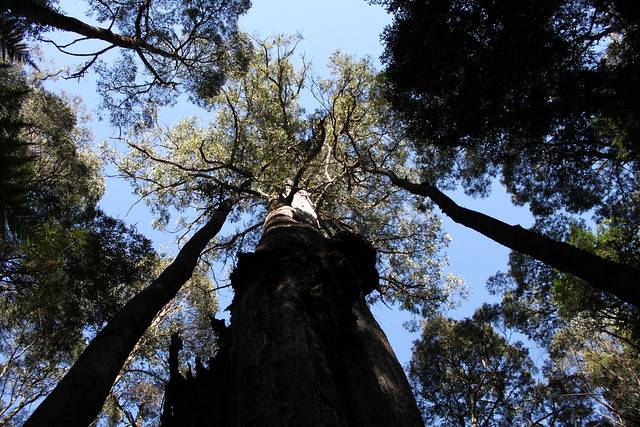
Tasmania: The Big Tree

Words marked with a * are reconstructions.

Proto-Celtic *māros = big, great
*māyūs = bigger, greater
*mārāti = to enlarge, magnify
Gaulish maros
Lepontic 𐌌𐌀𐌓𐌖𐌉 (marui)
Old Irish (Goídelc) mór = big, great
mó, moü, moä = bigger
Middle Irish (Gaoidhealg) mór, már = big, great
= bigger, greater
mórán, moran = a large quantity or number
anmor = huge, enormous
Irish (Gaeilge) mór [mˠoːɾˠ / mˠɔːɾˠ] = big, great, large
[mˠoː/mˠuː] = bigger, greater, larger
mórán = much, many
anmhór = huge, enormous, very friendly
anmhórán = huge amount, hugh number
athair mór = grandfather
baile mór = large town, city
Scottish Gaelic (Gàidhlig) mòr [moːr] = big, great, large, grand, strapping; ample, bulky; high, lofty, tall; spacious; large amount
= bigger, greater, larger
mòran = a lot, many, much, multitude
ana-mhòr = huge, innense, enormous, prominent
baile-mòr = town, city
mòr-chuid = majority, most
Manx (Gaelg) mooar [muːr / muːɹ̝ / muːə̯ / muː] = big, great, grand, heavy, tall, chief, major, familiar, powerful, marked, commodious, intimate, capacious, extravagant, intense, extensive, grievous, bold (promintary), loose-fitting, difficult
moo = bigger, larger
mooaran = many, much
mooarane = great deal, lot, many, much, multitude
mooar-earroo, mooar-eash = majority
Proto-Brythonic *mọr [mɔːr] = great, large
Old Welsh maur = great
Middle Welsh (Kymraec) máúr, maur, mawr = large, big
moi, muy, mui, mwy = larger, bigger, greater
muyhaw, mvihaw, mvyhaf, mwyhaf = biggest, largest, greatest
mawraidd, mawredd = great, fine, grand, majestic
mawr eir, mawrair, mawreir = boast, bragging, eloquence, elevated language
mawrdec, mawrdeg = great and fair, very fine, magnificent, splendid
mawrder, mowrder = largeness, bigness, immensity, greatness
Welsh (Cymraeg) mawr [mau̯r / mou̯r] = large, big; fully grown; capital (letter); heavy (rain); long (hair/time); deep (water), great, greater, stormy, rough
mwy [muːɨ̯/mʊi̯] = larger, bigger, greater, louder, more, longer, further
mwyaf = biggest, largest, greatest, most, loudest, longest
mawraidd = great, fine, grand, majestic
mawrair = boast, bragging, eloquence, elevated language
mawrdeg = great and fair, very fine, magnificent, splendid
mawrder = largeness, bigness, immensity, greatness
Old Cornish maur = big
Middle Cornish (CerneweC) maur, meur, mûr = great, large, big, much
moy = more, greater, bigger
moya, moycha, mocha, mochya = greatest, most
Cornish (Kernewek) meur [mø:r / me:r ] = great, grand, large, substantial, much
moy = another, extra, more
moyha = maximum, most
meur lowr = considerably
meur ras = thank you
meuredh = majesty
meurgara = to admire
meurgarer = admirer
meurgeryans = admiration
meurgeryek = admirable
meurgerys = beloved
Old Breton mor = big
Middle Breton (Brezonec) meur = big, very, many
muy, mui = more
meurbet = very, a lot, big
meurded, meurdet = size, magnitude, greatness
meurdez = majesty
meurniver = multitude
meurvor = ocean
Breton (Brezhoneg) meur [møʁ] = big, many
mui = more
moyha = maximum, most
meurded = magnificance
meurdez = majesty
meurvor = ocean

Etymology: from Proto-Indo-European *moh₁ros (great) [source].

Words from the same Proto-Celtic root, via Byzantine Greek μάραον (máraon – sweet chestnut), include marrone (brown, chestnut) in Italian, marron (chestnut, brown) in French, Morone (sweet chestnut) in German [source].

Proto-Celtic *brassos = great, violent
Old Irish (Goídelc) bras = boastful, strident, violent
Middle Irish (Gaoidhealg) bras, brass, brassa = boastful, defiant, forceful, violent
Irish (Gaeilge) bras = great, strong, swift (literary)
brasach = lively, quick-spoken
brasaire = lively, quick-spoken, talkative person
Scottish Gaelic (Gàidhlig) bras [bras] = swift, precipitous, rapid, hasty, impetuous, impulsive, rash, quick-tempered, exuberant, heady
bras-astarach =fleet-footed
bras-mhacnas = exuberant mirth, extreme debauchery
bras-uisgeach = swift/white-watered
bras-shruth = rapids, torrent
Welsh (Cymraeg) bras [braːs] = thick, fat, plump, stout, bulky, fatted, large, strong; coarse (sand); heavy (rain)
Middle Cornish (Cernewec) bras, brâs = great, gross, big, large, coarse
brasder = greatness, largeness, bigness, pride
braslavar = grandiloquent
brasoberys = magnificent
brassa = greater
Cornish (Kernewek) bras [bra:z] = big, bulky, large
braslavar = boast, threat
brasoberys = magnificent
brassa = bigger, major
braster = bulk, size
brastereth = majesty
brastir = continent
Middle Breton (Brezonec) bras, braz = big, large, deep, important, strong
brassaat, braçzaat, braçzeët, brasat = to grow, increase, put on weight, swell, extend, enlarge
brasadur = extension, enlargement
brasentez, brazentez = size, pride
Breton (Brezhoneg) bras [bʁaz] = big, huge, important
brazentez = size, magnitude, greatness

Etymology: from Proto-Indo-European *gʷrod-to- from *gʷred- from *gʰer- (to rub, stroke, grind, remove) [source].

Words from the same PIE root include gros (big, thick, fat, coarse, rough) in French, gross in English, and grosso (big, large, fat, thick, heavy, rough) in Italian [source].

Words marked with a * are reconstructions.

Blubrry podcast hosting

Sources: Wiktionary, Am Faclair Beag, Online Manx Dictionary, Teanglann.ie, eDIL – Electronic Dictionary of the Irish Language, In Dúil Bélrai English – Old Irish glossary, Geiriadur Prifysgol Cymru, Gerlyver Kernewek, Gerlyvyr Cernewec, Lexicon Cornu-britannicum: A Dictionary of the Ancient Celtic Language of Cornwall, Dictionaire Favereau, TermOfis, Le dictionnaire diachronique du breton, Geriafurch, English – ProtoCeltic WordList (PDF), Etymological Dictionary Of Proto Celtic