Celtic Pathways – Donkeys

In this episode we’re looking into words for donkey and related beasts in Celtic languages.

Donkeys

There don’t appear to be any Proto-Celtic words for donkey. Instead, the Celtic languages borrowed words from Latin. These include:

  • asal [ˈasˠəlˠ] = ass or donkey in Irish.
  • asal [asal̪ˠ] = ass or donkey in Scottish Gaelic
  • assyl = ass or donkey in Manx
  • asyn [ˈasɨ̞n / ˈasɪn] = (male) donkey / (he-)ass, or an absurd or stubborn person in Welsh
  • asen = ass or donkey in Cornish
  • azen = donkey in Breton [source]

The Brythonic words come from the Latin asina from asinus (donkey, ass), which is of unknown origin [source]. The Goidelic words come from the same root via the Latin asellus (young ass, donkey) [source].

The English word ass (donkey) was borrowed from an old Brythonic language, via the Middle English asse (ass, donkey) and the Old English assa and assen (she-ass) [source].

Other words from the same Latin roots include asinine (foolish, obstinate, donkeyish), asinicide (the killing of an idiot) in English [source], osel (donkey, ass, stupid person) in Czech, and osioł (male donkey) in Polish [source].

Incidentally, another word for donkey in Old English was esol [ˈe.zol], which came from Proto-West Germanic *asil (donkey), from Latin asellus (young ass, donkey) [source]. Related words in other Germanic languages include ezel (donkey, ass, fool, idiot, easel) in Dutch, Esel (ass, donkey, a stupid/stubborn person) in German, and æsel (ass, donkey) in Danish [source].

The English word easel also comes from the same roots, via Dutch ezel and Proto-West Germanic *asil [source].

Radio Omniglot podcasts are brought to you in association with Blubrry Podcast Hosting, a great place to host your podcasts. Get your first month free with the promo code omniglot.

You can find more details of these words on the Celtiadur blog. I also write about words, etymology and other language-related topics on the Omniglot Blog.


Adventures in Etymology – Ship

In this Adventure we’re uncovering the origins of the word ship.

Tall ship in Copenhagen harbour

A ship [ʃɪp] is:

  • A water-borne vessel generally larger than a boat.
  • A vessel which travels through any medium other than across land, such as an airship or spaceship.
  • A sailing vessel with three or more square-rigged masts. (archaic, nautical, formal)

It comes from Middle English s(c)hip [ʃip] (ship, boat), from Old English scip [ʃip] (ship), from Proto-West-Germanic *skip (ship), from Proto-Germanic *skipą (ship), possibly from PIE *skey- (to split, dissect) which originally meant a hollowed tree [source].

Words from the same roots include skipper in English, Schipp (ship) and Schiff (ship, nave, vessel, boiler) in German, schip (ship, nave) in Dutch, skepp (ship, nave) in Swedish, and sgioba (crew, team) in Scottish Gaelic [source].

The English word skiff (a small flat-bottomed open boat) also comes from the same roots, via Middle French esquif (skiff), Old Italian schifo (small boat, dingy), and Lombardic skif (ship, boat) [source].

Incidentally, the Scots word skiff (a light, fleeting shower of rain or snow; a gust of wind; to move in a light airy manner, barely touching the ground) does not come from the same roots. Instead, it probably has onomatopoeic origins. The English word skiffle (a type of folk music made using homemade or improvised instruments) was possibly borrowed from this Scots word [source].

Here’s a video I made of this information:

Video made with Doodly [afflilate link].

I also write about words, etymology and other language-related topics on the Omniglot Blog, and I explore etymological connections between Celtic languages on the Celtiadur.

You can also listen to this podcast on: Apple Podcasts, Amazon Music, Stitcher, TuneIn, Podchaser, PlayerFM or podtail.

If you would like to support this podcast, you can make a donation via PayPal or Patreon, or contribute to Omniglot in other ways.

The Fastest Way to Learn Japanese Guaranteed with JapanesePod101.com

Adventures in Etymology – Wheel

In this Adventure in Etymology we’re unrolling the origins of the word wheel, and finding out how its linked to such words as pole, telephone, cult, collar and cycle.

Snaefell Wheel (Lady Evelyn)

A wheel [wiːl/ʍiːl/wil] is:

  • A circular device capable of rotating on its axis, facilitating movement or transportation or performing labour in machines.

It comes from Middle English whele [ʍeːl] (wheel), from Old English hwēol [xwe͜oːl] (wheel), from Proto-Germanic *hwehwlą [ˈxʷe.xʷlɑ̃] (wheel), from PIE *kʷékʷlom (wheel) from *kʷel- (to turn) [source].

Words from the same roots include pole, telephone, chakra, cult, collar and cycle in English, kolo (bicycle, wheel) in Czech, kakls (neck, throat) in Latvian, and चाक (cāk – wheel) and चक्र (cakra – circle, ring, wheel, cycle) in Hindi [source].

Incidentally, words for chariot or wheel in Sumerian (𒄑𒇀), Aramaic and Hebrew (גַּלְגַּל‎) and Chinese (軲轆) possibly come from the same PIE roots [source].

Here’s a video I made of this information:

Video made with Doodly [afflilate link].

I also write about words, etymology and other language-related topics on the Omniglot Blog, and I explore etymological connections between Celtic languages on the Celtiadur.

You can also listen to this podcast on: Apple Podcasts, Amazon Music, Stitcher, TuneIn, Podchaser, PlayerFM or podtail.

If you would like to support this podcast, you can make a donation via PayPal or Patreon, or contribute to Omniglot in other ways.

The Fastest Way to Learn Japanese Guaranteed with JapanesePod101.com

Celtic Pathways – Surface and Skin

In this episode we’re looking into words for surface, skin and related things in Celtic languages.

Hippo very close

The Proto-Celtic *tondā means surface or skin and comes from the Proto-Indo-European *tend- (to cut off) [source].

Descendents in the modern Celtic language include:

  • tonn [t̪ˠɑun̪ˠ] = surface or skin in Irish.
  • tonn [tɔun̪ˠ] = skin or hide in Scottish Gaelic
  • ton [tɔn] = rind, crust, peel, turf, unploughed land or lawn in Welsh
  • ton = grass in Cornish
  • ton [tɔn] = rind or surface in Breton

There doesn’t appear to be a cognate in Manx.

The English word tonne/ton comes from the same Proto-Celtic root, via French, Latin and Gaulish [source]. Other words from the same Proto-Celtic root include tonne (tonne/ton) in French, tona (tun – a type of cask, ton/tonne) and tonya (a type of sweet bun) in Catalan, tona (surface, skin, bark) and tonel (barrel, tun) in Galician, and tonel (barrel) in Spanish [source].

Incidentally, the English word tun (a large cask, fermenting vat) probably comes from the same roots, via Middle English, Old English, Proto-Germanic, Latin and Gaulish, as does the German word Tonne (barrel, vat, tun, drum), the Dutch word ton (barrel, ton, large amount), and the Irish word tunna (cask), which was borrowed from Latin [source].
(A bit of bonus content that’s not included in the recording.)

You can find more details of these words on the Celtiadur blog. I also write about words, etymology and other language-related topics on the Omniglot Blog.

Adventures in Etymology – Kith and Kin

In this Adventure we’re looking into the words kith and kin.

We had all the kinfolk over fer Thanksgivins.

Kith [kɪθ] means:

  • Friends and acquaintances (archaic/obsolete)

It appears in the expression kith and kin (both friends and family) and comes from the Middle English kith (kinsmen, relations), from Old English cȳþþu [ˈkyːθ.θu] (knoweldge, native land, home) from Proto-Germanic *kunþiþō (knowledge, acquaintance), from PIE *ǵneh₃- (to know) [source].

Engish words from the same roots include can, cunning, gnome, know, noble, quaint and uncouth [source].

Kin [kɪn] means:

  • Race, family, breed, kind
  • Persons of the same race or family, kindred
  • One or more relatives

It comes from Middle English kyn (family, native, tribe, clan), from Old English cynn (kind, tribe, race, species, family), from Proto-West-Germanic *kuni (family, kin), from Proto-Germanic *kunją (kin, family, clan) from PIE *ǵenh₁- (to beget, give birth) [source]

Engish words from the same roots include cognate, engine, gene, genius, gentle, kind and nature [source].

Here’s a video I made of this information:

Video made with Doodly [afflilate link].

I also write about words, etymology and other language-related topics on the Omniglot Blog, and I explore etymological connections between Celtic languages on the Celtiadur.

You can also listen to this podcast on: Apple Podcasts, Amazon Music, Stitcher, TuneIn, Podchaser, PlayerFM or podtail.

If you would like to support this podcast, you can make a donation via PayPal or Patreon, or contribute to Omniglot in other ways.

The Fastest Way to Learn Japanese Guaranteed with JapanesePod101.com

Adventure in Etymology – Peace

In this Adventure we’re giving peace a chance.

dove-zeitgeist.associates

Peace [piːs] is:

  • A state of tranquility, quiet, and harmony; absence of violence.
  • A state free of oppressive and unpleasant thoughts and emotions
  • A state free of war

It comes from Middle English pees [pɛ(ː)s] (peace), from Anglo-Norman peis (peace), from Latin pāx (peace, rest quiet, ease, grace), from Proto-Indo-European *péh₂ḱ-s (peace) from *peh₂ḱ (to join, attach; agreement, setttlement) [source].

Words from the same PIE roots include pay, pact, fair (light in colour, just, equitable), and possibly fang in English; paix (peace), payer (to pay) and pacte (pact, deal) in French; paz (peace) and pagar (to pay) in Spanish, and pax (dibs – to claim a stake to something) in Swedish [source].

Other words from the same roots include the Irish póg, the Scottish Gaelic pòg and the Manx paag, all of which mean kiss and come, via Old Irish and Brythonic, from the Latin (dare) pācem (to give pace), which was originally a kiss used as a sign of peace during a mass [source].

In Old English there were different words for peace: sibb (peace, relationship), as in sibling, and friþ [friθ] (peace, refuge, sancutary), which is cognate with free in English, frid (peace, serenity) in Swedish, and vrede (peace, quiet, tranquility) in Dutch [source].

Incidentally, the band The Pogues were originally called Pogue Mahone, which is an anglicized version of the Irish expression póg mo thóin (kiss my arse) [source].

Here’s a video I made of this information:

Video made with Doodly [afflilate link].

I also write about words, etymology and other language-related topics on the Omniglot Blog, and I explore etymological connections between Celtic languages on the Celtiadur.

You can also listen to this podcast on: Apple Podcasts, Amazon Music, Stitcher, TuneIn, Podchaser, PlayerFM or podtail.

If you would like to support this podcast, you can make a donation via PayPal or Patreon, or contribute to Omniglot in other ways.

The Fastest Way to Learn Japanese Guaranteed with JapanesePod101.com

Celtic Pathways – Rivers

In this episode we’re diving into words for river.

Afon Ogwen River

A Proto-Celtic word for river was *abonā/*abū, which comes from the Proto-Indo-European *h₂ep- (water, body of water) [Source].

Related words in Celtic language include:

  • abhainn [əunʲ/oːn̠ʲ] = river in Irish
  • abhainn [a.ɪn̪ʲ] = river or stream in Scottish
  • awin [ˈawənʲ] = river in Manx
  • afon [ˈavɔn] = river or stream in Welsh
  • avon [ˈavɔn] = river in Cornish
  • aven [ˈɑː.ven] = river in Breton

The names of the river Avon in England and the river A’an (Avon) in Scotland were borrowed from Proto-Brythonic the *aβon (river) [source].

Words from the same PIE roots include अप् (ap – water, Virgo) in Sanskrit, and possibly words for ape in English and other Germanic languages, which might have originally referred to a water sprite [source].

Another Proto-Celtic word for river was *rēnos, which comes from the Proto-Indo-European *h₃reyH- (to flow, stream) [source].

Related words in Celtic languages include:

  • rían [r͈ʲiːa̯n] = sea, ocean, path, course, way or manner in Old Irish
  • rian = course, path, mark, trace, track or vigour in modern Irish
  • rian [r̪ʲian] = method, mode, system, arrangement, control, management, order or sense in Scottish Gaelic
  • rane = stanza, track or verse in Manx

Names for the river Rhine in many languages come from the same roots, via the Latin Rhēnus and/or Gaulish Rēnos. For example, the English word Rhein comes from Middle English Rine/Ryne, from Old English Rīn, from Middle/Old High German Rīn, from Proto-West Germanic *Rīn, from Proto-Germanic *Rīnaz, from Gaulish Rēnos [source].

The Latin word rīvus (small stream, brook, rivulet) comes from the same PIE roots, and is the root of river-related words in Romance languages, such as rio in Italian and Portuguese, and ruisseau (stream, brook, creek) in French [source].

Incidentally, the English word river comes from Middle English ryver/river(e), from Anglo-Norman rivere, from Old French riviere, from Vulgar Latin *rīpāria (riverbank, seashore, river), from Latin rīpārius (of a riverbank), from Latin rīpa (river bank), from PIE *h₁reyp- (to scratch, tear, cut) [source].

You can be find more details of Celtic words for river on the Celtiadur, a blog where I explore connections between Celtic languages in more depth. I also write about words, etymology and other language-related topics on the Omniglot Blog.

Adventures in Etymology – Haven

In this Adventure we’re finding a safe haven and other peaceful places.

Armadale harbour

A haven [ˈheɪvən] is:

  • A harbour or anchorage protected from the sea
  • A place of safety
  • A peaceful place

It comes from Middle English haven(e), from Old English hæfen [ˈxæ.fen] (inlet, harbour, port), from Proto-Germanic *hab(a)nō [ˈxɑ.βɑ.nɔː] (harbour, haven), from PIE *kh₂p(ó)neh₂, from *keh₂p- (to take, seize, grasp) [source].

The English word abra, which means a narrow mountain pass, was borrowed from Spanish abra (small bay, inlet, glade, clearing), which comes from French havre (haven), and comes ultimately from Proto-Germanic *hab(a)nō via Middle Dutch, Old Dutch and Proto-West-Germanic, or Old Danish and Old Norse [source].

Other words from the same Proto-Germanic roots include Hafen (harbour, port, haven) in German, haven (harbour, port) in Dutch, hamn (harbour) in Swedish, and havn (harbour, haven) in Danish [source].

Incidentally, the word heaven doesn’t come from the same roots as haven. Instead it comes from Middle English heven(e) [ˈhɛv(ə)nə] (heaven, the heavens), from Old English heofon [ˈxe͜o.fon] (sky, heaven), from Proto-West-Germanic *hebun (sky, heaven), the roots of which are uncertain [source].

In case you’re interested, here details of the origins of the word harbour.

Here’s a video I made of this information:

Video made with Doodly [afflilate link].

I also write about words, etymology and other language-related topics on the Omniglot Blog, and I explore etymological connections between Celtic languages on the Celtiadur.

You can also listen to this podcast on: Apple Podcasts, Amazon Music, Stitcher, TuneIn, Podchaser, PlayerFM or podtail.

If you would like to support this podcast, you can make a donation via PayPal or Patreon, or contribute to Omniglot in other ways.

The Fastest Way to Learn Japanese Guaranteed with JapanesePod101.com

Adventures in Etymology – Snort

In this Adventure we are snuffling around the origins of the word snort.

harbor seal thrusting head back and snorting

Snort [snɔɹt] means:

  • The sound made by exhaling or inhaling roughly through the nose.
  • to exhale roughly through the nose; to make a snort
  • to inhale snuff or another snortable substance

It comes from the Middle English snorten (to snore, breathe heavily, snort), from fnorten/fnōren (to snore loudly, to snort in one’s sleep, (of a horse) to snort), from the Old English fnora (a sneeze, sneezing), from the Proto-Germanic *fnuzô, from the Proto-Indo-European *pnew- (to breathe, snort, sneeze) [source].

Words derived from snort include chortle (a joyful, somewhat muffled laugh, rather like a snorting chuckle) – a blend of chuckle and snort [source]; and snortle (a hearty laugh that is punctuated by a snort on the inhale) – a blend of snort and chortle [source].

Words from the same roots at snort include πνέω [ˈpne.o] (to blow) in Greek; niezen (to sneeze) in Dutch; sneeze, pneumonia and pneumatic in English; and fnysa (to snort, scoff, sniff, harumph) in Swedish [source].

Here’s a video I made of this information:

Video made with Doodly [afflilate link].

I also write about words, etymology and other language-related topics on the Omniglot Blog, and I explore etymological connections between Celtic languages on the Celtiadur.

You can also listen to this podcast on: Apple Podcasts, Amazon Music, Stitcher, TuneIn, Podchaser, PlayerFM or podtail.

If you would like to support this podcast, you can make a donation via PayPal or Patreon, or contribute to Omniglot in other ways.

The Fastest Way to Learn Japanese Guaranteed with JapanesePod101.com

Adventures in Etymology / Celtic Pathways – Brogue

In this episode we’re look into the tangled origins of the word brogue. I decided to make this a joint Adventures in Etymology / Celtic Pathways episode rather doing two separate ones. I hope you don’t mind.

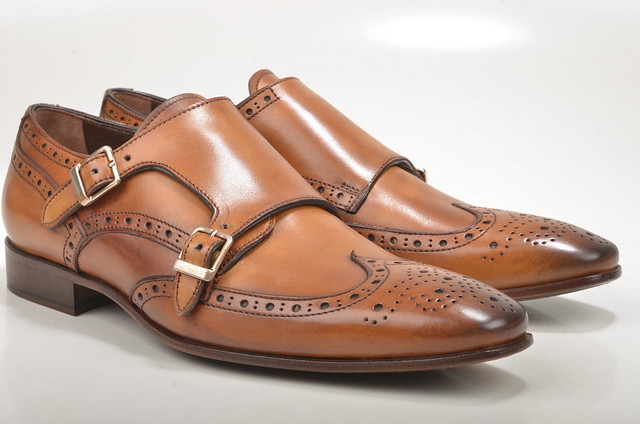
John Baker's Doppelmonk Brogue K188 Kalbsleder hellbraun (brown) (1)

The word brogue in English refers to a type of shoe, or a strong accent, particularly a strong Irish accent when speaking English, although it originally referred to Irish spoken with a strong English accent, or a heavy shoe of untanned leather.

It comes from the Irish word bróg (boot, shoe), from the Old Irish bróc [broːɡ] (shoe, sandal, greave), from the Old Norse brók (trousers, breeches) or the Old English brōc (underpants), both of which come from the Proto-Germanic *brōks (rear end, rump, leggings, pants, trousers), from the PIE *bʰreg- (to break, crack, split) [source].

Related words in other Celtic languages include:

  • bròg [brɔːg] = shoe, boot, hoof in Scottish Gaelic
  • braag = brogue, shoe in Manx
  • brog = brogue (shoe) in Welsh

Brogue in the sense of accent might come from the Irish word barróg (hug, wrestling grip, brogue, impediment of speech) [source], which comes from the Old Irish barróc (fast hold, tight grip, embrace, gripe, stitch) [source],

Other words from the Proto-Germanic root *brōks include breeches/britches in English, brók (trousers, underpants) in Icelandic and Faroese, brok (trousers) in Swedish and Norwegian, and broek (trousers) in Dutch [source].

The Irish word bríste (trousers), the Manx word breeçhyn (breeches) and the Welsh word brits/britsh (breeches) were borrowed from the English word breeches. The Scottish Gaelic word briogais (trousers) comes from the Scots breeks (trousers, breeches), from the Middle English breke, from the Old English brēċ [breːt͡ʃ] (underpants) [source].

More details of shoe– and trouser-related words in Celtic languages can be found on the Celtiadur, a blog where I explore connections between Celtic languages in more depth. I also write about words, etymology and other language-related topics on the Omniglot Blog.
You can also listen to this podcast on: Apple Podcasts, Amazon Music, Stitcher, TuneIn, Podchaser, PlayerFM or podtail.

If you would like to support this podcast, you can make a donation via PayPal or Patreon, or contribute to Omniglot in other ways.

The Fastest Way to Learn Japanese Guaranteed with JapanesePod101.com