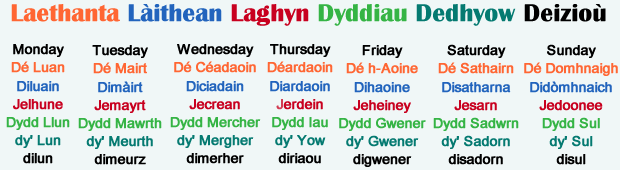
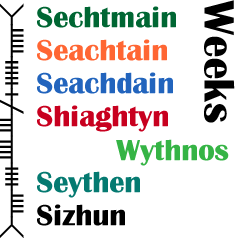
Words for time and weather in Celtic languages.
Words marked with a * are reconstructions.
| Proto-Celtic |
*ammen-, *amo- = time |
| Old Irish (Goídelc) |
amm = time |
| Middle Irish (Gaoidhealg) |
amm = time, point of time |
| Irish (Gaeilge) |
am [aumˠ / ɑːmˠ / amˠ] = time, point of time, occasion, usual, due, proper, opportune, season, period
am ar bith = at any time
ó am go ham = from time to time
amadóir = timepiece, timer
amchlár, clár ama = time-table
amchrios = time zone
amscála = time scale |
| Scottish Gaelic (Gàidhlig) |
àm [ãũm/amə] = time, occasion, period
àm air bith = whenever
àm-latha = daytime
àm nam pòg = honeymoon (“time of kissing”) |
| Manx (Gaelg) |
am = time
ec yn am = in the nick of time |
Etymology: possibly from Proto-Indo-European *h₂etmn̥ (wandering), from *h₂et- (to go), which is also the root of words such as annual in English, an(née) (year) in French and año (year, age) in Spanish [source].
| Proto-Celtic |
*amsterā = time, moment |
| Old Irish (Goídelc) |
aimser [ˈamʲsʲer] = time, age, period, season |
| Middle Irish (Gaoidhealg) |
aimser [ˈamʲɕər] = point of time, period of time, span, spell, period, age, epoch, season. weather
aimseradt = period, duration
aimserdae = belonging to time, temporal |
| Irish (Gaeilge) |
aimsir [ˈamʲʃəɾʲ / ˈæːmʲʃəɾʲ] = mind, mental state, disposition, attention, spirits, intention, accord
aimseartha = temporal |
| Scottish Gaelic (Gàidhlig) |
aimsir [ɛmɛʃɪrʲ] = climate, weather, season, era, time, reign
aimsireil [ɛmɛʃɪrʲal] = of this world, temporal |
| Manx (Gaelg) |
emshir [ˈɛmʃər] = weather, weather conditions, tense, time |
| Old Welsh |
amser = time |
| Middle Welsh (Kymraec) |
amser [ˈamser] = time
amserav = to time, date
amserawl, amseraỽl = timely |
| Welsh (Cymraeg) |
amser [ˈamsɛr / ˈamsar] = time, occasion, date, opportunity
amseraf, amseru = to time, date, occur, come to pass
amseriad = date, a timing, time, tempo (in music)
amserlen = timetable
amserlin = timeline, schedule
amsernod = noteworty, epoch, period, era, time signature
amserol = timely, well-timed, topical, seasonable, opportune, suitable, temporal, transient, temporary
amserolder = timeliness, seasonableness |
| Old Cornish |
anser = time |
| Middle Cornish (Cernewec) |
amser = time |
| Cornish (Kernewek) |
amser = (grammatical) tense
amseryow = menstruation, period |
| Middle Breton (Brezonec) |
amser, amzer = time, weather |
| Breton (Brezhoneg) |
amzer [ˈãm.zɛr] = time, weather
amzeran, amzerañ = to delay, to fix (in time)
amzereg = timer
amzeroni = chronology
amzervezh = time, era |
Etymology: possibly from the Proto-Indo-European *h₂meh₁- (to mow, reap, harvest), from Proto-Celtic *amm (time) – see above [source].
| Proto-Celtic |
*trātu = time, hour |
| Old Irish (Goídelc) |
tráth [traːθ] = time, hour, period (of time) |
| Middle Irish (Gaoidhealg) |
tráth [traːθ] = period of time, hour, point in time, day
tráthach = timely
tráthamail = timely |
| Irish (Gaeilge) |
tráth [t̪ˠɾˠɑː / t̪ˠɾˠæː] = hour, time, occasion, day, period
tráthaí = person who keeps regular hours
tráthchlár = timetable
tráthchuid = instalment
tráthnóna = afternoon, evening (up to nightfall)
tráthrialta = at regular times, regularly, punctually
tráthúil = timely, opportune, apt, felicitous, witty
tráthúlacht = timeliness, opportuneness, aptness, wittiness |
| Scottish Gaelic (Gàidhlig) |
tràth [traː] = time, meal, (grammatical) tense, when, phrase, season |
| Manx (Gaelg) |
traa = duration, time, period, occasion, tempo |
| Proto-Brythonic |
*trọd = course, voyage |
| Middle Welsh (Kymraec) |
traỽt, traỽd, trawt, trawd = course, way, journey, career, movement, gait, assault, attack |
| Welsh (Cymraeg) |
trawd, trawdd = course, way, journey, career, movement, gait, assault, attack
trawenaf, trawenu = to go (over/through), cross, travel |
| Cornish (Kernewek) |
trad = trade, way |
Etymology: from the Proto-Indo-European *terh₂- (to cross over, pass through, overcome) [source]. Words from the same roots include enter, term, terminal, thorough, through and transaction in English, and tarddu (to emerge, sprout, explode) in Welsh [source].
| Proto-Celtic |
*kʷritus = time, movement, shape, magical transformation |
| Old Irish (Goídelc) |
cruth [kruθ] / crud [kruð] = form, shape, manner, way |
| Middle Irish (Gaoidhealg) |
cruth = form, shape, appearance, shapeliness
cruthach = shapely, fair, beautiful
cruthaid = to create, form
cruthaigidir = to create, shape, form, produce
cruthmar = shapely |
| Irish (Gaeilge) |
cruth [kɾˠʊ(h)] = shape, appearance, state, condition, manner, mode
cruthach = shapely
cruthaigh = to create, form, prove
cruthaíocht = shape, appearance, good physique
cruthaitheach = creative
cruthú = creation, proof, testimony
cruthúil = shapely, beautiful, likely, plausible |
| Scottish Gaelic (Gàidhlig) |
cruth [kruh] = form, shape, figure
cruthach [kruhəx] = real, shapely, well-formed
cruthachadh [kruhəxəɣ] = (act of) creating, creation, (act of) forming
cruthachas [kruhəxəs] = creativity
cruthachd [kruhəxg] = form, complexion, creation
cruthadair [kruhədɪrʲ] = creator |
| Manx (Gaelg) |
croo = shape, appearance, format, coinage, creation, create, coining, form, build
crooaghey = shape
crootagh = creative, creator
crootaght = creativity |
| Proto-Brythonic |
*prɨd = shape, form |
| Middle Welsh (Kymraec) |
pryd, prid, pryt = sight, appearance
prydu, prydaf = to compose poetry
prydaw = beautiful, lovely
prydfawr, pryduawr = very beautiful or graceful, splendid, inspired
pryduerth, prytuerth = beautiful, splendid, handsome, fine, fair, seemly, decent |
| Welsh (Cymraeg) |
pryd [prɨːd / priːd] = sight, appearance, aspect, complexion, colouring, face, shape, form, comeliness, beauty
prydaf, prydu = to compose poetry, versify, write (a poem), to devise, compose
prydaw = beautiful, lovely
prydfawr = very beautiful or graceful, splendid, inspired
prydferth = beautiful, splendid, handsome, fine,
fair, seemly, decent
prydferthaf, prydferthu = to make beautiful, beautify, grace, adorn, embellish, flourish |
| Proto-Celtic |
*kʷritus = time, movement, shape, magical transformation |
| Proto-Brythonic |
*prɨd = time |
| Middle Welsh (Kymraec) |
pryt, pryd = time. occasion, period, season |
| Welsh (Cymraeg) |
pryd [prɨːd / priːd] = time, occasion, period, season, day, meal(time), when, while
prydlon = punctual, prompt, timely, seasonable; suitable, appropriate, proper
prydlondeb, prydlonder, prydlonedd = punctuality, timeliness, seasonableness
pryd(i)ol = timely, seasonable, punctual |
| Old Cornish |
prit = hour, time |
| Middle Cornish (Cernewec) |
prys, prês, preys = a stated time, a while, time, season, mealtime, a meal |
| Cornish (Kernewek) |
prys = season, time, while
prysweyth = instant, occasion |
| Middle Breton (Brezonec) |
pret = moment |
| Breton (Brezhoneg) |
pred = moment, meal
predadenn = (good) meal |
Etymology (of both the above words): from the Proto-Indo-European *kʷer- (to do, make, build). Words from the same roots include Britain, Brittany and karma in English, and words for cauldron in Celtic languages [source].
| Middle Welsh (Kymraec) |
tywyd = weather |
| Welsh (Cymraeg) |
tywydd [ˈtəu̯.ɨ̞ð / ˈtəu̯.ɪð] = weather, bad or stormy weather
tywyddiant = meterology
tywyddol = pertaining to the weather |
| Cornish (Kernewek) |
tewedh = storm
tewedha = to weather |
Etymology: unknown

Sources: Wiktionary, Am Faclair Beag, Online Manx Dictionary, Teanglann.ie, eDIL – Electronic Dictionary of the Irish Language, In Dúil Bélrai English – Old Irish glossary, Geiriadur Prifysgol Cymru, Gerlyver Kernewek, Lexicon Cornu-britannicum: A Dictionary of the Ancient Celtic Language of Cornwall, Dictionaire Favereau, TermOfis, Le dictionnaire diachronique du breton, Etymological Dictionary Of Proto Celtic