Celtic Pathways – Bards and Poets

In this episode we’re looking at words for bards, poets and related people.

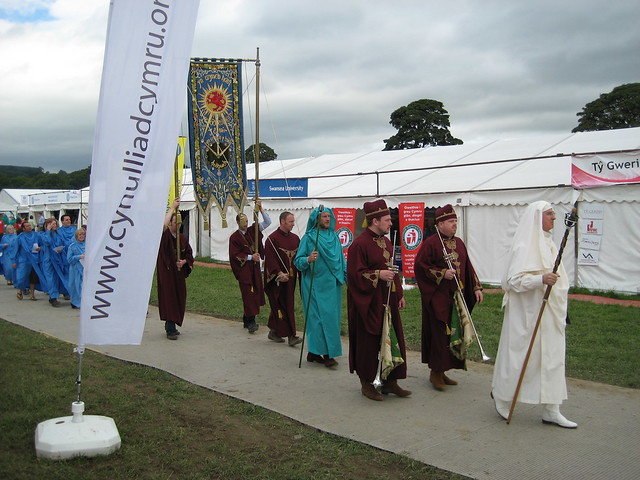
Eisteddfod Maes 2009

In Proto-Celtic one word for bard was *bardos, which comes from the Proto-Indo-European *gʷr̥dʰh₁-ó-s from *gʷerH- (to express approval, praise, elevate) [source].

Descendants in the modern Celtic languages include:

  • bard [bˠɑːɾˠd̪ˠ / bˠæːɾˠd̪ˠ] = poet, bard, scold in Irish
  • bàrd [baːr̪ˠd] = poet, versifier, bard, rhymer in Scottish Gaelic
  • bard = poet, bard in Manx
  • bardd [barð] = poet, bard, literary person, author, prophet, philosopher, priest in Welsh
  • bardh [barð] = bard, poet in Cornish
  • barzh = bard, poet in Breton

The English word bard was borrowed from Scottish Gaelic in the 15th century. The Proto-Celtic word *bardos was borrowed into Latin as bardus (bard), which became barde in French and bardo in Italian, Spanish and Portuguese [source]

The Proto-Celtic word *weless means seer or poet. It comes from the Proto-Celtic *weleti (to see) from the PIE *wel (to see) [source].

Descendants in modern Celtic languages include:

  • file [ˈfʲɪlʲə] = poet, song-maker, lyricist, satirist, scold in Irish
  • filidh [filɪ] = minstrel, poet (traditionally a member of one of the seven ranks of poets, all of which are above the bàrd) in Scottish Gaelic
  • feelee = poet in Manx

Words for to see in Welsh (gweld), Cornish (gweles) and Breton (gwelet) come from the Proto-Celtic *weleti, as to parts of the verb to be in Irish (bhfuil), Scottish Gaelic (bheil) and Manx (vel) – apparently they came from the imperative form of the verb and the meaning shifted from “see!” to “there is” to “is” [source].

The Swedish word leta (to search, look for) comes from the same PIE root, as does the word lait (to seek, search for, inquire), which is or was found in some UK dialects of English [source].

More details about these words on Celtiadur, a blog where I explore connections between Celtic languages in more depth.

I also write about words, etymology and other language-related topics on the Omniglot Blog.

You can also listen to this podcast on: Apple Podcasts, Amazon Music, Stitcher, TuneIn, Podchaser, PlayerFM or podtail.

If you would like to support this podcast, you can make a donation via PayPal or Patreon, or contribute to Omniglot in other ways.

The Fastest Way to Learn Japanese Guaranteed with JapanesePod101.com

Celtic Pathways – Family

In this episode we’re looking at words for family, tribe and related things.

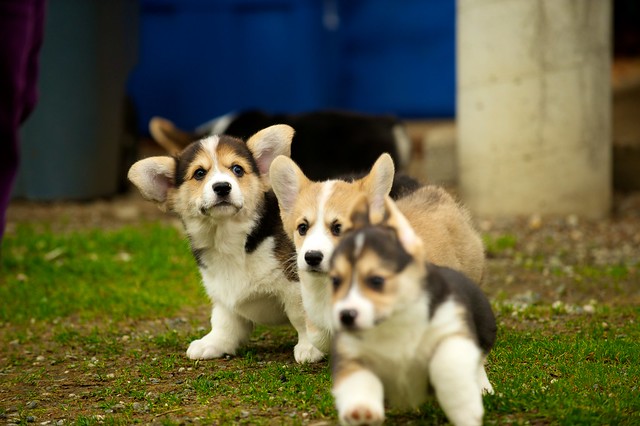
Corgi Puppies 21

In Proto-Celtic a word for family or kindred was *wenyā, which comes from the Proto-Indo-European *wenh₁- (to wish, seek, desire, love, win) [source].

Descendents in the modern Celtic languages include:

  • fine [ˈfʲɪnʲə] = family, kin, clan, tribe, race in Irish
  • fine [finə] = family group, race, territory of a family group in Scottish Gaelic
  • gouenn = race in Breton

The name of Vannes [van], a town in Brittany, comes from the same Proto-Celtic root, via the Latin Veneti [source]

Words from the same PIE root include venom, Venus, wonder, wean and winsome in English, vän (friend) in Swedish, and gwenwyn (poison, venom) in Welsh [source]

The Proto-Celtic word *genos (family, clan, birth) is the root of iníon [ˈɪnʲiːnʲ] (daughter, girl maiden, (young) woman, Miss) in Irish, nighean [ɲiː.an̪ˠ] (daughter, girl, lass) in Scottish Gaelic, and inneen [ɪnˈjiːn] (daughter, girl) in Manx [source].

It also makes up part of the Irish name Eoghan [oːn̪ˠ], the Scottish Gaelic name Eòghan [joː.ən̪ˠ], both of which are thought to come from the Proto-Celtic name *Iwogenos, from *iwos (yew) and *genos (born, family) [source].

The name Morgan possibly comes from the Old Welsh name Morgen from *mor (sea) and *gen (born), from the Proto-Celtic *genos [source].

The Proto-Celtic word *tegeso-slougo- means family or household. It comes from the Proto-Indo-European *tegos (cover, roof) [source] and *slowgʰos / *slowgos (entourage) [source].

Descendents in modern Celtic languages include:

  • teaghlach [ˈtʲalˠəx] = household, family, domestic establishment, retinue in Irish
  • teaghlach [ˈtʲɤːɫ̪ˠəx] = family, household in Scottish Gaelic
  • thielagh = family, household in Manx
  • teulu = family, tribe, nation, household in Welsh
  • teylu = family in Cornish
  • tiegezh = household, farm, family in Breton

More details about these words on Celtiadur, a blog where I explore connections between Celtic languages in more depth.

I also write about words, etymology and other language-related topics on the Omniglot Blog.

You can also listen to this podcast on: Apple Podcasts, Amazon Music, Stitcher, TuneIn, Podchaser, PlayerFM or podtail.

If you would like to support this podcast, you can make a donation via PayPal or Patreon, or contribute to Omniglot in other ways.

The Fastest Way to Learn Japanese Guaranteed with JapanesePod101.com

Adventures in Etymology – Riddles

Today we’re uncovering the mysterious and puzzling origins of the word riddle.

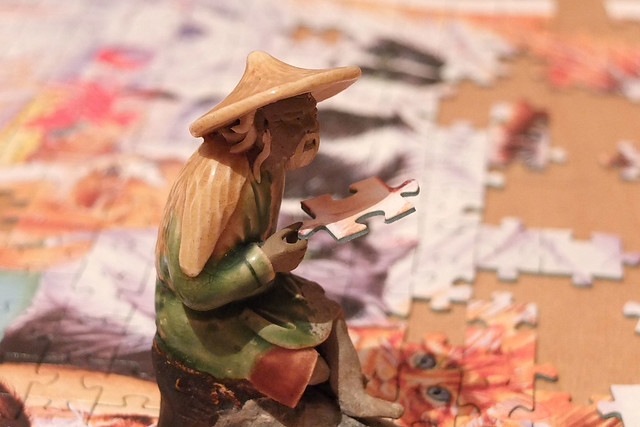
Puzzled

A riddle [ˈɹɪdəl] is:

  • A verbal puzzle, mystery, or other problem of an intellectual nature.

To riddle is:

  • To speak ambiguously or enigmatically.
  • To solve, answer, or explicate a riddle or question.

It comes from the Middle English rēdels (riddle, problem, enigma), from the Old English rǣdels [ˈræː.deɫs] (guess, conjecture, counsel, debate, enigma, riddle), from the Proto-West-Germanic *rādislī (advice, guess, riddle, puzzle), from *rādan (to advise, guess, interpret), from the Proto-Germanic *rēdaną [ˈrɛː.ðɑ.nɑ̃] (to decide, advise), from the PIE *Hreh₁dʰ- (to think, arrange) [source].

The English word read comes from the Germanic root, as do the Dutch words raadsel (riddle, mystery) and raden (to guess), the German words Rätsel (riddle, puzzle, mystery) and raten (to advise, recommend, guess), and the Swedish word råda (to advise, rule, reign, occur, exist) [source].

The word riddle, as in a kind of sieve, usually made of wire, comes from different roots: from the Middle English ridel (coarse sieve), from the Old English hriddel (sieve), from the Proto-West Germanic *hrīdrā (sieve), from the Proto-Germanic *hrīdrǭ [ˈxriːð.rɔ̃ː] (sieve), from *hrid- (to shake), ultimately from the Proto-Indo-European *krey- (to sift, separate, divide) [source].

Words from the same roots include crime, crisis, critic and secret in English, Reiter [ˈʁaɪ̯tɐ] (rider, mounted man-at-arms) in German, and crynu (to tremble, quake, shiver) and crwydr (sieve, winnowing-fan, wandering, roaming) in Welsh [source].

More details about sieve-related words in Celtic languages on the Celtiadur.

Here’s a video I made of this information:

Video made with Doodly [afflilate link].

I also write about words, etymology and other language-related topics on the Omniglot Blog, and I explore etymological connections between Celtic languages on the Celtiadur.

You can also listen to this podcast on: Apple Podcasts, Amazon Music, Stitcher, TuneIn, Podchaser, PlayerFM or podtail.

If you would like to support this podcast, you can make a donation via PayPal or Patreon, or contribute to Omniglot in other ways.

The Fastest Way to Learn Japanese Guaranteed with JapanesePod101.com

Celtic Pathways – Languages and Tongues

Celtic Pathways is a new series on Radio Omniglot that will be exploring connections between Celtic languages, and looking for Celtic roots in other languages.

The Six Celtic languages currently spoken are all members of the insular branch of the Celtic language family, which is part of the Indo-European language family. They can be divided into two groups: the Goidelic or Q-Celtic languages: Irish, Manx and Scottish Gaelic, and the Brythonic or P-Celtic languages: Welsh, Cornish and Breton. They are spoken mainly in the British Isles, Ireland, and Brittany in the northwest of France. There are also Welsh speakers in Patagonia in Argentina, and Scottish Gaelic speakers in Nova Scotia in Canada.

Other Celtic languages were spoken in the past in parts of Continental Europe, particularly in what is now France, Spain, Portugual, northern Italy and across central Europe perhaps as far as Turkey. They are all extinct, although there is a little written material in some of them, such as Gaulish, Celtiberian and Leptonic.

I’ve been collecting words that are cognate (related) in some or all of the modern Celtic languages since 2009 and putting them together in the Celtic cognates section of Omniglot. In 2018 I started exploring these words in more depth on the Celtiadur blog. I look for related words in the modern Celtic languages, in earlier versions of the Celtic languages, such as Middle Welsh and Old Irish, and in their extinct and reconstructed relatives, right back to Proto-Celtic. I also look for words from the same roots in other languages, such as English, French and Spanish.

Words of Celtic origin in other languages
https://en.wikipedia.org/wiki/Lists_of_English_words_of_Celtic_origin
https://en.wikipedia.org/wiki/List_of_French_words_of_Gaulish_origin
https://en.wikipedia.org/wiki/List_of_Galician_words_of_Celtic_origin
https://en.wikipedia.org/wiki/List_of_Spanish_words_of_Celtic_origin
https://www.uni-trier.de/en/forschung/zat/celtic-studies/celtic-cultures/celtic-words

By the way, I speak Welsh and Irish more or less fluently, can get by in Scottish Gaelic and Manx, and have a smattering of Breton and Cornish. I’ve been interested in Welsh for a long time as I have Welsh roots on my mother’s side, although she didn’t speak it. I got into Irish and Scottish Gaelic through a love of tradition music and songs from Ireland and Scotland, and I learnt the others out of interest. While doing an MA in Linguistics at Bangor University, I wrote a dissertation on the Death and Revival of Manx. Find out more in my Language Learning Adventures.

Let’s start this first episode of Celtic Pathways by looking at words for language and tongue.
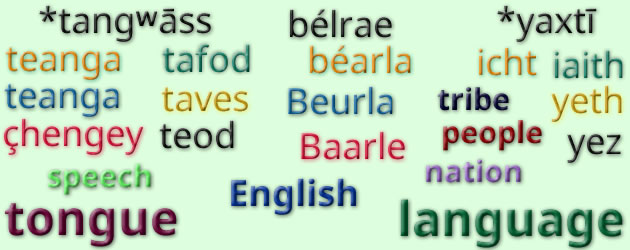
The Proto-Celtic word for language was *yaxtī, which comes from the Proto-Indo-European *yek- (to utter) [source].

Descendents in the modern Celtic languages include:

  • iaith [jai̯θ] = language, tongue; people, nation, race, tribe in Welsh
  • yeth [eːθ / jeːθ] = tongue, language in Cornish
  • yezh [ˈjeːs] = language in Breton

The Middle Irish word icht (race, people, tribe; province, district) possibly comes from the same Proto-Celtic root.

Words from the same PIE root include: joke and Yule in English, jul (Yule, Christmas) in Danish and Norwegian, juego (play, game, sport) in Spanish, and joc (game, play, dance) in Romanian [source].

The Proto-Celtic word for tongue was *tangʷāss, tangʷāt, from the Proto-Indo-European *dn̥ǵʰwéh₂s (tongue). Descendents in the modern Celtic langauges include:

  • teanga [ˈtʲaŋə / ˈtʲaŋɡə] = tongue, language in Irish
  • teanga [tʲɛŋgə] = tongue speech, spit (of land) in Scottish Gaelic
  • çhengey [ˈtʃɛnʲə] = bell-clapper, clasp, feather, strap-hinge; catch (of buckle); tongue; language, speech; utterance in Manx
  • tafod [ˈtavɔd / ˈtaːvɔd] = tongue, faculty of speech, power of expression; language, speech, dialect, accent in Welsh
  • taves = language, tongue in Cornish
  • teod [ˈtɛwt] = language, tongue in Breton

Words from the same PIE root include: tongue and language in English, lingua (tongue, language) in Italian, язик [jɐˈzɪk] (tongue) in Ukrainian, and jazyk (tongue, language) in Czech and Slovak [source].

An Old Irish word for language and speech was bélrae [ˈbʲeːl͈re], from the Old Irish bél (mouth). This became Béarla [ˈbʲeːɾˠl̪ˠə] in modern Irish, Beurla [bjɤːr̪ˠl̪ˠə] in Scottish Gaelic and Baarle [bɛːᵈl], all of which mean English (language) [source].

More details about these words on the Celtiadur.

I also write about words, etymology and other language-related topics on the Omniglot Blog.

You can also listen to this podcast on: Apple Podcasts, Amazon Music, Stitcher, TuneIn, Podchaser, PlayerFM or podtail.

If you would like to support this podcast, you can make a donation via PayPal or Patreon, or contribute to Omniglot in other ways.

The Fastest Way to Learn Japanese Guaranteed with JapanesePod101.com

Adventures in Etymology – Lead

Today we’re delving into the origins of the word lead.

Lead Ingots

lead [lɛd] is:

  • a soft, heavy, metallic element with atomic number 82 found mostly in combination and used especially in alloys, batteries, and shields against sound, vibration, or radiation.
  • a thin strip of metal used to separate lines of type in printing.

It comes from the Middle English le(e)d [lɛːd] (lead, cauldron), from the Old English lēad [læɑːd] (lead), from the Proto-West-Germanic *laud (lead)), from the Gaulish *laudon (lead), from the Proto-Celtic *ɸloudom (iron), from the PIE *plewd- (to fly, flow, run) [source].

Words from the same Proto-West-Germanic root include lood [loːt] (lead, plumb bob) in Dutch, Lot [loːt] (plummet, solder) in German, and lod [lʌð] (plumb bob, fishing weight) in Danish [source].

Words from the same Proto-Celtic root include luaidhe [ˈl̪ˠuːiː/l̪ˠuəjə] (lead) in Irish and Scottish Gaelic, leoaie (lead) in Manx [source].

Words from the same PIE root include float, flow, flood, fleet and Pluto in English, vlotten (to glide, go smoothly) in Dutch, and flotter [flɔ.te] (to float, flutter, wave, mill about) in French [source].

Incidentally, to word lead [liːd], as in to guide or direct, is not related to lead (the metal). It comes from the Middle English leden (to lead, carry, take, put), from the Old English lǣdan (to lead, bring, take, carry, guide), from the Proto-Germanic *laidijaną (to cause one to go, lead), causative of the Proto-Germanic *līþaną (to go, pass through), from Proto-Indo-European *leyt- (to go, depart, die) [source].

Here’s a video I made of this information:

Video made with Doodly [afflilate link].

I also write about words, etymology and other language-related topics on the Omniglot Blog, and I explore etymological connections between Celtic languages on the Celtiadur.

You can also listen to this podcast on: Apple Podcasts, Amazon Music, Stitcher, TuneIn, Podchaser, PlayerFM or podtail.

If you would like to support this podcast, you can make a donation via PayPal or Patreon, or contribute to Omniglot in other ways.

The Fastest Way to Learn Japanese Guaranteed with JapanesePod101.com

Adventures in Etymology – Timber

In this week’s Adventures in Etymology we’re exploring the origins of the word timber.

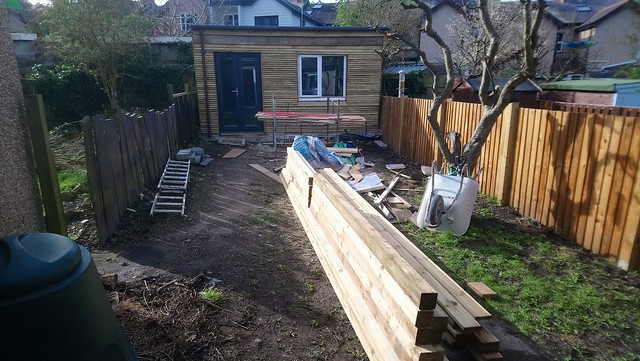
Studio / Stwdio

Timber [ˈtɪmbə/ˈtɪmbɚ] means:

  • Trees in a forest regarded as a source of wood.
  • Wood that has been pre-cut and is ready for use in construction.
  • A heavy wooden beam, generally a whole log that has been squared off and used to provide heavy support for something such as a roof.

It comes from the Middle English tymber/timber (timber), from the Old English timber [ˈtim.ber] (timber, a building, the act of building), from the Proto-Germanic *timrą [ˈtim.rɑ̃] (building, timber), from the PIE *dem- (to build) [source].

Words from the same Proto-Germanic root include timmeren (to build, put together) in Dutch, Zimmer [ˈt͡sɪmɐ] (room) in German, timmer (timber) in Swedish, and timbur (wood, timber) in Icelandic [source].

Words from the same PIE root include domus (house, home) in Latin, duomo [ˈdwɔ.mo] (cathedral) in Italian, дом [dom] (house, building, home) in Russian and most other Slavic languages, and dome, domestic and despot in English [source].

Here’s a video I made of this information:

Video made with Doodly [afflilate link].

I also write about words, etymology, and other language-related topics, on the Omniglot Blog, and I explore etymological connections between Celtic languages on the Celtiadur.

You can also listen to this podcast on: Apple Podcasts, Amazon Music, Stitcher, TuneIn, Podchaser, PlayerFM or podtail.

If you would like to support this podcast, you can make a donation via PayPal or Patreon, or contribute to Omniglot in other ways.
The Fastest Way to Learn Korean with KoreanClass101

Adventures in Etymology – Wood

Today we’re trying to see the wood for the trees by looking at the origins of the word wood.

Here be trees!

Wood [wʊd] is:

  • The substance making up the central part of the trunk and branches of a tree. Used as a material for construction, to manufacture various items, etc. or as fuel.
  • A forested or wooded area.

It comes from the Middle English wode [ˈwoːd(ə)] (wood), from the Old English wudu [ˈwu.du] (wood, forest, woods, tree), from the Proto-West-Germanic *widu (forest, tree, wood), from the Proto-Germanic *widuz [ˈwi.ðuz] (wood), from the PIE *h₁weydʰh₁ (wood, wilderness) [source].

Words from the same PIE root include ved (wood, firewood) in Swedish, Danish and Norwegian, gwŷdd [ɡwɨːð] (trees) in Welsh, fiodh [fʲɪ] (wood, timber) in Irish, and vidus (middle, centre) in Latvian [source].

How did a word meaning wood come to mean middle or centre in Latvian? Well, apparently the areas between villages were mainly forested in the past, and the meaning shifted from forest to area (between villages) to middle [source].

Here’s a video I made of this information:

Video made with Doodly [afflilate link].

I also write about words, etymology, and other language-related topics, on the Omniglot Blog, and I explore etymological connections between Celtic languages on the Celtiadur.

You can also listen to this podcast on: Apple Podcasts, Amazon Music, Stitcher, TuneIn, Podchaser, PlayerFM or podtail.

If you would like to support this podcast, you can make a donation via PayPal or Patreon, or contribute to Omniglot in other ways.
Learn Korean

Adventures in Etymology – Telling Tales

In today’s Adventure in Etymology we’re telling tales about the origins of the word tale.

Telling Tales

A tale [teɪl] is:

  • a narrative that relates the details of some real or imaginary event, incident, or case; story
  • a literary composition having the form of such a narrative
  • a falsehood; lie
  • a rumor or piece of gossip, often malicious or untrue

It used to mean:

  • number, tally, quota
  • account, estimation, regard, heed
  • speech, language
  • a speech, a statement, talk, conversation, discourse
  • a count, declaration

It comes from the Middle English tale [ˈtaːl(ə)] (personal narrative, account), from the Old English talu [ˈtɑ.lu] (account, reckoning, tale, narration) from the Proto-West Germanic *talu (narration, report, assessment, judgement, calculation, counting), from the Proto-Germanic *talō (narration, report), from the PIE *dol-éh₂ (reckoning, calculation, fraud), from *del- (to reckon, calculate) [source].

Some words from the same Proto-Germanic root include tell in English, taal [taːl] (language) in Dutch and Afrikaans, Zahl [tsaːl] (number, numeral, figure) in German, tala [ˈtʰaːla] (a speech, button, number) in Icelandic, tala [ˈtɑːˌla] (to speak, tell, talk) in Swedish, and tale [ˈtˢæːlə] (speech, talk, discourse; to speak, talk) in Danish [source].

Here’s a video I made of this information:

Video made with Doodly – an easy-to-use animated video creator [affiliate link].

Here’s a silly little ditty I wrote in 2019 called Tall Tales:

I also write about words, etymology, and other language-related topics, on the Omniglot Blog, and I explore etymological connections between Celtic languages on the Celtiadur.

You can also listen to this podcast on: Apple Podcasts, Amazon Music, Stitcher, TuneIn, Podchaser, PlayerFM or podtail.

If you would like to support this podcast, you can make a donation via PayPal or Patreon, or contribute to Omniglot in other ways.
Blubrry podcast hosting

Adventures in Etymology – Gates & Streets

In today’s Adventure in Etymology we’re find out when a gate is not a gate.

A gate [ɡeɪt] is:

  • A doorlike structure outside a house.
  • A doorway, opening, or passage in a fence or wall.
  • A movable barrier.

It comes from the Middle English gat(e)/ȝat(e) [ɡa(ː)t/ja(ː)t] (gate), from the Old English ġe(a)t/gat [jæ͜ɑt] (gate) from the Proto-West Germanic *gat (hole, opening) from the Proto-Germaic *gatą [ˈɣɑ.tɑ̃] (hole, opening, passage), from *getaną [ˈɣe.tɑ.nɑ̃] (to attain, acquire, get, receive, hold) [source].

In parts of northern England the word gate means a way, path or street, and in Scots it means way, road, path or street. It appears mainly in street names such as Briggate (“bridge street”) and Kirkgate (“church street”). It comes from the Old Norse gata (street, road), from the Proto-Germanic *gatwǭ [ˈɣɑt.wɔ̃ː] (street, passage), which comes from the same Proto-Germanic root as the other kind of gate.

Whip-Ma-Whop-Ma-Gate

Words from the same Old Norse root include gata [ˈɡɑːˌta] (street, frontage, strip) in Swedish, gate (street) in Norwegian and gade [ˈɡ̊æːðə] (street, road) in Danish, Gasse [ˈɡasə] (alley) in German, and gas [χɑs/ɣɑs] (unpaved street) in Dutch [source].

Here’s a video I made of this information:

Video made with Doodly – an easy-to-use animated video creator [affiliate link].

I also write about words, etymology, and other language-related topics, on the Omniglot Blog, and I explore etymological connections between Celtic languages on the Celtiadur.

You can also listen to this podcast on: Apple Podcasts, Amazon Music, Stitcher, TuneIn, Podchaser, PlayerFM or podtail.

If you would like to support this podcast, you can make a donation via PayPal or Patreon, or contribute to Omniglot in other ways.

Blubrry podcast hosting

Adventures in Etymology – Silly

In today’s Adventure in Etymology we’re getting a bit absurd and ridiculous and looking at the origins of the word silly.

A word cloud based on the contents of this post
Generated with WordItOUt

Silly [ˈsɪli] means:

  • laughable or amusing through foolishness or a foolish appearance
  • weak-minded or lacking good sense; stupid or foolish
  • absurd; ridiculous; irrational
  • stunned; dazed

It comes from the Middle English se(e)ly [seːliː] (spiritually favoured, blessed, holy, virtuous, righteous; worthy, noble, fine, excellent; fortunate, lucky, prosperous; happy pleasant; wealthy; innocent, harmless, good; simple, guileless, foolish, gullible; weak, helpless; wretched; humble; worthless) [source].

From the Old English sǣliġ [ˈsæː.lij] (blessed, fortunate, prosperous, happy), from the Proto-West Germanic *sālīg (blissful, prosperous, happy) from *sāli (happiness, prosperity; proper, appropriate time), from the Proto-Germaic *sēliz (happy, fortunate; kind, good) [source]

Words from the same Proto-West Germanic root (*sālīg) include: salig [ˈsæːli] (blessed) in Danish, salig [ˈsɑːli(ɡ)] (blessed, delighted, poor) in Swedish, and selig [ˈzeːlɪç] (overjoyed, tranquil, blessed) in German [source].

Here’s a video I made of this information:

Video made with Doodly – an easy-to-use animated video creator [affiliate link].

Here’s a silly little ditty I wrote in 2019 about being silly and odd: It’s Okay To Be Odd / Mae’n Iawn Bod yn Od

I also write about words, etymology, and other language-related topics, on the Omniglot Blog, and I explore etymological connections between Celtic languages on the Celtiadur.

You can also listen to this podcast on: Apple Podcasts, Amazon Music, Stitcher, TuneIn, Podchaser, PlayerFM or podtail.

If you would like to support this podcast, you can make a donation via PayPal or Patreon, or contribute to Omniglot in other ways.
Blubrry podcast hosting