Celtic Pathways – Hogging Sockets

In this episode we find out what links the words hog and socket with words for pig, ploughshare and related things in Celtic languages.

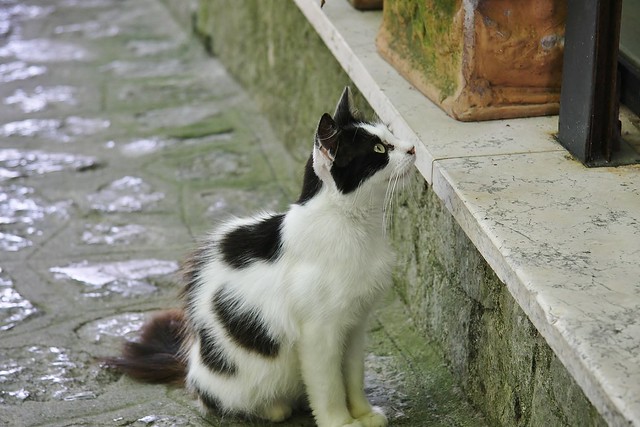
Family of Feral Hogs

The Proto-Celtic word sukkos means a pig (snout) or ploughshare, presumably because ploughshares looked like pig’s snouts. It comes from the Proto-Indo-European *súH-s (pig, hog, swine) [source]

Descendents in the modern Celtic languages include:

  • soc [sˠɔk] = sow in Irish.
  • soc [sɔxg] = beak, snout, socket, ploughshare, or a short, chubby person in Scottish Gaelic
  • sock = bow, nose, snout, ploughshare, jet or nozzle in Manx
  • hwch [huːχ] = sow, pig, swine, or a dirty creature in Welsh
  • hogh = hog, pig or swine in Cornish
  • houc’h = sow in Breton

Words from the same Proto-Celtic root in other languages include socket and possibly hog in English, and soc (ploughshare) in French.

The word socket comes from the Middle English soket, from the Anglo-Norman soket (spearhead), from the Old French soc (ploughshare), from the Vulgar Latin *soccus, from the Proto-Celtic *sokkos, probably via Gaulish [source].

The word hog comes from the Middle English hog(ge) (pig, swine, pig meat, hogget [young sheep]), from the Old English hogg (hog), either the Old Norse hǫggva (to hew), or from the Proto-Brythonic *hux (pig) [source].

The English word hoggan (a pork pasty), which is used mainly in Cornwall, probably comes from the Old Cornish hoggan/hogen) (pork pasty, pie), from hoch (pig), from the Proto-Brythonic *hux (pig). The word oggy/oggie (pasty), which is used in Devon and Cornwall, and also in Wales, comes from the same roots [source].

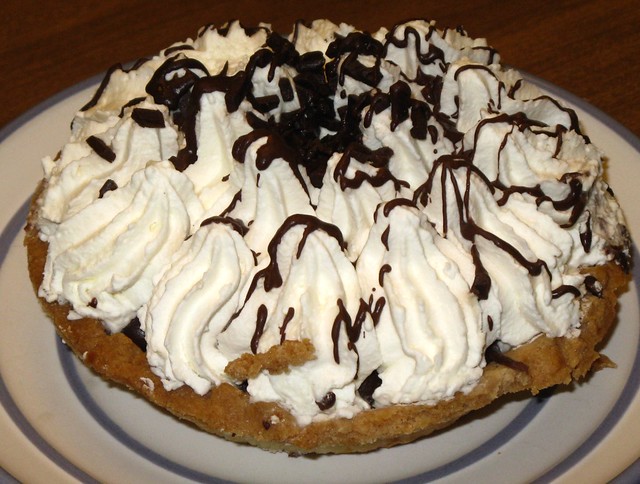
Welsh oggies are larger than Cornish pasties and contain lamb, potatoes and leeks. Here’s a recipe.

Oggie

Incidentally, the Welsh words hogyn (boy) and hogen (girl), which are used mainly in North Wales, come from hòg (young/little boy, youth, lad, fellow), from the English hogg (young sheep or hogget), from the Middle English hogget (a boar/sheep of the second year), from Anglo-Norman hog(g)et (young boar) and an Anglo-Latin hogettus [source].

You can find more details of words for pig and related beasts on the Celtiadur blog. I also write about words, etymology and other language-related topics on the Omniglot Blog.

Radio Omniglot podcasts are brought to you in association with Blubrry Podcast Hosting, a great place to host your podcasts. Get your first month free with the promo code omniglot.

The Fastest Way to Learn Japanese Guaranteed with JapanesePod101.com

Adventures in Etymology – Bureau

In this Adventure we are investigating the fiery origins of the word bureau.

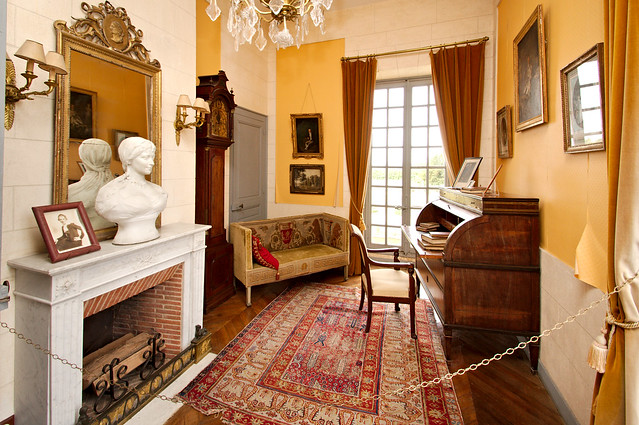
Bureau du château de Beaumesnil

A bureau [ˈbjʊɹ.əʊ/ˈbjʊɹ.oʊ] is:

  • An administrative unit of government
  • An organization or office for collecting or providing information or news.
  • A desk, usually with a cover and compartments (mainly UK)
  • A chest of drawers for clothes (mainly USA)

It comes from French bureau [by.ʁo] (desk, office, ticket office, office staff), from Old French burel (frieze [coarse woolen cloth], garment made of frieze) from Late Latin burra (a small cow with a red muzzle; a shaggy garment), from burrus (red, reddish-brown), from Ancient πυρρός [pyr̥.r̥ós] (flame-coloured, redheaded) from πῦρ [pŷːr] (fire, lighning, fever), from PIE *péh₂wr̥ (fire) [source].

How did we get from coarse fabric to a desk to an office? Well, back in the 14th century the French word bureau meant a carpet on which one did one’s accounts, probably made of coarse fabric. Later a table for doing accounts, then a place where you do your accounts, and by the 16th century it meant an establishment open to the public where a service of collective interest is undertaken [source].

The word burel (a coarse woolen cloth) also exists in English and was borrowed from Old French [source], and the old word borrel (a mean, ignorant or unlearned fellow) probably comes from the same roots [source].

The English prefix pyro- (fire, heat, fever), as in pyromancy (divination by fire), pyrometer (a thermometer designed to measure high temperatures) and pyroclast (solid matter ejected into the air by an active volcano) comes from the same PIE root [source], as do such words as fire, pyre and purge [source].

Here’s a video I made of this information:

Video made with Doodly [afflilate link].

I also write about words, etymology and other language-related topics on the Omniglot Blog, and I explore etymological connections between Celtic languages on the Celtiadur.

You can also listen to this podcast on: Apple Podcasts, Amazon Music, Stitcher, TuneIn, Podchaser, PlayerFM or podtail.

If you would like to support this podcast, you can make a donation via PayPal or Patreon, or contribute to Omniglot in other ways.

Radio Omniglot podcasts are brought to you in association with Blubrry Podcast Hosting, a great place to host your podcasts. Get your first month free with the promo code omniglot.

The Fastest Way to Learn Japanese Guaranteed with JapanesePod101.com

Celtic Pathways – Truant

In this episode we find out what links the word truant with words for beggar, wretch and related things in Celtic and other languages.

Begging

Truant [ˈtɹʊənt/ˈtɹuː.ənt] means:

  • Absent without permission, especially from school.
  • Wandering from business or duty; straying; loitering; idle, and shirking duty
  • One who is absent without permission, especially from school.

It comes from Middle English truant/truand (one who receives alms, a begger, vagabond, vagrant, scoundrel, rogue, shiftless or good-for-nothing fellow) from Old French truand (vagabond, beggar, rogue), either from Gaulish *trugan (wretch), or from Breton truant (beggar), possibly from Proto-Indo-European *terh₁- (to rub, turn, drill, pierce) [source].

Related words in the modern Celtic languages include:

  • trua [t̪ˠɾˠuə] = pity, sympathy, compassion, miserable person or wretch in Irish.
  • truaghan [truəɣan] = poor soul, poor thing or wretch in Scottish Gaelic
  • truanagh = miserable, mournful or sorrowful person in Manx
  • truan = wretch, miserable person; wretched, miserable, pathetic, poor or weak in Welsh
  • truan = sad, miserable, unfortunate or wretched in Cornish
  • truant = beggar in Breton

Other words from the same Proto-Celtic root include truand [tʁy.ɑ̃] (crook, gangster, beggar) in French [source], truhan [tɾuˈan] (scoundrel, scammer, swindler, rogue, crook, [historically] jester, buffoon) in Spanish, truão (jester) in Portuguese, and trogo (jester) in Galician [source].

Incidentally, words for truant in Celtic languages include: fánach in Irish, air falach in Scottish Gaelic, truggan in Manx, and triwant in Welsh.

What do you call the action of playing truant?

For me its skiving (off) and when you do it, you’re a skiver.

Here’s a video I made of this information:

Video made with Doodly [afflilate link].

You can find more details of these words on the Celtiadur blog. I also write about words, etymology and other language-related topics on the Omniglot Blog.

Radio Omniglot podcasts are brought to you in association with Blubrry Podcast Hosting, a great place to host your podcasts. Get your first month free with the promo code omniglot.
The Fastest Way to Learn Japanese Guaranteed with JapanesePod101.com

Celtic Pathways – Berets

In this episode we’re uncovering the Celtic origins of the word beret.

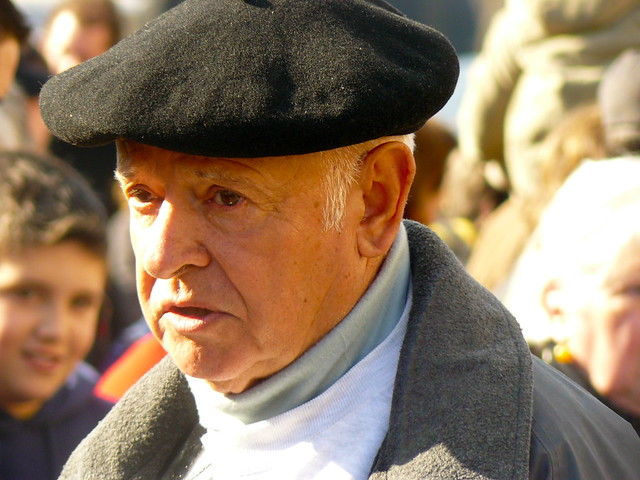
Fête du Boeuf Gras à Bazas

A beret [ˈbɛɹ.eɪ/bəˈɹeɪ] is:

  • A type of round, brimless cap with a soft top and a headband to secure it to the head; usually culturally associated with France.

It comes from the French béret (beret), from the Occitan (Gascon) berret (cap), from the Medieval Latin birretum (a kind of hat), from the Late Latin birrus (a large hooded cloak, a cloak to keep off rain, made of silk or wool), from the Gaulish birrus (a coarse kind of thick woollen cloth; a woollen cap or hood worn over the shoulders or head), from the Proto-Celtic *birros (short), the origins of which are not known [source]

Descendents in the modern Celtic languages include:

  • bearr [bˠɑːɾˠ] = to clip, cut, trim, shave, skim (milk), crop or pare (photos) in Irish.
  • beàrr [baːr̪ˠ] = to shave, cut (hair), clip, shear or prune in Scottish Gaelic
  • baarey = to bare, clip, cut, dress, poll, prune, shave or trimmed in Manx
  • byr [bɨ̞r/bɪr] = short, brief or concise in Welsh
  • berr [bɛɹ] = short or brief in Cornish
  • berr = short in Breton

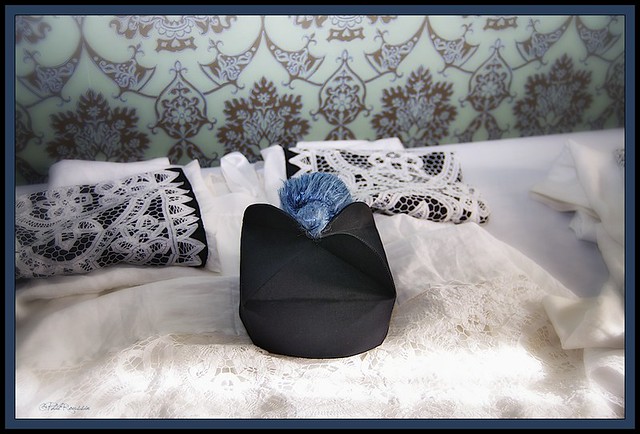
Other words from the Proto-Celtic root *birros, via Latin and Gaulish, include biretta (a square cap worn by some Roman Catholic priests) and berretto (beanie, cap) in Italian, barrete (biretta, cap) in Portuguese, birrete (biretta) in French, and βίρρος [ˈβir.ros] (a type of cloak or mantle) in Ancient Greek [source].

Biretta

Incidentally, words from beret in Celtic languages include: bairéad (beret, biretta, cap, hat, bonnet) in Irish, beeray or bayrn Frangagh (“French cap/hat”) in Manx, bere(t)/bered in Welsh, and béret/bered/boned in Breton.

You can find more details of these words on the Celtiadur blog. I also write about words, etymology and other language-related topics on the Omniglot Blog.

Here’s a video I made of this information:

Video made with Doodly [afflilate link].

Radio Omniglot podcasts are brought to you in association with Blubrry Podcast Hosting, a great place to host your podcasts. Get your first month free with the promo code omniglot.

The Fastest Way to Learn Japanese Guaranteed with JapanesePod101.com

Adventures in Etymology – Butler

In this Adventure we’re unbottling the origins of the word butler.

Butler on recent Production

A butler [ˈbʌt.lə(ɹ)/ˈbʌt.lɚ] is:

  • A manservant having charge of wines and liquors.
  • The chief male servant of a household who has charge of other employees, receives guests, directs the serving of meals, and performs various personal services.

It comes from Middle English boteler (the chief servant in charge of wine or other drink, the cupbearer of a king or nobleman), from Old French boteiller (one who takes care of the bottles), from boteille (bottle), possibly from Vulgar Latin *buticla (bottle), from Late Latin butticula (bottle), from buttis (cask, barrel) [source].

Words from the same roots include bottle, butt (large cask), and possibly boot in English, and bouteille (bottle, cylinder) and maybe botte (boot, bundle, bunch) in French.

Incidentally, another person involved with bottles and wine is a sommelier (a wine steward, waiter or server). It comes from French sommelier (originally, a person in charge of the beasts of burden carrying wine), from somme (pack), from Latin sagma (packsaddle) [source].

Here’s a video I made of this information:

Video made with Doodly [afflilate link].

I also write about words, etymology and other language-related topics on the Omniglot Blog, and I explore etymological connections between Celtic languages on the Celtiadur.

You can also listen to this podcast on: Apple Podcasts, Amazon Music, Stitcher, TuneIn, Podchaser, PlayerFM or podtail.

If you would like to support this podcast, you can make a donation via PayPal or Patreon, or contribute to Omniglot in other ways.

Radio Omniglot podcasts are brought to you in association with Blubrry Podcast Hosting, a great place to host your podcasts. Get your first month free with the promo code omniglot.

The Fastest Way to Learn Japanese Guaranteed with JapanesePod101.com

Celtic Pathways – Top Tips

In this episode we’re looking into words for top, tip and related things in Celtic languages.

Snowdon / Yr Wyddfa

The Proto-Celtic word *barros means top, point or peak. Descendents in the modern Celtic languages include:

  • barr [bˠɑːɾˠ] = tip, point, top, summit, upper part, surface, etc in Irish.
  • bàrr [baːr̪ˠ] = apex, crest, crown, summit, tip, top, zenith, surface, etc in Scottish Gaelic
  • baare = apex, cap, climax, end, point, summit, tip, top, crest (of a wave), etc n in Manx
  • bar [bar] = head, top, summit, crest, bush, tuft or branch in Welsh
  • barr = summit in Cornish
  • barr = summit, surface, access or paroxysm in Breton [source]

Words from the same Proto-Celtic roots, via Gaulish and Latin, include baràz (bramble) in Romansh, and barra (garret, loft, upper platform) in Galician [source].

Words from the same PIE roots include barley in English, farine (flour) in French, bara (bread) in Welsh, Cornish and Breton, bairín (loaf) in Irish, and related words in Celtic languages [source].

Incidentally, the unrelated Galician word barra (sandbank, bar, rod) possibly comes from a Gaulish word, via the Vulgar Latin barra [source].

You can find more details of these words on the Celtiadur blog. I also write about words, etymology and other language-related topics on the Omniglot Blog.

Radio Omniglot podcasts are brought to you in association with Blubrry Podcast Hosting, a great place to host your podcasts. Get your first month free with the promo code omniglot.

Celtic Pathways – Surface and Skin

In this episode we’re looking into words for surface, skin and related things in Celtic languages.

Hippo very close

The Proto-Celtic *tondā means surface or skin and comes from the Proto-Indo-European *tend- (to cut off) [source].

Descendents in the modern Celtic language include:

  • tonn [t̪ˠɑun̪ˠ] = surface or skin in Irish.
  • tonn [tɔun̪ˠ] = skin or hide in Scottish Gaelic
  • ton [tɔn] = rind, crust, peel, turf, unploughed land or lawn in Welsh
  • ton = grass in Cornish
  • ton [tɔn] = rind or surface in Breton

There doesn’t appear to be a cognate in Manx.

The English word tonne/ton comes from the same Proto-Celtic root, via French, Latin and Gaulish [source]. Other words from the same Proto-Celtic root include tonne (tonne/ton) in French, tona (tun – a type of cask, ton/tonne) and tonya (a type of sweet bun) in Catalan, tona (surface, skin, bark) and tonel (barrel, tun) in Galician, and tonel (barrel) in Spanish [source].

Incidentally, the English word tun (a large cask, fermenting vat) probably comes from the same roots, via Middle English, Old English, Proto-Germanic, Latin and Gaulish, as does the German word Tonne (barrel, vat, tun, drum), the Dutch word ton (barrel, ton, large amount), and the Irish word tunna (cask), which was borrowed from Latin [source].
(A bit of bonus content that’s not included in the recording.)

You can find more details of these words on the Celtiadur blog. I also write about words, etymology and other language-related topics on the Omniglot Blog.

Celtic Pathways – Shamrocks and Clover

In this episode we’re looking into words for shamrock, clover and related things in Celtic languages.

Shamrocks

A shamrock is the trefoil leaf of any small clover, especially Trifolium repens, commonly used as a symbol of Ireland. The word comes from the Irish seamróg (shamrock), from the Old Irish semróc, a diminutive of semar (clover, shamrock), from Proto-Celtic *semarā, possibly from Proto-Indo-European *semh₁r-/*smeh₁r- [source].

Related words in the modern Celtic language include:

  • seamróg [ˈʃamˠɾˠoːɡ] = shamrok and semair = clover in Irish.
  • siumrag [ʃumərag] = clover, shamrock, wood sorel, and semair [ʃɛmɪrʲ] = shamrock, clover in Scottish Gaelic
  • shamrag = clover, shamrock, wood sorel in Manx
  • siamroc/samrog = shamrock in Welsh (borrowed from English)

Shamrock in Cornish teyrdelen (“three leaves”). In Breton it’s trefle, which was borrowed from the French trèfle (clover, shamrock); or melchonenn, which is cognate with the Cornish mellyon (clover), and the Welsh meillion (clover, trefoil, clubs (a suit in cards)). The origin of these words is not known.

You can be find more information about connections between Celtic languages on the Celtiadur blog. I also write about words, etymology and other language-related topics on the Omniglot Blog.

Adventures in Etymology – Herbs

In this Adventure we’re digging up the origins of the word herb.

Herbs

A herb [hɜːb/(h)ɝb] is:

  • Any green, leafy plant, or parts thereof, used to flavour or season food.
  • A plant whose roots, leaves or seeds, etc. are used in medicine.

It comes from Middle English herbe [ˈhɛ(ː)rb(ə)] (a herbaceous plant, herbage, woody plant, tree), from Old French erbe [ˈɛr.bə] (grass, herb), from Latin herba [ˈher.ba] (grass, herbage, herb, weeds, plant), from Proto-Indo-European *gʰreh₁- (to grow, become green) [source].

The initial h sound in herb disappeared at some point, and was restored during the 15th century based on the Latin spelling. However, it wasn’t pronounced by many people until the 19th century, and still isn’t by many speakers, especially in North America.

Words from the same roots include grow, green, graze, gray/grey in English, herbe (grass) in French, erba (grass, herb) in Italian, and hierba (herb, grass) in Spanish [source].

Incidentally, this is the 100th episode of this series, which started in March 2021. You can find a list of all the words covered on Radio Omniglot. If you would like me to look into any words that I haven’t already covered, in English or other languages, you can leave your suggestions there as well.

Here’s a video I made of this information:

Video made with Doodly [afflilate link].

I also write about words, etymology and other language-related topics on the Omniglot Blog, and I explore etymological connections between Celtic languages on the Celtiadur.

You can also listen to this podcast on: Apple Podcasts, Amazon Music, Stitcher, TuneIn, Podchaser, PlayerFM or podtail.

If you would like to support this podcast, you can make a donation via PayPal or Patreon, or contribute to Omniglot in other ways.

The Fastest Way to Learn Japanese Guaranteed with JapanesePod101.com

Celtic Pathways – Heights

In this episode we’re looking up words for high and related things.

View from Snowdon

The Proto-Celtic word *ardwos means high, and comes from the Proto-Indo-European *h₃r̥dʰwós., from *h₃erdʰ- (to increase, grow; upright, high) [Source].

Related words in the modern Celtic language include:

  • ard [ɑːɾˠd̪ˠ/æːɾˠd̪ˠ] = height, hillock, top, high part; high, tall, loud, ambitious, chief, excellent, noble or advanced in Irish.
  • àrd [aːr̪ˠd] = high, lofty, tall; great; loud; chief, eminent, superior or supreme in Scottish Gaelic
  • ard = high, towering, tall, big, loud, height, high place, fell, incline, district, region, direction, compass point or pole in Manx
  • ardd [arð] = hill, highland, top, high or upland in Welsh
  • ardh = height or high place in Cornish
  • arz = high or elevated in Breton

The Ardennes, a region of forests and hills in mainly in Belgium, Luxembourg, and also in France and Germany, was known as Arduenna Silva in Latin. The first part of the Latin name probably comes from the Gaulish *arduenna (high), or from the Latin arduus (lofty, high, steep, tall), which comes from the same PIE root [source].

Other words from the same PIE roots include arbor, arduous, orthodox and orthography in English, arbre (tree) in French, árbol (tree, mast) in Spanish, and рост [rost] (growth, increase, rise, height, stature) in Russian [source].

You can be find more details of words for High, Elevated, Noble and related things in Celtic languages on the Celtiadur, a blog where I explore connections between Celtic languages in more depth. I also write about words, etymology and other language-related topics on the Omniglot Blog.