Procrastination Chariots

Do you tend to leave things to the last minute, and then scramble around frantically trying to get them done in time?

I certainly have been known to do this on occasion. For example, for nearly two years, I’ve been meeting with a few friends once a month to share songs we’re working on. During this time I’ve written a new song every month, and often do so in the few days before we meet. I may have various ideas for songs before then, but don’t usually do much with them until the last minute. In this case, I find that having the monthly deadline of our meetings helps.

Before this group started meeting, I wrote songs when I felt inspired – sometimes I’d write several in a month, and at other times I didn’t write anything for ages.

What I indulge in could be called a charet(te), or “a period of intense work, especially group work undertaken to meet a deadline” [source], a word that comes from the Old French charrete (chariot).

The sense of last-minute work apparently comes from the practice of students at the École de Beaux-Arts (School of Fine Arts) in Paris working together furiously at the last minute to finish their termly projects, which would be collected on a charette, a small wheeled chart. They were said to be working en charette (“in the chart”), and the night before the deadline was known as la nuit de charette (“charette night”). Any work not on the charette was not accepted for assessment. The word and concept was borrowed into English in the mid-19th century [source].

Vintage cart illustration

Do you find it helpful to have targets and deadlines, whether set by you or someone else?

I don’t usually set myself deadlines and targets when learning languages, unless I’m preparing for a particular trip, event or occasion.

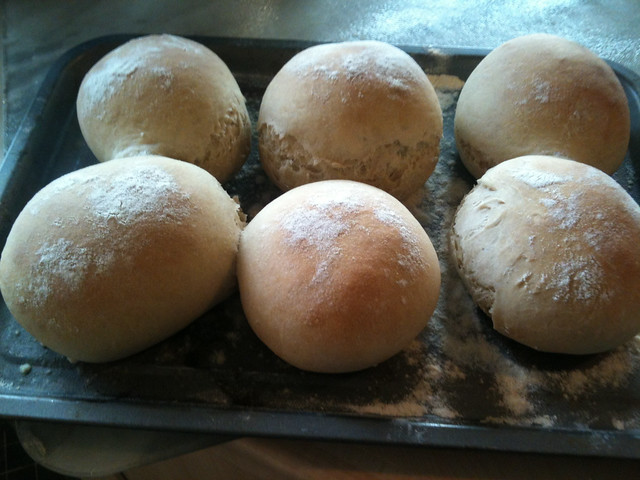
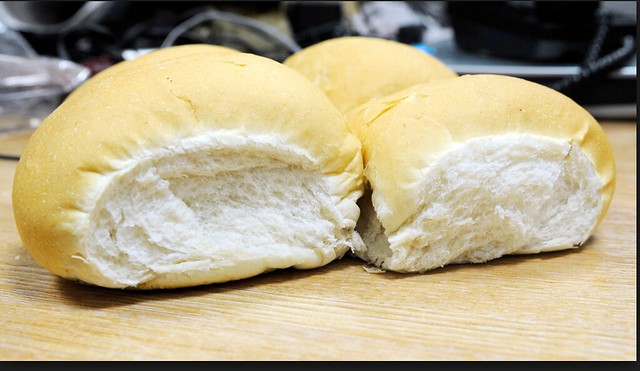
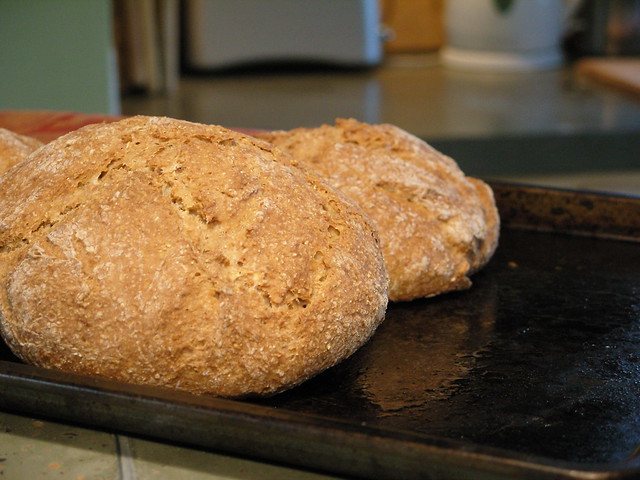
Bread rolls

In the UK there are many different regional words for types of bread, particularly for bread rolls, and people tend to be quite attached to their version, believing it to be the one true name for such things. Not all of them refer to exactly the same type of bread product though.

Baps - Scottish Morning Rolls

Whatever you call them, they are small, usually round loaves of bread, and were apparently invented in the south east of England in 1581 [source], although similar small loaves were probably made in other places long before that.

Here are some of the words for bread rolls used in the UK:

  • Scotland: roll, bap, bun, morning roll, softie, buttery, rowie
  • North East England: bun, roll, muffin, batch, breadcake, stottie, oven bottom (bread), tufty bun, scuffler
  • Noth West England: barm, barm cake, bun, tea cake, muffin, nudger
  • Midlands: cob, bap, roll, bun, batch
  • Southern England: roll, bap, bun, cob
  • Wales: roll, bap, cob, batch
  • Northern Ireland: cob, roll, bun, bap

The word roll comes from the Middle English rolle (role), from the Old French rolle / role / roule (roll, scroll), from the Medieval Latin rotulus (a roll, list, catalogue, schedule, record, a paper or parchment rolled up) [source].

The word bun (a small bread roll, often sweetened or spiced), comes from the Middle English bunne (wheat cake, bun), from the Anglo-Norman bugne (bump on the head; fritter), from the Old French bugne, from Frankish *bungjo (little clump), a diminutive of *bungu (lump, clump) [source].

Buns!

The origins of the word bap, as in a soft bread roll, originally from Scotland, are unknown [source].

A cob is a round, often crusty, roll or loaf of bread, especially in the Midlands of England, is of uncertain origin [source].

Cob

A barm (cake) is a small, flat, round individual loaf or roll of bread, and possibly comes from the Irish bairín breac (“speckled loaf” or barmbrack – yeasted bread with sultanas and raisins) [source]. The cake in barm cake was historically used to refer to small types of bread to distinguish them from larger loaves [source].

Barm Cake

A batch, or bread roll, comes from the Middle English ba(c)che, from the Old English bæċ(ċ)e (baking; something baked), from the Proto-Germanic *bakiz (baking), [source].

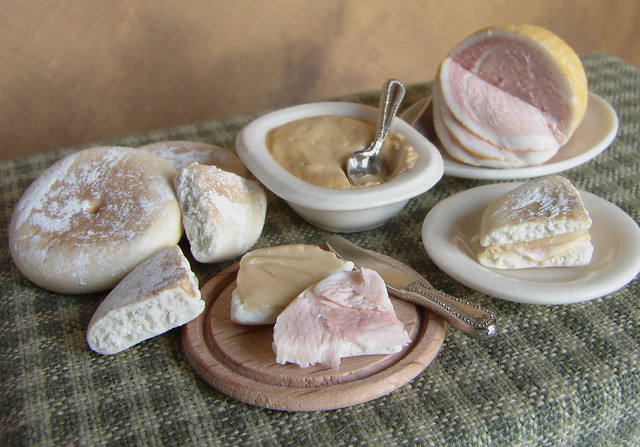
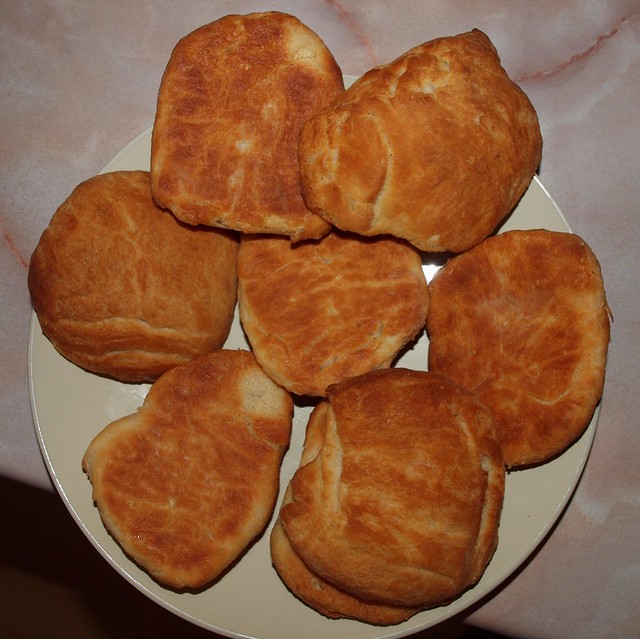
A stottie (cake) / stotty is a round flat loaf of bread, traditionally pan-fried and popular in Tyneside in the north east of England. The word comes from stot(t) (to bounce), from the Middle Dutch stoten (to push), from the Proto-Germanic *stautaną (to push, jolt, bump) [source].

Traditional Ham, Pease Pudding and Stotties

They are known as oven bottoms or oven bottom bread, as they used to be baked on the bottom of ovens, and typically eaten filled with ham, pease pudding, bacon, eggs and/or sausage. A smaller version, known as a tufty bun, can be found in bakeries in the North East of England [source]

A scuffler is a triangular bread cake originating in the Castleford region of Yorkshire, and the name is thought to come from a local dialect word [source].

A nudger is a long soft bread roll common in Liverpool [source].

A buttery is a type of bread roll from Aberdeen in Scotland, also known as a roll, rowie, rollie, cookie or Aberdeen roll [source].

2017_09_1814

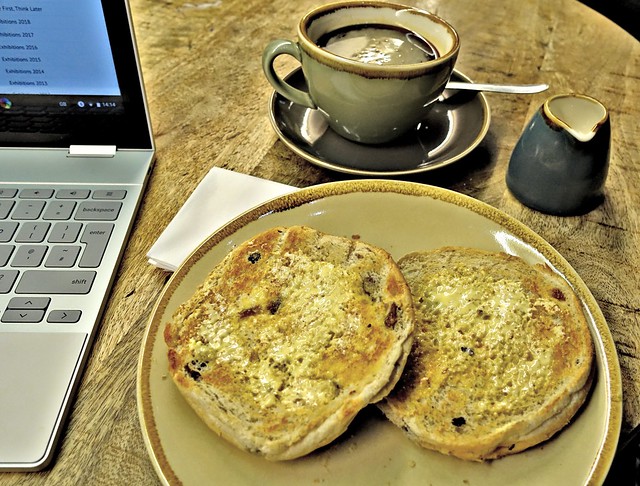
A teacake is a type of round bread roll found mainly in parts of Lancashire, Yorkshire, Cumbria. Elsewhere a teacake is a light, sweet, yeast-based bun containing dried fruits, often eaten toasted [source].

Toasted Teacake with Coffee at the Harris Museum cafecafe

In Welsh, bread rolls are known as rholyn bara, rhôl fara, rôl / rol / rowl, bab, wicsan, cwgen, cnap or cnepyn [source]. There may be other regional words as well.

Rhôl/rôl/rol were borrowed from English, and rholyn is a diminutive. Bara (bread) comes from the Proto-Celtic *bargos / *barginā (cake, bread) [source]. Cnap was borrowed from the Old Norse knappr (knob, lump) and cnepyn is a diminutive [source]. Cwgen is a diminutive of cwc, cŵc, cwg (cook), which was borrowed from English.

In Cornish, bread rolls are bara byghan (“small bread”) [source].

In Scottish Gaelic, a bread roll is a bonnach arainbonnach is a bannock or (savoury) cake, and comes from the French beignet (a fritter filled with fruit), from the Frankish *bungjo (lump, bump, swelling), from the Proto-Germanic *bungô / *bunkô (lump, heap, crowd), from the Proto-Indo-European bʰenǵʰ- (thick, dense, fat) [source], which is also the root of the English words bunch and bunion.

Bannock!

Aran (bread, loaf, livelihood, sustenance), comes from the Old Irish arán (bread, loaf), from Proto-Celtic *ar(-akno)- (bread) [source].

Irish Soda Bread

See a map showing where these words are used:
http://projects.alc.manchester.ac.uk/ukdialectmaps/lexical-variation/bread/

If you’re from the UK, what do you call a bread roll?

What are such baked goods called elsewhere?

Weaving Frocks

The Danish word frakke [ˈfʁɑgə] means coat or overcoat. It was borrowed from the German Frack [fʁak] (tails, tailcoat, dress coat), which came from the English frock, which generally means dress, but can also refer to a peasant’s smock, or a coarse wide-sleeved outer garment worn by members of some religious orders [source].

When the rights and authority are removed from a priest, government official or medical practioner, they are said to be defrocked, unfrocked or disfrocked [source]. Before being defrocked, you would have to be frocked (made into a cleric).

In a frock flick (costume drama), some of the characters might wear frock coats, while others might wear smock frocks, housefrocks or underfrocks or even go frockless, which might lead to them being defrocked [source].

Frock comes from the Middle English frok / frokke (habit, cope, cowl, coat), from Old French froc (frock, a monk’s gown or habit), perhaps from the Medieval Latin hrocus / roccus / rocus (a coat), from the Frankish *hroc / *hrok (skirt, dress, robe), from the Proto-Germanic *hrukkaz (robe, jacket, skirt, tunic), from the Proto-Indo-European *kreḱ- (to weave).

So these words have been weaving their way between the Germanic and Romance language families, and changing their meanings, pronunciations and spellings over time.

Other words from the same roots include:

  • Danish: rok [ˈʁʌg] = garment
  • Dutch: rok [rɔk] = skirt, petticoat
  • French: froc [fʁɔk] = frock (clerical garment), the clerical profession, trousers
  • German: Rock [ʁɔk] = skirt
  • Swedish: frack [fɹæk] = dress suit, tailcoat

A similar Danish word – jakke [ˈjɑgə] (jacket) – comes from the German Jacke (jacket), from the Old French jaque (a gambison – a type of tight-fitting shirt), which was either named after someone called Jaques (James), or from jaque de mailles (coat of arms) from the Arabic شـَكّ (šakk – breastplate). The English word jacket comes fromt the same root, via the Middle French jacquet.

The Danish word skjort [ˈsɡ̊joɐ̯d̥ə] sounds similar to skirt in English, but means shirt. It comes from the Old Norse skyrta (shirt), from the Proto-Germanic *skurtijǭ (skirt, apron). The English word skirt comes from the same root [source].

The English word shirt also comes from the same root, but via the Middle English sherte / shurte / schirte, from Old English sċyrte (a short garment; skirt; kirtle) [source].

The Danish word skørt [ˈsɡ̊ɶɐ̯d̥] (skirt, kilt) comes from the same root, via the Middle Low German schorte (armour) [source].

Another Danish word for skirt is nederdel (“lower part”).

coat hooks

Sources: Den Danske Ordbog, Wiktionary, Middle English Compendium, bab.la, Reverso

Are you sitting comfortably?

One of the words that came up this week in the French Conversation Group I’m part of was chaire [ʃɛʁ], which means chair (a professorship), pulpit, rostrum or throne.

Here are some examples of how it’s used:

  • chaire épiscopale = bishop’s throne
  • chaire pontificale = papal throne
  • être titulaire d’une chaire = to have a personal chair / to be a professor
  • sans chaire = untenured

Source: Reverso

Chaire comes from the Middle French chaire (chair (item of furniture)), from the Old French chaiere, chaere, from the Latin cathedra (armchair, ceremonial chair, the office or rank of teacher or bishop), from Ancient Greek καθέδρα (kathédra – seat; chair; rower’s seat; posterior, bottom; base of a column; sitting posture; teacher’s / professor’s chair; imperial throne), from κατά (katá – down) and ἕδρα (hédra – seat) [source].

The English words chair and chaise come from the same root, via the Old French chaiere, chaere [source].

Cathedral comes from the the Late Latin ecclesia cathedralis (church of a bishop’s seat), from the Latin cathedra [source].

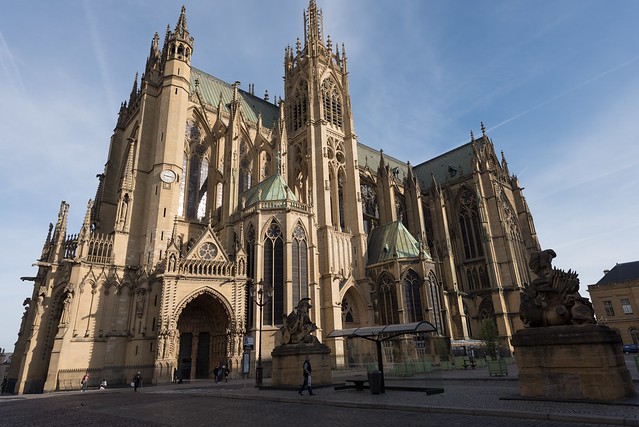
Cathedrale de Metz

Sit comes from the Old English sittan (to sit), from the Proto-Germanic *sitjaną (to sit), from the Proto-Indo-European *sed- (to sit), which is also the root of the Ancient Greek word ἕδρα (seat) [source].

Other words from the same root include:

  • Bengali: কেদারা [ˈke.d̪ä.ɾäˑ] = chair
  • Irish: cathaoir = chair; seat, throne; stool, stump (of tree)
  • Italian: cattedra = desk (of a teacher); teaching post; throne (of a bishop): chair, professorship, chair (archaic)
  • Portuguese: cadeira = chair, subject, stall, post, hip
  • Scottish Gaelic: cathair = chair, seat, bench throne; town, city
  • Spanish: cadera = hip
  • Welsh: cadair = chair, seat; (bishop’s) throne; cathedral; professorship

Source: Wiktionary

Rare Words

There’s a rare word in Dutch – raar [raːr] – which is cognate with the English word rare, but means weird, strange, funny, odd or unusual.

It comes from the Middle Dutch rare (rare, unusual), from the Latin rārus (scattered, seldom, few, uncommon, thin, loose), from the Proto-Indo-European *h₁r̥h₁rós, from *h₁reh₁- (to separate) [source].

Here are some examples of how it’s used:

  • Ik heb een raar telefoontje gehad = I got a weird phone call
  • Want je doet een beetje raar = Because you’ve been acting a little weird
  • Dit is vast gewoon een raar misverstand = I’m sure it’s just a weird misunderstanding
  • M’n leven is nu nogal raar = My life is kind of, like, a little weird right now
  • Luister, dit gaat raar klinken … = Look, this is going to sound strange …

Source: Reverso Context

The Dutch words for rare include zeldzaam [ˈzɛlt.saːm] (rare, scarce), which is cognate with the Engish words seldom and seldsome (rare, uncommon), and schaars [sxaːrs] (scarce, rare, sparse), which is cognate with the Engish word scarce [source].

The English word rare comes from the same root, via the Middle English rare [ˈraːr(ə)/ˈrɛːr(ə)] (airy, vacuous, porous, breathable, sparsely spread, uncommon, scare, small, little), and the Old French rare/rere (rare, uncommon) [source].

Other descendants of the Latin word rārus include:

  • Albanian: rrallë [raːɫ] = sparse, infrequent, rare, outstanding
  • Catalan: rar [ˈrar] = rare, strange, odd, thin (of a gas)
  • Danish: rar [ʁɑːˀ] = pleasant, kind, nice
  • Dutch: raar [raːr] = weird, strange, funny, odd, unusual
  • French: rare [ʁɑʁ] = rare, sparse, scarce
  • German: rar [ʁaːʁ] = rare, scarce
  • Spanish: raro [ˈraɾo] = strange, odd, rare
  • Swedish: rar = cute, sweet, loveable, rare

So rare, and its relatives, are strangely funny, wiredly unusual, outstandingly odd, loveably cute, nicely sweet, sparsely scarce and oddly rare words, it seems.

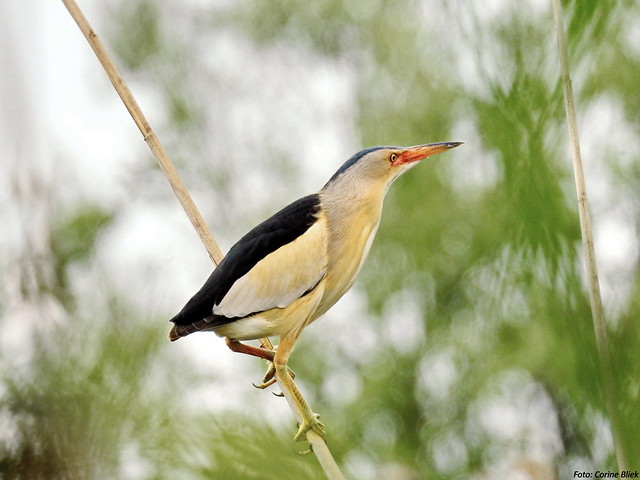
Now here’s a rare bird, a little bittern or Ixobrychus minutus:

Little Bittern

Boring Cloaks

The Dutch word saai [saːi] means boring, tedious or dull. It originally meant woven woollen cloth. By the 19th century it was being used to mean annoying, and also came to mean boring, because cloth was thought to be dull and uninteresting apparently [source].

Saai comes from the Middle Dutch saye / saey, from the Old French saie [sɛ] (a short garment worn by ancient Persians, Romans, and Gauls in combat), from the Latin sagum [ˈsa.ɡʊ̃ˑ/ˈsaː.ɡum] (a military cloak), from the Ancient Greek σάγος [ˈsa.ɣos] (cloak, coat, habit), [source] from the Gaulish *sagos [source], from the Proto-Celtic word *sago- (a coarse woollen blanket or mantle) [source] (PDF), from the Proto-Indo-European *sagom (mantle) [source]

The word sagum also exists in English, and refers to a cloak, worn in ancient times by the Gauls, early Germans, and Roman soldiers, made of a rectangular piece of (usually red) coarse cloth and fastened on the right shoulder (see the photo below).

Words that come from the Latin sagum include the Spanish saya [ˈsaʝa] (skirt, petticoat, dress, woman), the Portuguese saia [ˈsajɐ/ˈsaja] (skirt, woman), and the obsolete French word sayon [sɛ.jɔ̃] (cassock, jacket) [source].

Romans

Orbiting Ruts

One of the expressions that came up in the French conversation group yesterday was (être) coincé dans une ornière, which means (to be) stuck in a rut.

Coincé [kwɛ̃.se] means stuck, jammed,wedged, stranded, uptight, stuck up or close-minded. It appears in expressions like:

  • etre coincé = to be stuck (fast), to get stuck
  • etre coincé dans = to be marooned in
  • etre coincé entre = to be wedged between
  • etre coincé avec qn = to be stuck with sb
  • etre coincé avec qch = to be stuck with sth
  • rester coincé = to get stuck
  • La clé est coincée dans la serrure = The key is stuck in the lock
  • La porte est coincée = The door’s jammed
  • Il est un peu coincé = He’s a bit uptight

It comes from coincer (to jam, catch (out), nab, stick), which comes from coin (wedge, cornerpiece, corner, area, part, place, spot), from the Old French coin, from the Latin cuneus (wedge, wedge shape, troops in a wedge formation, an army), from the Proto-Indo-European *h₂ḱū (sting), which is also the root of such words as the English coin and cuneiform, the Irish cúinne (angle, corner, nook), the Welsh cŷn (chisel) and the Albanian kunj (peg, spike).

Ornière [ɔʁ.njɛʁ] is a rut, habit, routine or cart track, and appears in such expressions as;

  • suivre l’ornière = to be in a rut
  • sortir de l’ornière = to get out of a rut / spot
  • dans l’ornière = in a rut
  • dans une ornière = cornered
  • avec ornière = potholed

It comes from the Old French ordiere, from the Vulgar Latin *orbitaria, from the Latin orbita (a track or rut made by a wheel, path, track, circuit, orbit, impression, mark), form orbis (rind, circle, orbit).

ruts

Another way to say you’re stuck in a rut in French is s’encroûter, to get into a rut, to get set in one’s ways, to become encrusted (“to encrust onself”).

Sources: Reverso, Wiktionary

Whirling Dustsuckers

One of the Dutch words I learnt recently is stofzuiger [stɔfsœyɣər], or literally “dustsucker”. In English you might call it a vacuum, vacuum cleaner, hoover or even a dyson.

Stofzuiger comes from stof (dust) and zuigen (to suck, hoover, be bad at).

When I first learnt this word, I thought that stof might be related to stuff in English, so a Dutch vacuum cleaner would be a “stuffsucker”. However, stof is in fact two words in Dutch that have different meanings and come from different roots.

Stof as in dust comes from the Proto-Germanic *stubą, *stubjuz (dust), from the Proto-Indo-European *dʰeubʰ- (to whisk, smoke, obscure), from *dʰew- (to whirl, waft, stink, shake; steam, haze, smoke) [source].

Related words include:

  • huisstof = household dust
  • stofdoek = duster, dust cloth
  • stoffen = to dust, to remove dust from
  • stoffig = dusty
  • stofvrij = dustfree
  • stofwolk = dust cloud
  • stofzuigen = to vacuum / hoover
  • stofzuigerslang = vacuum cleaner hose (“dust-sucker-snake”)

The other stof means matter, material, substance, fabric or curriculum. It comes from the Middle Dutch stoffe, from the Old French estophe / estoffe, from estoffer (to decorate, garnish), from Old High German stoffōn (to stop, halt, stuff, insert), from the Proto-West Germanic *stuppōn (to cram, plug, stuff). The English word stuff comes from the same root.

Related words include:

  • afvalstof = waste product (“waste-stuff”)
  • brandstof = fuel (“burning-stuff”)
  • delfstof = mineral (“excavated-stuff”)
  • kleurstof = dye, colourant (“colour-stuff”)
  • koolstof = coal (“coal stuff”)
  • stikstof = nitrogen (“suffocating-stuff”)
  • voedingstof = nutrient (“food-stuff”)
  • waterstof = hydrogen (“water-stuff”)
  • zuurstof = oxygen (“sour-stuff”)

Are there interesting names for vacuum cleaners in other languages?

Henri stofzuiger

Bed litter

What links litter and beds?

Well, back in about 1300 a litter was a bed. Later on it came to mean a bed-like vehicle carried on the shoulders. By the the 15th it also referred to straw used for bedding, particularly for animals, and then the offspring of an animal born at the same time.

By the 18th century litter could also be “scattered oddments” or “disorderly debris”, and by the 19th century litter was straw bedding for animals and the animal waste in it.

The verb to litter originally meant to provide with bedding, and later came to mean to give birth to, to strew with objects, and to scatter in a disorderly way.

Litter comes from the Anglo-Norman litere (portable bed), from the Old French litiere (litter, stretcher, bier, straw, bedding), from the Medieval Latin lectaria (litter), from the Latin lectus (bed, lounge, sofa, dining-couch), from the Proto-Indo-European *legh- (to lie down, lay).

From the same PIE root we also get such words as the English lie, lay, low, law and lair, the Irish luigh (to lie down) and luí (bed), and the Welsh gwely (bed) and lle (place, location).

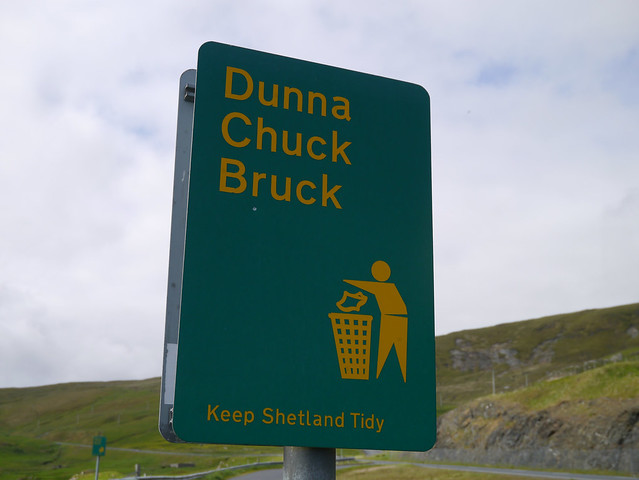
Shetland dialect

Sources: Online Etymology Dictionary, Wiktionary

Artists’ Donkeys

Yesterday while preparing the latest episode of the Radio Omniglot podcast, which is about Dutch, I found that there are quite a few words of Dutch origin in English.

Some come directly from Dutch, some via other languages, such as French, and some come via Dutch from other languages.

  • avast – from the Dutch hou vast (hold tight)
  • bluff – probably from the Dutch bluffen (to brag)
  • booze – from the Middle Dutch busen (to drink to excess)
  • brandy – from the Dutch brandewijn (“burnt wine”).
  • cookie – from the Dutch koekje (little cake)
  • easel – from the Dutch (schilders)ezel (“painter’s donkey”)
  • iceburg – from the Dutch ijsberg (“ice mountain”)
  • knapsack – from the Middle Dutch knapzak (“snack bag”)
  • bamboo – from the Dutch bamboe, from the Portuguese bambu, from the Malay bambu, from the Kannada ಬಮ್ಬು (bambu)
  • cricket (the insect) – from the Middle English creket/crykett/crykette, from the Old French crequet/criquet (locust) from criquer (to make a cracking sound; creak), from the Middle Dutch kricken (to creak, crack)
  • cricket (the game) – perhaps from a Flemish dialect of Dutch met de krik ketsen (to chase a ball with a curved stick)

I particularly like schildersezel, or “painter’s donkey”, for an easel. It’s perhaps a relative of the clothes horse, which is also known as a drying horse or garment donkey, apparently.

The word ezel means donkey, ass, mule, fool, idiot, easel, (work)bench or trestle. Related words include:

  • ezelin = jenny, she-ass
  • ezelsveulen = foal of a donkey; utter idiot, hopeless fool
  • ezelachtig = asinine
  • ezeldrijver = donkey-driver
  • ezelsbruggetje = memory aid, mnemonic (“little donkey bridge”)
  • ezelsoor = dog-ear (turned down part of a page – “donkey’s ear”)

Here’s a tune I wrote called The Dancing Donkeys / Asynnod sy’n Dawnsio:

_B110826