He, She, It

In this post we’re looking at words for he, she, it and related pronouns in Celtic languages.

He, She, It

Words marked with a * are reconstructions.

Proto-Celtic *es, *ēs = he, she, it
*ed = it
*esyo his, its
Gaulish eiasom = he (?)
eiabo = he (?)
Old Irish (Goídelc) é, hé, hǽ, sé [ˈeː] = he, it
a, aí = his
ed, hed [ˈ(h)eð] = it, this
Middle Irish (Gaoidhealg) sé, se, sē = he, it
issi, isí = she, her (emphatic)
a, aí, áe = his, its
ed = it
Irish (Gaeilge) sé, é [ʃeː / ʃɛ / eː] = he, him, it
eisean[ˈɛʃənˠ] = he, him (emphatic)
é féin = himself
a [ə] = his, its
ea [a] = it
Scottish Gaelic (Gàidhlig) e [ɛ] = he, him, it
esan [ɛsən] = he, him (emphatic)
e fhèin = himself
a [ə] = his, its
eadh [a] = it
Manx (Gaelg) eh = he, him, it
eshyn = he, him, himself (emphatic)
e hene, eh hene = himself, itself
e = his, its
Proto-Brythonic *eβ̃ = he, it
*emen = he (emphatic)
*eið = his, its
Old Welsh (Kembraec) em = he, him, it
nini, nyni = we, us, ourselves (emphatic)
hi, i = his, its
Middle Welsh (Kymraec) ef, e = he, him, it
nini, nyni = we, us, ourselves (emphatic)
y hun, ehun, ehunan, ei hun(an) = himself, itself
hi, y, ei = his, its
Welsh (Cymraeg) ef [eːv] = he, him, it (literary)
efyntau [eːv] = he also, and him too (literary)
(f)e [veː] = he, him, it (south Wales)
yntau [ˈənta(ɨ̯) / ˈəntai̯] = he also, and him too
(f)o [voː] = he, him, it (north Wales)
(f)othau [voː] = he also, and him too (north Wales)
ei (… (f)e/(f)o) [ei̯ / iː / ɪ] = his, its
ei hun = himself, itself
Middle Cornish (Cernewec / Kernuak) e, ef, ev = he, him, it
y, e, a = his, its
y honan = himself
Cornish (Kernewek) ev, e = he, him
eev = he, him (emphatic)
y = his
ev y honan, y honan, y honen = himself, itself
Old Breton (Brethonoc) em = he, him
Middle Breton (Brezonec) eff = he, him
e, he, è = his
Breton (Brezhoneg) eñ(v) [ẽw] = he, him
eñv = he, him
e, he = his
e-unan = himself

Etymology: from Proto-Indo-European *ís (this, he) [source]. Words from the same roots include hi (there) in Catalan, (there) in Portuguese, ahí (there, that) in Spanish [source].

Proto-Celtic *sī = she
*esyās = her, hers, its
Old Irish (Goídelc) sí, í = she, it
sissi = she, it (emphatic)
a, aí = hers
Middle Irish (Gaoidhealg) sí, í, sī = she, her
issi, isí = she, her (emphatic)
a, aí, áe = hers, its
Irish (Gaeilge) [ʃiː] = she, it
ise = she, her (emphatic)
i fhèin = herself
a [ə] = her, its
Scottish Gaelic (Gàidhlig) i [i] = she, her, it
sise, ise = she, her (emphatic)
i féin = herself
a [ə] = her, its
Manx (Gaelg) ee [iː] = she, her, it
eeish, ish = she, her (emphatic)
ee hene = herself, her, itself
e = her, hers, its
Proto-Brythonic *hi = she
*eið = her, its
Old Welsh (Kembraec) em = she, its
hithou, ithou = her also, and her too
hi, i = her, its
Middle Welsh (Kymraec) hi = she, her, it
hitheu, hithe = her also, and her too
y, i = her, its
Welsh (Cymraeg) hi [hiː] = she, her, it
hithau [ˈhɪθaɨ̯ / ˈhɪθai̯] = her also, (and) her too
ei (… hi) [ei̯ / iː / ɪ] = her, its
ei hun = herself, itself
Middle Cornish (Cernewec / Kernuak) hy, hi = she, her, it
hyhy = she, her, herself (emphatic)
y, a = her
y honan = herself
Cornish (Kernewek) hi, hy, hei = she, her
hyhi = she, her, herself (emphatic)
hy, hy re = hers
hy honan, hei hy honan, hi hy honan, hy honen = herself, solo, itself
Middle Breton (Brezonec) hy = she
he [e] = her
Breton (Brezhoneg) hi [hi] = she
hehi = she, her (emphathic)
he [e] = her
he-unan = herself

Etymology: from Proto-Indo-European síh₂ (she) [source]. Words from the same roots include she in English, zij (she, they) in Dutch, sie (she, her) in German [source].

Proto-Celtic *eyes, *yoi = they
*ens = them
*eisom = their(s)
*eibis = (to) them
Old Irish (Goídelc) é, íat, iat = they
a, aí = their, theirs
Middle Irish (Gaoidhealg) íat = they, them
a, aí, áe = their, theirs
Irish (Gaeilge) siad [ʃiəd̪ˠ] = they
siadsan [ˈʃiəd̪ˠsənˠ] = they (emphatic)
iad [iəd̪ˠ] = they, them
iadsan [ˈiət̪ˠsˠənˠ] = they (emphatic)
a = their
Scottish Gaelic (Gàidhlig) iad [iəd] = they
iadsan [ˈiədsən] = they (emphatic)
iad fhèin = themselves
an [ən] = their
Manx (Gaelg) ad = they, them
adsyn = they, them, themselves (emphatic)
adhene = themselves
nyn = their, theirs
Proto-Brythonic *eið = their
Middle Welsh (Kymraec) wy, wynt, hwy, hwynt = they
y = their
Welsh (Cymraeg) nhw [nuː / n̥uː] = they
nhwthau [ˈnʊθa / ˈnʊθɛ] = they also, and them too
hwy, wy [huːɨ̯ / hʊi̯] = they, them (literary)
hwythau [ˈhʊɨ̯θaɨ̯ / ˈhʊi̯θai̯] = they also, and them too
hwynt [hʊɨ̯nt / hʊi̯nt] = they (literary)
hwyntau, wyntau = they also, and them too (literary)
eu, ‘u, ‘w [ei̯] = them
eu (… nhw) = their
Middle Cornish (Cernewec / Kernuak) y = they
an = them
aga = their
Cornish (Kernewek) i = they
ynsi = they (emphatic)
aga … i = them, their
aga honem, aga honan, anjei = themselves
‘ga, aga (… i) = their
aga re, dhedha = theirs
Middle Breton (Brezonec) int, y = they, them
Breton (Brezhoneg) int, i [ĩnt / i] = they, them
o [o] = their, theirs
o-unan = themselves

Etymology: from Proto-Indo-European *éyes, the plural of *ís (this, he) [source].

The Fastest Way to Learn Japanese Guaranteed with JapanesePod101.com

Sources: Wiktionary, Am Faclair Beag, Online Manx Dictionary, Teanglann.ie, eDIL – Electronic Dictionary of the Irish Language, In Dúil Bélrai English – Old Irish glossary, Geiriadur Prifysgol Cymru, Gerlyver Kernehe, itk, Dictionaire Favereau, TermOfis, English – ProtoCeltic WordList (PDF), Etymological Dictionary Of Proto Celtic

Unlimited he, itb Hosting - Kualo

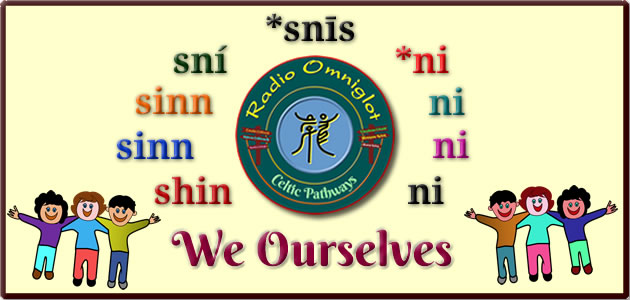
We Ourselves

In this post we’re looking at words for we, us, our and related pronouns in Celtic languages.

Us Ourselves

Words marked with a * are reconstructions.

Proto-Celtic *snīs = we
*snīsnīs = we, ourselves (?)
*snos = us
*anserom = our
Gaulish sni = we
Old Irish (Goídelc) sní [ˈsʲn̠ʲiː] = we
snisni, nini, sinni = we (emphatic)
ar = our
Middle Irish (Gaoidhealg) sní [ˈsʲn̠ʲiː] = we
snisni, snissni, snissi, sisni, sinni, nini, ninni = we (emphatic)
ar, ‘r = our
Irish (Gaeilge) sinn [ʃinʲ] = we, us
sinne[ˈʃin̠ʲə] = we, us (emphatic)
sinn féin = ourself
muid [mˠidʲ] = we (Connacht, Ulster)
muidne[ˈmˠin̠ʲə] = we, us (emphatic)
ár [ɑːɾˠ / əɾˠ / ɛɾʲ] = our
Scottish Gaelic (Gàidhlig) sinn [ʃiNʲ] = we, us
sinne [ʃiNʲə] = we, us (emphatic)
sinn fhìn = ourselves
ar [ər] = our
Manx (Gaelg) shin [ʃin] = we, us
shinyn = we, us, ourselves (emphatic)
shin hene = we ourselves, ourselves
ain, ar, nar, nyn = our
Proto-Brythonic *ni = we
*nini = we (emphatic)
Old Welsh (Kembraec) ni = we, us
an = our
Middle Welsh (Kymraec) ny, ni = we, us
nini, nyni = we, us, ourselves (emphatic)
nynheu, ninheu, nynhev, nynne, ninneu = we (us) too, we (us) also, even we (us)
nyhunein, nu hun, nyhun(an) = ourselves
yn, in, an = our
Welsh (Cymraeg) ni [niː] = we, us
ninnau = we (us) too, we (us) also, even we (us)
nyni = we (us) (emphatic), we (us) ourselves
nyninnau = we / us also, even we / us, we / us ourselves
ein hun(ain) = we, us ourselves, our own
ein (… ni) [ei̯n niː] = our, us
Middle Cornish (Cernewec / Kernuak) ni, ny = we, us
agan, an = our
agan honan = ourselves
Cornish (Kernewek) ni, nei = we
nyni = we (emphatic)
agan, ‘gan, ‘n = our
agan re = ours
agan honan, agan honen = ourselves
Old Breton (Brethonoc) ni = we
Middle Breton (Brezonec) ny = we
hon, hor = our
Breton (Brezhoneg) ni [ni] = we
hol, hon, hor = our
ni hon hunan = ourselves

Etymology: from PIE *nēs (we), a modification of *nos, the oblique plural form of éǵh₂ (I) [source] and *téwe (your) [source].

The Fastest Way to Learn Japanese Guaranteed with JapanesePod101.com

Sources: Wiktionary, Am Faclair Beag, Online Manx Dictionary, Teanglann.ie, eDIL – Electronic Dictionary of the Irish Language, In Dúil Bélrai English – Old Irish glossary, Geiriadur Prifysgol Cymru, Gerlyver Kernewek, Dictionaire Favereau, TermOfis, English – ProtoCeltic WordList (PDF), Etymological Dictionary Of Proto Celtic
Unlimited Web Hosting - Kualo

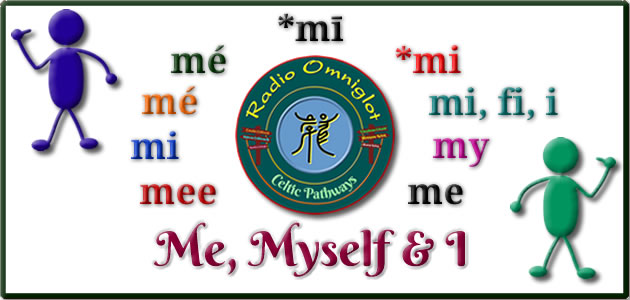
My, Myself & I

In this post we’re looking at words for me, myself, I and related pronouns in Celtic languages.

My, Myself & I

Words marked with a * are reconstructions.

Proto-Celtic *mī = I, me
*me = me
*mene = my
Gaulish mi = I
me = me
mon = my
moi = to me
Old Irish (Goídelc) [ˈmʲeː] = I, me
messe = I, me (emphatic)
mo = my
Middle Irish (Gaoidhealg) = I, me
mes(s)e, meisse, mis(s)e = I, me (emphatic)
mo, mu = my
Irish (Gaeilge) [mʲeː / mʲə] = I, me
mise[ˈmʲiʃə] = I, me (emphatic)
mé féin = myself
mo, m’ = my
Scottish Gaelic (Gàidhlig) mi [mi] = I
mise [ˈmiʃə] = I (emphatic)
mi fhìn = myself
mo [mə] = my, mine
Manx (Gaelg) mee [miː] = I, me
mish [miʃ] = I, me, myself (emphatic)
mee hene = myself
my = my
Proto-Brythonic *mi = I, me
Old Welsh (Kembraec) mi = I, me
vi = my
Middle Welsh (Kymraec) mi, my, vi, i = I, me
minnev, minheu, minne, vinneu, finne, ynnev, inheu, ynneu, inneu = I (me) too, I (me) too, even I (me)
myhun [və] = myself
vy, my, vym, veu = my
Welsh (Cymraeg) mi, fi, i [mi, viː, iː] = I, me
minnau, finnau, innau [ˈmɪna(i̯) / ˈvɪna(i̯), ina(i̯)] = I, me (emphatic), I (me) also, I (me) too, even I (me), I (me) on the other hand, I (me) for my part
fy hun(an), my hun(an) [və hɨːn(an) / mə hiːn(an)] = myself
fy (… fi) [və viː] = my
Old Cornish mi = I, me
Middle Cornish (Cernewec / Kernuak) mi, my, me, vy = I, me
ma, mv = my, mine
ow honan, ow honyn = myself
Cornish (Kernewek) my, me, vy = I, me
evy = I, me (emphatic)
ma = my
ow honan, ow honen = myself
Old Breton (Brethonoc) ti, te = I, me
Middle Breton (Brezonec) me = I, me
ma = my
mahunan, ma hunan = myself
Breton (Brezhoneg) me [meː] = I, me
ma, va, ‘m = my
ma-unan, va-unan = myself

Etymology: from PIE *me (me), the accusative form of éǵh₂ (I) [source]. Many words for I, me, my and myself in other Indo-European languages come from the same roots, as does the English word ego [source].

The Fastest Way to Learn Japanese Guaranteed with JapanesePod101.com

Sources: Wiktionary, Am Faclair Beag, Online Manx Dictionary, Teanglann.ie, eDIL – Electronic Dictionary of the Irish Language, In Dúil Bélrai English – Old Irish glossary, Geiriadur Prifysgol Cymru, Gerlyver Kernewek, Dictionaire Favereau, TermOfis, English – ProtoCeltic WordList (PDF), Etymological Dictionary Of Proto Celtic

Unlimited Web Hosting - Kualo

You Yourself

In this post we’re looking at words for you and related things in Celtic languages.

who are you?

Words marked with a * are reconstructions.

Proto-Celtic *tū = you (singular), thou
*towe = your, thy
Gaulish tu = you (singular), thou
Old Irish (Goídelc) [t̪uː] = you (singular)
tussu, túsu [ˈt̪u.su] = you (singular, emphatic)
do = your (singular)
Middle Irish (Gaoidhealg) tú, tu = you (singular)
túsu, túsu, tussu, tússu = you (singular, emphatic)
do = your (singular)
Irish (Gaeilge) [t̪ˠuː] = you (singular)
tú fhéin [t̪ˠuː heːnʲ] = yourself
tusa [ˈt̪ˠɞsˠə / ˈt̪ˠɨsˠə] = you (singular, emphatic)
do = your (singular)
Scottish Gaelic (Gàidhlig) thu [u] = you (singular)
thu fhèin [u heːn] = yourself
thusa [ˈusə] = you (singular, emphatic)
do [də] = your (singular), thy
Manx (Gaelg) oo [u(ː)] = you (singular)
oo-hene [u heːn] = yourself
uss [ˈt̪u.su] = you (singular, emphatic)
dty = your (singular)
Proto-Brythonic *ti = you (singular)
Old Welsh (Kembraec) ti = you (singular)
Middle Welsh (Kymraec) ti, ty = you (singular), thou, thee
titheu, thithau = you too, you also, even you
dy (… di) = your (singular), thy, thine
Welsh (Cymraeg) ti [tiː] = you (singular)
chdi [χdiː] = you (singular – northern)
tithau [ˈtɪθaɨ̯] = you too, you also, even you
chdithau [ˈχdiːθaɨ̯] = you too, etc (northern)
dy (… di) [də] = your (singular)
dy hun(an) [də ˈhɨ̞nan / də ˈhiːnan] = yourself
Middle Cornish (Cernewec / Kernuak) ti, te, ty = thou, thee
da, dha, dhe = your (singular)
Cornish (Kernewek) ty, che, chy = you (singular)
dha, ‘th = your (singular)
dha honan = yourself
Old Breton (Brethonoc) ti, te = you (singular)
Middle Breton (Brezonec) te = you (singular)
Breton (Brezhoneg) te [teː] = you (singular)
te ivez [teː] = you (singular, emphatic)
teal [ˈteː.al] = to address someone informally (with te)
da = your (singular)
da-unan = yourself

Etymology: from PIE *túh₂ (you, thou) [source] and *téwe (your) [source]. Many words for you (singular) in other Indo-European languages come from the same roots [source].

Proto-Celtic *swīs = you (plural)
*swīswīs = you (plural, emphatic)
Gaulish suis = you (plural)
Old Irish (Goídelc) sib, sí(i) [ˈsʲiβʲ / ˈsʲiː] = you (plural), ye
sibsi, sissi [ˈsʲiβʲ / ˈsʲi.sʲi] = you (plural, emphatic)
for = your (plural)
Middle Irish (Gaoidhealg) sib = you (plural)
sis(s)i = you (plural, emphatic)
for, far = your (plural)
Irish (Gaeilge) sibh [ʃɪvʲ] = you (plural)
sibh fhéin [ʃɪvʲ heːnʲ] = yourselves
sibhse [ˈʃivʲʃə] = you (plural, emphatic)
bhur = your (plural)
Scottish Gaelic (Gàidhlig) sibh [ʃɪv] = you (plural)
sibh fhèin [ʃɪv heːnʲ] = yourselves
sibhsa [ʃiːvʃə] = you (plural, emphatic)
ur n- [ər n] = your (plural)
Manx (Gaelg) shiu [ʃuː] = you (plural)
shiu-hene [ʃuːhen] = yourselves
shiush [ˈʃuːʃ] = you (plural, emphatic)
nyn = your (plural)
Proto-Brythonic *hwi = you (plural)
*hwihwi = you (plural, emphatic)
Old Welsh (Kembraec) hui = you (plural)
Middle Welsh (Kymraec) chwi, chi = you, ye (plural)
chw(i)chwi = you, ye (plural, emphatic), you yourselves
y ch, ych, ‘ch = your (plural)
Welsh (Cymraeg) chwi, chi [χ(w)ɪ] = you (plural)
chi hun(ain) [χɪ ˈhɨ̞n(ai̯n) / ˈhiːn(ai̯n)] = yourselves
chithau [ˈχɪθaɨ̯ / ˈχɪθai̯] = you also, and you too
chwychwi, chwchwim chychwi = you (plural, emphatic), you yourselves
eich (… chi) [ei̯χ] = your (plural)
Middle Cornish (Cernewec / Kernuak) hwi, hwî, why = ye, you (plural)
agas, ages, agis, agos, agys = your (plural)
ages honan = yourselves
Cornish (Kernewek) hwi, hwei = you (plural)
hwyhwi = you (plural, emphatic)
agas, ‘gas, ‘s [aɡəs / aɡəz] = your (plural)
agas honan = yourselves
Old Breton (Brethonoc) hui = you (plural)
Middle Breton (Brezonec) huy = you (plural)
hoz, ho = your (plural)
Breton (Brezhoneg) c’hwi, hwi [ˈxwiː] = you (plural)
c’hwi ivez = you (plural, emphatic)
c’hwial [ˈxwiːal] = to address someone formally (with c’hwi)
ho, hoc’h = your (plural)
hoc’h-unan = yourselves

Etymology: from PIE *wos, the oblique form of *yúHs (you (plural)) [source]. Many words for you (plural) in other Indo-European languages come from the same roots [source].

The Fastest Way to Learn Japanese Guaranteed with JapanesePod101.com

Sources: Wiktionary, Am Faclair Beag, Online Manx Dictionary, Teanglann.ie, eDIL – Electronic Dictionary of the Irish Language, In Dúil Bélrai English – Old Irish glossary, Geiriadur Prifysgol Cymru, Gerlyver Kernewek, Dictionaire Favereau, TermOfis, English – ProtoCeltic WordList (PDF), Etymological Dictionary Of Proto Celtic

Unlimited Web Hosting - Kualo