Pickaxe

Today we’re looking at the words for pickaxe, pike and related things in Celtic languages.
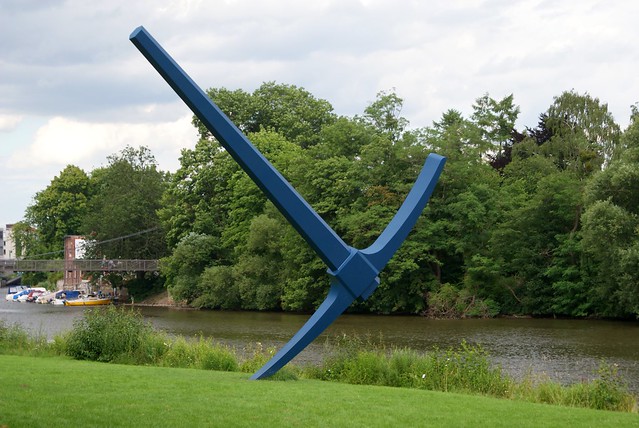
Claes Oldenburg

Words marked with a * are reconstructions.

Middle Irish (Gaoidhleag) píce = pole, pike
pícóid = mattock, pickaxe
Irish (Gaeilge) píce [ˈpʲiːcɪ] = pike, fork, peak
píceáil = pike, fork, pitchfork, peak
píceálaí = forker, pitcher
píceán = peak, tip
Scottish Gaelic (Gàidhlig) pic, pìc [piːçgʲ] = pike
pìceach [piːçgʲəx] = armed with pikes, abounding in pikes
pìcear = pikeman
Middle Welsh (Kymraec) pig = point, spike, pike
pigo = to prick, pierce, goad, peck, sting, bite
pigawd = a thrusting or stabbing with a spear, a pricking
Welsh (Cymraeg) pig [piːɡ] = point, spike, pike, lance, pick(axe), prong, beak
pigach = darts
pigadail = obelisk, spire, pyramid, cone
pigaf, pigo = to prick, pierce, goad, peck, sting, bite
pig(i)aid = as much as can be picked up or carried on a pitchfork, beakful
pigau = pitchfork, hay-fork
pigawd = a thrusting or stabbing with a spear, a pricking
pigell = goad, prick, prickle
Middle Cornish (Cernewec) piga = to prick, prickle, sting
pigol = mattock, pick, pickaxe
Cornish (Kernewek) pig = grub axe, grubber, pick, pickaxe, pickle
piga = to goad, incite, sting
pigell = hoe, pick(axe), pickle
pigallas = to hoe
pigellik = picker
Middle Breton (Brezonec) pig = pickaxe
Breton (Brezhoneg) pik = piquant, point, pique
pikañ = to sting, bite, pinch
pikezenn = pike, spade (in cards)
pigell = pickaxe

Etymology (Irish): from Old French pik(k)e, from Latin pīcca (pickace, pike), possibly from Frankish *pikkōn (to peck, strike), or from Frankish *pīk (sharp point, pike), from Proto-Germanic *pīkaz (sharp point, pike, pickaxe, peak) probably of imitative origin [source].

Etymology (Scottish Gaelic, Welsh & Cornish): probably from English pike or the Middle English pyke (pike, sharp point), which ultimately come from the same Proto-Germanic roots as pik(k)e in Old French.

Words from the same roots include peck, pick, pike, pique, pitch in English [source].

Irish (Gaeilge) caib [kɑbʲ/kabʲ] = dibble
caibeáil = to plant with an implement, dibble
caibeáilaí = planter (of seed), dibbler
Scottish Gaelic (Gàidhlig) caibe [kɛbə] = space, mattock, iron part of tools
caibe-sìthe = fairy spade (amulet given to sick people & cattle)
Manx (Gaelg) kiebbey = spade, mattock
Old Welsh cep = pickaxe, mattock, hoe, ploughshare
Middle Welsh (Kymraec) keyp, keib, caib = pickaxe, mattock, hoe, ploughshare
Welsh (Cymraeg) caib = pickaxe, mattock, hoe, ploughshare
caib garddwr = hoe
caib big, caib bicys = pickaxe

Etymology: unknown

Sources: Wiktionary, Am Faclair Beag, Online Manx Dictionary, Teanglann.ie, eDIL – Electronic Dictionary of the Irish Language, In Dúil Bélrai English – Old Irish glossary, Geiriadur Prifysgol Cymru, Gerlyver Kernewek, Lexicon Cornu-britannicum: A Dictionary of the Ancient Celtic Language of Cornwall, Dictionaire Favereau, TermOfis, Le dictionnaire diachronique du breton, Etymological Dictionary Of Proto Celtic

italki - Win cash rewards for learning any language

Axes and Hatchets

In this post we’re looking at the words for axe and related things in Celtic languages.

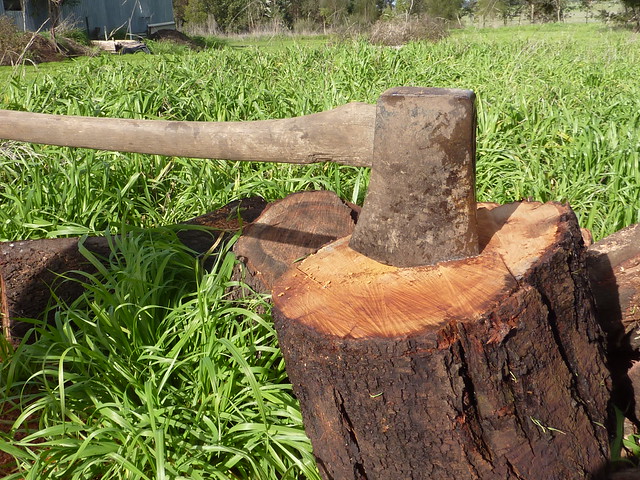
Axe in wood

Words marked with a * are reconstructions.

Proto-Celtic *tāxslo- = axe
Old Irish (Goídelc) tál = adze
Middle Irish (Gaoidhleag) tál = adze
Irish (Gaeilge) tál [t̪ˠɑːlˠ/t̪ˠæːlˠ] = adze
Scottish Gaelic (Gàidhlig) tàl [taːl̪ˠ] = adze
tàl-fuinn = hoe
Manx (Gaelg) taal = adze

An adze cutting tool that has a curved blade set at a right angle to the handle and is used in shaping wood. [source].

Etymology possibly from the Proto-Indo-European *tetḱ-(dʰ)lo-, from *teḱ- (to sire, beget) [source]. Words from the same roots include architect, technical, text and textile in English, цясла́ [t͡sʲasˈɫa] (adze) in Belausian, тесло [tʲɪsˈɫo] (adze) in Russian, and teslă (adze) in Romanian [source].

Old Irish (Goídelc) túag = axe, hatchet
Middle Irish (Gaoidhleag) túag = axe, hatchet
túagaid = to hew, chop, strike with an axe
túagrótae = roadway cleared with an axe
Irish (Gaeilge) tua [t̪ˠuə] = axe, hatchet
tuadóir = axe-man, hewer, chopper
tuadóireacht = (act of) hewing, shaping, chopping
tuaigh = to chop (with an axe)
Scottish Gaelic (Gàidhlig) tuagh [tuəɣ] = axe
tuaghadair = axeman, axe-wielder
Manx (Gaelg) teigh = axe, chopper, hatchet

Etymology possibly from the Proto-Indo-European *(s)tewk- (to push, press, strike, beat, pierce), from *(s)tew- (to push, hit) [source]. Words from the same roots include tkát (to weave) in Czech, tkać (to weave, stick, tuck) in Polish, and тъка [tɐˈkɤ] (to spin, plait, entwine, weave) in Bulgarian [source], and words for hole & hollow in Celtic languages.

Proto-Celtic *biyatlis = (?)
Old Irish (Goídelc) biáil [ˈbʲi.aːlʲ] = axe, hatchet
Middle Irish (Gaoidhleag) bíail, biáil = axe, hatchet, battle-axe
Irish (Gaeilge) biail [bʲiəlʲ] = hatchet
Scottish Gaelic (Gàidhlig) biail = axe, hatchet (archaic)
Old Welsh bahell = axe
Middle Welsh (Kymraec) buyall, bwell, bwyeill = axe
bwyellic = small axe, hatchet
bwyallawt = axe stroke
bwiallawc = bearing an axe, armed with an axe; like an axe
Welsh (Cymraeg) bwyall, bwyell, bwell = axe, battle-axe
bwyellan, bwyellig = small axe, hatchet
bwyellangaib = pickaxe, hoe
bwyellod, bwyallod = stroke or cut with an axe, axe stroke
bwyellog, bwyallog = bearing an axe, armed with an axe; like an axe
bwyellwr = woodman
Middle Cornish (Cernewec) biail, boell, bool = axe, hatchet
Cornish (Kernewek) bool = axe, chopper, hachet
bolik = (small) axe, chopper, hachet
Middle Breton (Brezonec) bouhazl, bouchazl, bouchal, boc’hal = axe
Breton (Brezhoneg) bouc’hal [ˈbuː.ɣal] = axe, hammered
bouc’halig = hatchet

Etymology: from Proto-Celtic *bināti (to strike, hit, beat) from the Proto-Indo-European *bʰi-né-h₂-ti, from bʰeyh₂- (to strike, hew) [source]. Words from the same roots include billhook and bone in English, bain (to extract, separate, strike) and béim (a blow, emphasis, beat) in Irish, gofid (grief, sorrow, regret) in Welsh [source].

Sources: Wiktionary, Am Faclair Beag, Online Manx Dictionary, Teanglann.ie, eDIL – Electronic Dictionary of the Irish Language, In Dúil Bélrai English – Old Irish glossary, Geiriadur Prifysgol Cymru, Gerlyver Kernewek, Lexicon Cornu-britannicum: A Dictionary of the Ancient Celtic Language of Cornwall, Dictionaire Favereau, TermOfis, Le dictionnaire diachronique du breton, Etymological Dictionary Of Proto Celtic

italki - Win cash rewards for learning any language