Adventures in Etymology 22 – Fence

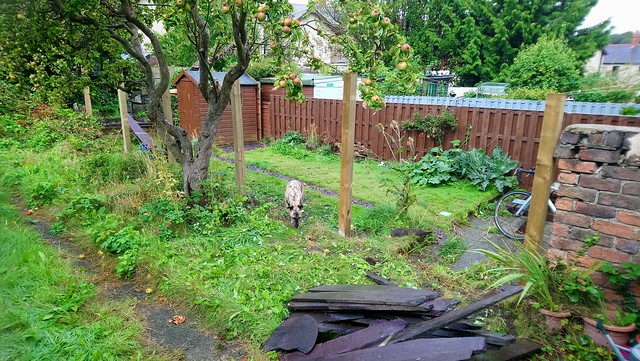
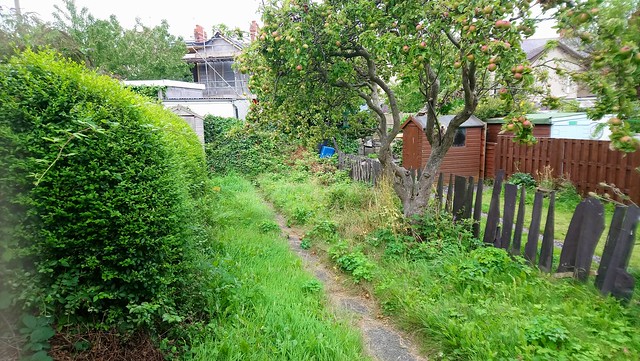
Today we’re looking at the word fence [fɛns], as my slate fence is being replaced with a wooden one, mainly to stop my neighbour’s dog from getting in my garden.

Fences

Definition:

  • a barrier enclosing or bordering a field, yard, etc, usually made of vertical posts connected with horizontal sections of sturdy material such as wood, metal or wire, used to prevent entrance, to confine, or to mark a boundary

[source]

It comes from the Middle English word fence/fens, from the Old French defens(e) (defence), from the Latin dēfensa [d̪ɛˈfɛnsɑ] (defense, protection), from dēfendō [d̪eːˈfɛn̪d̪oː] (to defend, guard, protect), from dē- (of, from) and *fendō (hit, thrust) [source].

The English word defend comes from the same root, as do related words in other European languages, such as défendre (to defend, forbid) in French and amdiffyn (to protect, defend) in Welsh [source].

The Old English word for fence was edor [ˈe.dor], which also meant enclosure, hedge, shelter, dwelling, house, protector or prince. This became edder, an now obsolete word that refers to flexible wood worked into the top of hedge stakes, to bind them together. [source].

Here’s a video I made of this information:

Video made with Doodly – an easy-to-use animated video creator [affiliate link].

I also write about etymology, and other language-related topics, on the Omniglot Blog.

You can also listen to this podcast on: Apple Podcasts, Stitcher, TuneIn, Podchaser, PlayerFM or podtail.

If you would like to support this podcast, you can make a donation via PayPal or Patreon, or contribute to Omniglot in other ways.

Blubrry podcast hosting

Adventures in Etymology 21 – Circle

Today we are looking at the word circle [ˈsɜː.kəɫ / ˈsɝ.kəɫ].

Circles made with fire poi on Brighton beach

Definition:

  • A shape consisting of a curved line completely surrounding an area, every part of which is the same distance from the centre of the area.

[source]

It comes from the Middle English word circle, cercle, from the Old French cercle [ˈtser.klə] (circle), from the Latin circulus [ˈkɪɾkʊɫ̪ʊs̠] (circle, orbit, ring, hoop, necklace, chain, company, group), a diminutive of circus [ˈkɪɾkʊs̠] (orbit, circle, ring, racecourse, circus), from the Ancient Greek κίρκος [kír.kos] (type of hawk, or falcon, type of wolf, circle, ring, racecourse, circus), from the PIE *(s)ker- (to bend, turn) [source].

Some English words from the same root include: ring, rink, cross, crown, corona, curb, curtain, curve, crisp and crest [source].

Here’s a video I made of this information:

Video made with Doodly – an easy-to-use animated video creator [affiliate link].

I also write about etymology, and other language-related topics, on the Omniglot Blog.

You can also listen to this podcast on: Apple Podcasts, Stitcher, TuneIn, Podchaser, PlayerFM or podtail.

If you would like to support this podcast, you can make a donation via PayPal or Patreon, or contribute to Omniglot in other ways.

Blubrry podcast hosting

Adventures in Etymology 18 – Parnips

Today we are looking at the word parsnip [ˈpɑː.snɪp/ˈpɑɹ.snɪp].

Parsnips

Definition:

  • A plant (Pastinaca sativa) in the parsley family, native to Eurasia, cultivated for its long, white, edible, fleshy root.
  • The root of this plant.

It comes from the Middle English word passenep a version of the Old French word pasnaie, with influence from the Middle English word nepe [neːp] (turnip), from the Latin pastināca [pas.tiˈnaː.ka] (parsnip, carrot, stringray) from pastinum [ˈpas.ti.num] (two-pronged fork/dibble), which is of unknown orgin [source].

Words for parsnip are similiar in quite a few other languages, including pastinaca in Italian, pastinaak in Dutch and panais in French.

One exception is Spanish, in which parsnip is chirivía [t͡ʃi.ɾiˈβ̞i.a], from alcaravea [al.ka.ɾaˈβ̞e.a] (caraway), from the Arabic كَرَاوِيَا‎ (karāwiyā, caraway) [source].

This adventure was inspired by a friend who sent me a collection of ‘useful’ phrases from the Welsh course on Duolingo concerning Owen and his parsnips.

Here’s a video I made of this information:

Video made with Doodly – an easy-to-use animated video creator [affiliate link].

I also write about etymology, and other language-related topics, on the Omniglot Blog.

Adventures in Etymology 16 – Book

Today we are looking at the word book [bʊk].

Library

Definition
– a handwritten or printed work of fiction or nonfiction, usually on sheets of paper fastened or bound together within covers
– a work of fiction or nonfiction in an electronic format [source]

It comes from the Middle English word booke [boːk] (book), from the Old English bōc [boːk] (book, writing. document), from the Proto-Germanic *bōks [bɔːks] (letter, written message, inscriptions carved into a flat object pressed together) [source].

In Middle English another word for book was livret, from the Old French livret (book, booklet) from livre (book), from the Latin liber (book, the inner bark of a tree, paper, parchment), from the PIE *lewbʰ- (to peel, cut off, harm).

English words from the same root include leaf, lobby, lodge, libel, library, which in Middle and Old English was bōchūs [ˈboːkˌhuːs] or “bookhouse” [source] or bōchord (“bookhoard”) [source]. Incidentally, there’s a post on the Omniglot blog about words for library in various languages.

Here’s a video I made of this information:

Video made with Doodly – an easy-to-use animated video creator [affiliate link].

I also write about etymology, and other language-related topics, on the Omniglot Blog.

Adventures in Etymology 9 – Window

Today we are looking at the word window [ˈwɪndəʊ / ˈwɪndoʊ].

Definition: an opening in the wall of a building, the side of a vehicle, etc., for the admission of air or light, or both, commonly fitted with a frame in which are set movable sashes containing panes of glass [source].

Windows

Window comes from the Middle English windowe/windohe/windoge, from the Old Norse vindauga (window) or literally “wind-eye/wind-hole”, as windows were originally unglazed holes in walls or roofs that allowed the wind to pass through [source].

Another word for window in Middle English was fenestre/fenester, which was used in parallel with windowe/windohe/windoge until the mid 16th century. It comes from the Old French fenestre (window), from the Latin fenestra (window, breach, loophole, orifice, inlet), which possibly came from Etruscan.

In Old English a window was known as an eagþyrel [ˈæ͜ɑːɣˌθyː.rel] (“eye-hole”) or ēagduru [ˈæ͜ɑːɣˌdu.ru] (“eye-door”). This fell out of use by about 1200 AD [source].

Words for window in some other Germanic languages are similar to window, including vindue [ˈvend̥u] in Danish, vindu in Norwegian, vindeyga [ˈvɪntˌɛiːja] in Faroese, and vindöga in Swedish, although that is no longer used, and fönster is used instead.

Words for window in the Goidelic languages were borrowed from Old Norse: fuinneog [ˈfˠɪn̠ʲoːɡ] in Irish, uinneag [ɯn̪ʲag] in Scottish Gaelic and uinnag [onˈjaɡ] in Manx [source].

Here’s a video I made of this information:

Video made with Doodly – an easy-to-use animated video creator [affiliate link].

I also write about etymology on the Omniglot Blog.

Adventures in Etymology 8 – Mother

As today is Mother’s Day in many countries around the world, though not here in the UK, we are looking at the origins of the word mother.

Mother

Mother comes from the Middle English moder [ˈmoːdər/ˈmoːðər], from the Old English mōdor [ˈmoː.dor], from the Proto-Germanic *mōdēr [ˈmɔː.ðɛːr], from Proto-Indo-European *méh₂tēr [source].

Words for mother in most Indo-European languages come from the same root, including moeder [ˈmu.dər] in Dutch, Mutter [ˈmʊtɐ] in German, and móðir [ˈmouːðɪr] in Icelandic [source].

Some related words include matriarch, matron, maternal, matrimony, material, matriculate, matrix and matter, all of which come ultimately from the Latin māter (mother, matron, woman, nurse) via French [source].

Here’s a video I made of this information:

Video made with Doodly – an easy-to-use animated video creator [affiliate link].

I also write about etymology on the Omniglot Blog.

Adventures in Etymology 6 – Bread

On today’s adventure we are looking at the origins of the word bread, which comes from the Middle English word bre(e)d [brɛːd] (bread, pastry, food, nourishment), from the Old English brēad [bræ͜ɑːd] (bit, piece, morsel, crumb, bread). from the Proto-Germanic *braudą [ˈbrɑu̯.ðɑ̃] (fragment, piece, bread), from the Proto-Indo-European *bʰrew(h₁-) (to boil, seethe) and Proto-Indo-European *bʰera- (to cut, scratch, split, rub) [source].

bread

A more common Old English word for bread, and loaf, was hlāf [xlɑːf], which became loaf in modern English. The word lord is related as it comes from hlāfweard/hlāford [ˈxlɑːfˌwæ͜ɑrd/ˈl̥ɑː.vorˠd] (“bread guard”), as is the word lady, which comes from hlæfdige [ˈl̥æːvˌdiː.je] (“bread kneader”) [source].

Sources: https://en.wiktionary.org/wiki/bread#English
https://en.wiktionary.org/wiki/loaf#English
https://en.wiktionary.org/wiki/brew#English

Here’s a video I made of this information:

Video made with Doodly – an easy-to-use animated video creator [affiliate link].

I also write about etymology on the Omniglot Blog, and I wrote about Celitc words for bread on Celtiadur this week.

Adventures in Etymology 5 – Music

Today we are looking at the origins of the word music, which is something that is quite important to me as I like to sing, play various musical instruments, and to write songs and tunes.

Music comes from the Middle English word musyke [ˈmiu̯ziːk], which was borrowed from the Anglo-Norman musik/musike, which came from the Old French musique [myˈzikə], from the Latin mūsica [ˈmuː.si.ka].

This was borrowed from the Ancient Greek μουσική (mousikḗ) [moː.si.kɛ̌ː], which means ‘music, poetry or art’, and comes from Μοῦσα (Moûs – Muse), inspirational Ancient Greek goddesses of literature, science, and the arts. Of uncertain origin, possibly from the Proto-Indo-European root *men- (to think).

Other words from the same Greek root include Muse, museum and mosaic.

In Old English the word for music (and also joy, frenzy and ecstasy) was drēam [dræ͜ɑːm], from the Proto-West Germanic *draum (dream), from the Proto-Germanic *draumaz [ˈdrɑu̯.mɑz] (dream), from the Proto-Indo-European *dʰrewgʰ- (to deceive, injure, damage). The word dream comes from the same root.

Sources: https://en.wiktionary.org/wiki/music
https://en.wikipedia.org/wiki/Muses
https://en.wikipedia.org/wiki/Euterpe

Here’s a video I made of this information:

Video made with Doodly? – an easy-to-use animated video creator [affiliate link].

I also write about etymology on the Omniglot Blog.

Here’s my latest song – Distraction – I was planning to write a song about owls, but got distracted and wrote this instead:

If you would like to support this podcast, you can make a donation via PayPal or Patreon, or contribute to Omniglot in other ways.

Blubrry podcast hosting

Adventures in Etymology 4 – April

As we are in the month of April, I thought I’d look at the origins of that word.

Spring blossom / Blodau'r Gwanyn

April comes from the Middle English apprile, which was originally aueril, from the Old French avrill, but was re-Latinised to make it like the Latin word Aprīlis (of the month of the goddess Venus), which possibly came from the Etruscan 𐌀𐌐𐌓𐌖 (apru), from the Ancient Greek Ἀφροδίτη (Aphrodítē), the goddess of love and beauty [source].

The originally Old English word for April was ēastermōnaþ, or “Eastermonth”, named after the goddess Ēastre, whose name is related to a Proto-Indo-European word for dawn and east (*h₂ews-). The word Eastermonth also exists in modern English, but is only used in poetry [source].

Words for April, and other months, in many languages.

Here’s a video I made of this information:

Video made with Doodly​ – an easy-to-use animated video creator [affiliate link].

I also write about etymology on the Omniglot Blog.

Here’s a Spring-related tune I wrote: Spring at Last / Gwanwyn o’r Diwedd

If you would like to support this podcast, you can make a donation via PayPal or Patreon, or contribute to Omniglot in other ways.

Blubrry podcast hosting

Adventures in Etymology 3 – Eggs

As it is Easter – Happy Easter to those of you who celebrate it, or Happy Sunday to those who don’t – I thought I’d look into the origins of an important Easter-related word, no not Easter, but egg.

Eggs.

The word egg comes the Middle English egge, from Old Norse egg, from Proto-Germanic *ajją [ˈɑj.jɑ̃], from Proto-Indo-European *h₂ōwyóm (egg), probably from *h₂éwis (bird) [source].

Egg, with the same spelling, is also found in Icelandic, Faroese and Norwegian, and with different spelling in Swedish and Danish, pronounced slightly different in each language – egg [ˈɛkː] in Icelandic, egg [ɛkː] in Faroese, egg [ɛɡ] in Norwegian, ägg [ɛɡː] in Swedish, and in æg [ˈɛˀɡ̊] Danish. In Dutch and German, words for egg are like the original English word: Ei [aɪ̯] in German and ei [ɛi̯] in Dutch [source].

The originally English word for egg was ey [ei] from the Old English ǣġ [æːj], from the same Proto-Germanic root as egg. It was used until the 16th century, when it was replaced with egg, possibly because it got confused with the word eye, as in the thing you see with [source].

Here’s a video I made of this information:

Video made with Doodly​ – an easy-to-use animated video creator [affiliate link].

I also write about etymology on the Omniglot Blog.

If you would like to support this podcast, you can make a donation via PayPal or Patreon, or contribute to Omniglot in other ways.
Blubrry podcast hosting